About this sheet
Gaulish to Carolingian Women’s Costume, French Historical Prints, 5-Plate Set, ca. 1860
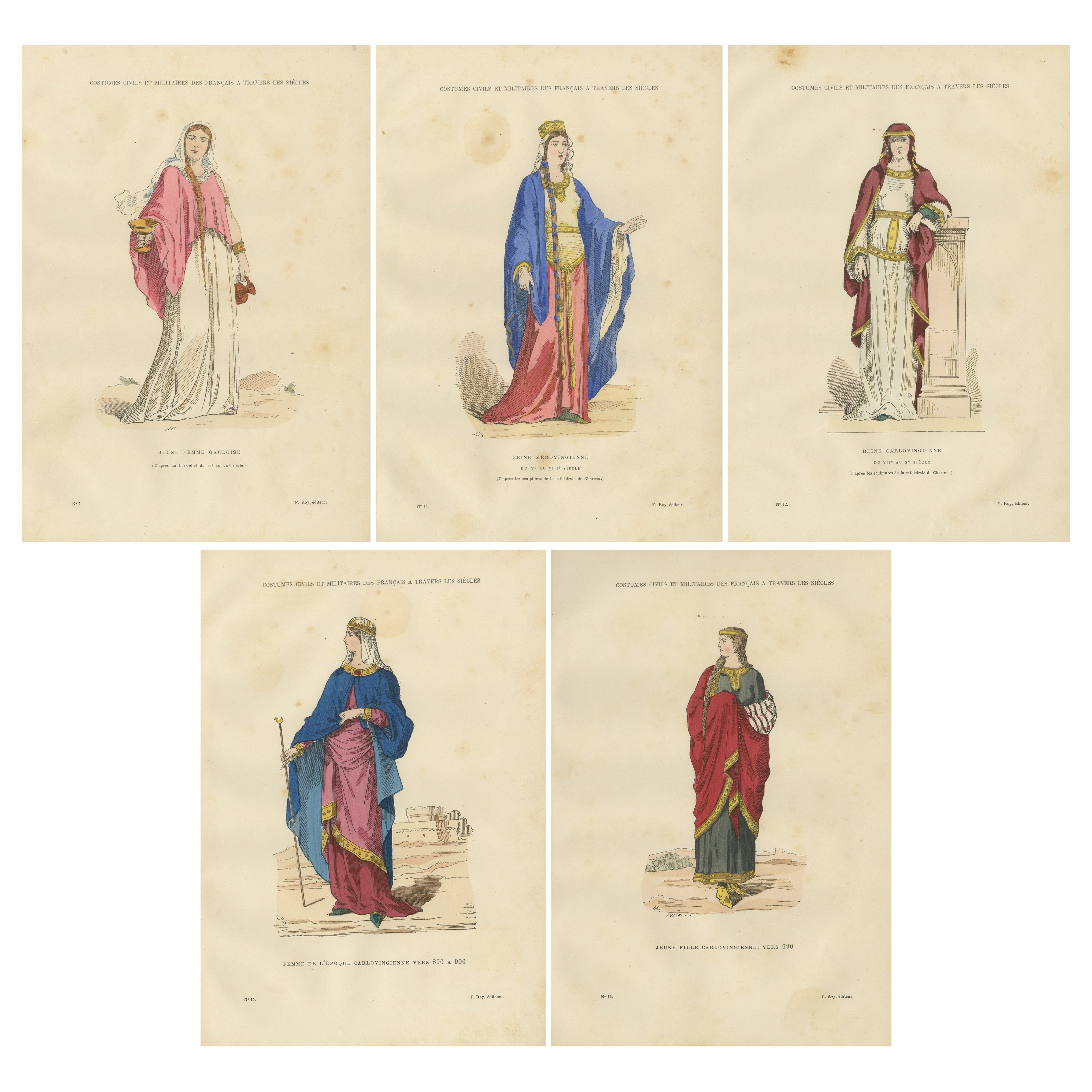
A refined and visually cohesive set of five original 19th-century hand-colored engravings depicting the evolution of women’s dress in France from ancient Gaul through the Merovingian and Carolingian periods. These plates originate from the important French publication Costumes civils et militaires des Français à travers les siècles, issued in Paris by F. Roy and based on archaeological evidence, sculptural sources, and early medieval monuments.
Note: The work is offered unframed, enabling custom framing to personal or interior preferences.
The set presents a chronological and stylistic progression of female costume, each figure shown full-length and isolated against a minimal ground, allowing close study of silhouette, drapery, textiles, and ornament. Together, the five plates form an elegant visual narrative of continuity and change in women’s dress across more than a millennium of French history.
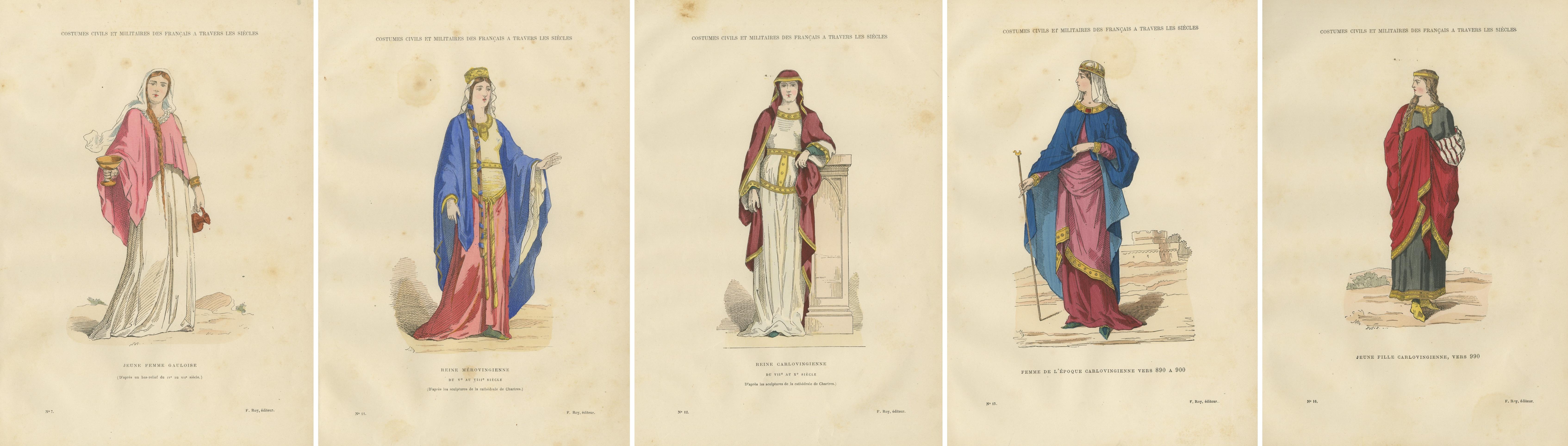
The set includes the following plates, with original French titles and English translations:
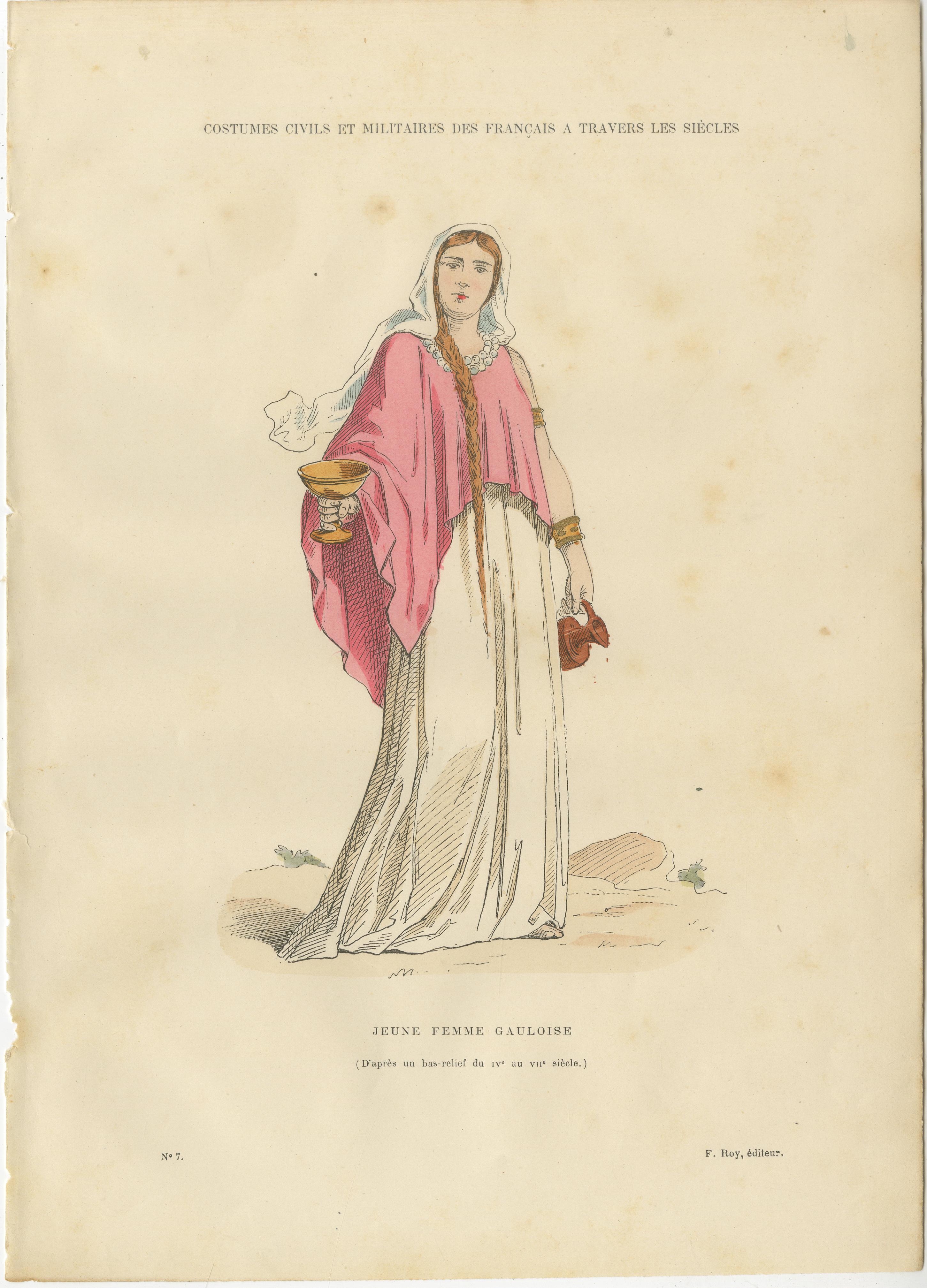
1. Jeune femme gauloise
Young Gaulish woman
After a bas-relief dated between the 5th and 7th century.
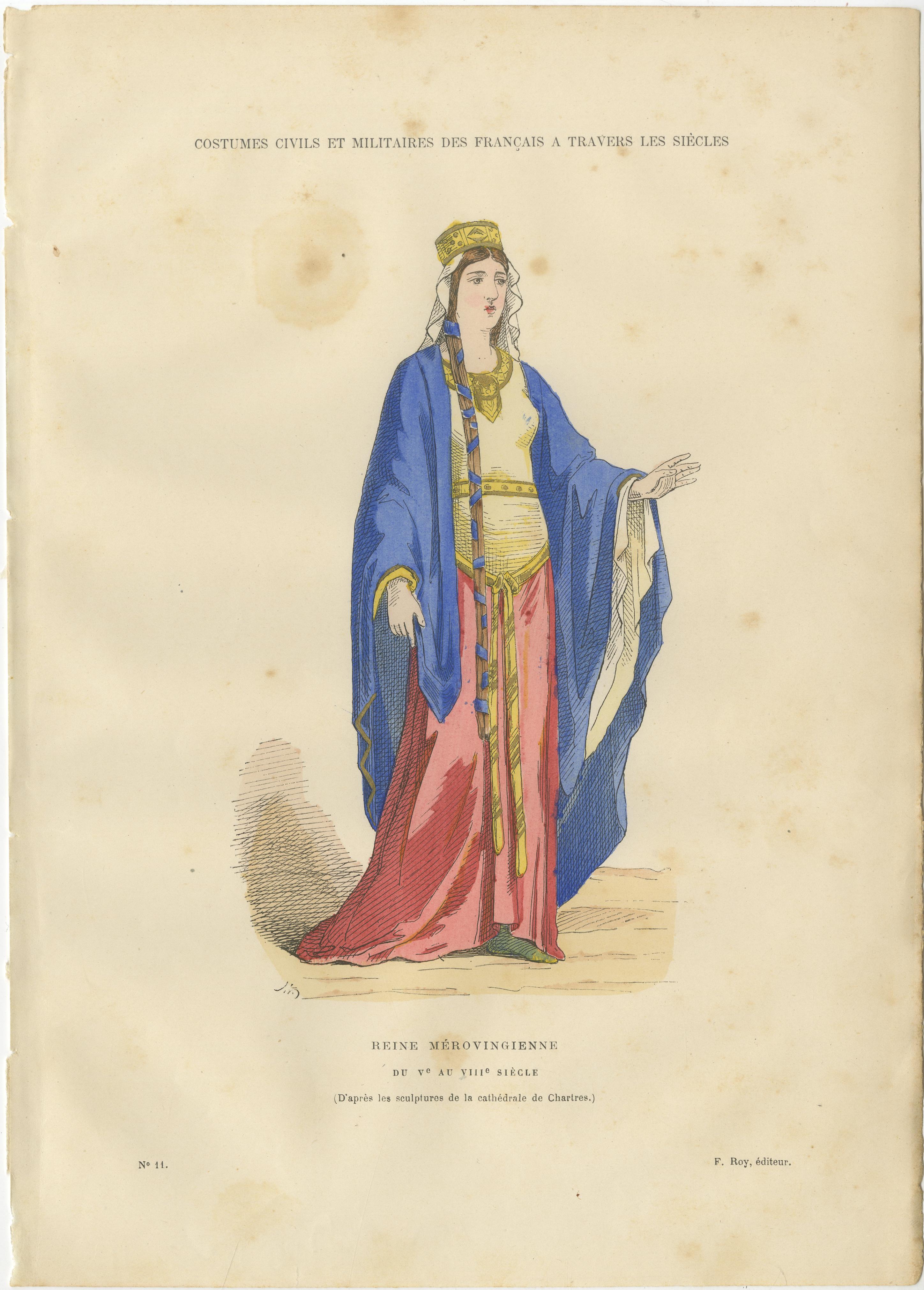
2. Reine mérovingienne (Ve au VIIIe siècle)
Merovingian queen (5th to 8th century)
After sculptural sources from the Cathedral of Chartres.
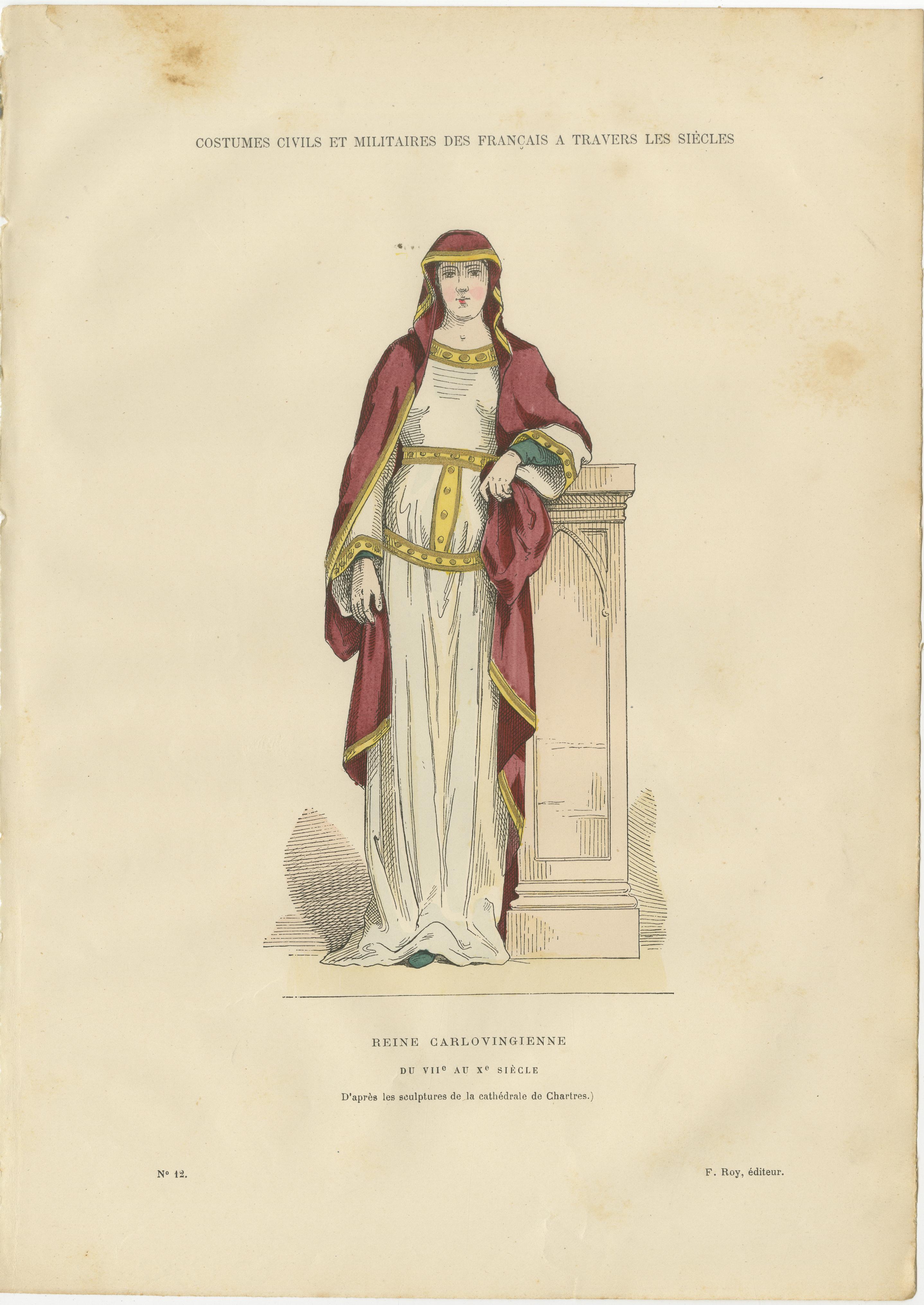
3. Reine carlovingienne (VIIIe au Xe siècle)
Carolingian queen (8th to 10th century)
After sculptural sources from the Cathedral of Chartres.
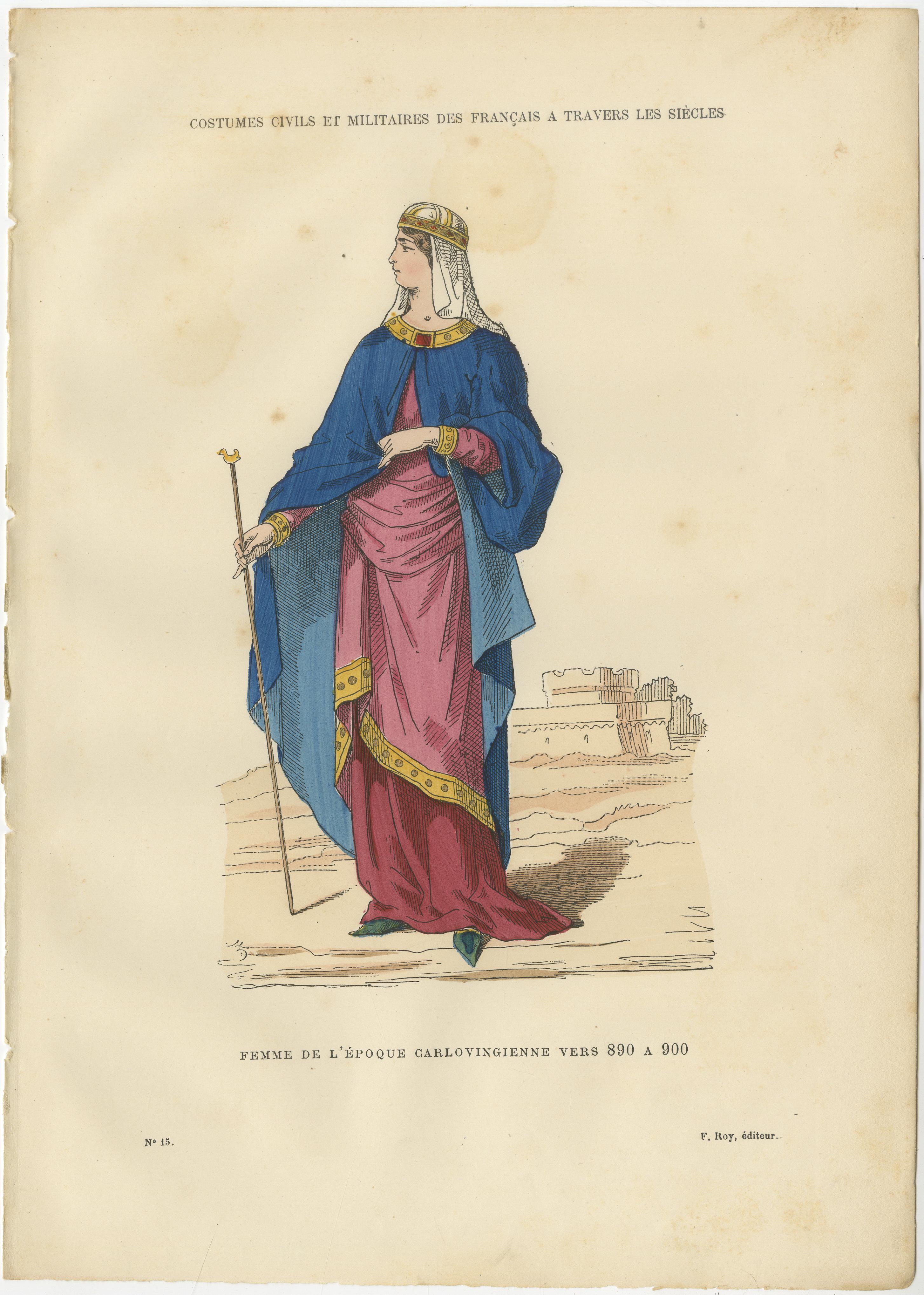
4. Femme de l’époque carlovingienne, vers 890 à 900
Woman of the Carolingian period, circa 890–900.
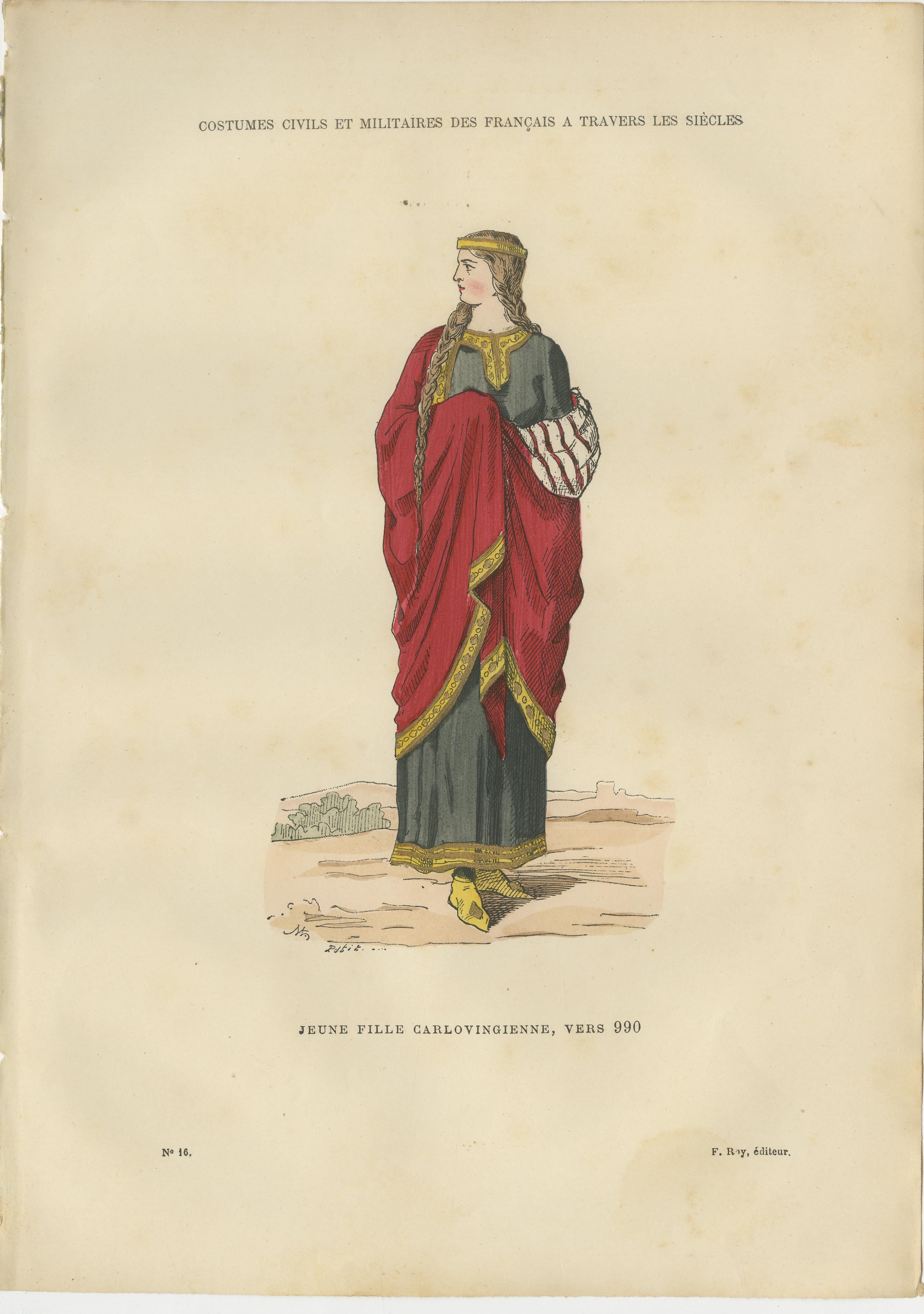
5. Jeune fille carlovingienne, vers 990
Young Carolingian girl, circa 990.
Visually, the plates are remarkably harmonious: each figure is rendered at the same scale, with balanced use of color—rose, blue, ivory, and gold—and with a restrained background that enhances their decorative presence. As a group, they read as a unified ensemble rather than individual images, making this set particularly appealing to interior designers as well as collectors of early European costume and medieval history.
Displayed together, the set offers both aesthetic elegance and scholarly interest, illustrating changing ideals of femininity, status, and material culture from pre-Roman Gaul to the early medieval kingdoms of France.
Condition:
Good antique condition overall. Light age toning and scattered foxing consistent with 19th-century paper. Minor edge wear and occasional soft handling creases, largely confined to the margins. The images remain clear and attractively hand colored. No restorations observed.
Framing suggestions:
Highly recommended as a coordinated set of five. Frame individually and hang as a horizontal or linear sequence. Dark walnut, ebonized wood, or antique black frames work particularly well. Use generous ivory or warm off-white mats to complement the aged paper tone and emphasize the vertical elegance of the figures. Museum glass advised.
Technique: Engraving with original hand coloring
Maker: F. Roy (éditeur), Paris, circa 1860