About this sheet
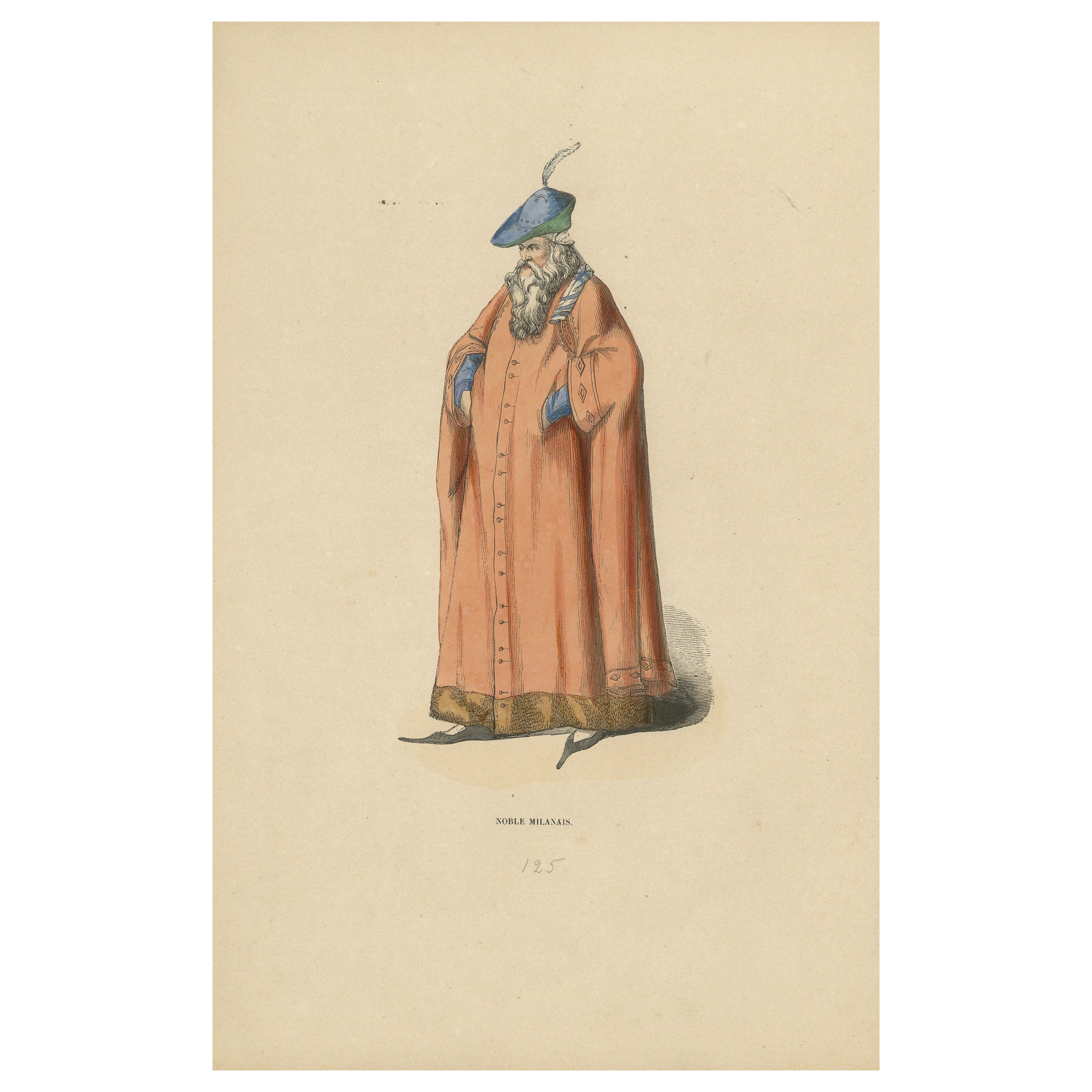
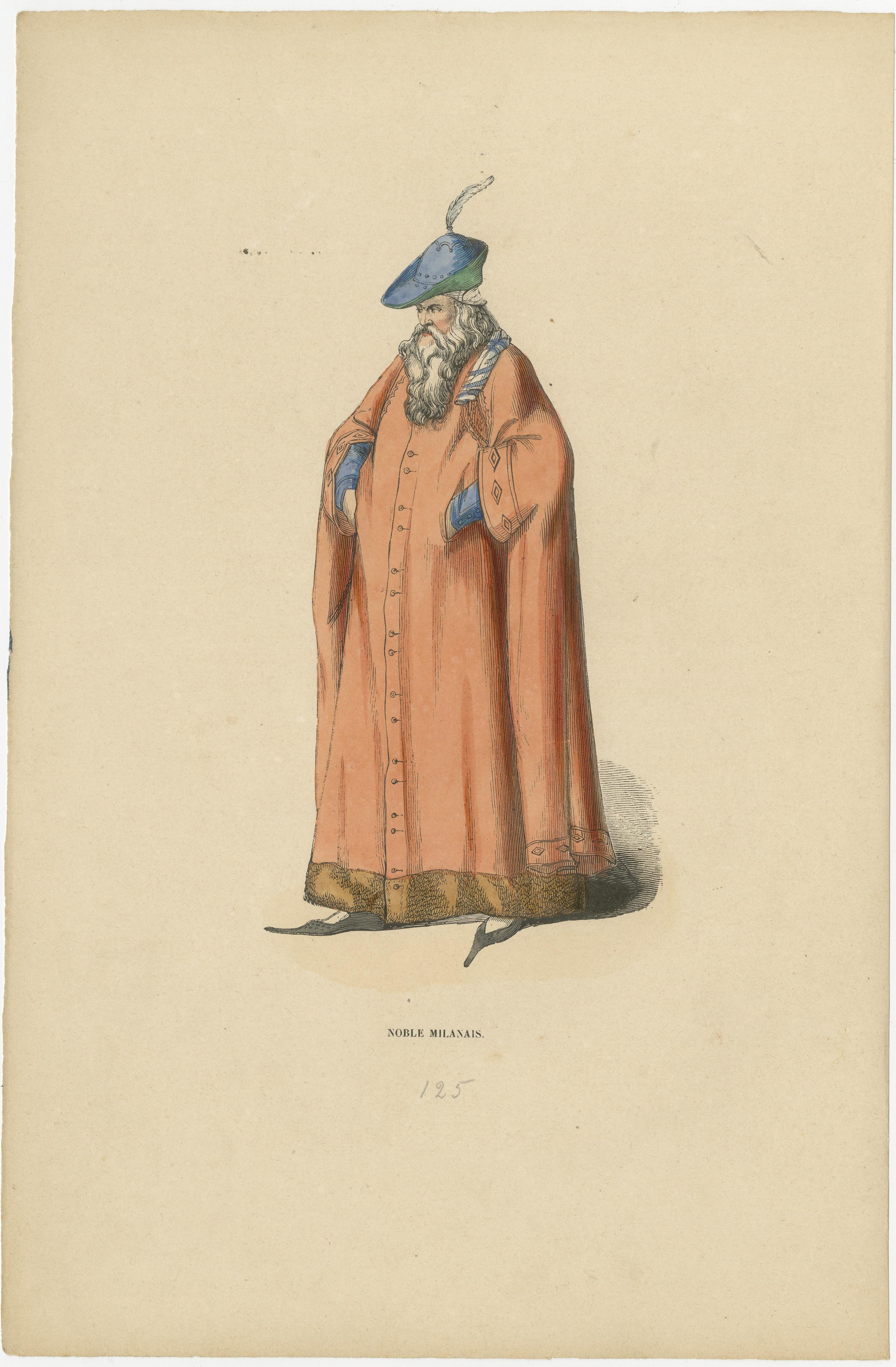
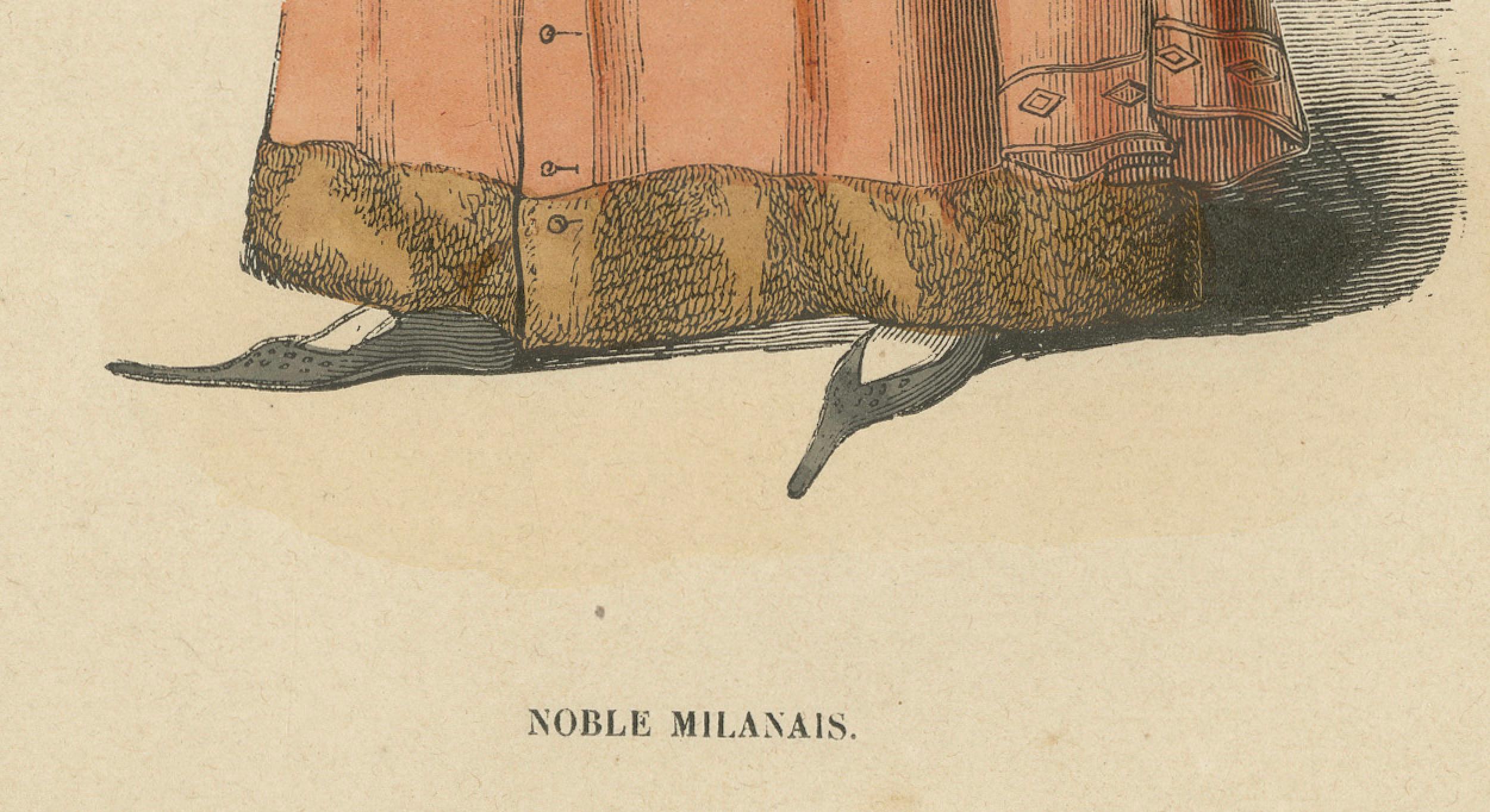
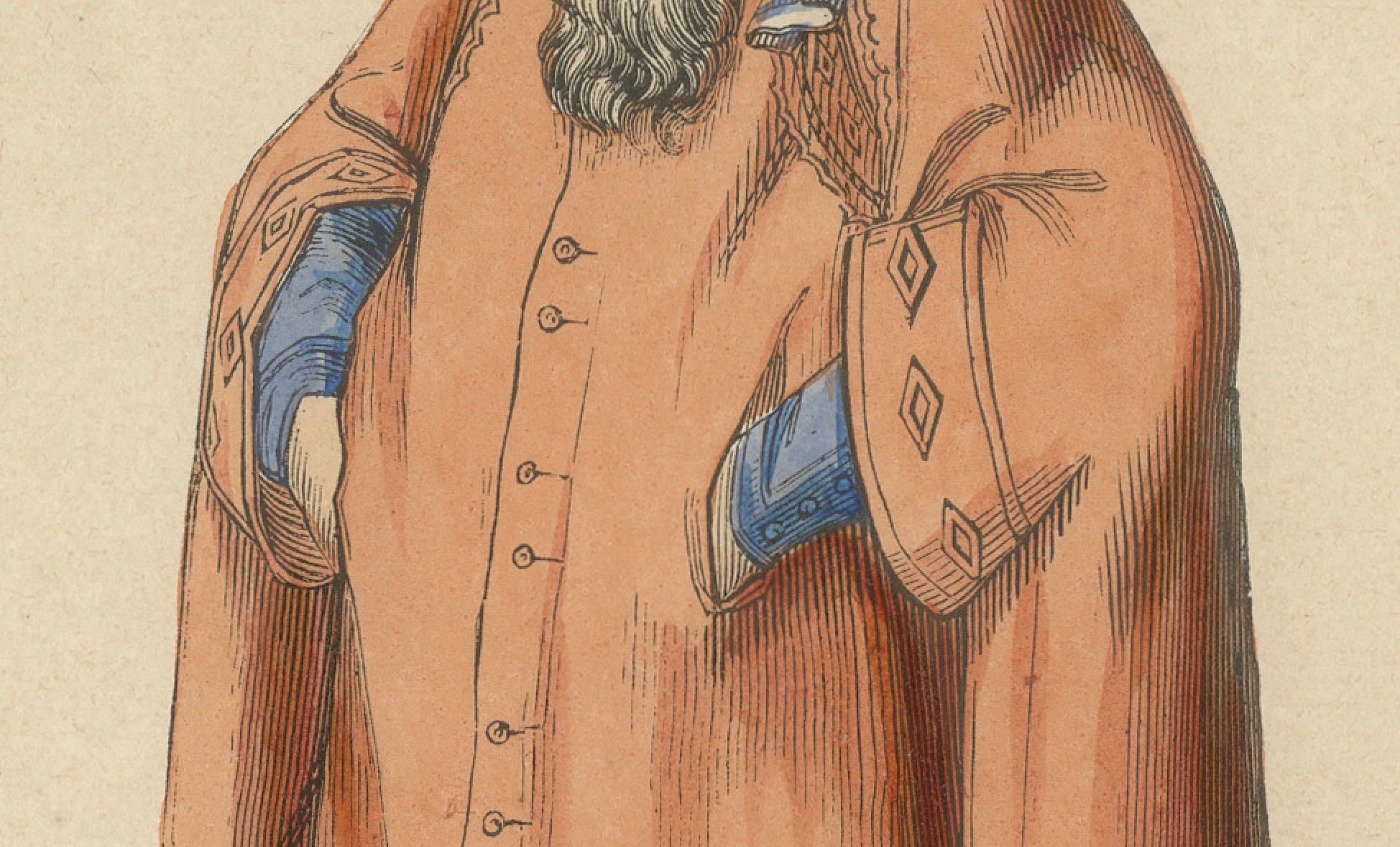
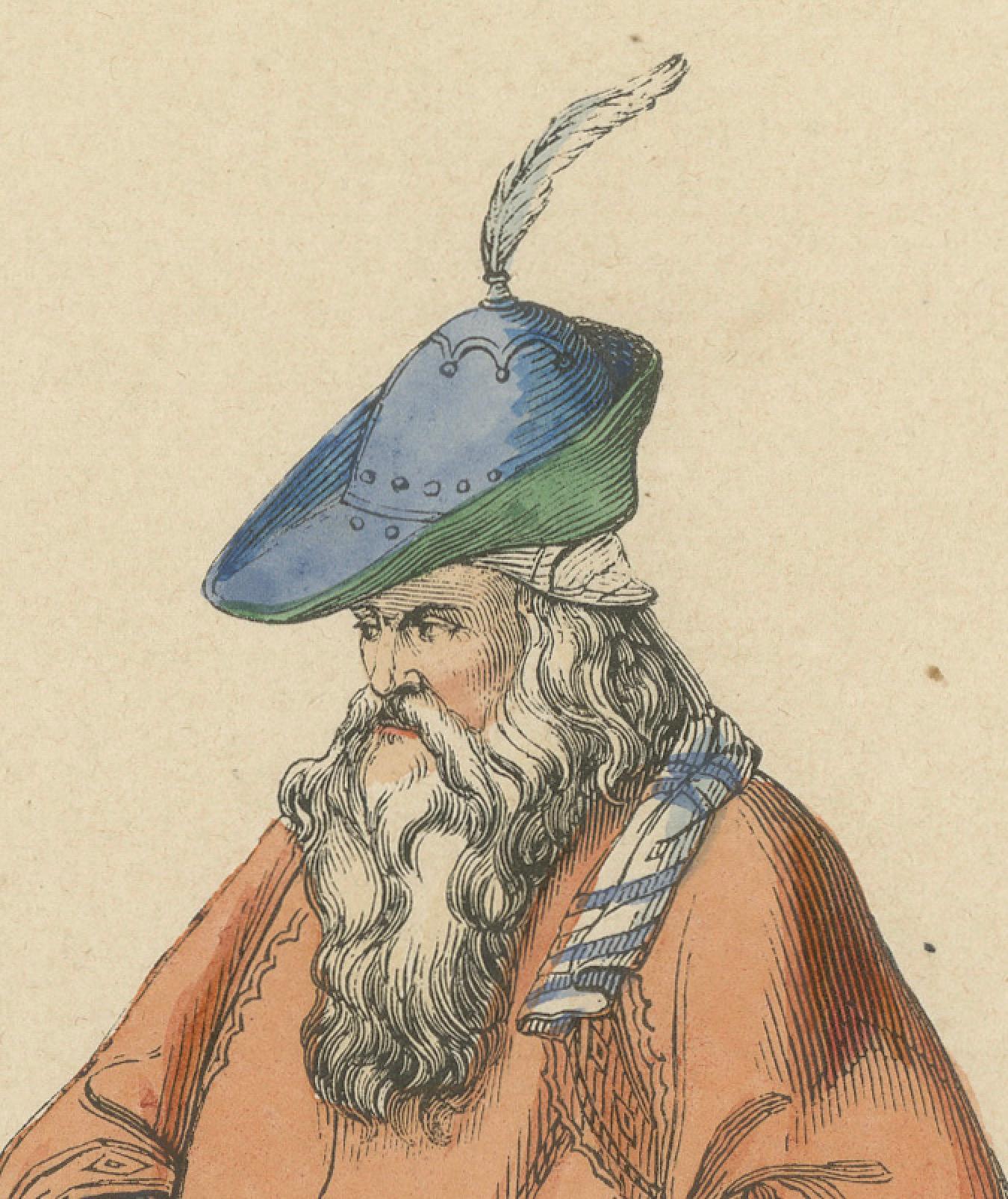
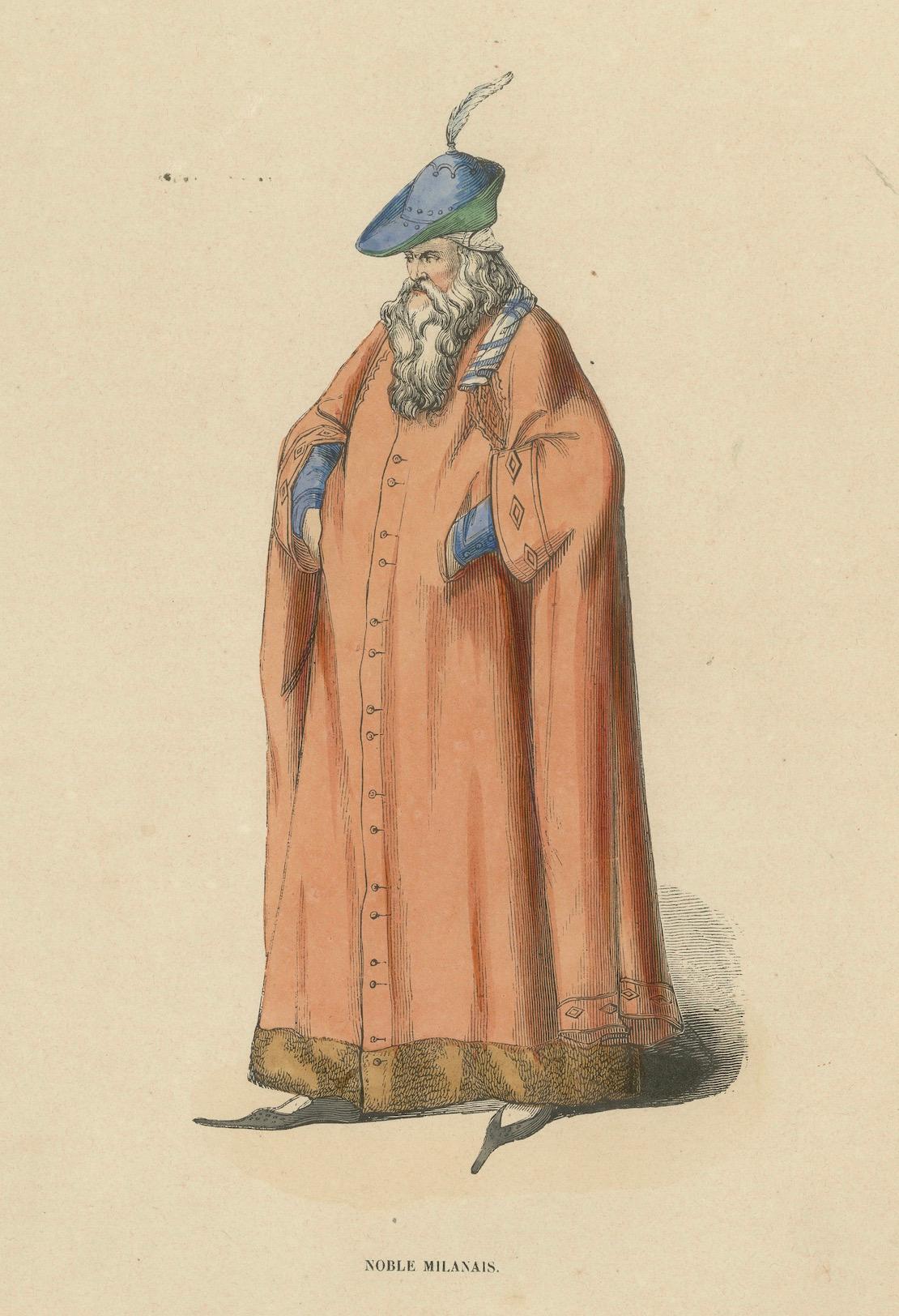
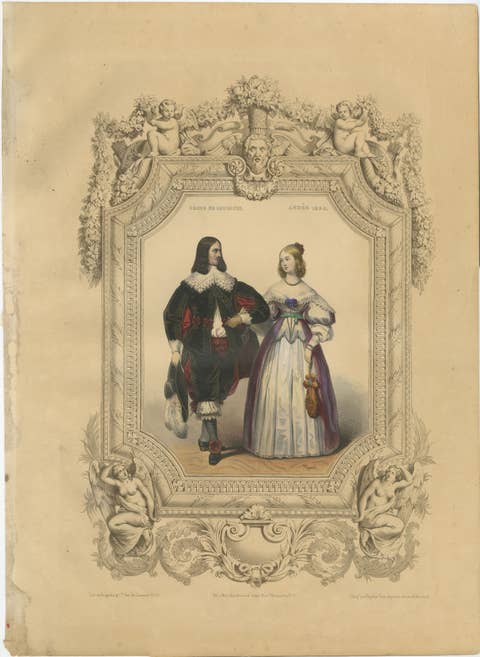
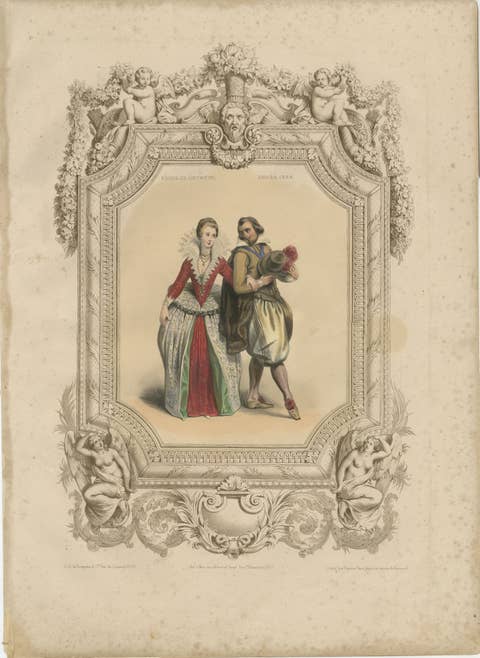
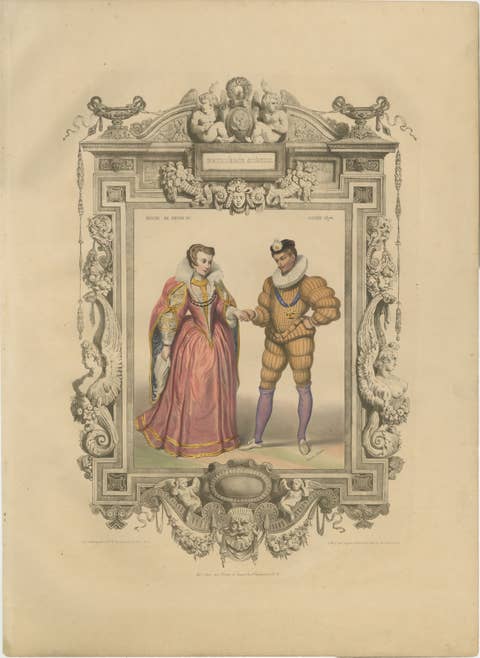
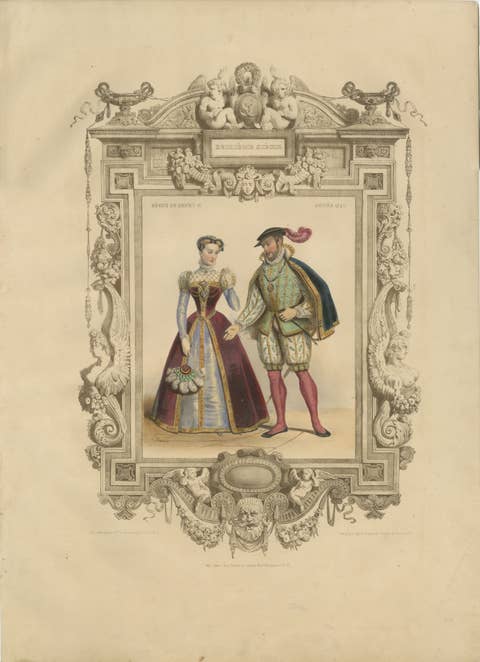
This finely detailed lithograph is part of the 1847 seminal work "Costume du Moyen Âge," which portrays a Milanese nobleman, attired in the fashion of the Middle Ages. The nobleman stands in a dignified pose, with a slight turn to the side that suggests movement or the commencement of an address. His garment is a robust, terracotta-hued robe, which falls in heavy folds to the ground, indicating the weight and quality of the fabric. The robe features elegant blue cuffs and a blue collar, which provide a contrast to the warm primary color and are adorned with diamond-shaped embellishments, implying a subtle yet unmistakable wealth.
Atop his head sits a distinctive chapeau with a jaunty feather, adding a touch of personal flair to his ensemble. This hat, along with his full, neatly groomed beard, contributes to the air of wisdom and experience that the nobleman exudes. His expression is one of contemplation and sagacity, with eyes that appear to be observing or assessing the scene before him.
As in other plates from the collection, the background is left intentionally plain, directing the viewer’s focus to the subject and his elaborate attire. This lithograph not only captures the fashion and dignity of a nobleman from Milan but also serves as a cultural and historical record, revealing the meticulous attention to detail in costume design and social hierarchy of the time. The lithograph serves as a visual study of the mores and attire of the period, crafted with reverence for the historical accuracy and an appreciation for the aesthetics of medieval clothing.
The colors have a nice glow over them. Historically, egg whites, known as glair, and sometimes egg yolk were indeed used in illumination and painting, particularly in manuscripts, to give colors a brighter appearance and to add a sheen or gloss to the work. This technique was quite common during the Middle Ages and into the Renaissance.
Egg whites can be applied as a varnish over pigments to enhance their brightness and to protect the colors. This application could make the colors appear more vivid and also add a slight glossy sheen to the surface of the image.
Egg yolk, on the other hand, was commonly used as a binding agent in paint. It forms the basis of tempera paint, a medium that was widely used before the advent of oil painting. Egg yolk helps to create a durable and long-lasting color that adheres well to various surfaces.
In the context of the print from 1847, it's less likely that egg whites or yolks were used directly on the print, as by that time, commercial printing processes would have been more advanced and less reliant on such manual methods. However, if this print is a representation of an earlier style or is meant to mimic the appearance of hand-painted manuscripts, the original artists might have employed techniques or materials that gave a similar effect to those achieved with egg-based binders and varnishes.