About this sheet
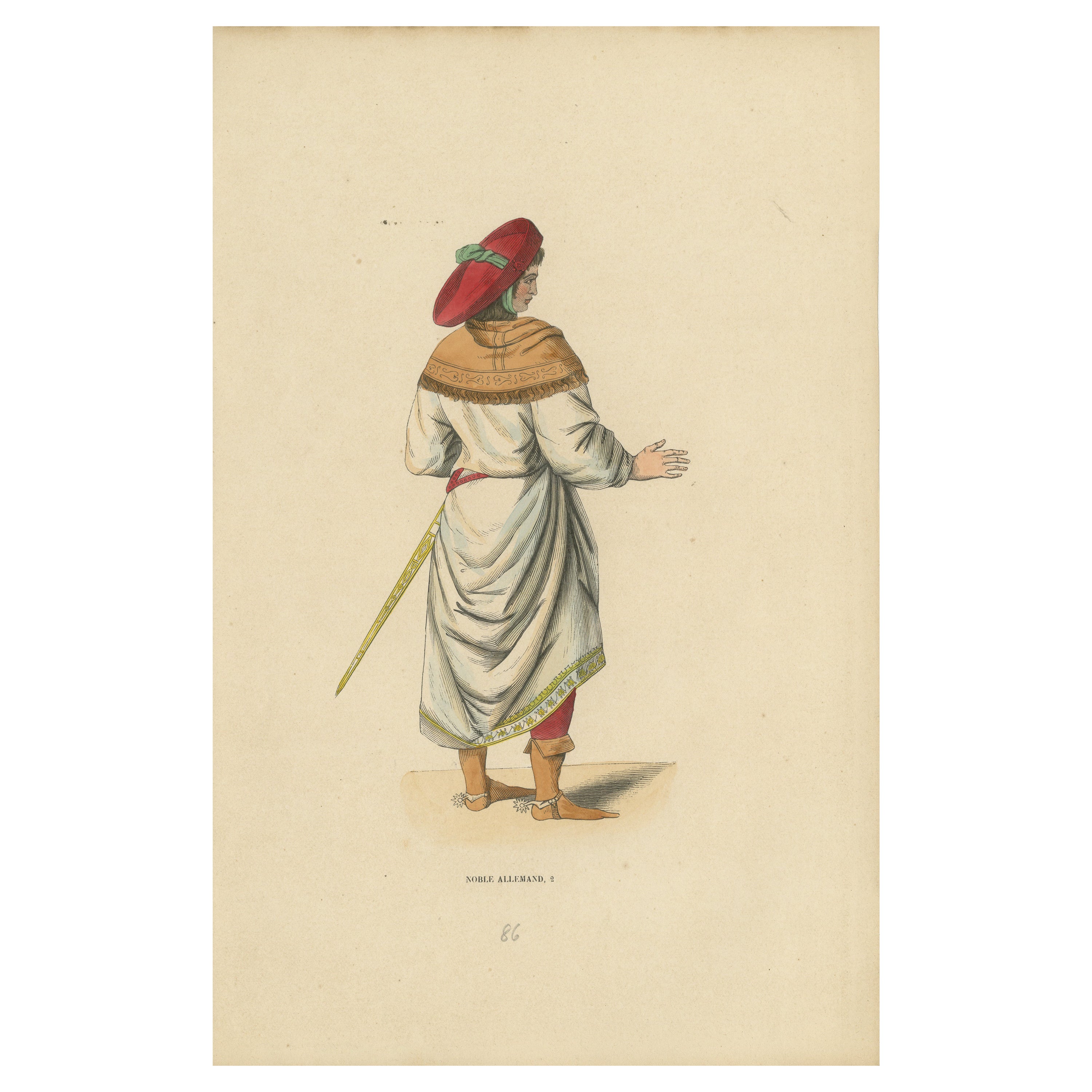
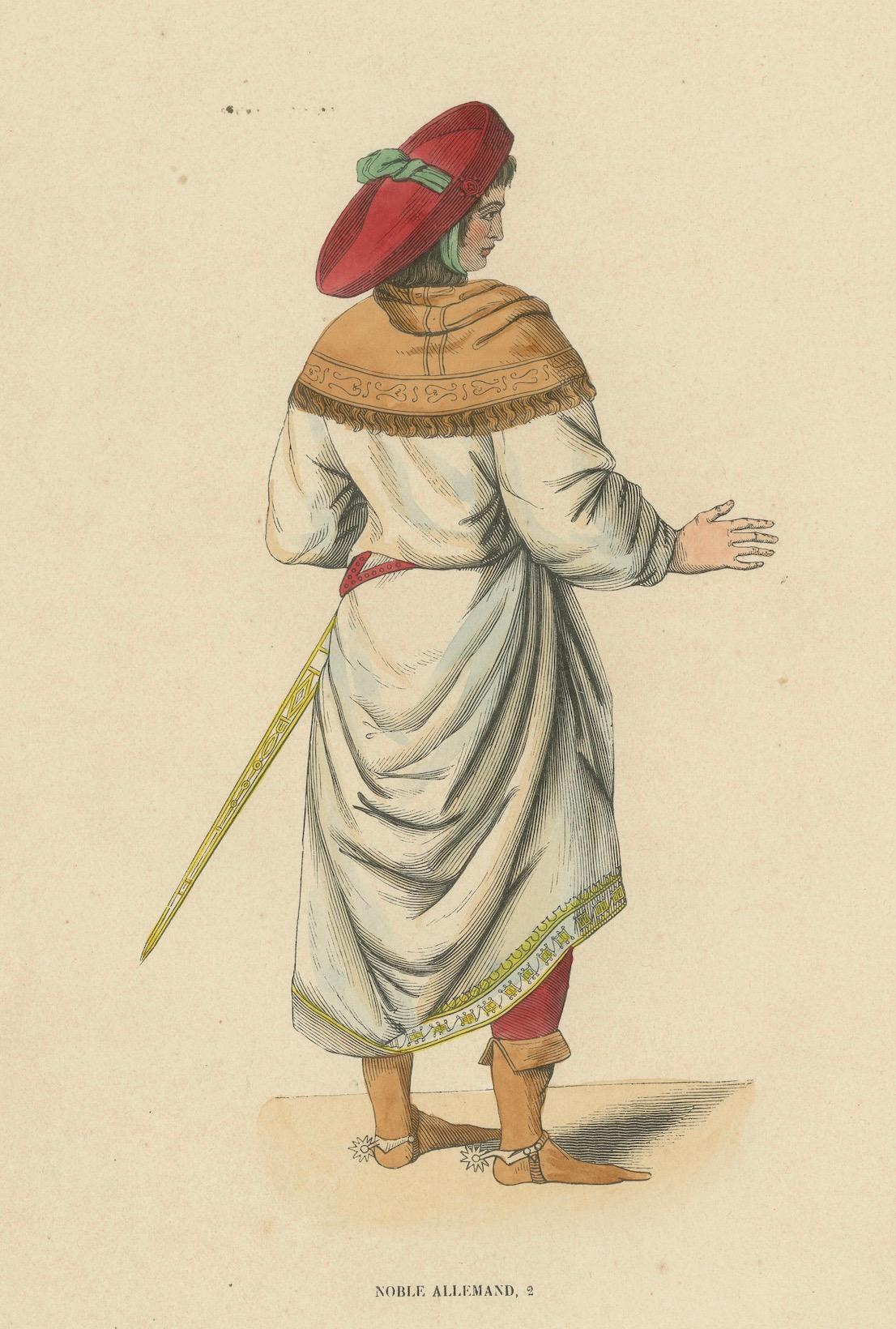
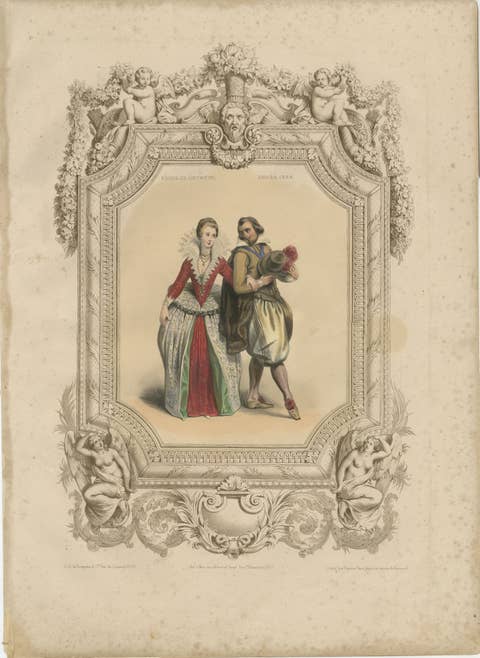
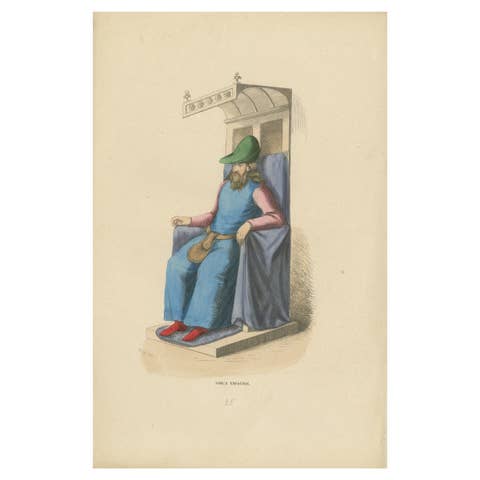
This vibrant print, original antique and hand-colored, presents a German nobleman from the Middle Ages, captured in a profile view that emphasizes his dignified posture and refined attire. He stands with one hand gesturing outward, perhaps in conversation or giving an instruction, indicative of his active role in the social and political spheres of the time.
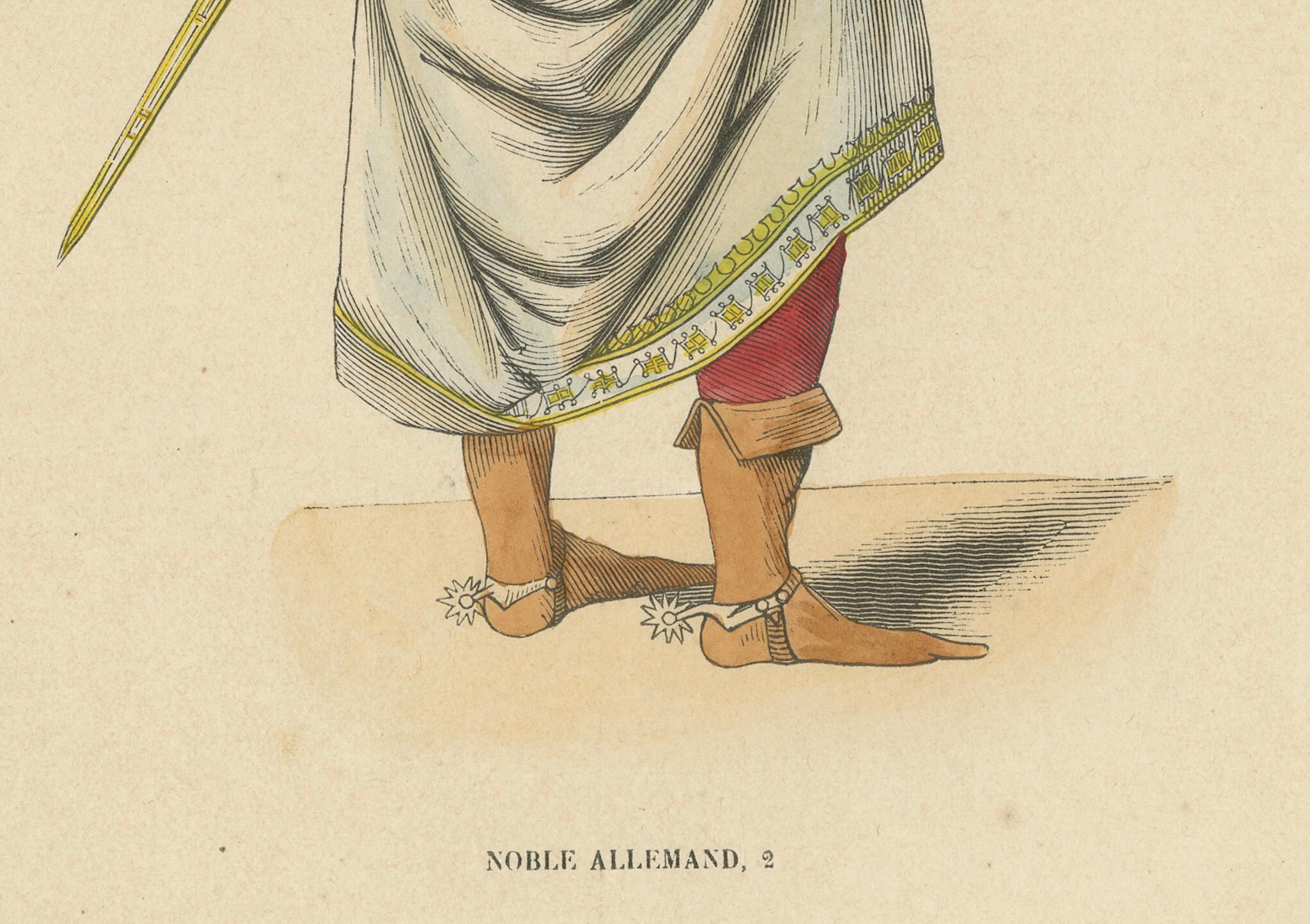
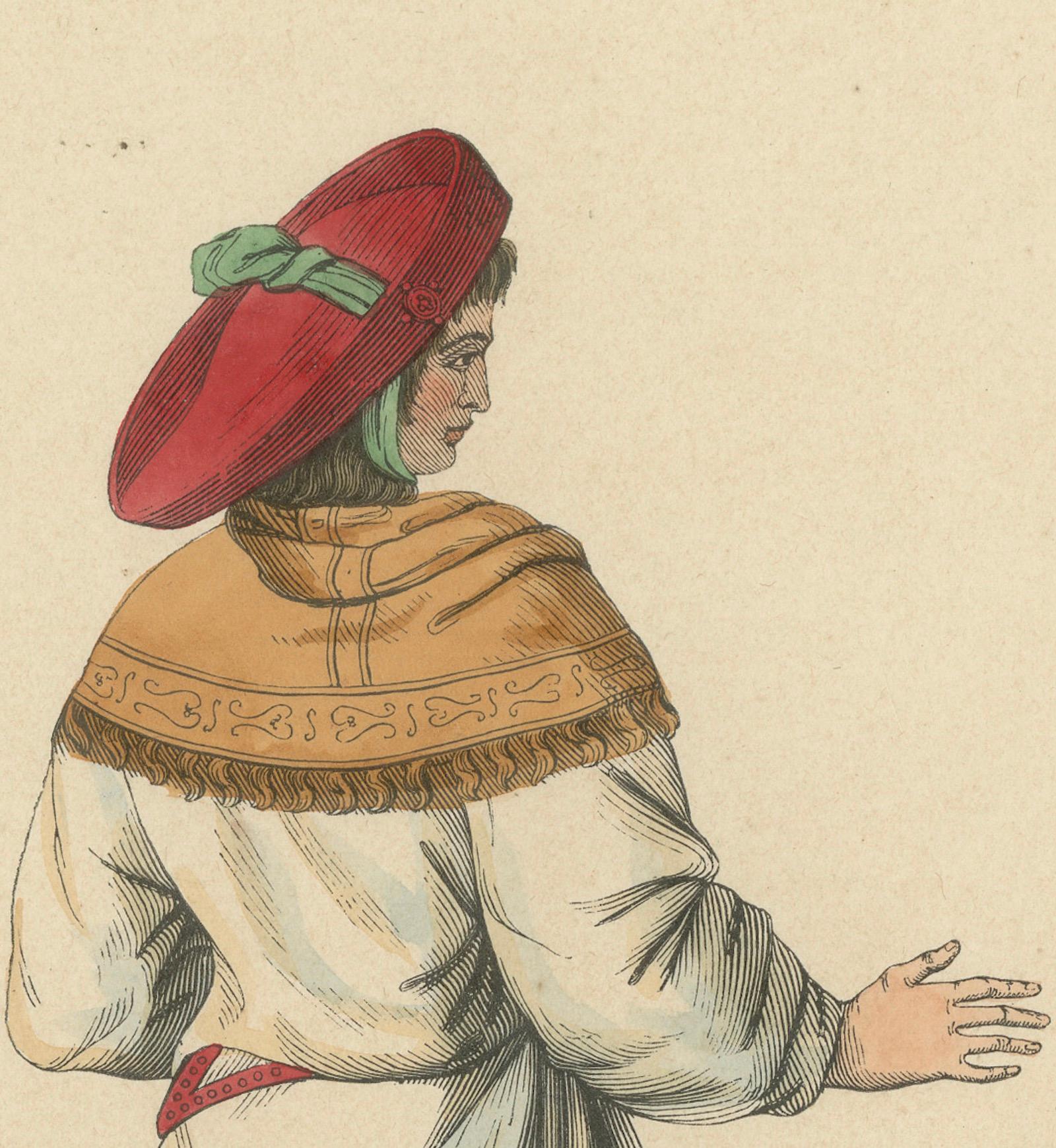
The nobleman is adorned in a flowing, draped garment with a broad, decorative collar that encircles his neck, showcasing intricate patterns that reflect the era's attention to textile artistry. This piece of clothing is a testament to the wealth and status of the noble class, with its elaborate design and the apparent quality of the material.
His head is covered with a large, flat red hat with a distinctive green band, providing a bold contrast to his otherwise neutral-toned ensemble. Such a hat would not only serve as a fashion statement but also as a practical cover against the elements.
He carries a long, slender sword by his side, signifying his readiness to defend his honor or engage in the warfare that was a common part of noble life during those tumultuous times. The sword is also a symbol of his right to bear arms, a privilege reserved for the nobility.
The nobleman’s footwear is simple yet functional, with pointed toes that were fashionable during the period. The understated shoes suggest that while he is a person of importance, he is not ostentatious in displaying his wealth.
The simplicity of the background in the print directs the viewer's attention to the nobleman's figure, with the focus on his clothing, accessories, and the subtle details that convey his aristocratic standing. Through this portrayal, the print invites contemplation of the cultural and societal norms that were conveyed through dress during the Middle Ages in Germany.
The colors have a nice glow over them. Historically, egg whites, known as glair, and sometimes egg yolk were indeed used in illumination and painting, particularly in manuscripts, to give colors a brighter appearance and to add a sheen or gloss to the work. This technique was quite common during the Middle Ages and into the Renaissance.
Egg whites can be applied as a varnish over pigments to enhance their brightness and to protect the colors. This application could make the colors appear more vivid and also add a slight glossy sheen to the surface of the image.
Egg yolk, on the other hand, was commonly used as a binding agent in paint. It forms the basis of tempera paint, a medium that was widely used before the advent of oil painting. Egg yolk helps to create a durable and long-lasting color that adheres well to various surfaces.
In the context of the print from 1847, it's less likely that egg whites or yolks were used directly on the print, as by that time, commercial printing processes would have been more advanced and less reliant on such manual methods. However, if this print is a representation of an earlier style or is meant to mimic the appearance of hand-painted manuscripts, the original artists might have employed techniques or materials that gave a similar effect to those achieved with egg-based binders and varnishes.