About this sheet
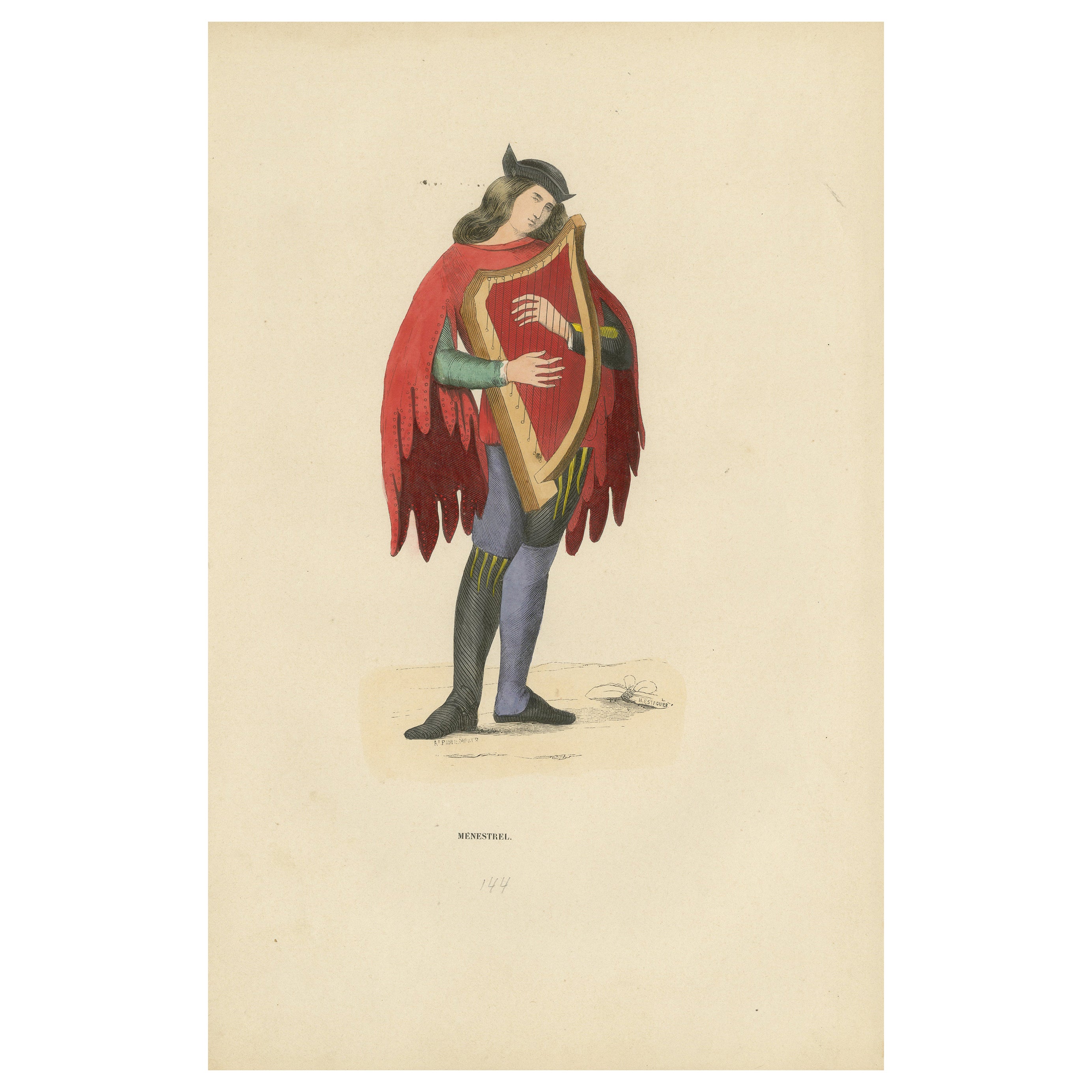
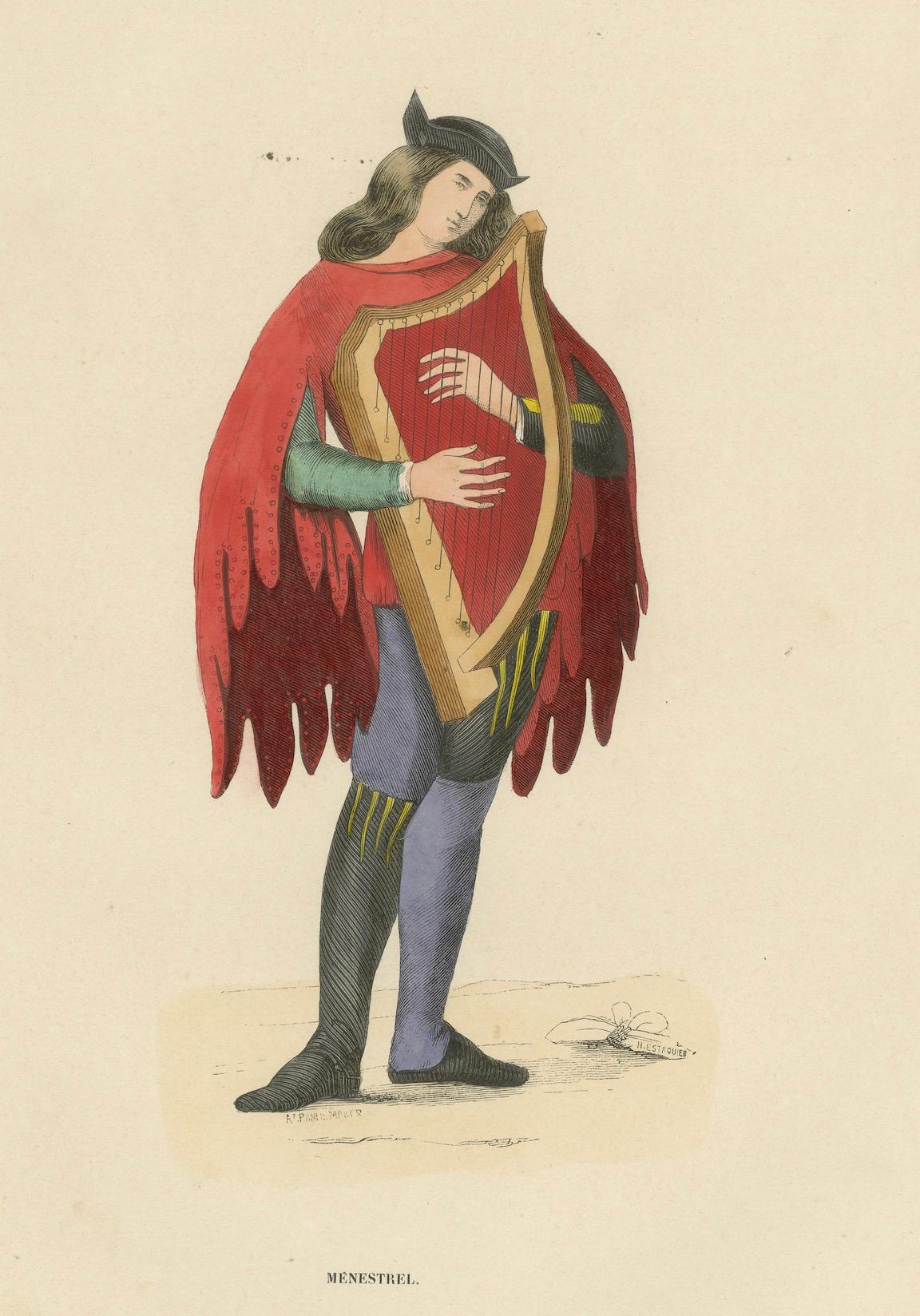
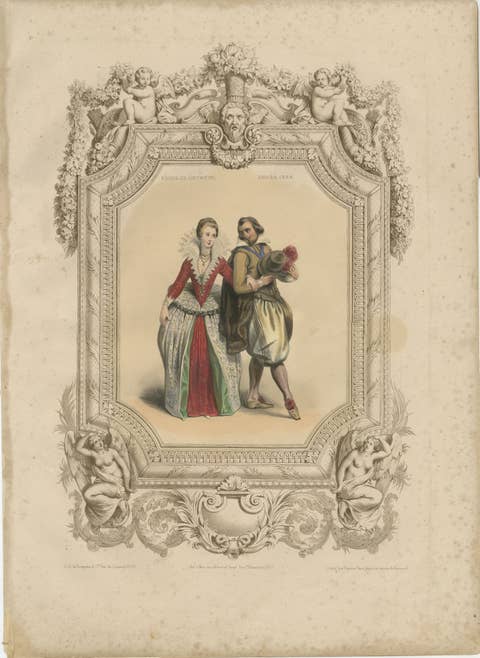
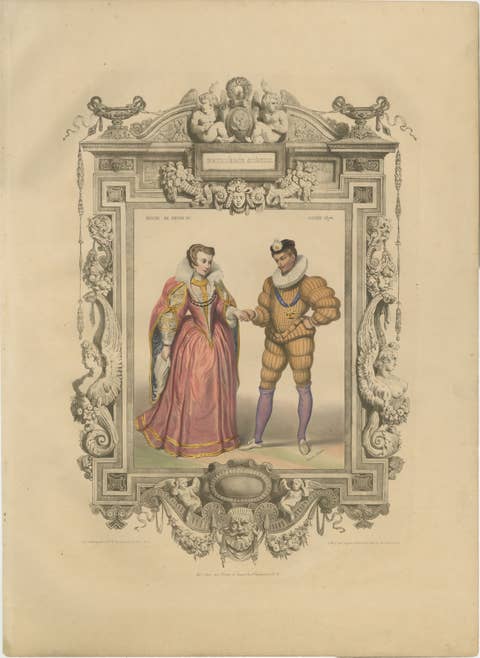
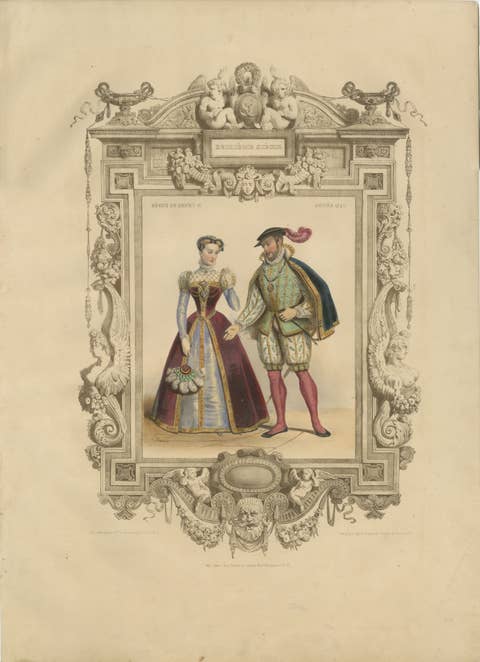
This expressive lithograph from the 1847 collection "Costume du Moyen Âge" portrays a medieval minstrel, a traveling musician, and storyteller of the Middle Ages. The minstrel is captured in a moment of repose, eyes closed, as if lost in the music he creates or perhaps in contemplation of his next performance.
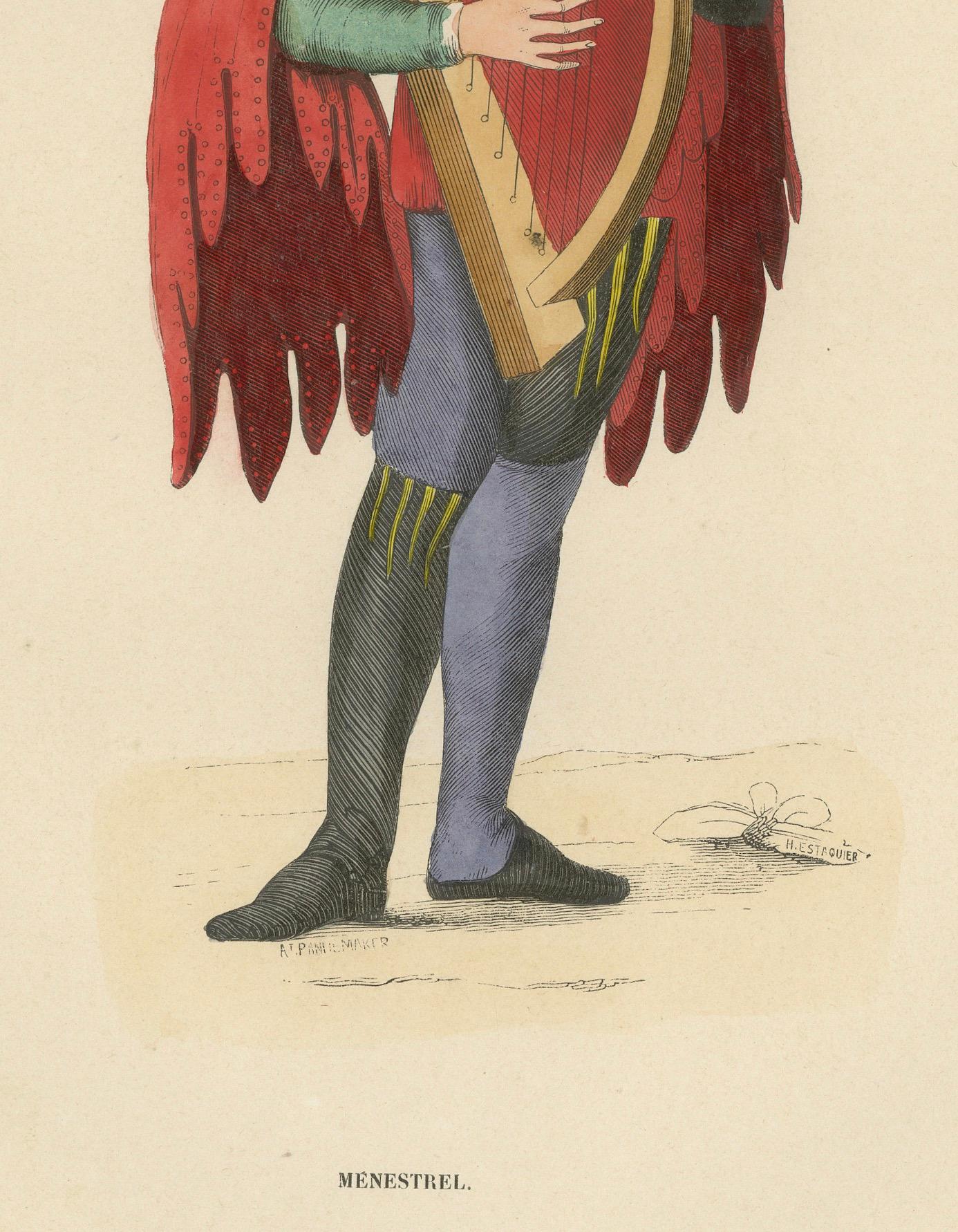
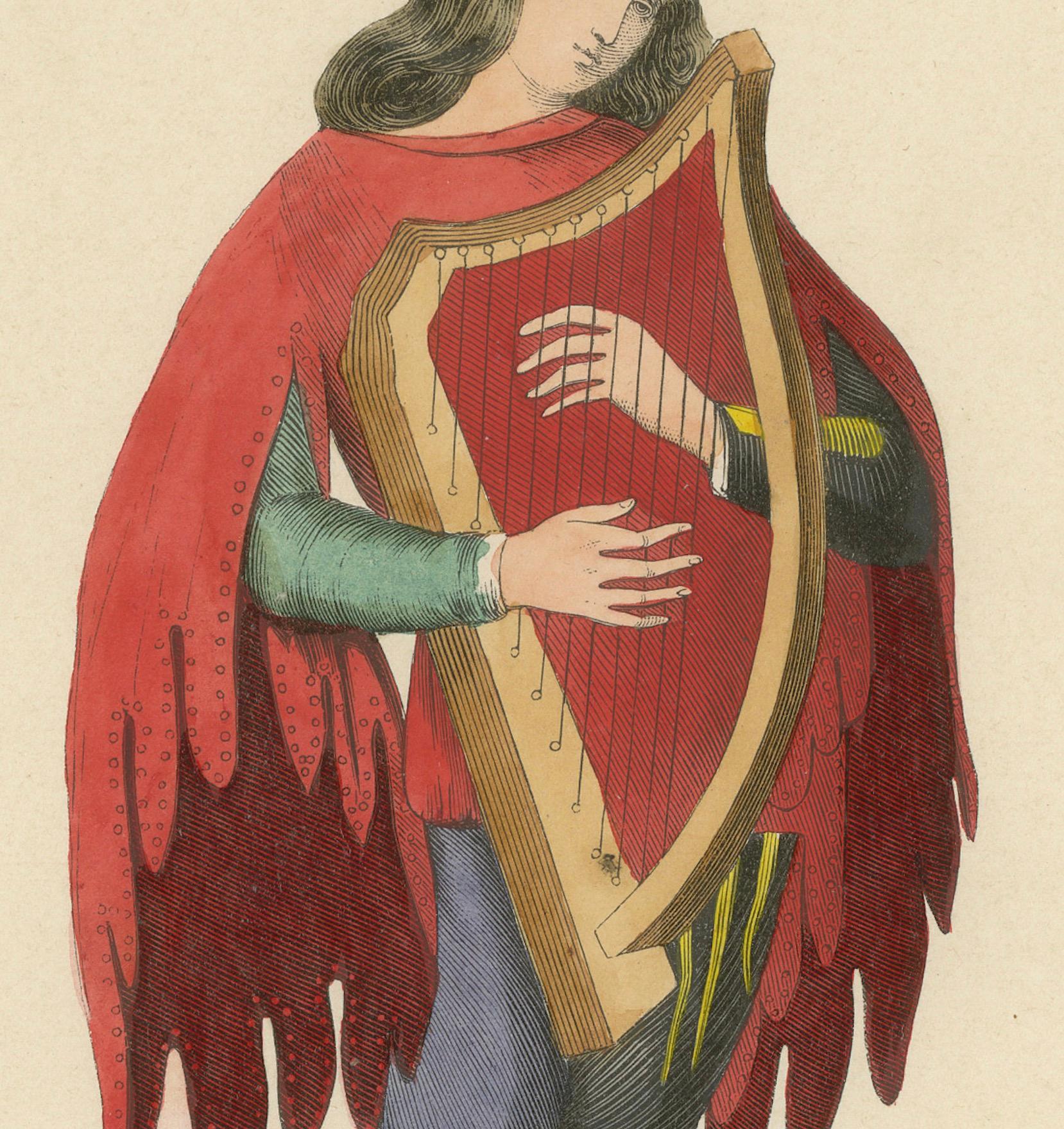
His attire is a colorful expression of his profession, with a vibrant red cloak that drapes over his shoulders, frayed at the edges to suggest his nomadic lifestyle. The cloak is a sharp contrast to the more subdued hues of his underlying garments. He wears a blue tunic, accented with golden embellishments that catch the eye, suggesting a love for flair and presentation.
The instrument he embraces is a harp, an emblem of the minstrel's craft, with its strings and soundbox detailed in the lithograph. The minstrel's leggings are a mix of green and blue, patterned in a way that is likely to draw attention in any public square or noble court where he performs.
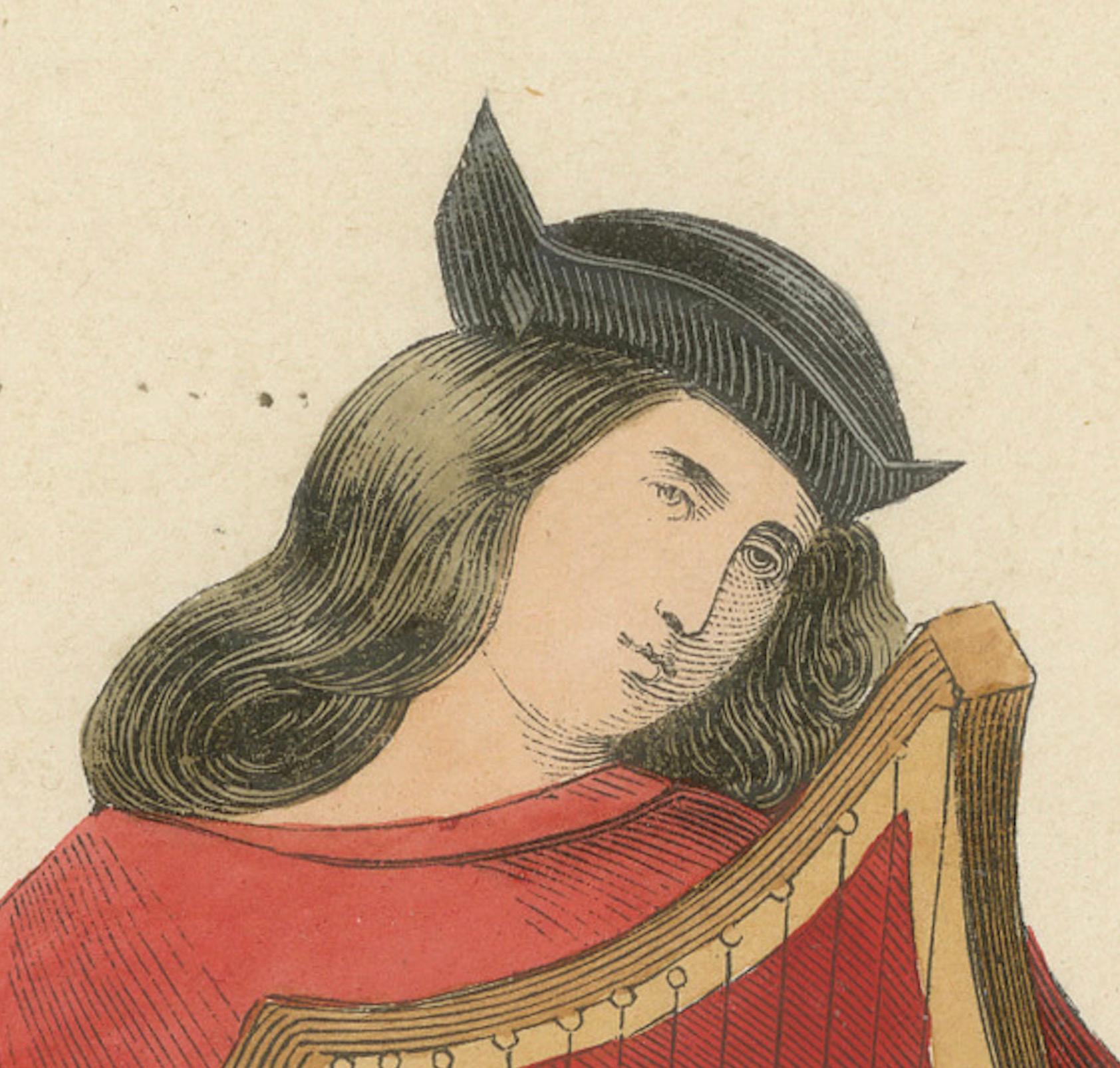
His headwear is a simple, flat cap that sits back on his head, practical for a life spent traveling and performing outdoors. The minstrel's footwear is modest, befitting his itinerant nature.
This image is not just a study in the historical fashion of minstrels but also a glimpse into the role of the medieval entertainer. It reveals the importance of music and storytelling in the cultural life of the Middle Ages and the minstrel's place within that world, bridging the social gaps between peasants, clergy, and nobility with his art. The lithograph reflects the romanticized vision of the minstrel as both an artist and a figure of medieval lore.
The colors have a nice glow over them. Historically, egg whites, known as glair, and sometimes egg yolk were indeed used in illumination and painting, particularly in manuscripts, to give colors a brighter appearance and to add a sheen or gloss to the work. This technique was quite common during the Middle Ages and into the Renaissance.
Egg whites can be applied as a varnish over pigments to enhance their brightness and to protect the colors. This application could make the colors appear more vivid and also add a slight glossy sheen to the surface of the image.
Egg yolk, on the other hand, was commonly used as a binding agent in paint. It forms the basis of tempera paint, a medium that was widely used before the advent of oil painting. Egg yolk helps to create a durable and long-lasting color that adheres well to various surfaces.
In the context of the print from 1847, it's less likely that egg whites or yolks were used directly on the print, as by that time, commercial printing processes would have been more advanced and less reliant on such manual methods. However, if this print is a representation of an earlier style or is meant to mimic the appearance of hand-painted manuscripts, the original artists might have employed techniques or materials that gave a similar effect to those achieved with egg-based binders and varnishes.