About this sheet
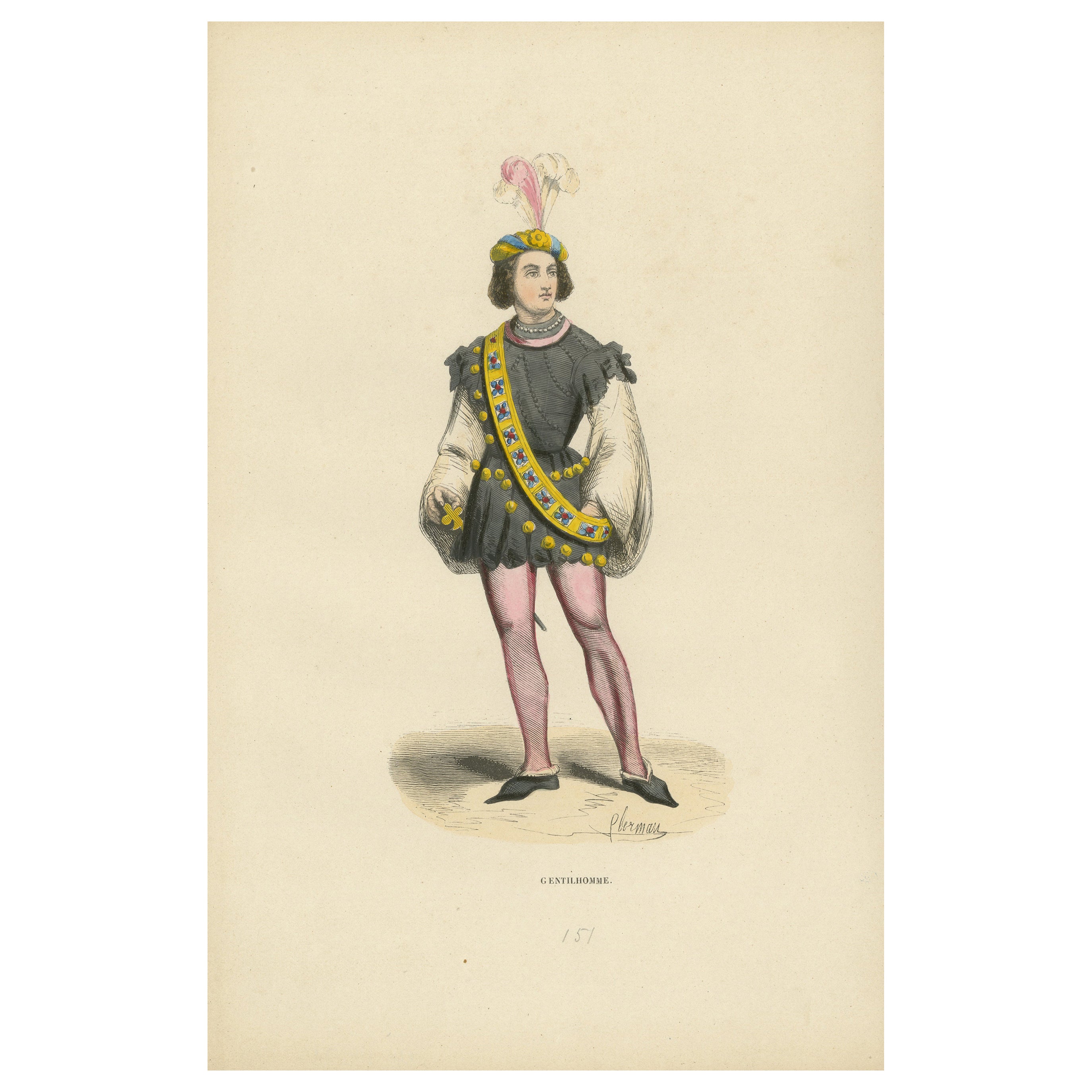
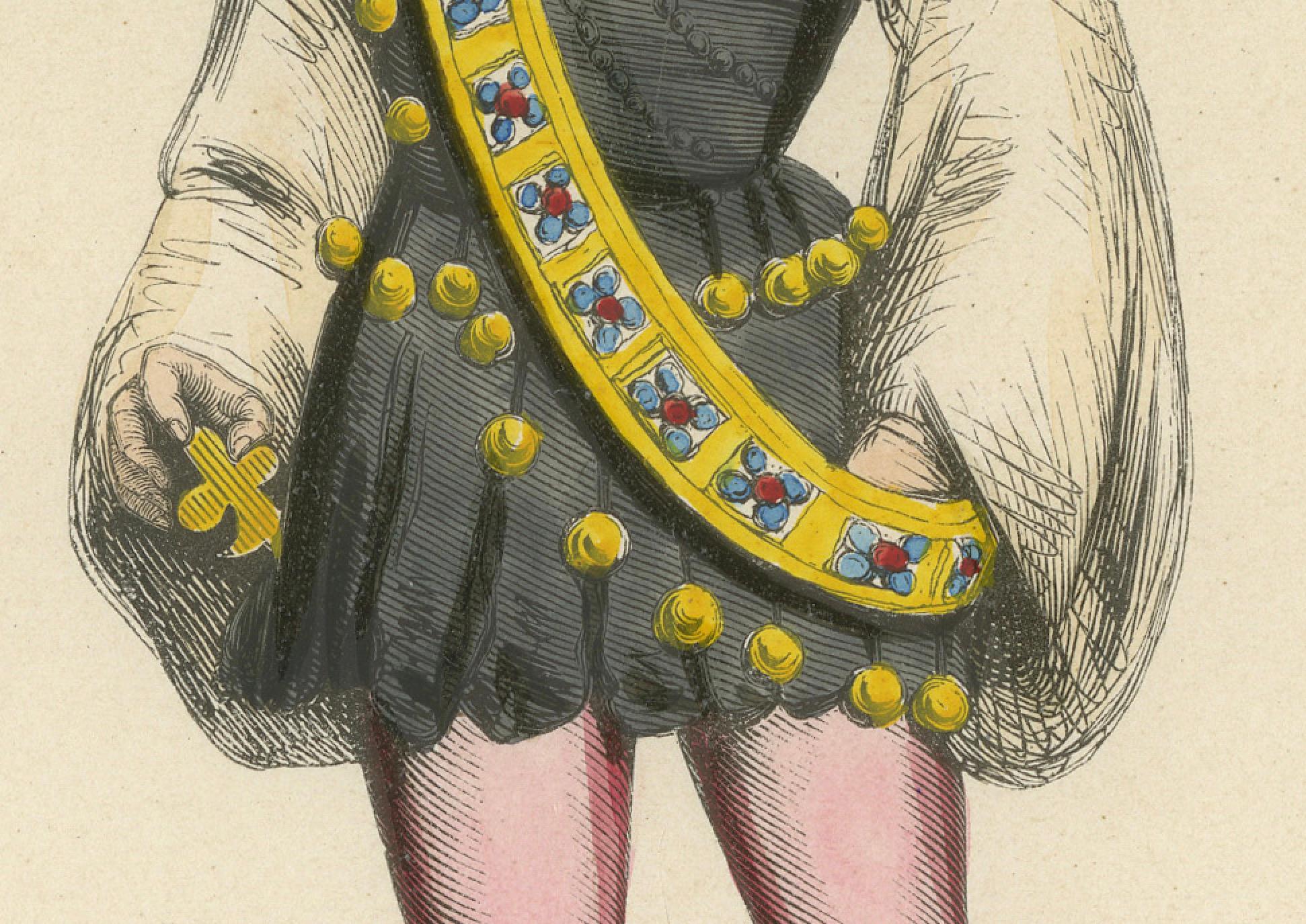
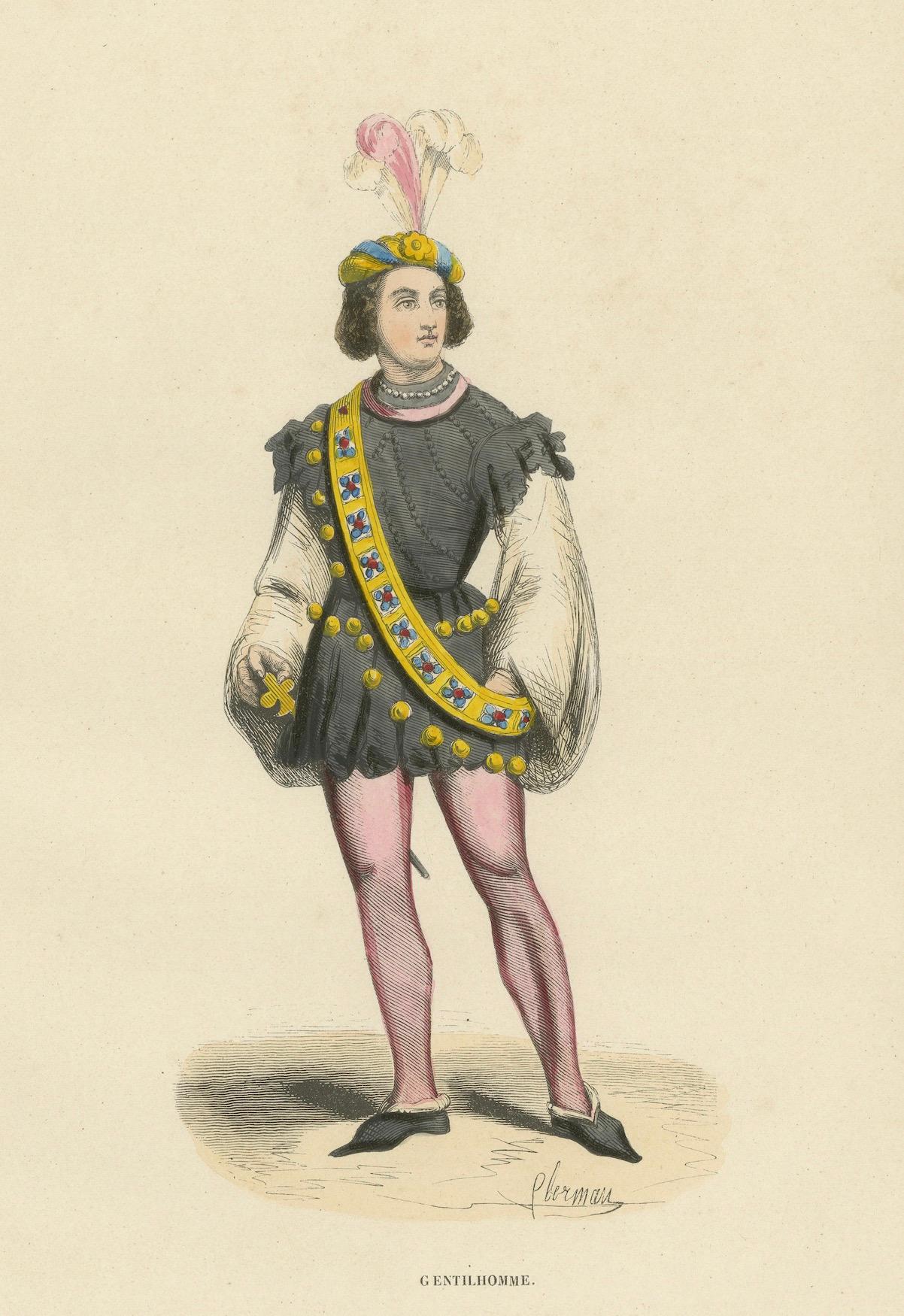
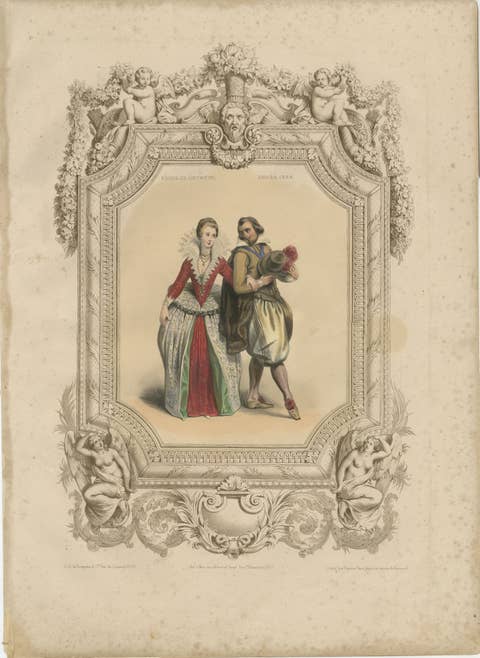
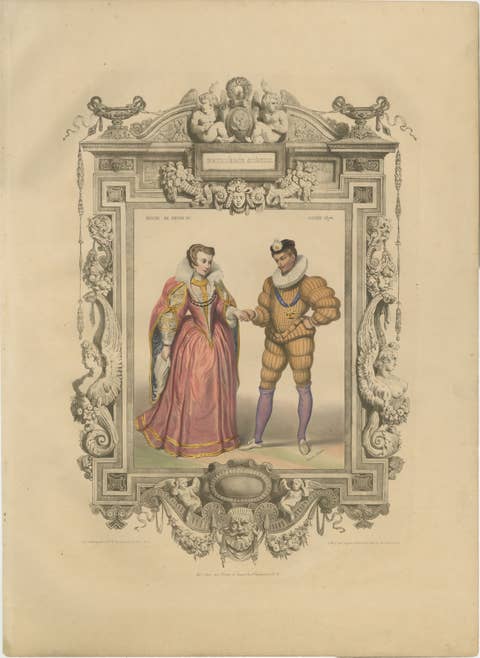
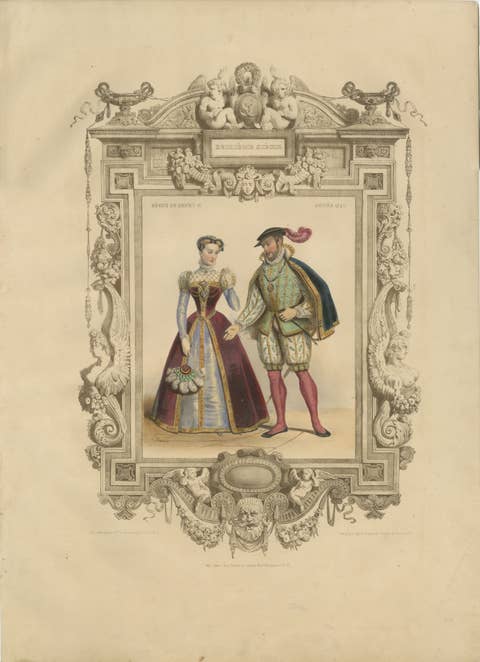
This 1847 lithograph from the "Costume du Moyen Âge" collection depicts a nobleman dressed in the height of courtly fashion. His ensemble exemplifies the luxurious attire favored by the nobility during the Middle Ages. The nobleman's doublet is a deep, rich black, accentuated with golden buttons and a striking blue and gold sash draped across his chest, possibly indicating his rank or affiliation with a royal court.
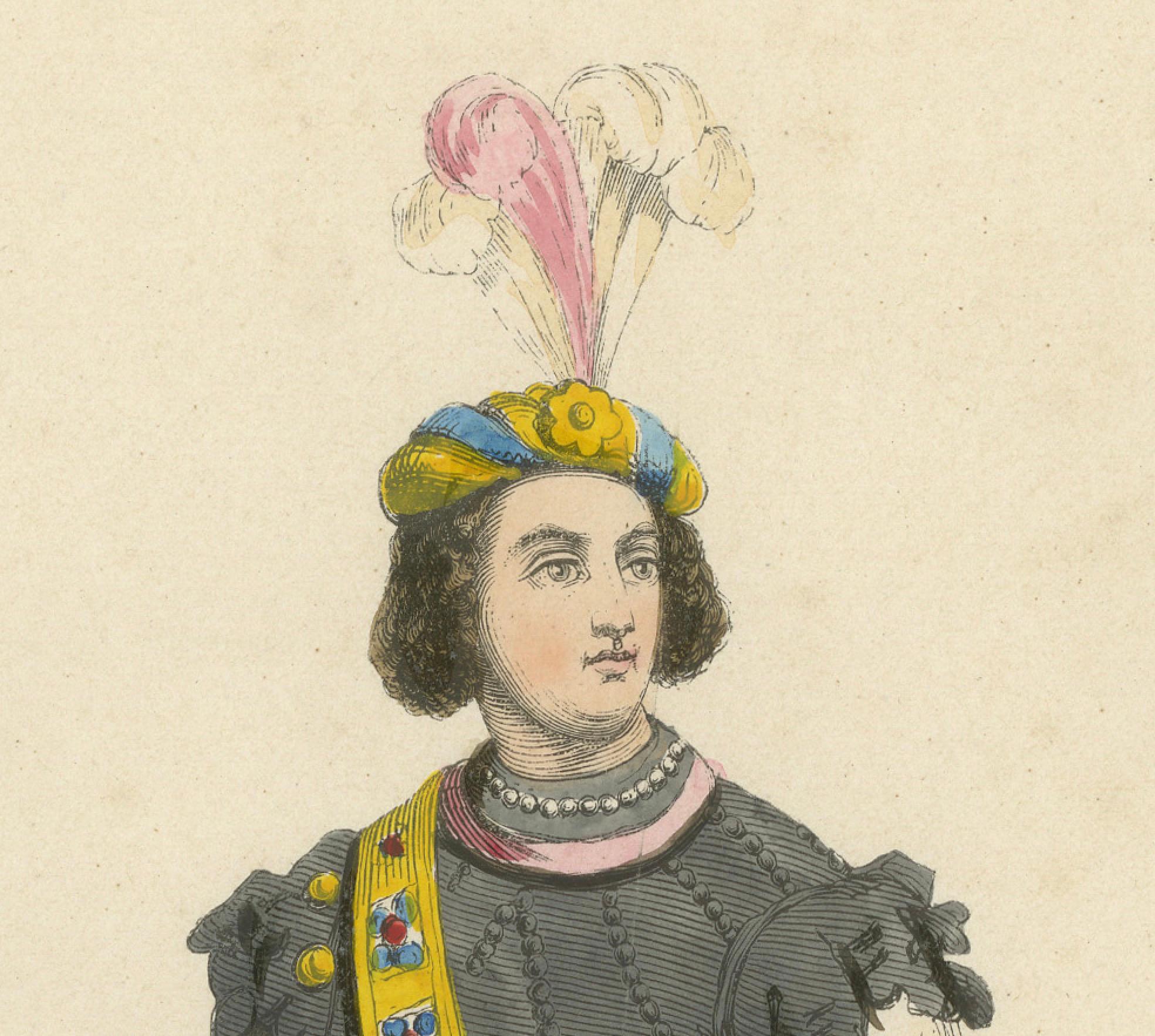
His attire is further adorned with a dramatic feathered hat, a fashionable statement piece of the time, which complements the elegance and bravado of his character. The feathers, in shades of pink and white, add a pop of color and flamboyance to his otherwise dark-toned attire.
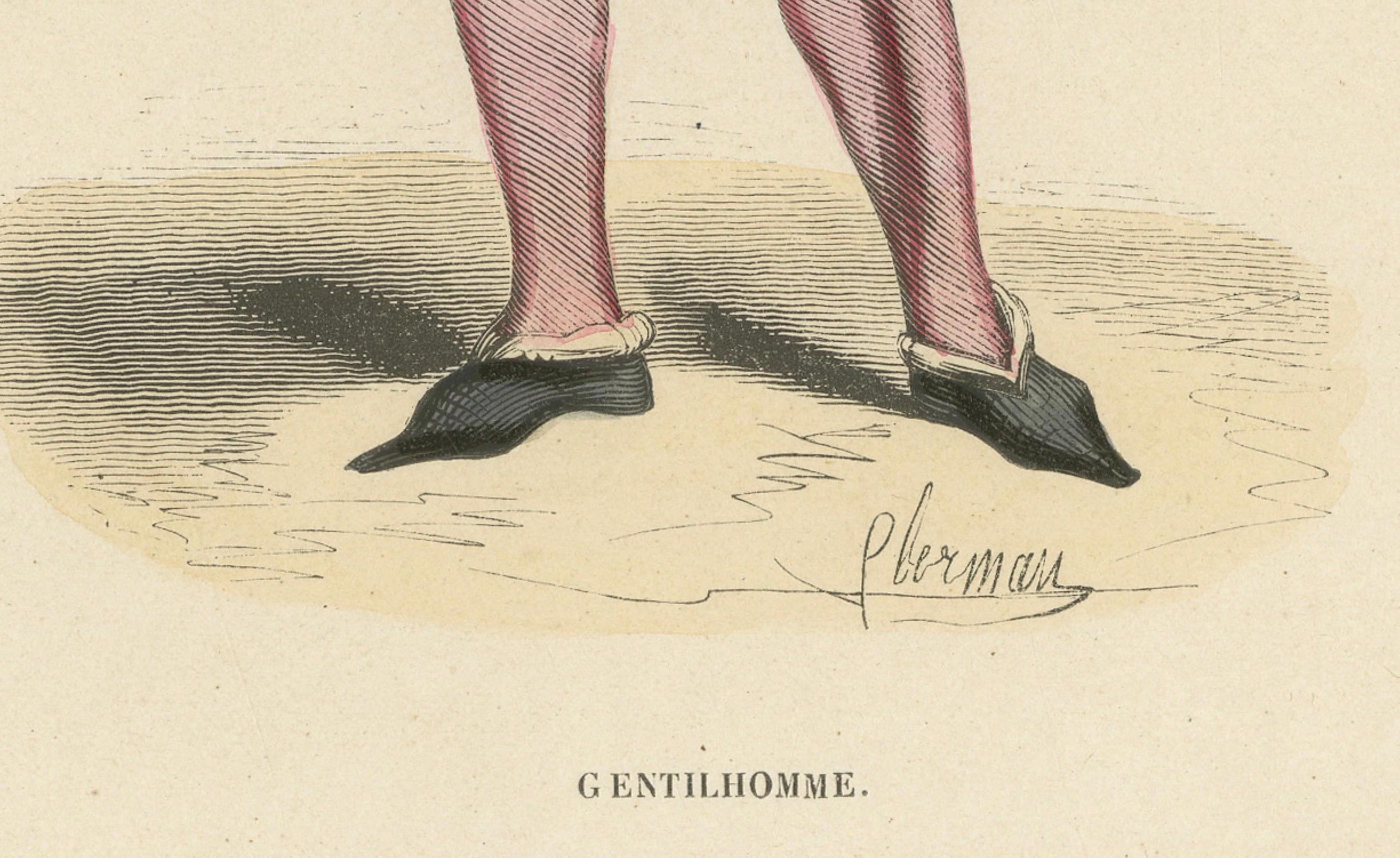
The nobleman's hose are in a bold shade of pink, fitting snugly to his legs and showcasing the muscular contours expected of a man of action. His shoes are pointed, a common trend of the era, and they match the color of his doublet, providing a cohesive look.
His posture is one of confidence and poise, with his head turned slightly, perhaps engaging with an unseen onlooker. The nobleman's face is framed by a neatly trimmed beard and mustache, and his expression is one of calm self-assurance.
This image is a rich visual representation of the clothing worn by a nobleman in the medieval period, reflecting the period's sartorial standards that combined functionality with ornate details to convey status and identity. The lithograph captures not only the fashion but also the demeanor and social standing of a gentleman of the court.
The colors have a nice glow over them. Historically, egg whites, known as glair, and sometimes egg yolk were indeed used in illumination and painting, particularly in manuscripts, to give colors a brighter appearance and to add a sheen or gloss to the work. This technique was quite common during the Middle Ages and into the Renaissance.
Egg whites can be applied as a varnish over pigments to enhance their brightness and to protect the colors. This application could make the colors appear more vivid and also add a slight glossy sheen to the surface of the image.
Egg yolk, on the other hand, was commonly used as a binding agent in paint. It forms the basis of tempera paint, a medium that was widely used before the advent of oil painting. Egg yolk helps to create a durable and long-lasting color that adheres well to various surfaces.
In the context of the print from 1847, it's less likely that egg whites or yolks were used directly on the print, as by that time, commercial printing processes would have been more advanced and less reliant on such manual methods. However, if this print is a representation of an earlier style or is meant to mimic the appearance of hand-painted manuscripts, the original artists might have employed techniques or materials that gave a similar effect to those achieved with egg-based binders and varnishes.