About this sheet
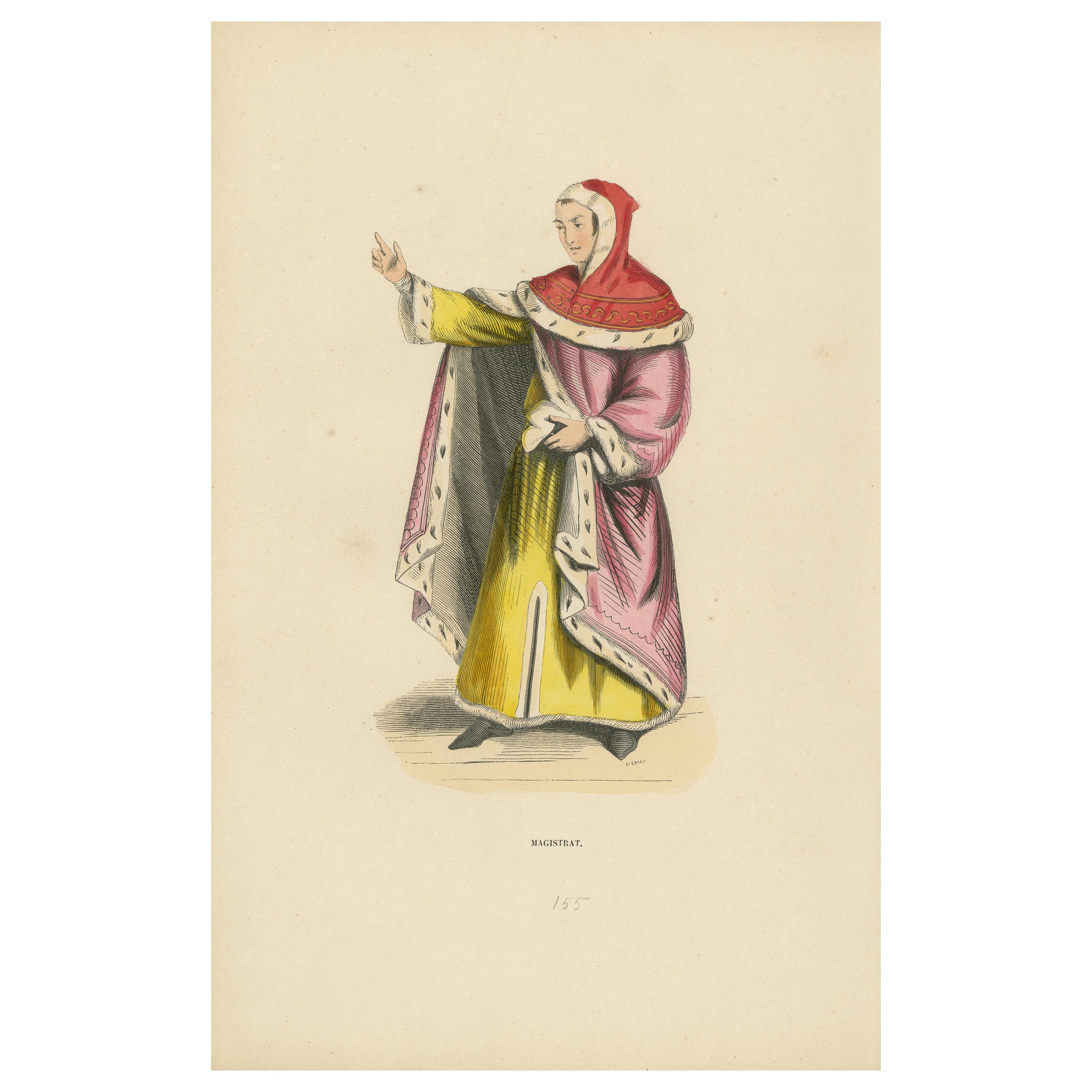
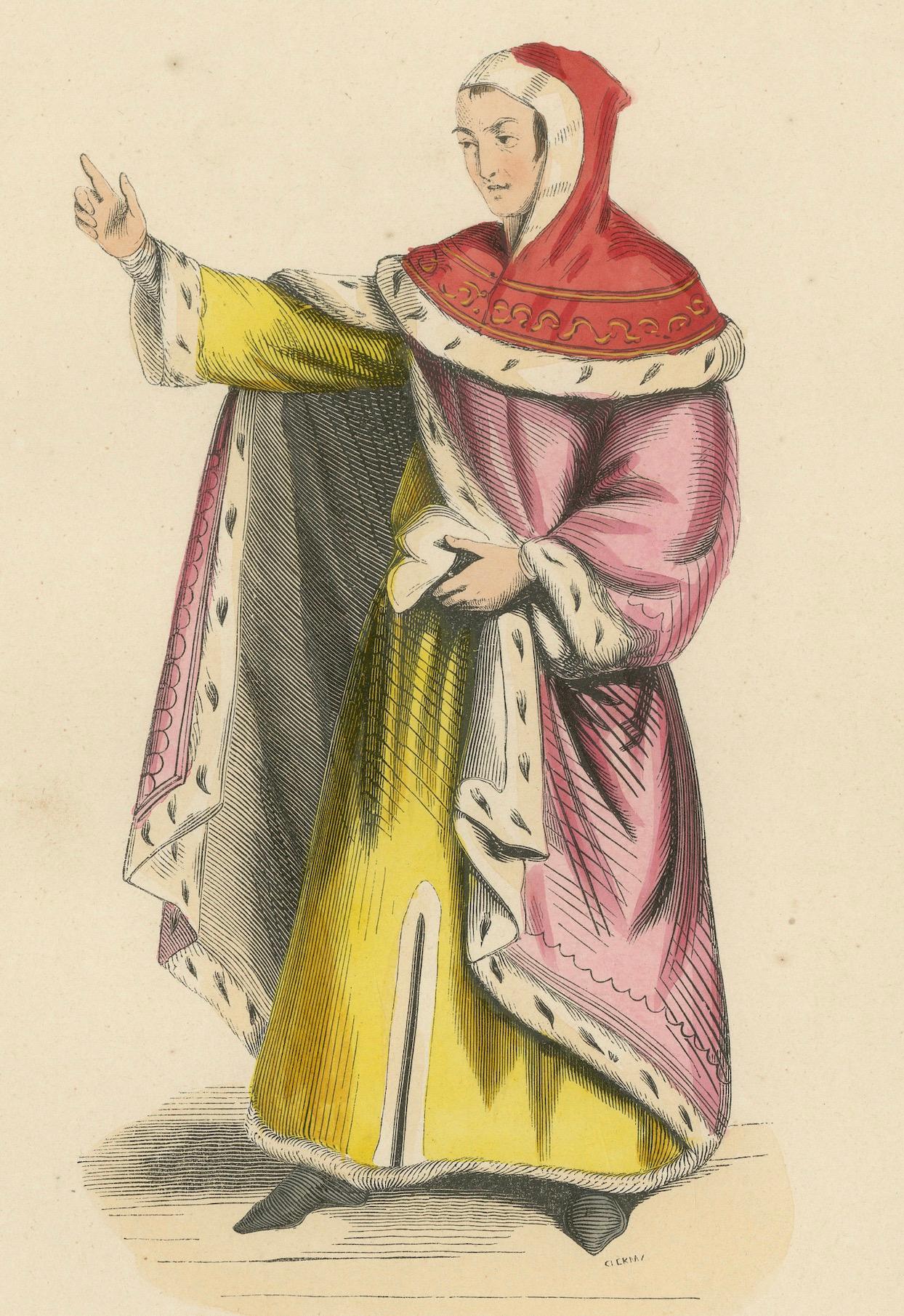
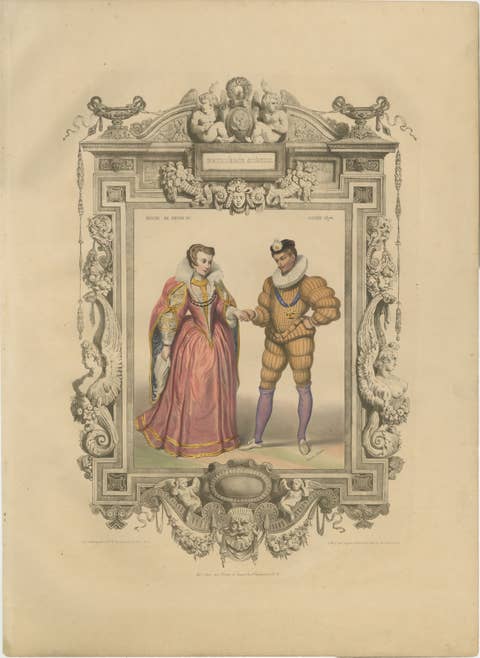
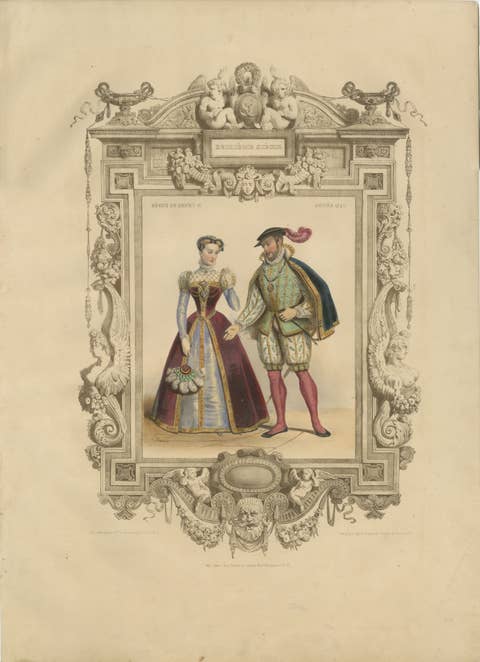
This lithograph, originating from the mid-19th century "Costume du Moyen Âge" series, presents a magistrate clothed in official judicial regalia. The figure is depicted gesturing with an outstretched arm, perhaps in the act of delivering a verdict or addressing a courtroom.
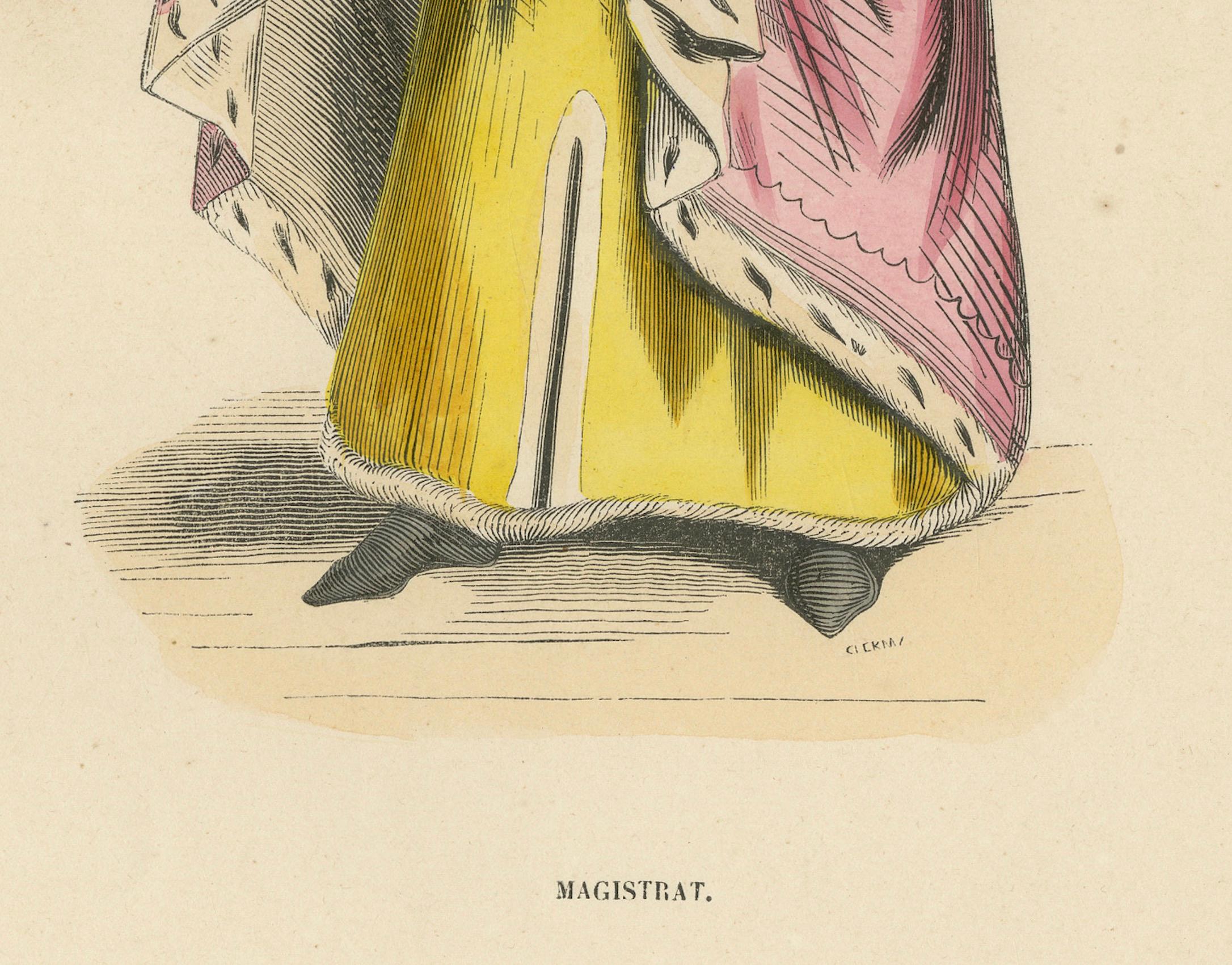
The magistrate's robe is a rich tapestry of color and detail, indicative of his high status in the legal hierarchy. The outer garment is a vibrant crimson, lined with ermine, a symbol of authority and justice. A golden-yellow under-robe, visible beneath the crimson outer layer, adds to the opulence of the ensemble, featuring elaborate designs that likely signify the magistrate's legal jurisdiction or personal coat of arms.
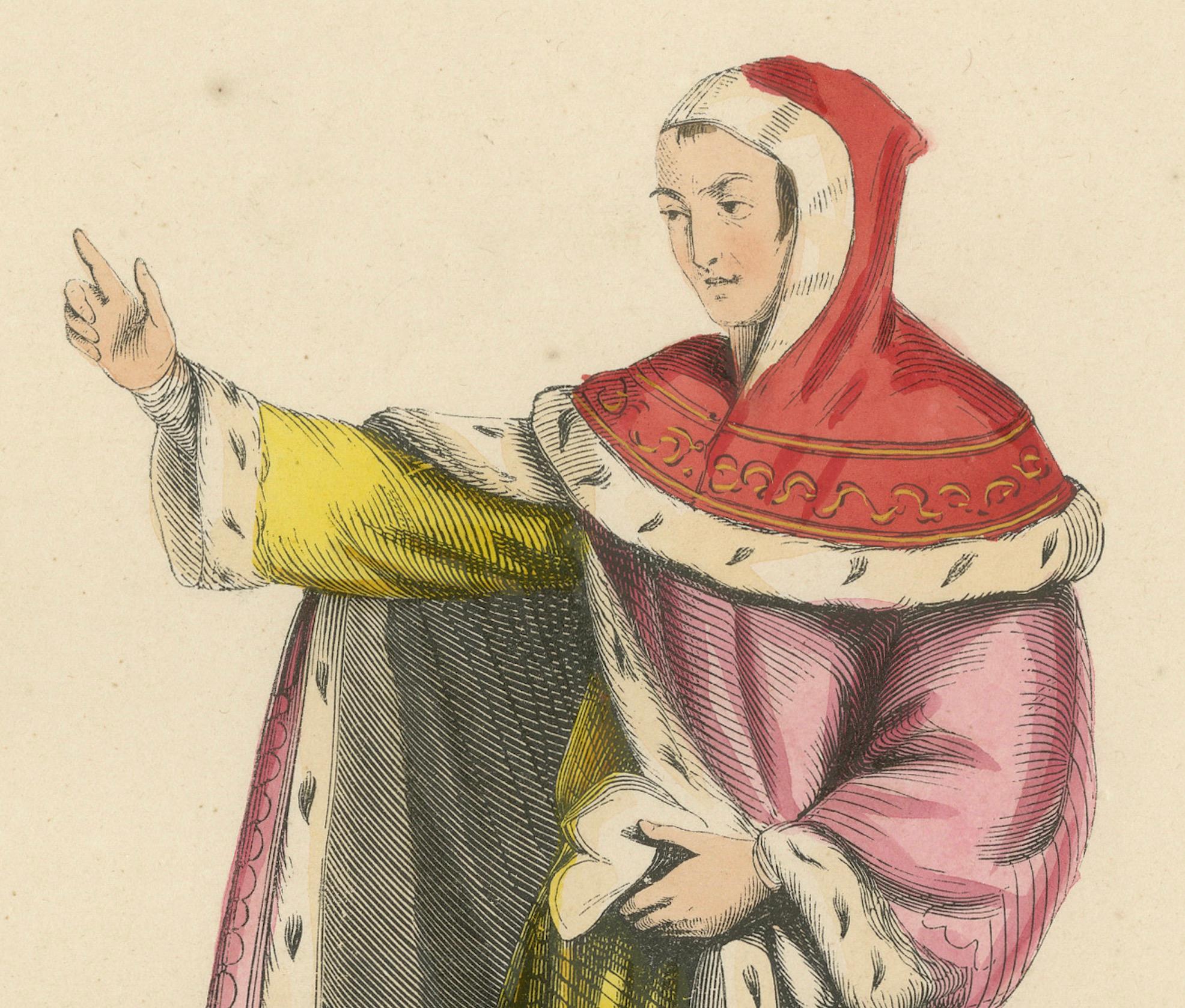
A red cap, trimmed with gold, adorns his head, marking his office and complementing the color scheme of his attire. The cap's shape and style align with the fashion of the day for those in positions of governance and law.
His expression is solemn and thoughtful, befitting the seriousness of his role in administering justice. The meticulous detailing of his robes, from the fur lining to the intricate patterns, reflects the respect and esteem granted to legal officials in the Middle Ages.
This image not only captures the fashion of a magistrate of the period but also serves as a visual testament to the esteemed position such legal figures held in society. It underscores the importance of dress as a reflection of societal roles and the rule of law during the medieval era.
The colors have a nice glow over them. Historically, egg whites, known as glair, and sometimes egg yolk were indeed used in illumination and painting, particularly in manuscripts, to give colors a brighter appearance and to add a sheen or gloss to the work. This technique was quite common during the Middle Ages and into the Renaissance.
Egg whites can be applied as a varnish over pigments to enhance their brightness and to protect the colors. This application could make the colors appear more vivid and also add a slight glossy sheen to the surface of the image.
Egg yolk, on the other hand, was commonly used as a binding agent in paint. It forms the basis of tempera paint, a medium that was widely used before the advent of oil painting. Egg yolk helps to create a durable and long-lasting color that adheres well to various surfaces.
In the context of the print from 1847, it's less likely that egg whites or yolks were used directly on the print, as by that time, commercial printing processes would have been more advanced and less reliant on such manual methods. However, if this print is a representation of an earlier style or is meant to mimic the appearance of hand-painted manuscripts, the original artists might have employed techniques or materials that gave a similar effect to those achieved with egg-based binders and varnishes.