About this sheet
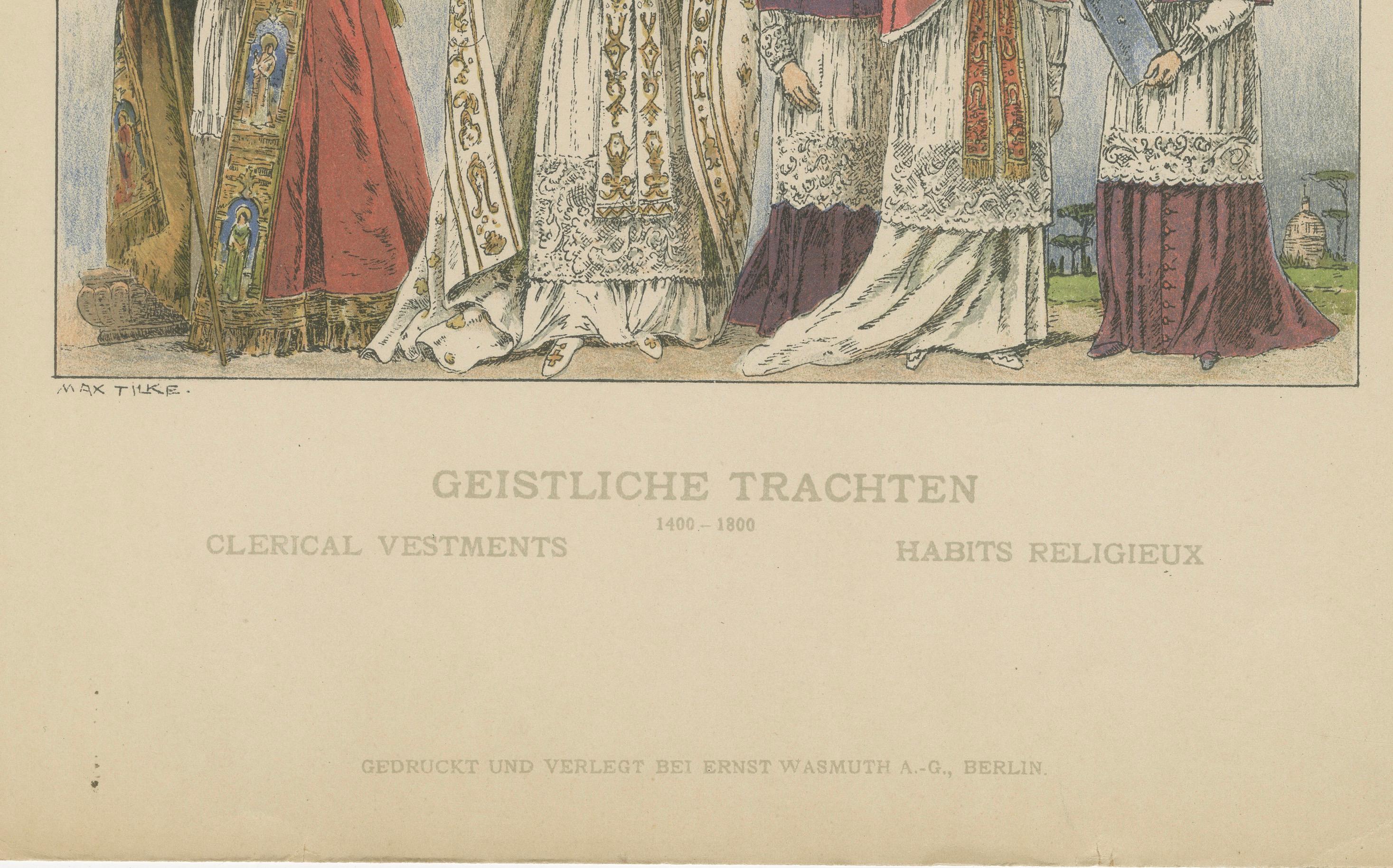
Clerical Vestments 1400–1800, Antique Hand-Colored Ecclesiastical Print
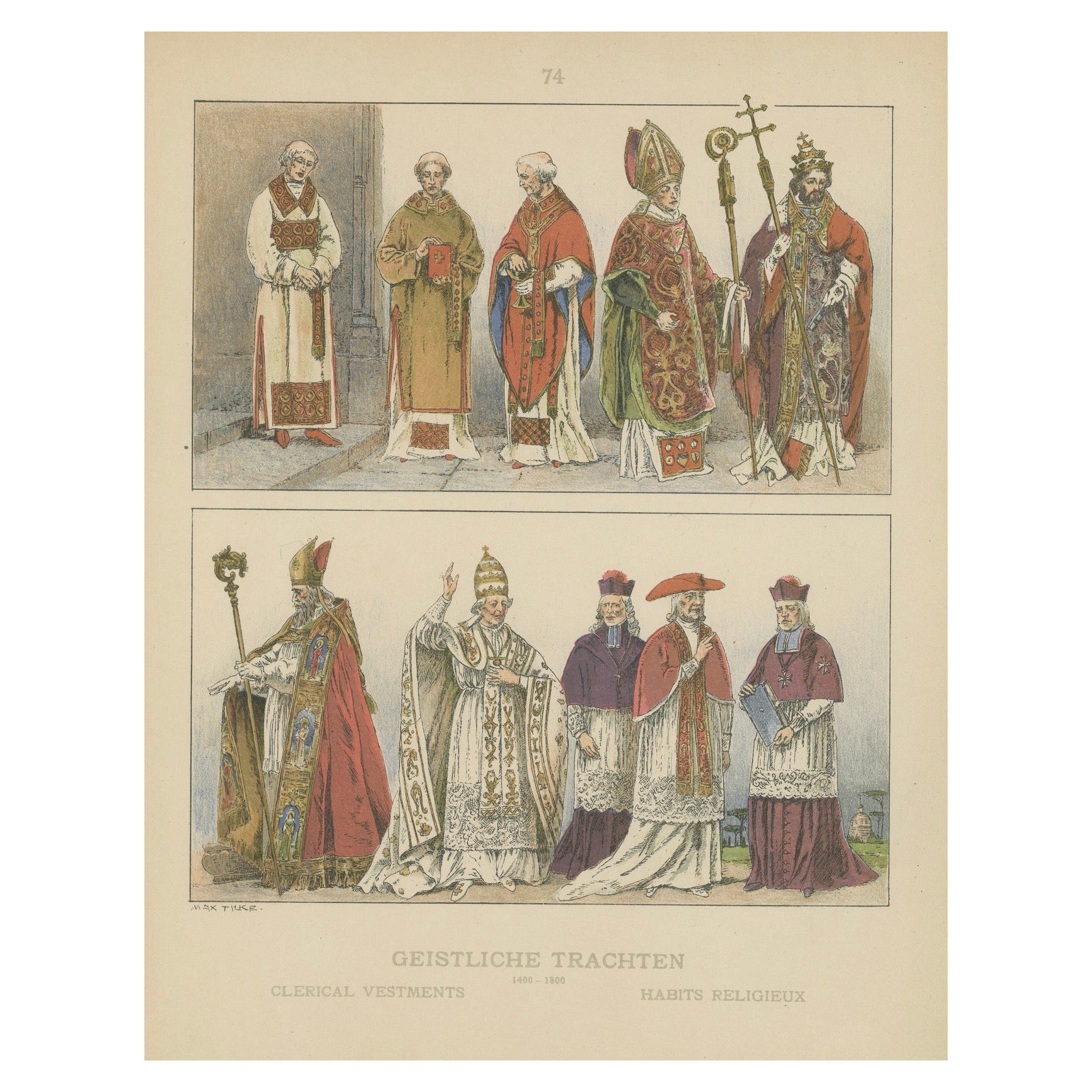
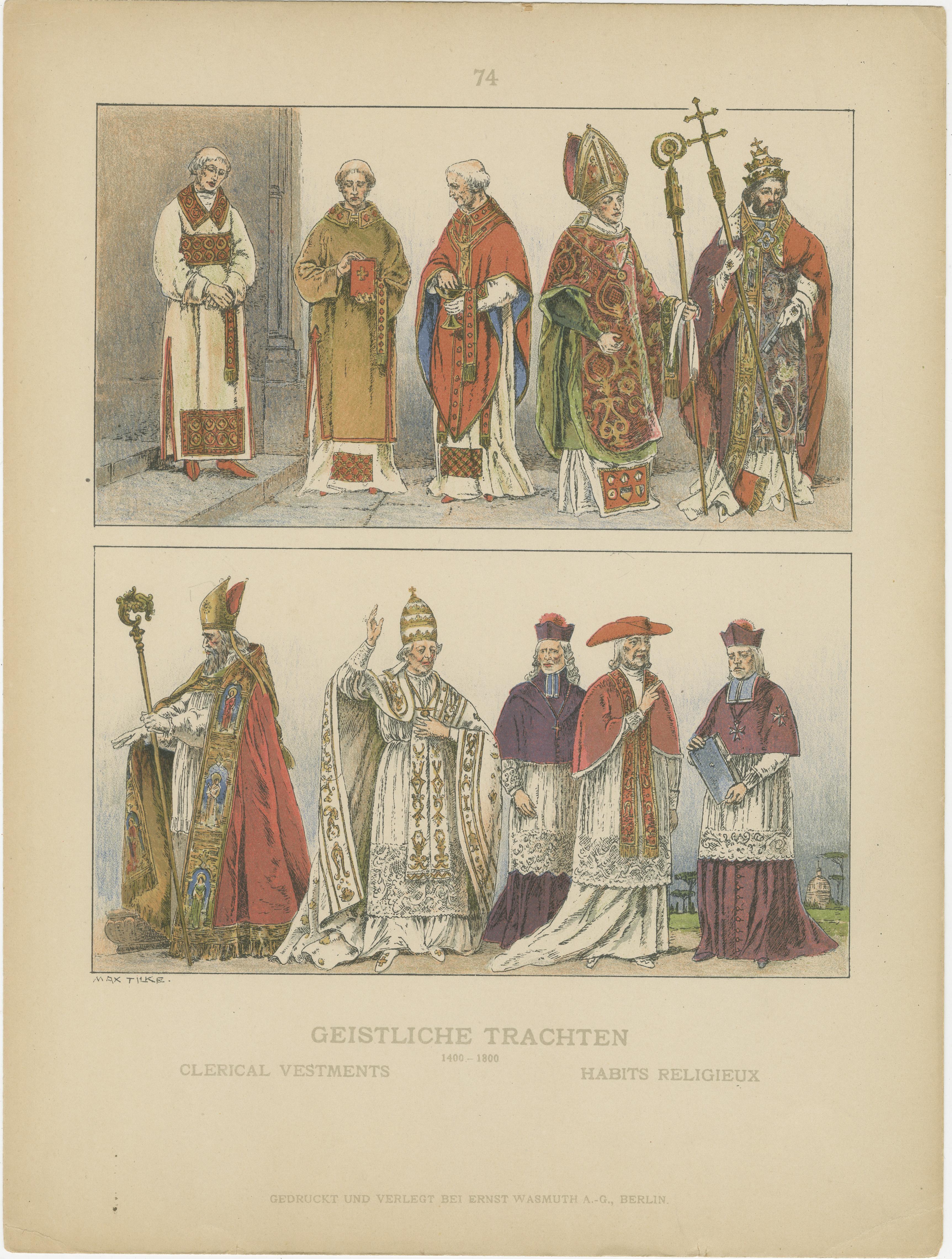
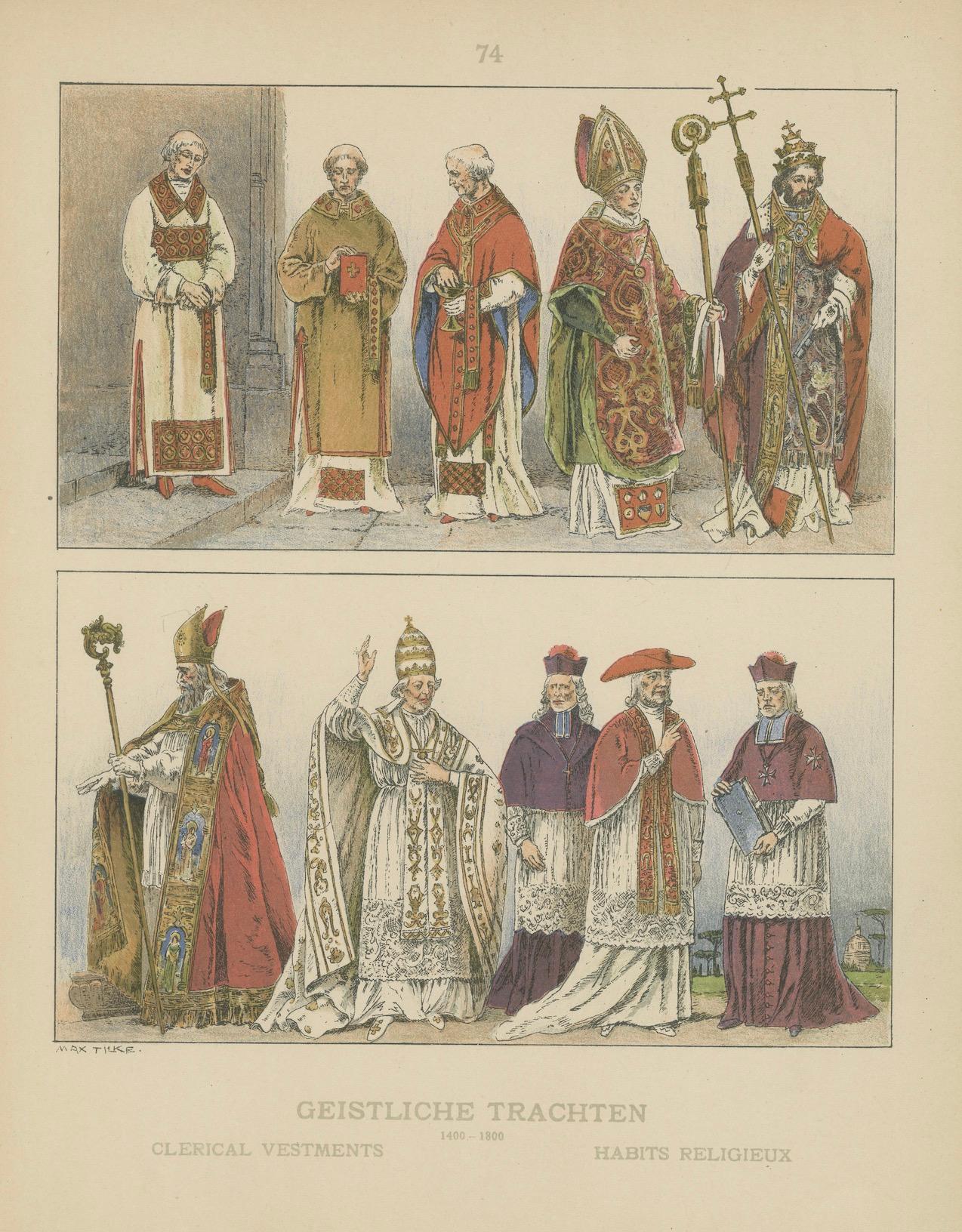
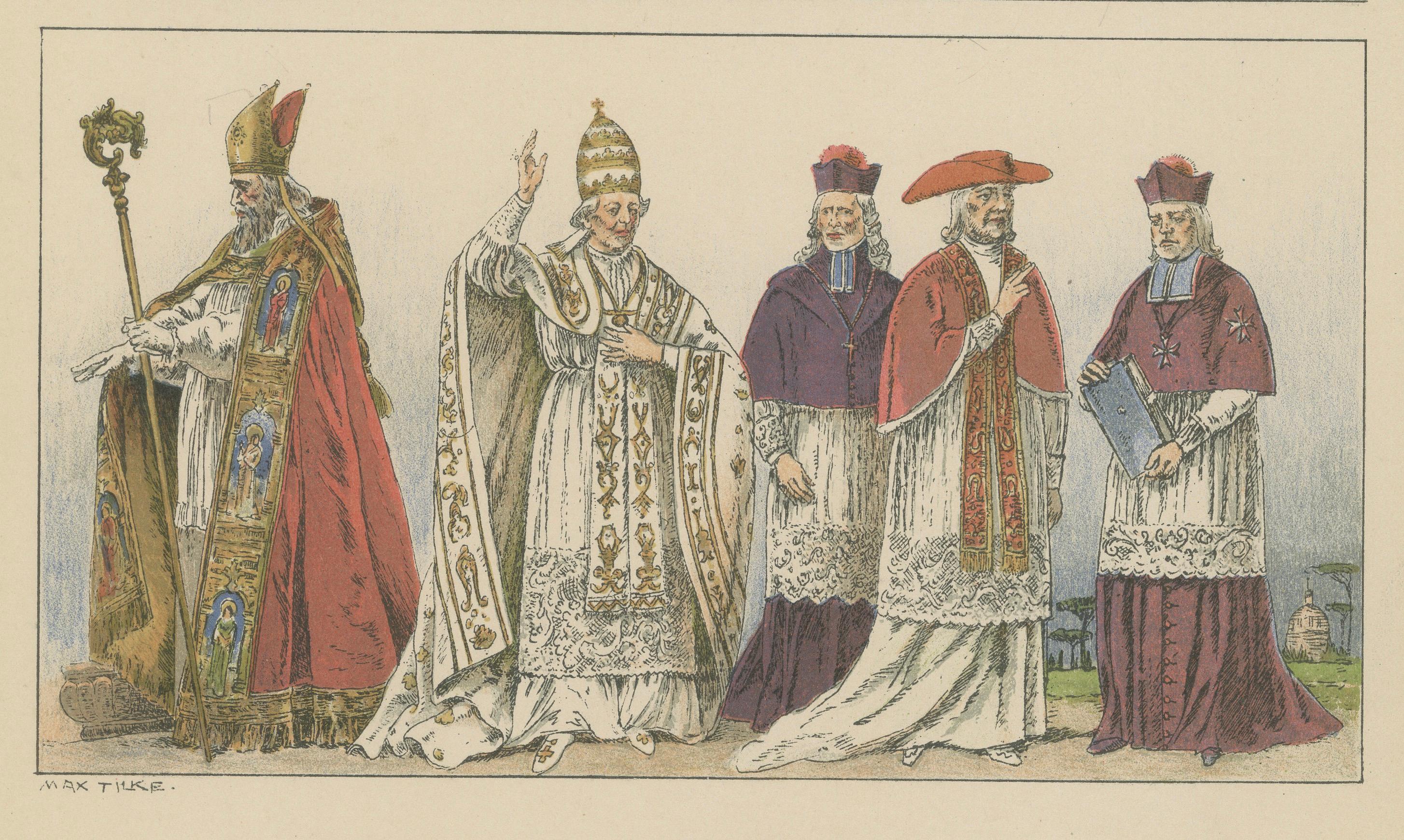
This richly detailed antique costume plate illustrates the evolution of clerical vestments between 1400 and 1800, offering a vivid and authoritative overview of ecclesiastical dress from the late medieval period through the Baroque and early modern eras. Drawn by Max Tilke and printed by Ernst Wasmuth A.-G. in Berlin, the plate showcases the elaborate textiles, symbolic garments, and liturgical accessories worn by high-ranking clergy in the Western Church. Its precise hand-coloring and accurate representation make it both a valuable historical document and an elegant decorative artwork.
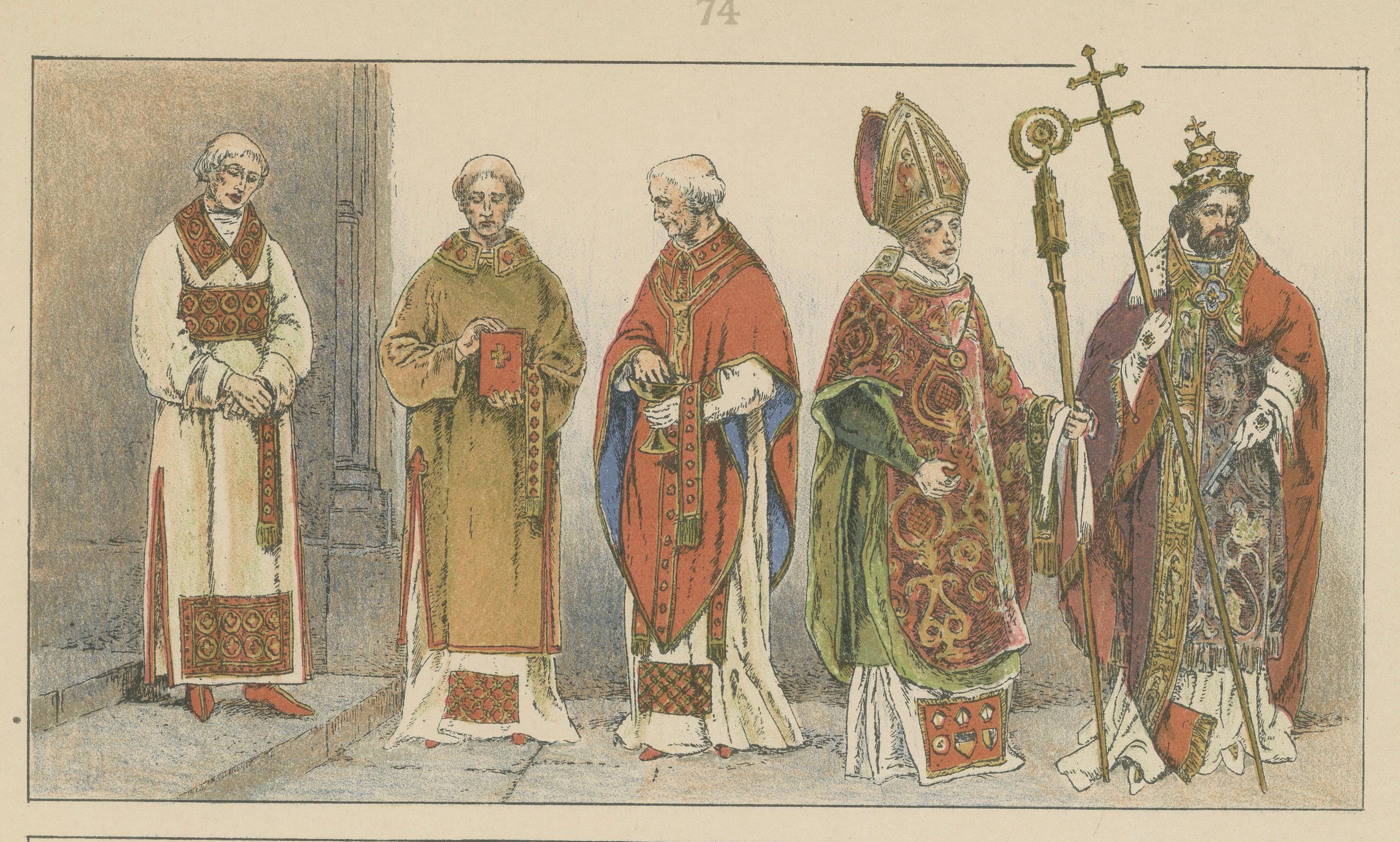
The upper register features a line of clergy dressed in increasingly elaborate vestments. The simpler garments of earlier centuries—stoles, dalmatics, and chasubles—gradually give way to more ornate pieces displaying embroidered panels, jeweled borders, and heavy ecclesiastical capes. Toward the right, richly attired bishops and archbishops appear with miters, croziers, and ceremonial gloves, illustrating the rising visual splendor of church hierarchy.
The lower register displays the height of ecclesiastical magnificence. A bishop wears a cope decorated with panels depicting saints, while the pontiff stands in the center in ceremonial papal attire, complete with tiara, elaborate lace, and gold-trimmed vestments. Cardinals and prelates in purple and red stand to the right, reflecting the increasingly codified color system associated with rank and liturgical function. This array highlights the Church’s central role as a cultural, political, and artistic power throughout the early modern period.
Collectors of ecclesiastical art, historical costume, religious iconography, or museum-quality prints will appreciate the plate’s combination of scholarly accuracy and decorative richness. It displays exceptionally well in libraries, offices, and classical or ecclesiastical interiors.
Condition report: Good antique condition with gentle toning and minor edge wear. A few faint spots in the margins as expected for age. Image area clean and colors vivid. No tears or repairs.
Framing tips: A warm cream or parchment mat brings out the deep reds, greens, and golds of the vestments. A gilt frame emphasizes the ecclesiastical grandeur, while a darker wood frame such as walnut adds a refined, scholarly tone. Floating the sheet preserves the imprint and enhances its museum-quality presence.
Technique: Hand-colored lithograph
Maker: Max Tilke, printed by Ernst Wasmuth A.-G., Berlin, c.1880