Polish Royal & Noble Costume Engravings, Hand-Colored Set of 4, 1749
€ 990
Original antique · The actual sheet photographed · Certificate of authenticity on request · Sold unframed · Worldwide shipping from € 15 (rates)
Date
1749
Mapmaker / artist
European School, circa 1749
Technique
Copper engravings with original hand-coloring
Sheet size
32.1 × 24.9 cm (12.6 × 9.8 in)
Condition
Good
Reference
BG-14276-93, -94, -95, -96
What the condition grades mean
Excellent
Bright and clean, with no faults worth mentioning.
Very good
Only light signs of age, such as faint toning.
Good
Normal signs of age for a sheet of this period: toning, some foxing, small marks or neat old repairs.
Fair
Clear faults such as staining, tears or repairs, priced to match.
Every fault we see is written in the condition note, and the whole sheet is shown uncropped in the photos.
Condition
Good condition overall with age-related toning, scattered minor spotting, and occasional edge wear consistent with age. Wide margins preserved throughout. Original hand-coloring remains fresh and attractive.
About this sheet
Polish Royal & Noble Costume Engravings, Hand-Colored Set of 4, 1749
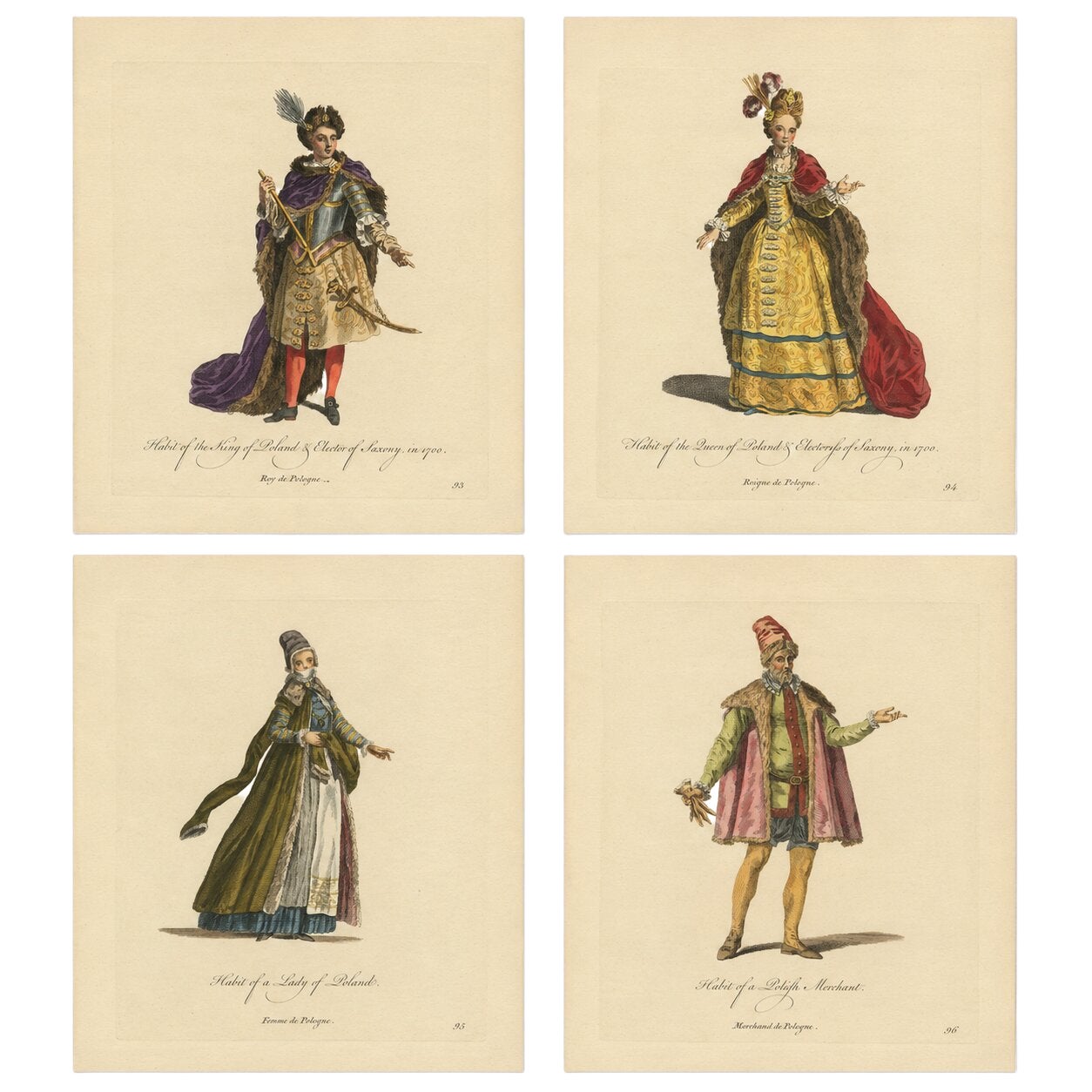
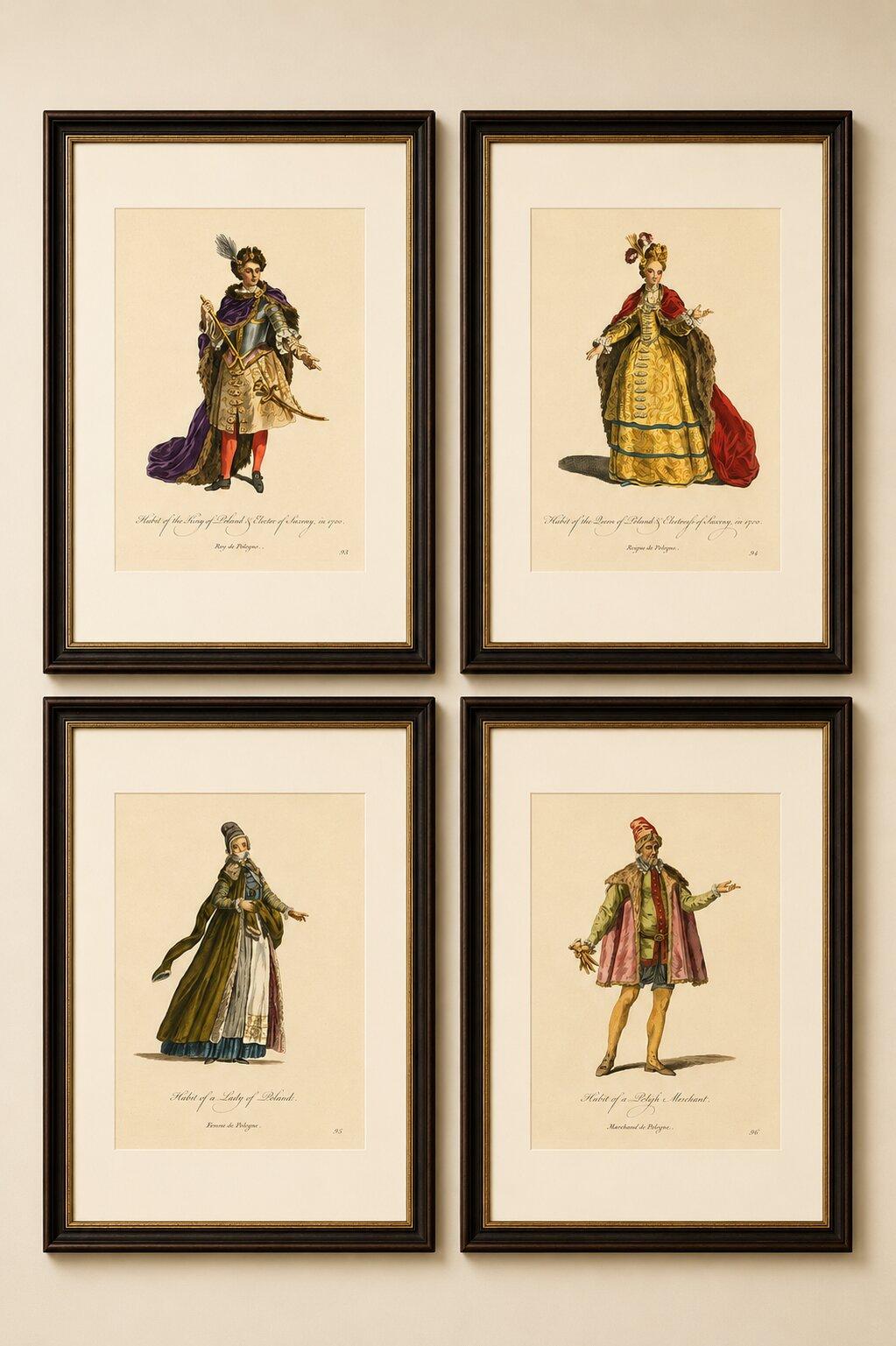
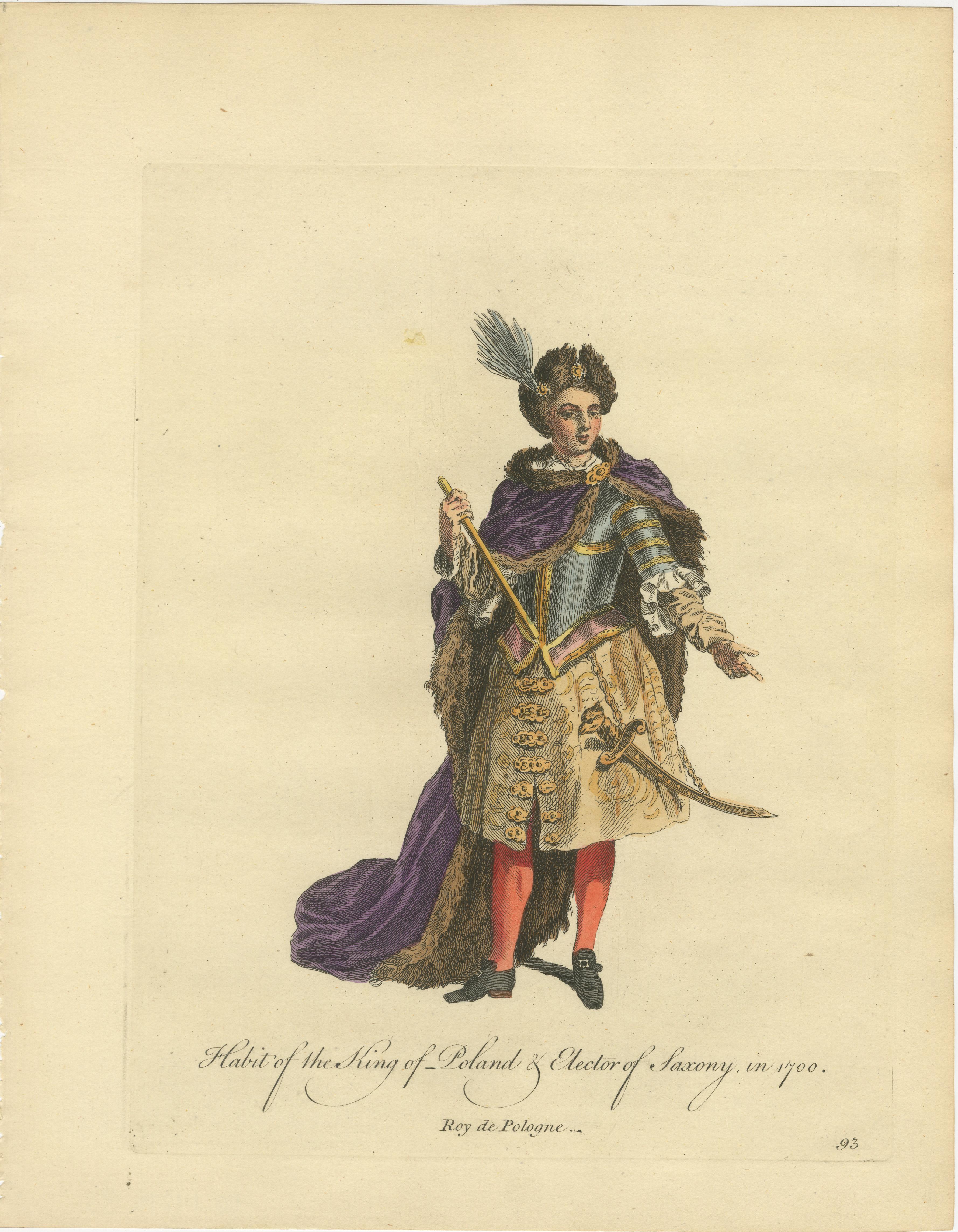
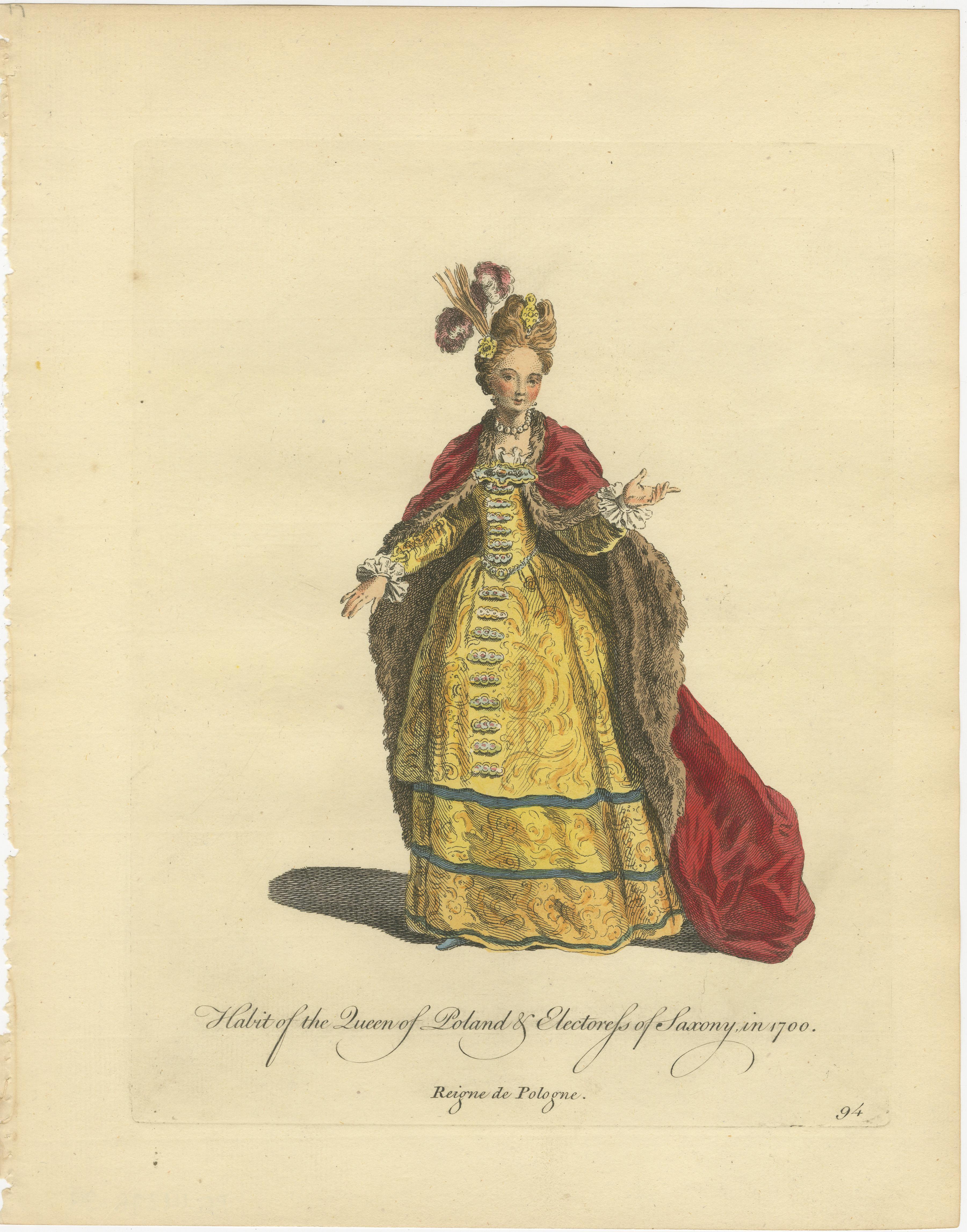
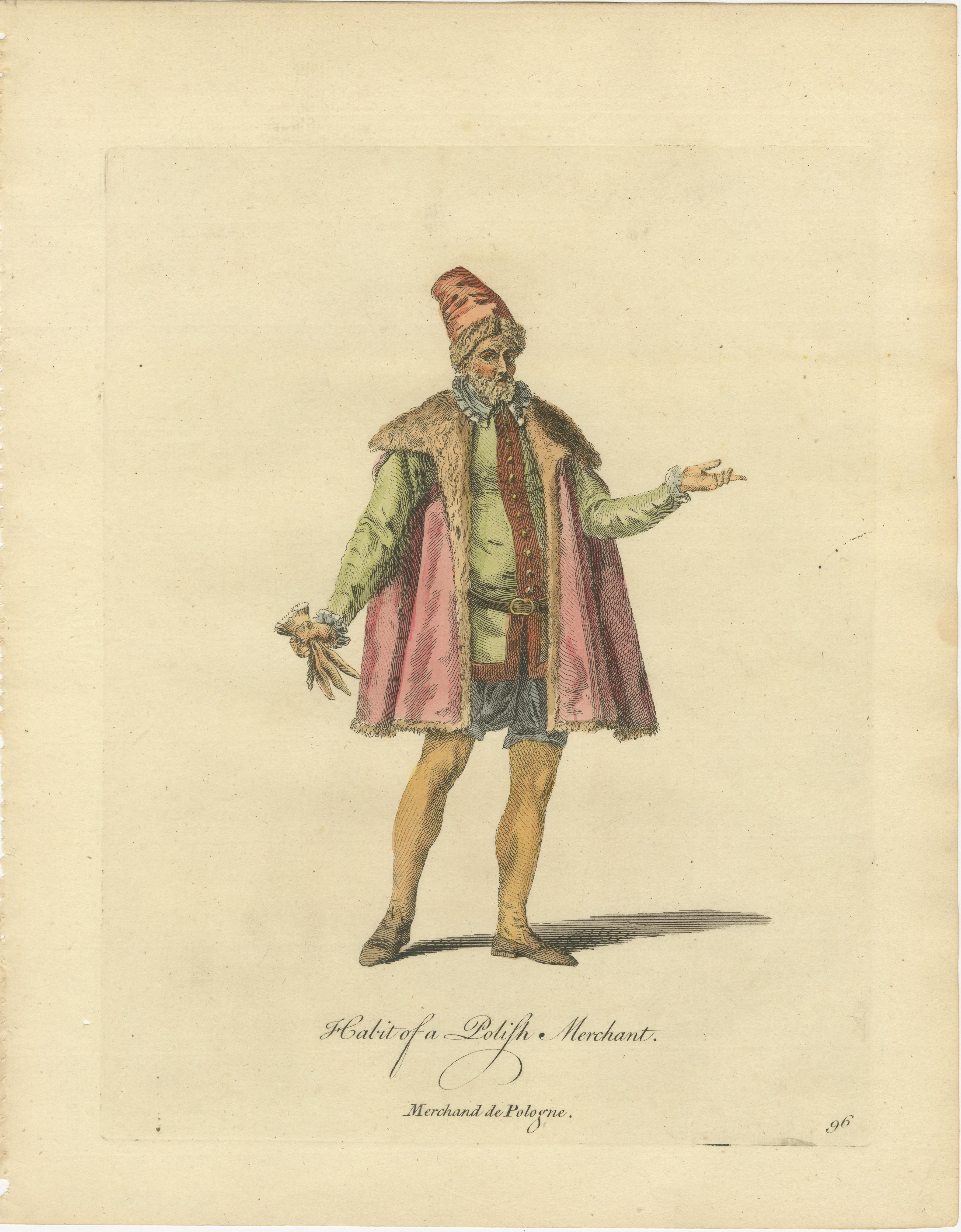
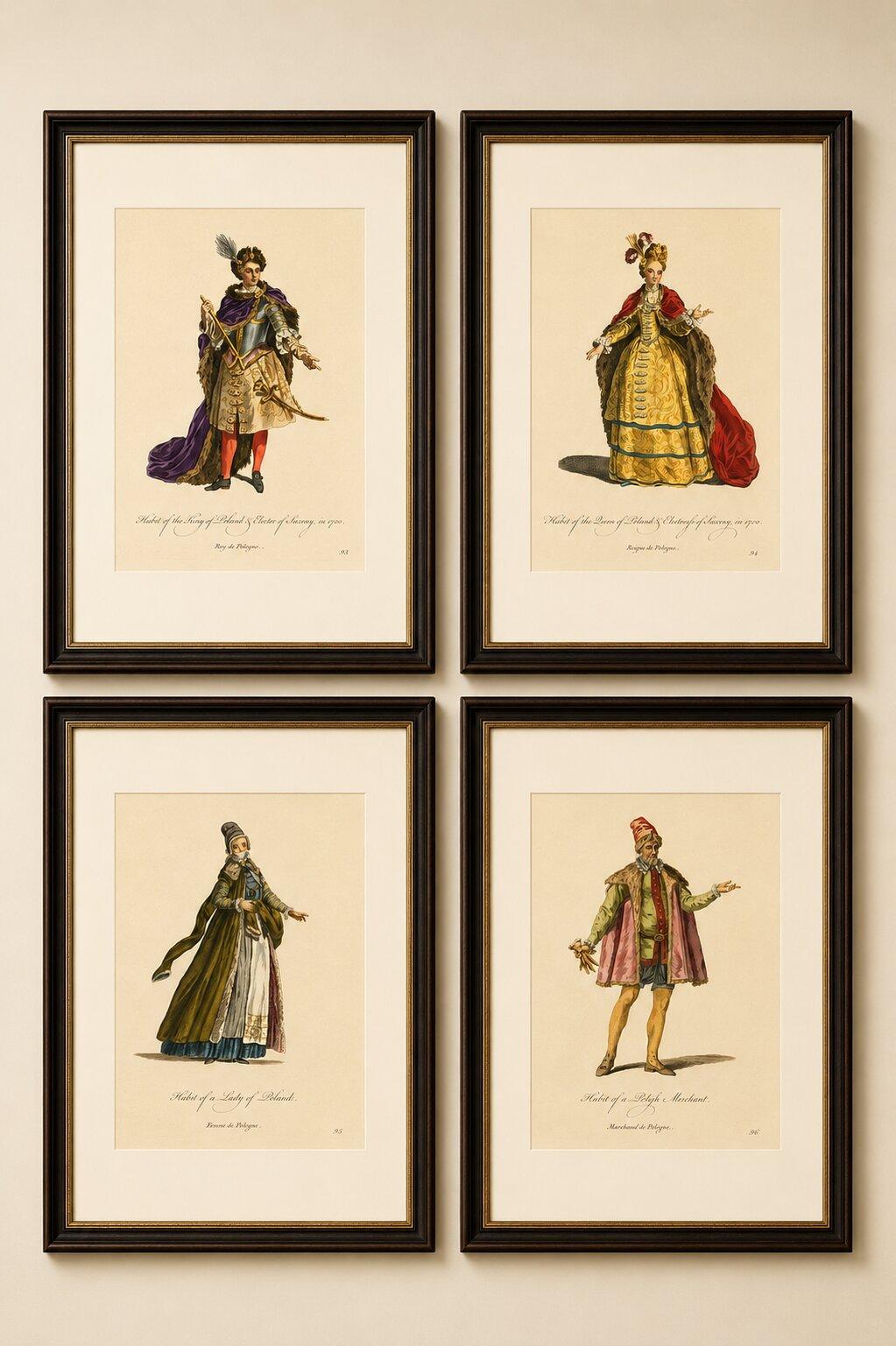
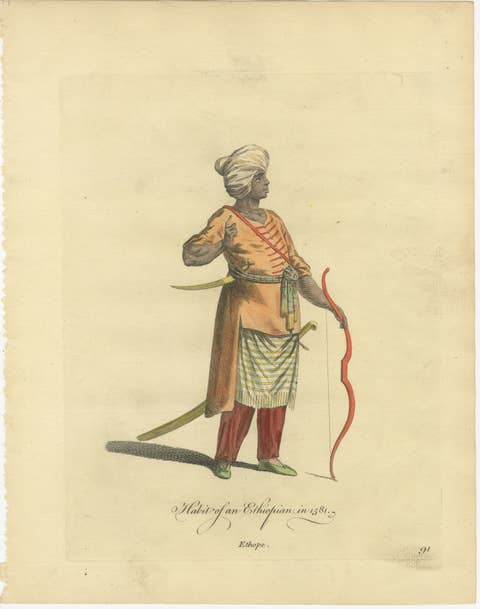
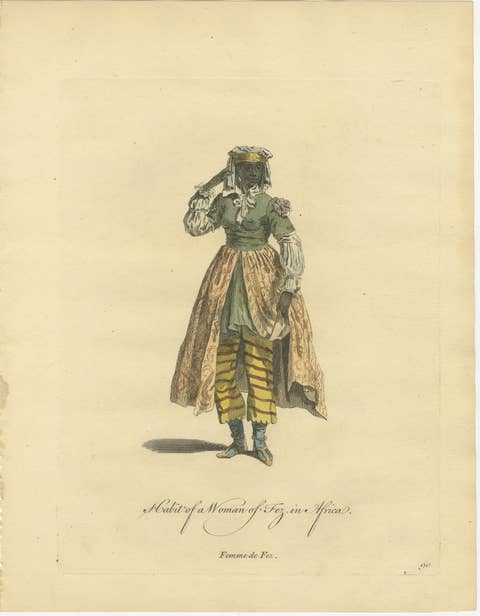
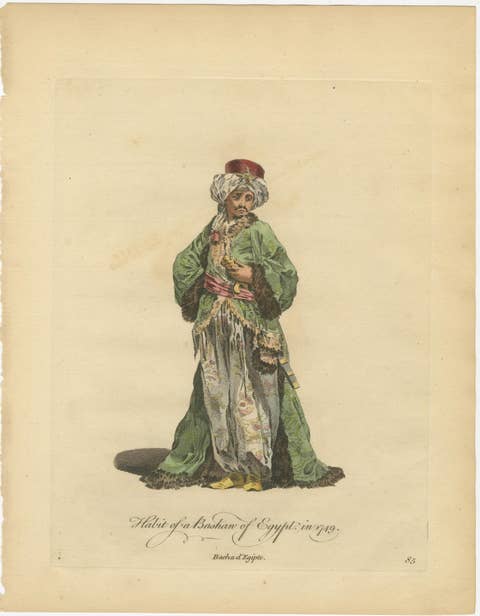
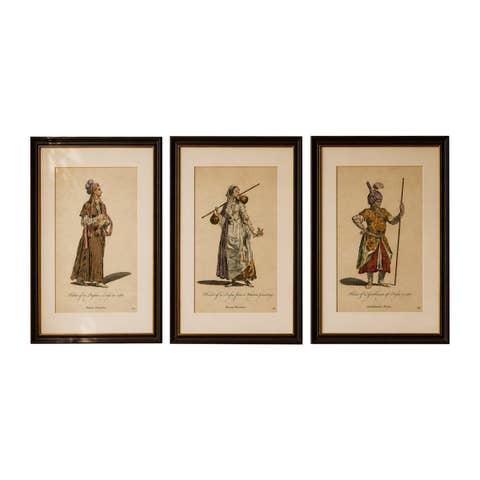
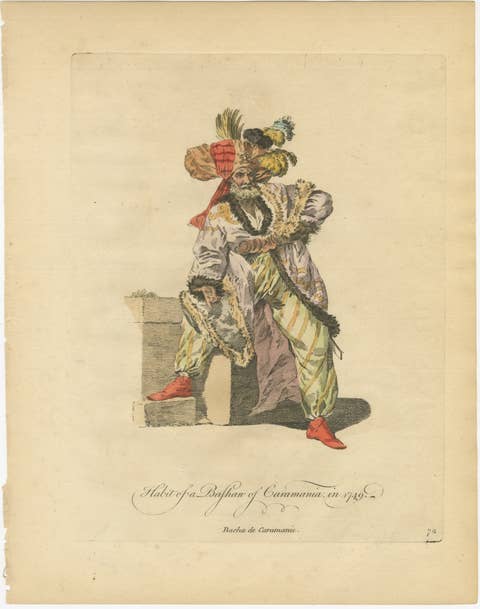
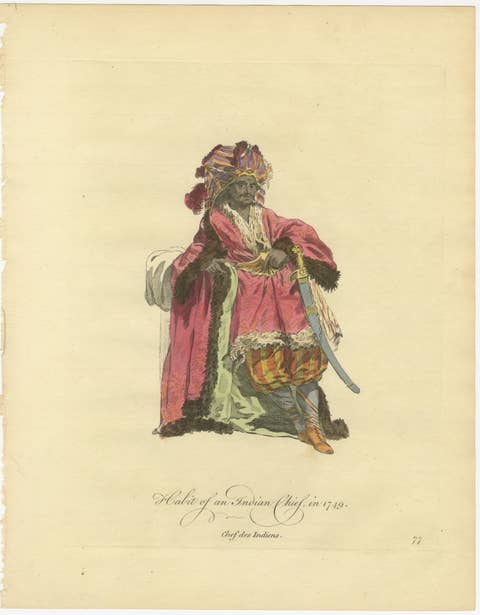
This elegant set of four mid-18th century hand-colored costume engravings depicts members of Polish society and the royal court in richly detailed ceremonial dress. The engravings include the “Habit of the King of Poland & Elector of Saxony, in 1700,” the matching “Habit of the Queen of Poland & Electress of Saxony, in 1700,” alongside a “Habit of a Lady of Poland” and a “Habit of a Polish Merchant.” Together, the series presents a fascinating visual survey of aristocratic and bourgeois costume in early 18th-century Poland during the Saxon dynasty.
Produced around 1749 by the European School, these finely engraved plates belong to the great European tradition of costume books that documented the clothing, customs, and appearance of peoples across the world. Such engravings were highly fashionable among Enlightenment-era collectors and were admired for both their ethnographic interest and decorative appeal. The hand-coloring remains especially attractive, with vivid purples, reds, golds, greens, and fur textures bringing the elaborate garments to life.
The royal figures likely represent Augustus II or Augustus III and their consorts, rulers who united the crowns of Poland and Saxony. Their costumes combine Western European court fashion with distinctive Polish influences, including fur-lined mantles, richly embroidered robes, plumed headdresses, and ceremonial sabers. The inclusion of a noblewoman and merchant broadens the social perspective of the series and gives the set additional historical and decorative interest.
The compositions are strikingly elegant due to the generous blank margins surrounding each figure, creating a refined and highly modern presentation despite their 18th-century origin. Framed together, the prints form an exceptional decorative ensemble suitable for libraries, studies, dressing rooms, or sophisticated traditional interiors. The matching format and numbering further enhance their appeal as a complete set rather than individual plates.
Framing tips: This set works beautifully framed together in matching dark walnut, ebonized, or gilt frames with wide ivory mats. Their elegant proportions and restrained compositions lend themselves especially well to a museum-style grouped presentation.
Note: These prints are original antique engravings, not reproductions. The pieces are sold unframed; any framed images are shown for presentation and interior inspiration only and may not always be to scale.