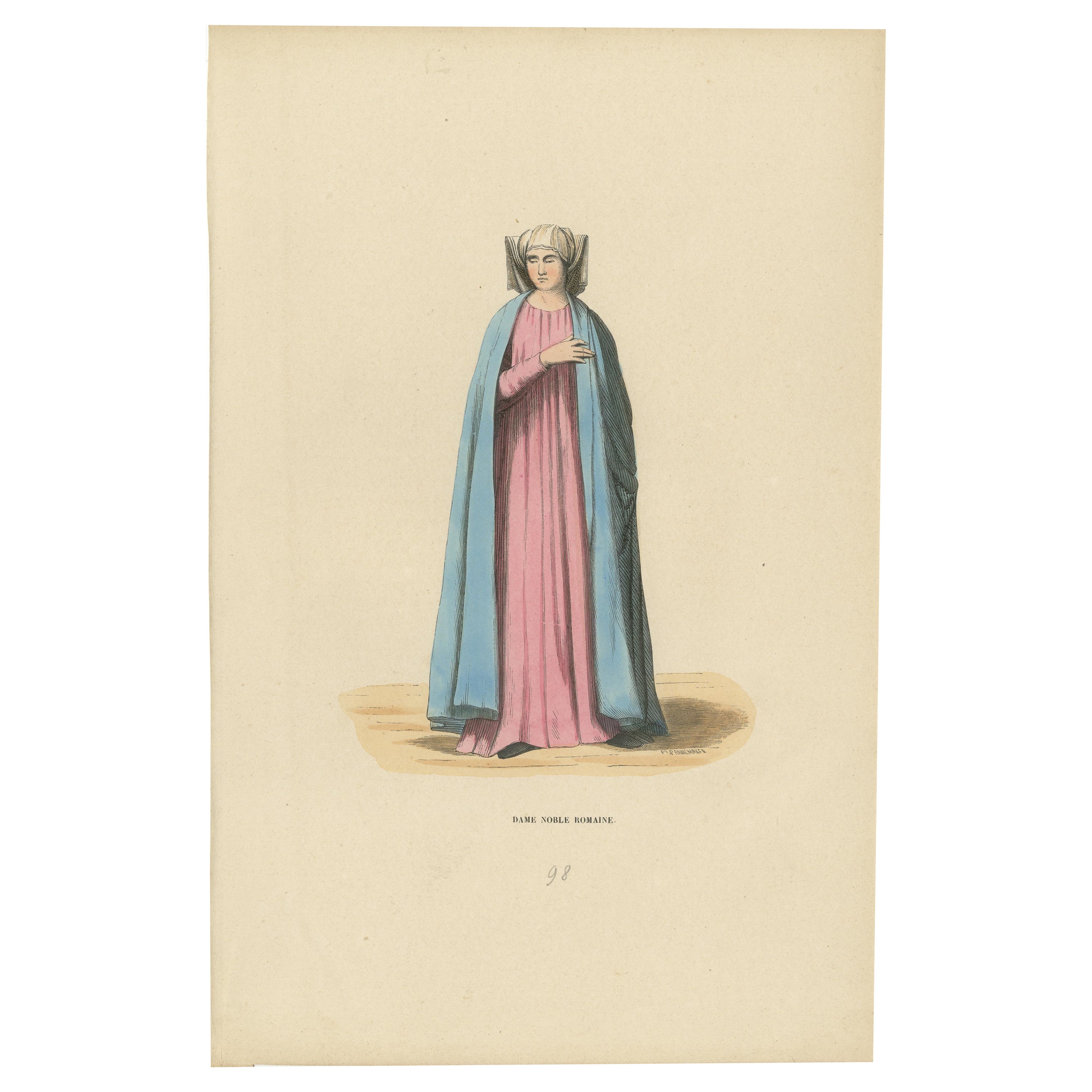
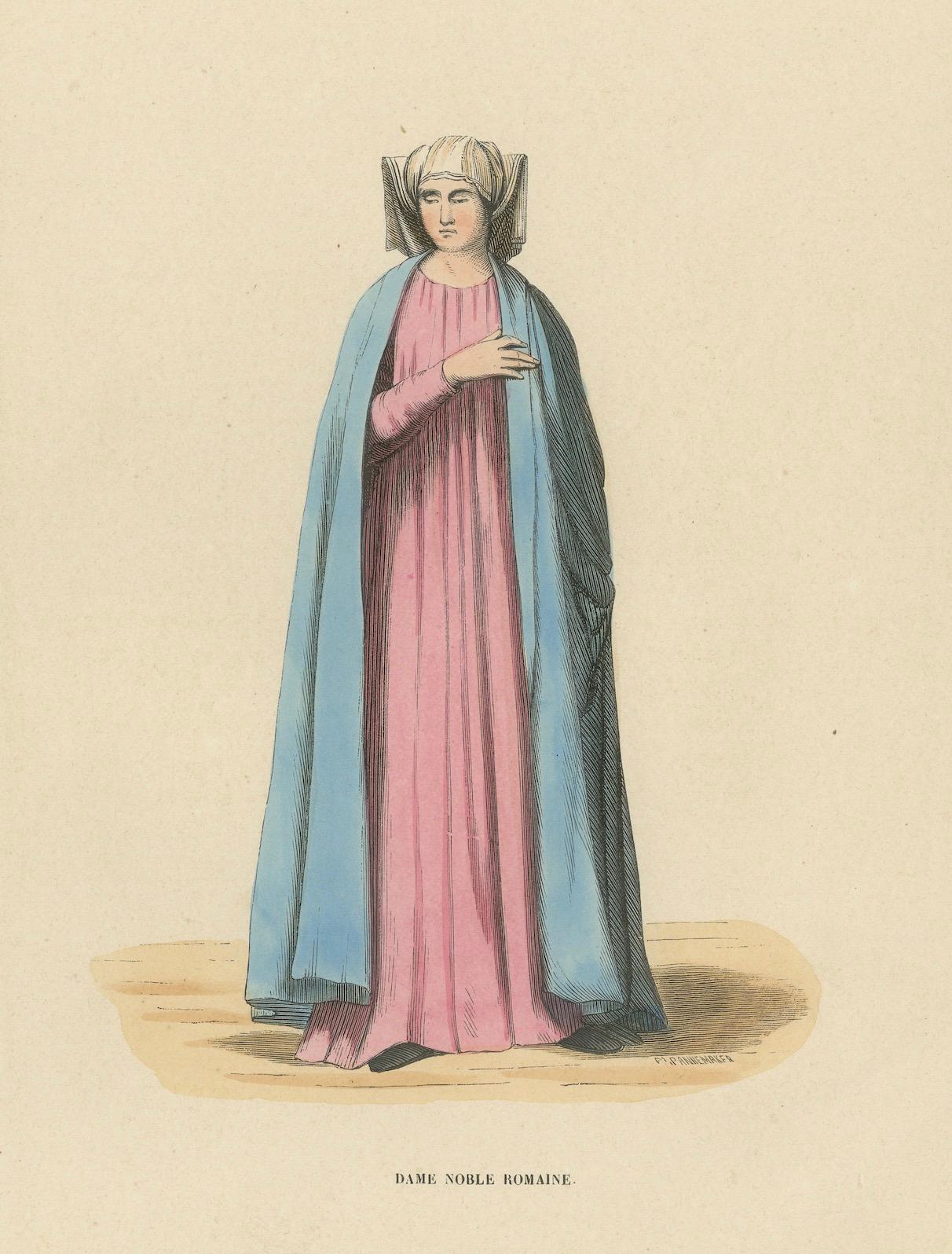
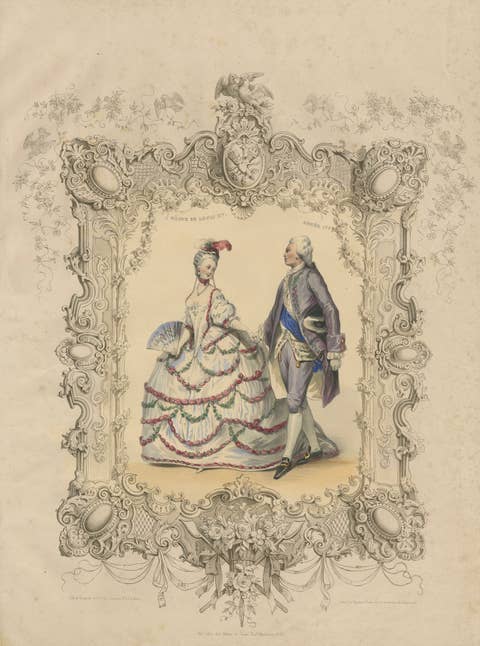
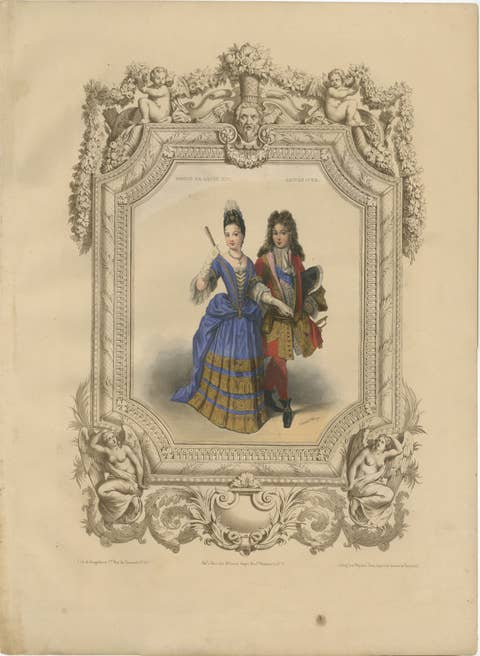
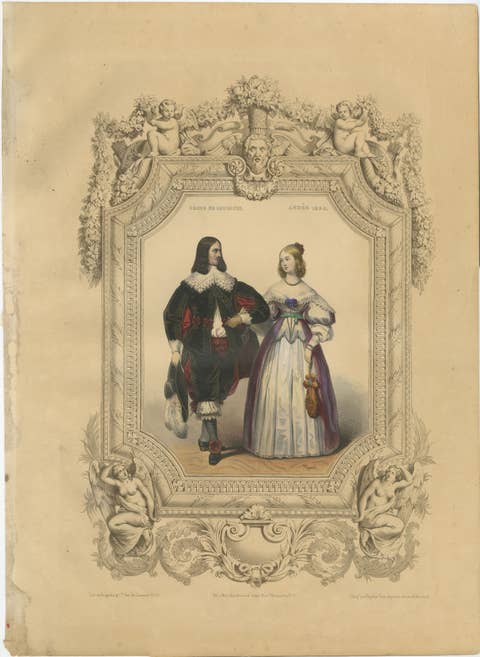
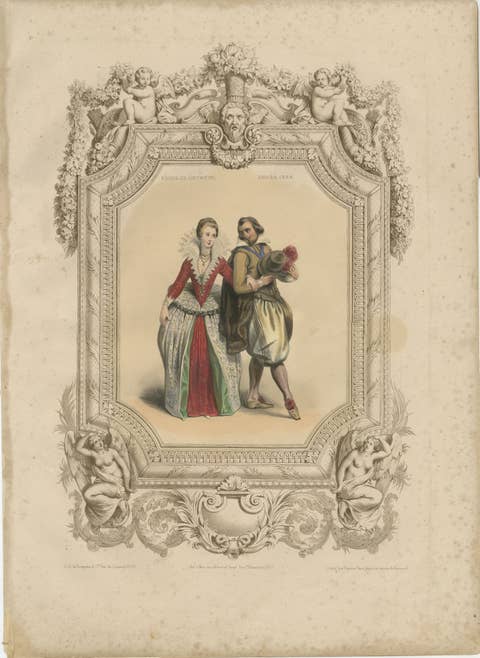
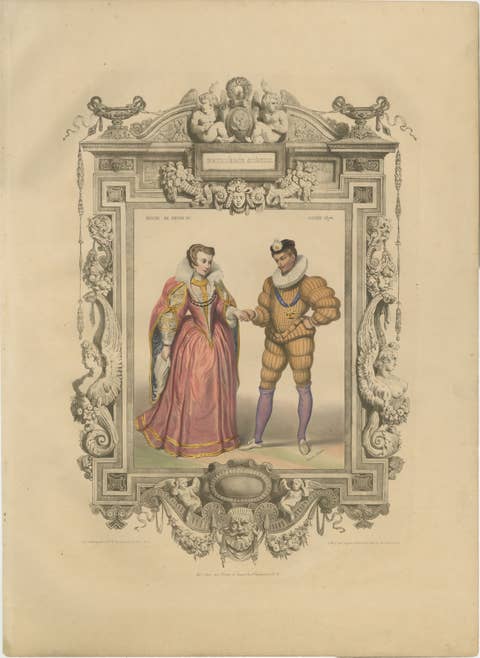
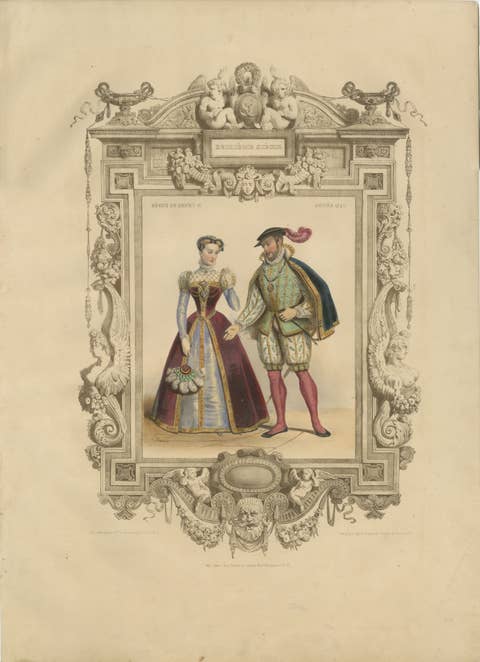
Noble Roman Lady of the Middle Ages, Handcolored and Published in 1847
€ 130
One of a kind: this is the sheet in the photographs. Ships from Langweer, the Netherlands.
Date
1847
Sheet size
27 × 18 cm (10.6 × 7.1 in)
Condition
Good
Reference
BG-13635-83
Condition
Good. Overal light toning but the image itself clean and hand-colored almost 200 years ago and still in expliciet colors. Aged paper with typically warm, yellowish-brown hue, mostly around the edges. Study the images carefully.
About this sheet
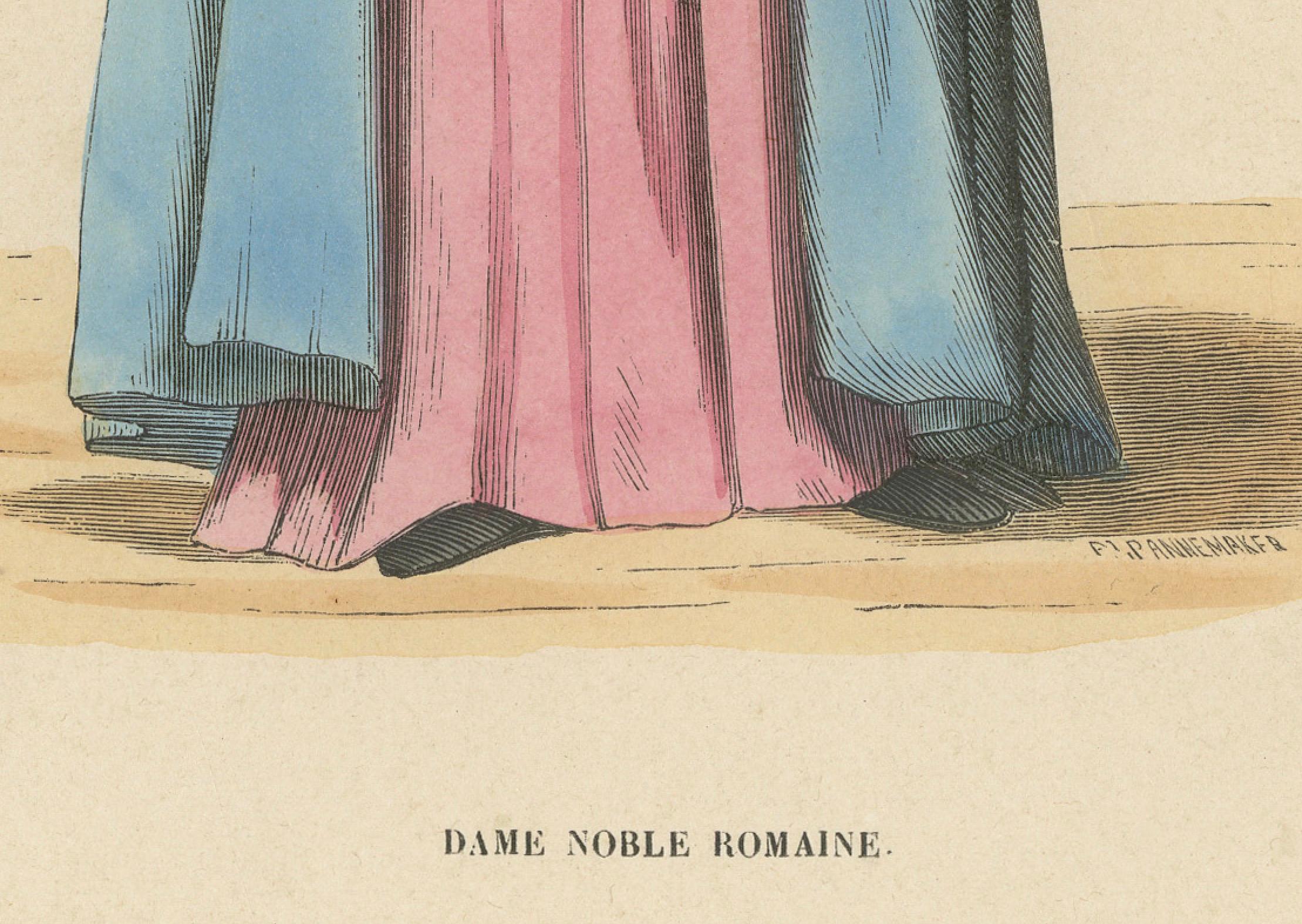
The print shows a portrayal of a "Dame Noble Romaine," which translates to "Noble Roman Lady," from the Middle Ages. It is part of the collection from "Costume du Moyen Age" dated 1847. She is dressed in a long, pink gown that falls straight from the shoulders to the ground, a style that may reflect the simplicity and elegance valued in Roman medieval fashion. Over her gown, she wears a long, blue cloak that envelops her figure, adding a sense of stature and grace.
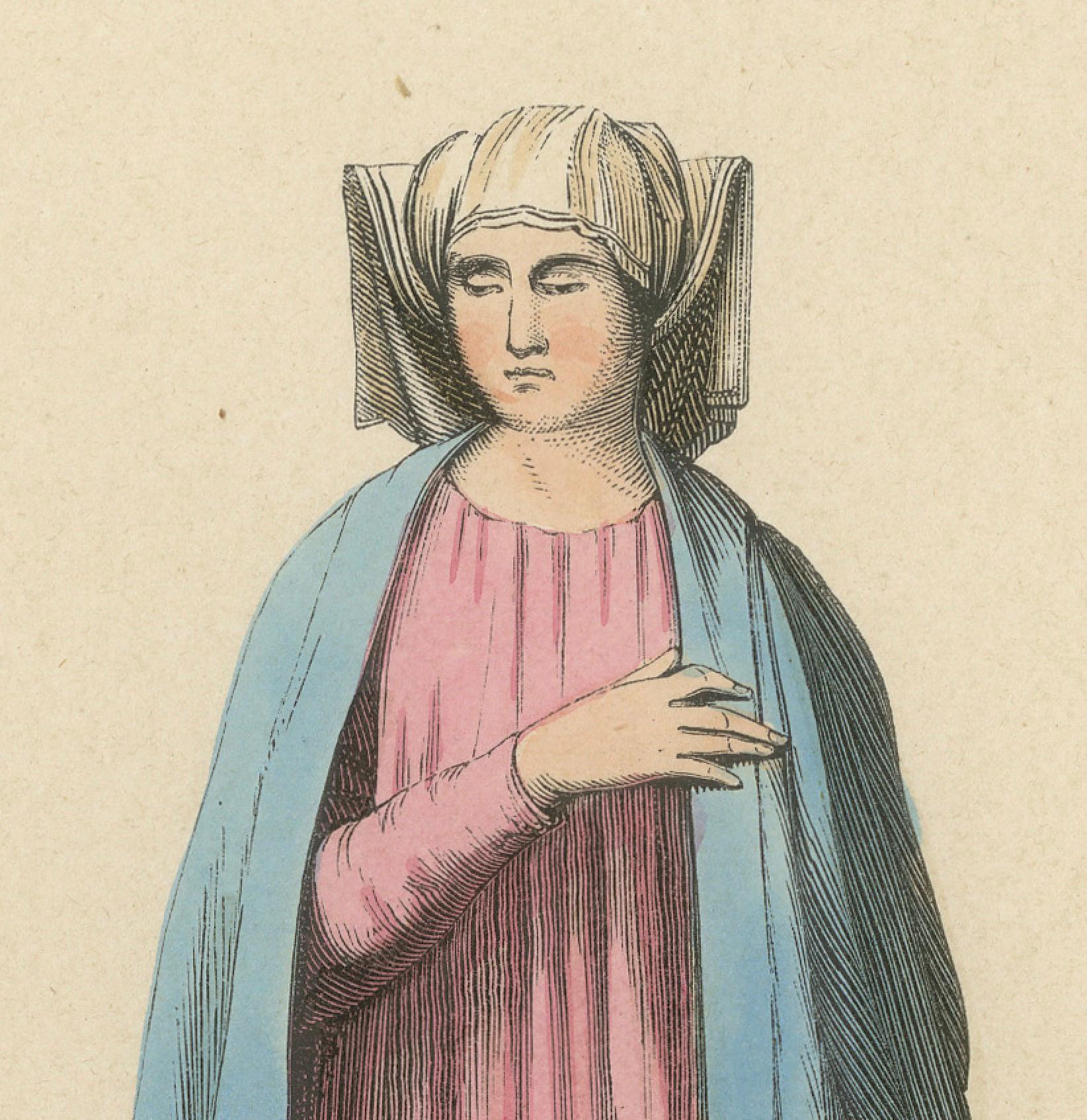
The lady's hair is styled in a manner typical of the period, parted in the center and contained by a stiff, white headdress that frames her face. Such headdresses were often a mark of nobility and fashion among women of high status during the Middle Ages.
Her demeanor is serene with a gentle expression, and she holds one hand to her chest, a gesture that can be interpreted as a sign of her piety or contemplation. The artist has paid careful attention to the draping of the fabrics, the subtle shading, and the color contrasts, which bring a rich vibrancy to the image, reflective of the noble lady's status and the fashion of the era.
The colors have a nice glow over them. Historically, egg whites, known as glair, and sometimes egg yolk were indeed used in illumination and painting, particularly in manuscripts, to give colors a brighter appearance and to add a sheen or gloss to the work. This technique was quite common during the Middle Ages and into the Renaissance.
Egg whites can be applied as a varnish over pigments to enhance their brightness and to protect the colors. This application could make the colors appear more vivid and also add a slight glossy sheen to the surface of the image.
Egg yolk, on the other hand, was commonly used as a binding agent in paint. It forms the basis of tempera paint, a medium that was widely used before the advent of oil painting. Egg yolk helps to create a durable and long-lasting color that adheres well to various surfaces.
In the context of the print from 1847, it's less likely that egg whites or yolks were used directly on the print, as by that time, commercial printing processes would have been more advanced and less reliant on such manual methods. However, if this print is a representation of an earlier style or is meant to mimic the appearance of hand-painted manuscripts, the original artists might have employed techniques or materials that gave a similar effect to those achieved with egg-based binders and varnishes.