About this sheet
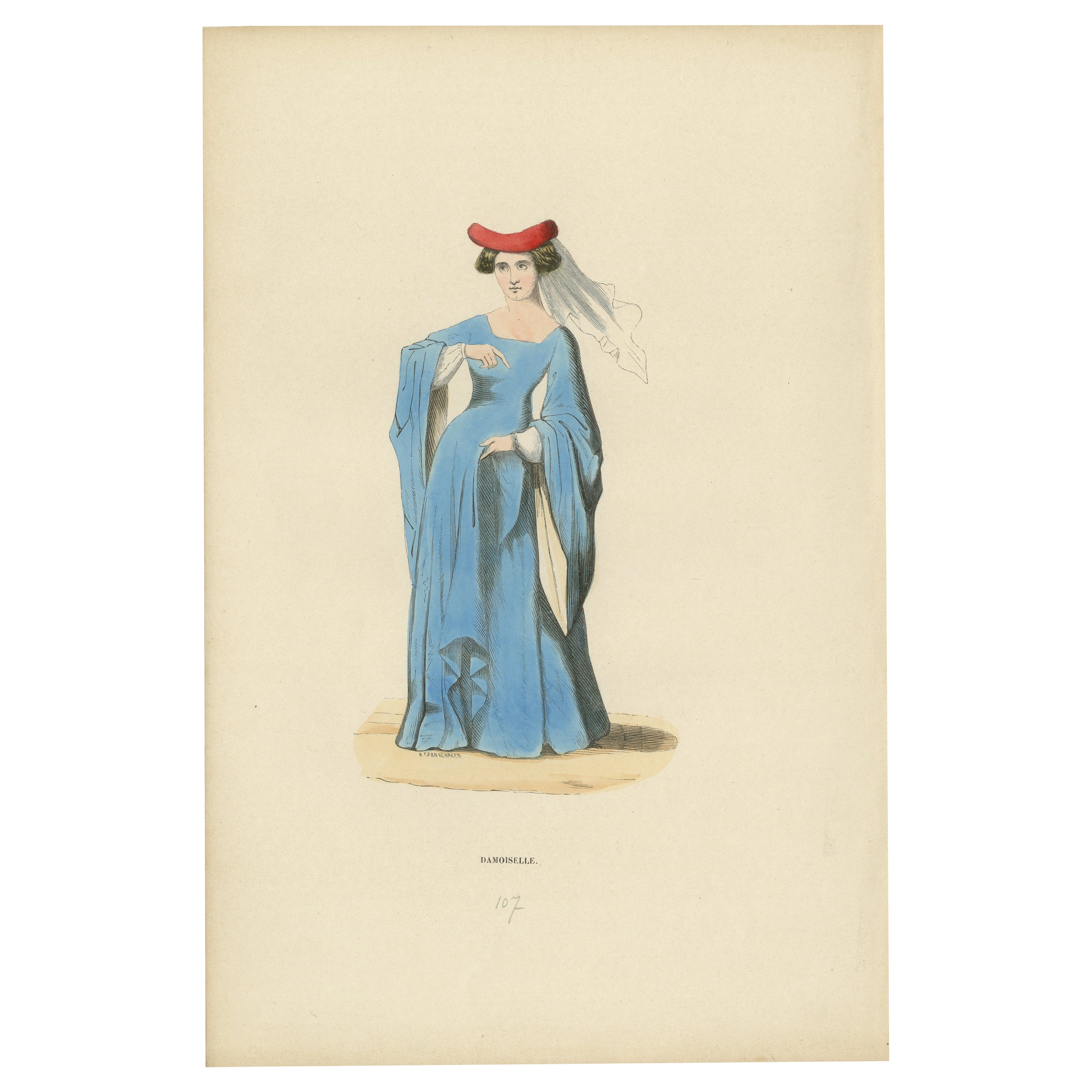
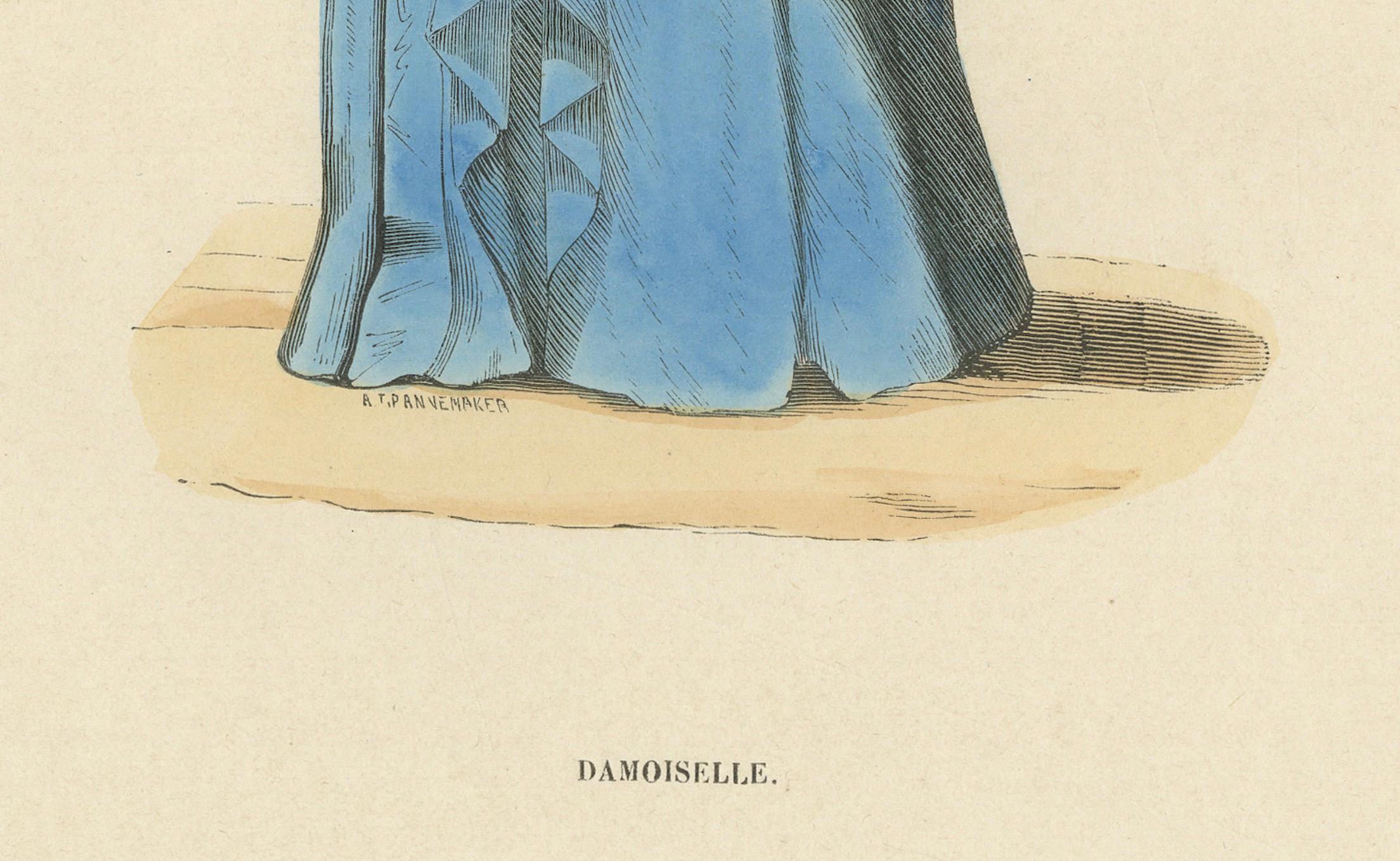
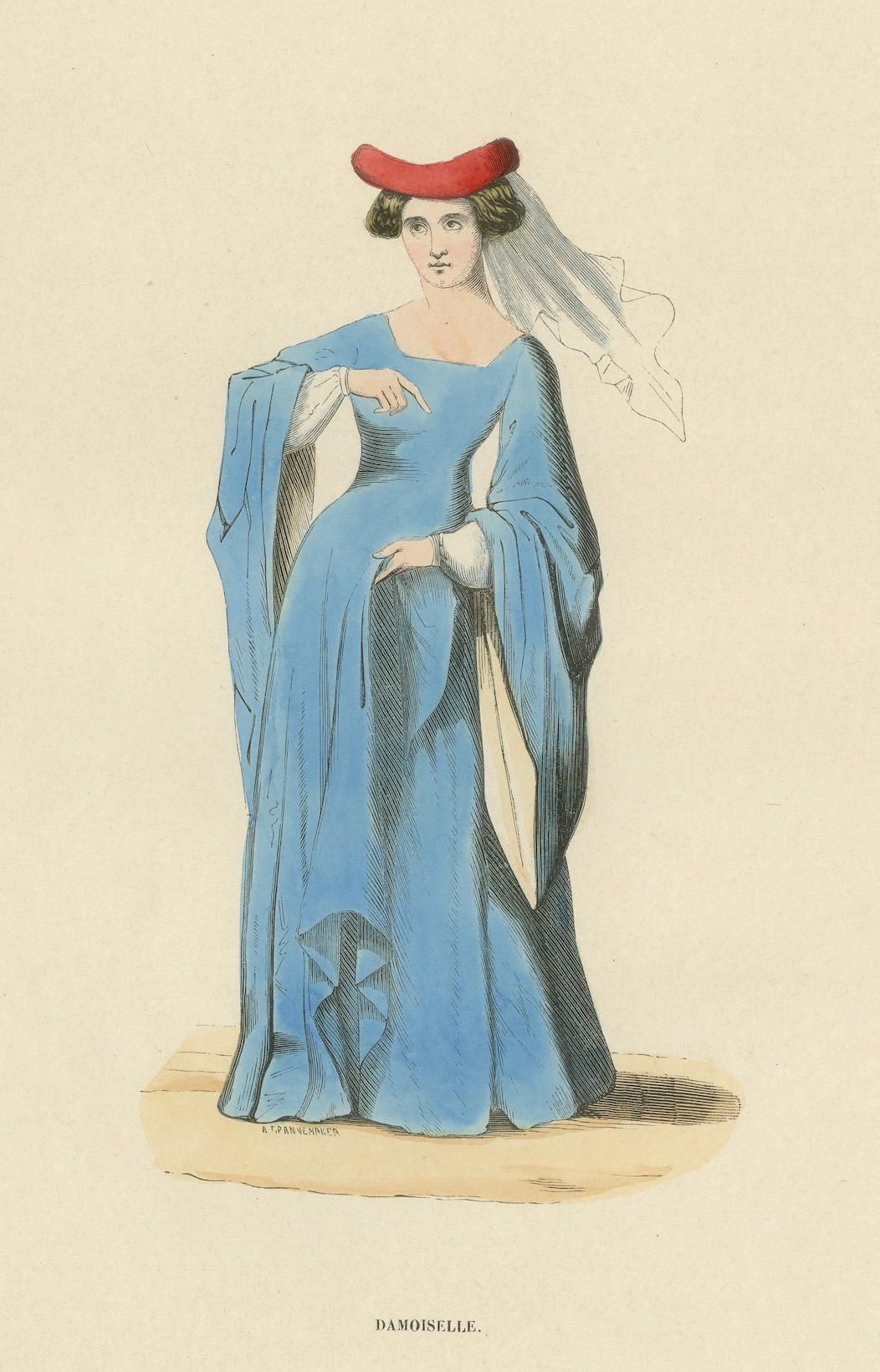
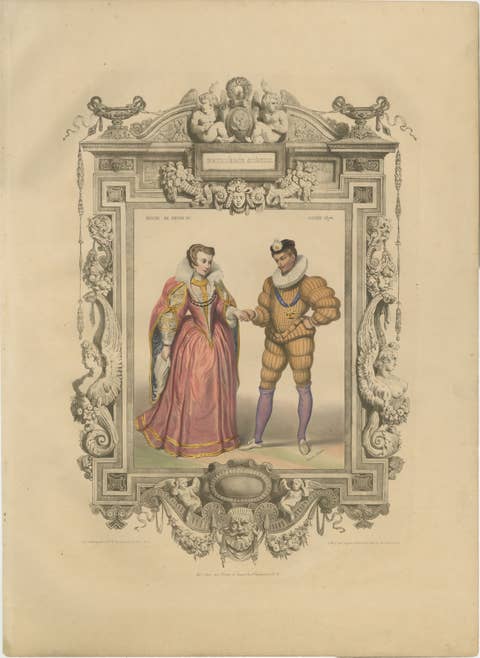
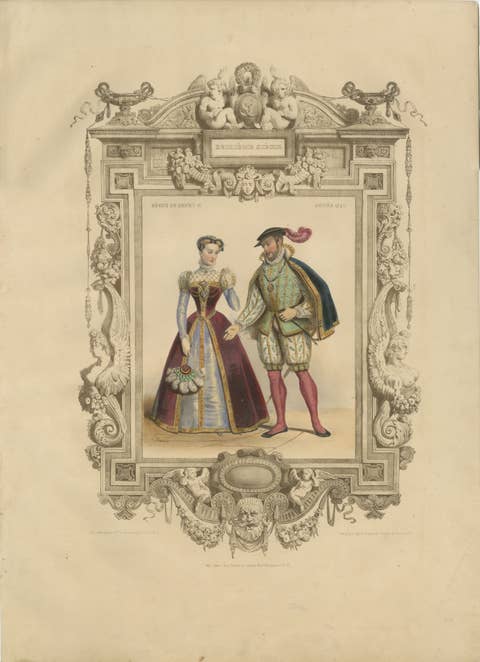
The print, titled "Demoiselle," which translates to "Young Lady" or "Damsel," depicts a young noblewoman from the Middle Ages. It is another hand-colored engraving from the 1847 series "Costume du Moyen Age."
She is dressed in an elegant, floor-length blue gown. The gown is designed with wide, draping sleeves that open at the elbows to reveal an inner layer or undersleeve, which was a common fashion feature in medieval times, often used to display wealth by showcasing expensive fabrics. The dress has a fitted bodice, which accentuates the lady's waist, a style that was favored in medieval European fashion to demonstrate grace and femininity.
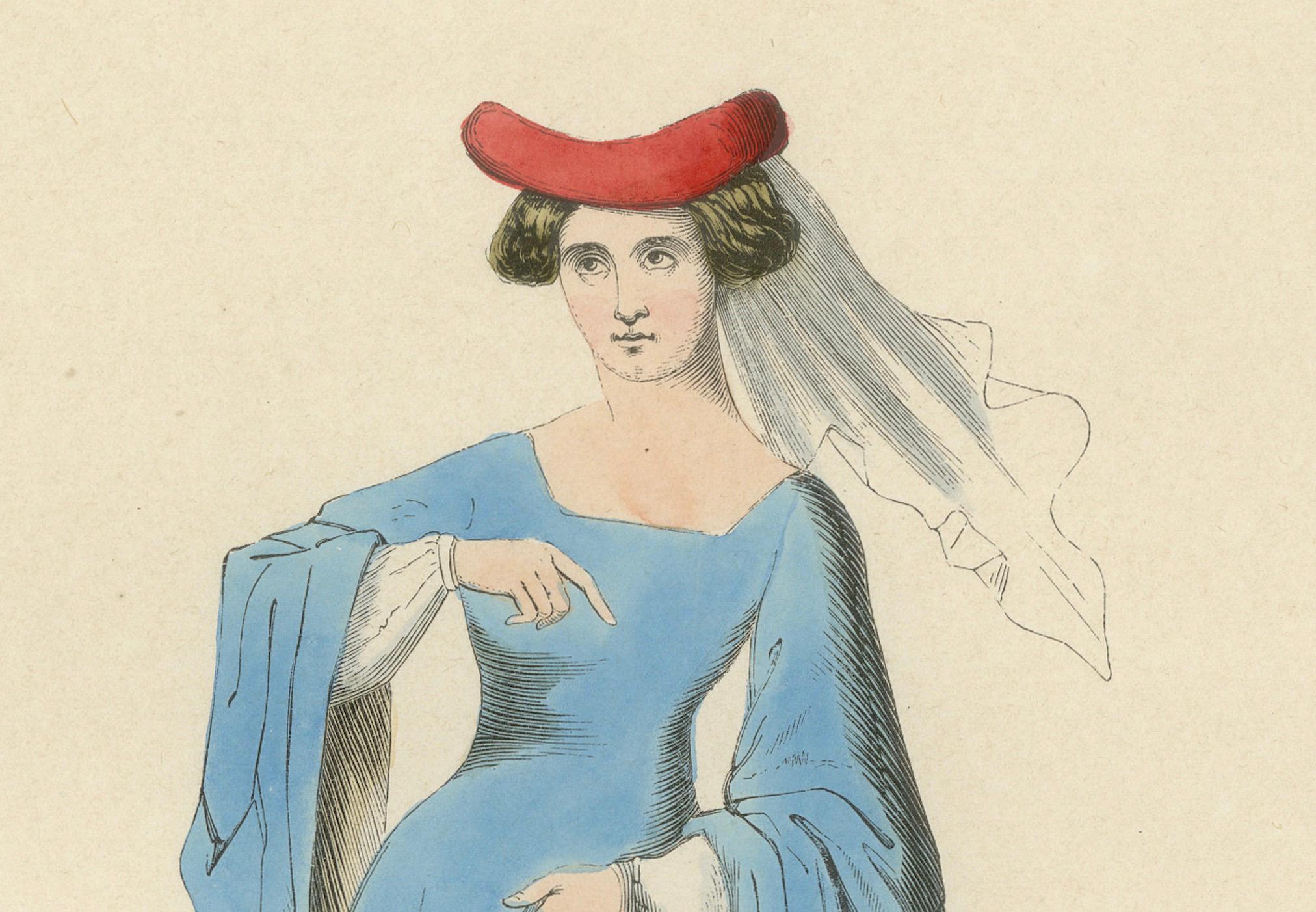
The young lady's head is adorned with a striking red hat with a flat top and a rolled brim, sitting atop her neatly arranged hair. A long, transparent veil trails from the back of the hat, adding a layer of sophistication to her ensemble.
Her pose is demure and composed, with one hand delicately pointing to the front, perhaps to draw attention to the detail of her gown, or as a gesture in a narrative we are not privy to. Her expression is serene with a hint of a confident gaze, suggesting her noble standing.
The artist has paid particular attention to the texture and flow of the gown, the distinctive hat, and the gentle yet confident posture of the young noblewoman, all of which contribute to a portrait of medieval elegance and class.
The colors have a nice glow over them. Historically, egg whites, known as glair, and sometimes egg yolk were indeed used in illumination and painting, particularly in manuscripts, to give colors a brighter appearance and to add a sheen or gloss to the work. This technique was quite common during the Middle Ages and into the Renaissance.
Egg whites can be applied as a varnish over pigments to enhance their brightness and to protect the colors. This application could make the colors appear more vivid and also add a slight glossy sheen to the surface of the image.
Egg yolk, on the other hand, was commonly used as a binding agent in paint. It forms the basis of tempera paint, a medium that was widely used before the advent of oil painting. Egg yolk helps to create a durable and long-lasting color that adheres well to various surfaces.
In the context of the print from 1847, it's less likely that egg whites or yolks were used directly on the print, as by that time, commercial printing processes would have been more advanced and less reliant on such manual methods. However, if this print is a representation of an earlier style or is meant to mimic the appearance of hand-painted manuscripts, the original artists might have employed techniques or materials that gave a similar effect to those achieved with egg-based binders and varnishes.