About this sheet
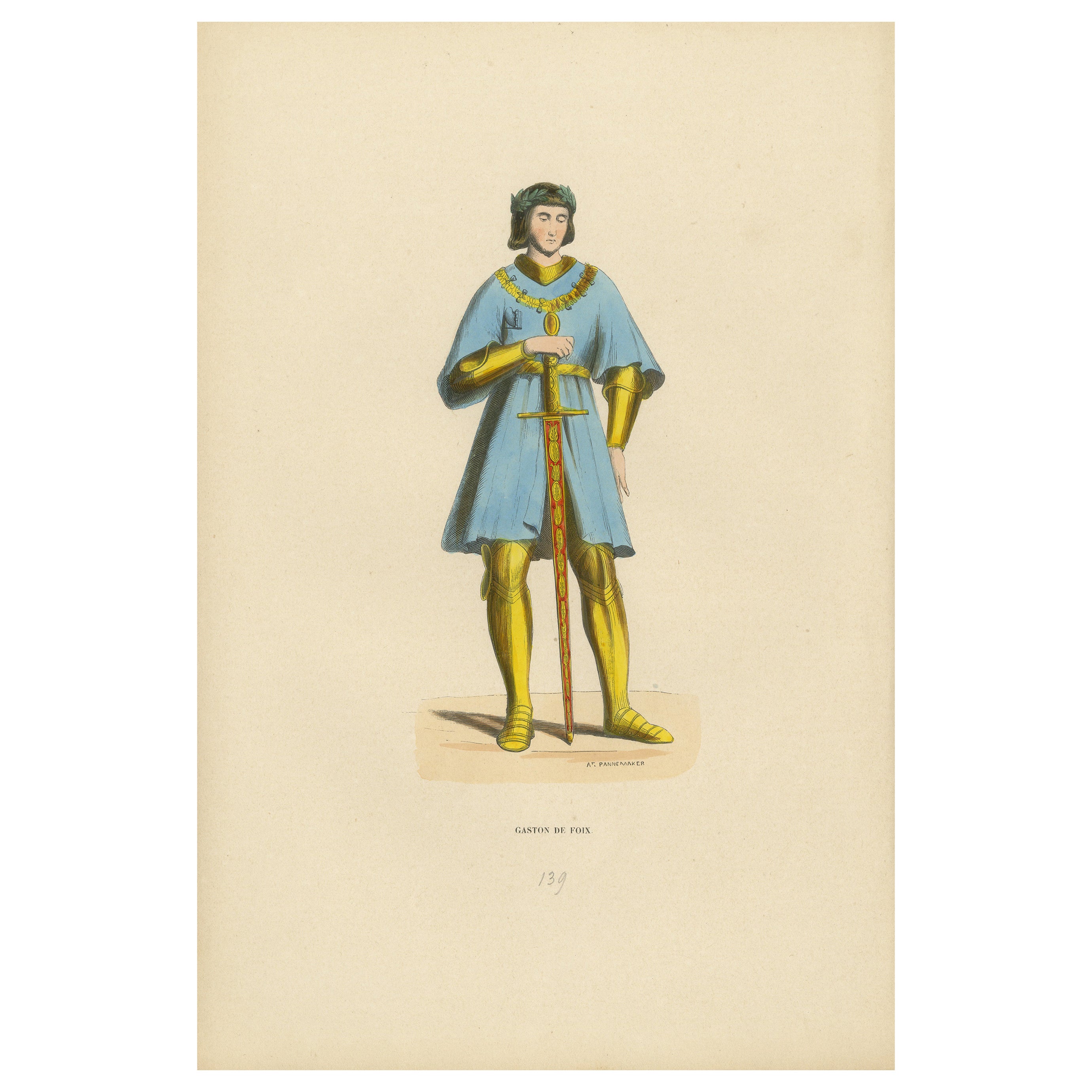
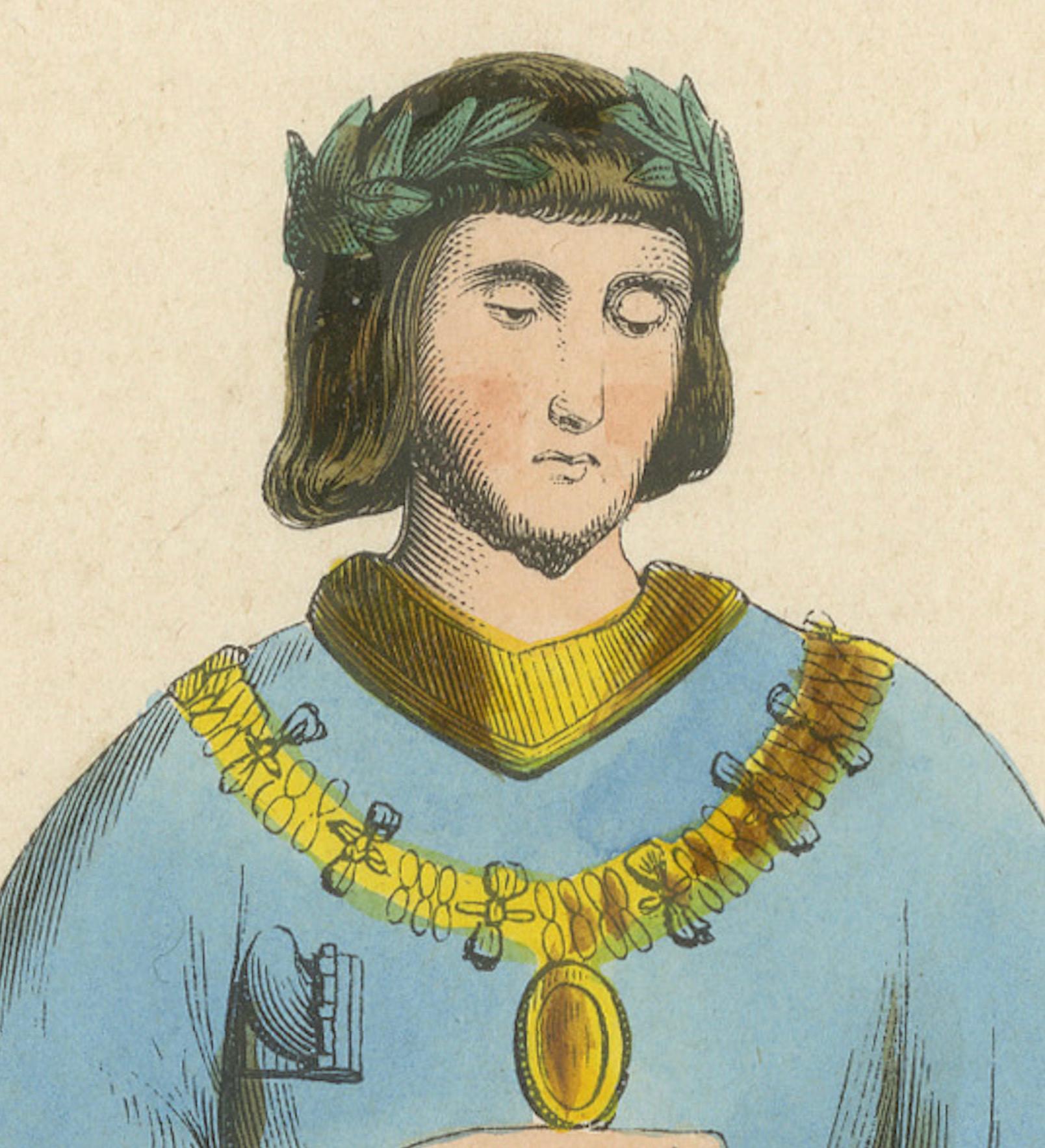
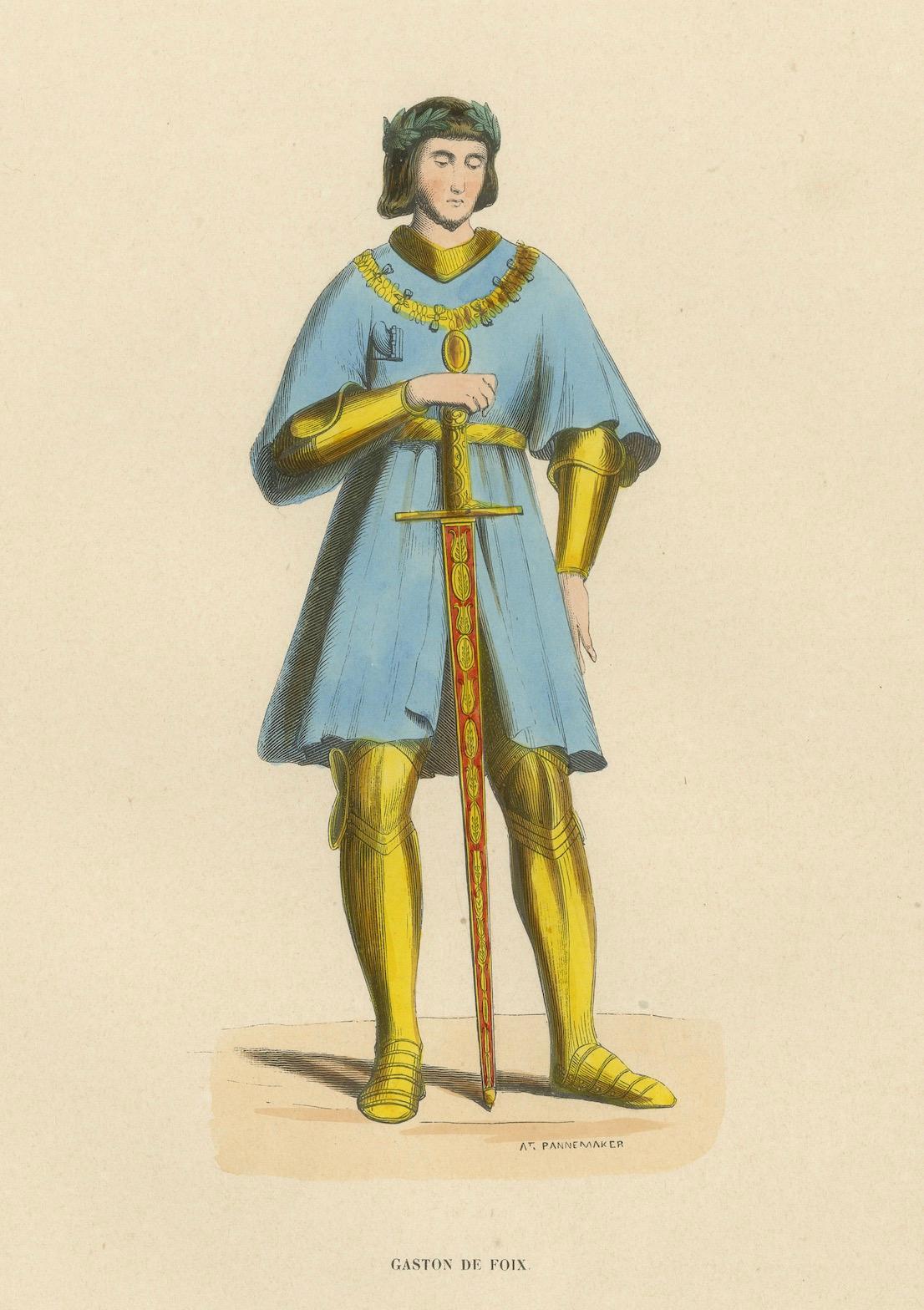
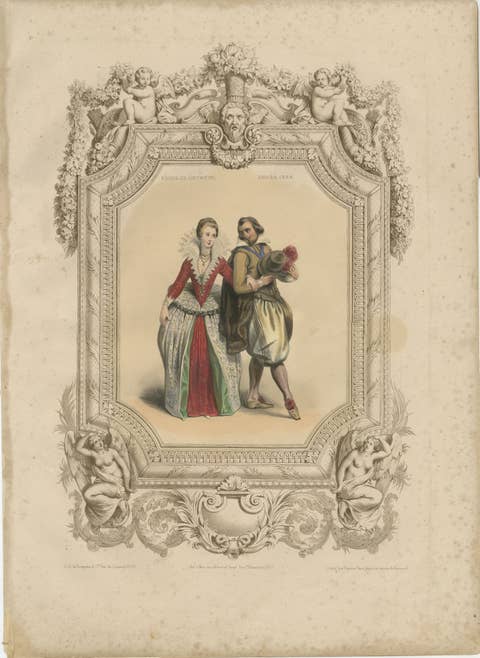
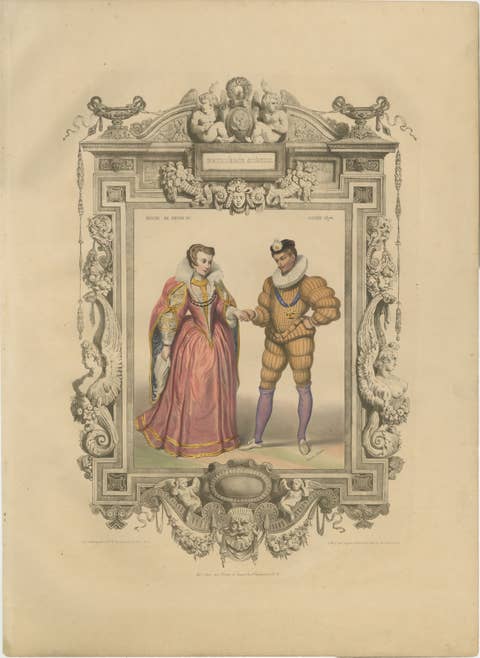
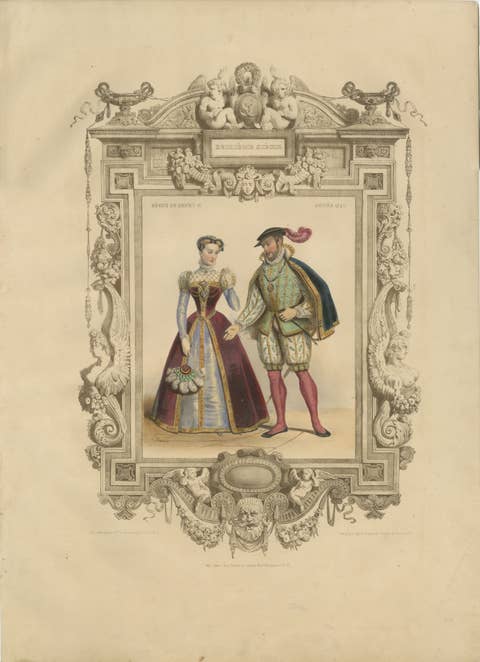
The lithograph from "Costume du Moyen Âge," created in 1847, features a depiction of Gaston de Foix, a notable figure from French history. He stands with an air of nobility, clothed in the fashion of his time. His attire is a striking combination of practicality and splendor, with a blue tunic that falls just above the knee, adorned with a golden collar and cuffs that suggest both status and martial readiness.
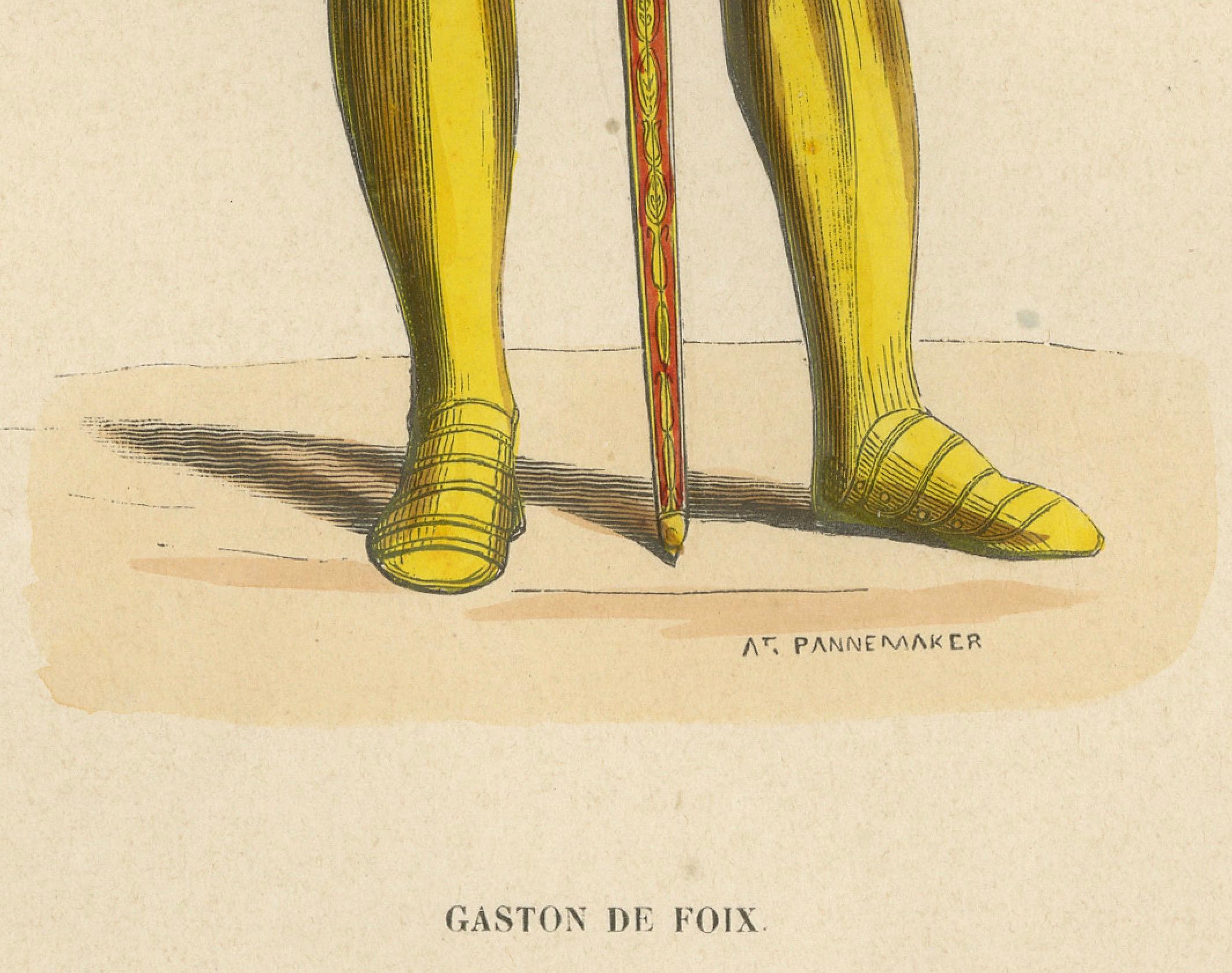
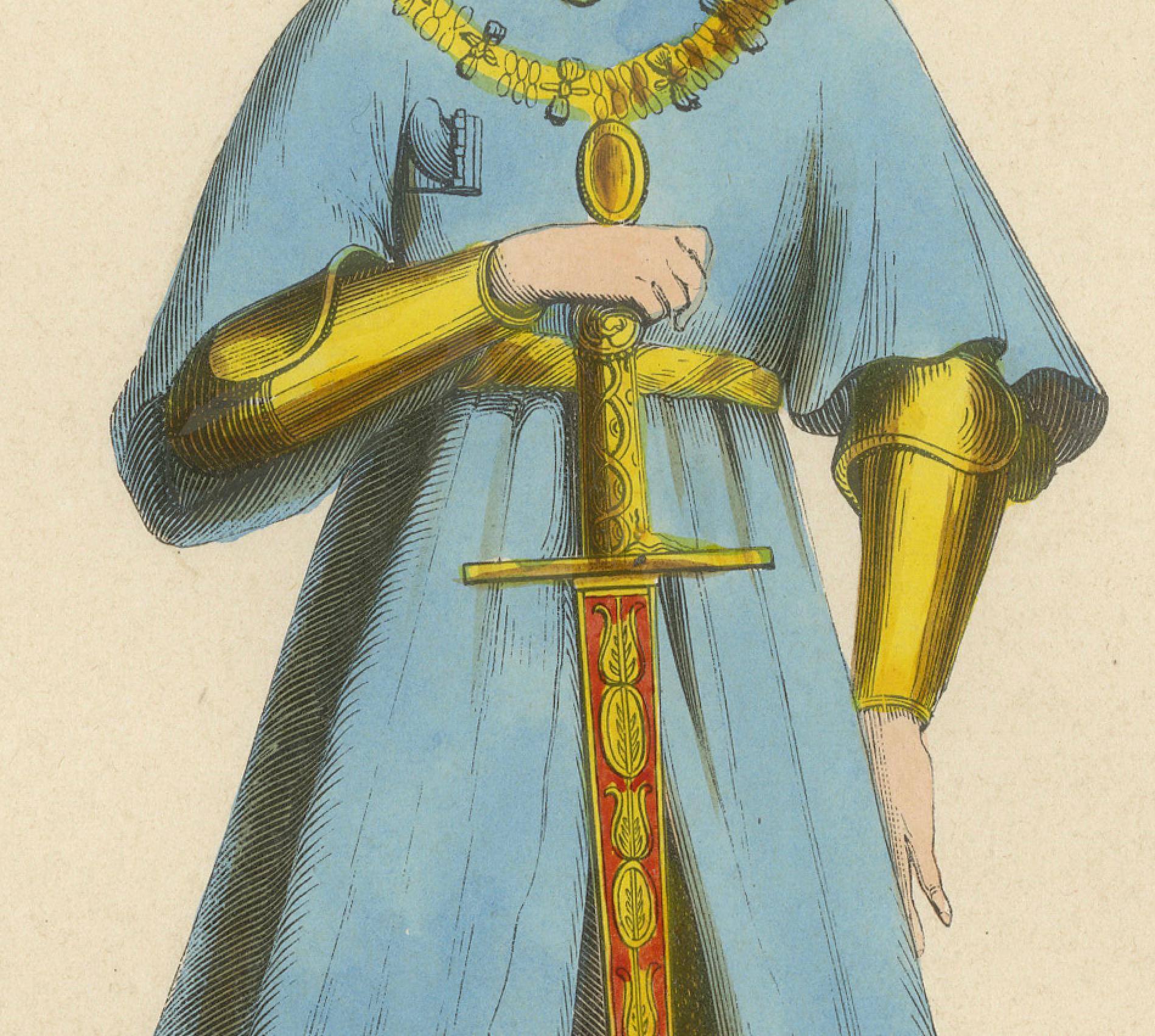
The gold and red belt at his waist adds a touch of regal opulence, and is matched by the red and gold pattern running down the sides of his leg armor, signifying his high rank and family lineage. His leggings are a bright yellow, conforming to the shape of his legs, and leading down to simple yet elegant footwear.
In Gaston's right hand, he holds a long sword with a detailed hilt, a symbol of his knighthood and readiness for battle. The laurel wreath atop his head is a classical symbol of victory and honor, perhaps alluding to his achievements and reputation as a warrior.
His gaze is steady and forward-facing, indicative of a man accustomed to leadership and command. The portrait captures a moment of calm, with Gaston's posture upright and his hand resting on the hilt of his sword, a gesture that conveys both ease and authority.
This lithograph serves as a historical representation of the clothing and accoutrements of a nobleman in the Middle Ages. It provides insight into the aesthetic qualities that were valued by the nobility of the time: elegance, strength, and the conspicuous display of wealth and power.
The colors have a nice glow over them. Historically, egg whites, known as glair, and sometimes egg yolk were indeed used in illumination and painting, particularly in manuscripts, to give colors a brighter appearance and to add a sheen or gloss to the work. This technique was quite common during the Middle Ages and into the Renaissance.
Egg whites can be applied as a varnish over pigments to enhance their brightness and to protect the colors. This application could make the colors appear more vivid and also add a slight glossy sheen to the surface of the image.
Egg yolk, on the other hand, was commonly used as a binding agent in paint. It forms the basis of tempera paint, a medium that was widely used before the advent of oil painting. Egg yolk helps to create a durable and long-lasting color that adheres well to various surfaces.
In the context of the print from 1847, it's less likely that egg whites or yolks were used directly on the print, as by that time, commercial printing processes would have been more advanced and less reliant on such manual methods. However, if this print is a representation of an earlier style or is meant to mimic the appearance of hand-painted manuscripts, the original artists might have employed techniques or materials that gave a similar effect to those achieved with egg-based binders and varnishes.