About this sheet
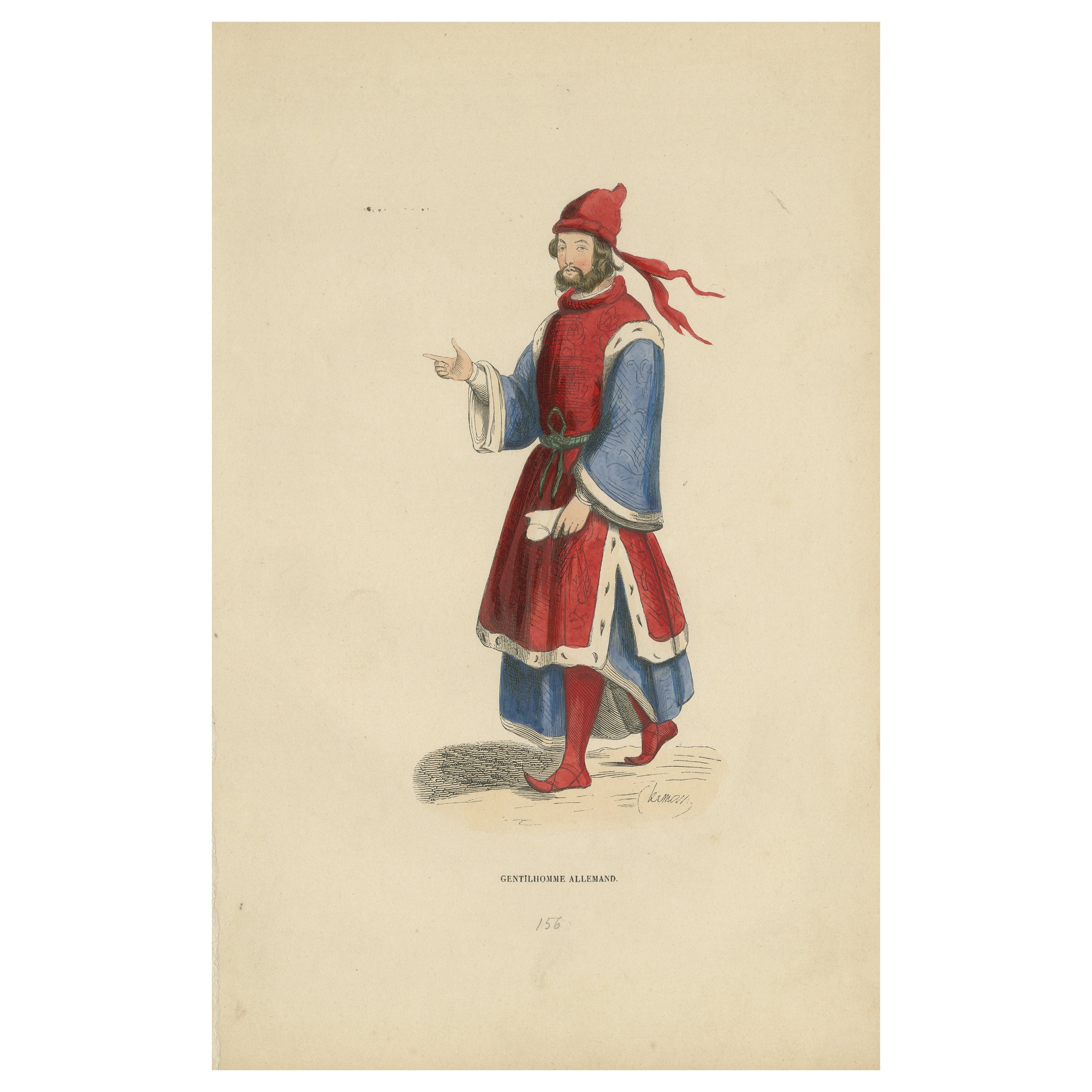
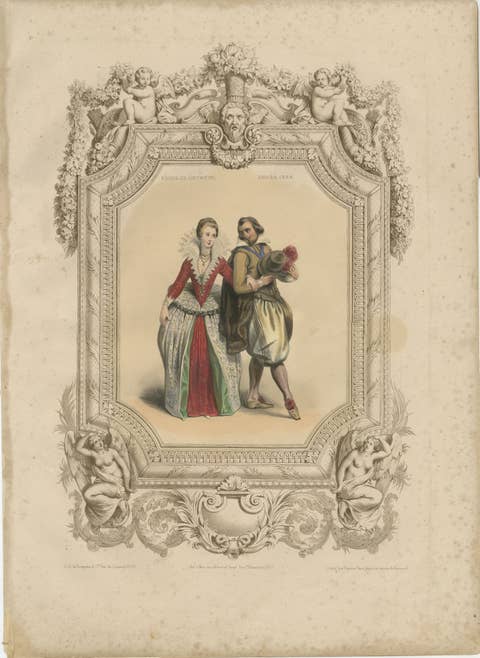
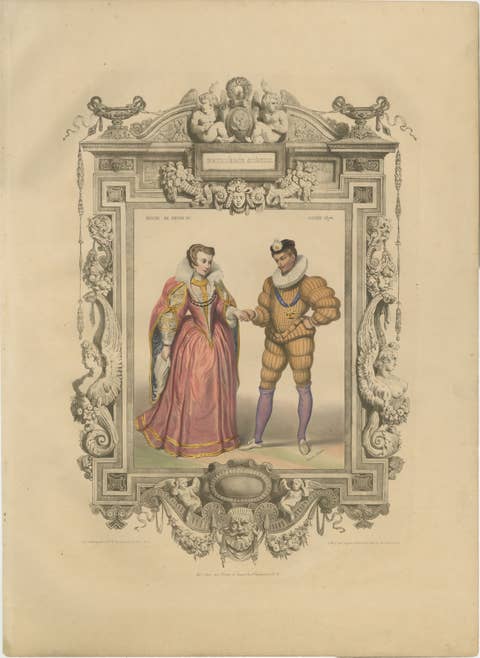
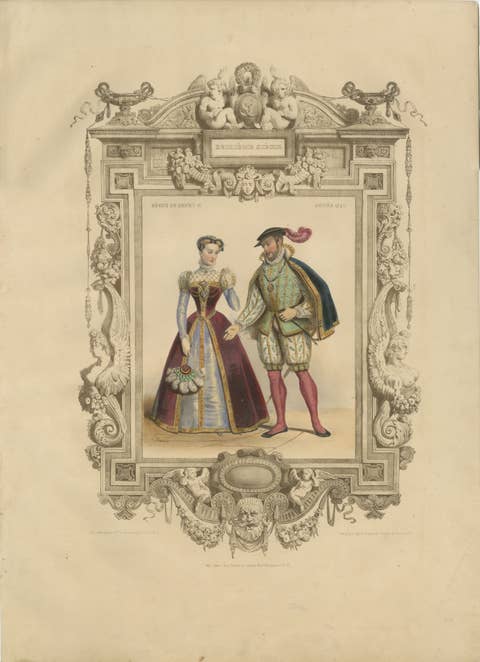
This 1847 lithograph from the esteemed collection "Costume du Moyen Âge" showcases the elaborate attire of a German nobleman. The gentleman stands with an air of confidence, his hand extended as if engaged in conversation or issuing a command.
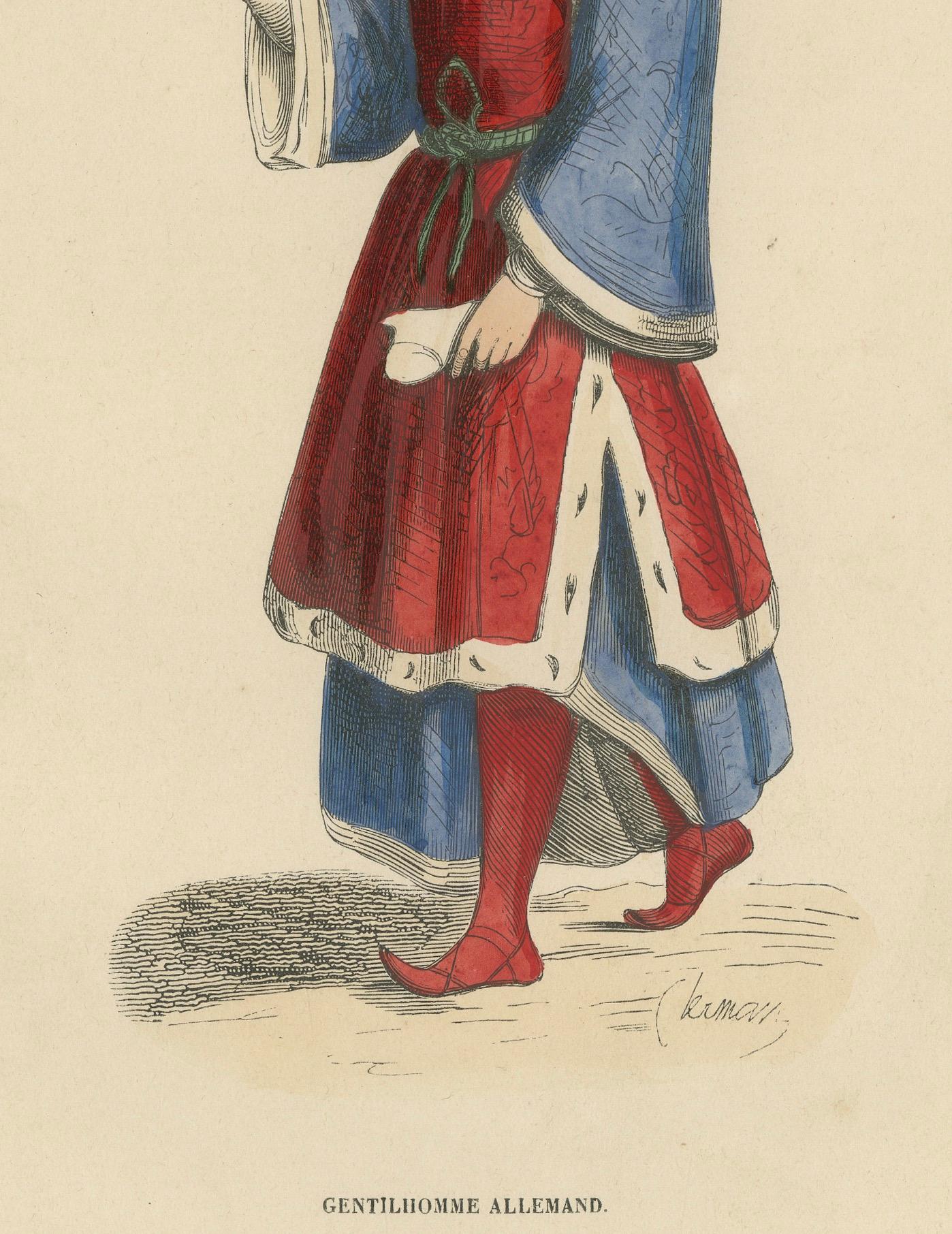
He is attired in a striking red doublet with white fur trim, a style that denotes his noble status. The doublet is fastened with a green belt at the waist, which accentuates the richness of his clothing. Over the doublet, he wears a blue surcoat emblazoned with heraldic symbols, suggesting a lineage of distinction and valor. The surcoat's short sleeves reveal the detailed undergarments, adding depth to the layered ensemble.
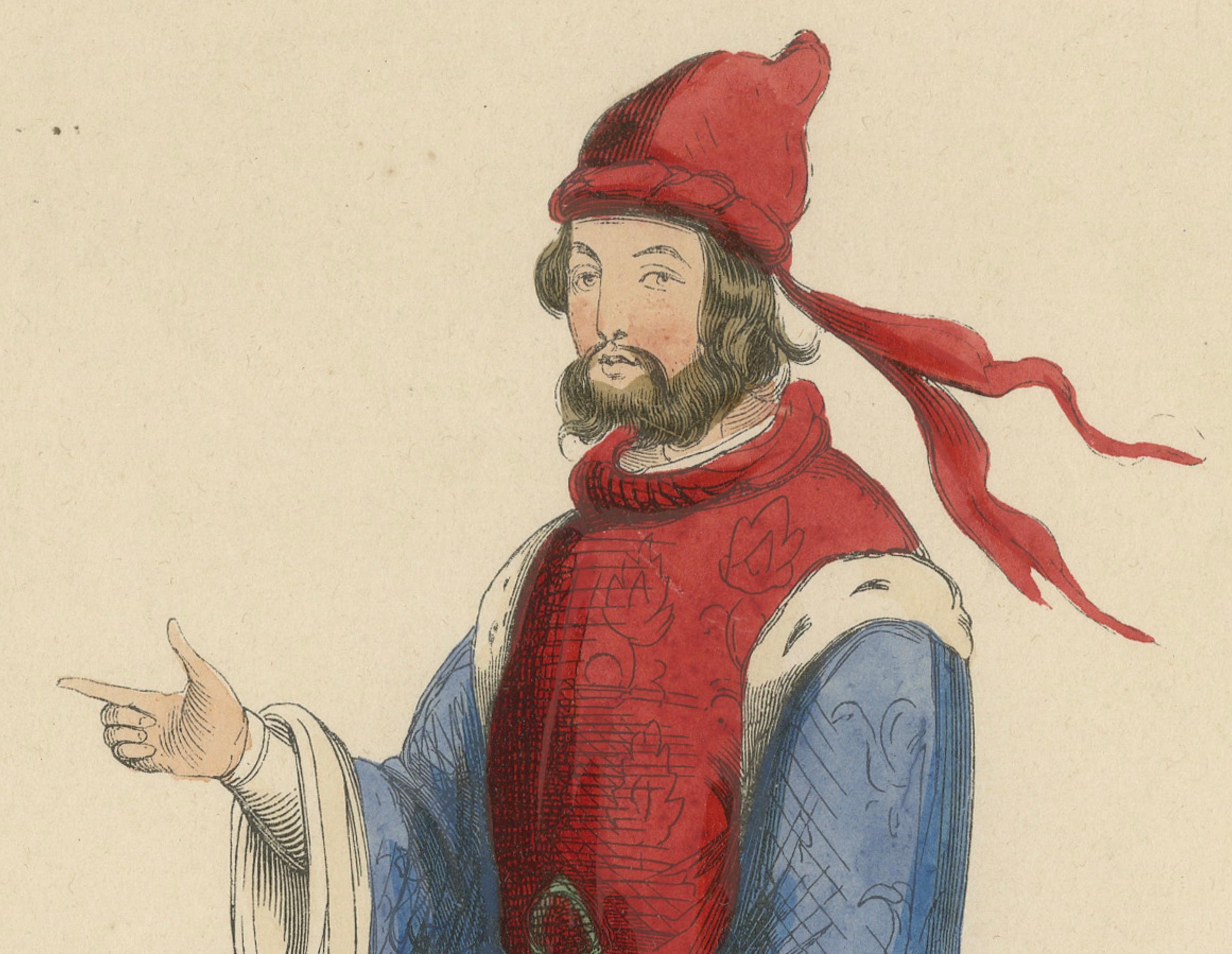
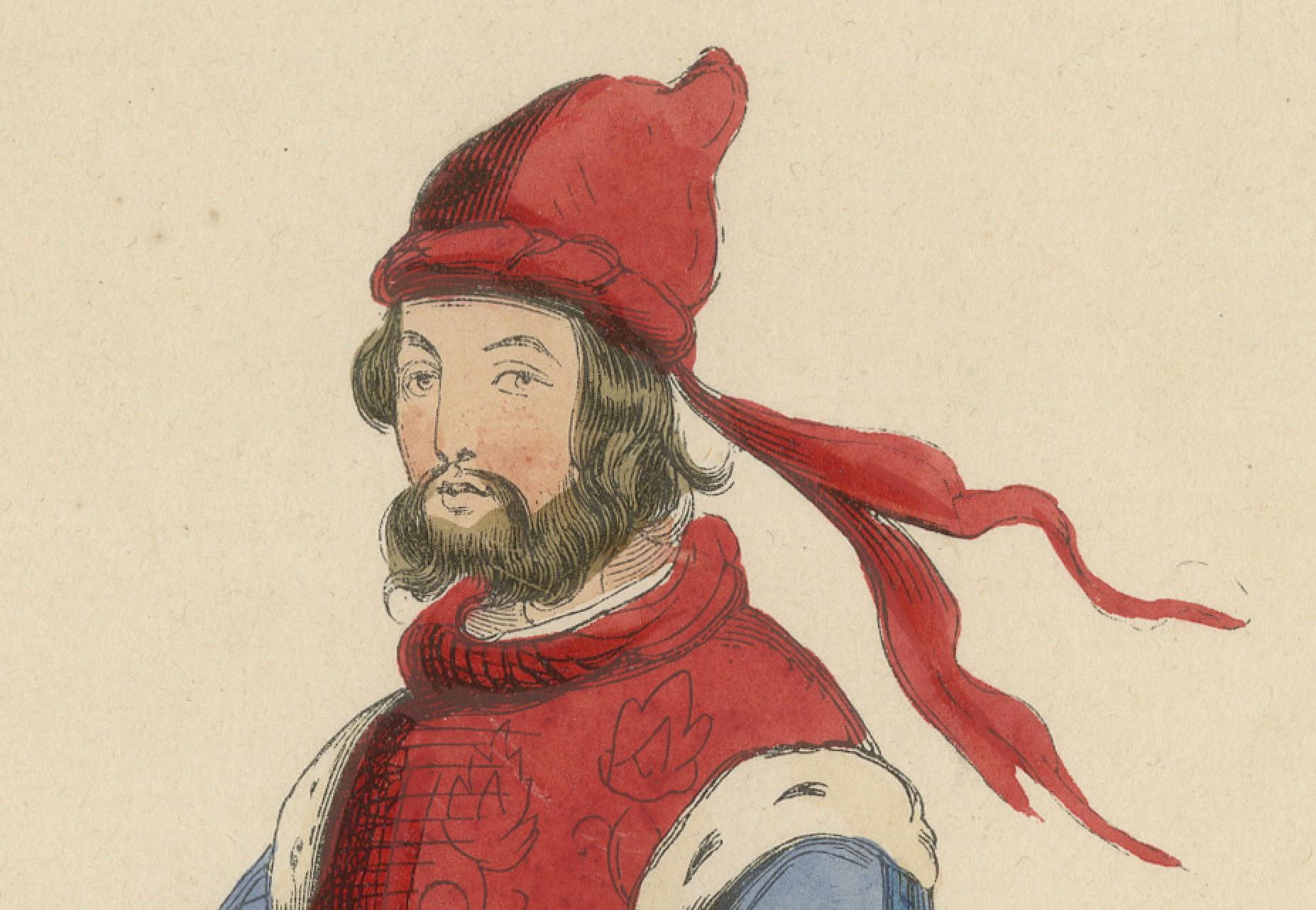
His hose are a vivid red, matching the doublet, and are met with contrasting black shoes, pointed in the fashion of the era. On his head sits a red chaperon with a long, flowing liripipe, giving him a distinguished and fashionable profile.
The nobleman's beard and hairstyle are meticulously groomed, befitting a man of his station. His posture and the direction of his gaze imply an engagement with an unseen audience or counterpart, perhaps in the matters of state or courtly discussion.
This lithograph serves not only as a historical reference to the fashion of the German aristocracy but also provides insight into the social customs and visual culture of the Middle Ages, where clothing was a powerful indicator of social standing and identity.
The colors have a nice glow over them. Historically, egg whites, known as glair, and sometimes egg yolk were indeed used in illumination and painting, particularly in manuscripts, to give colors a brighter appearance and to add a sheen or gloss to the work. This technique was quite common during the Middle Ages and into the Renaissance.
Egg whites can be applied as a varnish over pigments to enhance their brightness and to protect the colors. This application could make the colors appear more vivid and also add a slight glossy sheen to the surface of the image.
Egg yolk, on the other hand, was commonly used as a binding agent in paint. It forms the basis of tempera paint, a medium that was widely used before the advent of oil painting. Egg yolk helps to create a durable and long-lasting color that adheres well to various surfaces.
In the context of the print from 1847, it's less likely that egg whites or yolks were used directly on the print, as by that time, commercial printing processes would have been more advanced and less reliant on such manual methods. However, if this print is a representation of an earlier style or is meant to mimic the appearance of hand-painted manuscripts, the original artists might have employed techniques or materials that gave a similar effect to those achieved with egg-based binders and varnishes.