About this sheet
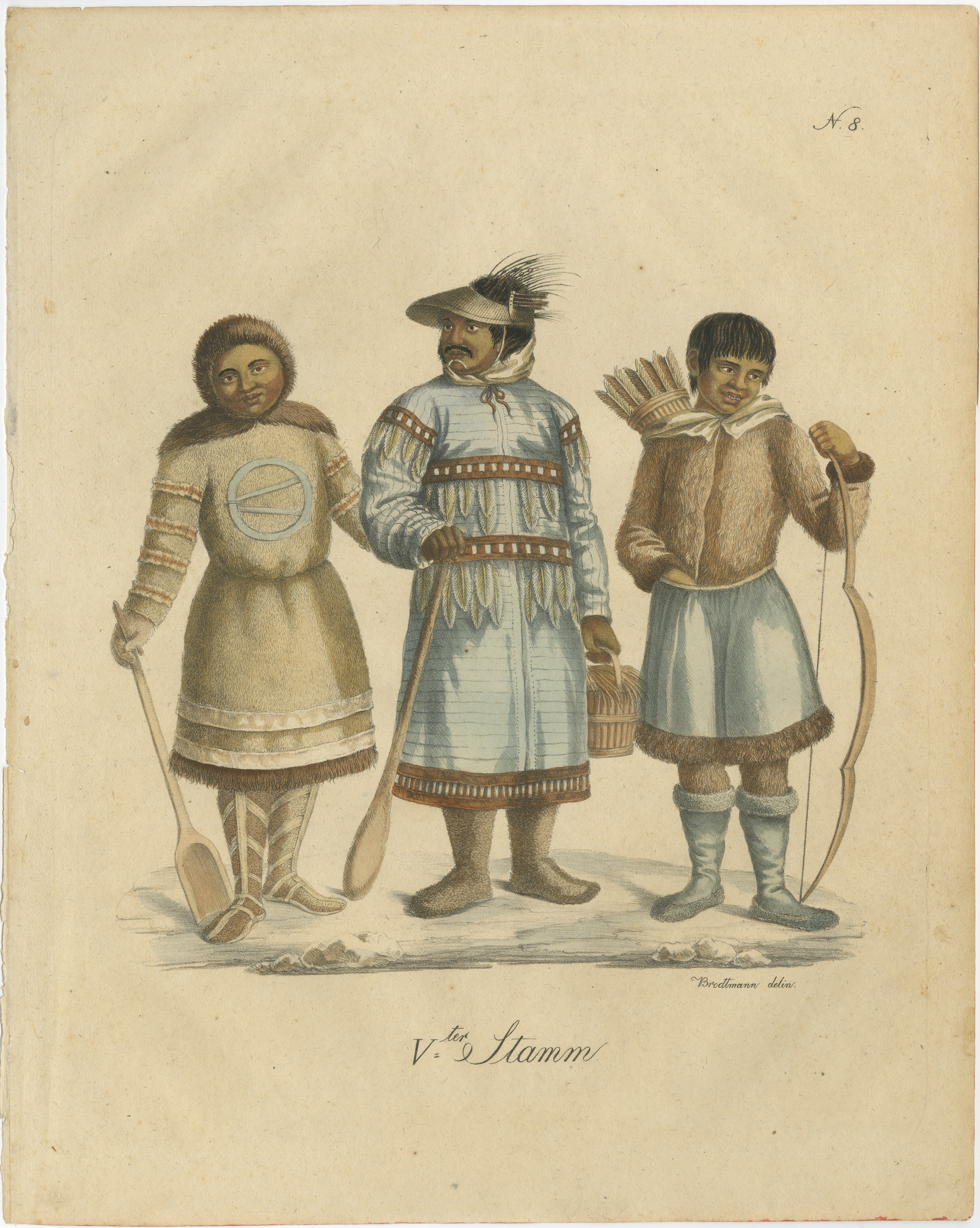
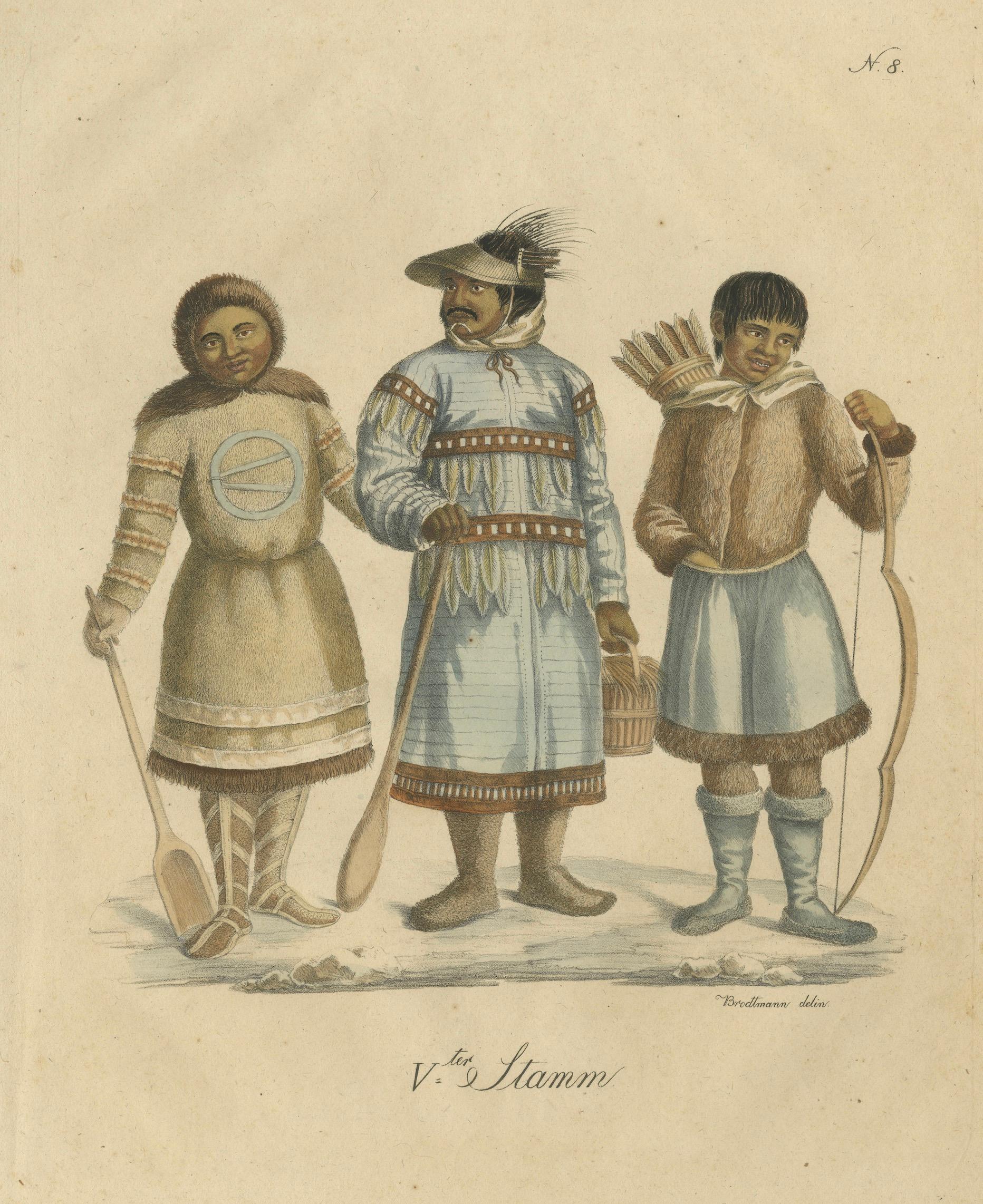
Nenet Woman, Aleut Man & Inuit Youth, Brodtmann Lithograph, 1816
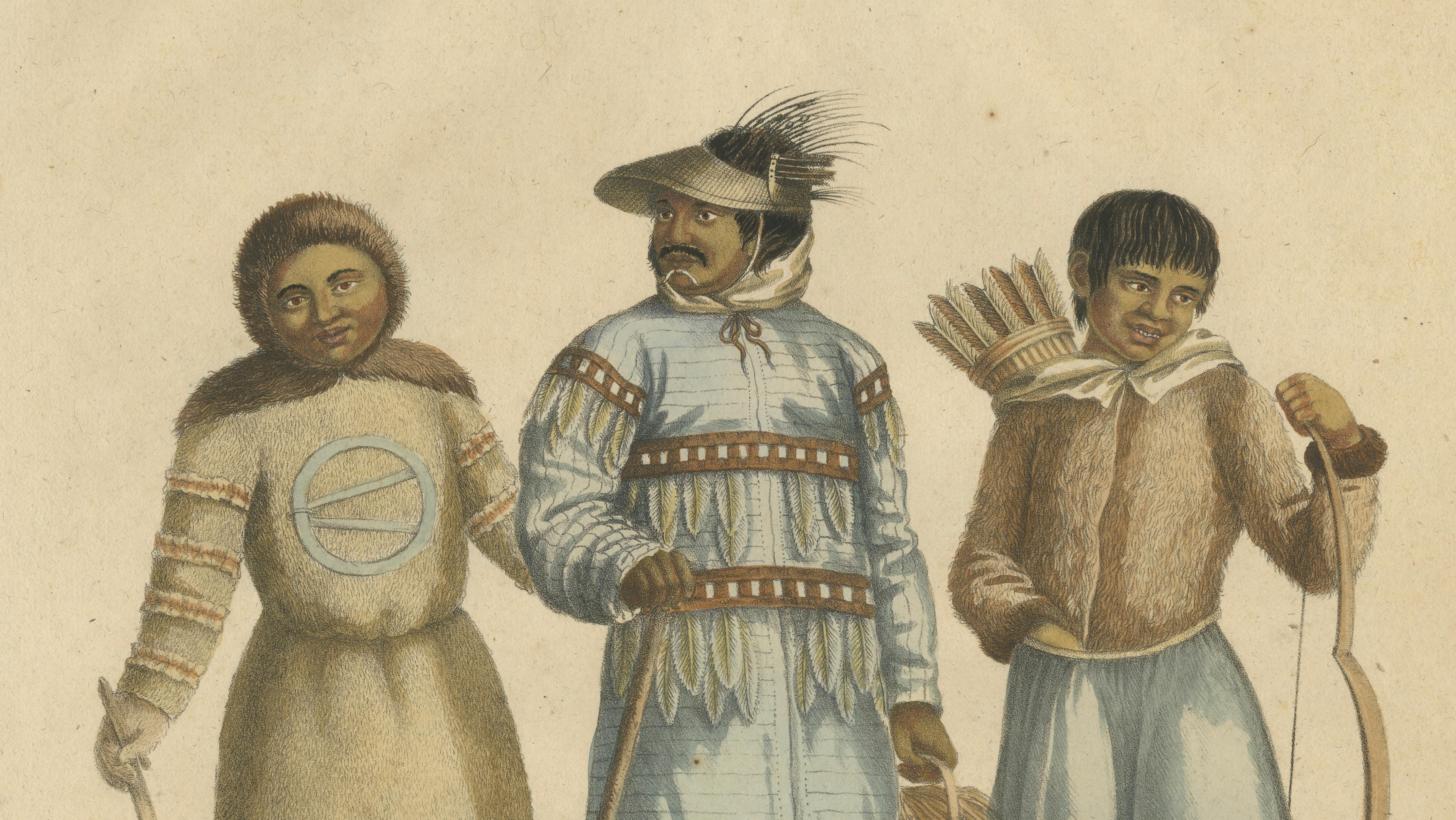
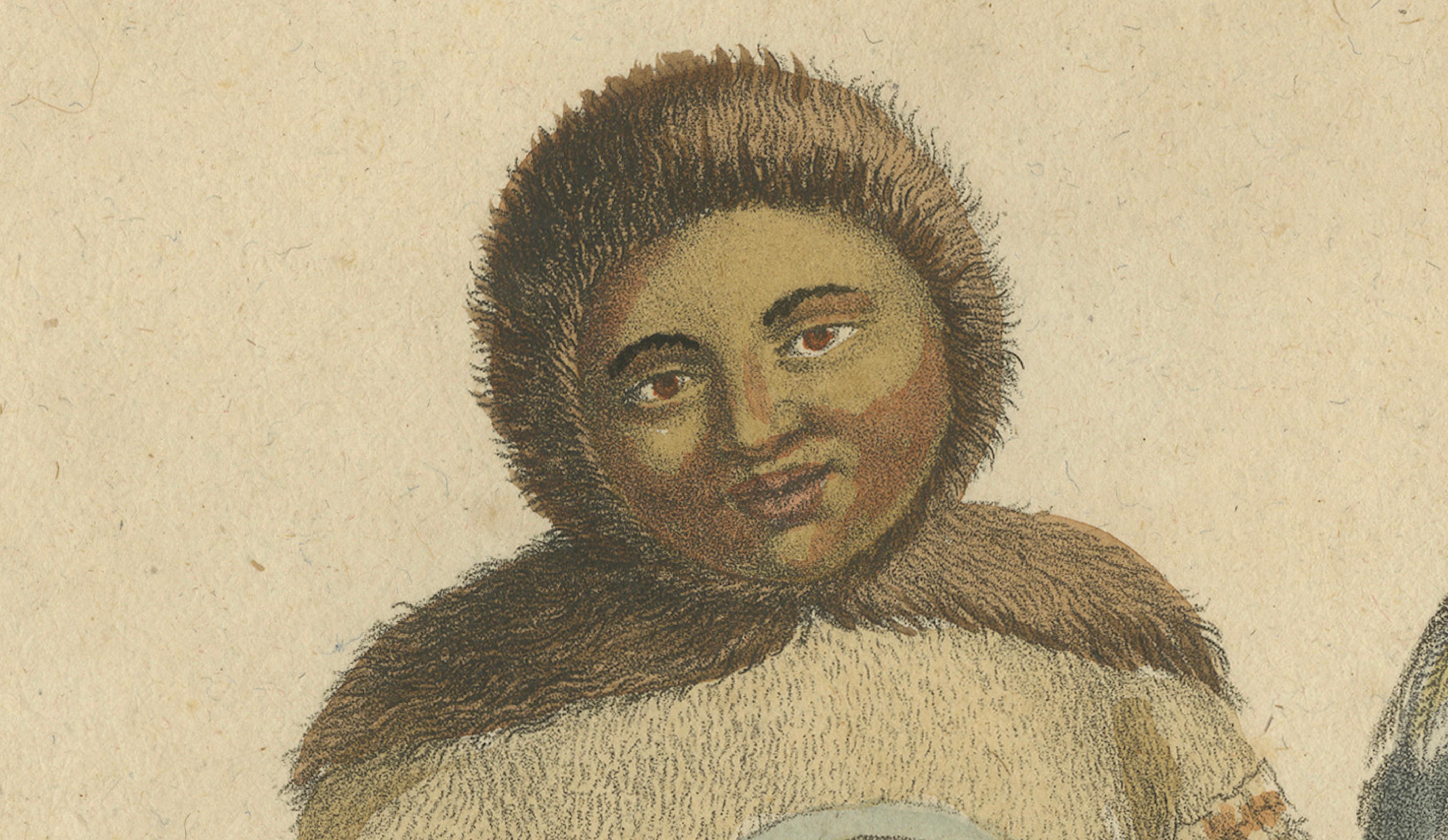
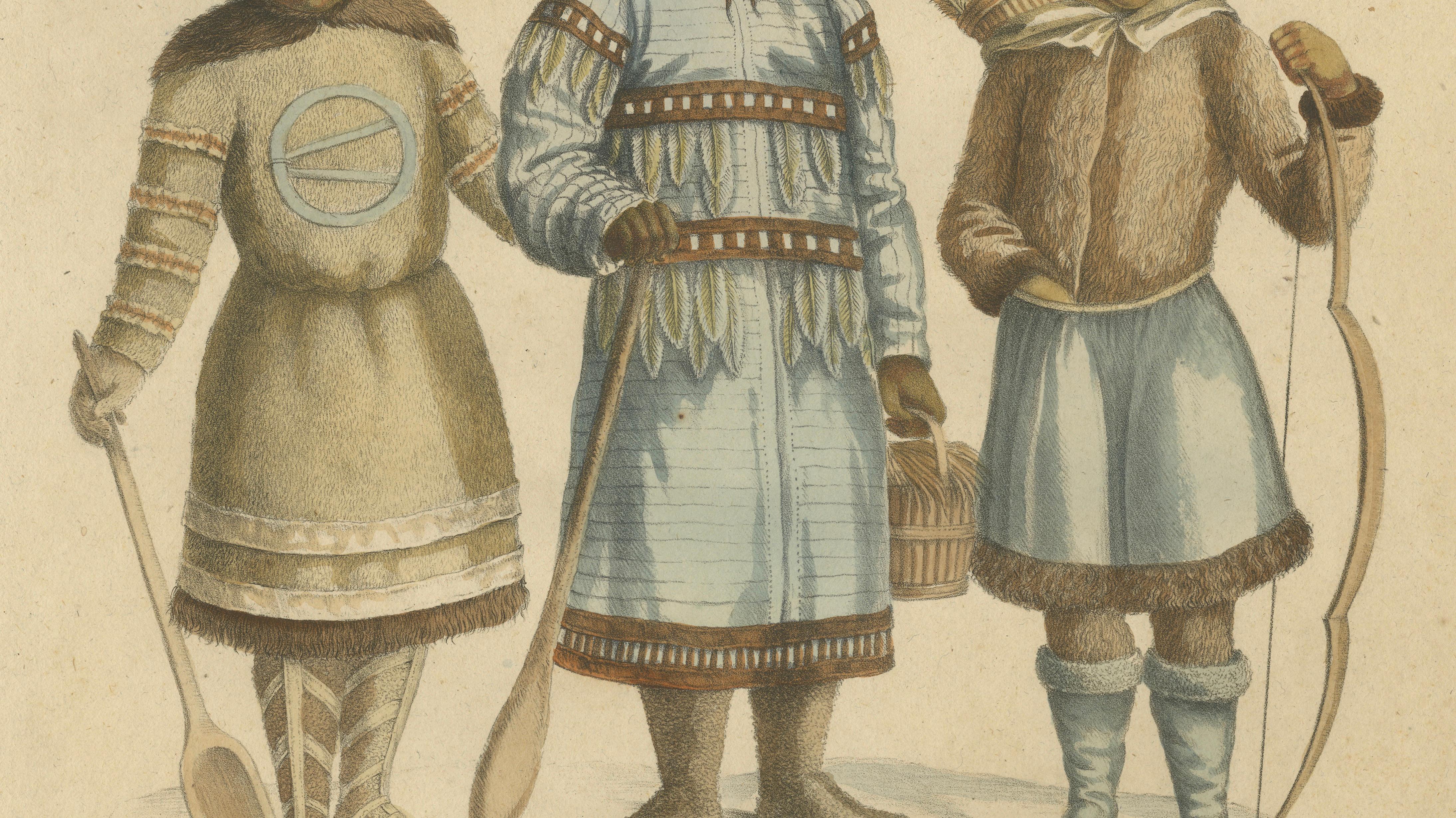
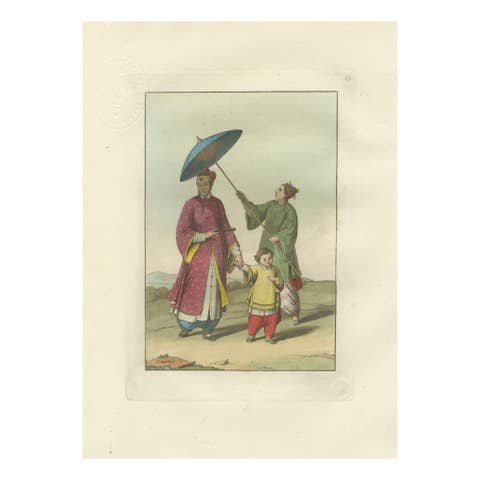
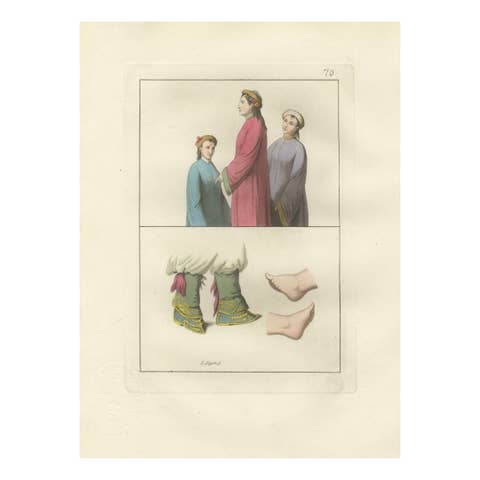
This original hand-colored lithograph presents a fascinating ethnographic study of three indigenous peoples from the Arctic and Subarctic regions. The figures depicted are identified as a Nenet woman at left, a man from Unalaska of the Aleut (Aleutian) Islands in the center, and an Inuit youth carrying a bow and quiver of arrows at right. Their distinctive clothing, tools, and equipment illustrate the remarkable diversity of northern cultures encountered by explorers and documented by European artists during the early nineteenth century.
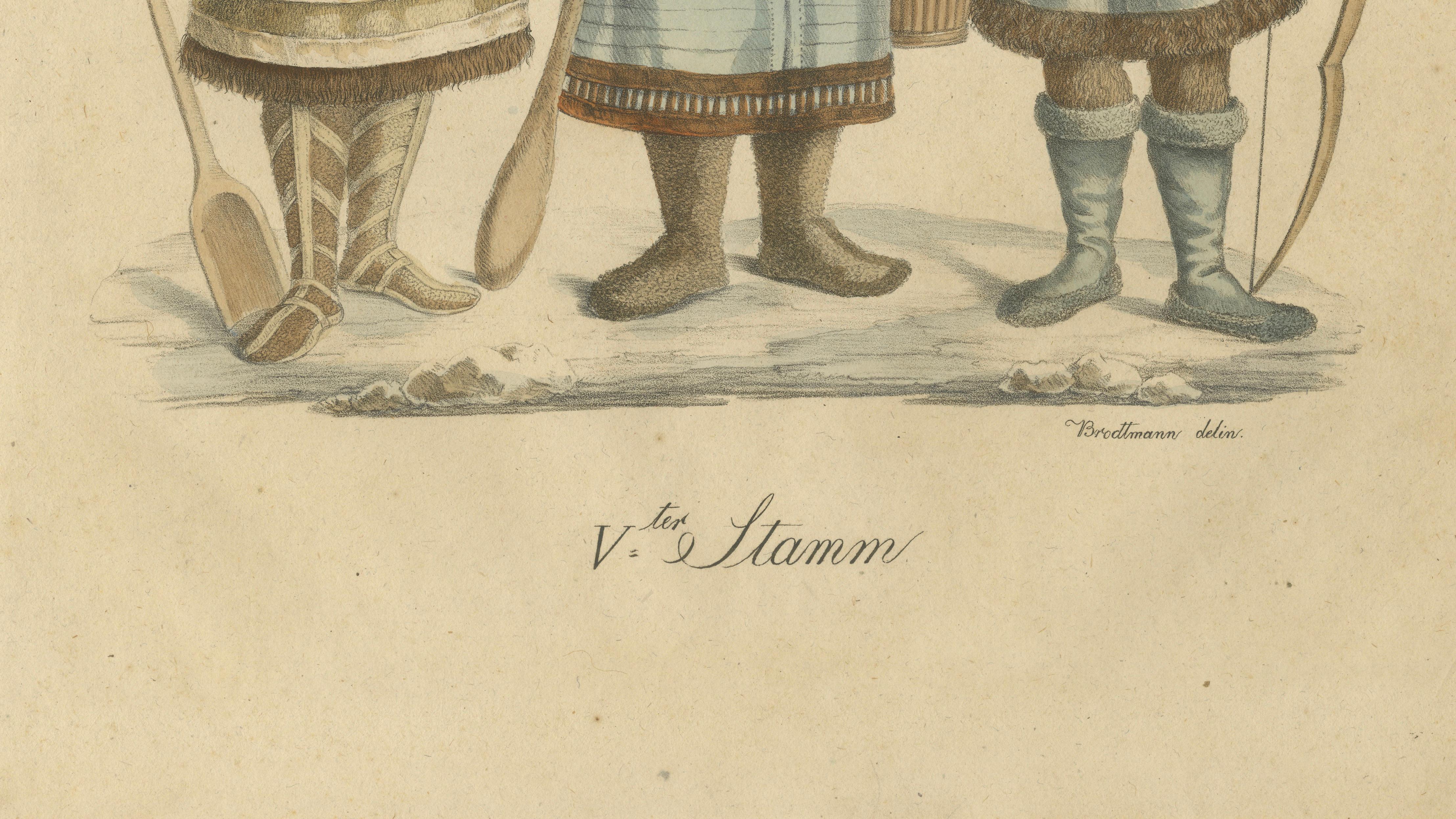
The print was created by Swiss artist Karl Joseph Brodtmann (1787–1862) and published in Lindau in 1816 as part of the celebrated Naturhistorische Bilder-Gallerie aus dem Thierreiche. Although best known for its natural history illustrations, the work also included a series of ethnographic plates portraying peoples from around the world. These images reflect the period's growing interest in geography, anthropology, exploration, and the documentation of cultures beyond Europe.
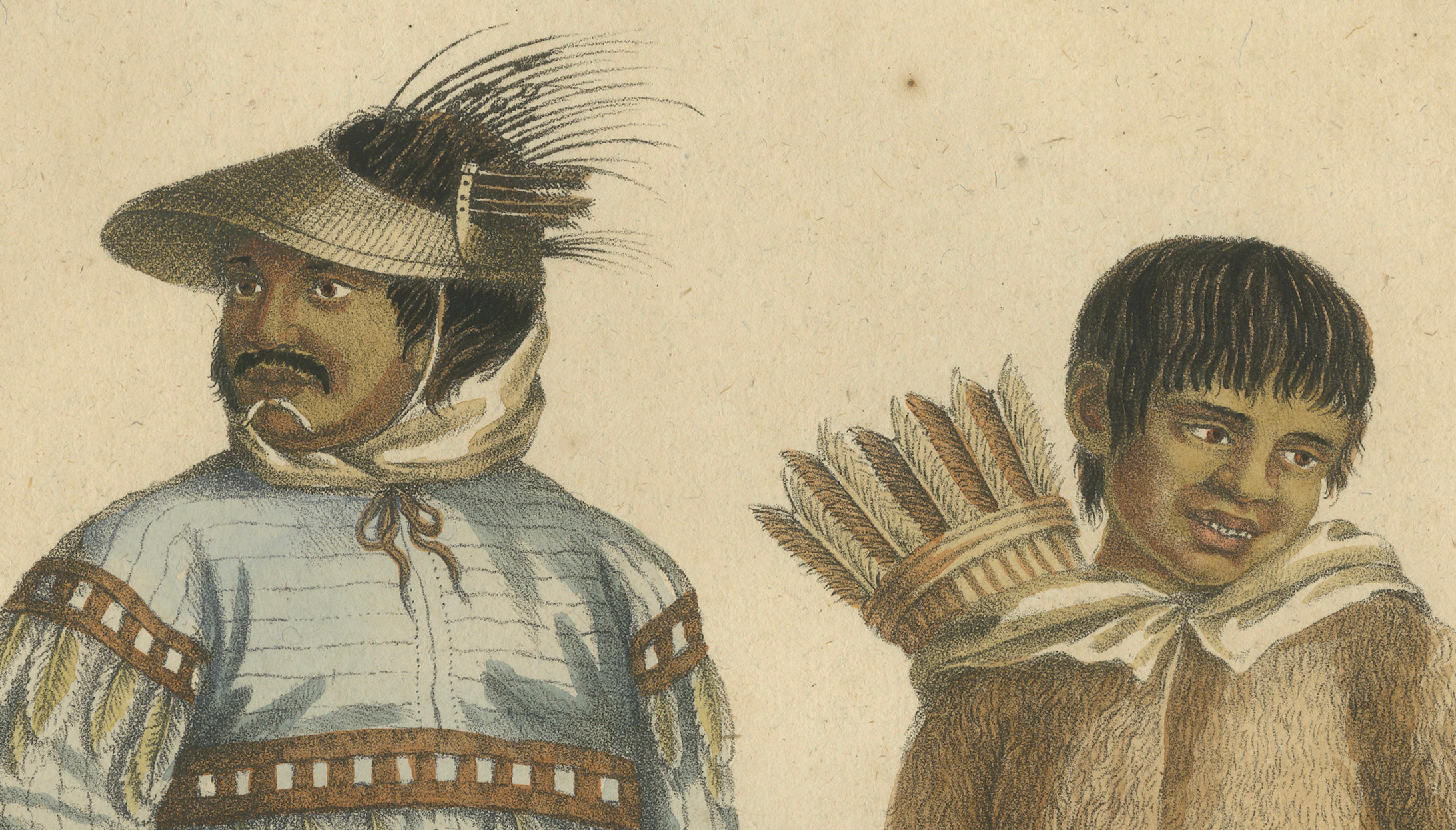
The Nenet woman is shown wearing traditional fur clothing adapted to the harsh conditions of northern Siberia. The Aleut man from Unalaska stands in the center carrying a basket and paddle, illustrating the maritime traditions of the Aleutian Islands. To the right, the Inuit youth is equipped with a bow and arrows, reflecting hunting practices that were essential for survival in Arctic environments. Together, the three figures provide a unique visual comparison of northern indigenous cultures stretching from Siberia across Alaska and into the Arctic regions of North America.
Brodtmann's lithographs are admired for their refined draftsmanship, delicate hand coloring, and attention to costume and cultural detail. The soft palette of earth tones, greys, and blues lends the composition a quiet elegance while emphasizing the practical beauty of Arctic clothing and equipment.
Today, such prints are valued by collectors of exploration, Arctic history, indigenous cultures, anthropology, and early lithography. Combining decorative appeal with historical significance, this sheet serves as both a work of art and a document of early nineteenth-century ethnographic curiosity.
Keywords: Nenet, Nenets, Aleut, Aleutian Islands, Unalaska, Inuit, Arctic Peoples, Indigenous Arctic Culture, Siberia, Alaska Native, Arctic Hunter, Ethnographic Print, Karl Joseph Brodtmann, Hand-Colored Lithograph, Polar Exploration, Anthropology, Traditional Costume, Cultural History, Northern Peoples, Indigenous Cultures, Early Lithography, Lindau 1816, Decorative Antique Print, Arctic Exploration, Ethnography.
Condition report:
Good condition considering age. Light age toning, occasional foxing, and minor handling wear consistent with a print over 200 years old. Original hand coloring remains attractive and well preserved. Please review photographs carefully.
Framing tips:
This print displays beautifully in a dark walnut, ebonized, or weathered oak frame with an ivory museum mat. The restrained Arctic palette benefits from understated framing that emphasizes the fine costume details and delicate hand coloring. Particularly suitable for studies, libraries, mountain retreats, and collections devoted to exploration, indigenous cultures, or Arctic history.
Technique: Hand-colored lithograph
Maker: Karl Joseph Brodtmann, Switzerland, published in Lindau, 1816.