About this sheet
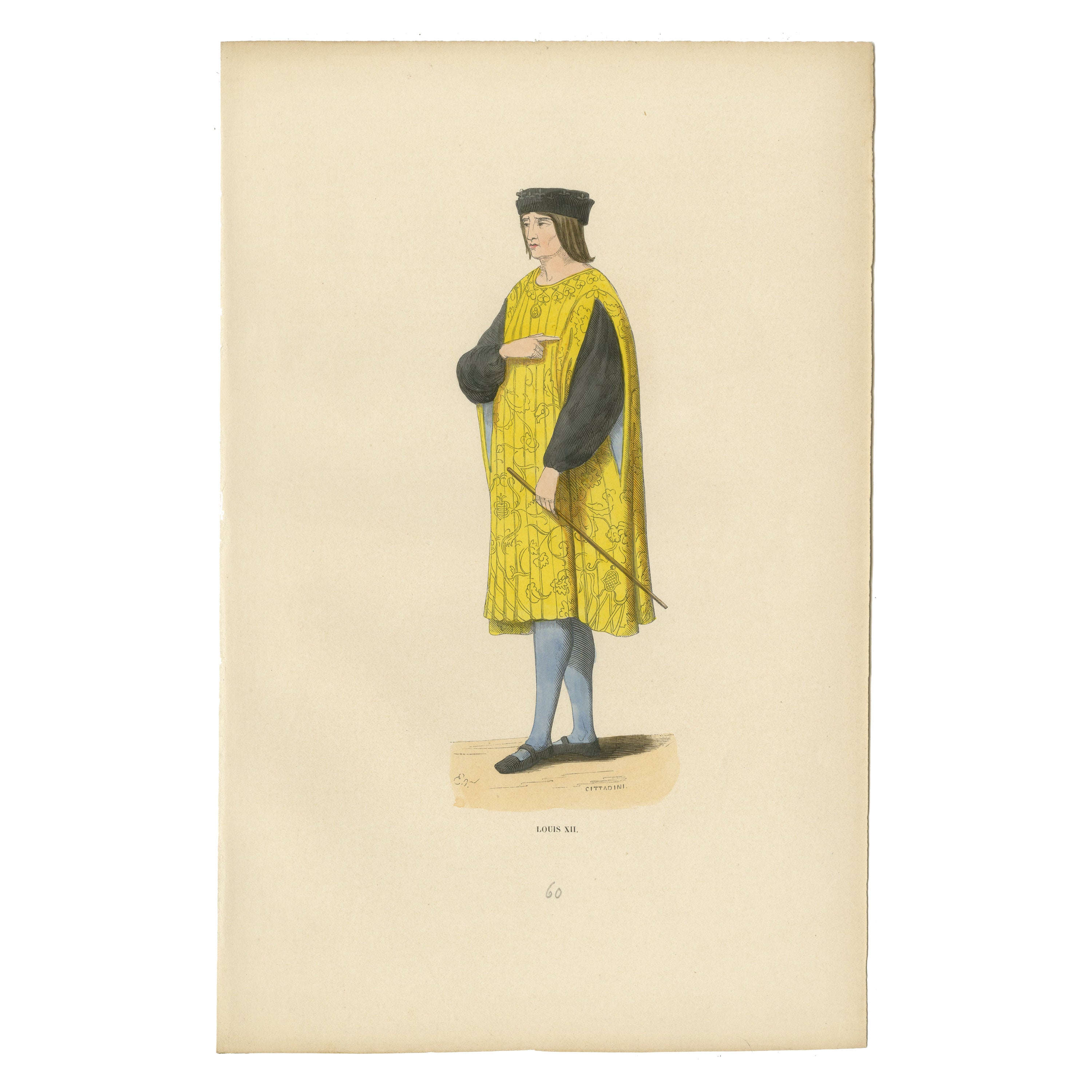
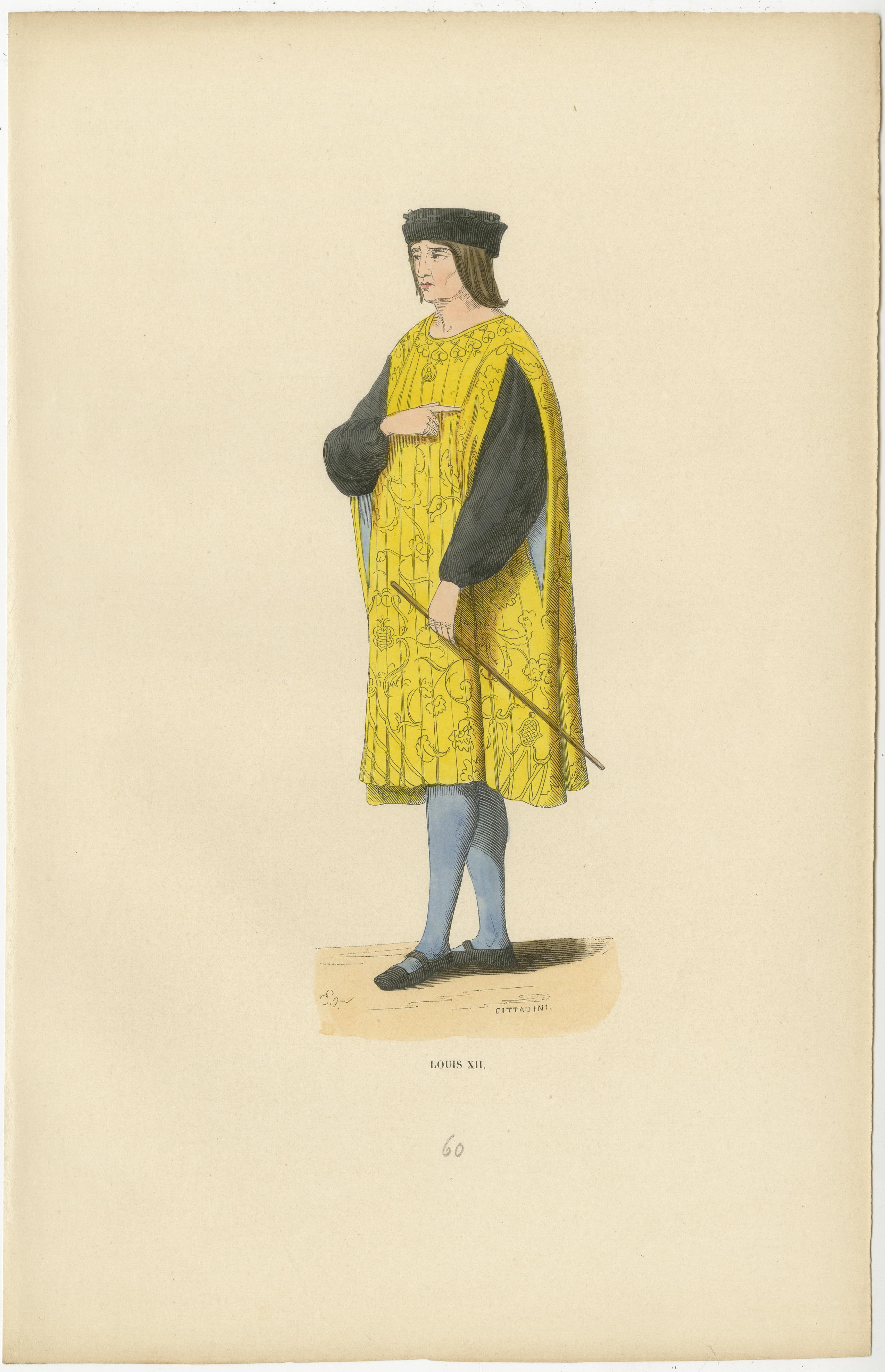
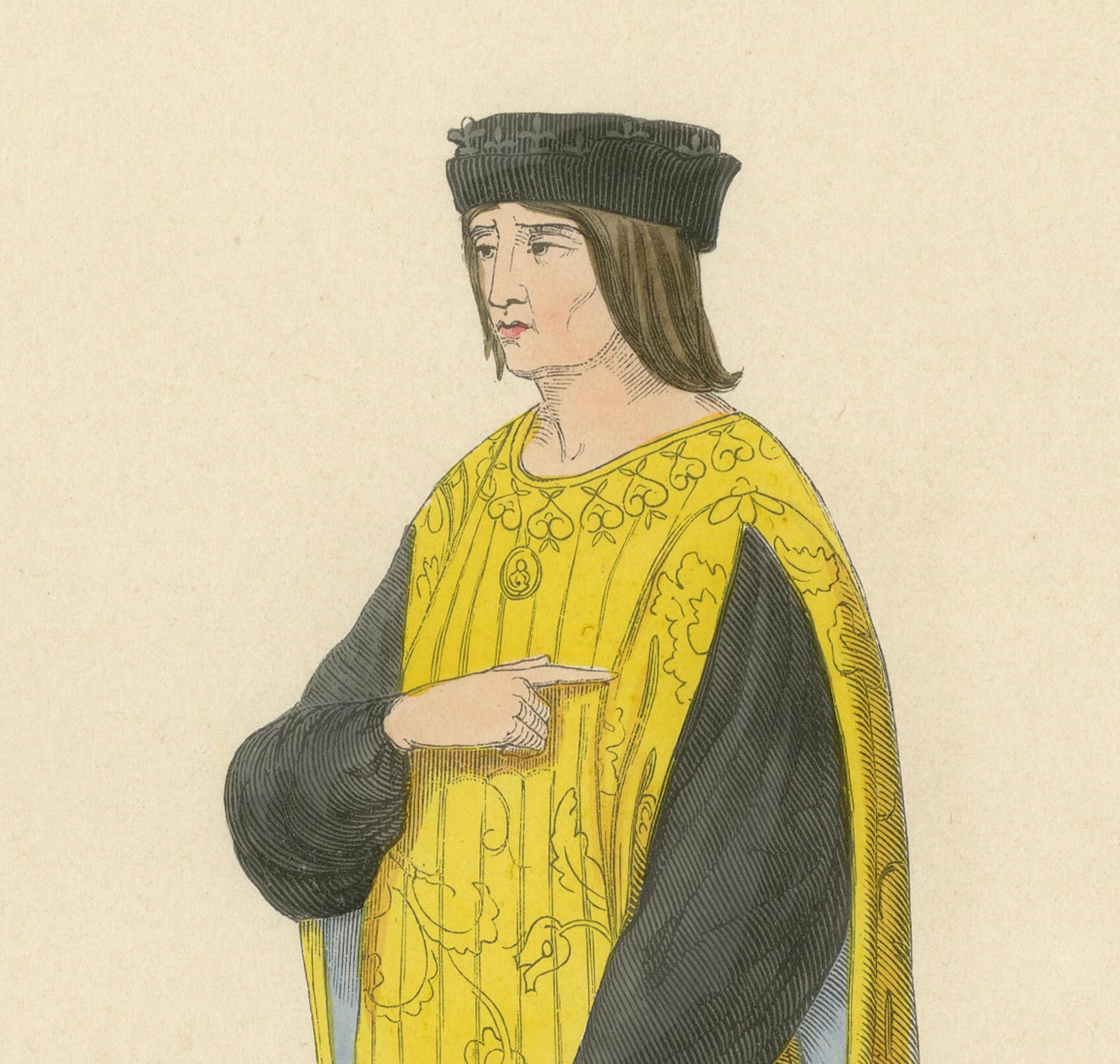
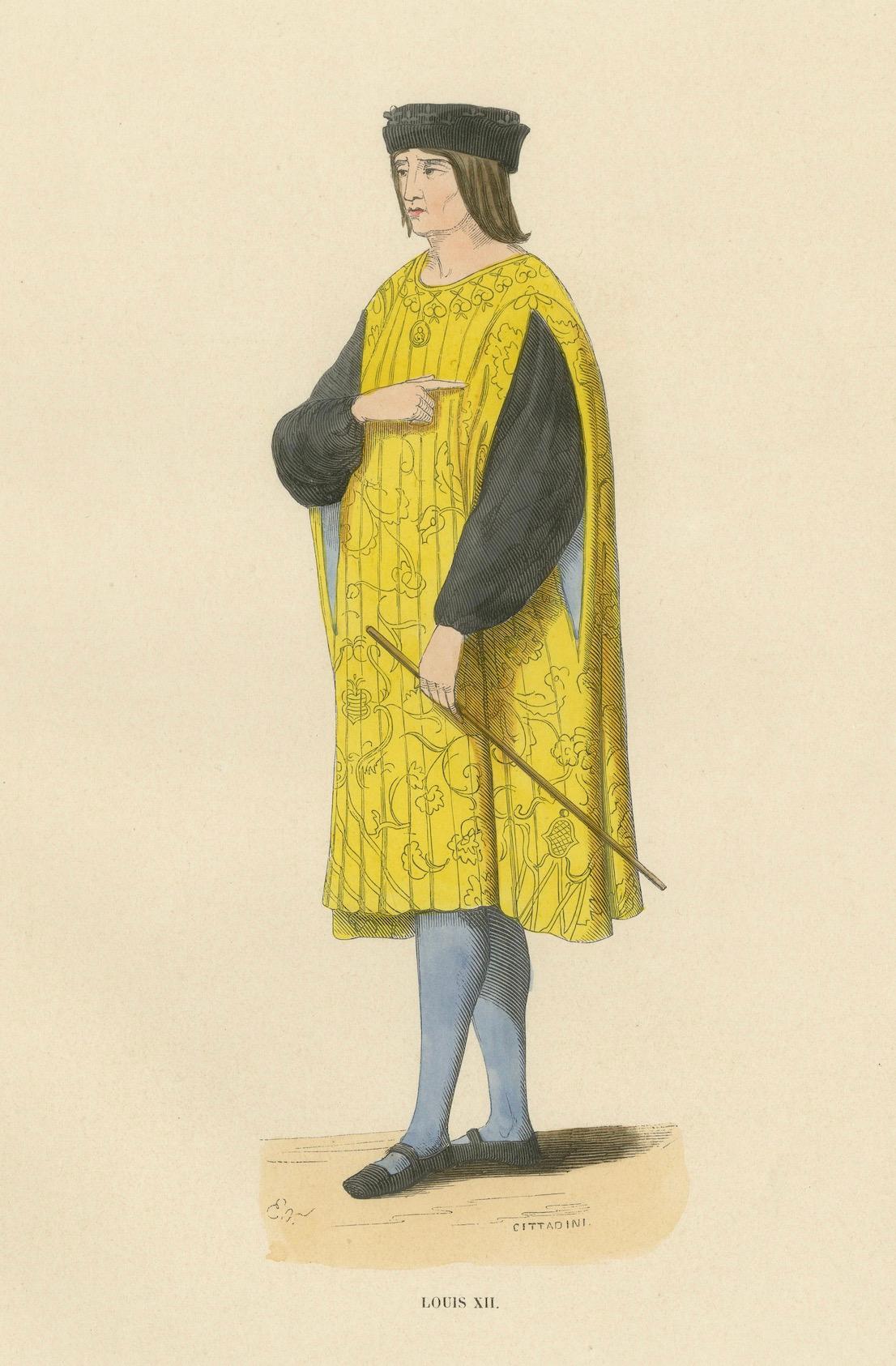
This print presents a dignified portrait of Louis XII, King of France, known for his prudent and just reign. Standing in profile, the king is depicted in royal attire that is both lavish and emblematic of his status.
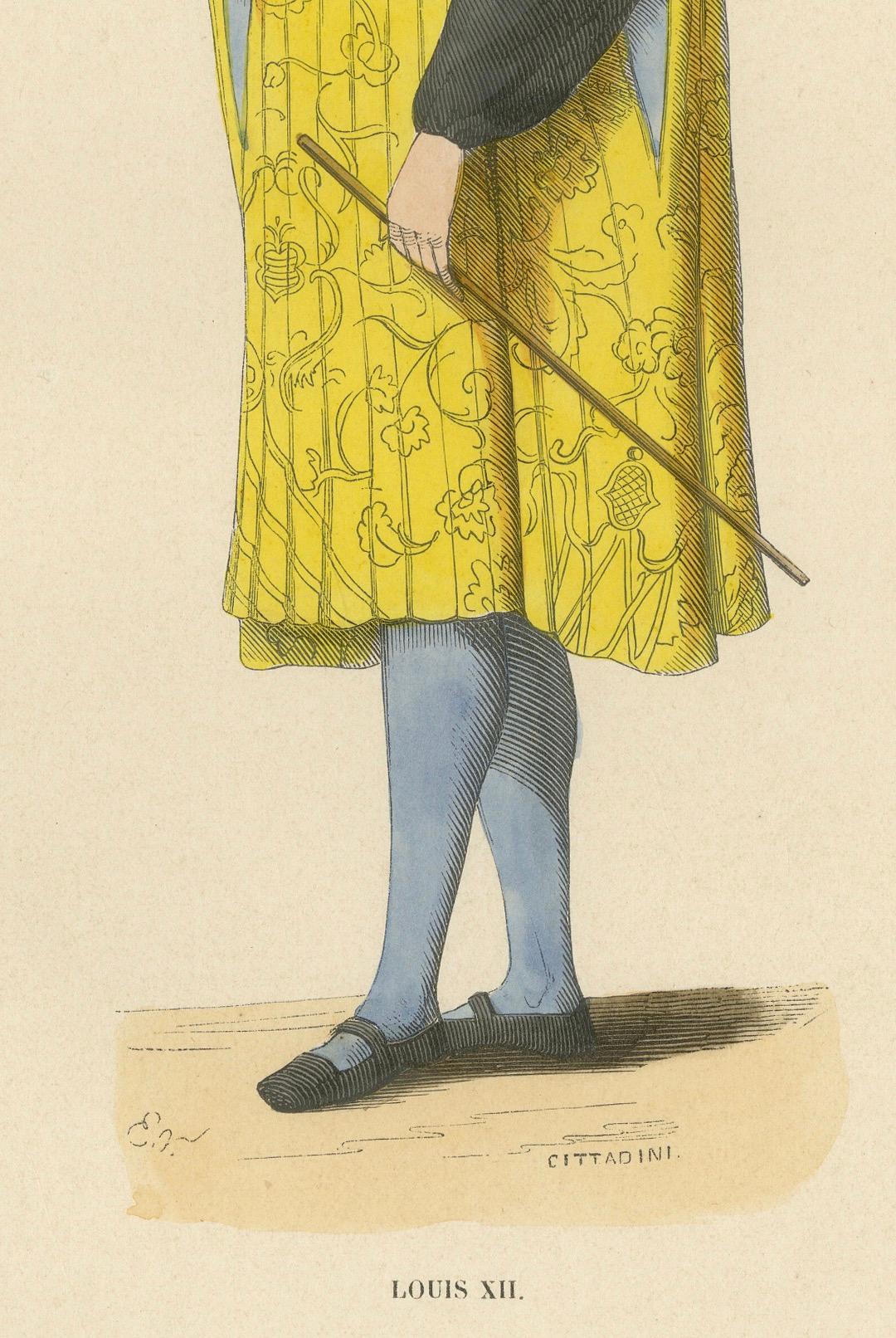
He is wearing a long, richly patterned yellow robe that falls straight to his feet, adorned with an intricate design that may represent fleurs-de-lis, symbolic of French royalty. The robe is edged with a dark fur trim, adding a layer of luxury and warmth, fitting for a king. Underneath, a black garment can be seen, with a sleeve that matches the fur trim of the outer robe.
On his legs, he wears blue hose, a common element of male fashion during the Renaissance, which contrasts with the bold yellow of his robe. His black shoes are simple and functional, with a squared toe.
Louis XII’s head is adorned with a dark, brimless hat, which sits atop his neatly cut hair. His facial expression is calm and reflective, with a hint of sternness, perhaps indicative of the serious responsibilities of kingship. In his right hand, he holds a slender scepter, reaffirming his authority and rule.
The background is minimalistic, ensuring that the focus remains on the figure of the king and his regal bearing. This print captures the essence of the monarch in a period of transition from the medieval to the Renaissance era, reflecting the cultural and stylistic changes of the time.
The colors have a nice glow over them. Historically, egg whites, known as glair, and sometimes egg yolk were indeed used in illumination and painting, particularly in manuscripts, to give colors a brighter appearance and to add a sheen or gloss to the work. This technique was quite common during the Middle Ages and into the Renaissance.
Egg whites can be applied as a varnish over pigments to enhance their brightness and to protect the colors. This application could make the colors appear more vivid and also add a slight glossy sheen to the surface of the image.
Egg yolk, on the other hand, was commonly used as a binding agent in paint. It forms the basis of tempera paint, a medium that was widely used before the advent of oil painting. Egg yolk helps to create a durable and long-lasting color that adheres well to various surfaces.
In the context of the print from 1847, it's less likely that egg whites or yolks were used directly on the print, as by that time, commercial printing processes would have been more advanced and less reliant on such manual methods. However, if this print is a representation of an earlier style or is meant to mimic the appearance of hand-painted manuscripts, the original artists might have employed techniques or materials that gave a similar effect to those achieved with egg-based binders and varnishes.