About this sheet
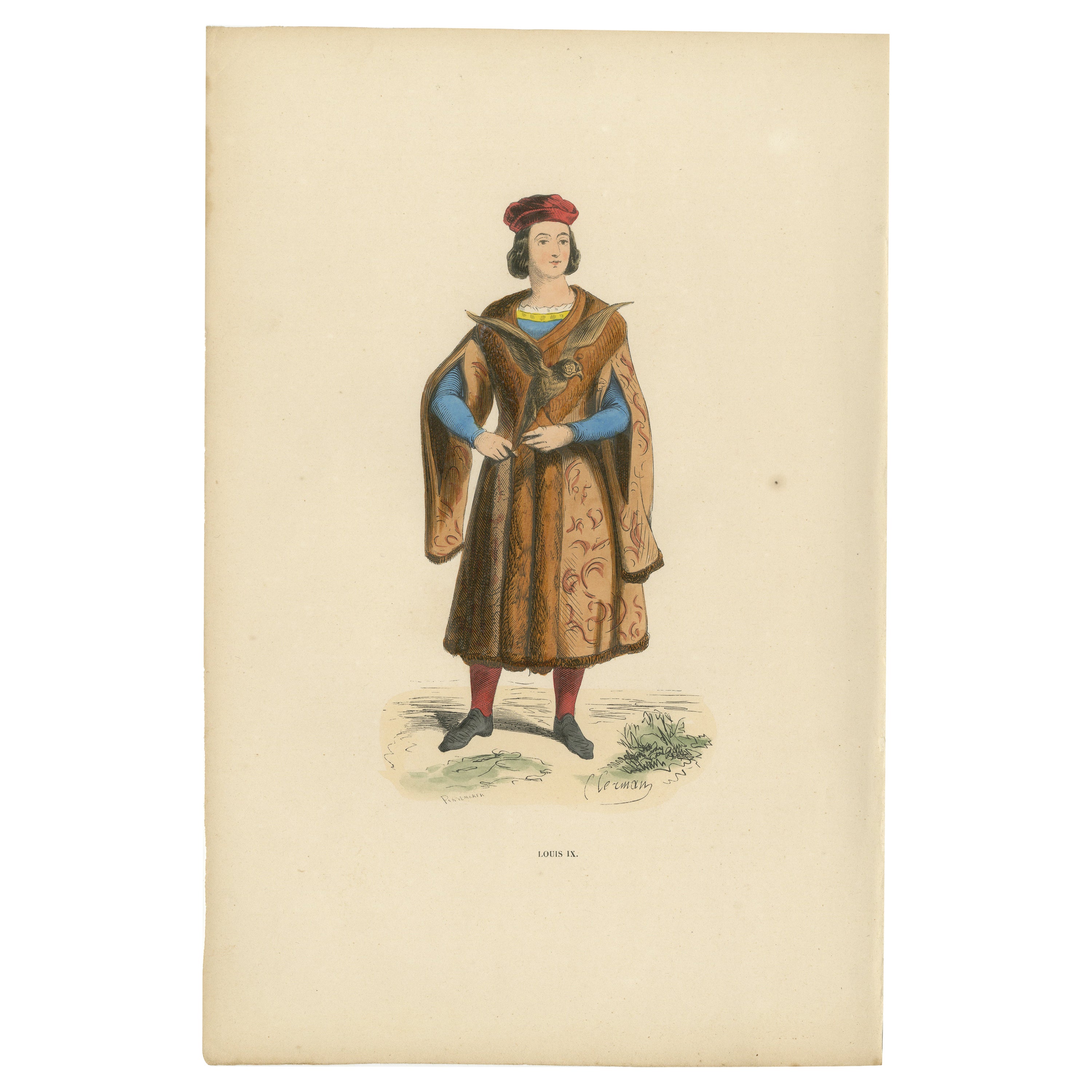
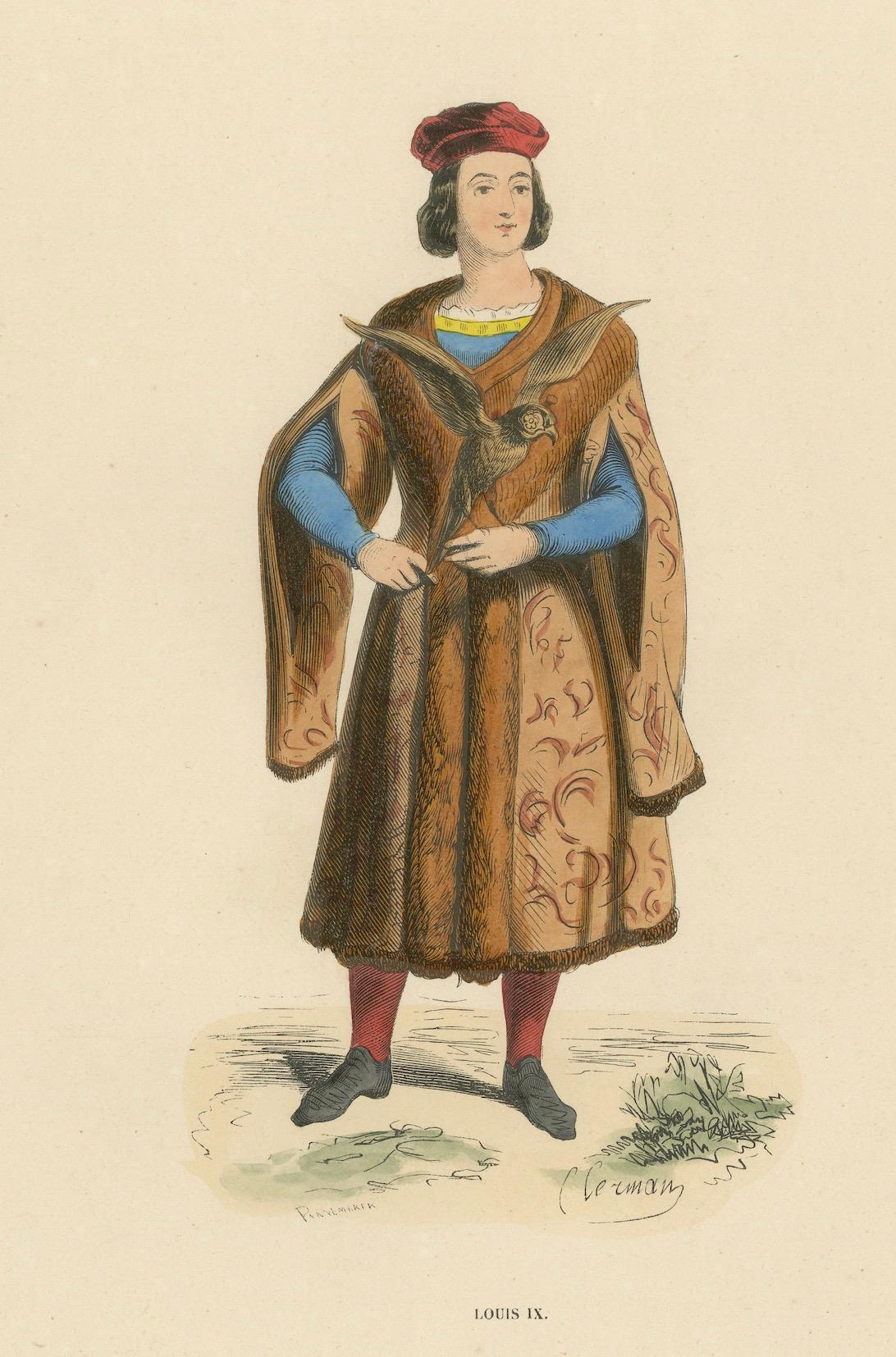
The image is a hand-colored engraving titled "Louis IX," representing the 13th-century King of France, also known as Saint Louis, renowned for his Christian zeal and justice. It is part of the "Costume du Moyen Age" series from 1847, which illustrates the fashion and historical figures of the Middle Ages.
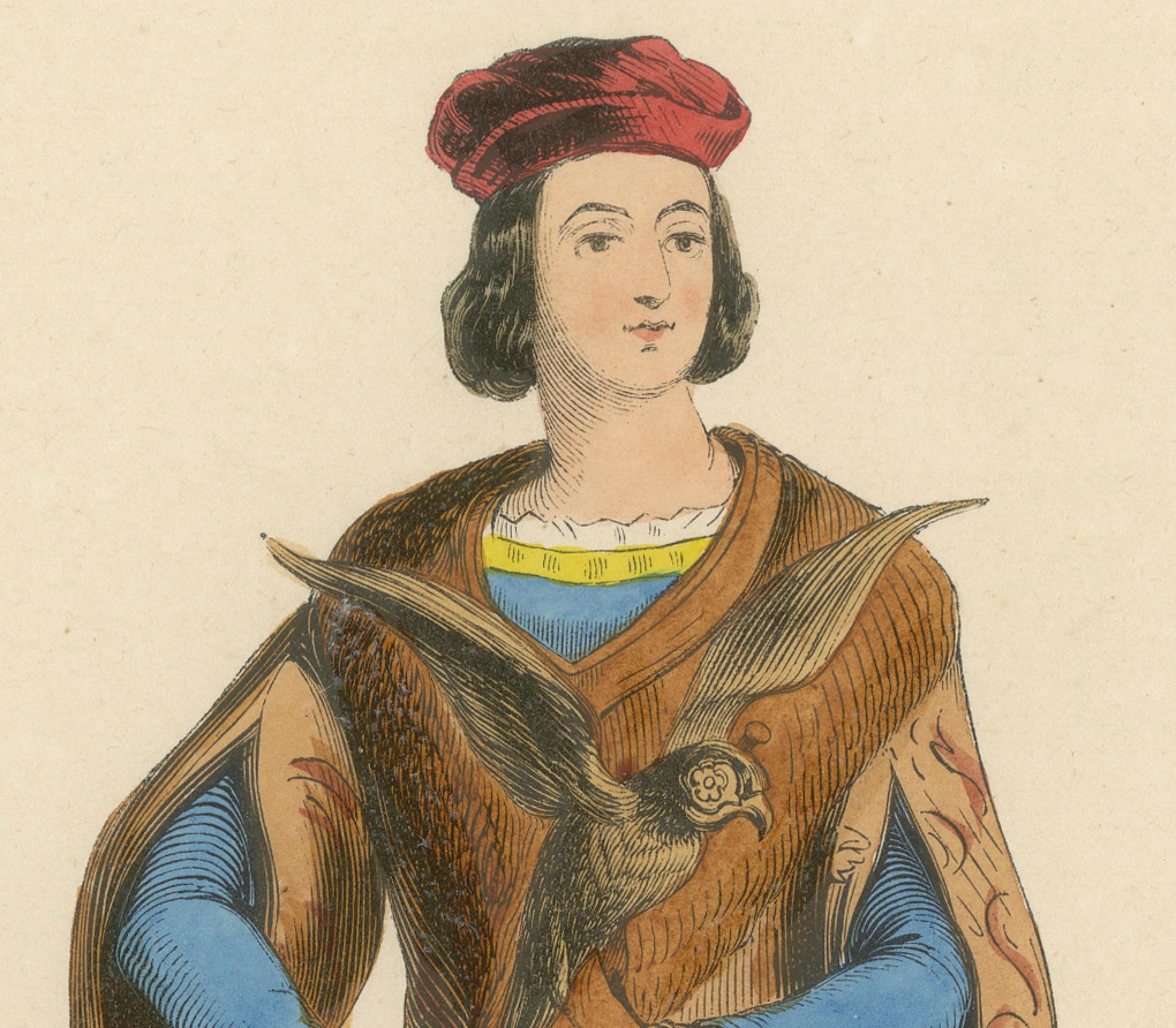
In the portrait, Louis IX is depicted in regal attire. He wears a long brown fur-lined robe adorned with floral patterns, possibly symbolizing royalty or a connection to the divine—a nod to his canonization. The robe is open in the front to reveal a blue tunic and a yellow undergarment that peeks from the neckline, suggesting layers of clothing that denote status and provide warmth.
His head is adorned with a red chaperon, a type of headgear popular in the medieval period, which sits atop his long, dark hair. His pose is stately, with his right hand slightly raised in a gesture that may indicate a moment of giving a command or blessing, befitting his reputation as a just ruler and a saintly figure.
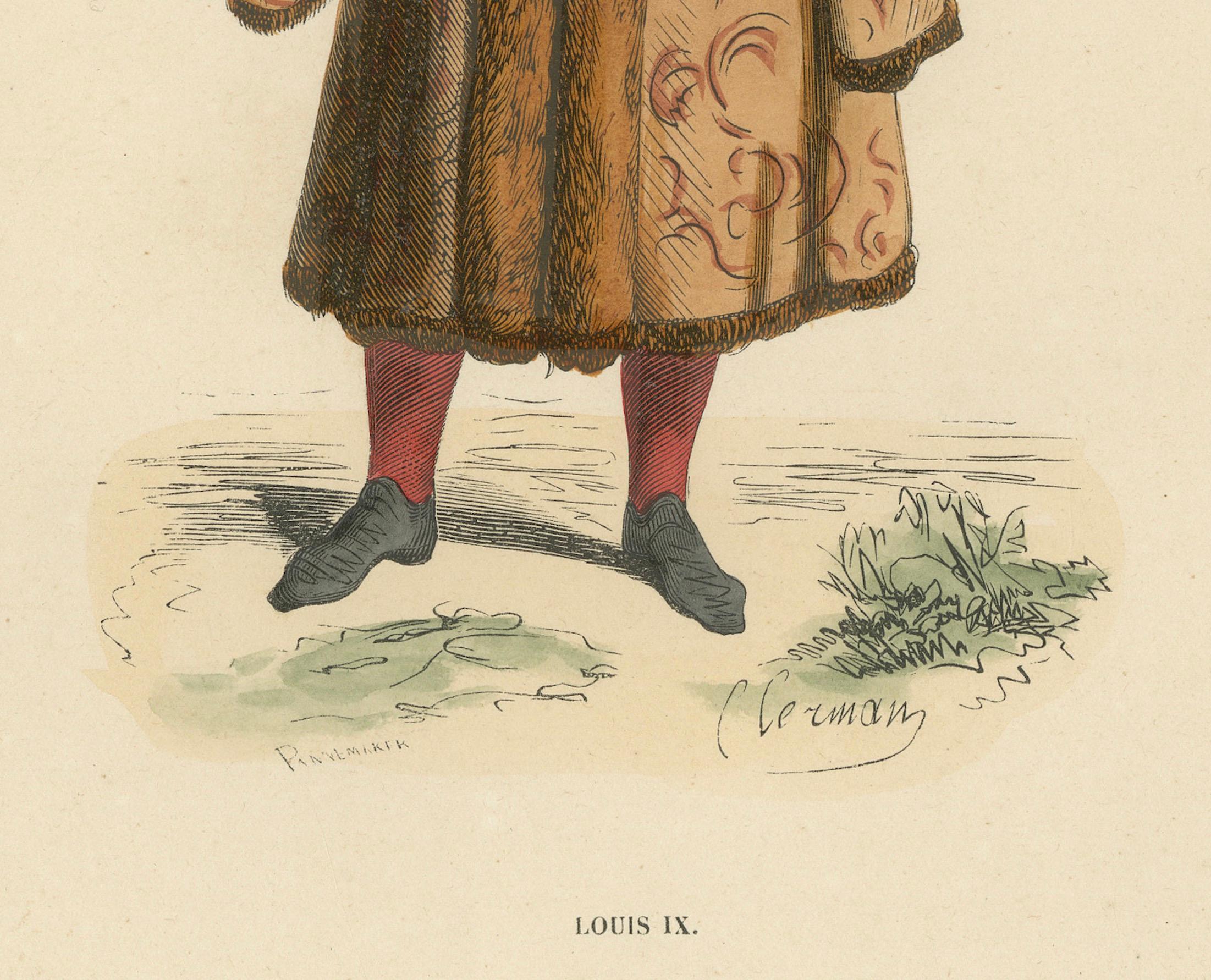
The hose he wears are a rich red color, fitting tightly to his legs, a common fashion of the time for men of status. His footwear is black and simple, which may emphasize practicality and humility, traits often associated with Louis IX's persona.
The background is minimal, featuring just a hint of the natural landscape, which ensures the focus remains on the figure and his attire. This image offers a glimpse into the idealized representation of one of France's most venerated kings, capturing the essence of his piety and regality.
The colors have a nice glow over them. Historically, egg whites, known as glair, and sometimes egg yolk were indeed used in illumination and painting, particularly in manuscripts, to give colors a brighter appearance and to add a sheen or gloss to the work. This technique was quite common during the Middle Ages and into the Renaissance.
Egg whites can be applied as a varnish over pigments to enhance their brightness and to protect the colors. This application could make the colors appear more vivid and also add a slight glossy sheen to the surface of the image.
Egg yolk, on the other hand, was commonly used as a binding agent in paint. It forms the basis of tempera paint, a medium that was widely used before the advent of oil painting. Egg yolk helps to create a durable and long-lasting color that adheres well to various surfaces.
In the context of the print from 1847, it's less likely that egg whites or yolks were used directly on the print, as by that time, commercial printing processes would have been more advanced and less reliant on such manual methods. However, if this print is a representation of an earlier style or is meant to mimic the appearance of hand-painted manuscripts, the original artists might have employed techniques or materials that gave a similar effect to those achieved with egg-based binders and varnishes.