About this sheet
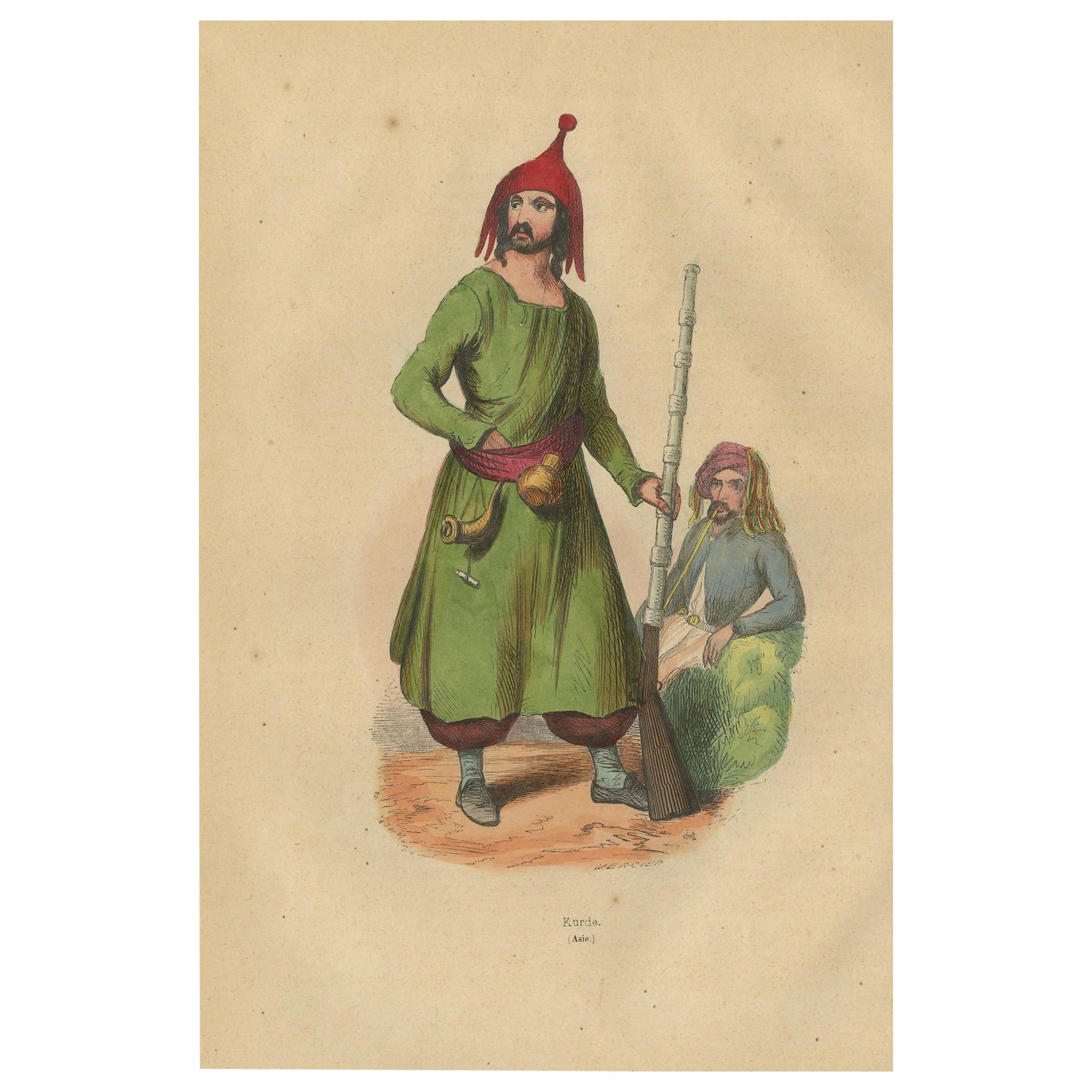
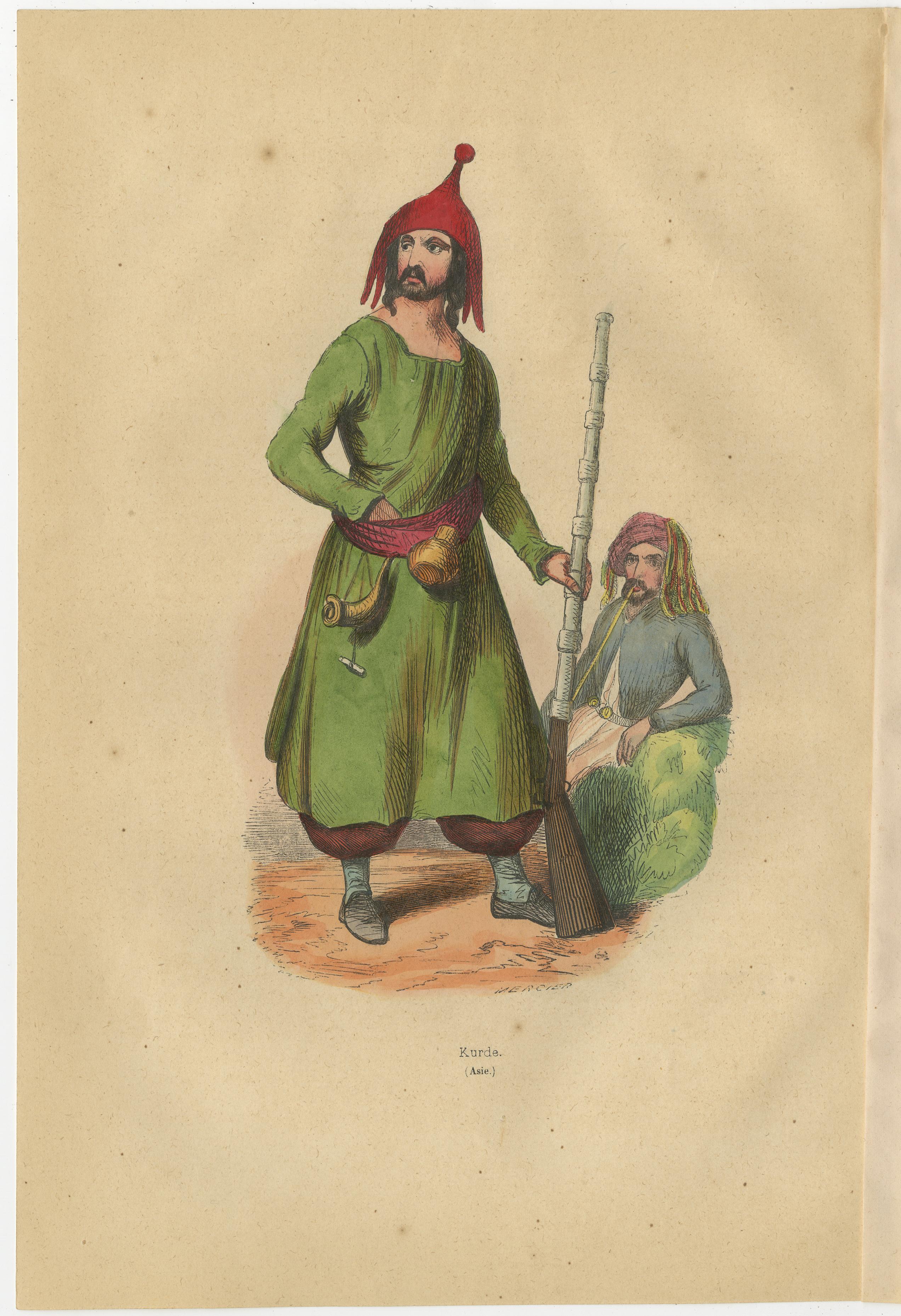
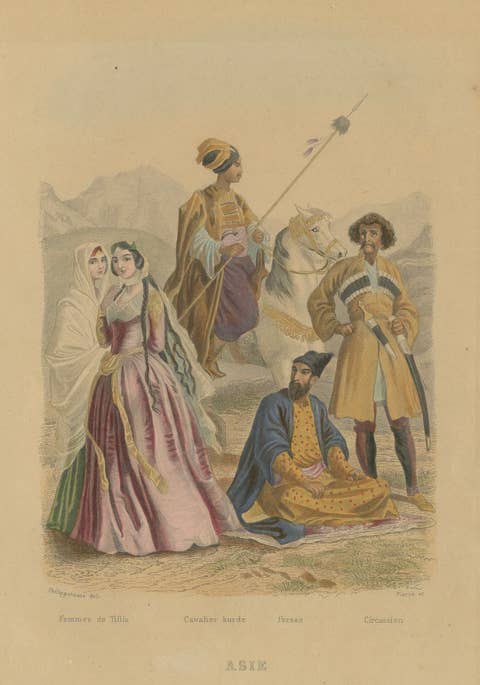
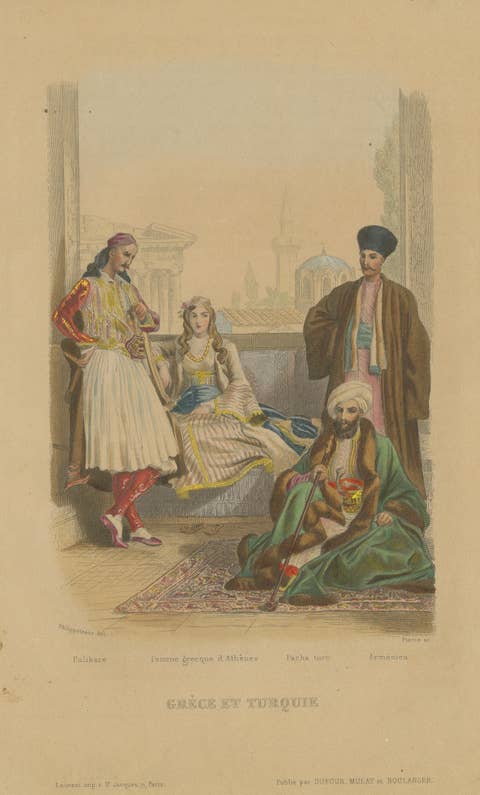
This hand-colored lithograph titled "Kurda" showcases a Kurdish man in traditional attire, complete with distinctive elements such as a red hat and a long green robe. This print is part of the Asia volume of "Moeurs, Usages et Costumes de tous les Peuples de Monde" (Customs, Manners, and Dress of All the Peoples of the World), published in 1844 in Paris by Poiree, Pilout, Duterte, and Martinon.
The image was produced by an anonymous engraver following designs by Auguste Wahlen, with contributions from artists like Evrard Duverger, L. Markaert, and R. King.
Attractiveness:
The print is notable for its vivid coloring and detailed depiction of the Kurdish warrior's costume and accessories. The use of Arabic gum enhances the depth and glossiness of the colors, making the lithograph strikingly attractive. It captures the rich cultural heritage and attire specific to the Kurdish people of the time.
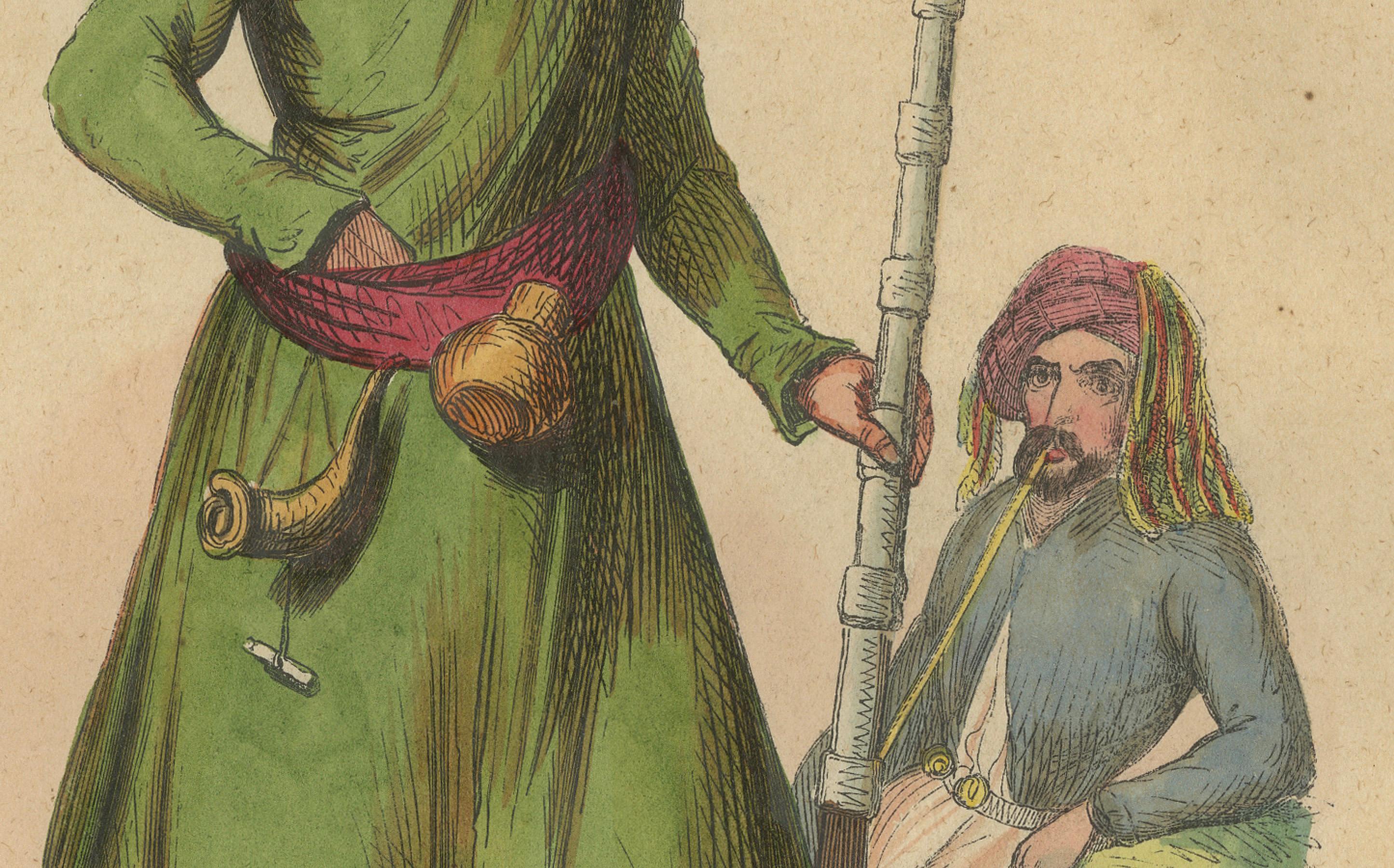
The lithograph of the Kurdish man offers a rich visual representation that captures the traditional attire and accessories associated with Kurdish culture during the 19th century. Here are some details that make this print particularly interesting:
Weapon:
The weapon carried by the Kurdish figure appears to be a type of long rifle, possibly a jezail. The jezail was commonly used by various tribes in the Middle East and Central Asia, known for its long, curved barrel which enhanced its accuracy at long distances. It was a favored weapon among mountainous tribes due to its utility in rugged terrains.
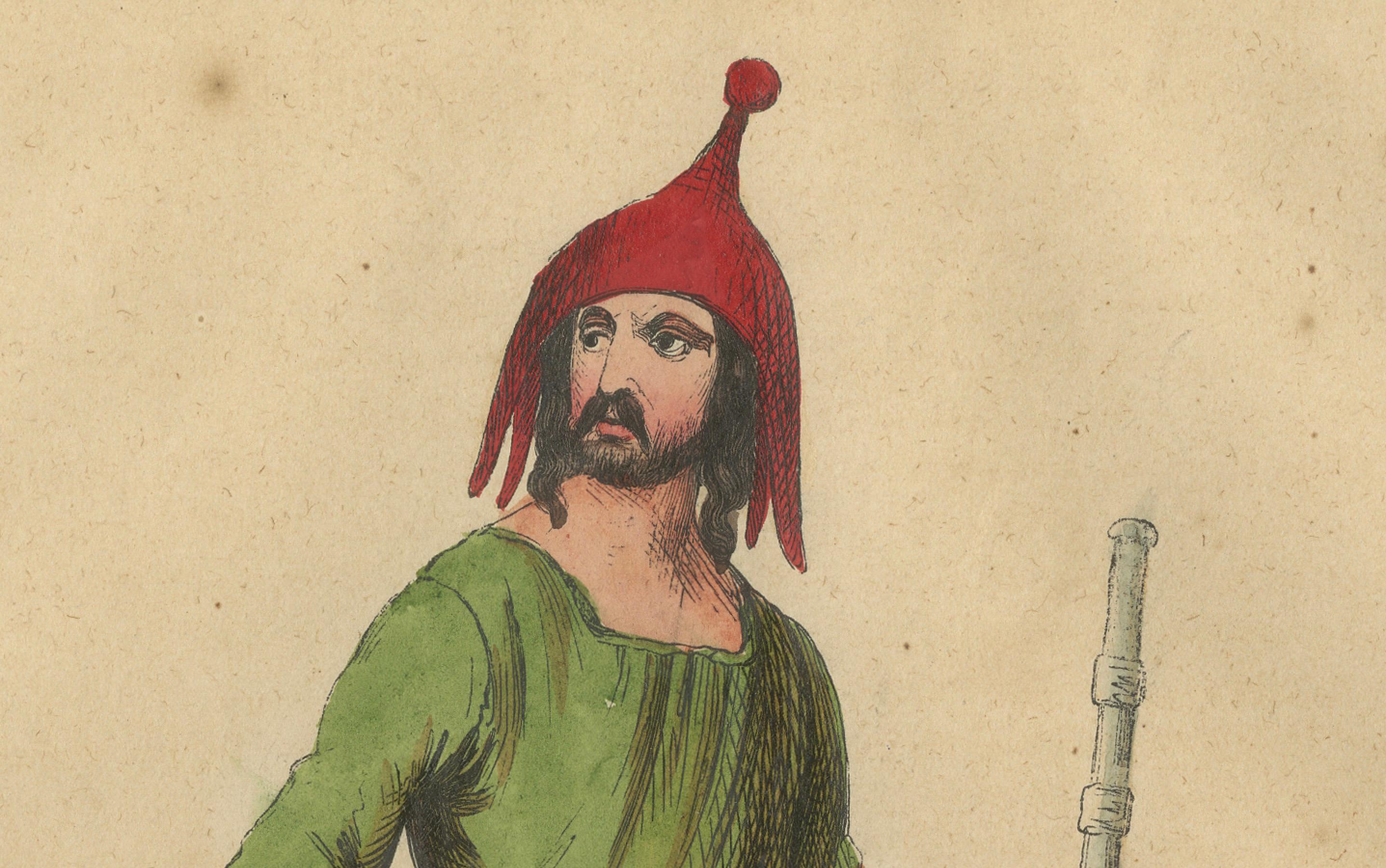
Headgear:
The red hat worn by the figure is known as a "kolah," a traditional Kurdish hat. This type of hat often has a pointed top and is sometimes adorned with a tassel or other decorative elements. It is a distinctive piece of Kurdish cultural attire, reflecting elements of identity and tradition.
Horn:
The horn attached to the man’s belt is likely a powder horn, used for carrying gunpowder. Powder horns were essential accessories for firearms before the advent of cartridge-based ammunition, allowing the user to reload their weapon efficiently. The use of a horn, often crafted from animal horn, helped to keep the gunpowder dry and was a common sight among warriors and hunters who relied on muskets or rifles.
Other Details:
Additionally, the print shows the man wearing a sash around his waist, often used to hold weapons or tools, reinforcing the image of the man as equipped for defense or battle. The clothing and the overall pose of the figure convey a sense of readiness and alertness, traits valued in a warrior culture.
These elements together not only depict the physical appearance of a 19th-century Kurdish warrior but also provide insight into the functional aspects of his attire and equipment, reflecting his societal role and the practical needs of his environment.
Keywords for Searching:
To find similar prints, keywords such as "Kurdish traditional costume prints," "1844 Wahlen lithograph," "hand-colored lithographs," "historical Kurdish attire," and "chromolithography art" would be useful. These terms help locate historical art pieces that focus on the cultural and traditional representations of different ethnic groups from the 19th century.