About this sheet
Italy 10th–16th Century, Set of Eight Antique Hand-Colored Costume Prints
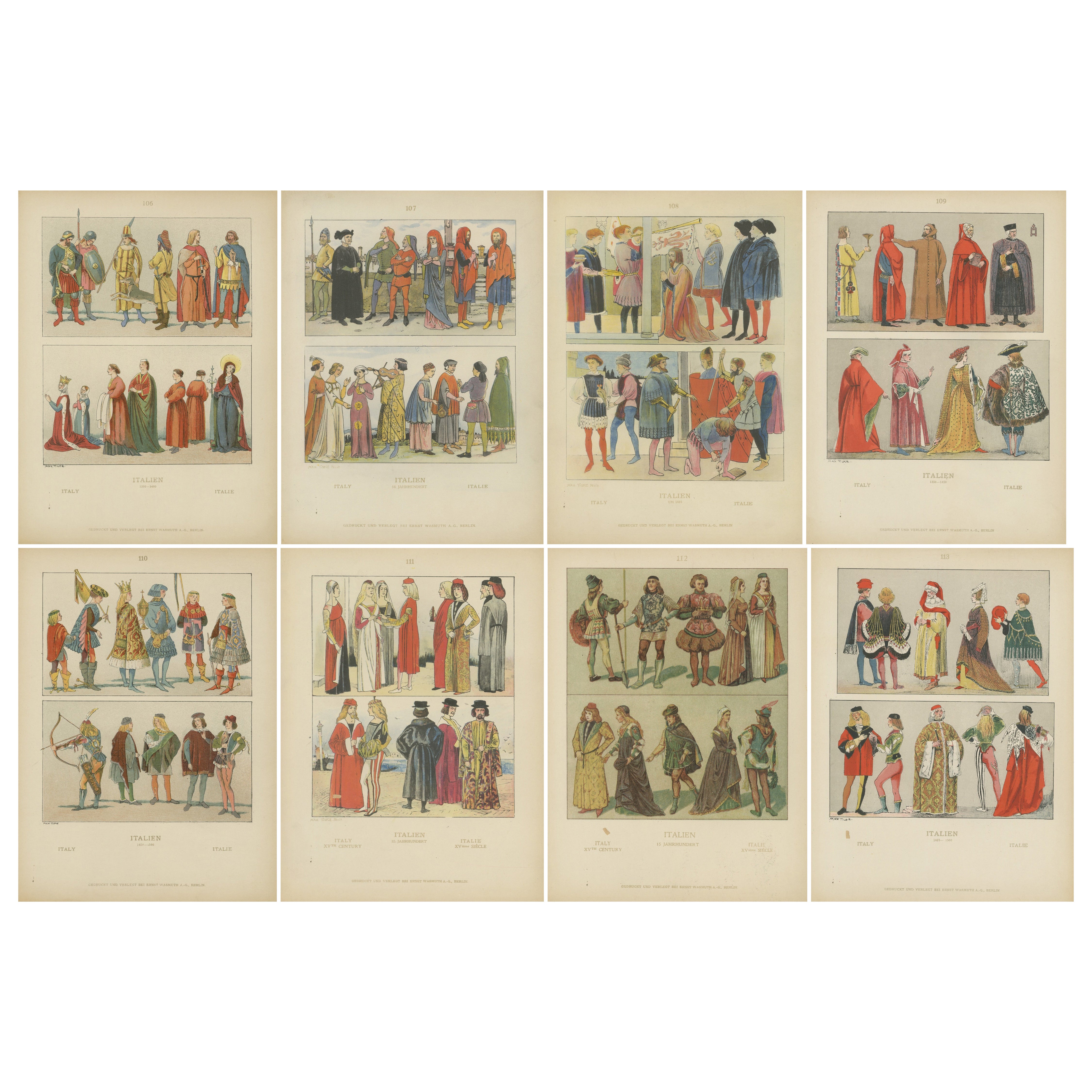
This impressive set of eight hand-colored costume plates offers a sweeping visual history of Italian dress from the early medieval period through the flourishing of the Renaissance. Produced by Ernst Wasmuth A.-G. in Berlin after designs by Max Tilke, the series covers nearly seven centuries of Italian clothing, social identity, and artistic culture. Rare to find as a complete, consecutive group, these plates provide a richly detailed narrative of Italy’s evolving fashion tradition.
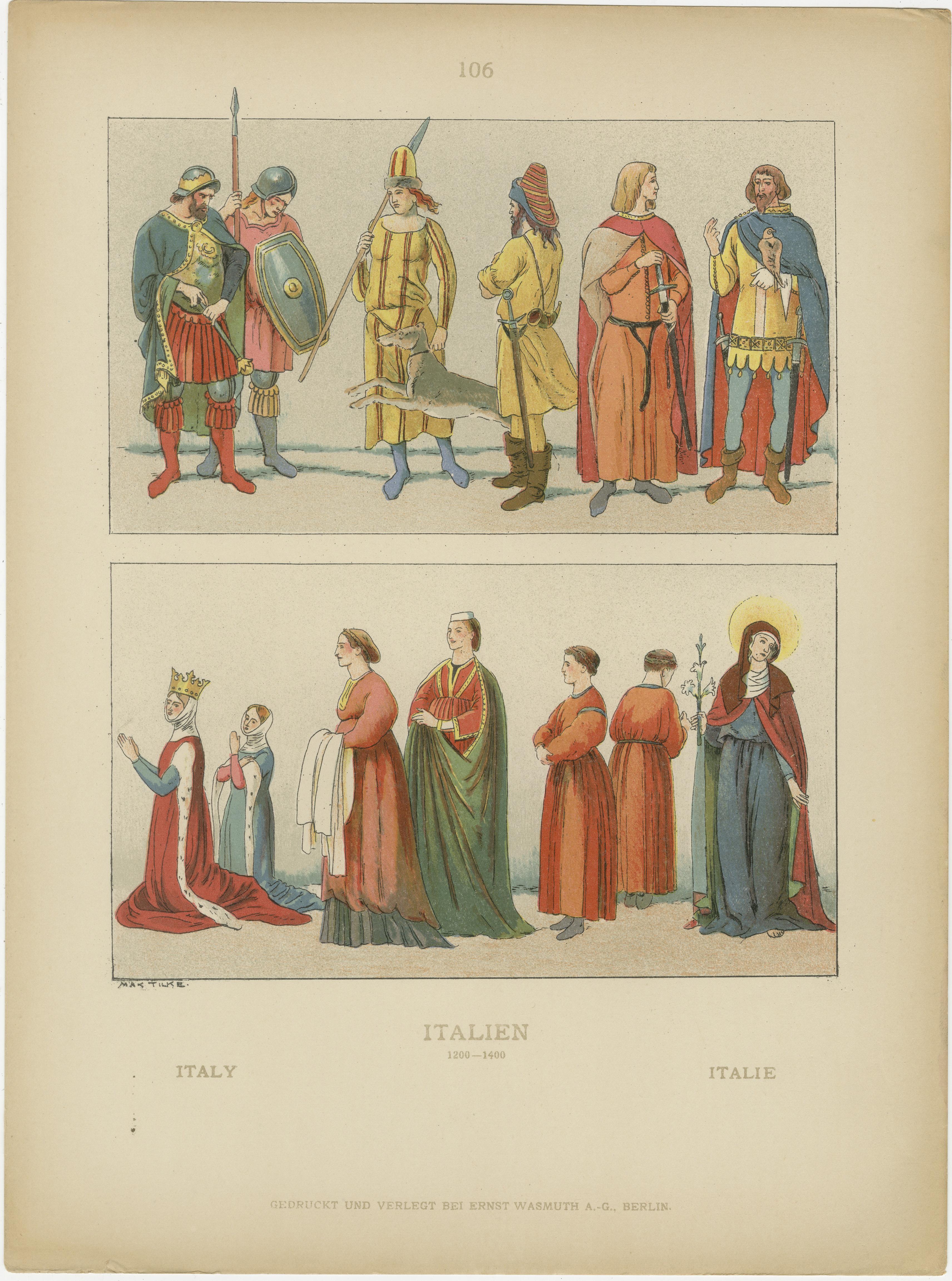
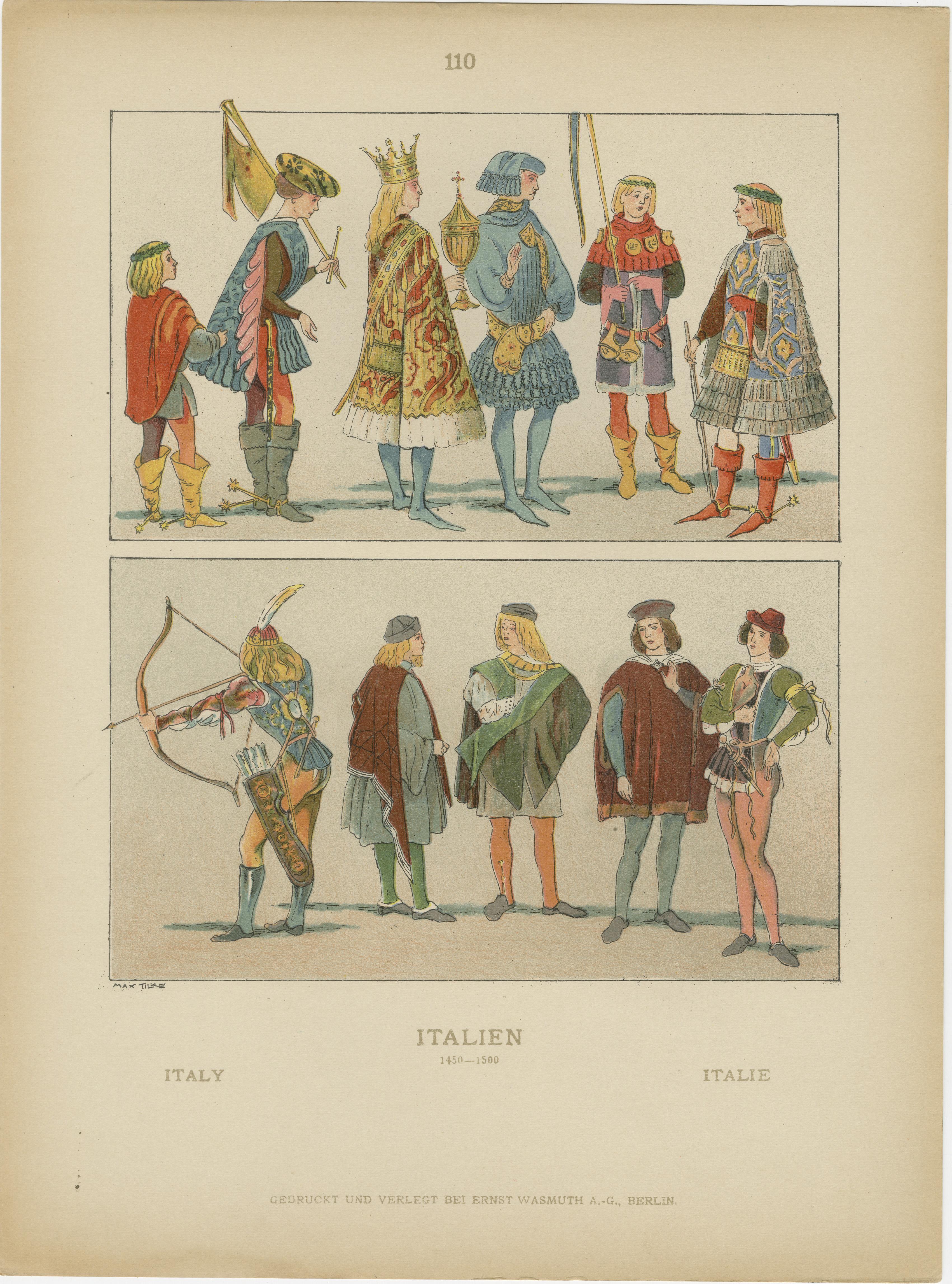
Plate 106 introduces early medieval Italy, depicting warriors, courtiers, and noblewomen in long tunics, mantles, and draped robes—a visual language shaped by Byzantine, Lombard, and early Christian influences. Plate 107 moves forward to the 12th and 13th centuries, with an elegant ensemble of scholars, merchants, noblemen, and women in more fitted garments, distinctive veils, and decorative fabrics reflecting Italy’s rising city-states and mercantile wealth.
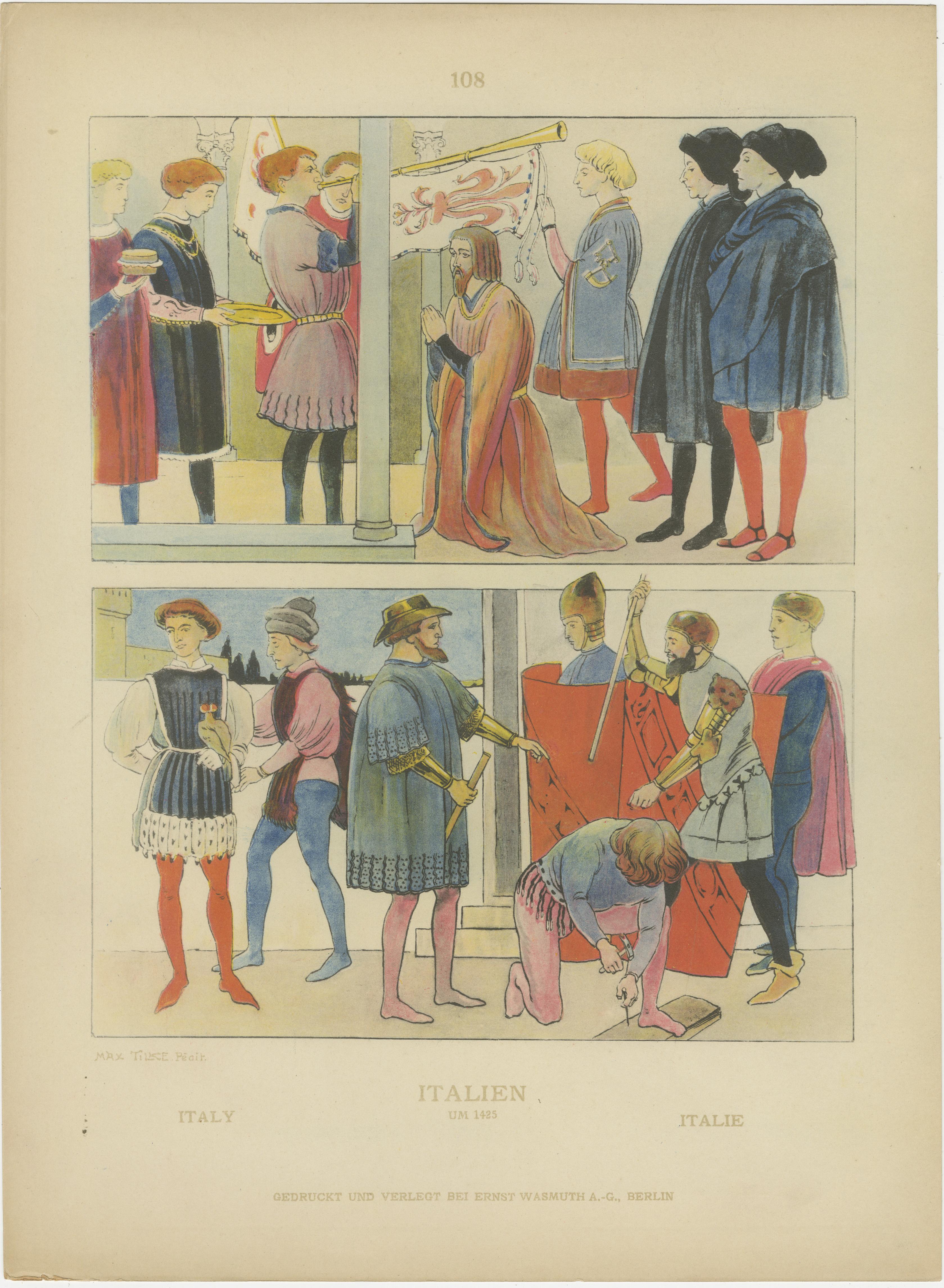
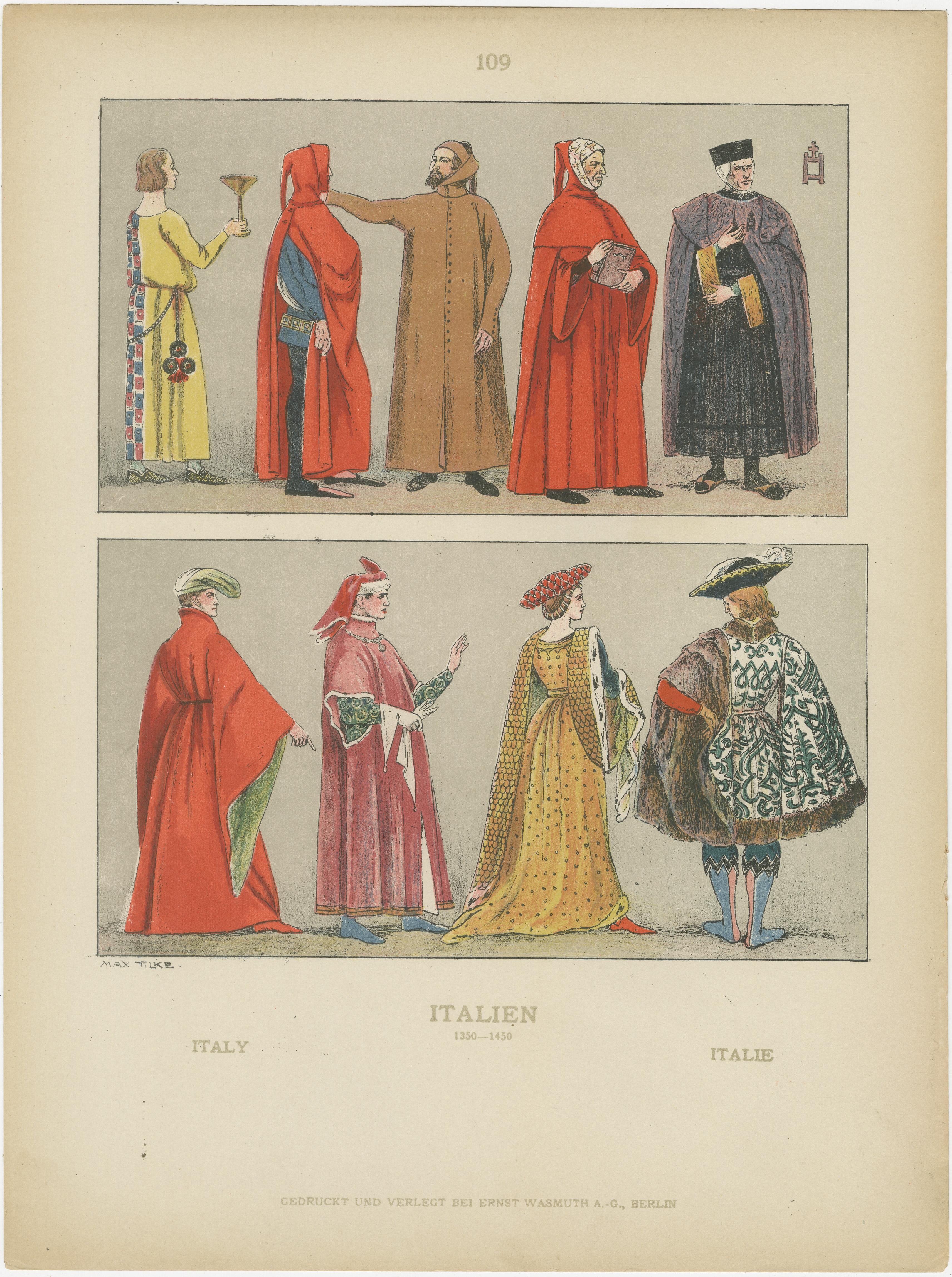
Plate 108 captures the transition into the 14th century, showing tailors, artisans, court officials, and elegantly dressed courtiers whose shorter tunics, split sleeves, and refined silhouettes reflect a society deeply influenced by urban culture and artistic innovation. Plate 109 highlights the early Renaissance, presenting clerics, merchants, and noblewomen in richly colored robes, fur-lined mantles, elaborate headwear, and the first glimpses of humanist fashion.
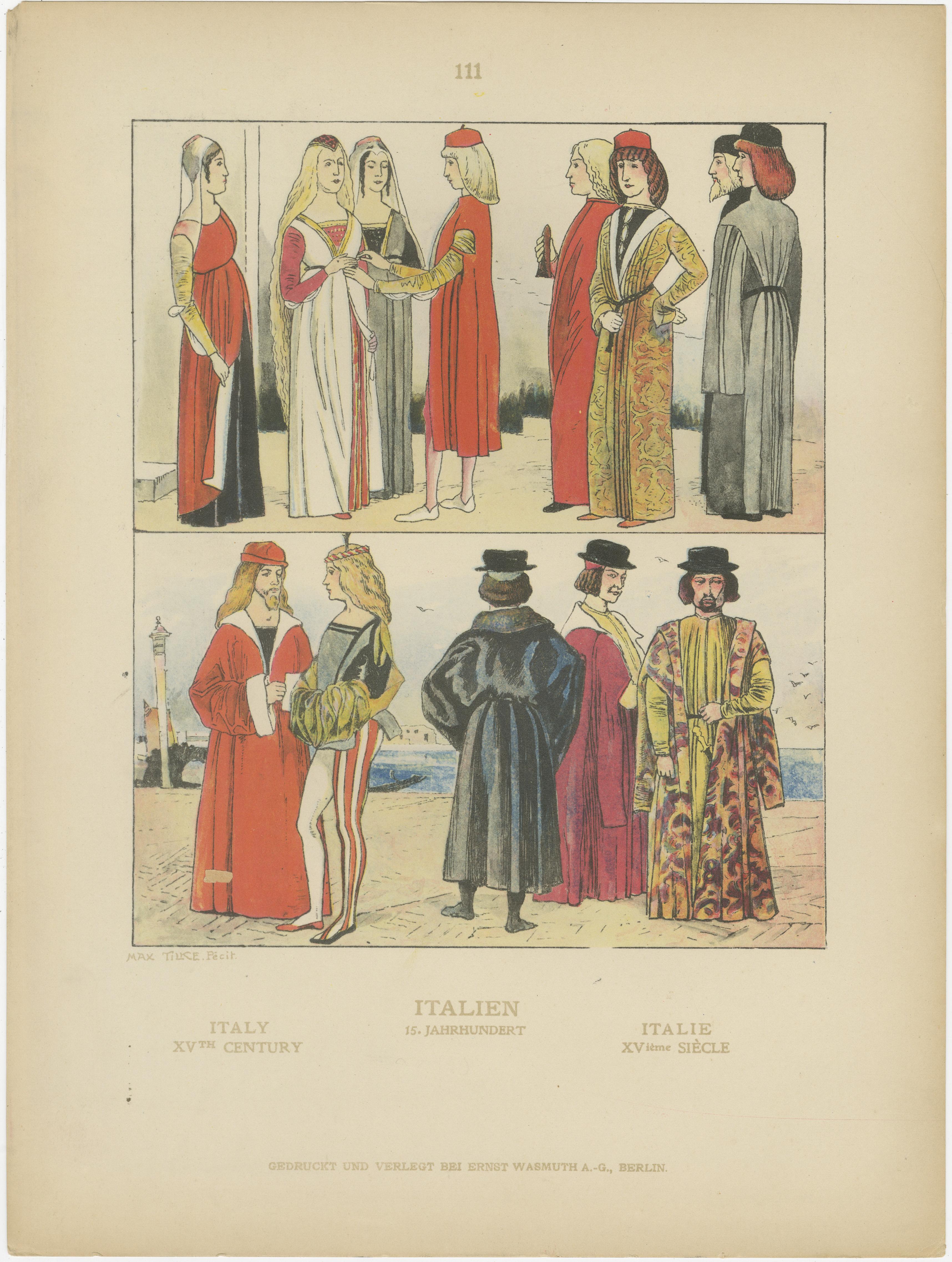
From Plate 110 onward, the Renaissance heightens in visual complexity. Knights and nobles appear in ornate armor, embroidered tunics, and ceremonial dress, while women wear flowing gowns with carefully structured bodices, long trains, and decorative fabrics. Plate 111 showcases 15th-century civic and academic attire, featuring scholars, patricians, and artists in formal robes and city garments that reflect the intellectual and cultural vibrancy of Florence, Venice, and other Italian centers.
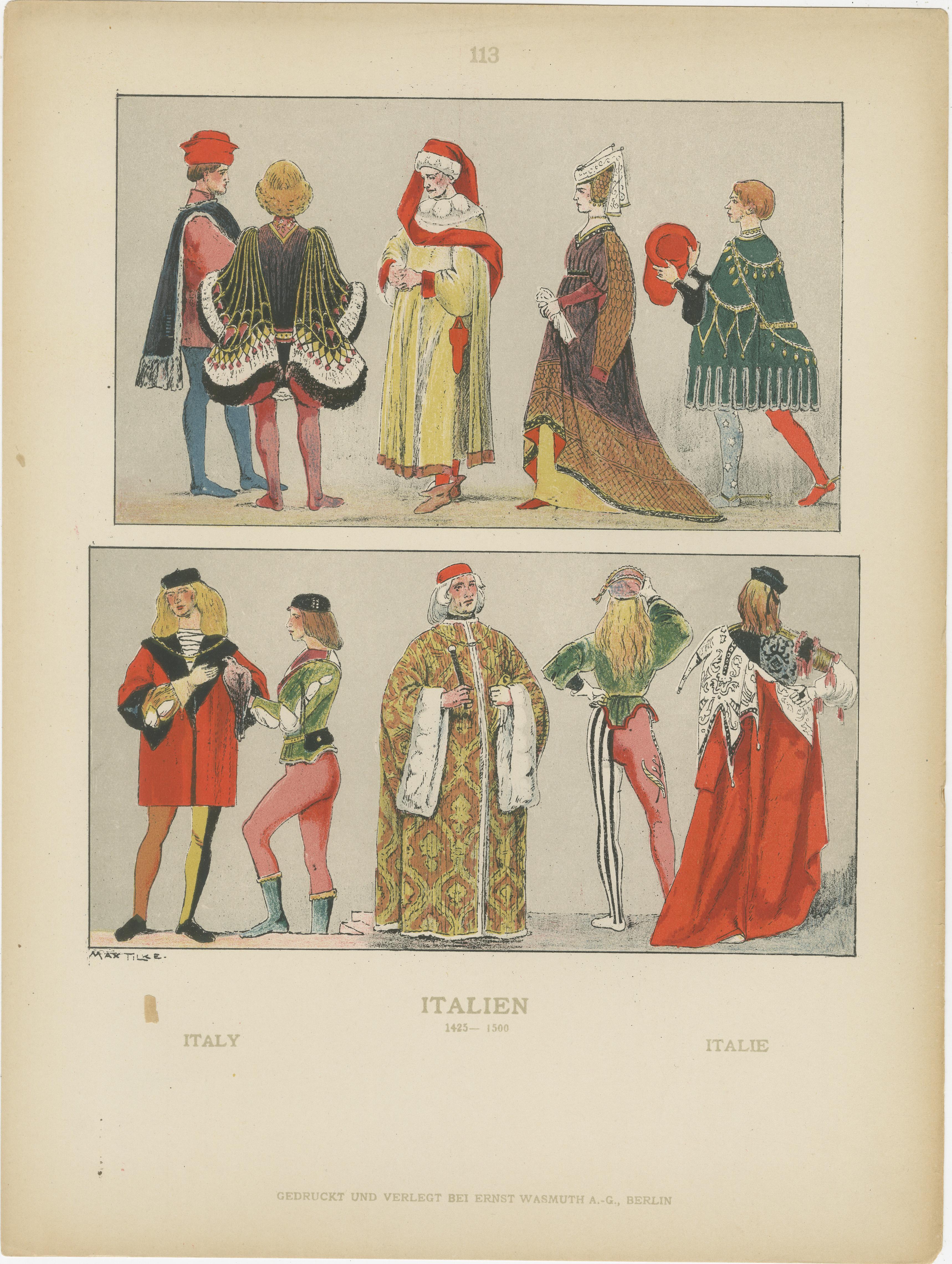
Plate 112 brings us fully into the high Renaissance, with striking men’s fashion featuring puffed sleeves, slashed fabrics, short doublets, hose, and richly patterned outer garments. Women’s dress becomes more architectural, with fitted waists, layered skirts, and stylized sleeves. Plate 113, extending into the 16th century, completes the collection with a dramatic range of nobles, courtiers, musicians, and elegantly dressed ladies whose clothing reflects both regional traditions and the growing influence of international court fashion.
Together, these eight plates form a magnificent and comprehensive study of Italian costume history. The hand-coloring across the set is beautifully balanced, making the group ideal for display in a library, dressing room, study, gallery wall, or any interior inspired by classical European culture. Sets of this size and chronological completeness are increasingly scarce and highly desirable among collectors, decorators, and historians alike.
Condition report: All eight plates are in very good antique condition with soft age toning, occasional minor edge wear, and clean image areas. Colors remain vivid and harmonious across the set. No tears, repairs, or distracting marks.
Framing suggestion: For a striking presentation, frame the eight plates in matching walnut or black frames with warm cream or parchment mats. They display beautifully in two horizontal rows of four, or vertically in pairs. Their consistent format and cohesive color palette create a refined, museum-style installation.
Technique: Hand-colored lithographs
Maker: Max Tilke, printed by Ernst Wasmuth A.-G., Berlin, c.1880