About this sheet
Costume Print: Italian Gestures with Traditional Dress, “Cattivo!” Series, 1820s
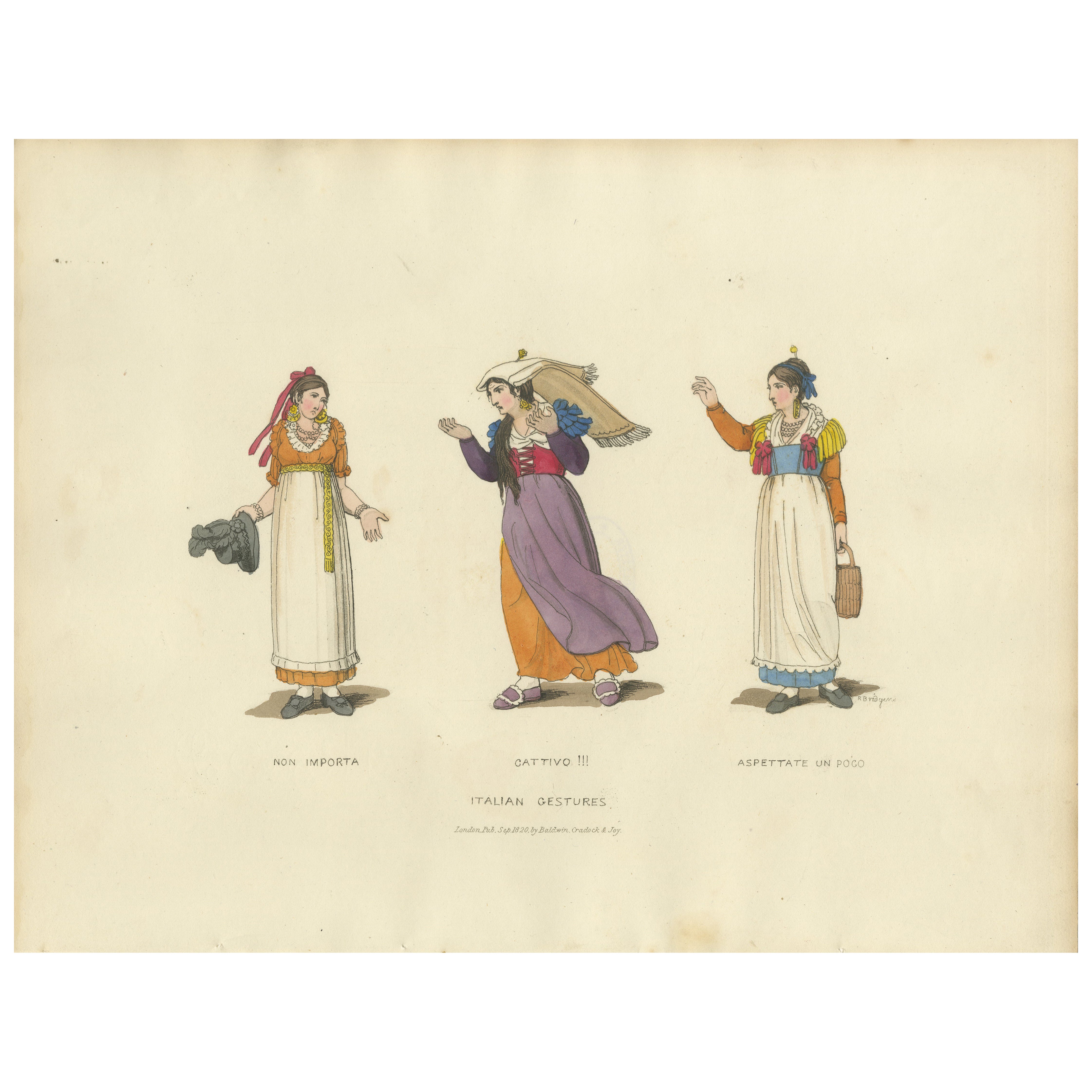
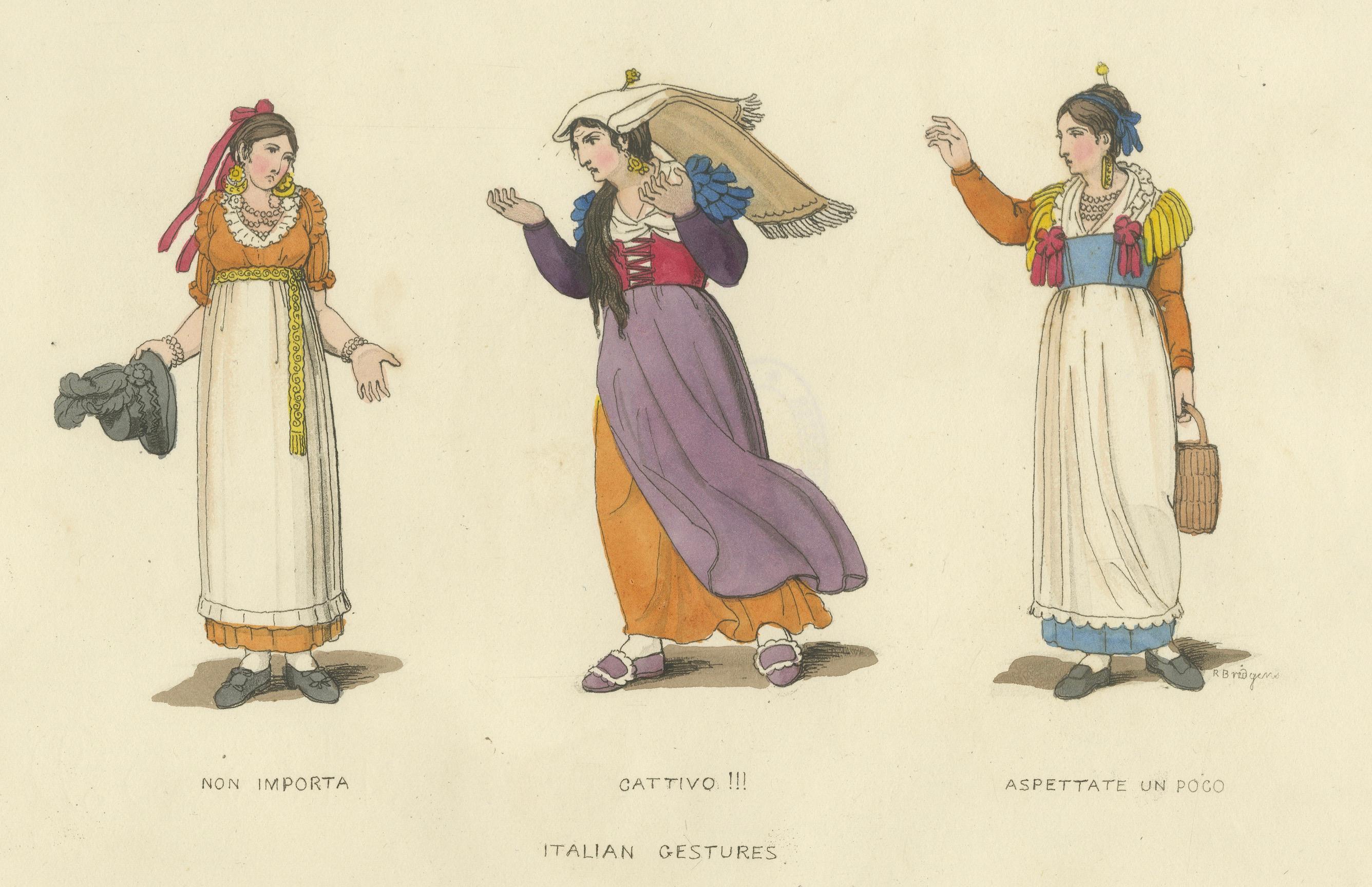
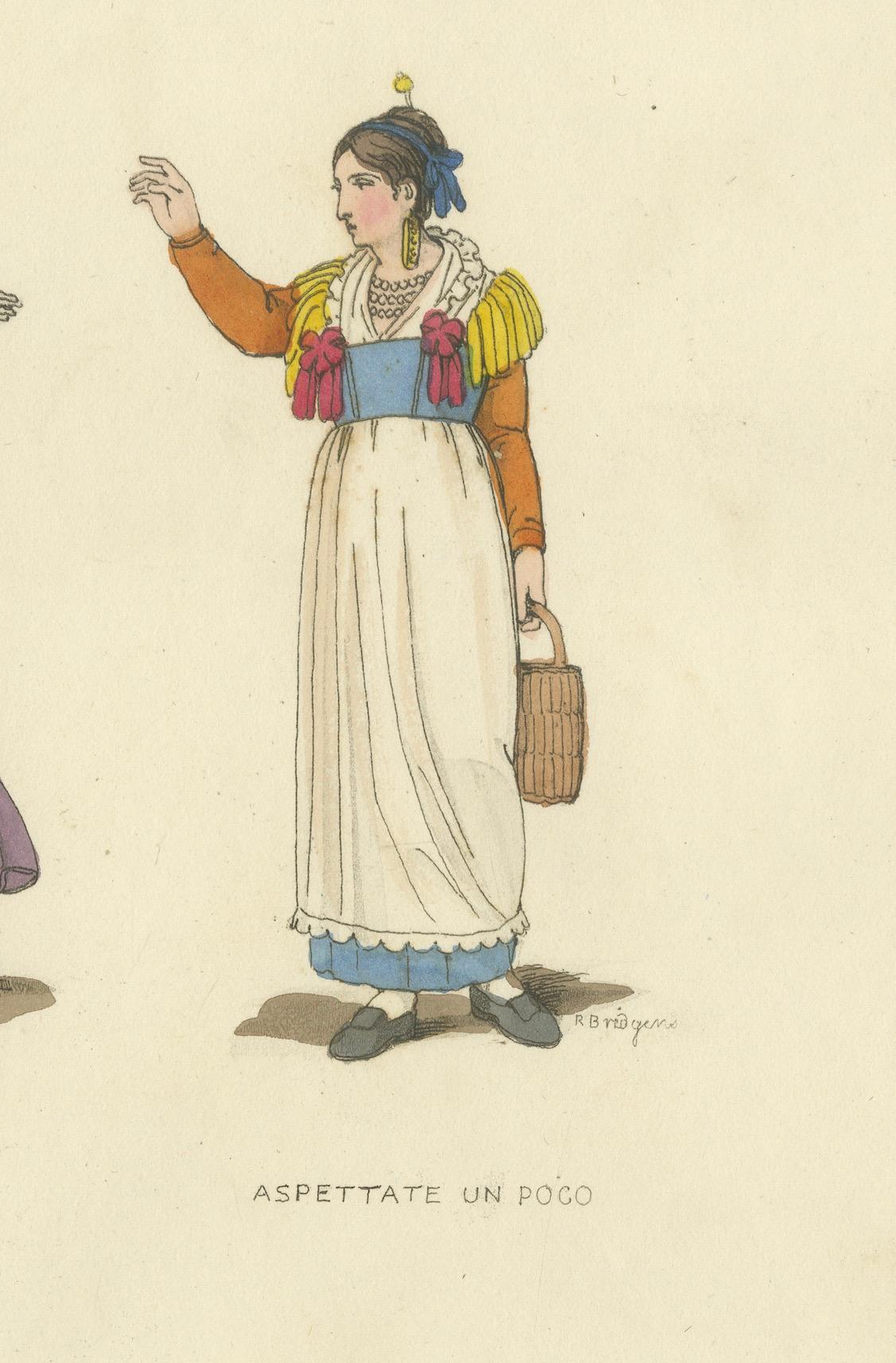
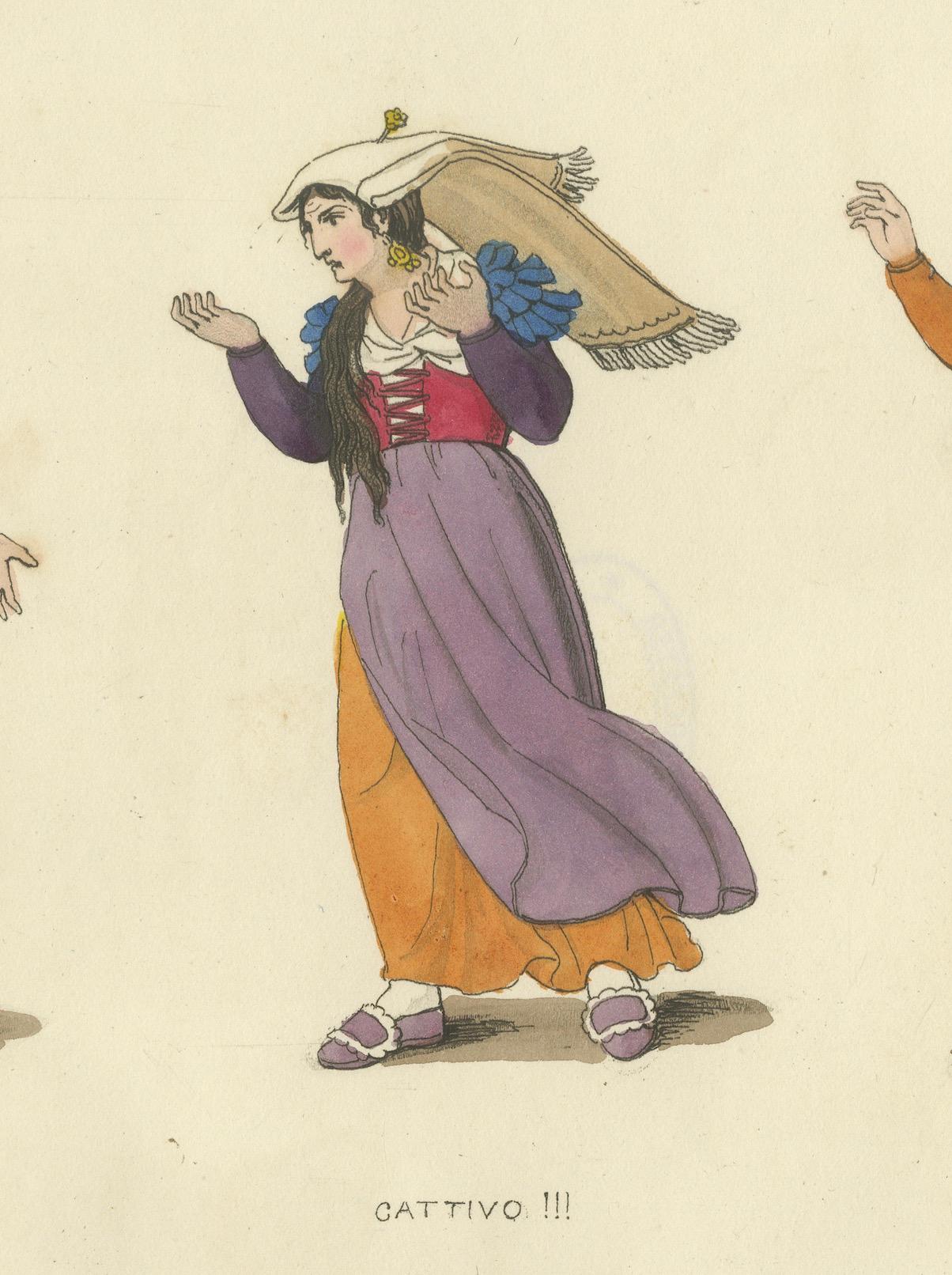
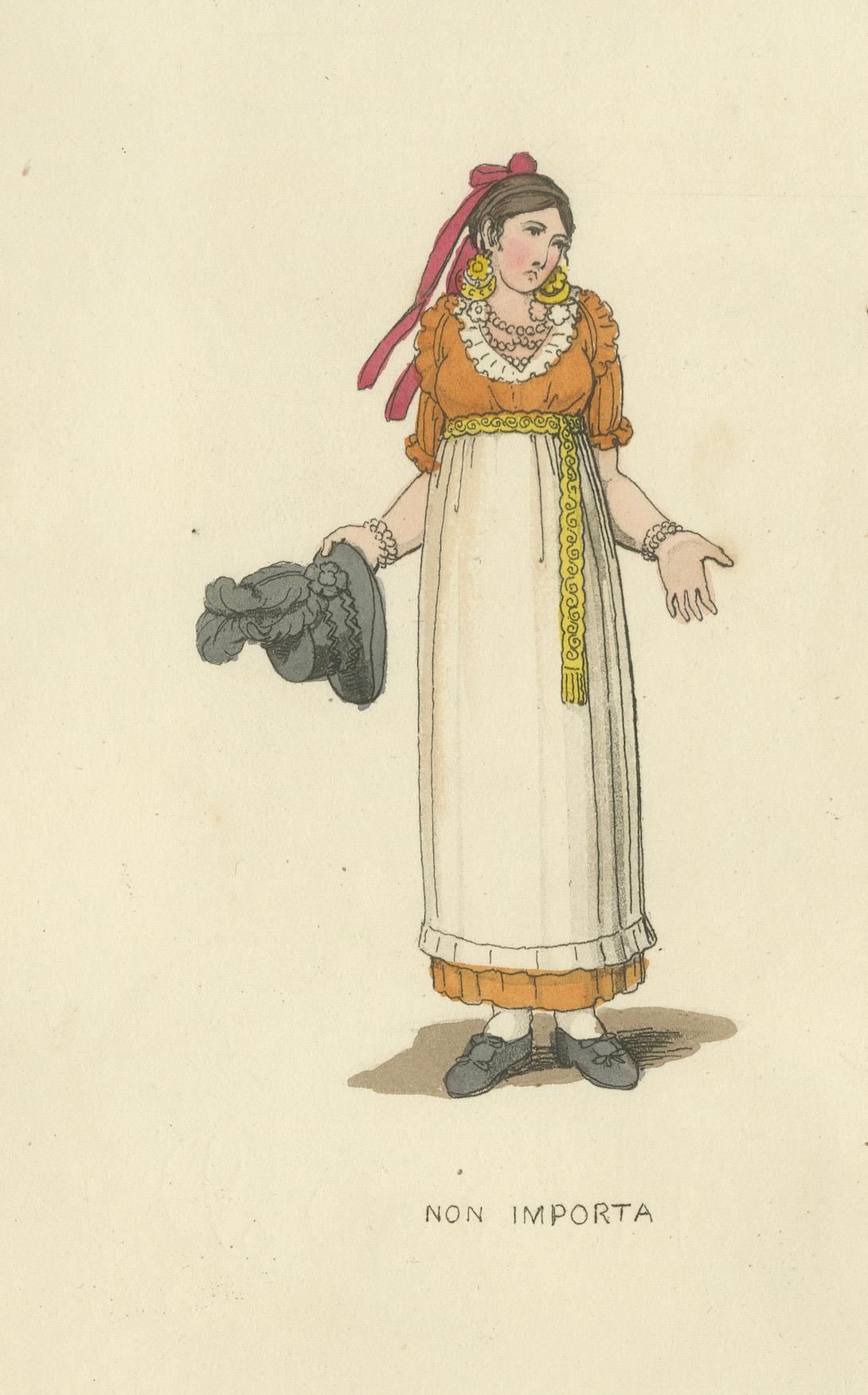
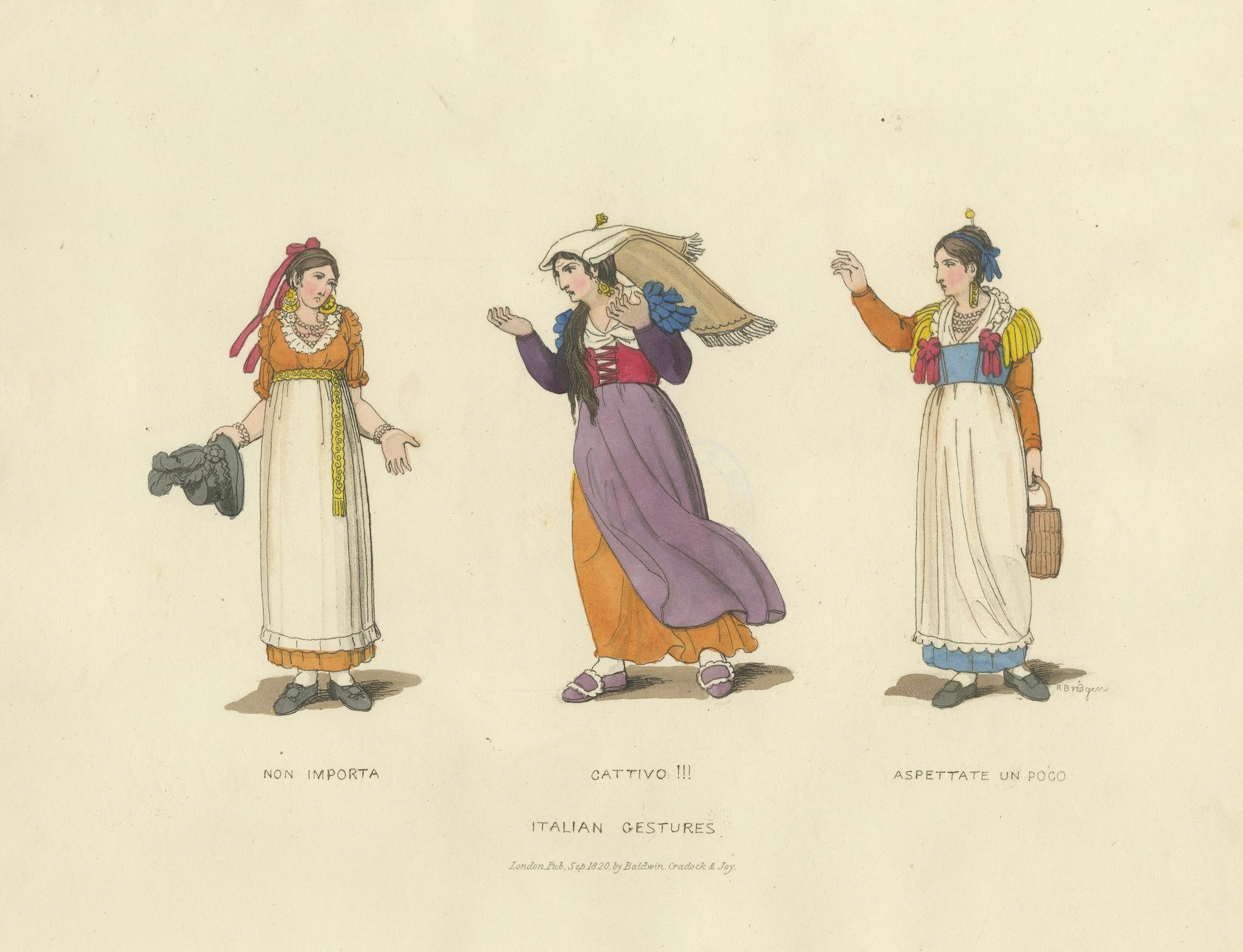
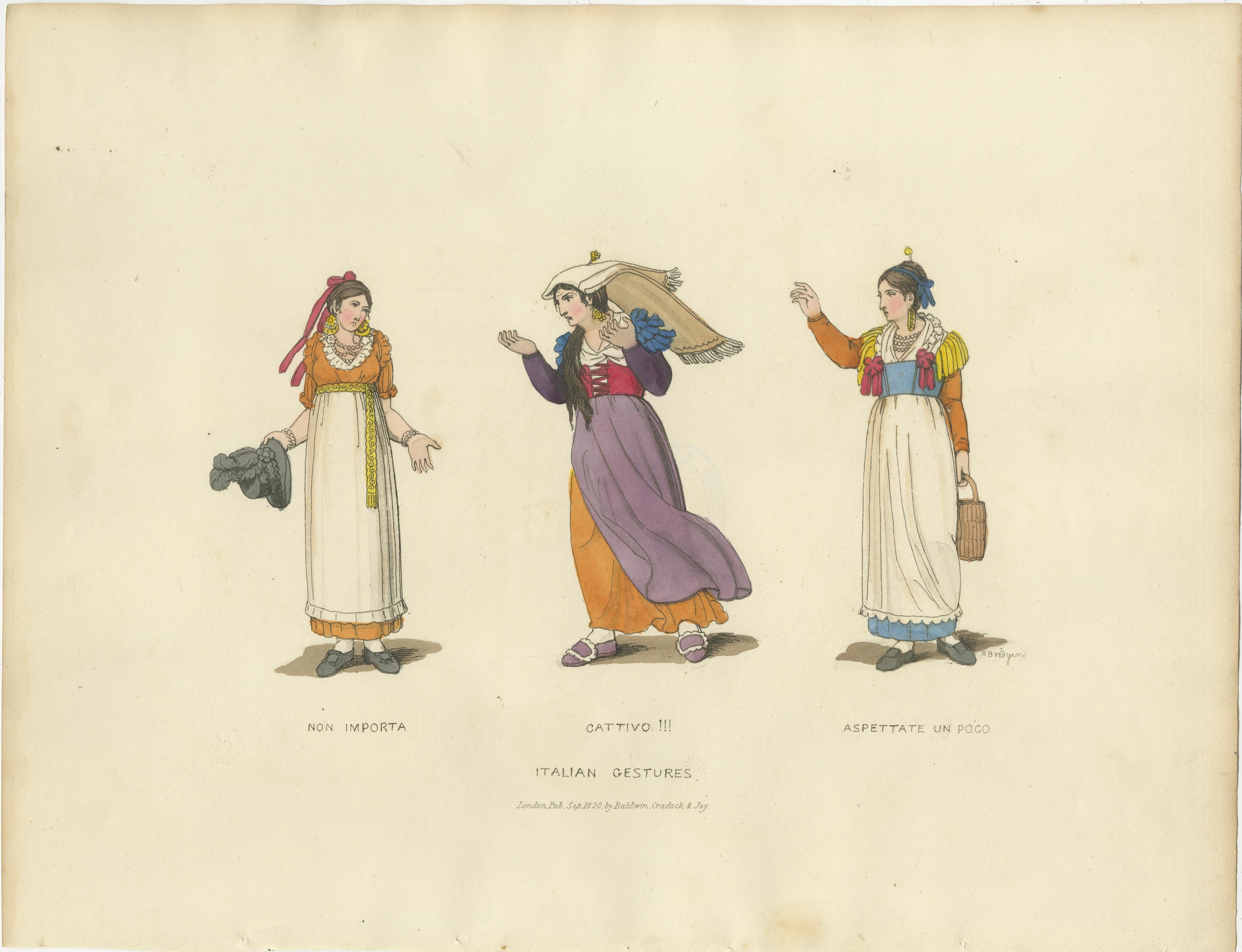
This delightful hand-colored engraving is part of a rare and humorous series titled *Italian Gestures*, published in 1821 by Baldwin, Cradock & Joy in London. Intended to educate and entertain European audiences, especially English travelers, the print illustrates three expressive Italian women in regional dress, each embodying a culturally specific gesture—a vital part of Italian non-verbal communication.
From left to right:
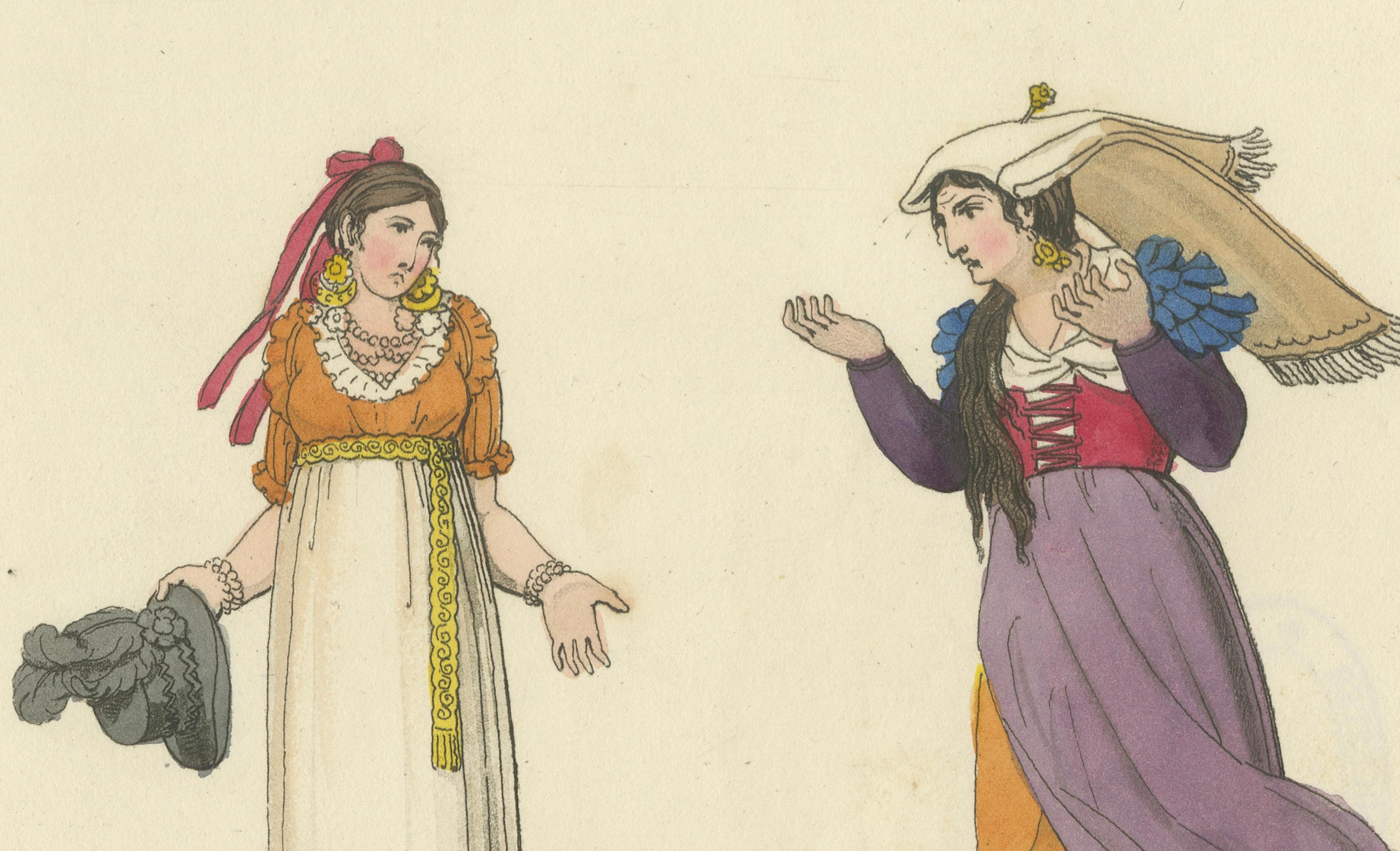
* The first woman, dressed in an elegant orange gown with a white apron and holding a black shawl, stands with upturned hands in a relaxed, casual shrug. Her expression matches the caption “Non importa” (It doesn’t matter), conveying indifference or dismissal.
* At center, a figure in motion dominates the scene with vibrant energy. Her orange and purple dress billows dramatically as she flings up one arm in dismay while grasping her hat with the other. Her expression is one of outrage or protest, matched by the emphatic caption “Cattivo!!!” (Bad!!!).
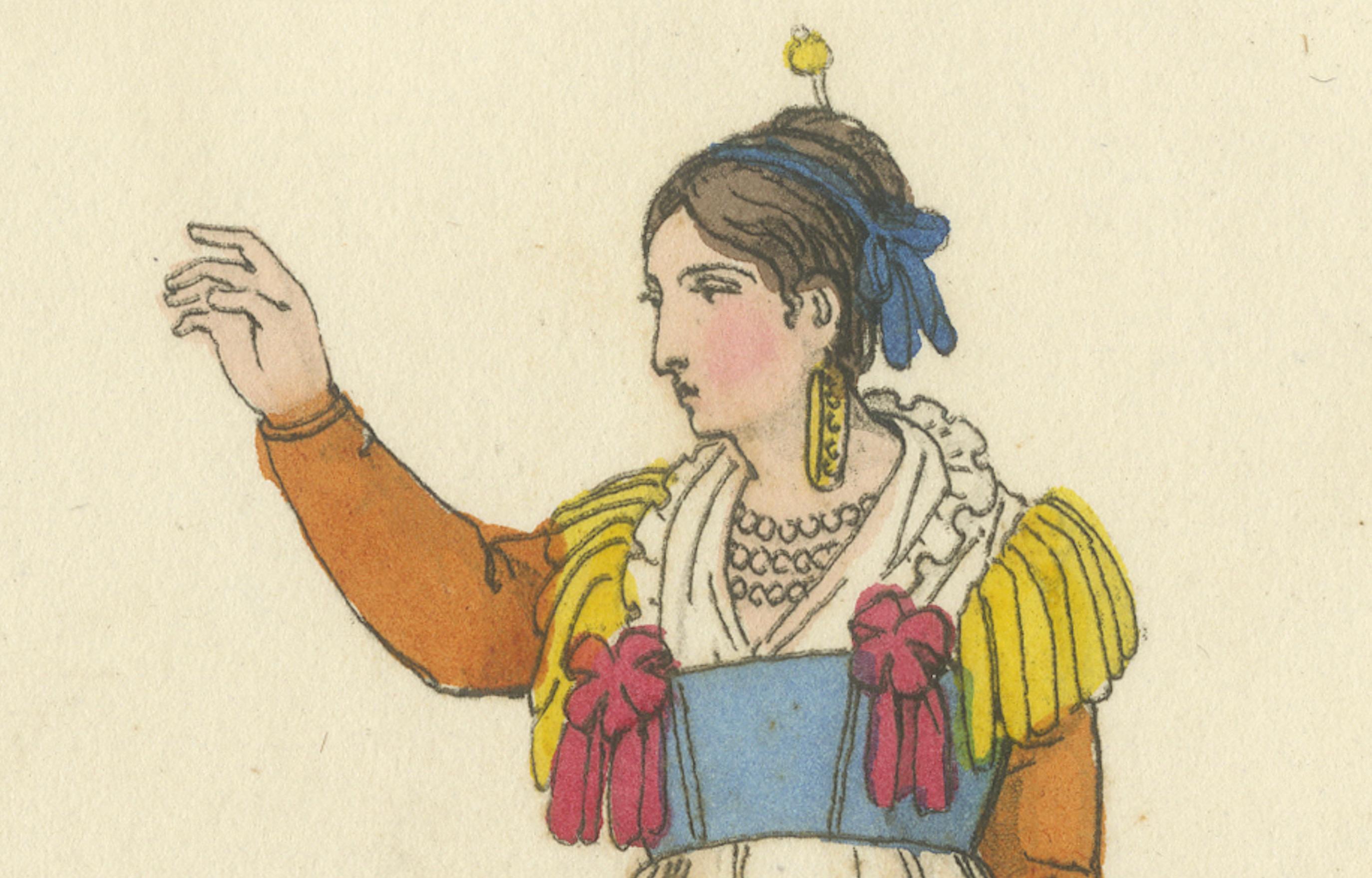
* On the right, a woman in a richly decorated blouse and blue apron, holding a woven basket, raises her hand in a signaling gesture. The phrase “Aspettate un pòco” (Wait a moment) is conveyed with both subtle firmness and familiarity—suggesting the everyday nature of such communicative gestures.
Each woman’s regional costume is carefully rendered, with vibrant, contrasting colors and delicate detail in the embroidery, jewelry, and fabric folds. These figures not only reflect 19th-century Italian fashion but also embody the spirit of lively conversation and expressive emotion for which Italian culture is renowned.
The artist, most likely Bartolomeo Pinelli or one of his contemporaries, has succeeded in transforming mundane moments into richly animated vignettes. These prints were as educational as they were decorative, often sold to English tourists during their Grand Tour as charming and humorous keepsakes.
Condition:
Very good condition overall, with light age-related toning and minimal foxing. The hand-coloring remains vivid and the paper surface is strong and clean, enhancing both collectibility and display value.
Framing tips:
A cream or pale ivory mat paired with a slim, natural wood or antiqued gilt frame will beautifully complement the warm palette and period character of this print. Ideal for gallery walls, libraries, or any interior with a touch of historical or cultural flair.