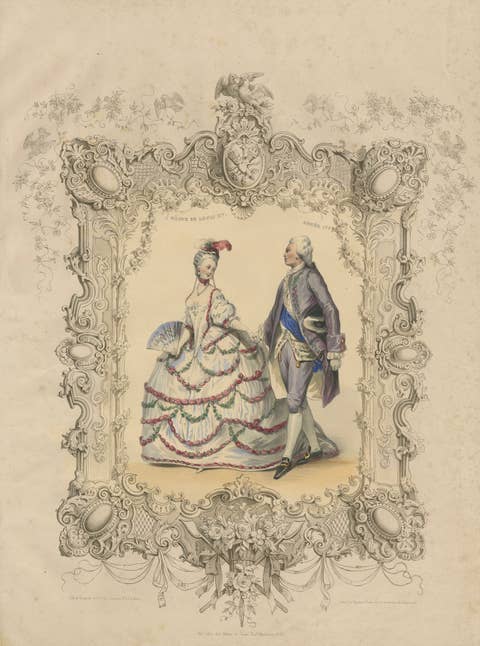
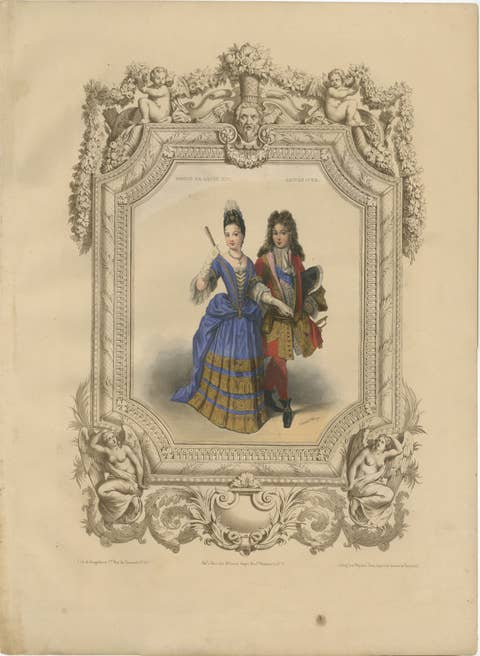
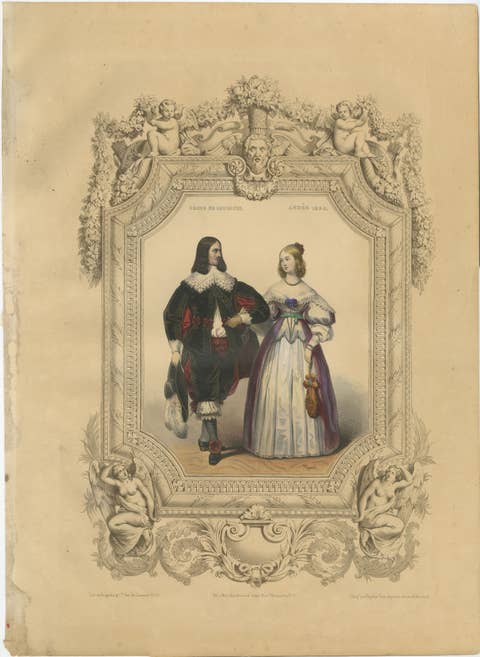
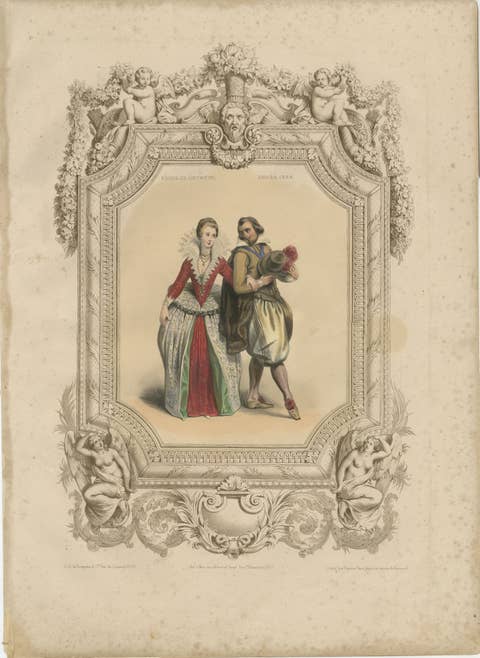
Heraldic Harmony: Shields and Effigies of Medieval Nobility, 1847
€ 150
One of a kind: this is the sheet in the photographs. Ships from Langweer, the Netherlands.
Date
1847
Sheet size
27 × 18 cm (10.6 × 7.1 in)
Condition
Good
Reference
BG-13635-142
Condition
Good. Overal light toning and light soiling but the image itself clean and hand-colored almost 200 years ago and still in expliciet colors. Aged paper with typically warm, yellowish-brown hue, mostly around the edges. Study the images carefully.
About this sheet
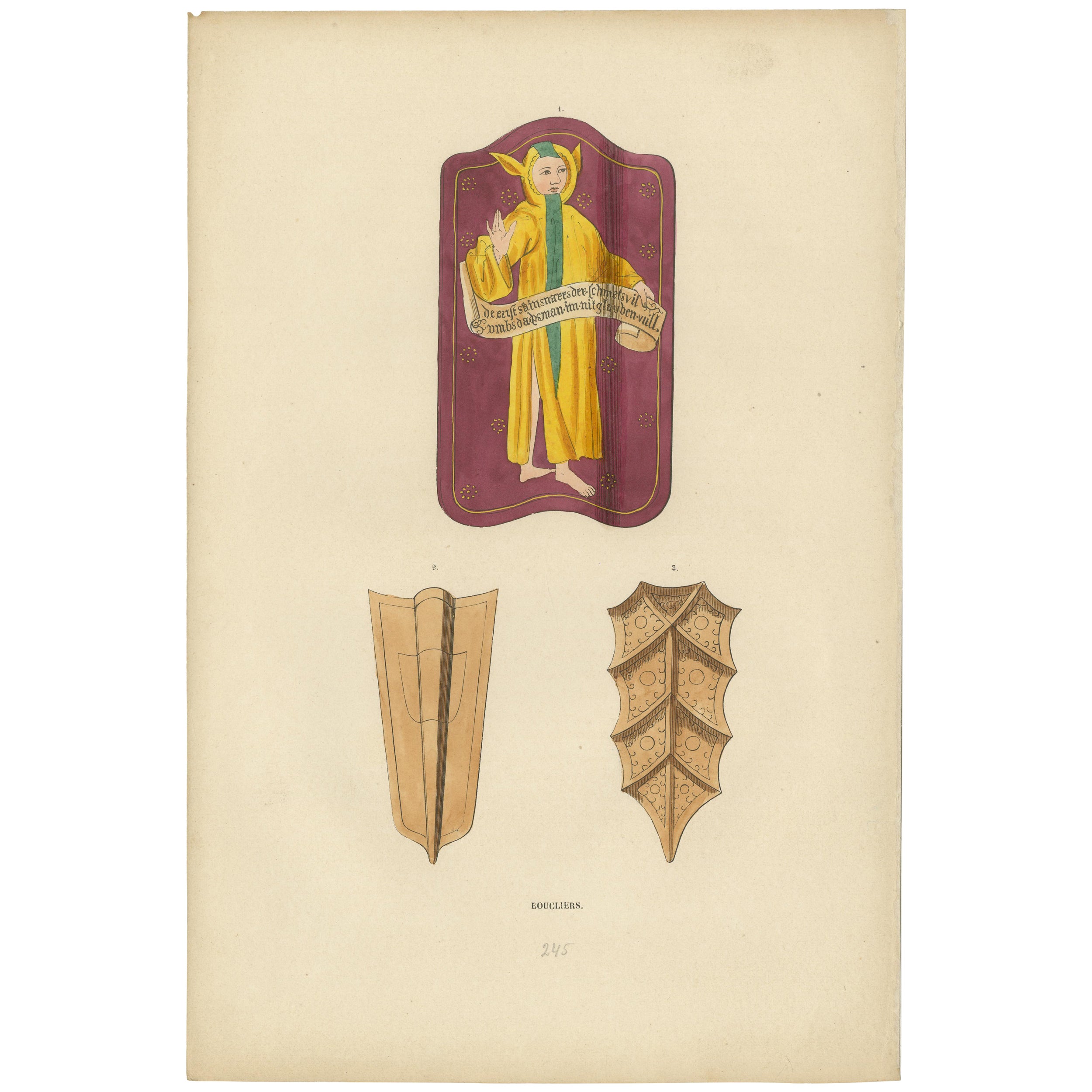
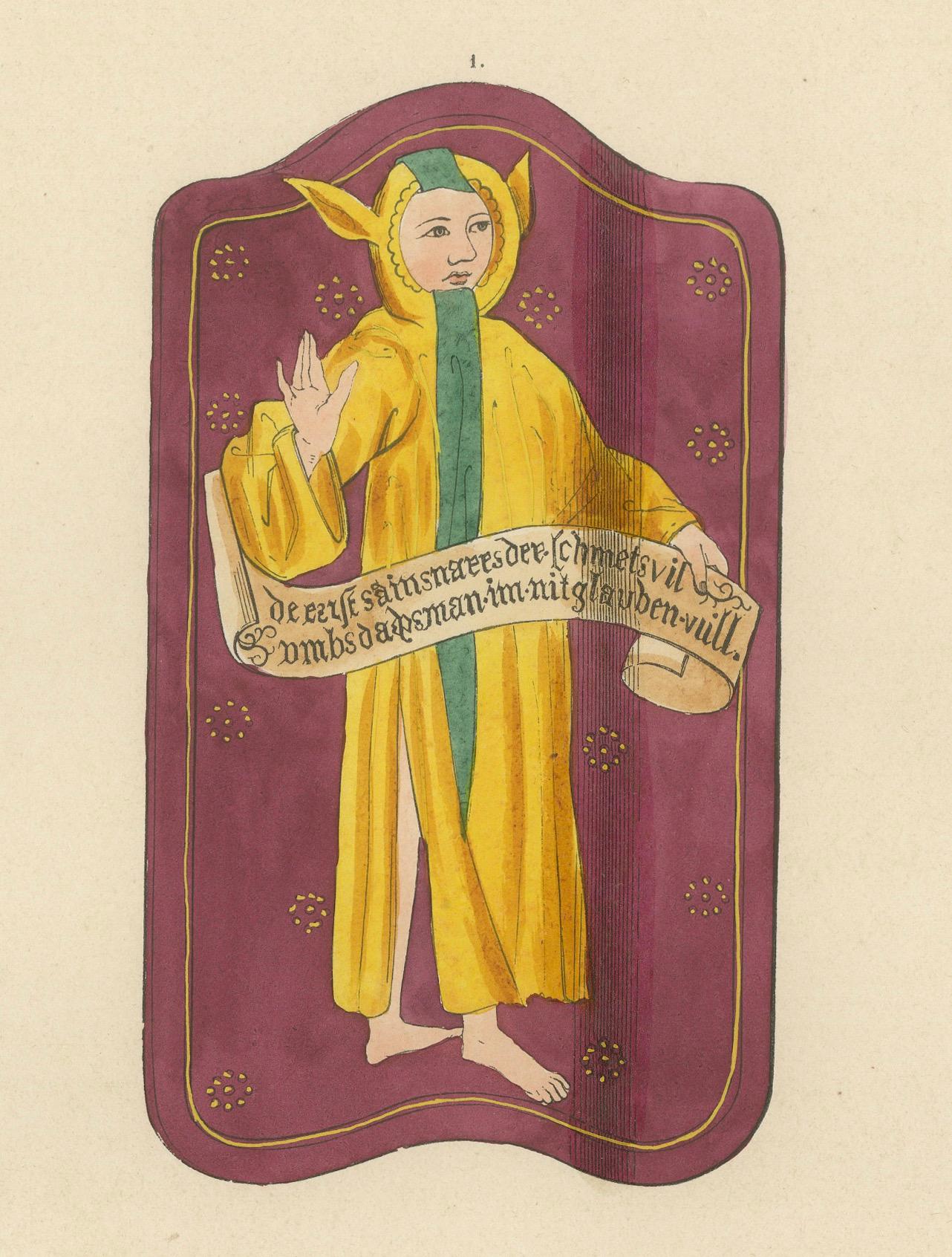
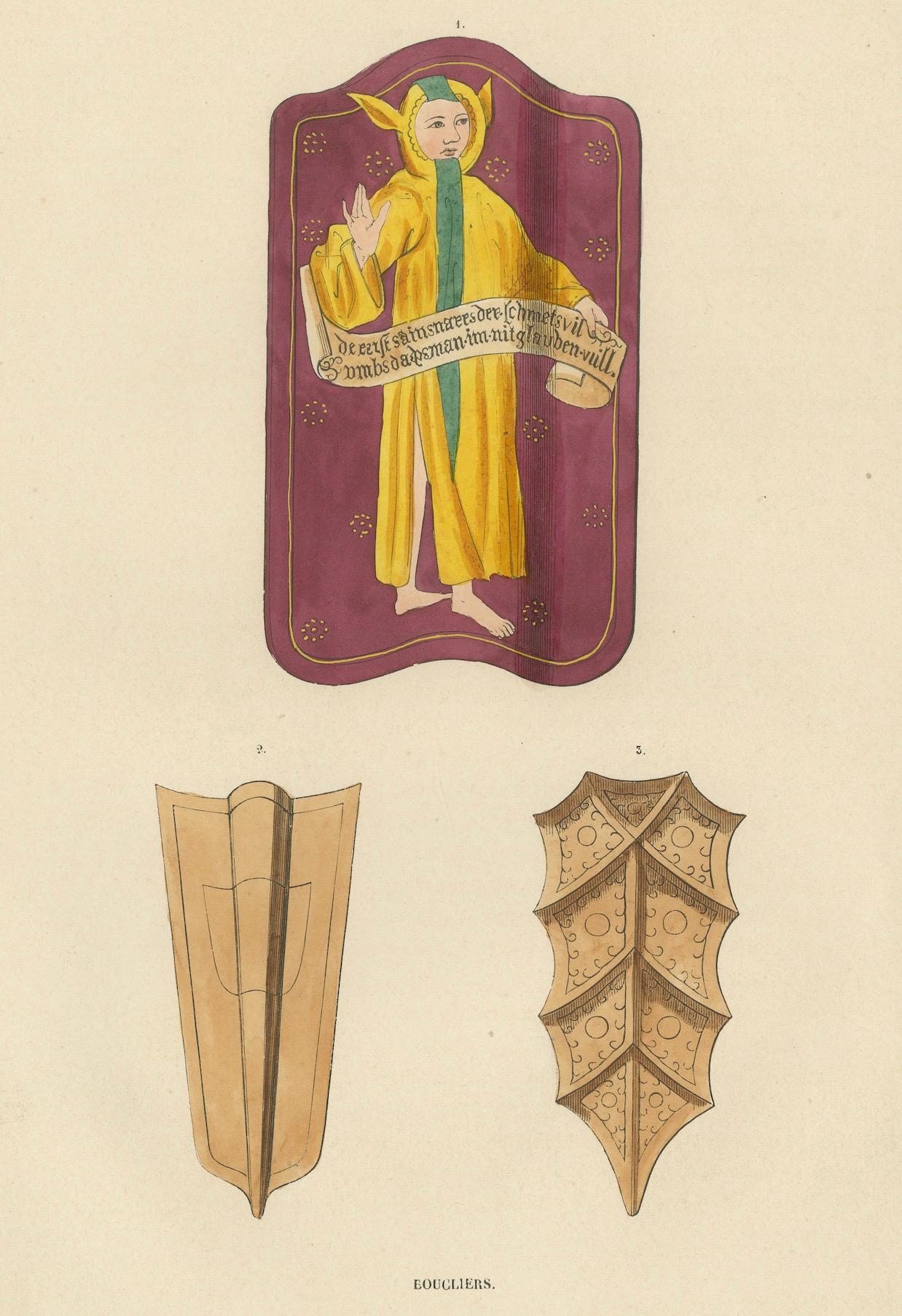
This print is a compelling illustration of medieval heraldry and armament. It features three distinct elements that were integral to the identity and status of a noble or knight during the Middle Ages. At the top, we have a vibrant effigy of a figure dressed in a yellow and green tunic, overlaid on a regal purple backdrop adorned with golden fleur-de-lis symbols. The figure is positioned within an elaborate frame, with an inscription flowing from their hand, which suggests the importance of written proclamations or lineage.
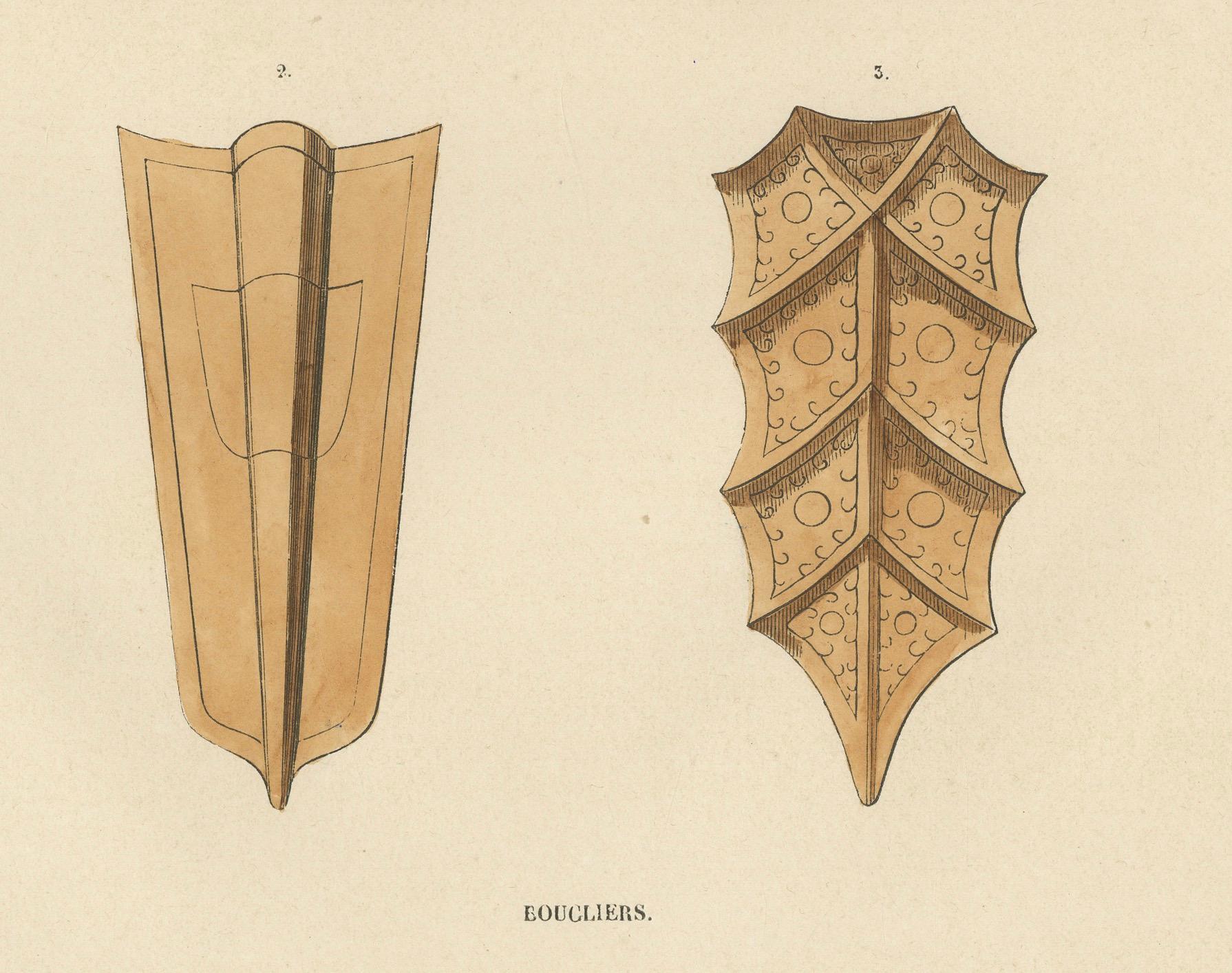
Below the effigy are two shields, or "écus," which are intricately designed with their own heraldic symbols. The first shield is slender and pointed, possibly indicating a jousting shield used for tournaments, while the second shield displays a complex pattern with what appear to be decorative rosettes, indicative of a family's coat of arms.
Together, these items not only served as protective gear in battle but also as emblems of heritage and honor, bearing the marks and symbols that told stories of lineage, allegiances, and valor..
The colors have a nice glow over them. Historically, egg whites, known as glair, and sometimes egg yolk were indeed used in illumination and painting, particularly in manuscripts, to give colors a brighter appearance and to add a sheen or gloss to the work. This technique was quite common during the Middle Ages and into the Renaissance.
Egg whites can be applied as a varnish over pigments to enhance their brightness and to protect the colors. This application could make the colors appear more vivid and also add a slight glossy sheen to the surface of the image.
Egg yolk, on the other hand, was commonly used as a binding agent in paint. It forms the basis of tempera paint, a medium that was widely used before the advent of oil painting. Egg yolk helps to create a durable and long-lasting color that adheres well to various surfaces.
In the context of the print from 1847, it's less likely that egg whites or yolks were used directly on the print, as by that time, commercial printing processes would have been more advanced and less reliant on such manual methods. However, if this print is a representation of an earlier style or is meant to mimic the appearance of hand-painted manuscripts, the original artists might have employed techniques or materials that gave a similar effect to those achieved with egg-based binders and varnishes.