About this sheet
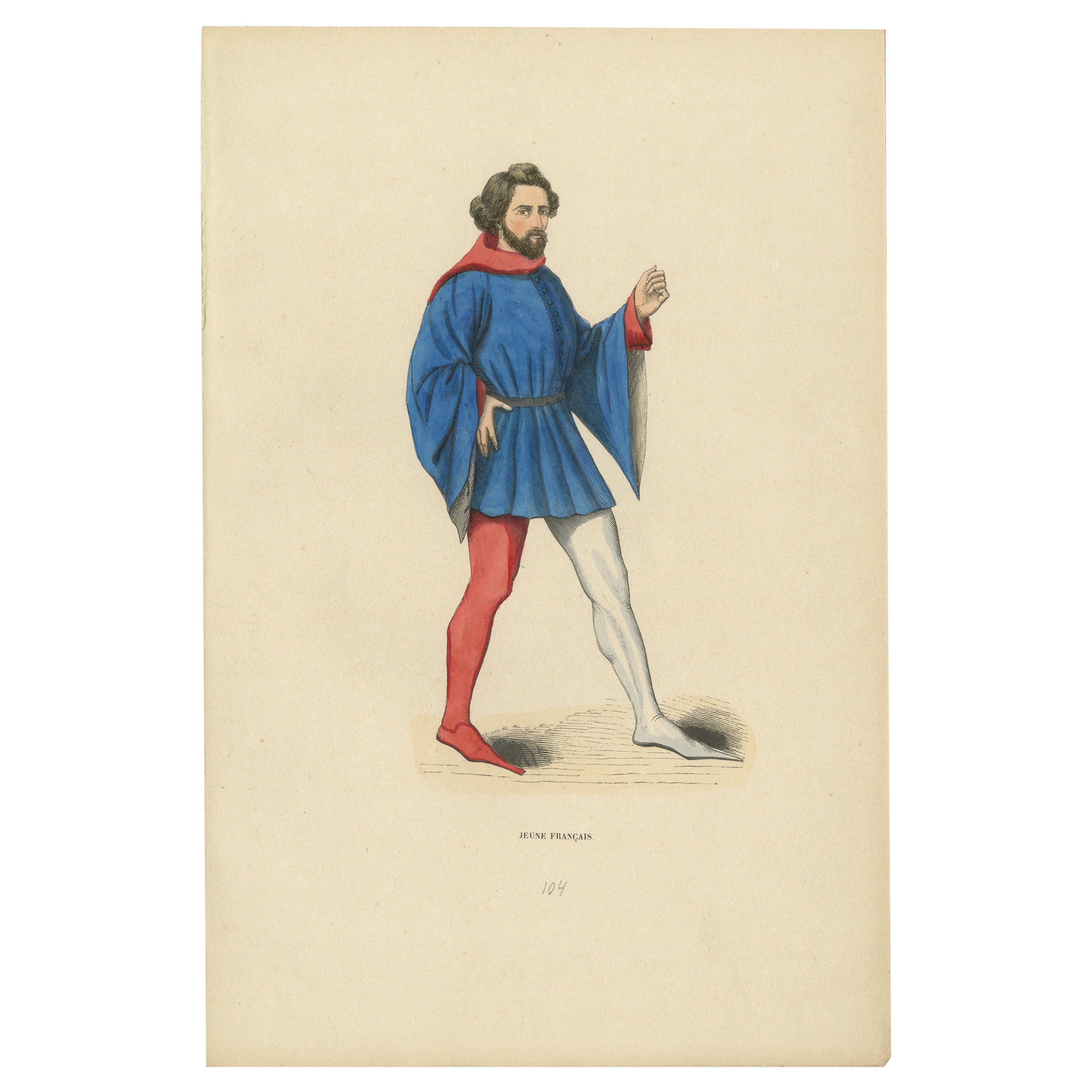
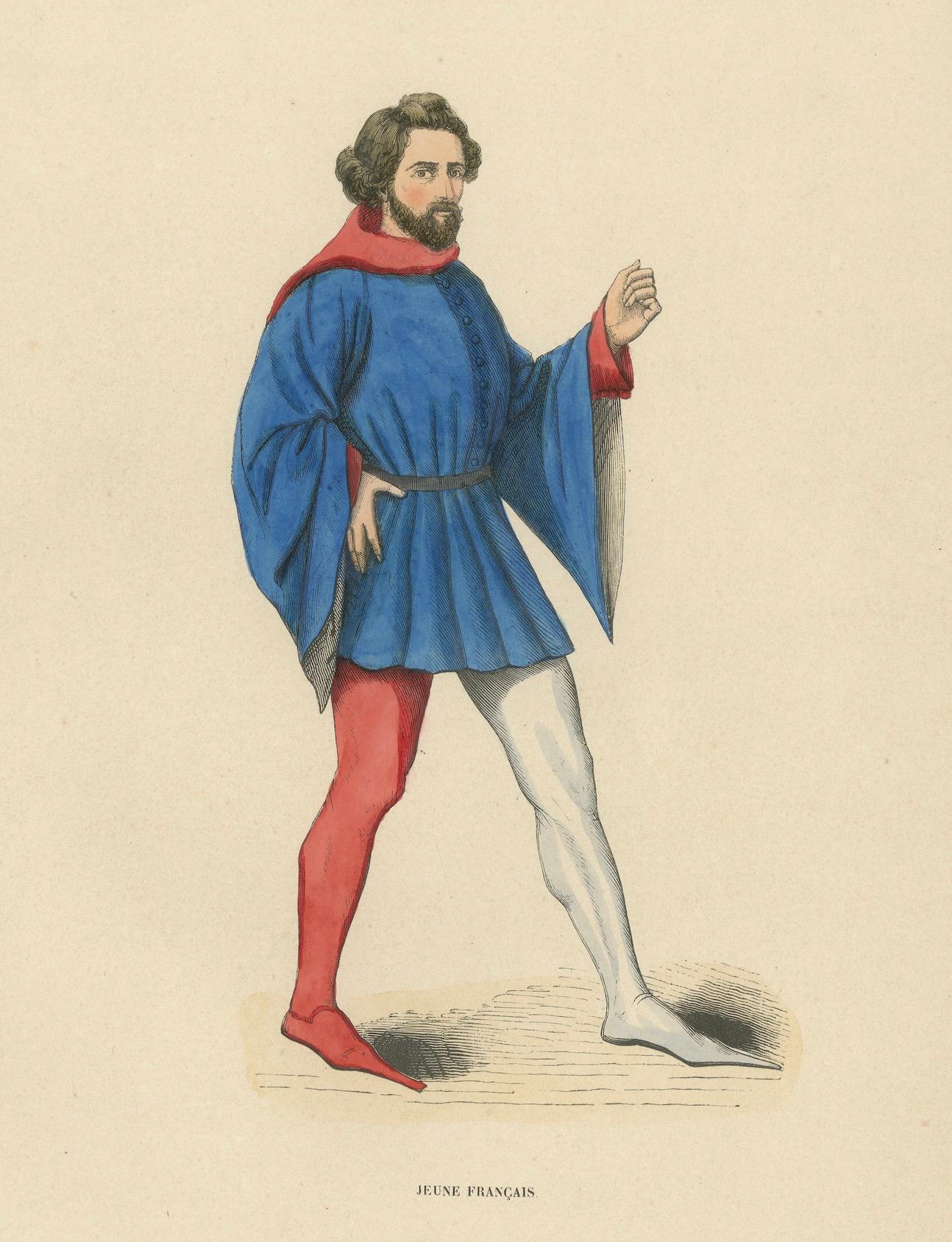
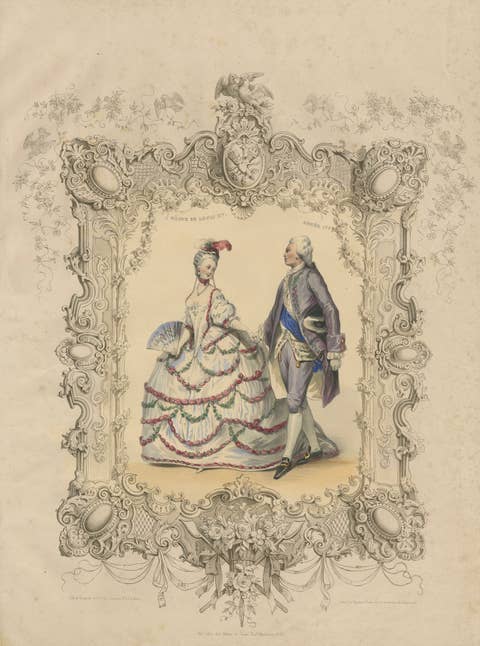
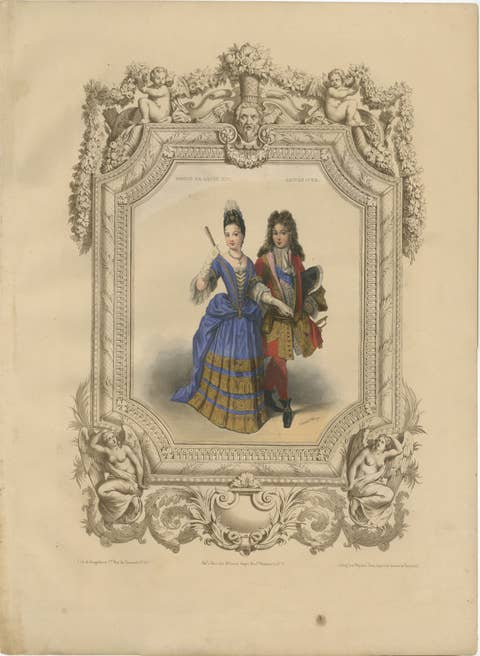
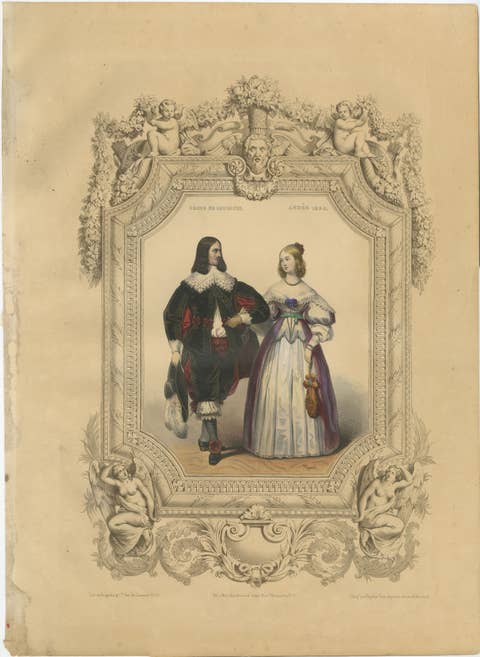
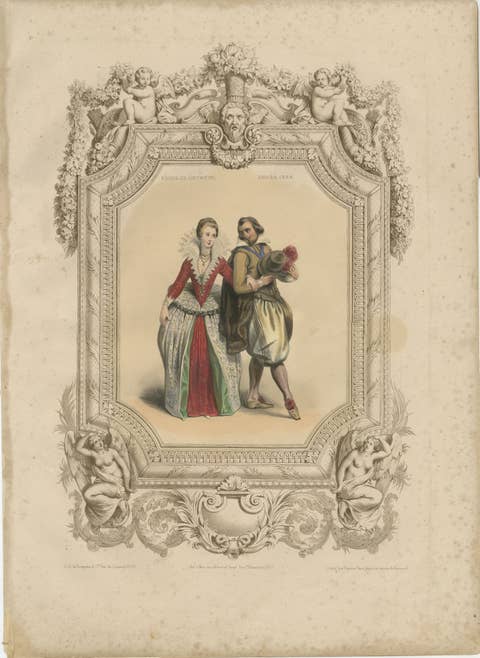
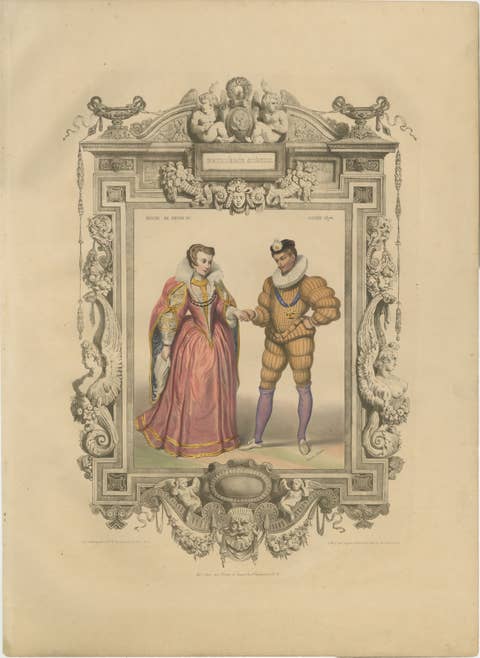
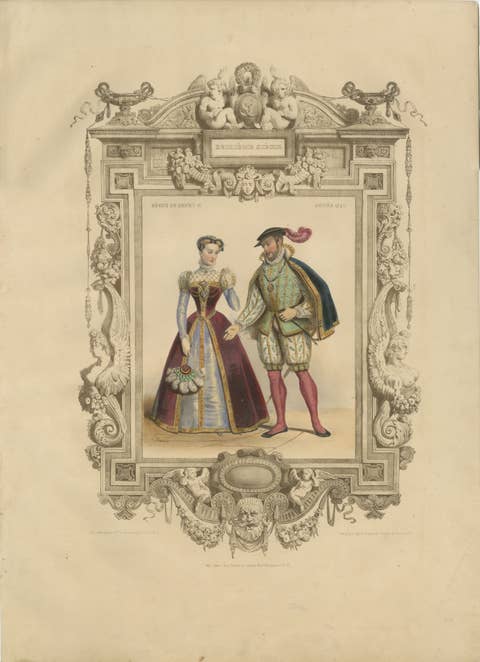
This hand-colored engraving, titled "Jeune Français," which translates to "Young Frenchman," is part of the historical costume series from "Costume du Moyen Age" created in 1847. It depicts a young French man dressed in a style that was typical during the medieval period.
He is wearing a striking blue tunic with long, flowing sleeves that convey a sense of movement and grace. The tunic is cinched at the waist with a belt, giving the garment structure and emphasizing his figure. The neckline and cuffs are accentuated with red, providing a bold contrast to the blue of the tunic. This color scheme may symbolize the young man's vivacity or possibly his allegiance to a particular house or region.
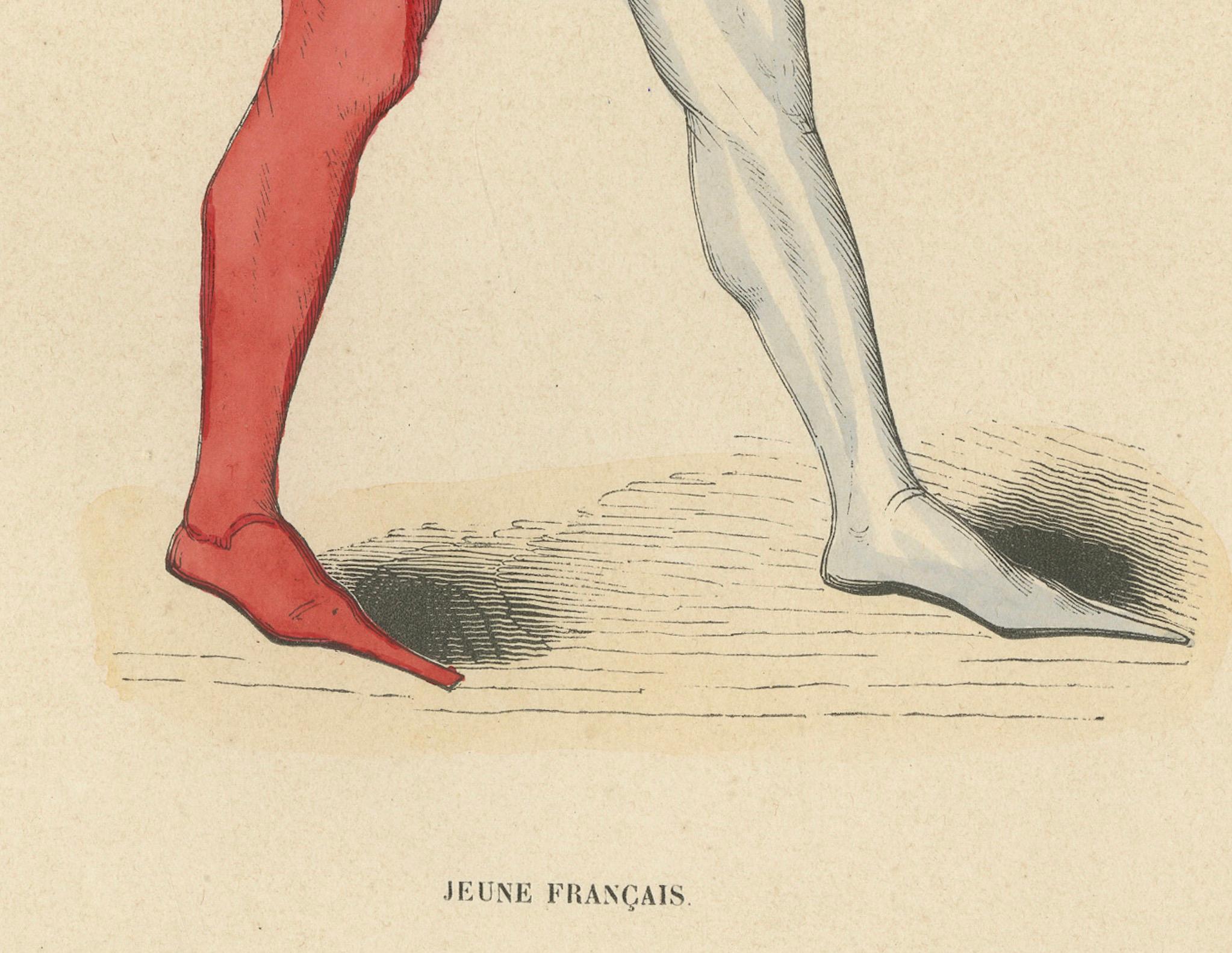
His hose are a vibrant red on the right leg and white on the left, a fashion that was sometimes seen in medieval times, known as mi-parti or parti-colored clothing, which signified a certain boldness in personal style or possibly participation in festivities or tournaments. His footwear is not fully visible but appears to match the red of his hose.
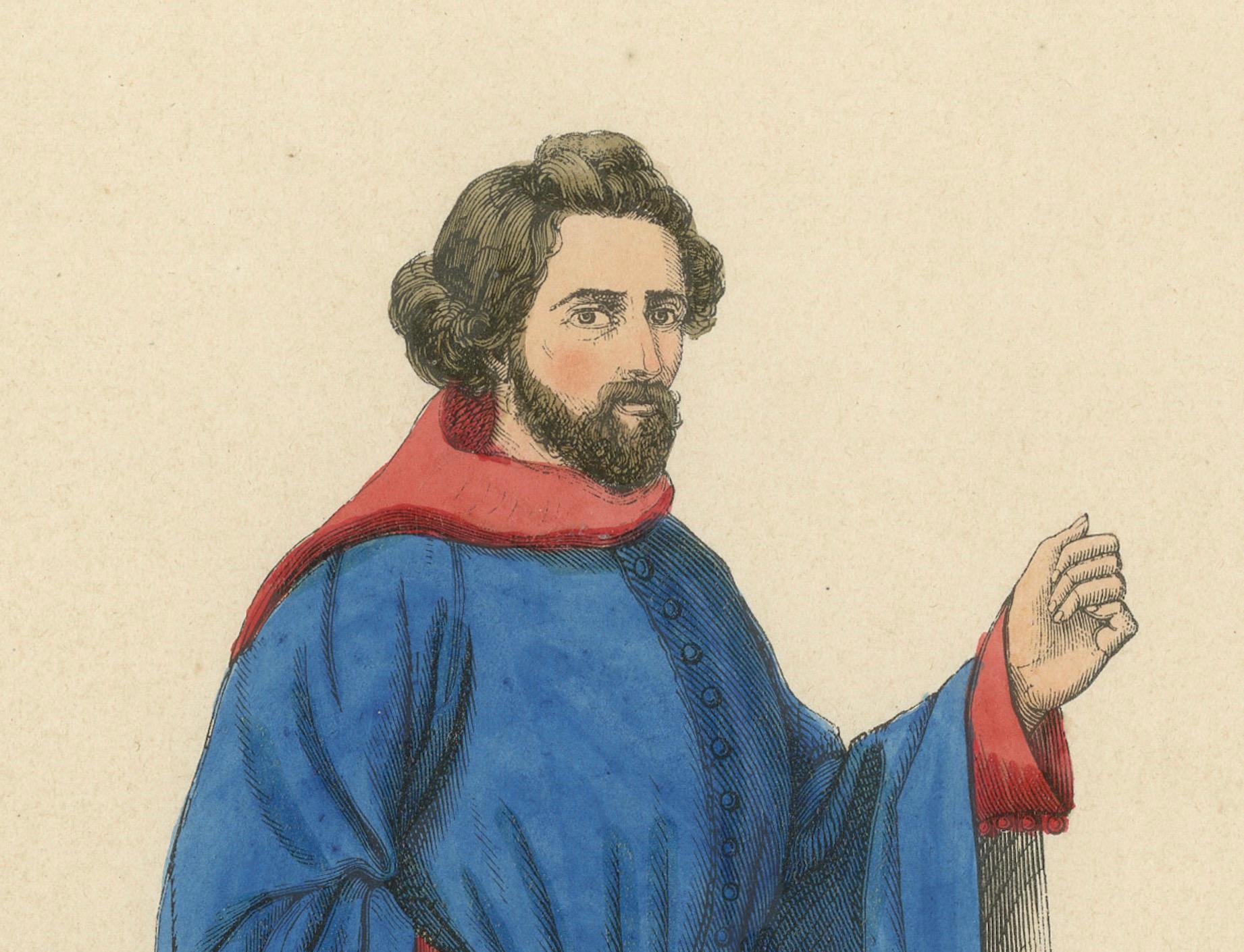
The young man's hair is styled with length at the back and a shorter cut around the face, which frames his confident expression. He holds what looks to be a feather or quill in one hand, while the other is extended as if he is gesturing in conversation or making a point.
The artist has carefully detailed the folds of the fabric, the subtle shadows, and the texture of the tunic, adding a sense of depth and realism to the attire. This depiction provides a window into the style and fashion sensibilities of young men in medieval France.
The colors have a nice glow over them. Historically, egg whites, known as glair, and sometimes egg yolk were indeed used in illumination and painting, particularly in manuscripts, to give colors a brighter appearance and to add a sheen or gloss to the work. This technique was quite common during the Middle Ages and into the Renaissance.
Egg whites can be applied as a varnish over pigments to enhance their brightness and to protect the colors. This application could make the colors appear more vivid and also add a slight glossy sheen to the surface of the image.
Egg yolk, on the other hand, was commonly used as a binding agent in paint. It forms the basis of tempera paint, a medium that was widely used before the advent of oil painting. Egg yolk helps to create a durable and long-lasting color that adheres well to various surfaces.
In the context of the print from 1847, it's less likely that egg whites or yolks were used directly on the print, as by that time, commercial printing processes would have been more advanced and less reliant on such manual methods. However, if this print is a representation of an earlier style or is meant to mimic the appearance of hand-painted manuscripts, the original artists might have employed techniques or materials that gave a similar effect to those achieved with egg-based binders and varnishes.