About this sheet
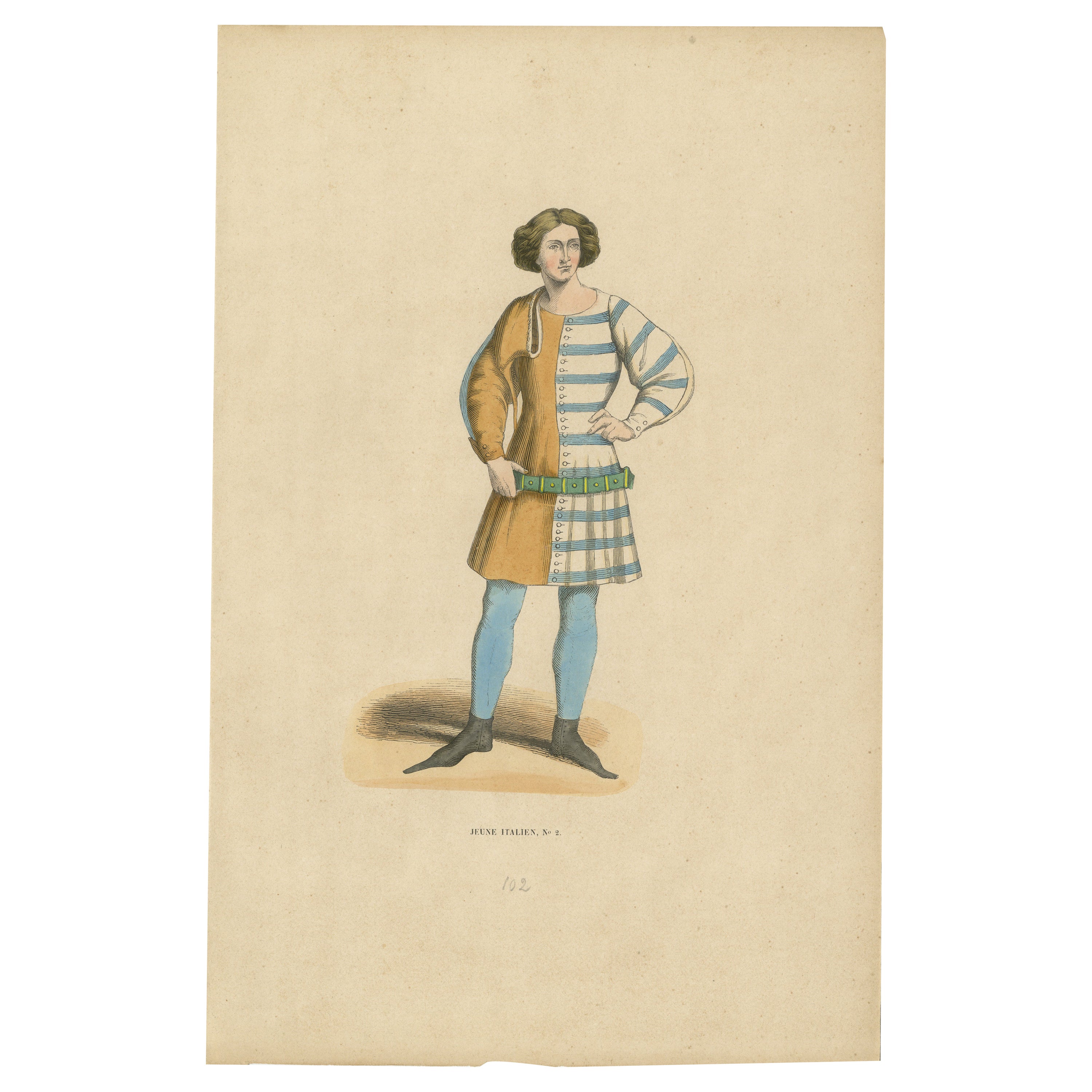
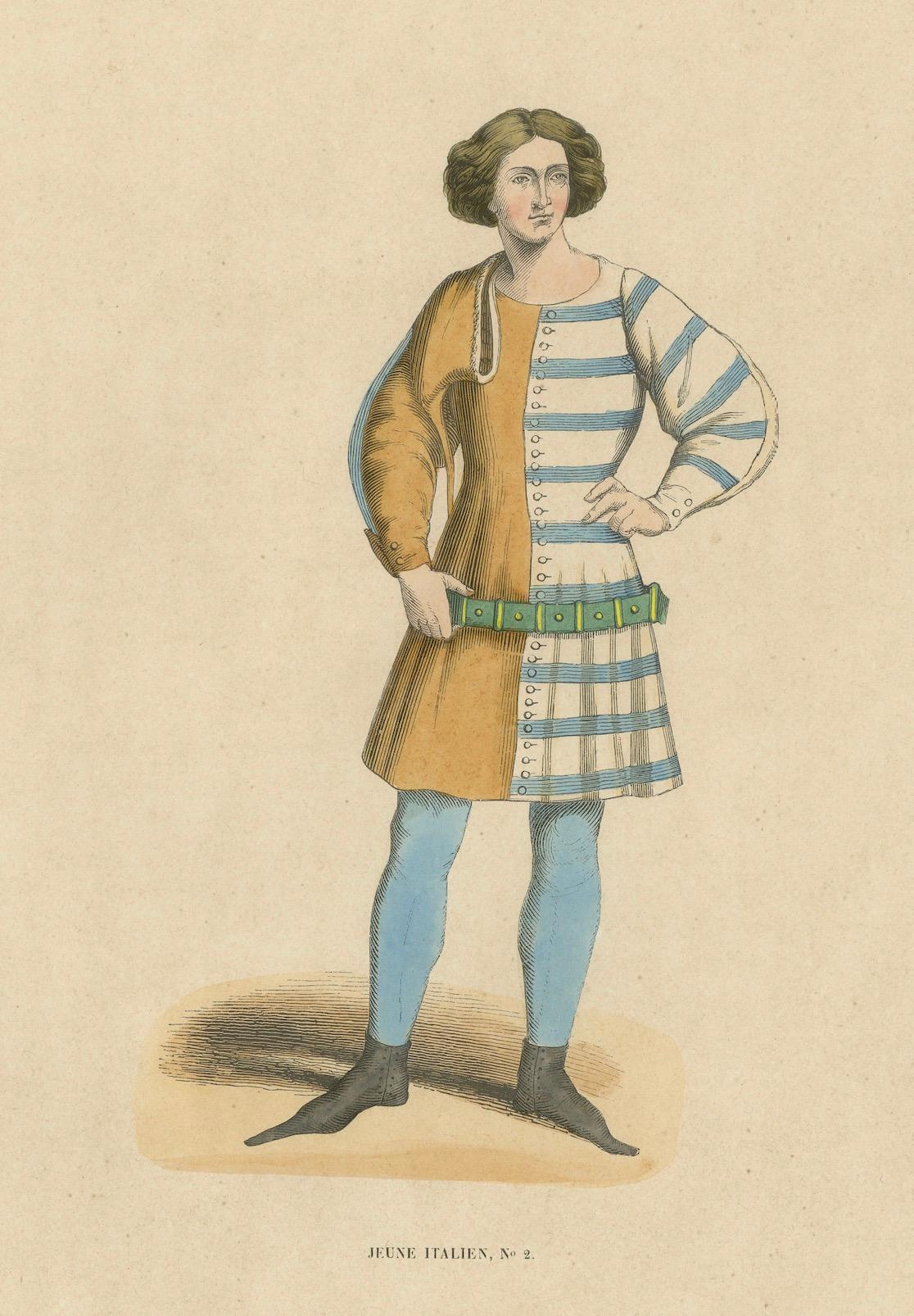
This original antique print, labeled "Jeune Italien, No. 2," which translates to "Italian Youth, No. 2," depicts a young man in what appears to be a Renaissance-period attire, indicating that this piece is part of a series, from the collection "Costume du Moyen Age" dated 1847.
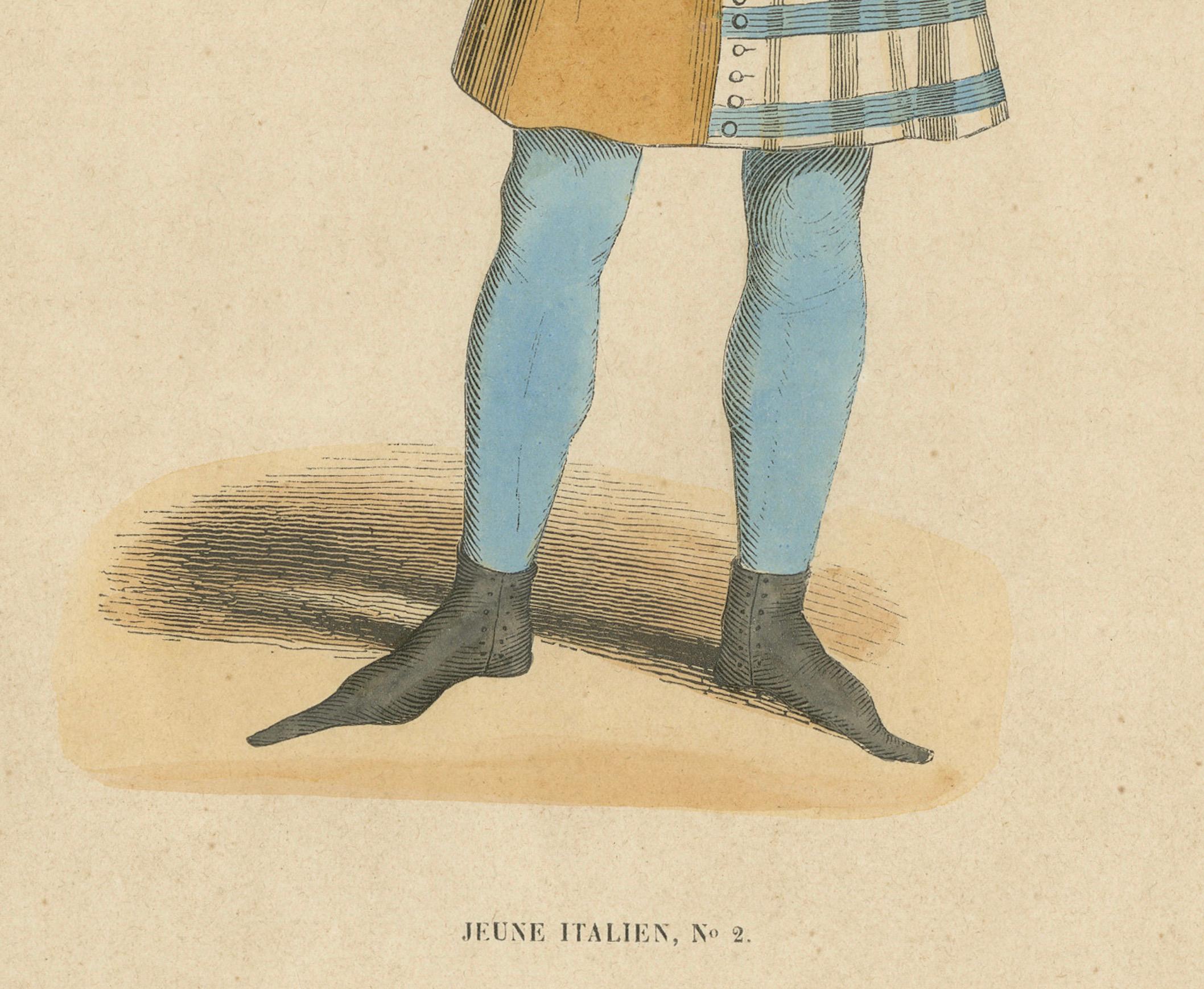
The young man is dressed in a short tunic with a unique patterned skirt part, which is striped in blue and white with a checkered hemline, suggesting a distinctive style or regional costume. The tunic is paired with tight-fitting blue hose and pointed shoes, which were common in Renaissance fashion. The outfit is completed with a brownish-golden doublet with what appears to be puffed sleeves, a style that was popular among the youth and indicative of a certain level of affluence and attention to fashion.
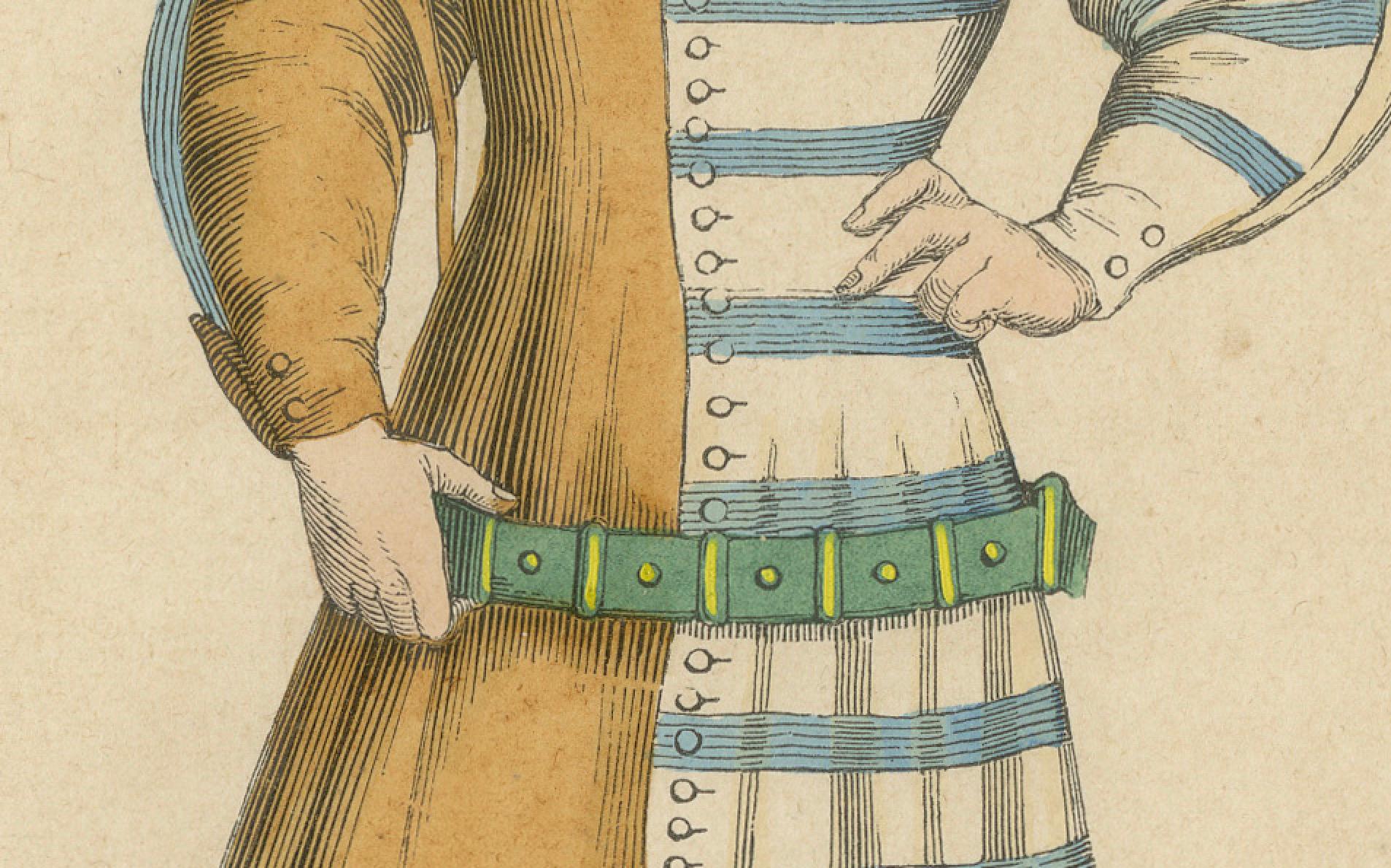
His belt features large, ornate disks, which may serve as both functional fastenings and decorative elements. He stands confidently with one hand on his hip, a pose that exudes a sense of self-assuredness and style.
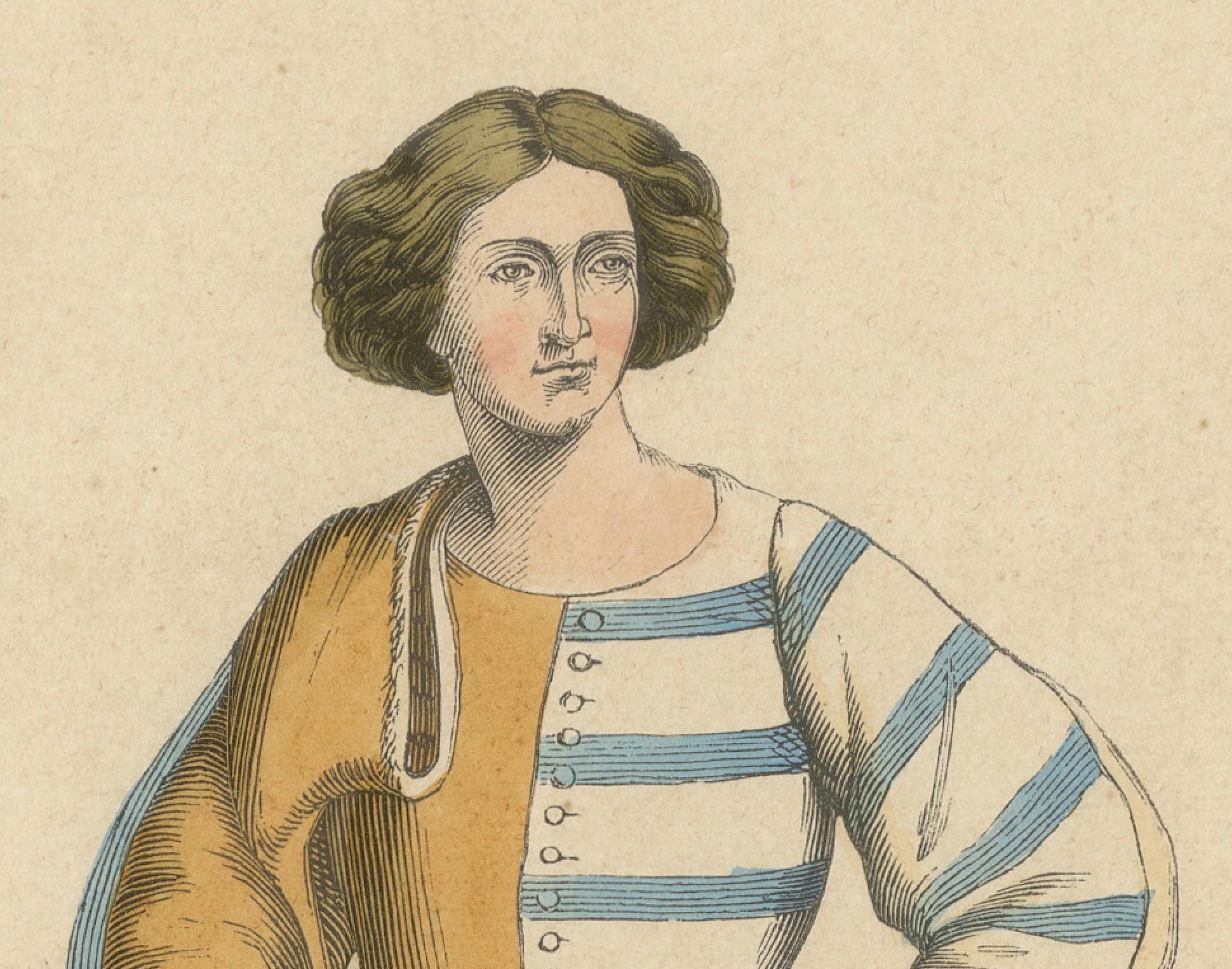
His hair is styled in a manner typical of the time, cut to the length of his ears and framing his face, providing a sense of the grooming standards of the period. The print is numbered "102," suggesting its sequence in the collection. The depiction of this Italian youth offers insight into the clothing and fashion sensibilities of young men in Renaissance Italy.
The colors have a nice glow over them. Historically, egg whites, known as glair, and sometimes egg yolk were indeed used in illumination and painting, particularly in manuscripts, to give colors a brighter appearance and to add a sheen or gloss to the work. This technique was quite common during the Middle Ages and into the Renaissance.
Egg whites can be applied as a varnish over pigments to enhance their brightness and to protect the colors. This application could make the colors appear more vivid and also add a slight glossy sheen to the surface of the image.
Egg yolk, on the other hand, was commonly used as a binding agent in paint. It forms the basis of tempera paint, a medium that was widely used before the advent of oil painting. Egg yolk helps to create a durable and long-lasting color that adheres well to various surfaces.
In the context of the print from 1847, it's less likely that egg whites or yolks were used directly on the print, as by that time, commercial printing processes would have been more advanced and less reliant on such manual methods. However, if this print is a representation of an earlier style or is meant to mimic the appearance of hand-painted manuscripts, the original artists might have employed techniques or materials that gave a similar effect to those achieved with egg-based binders and varnishes.