About this sheet
Egyptian Dress, Jewelry & Camel Transport – Antique Print of Egypt, 18th c.
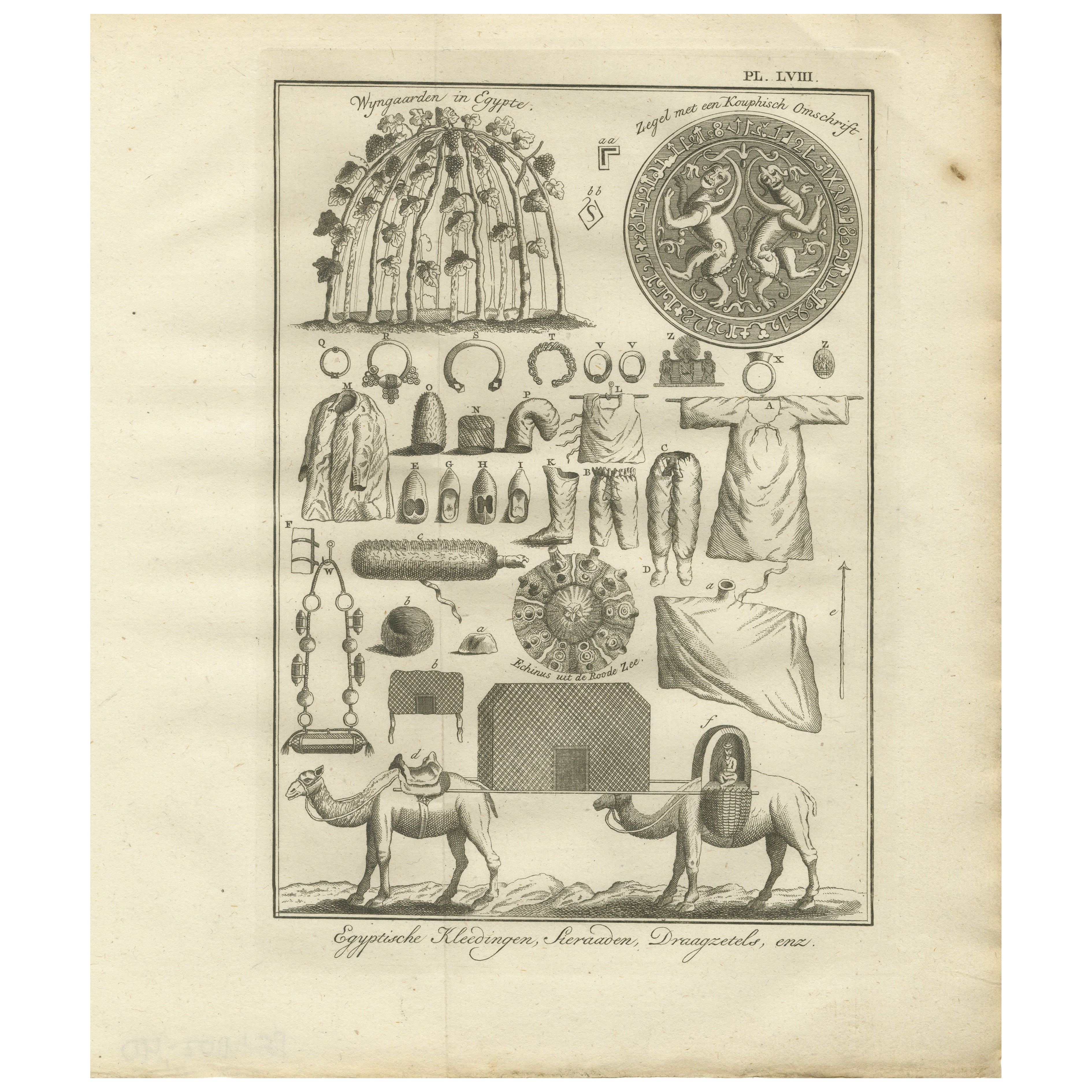
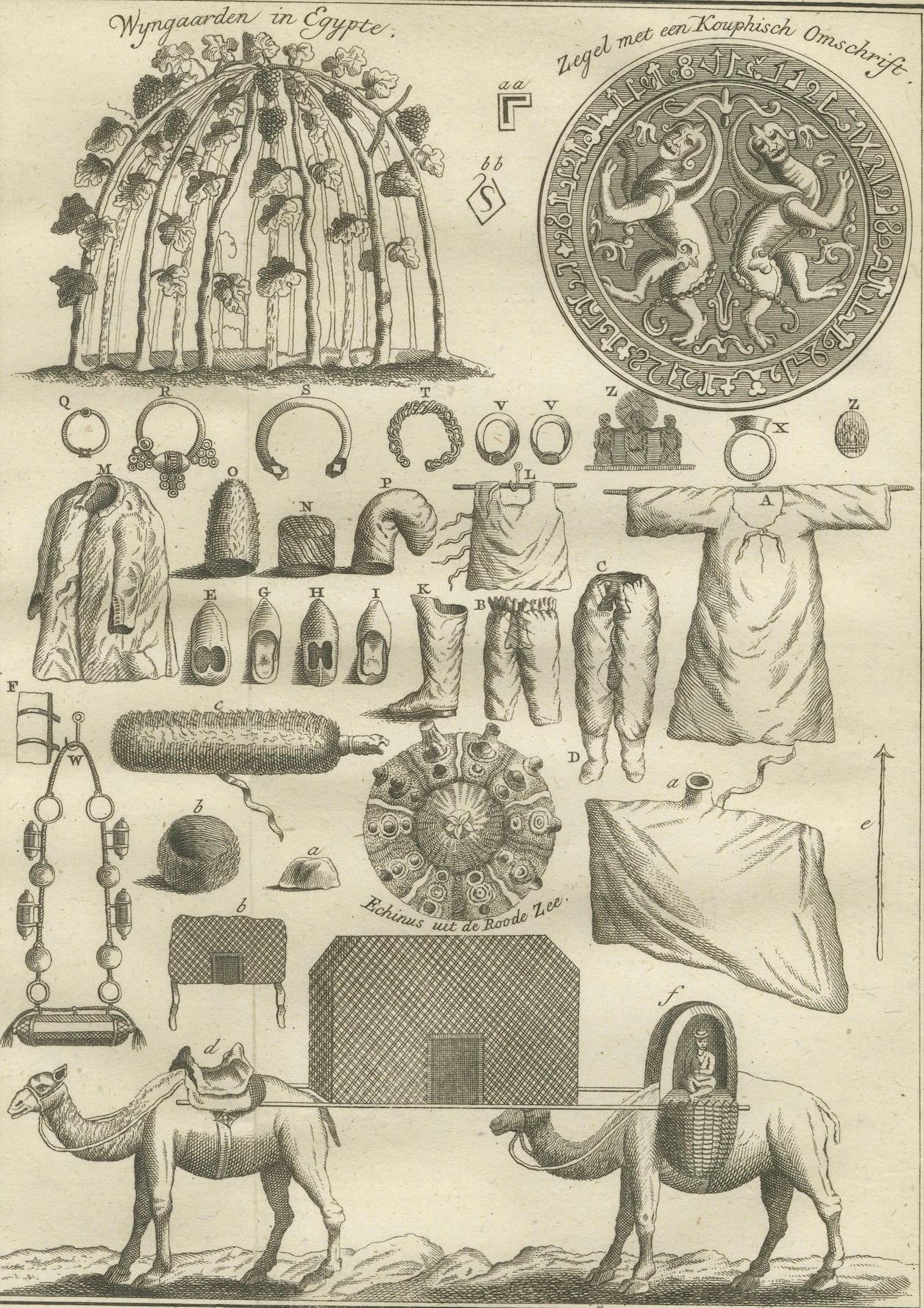
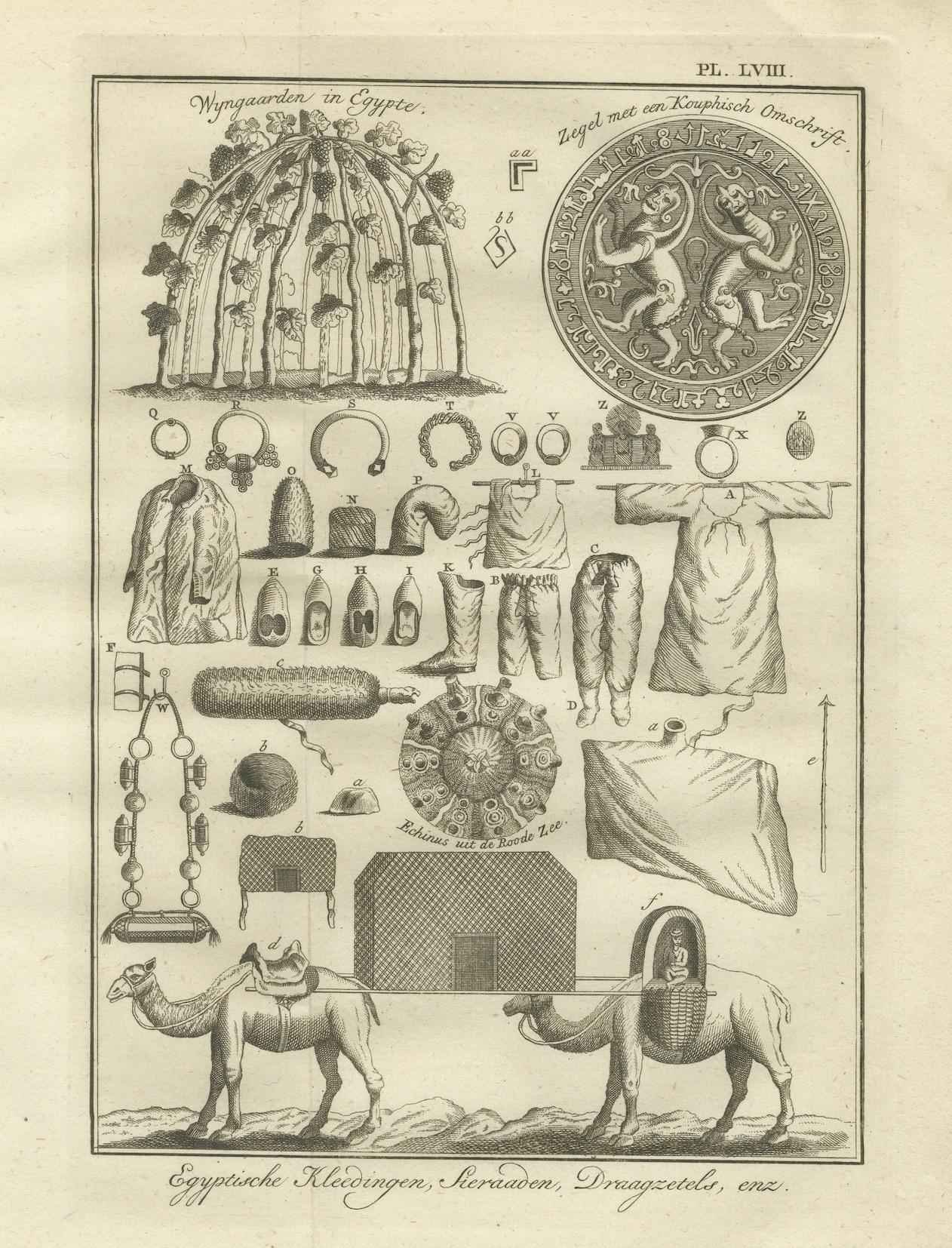
This richly detailed 18th-century engraving offers an illuminating visual inventory of Egyptian material culture, combining elements of traditional clothing, jewelry, camel transportation, architecture, and domestic objects. The plate, numbered Pl. LVIII, is captioned “Egyptische Kleedingen, Sieraden, Draagzetels, enz.”, which translates to “Egyptian Clothing, Jewelry, Sedan Chairs, etc.” It is part of a broader ethnographic and antiquarian series likely based on the travel accounts of 17th- and 18th-century European explorers documenting daily life and traditions in Egypt.
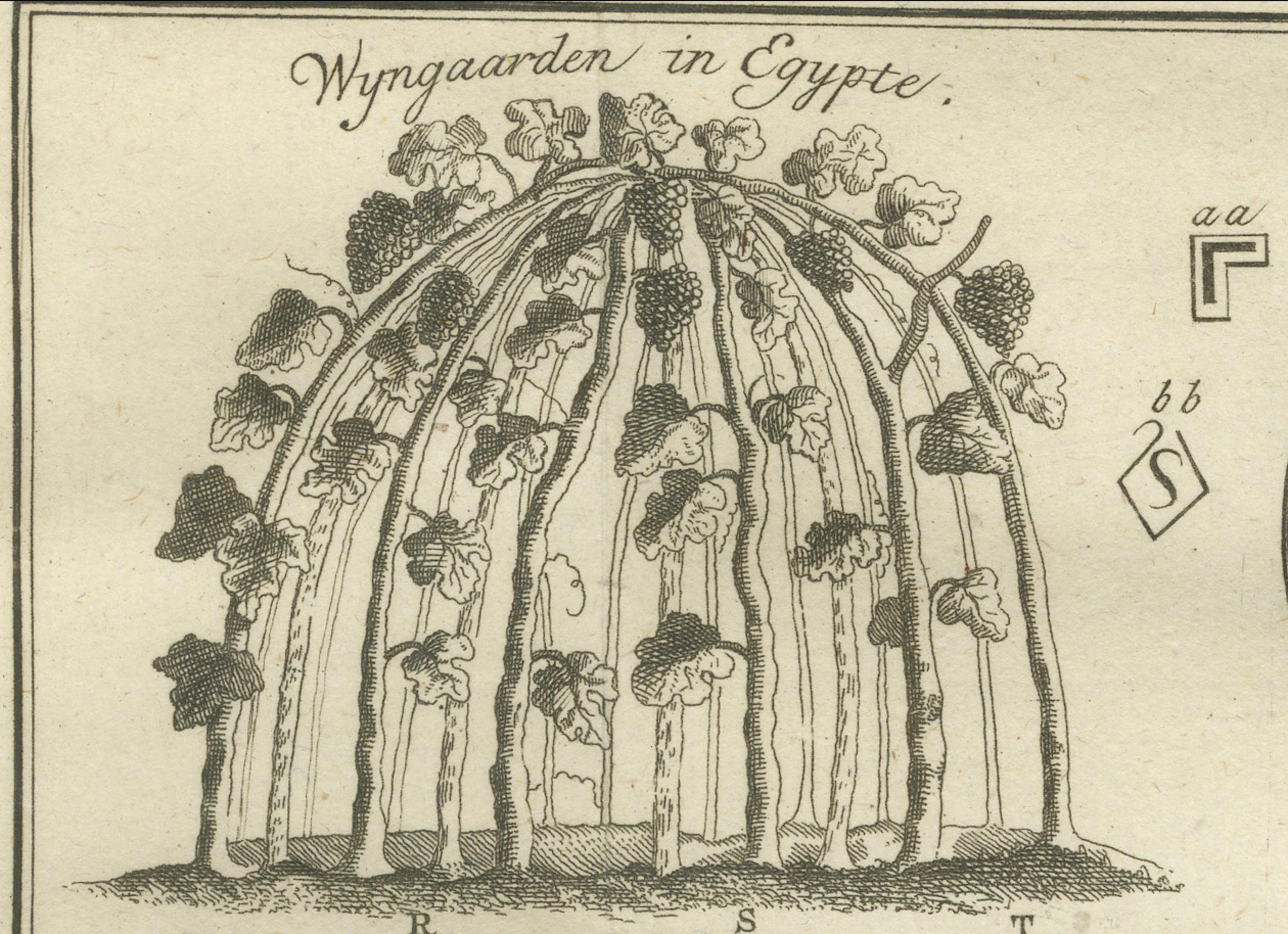
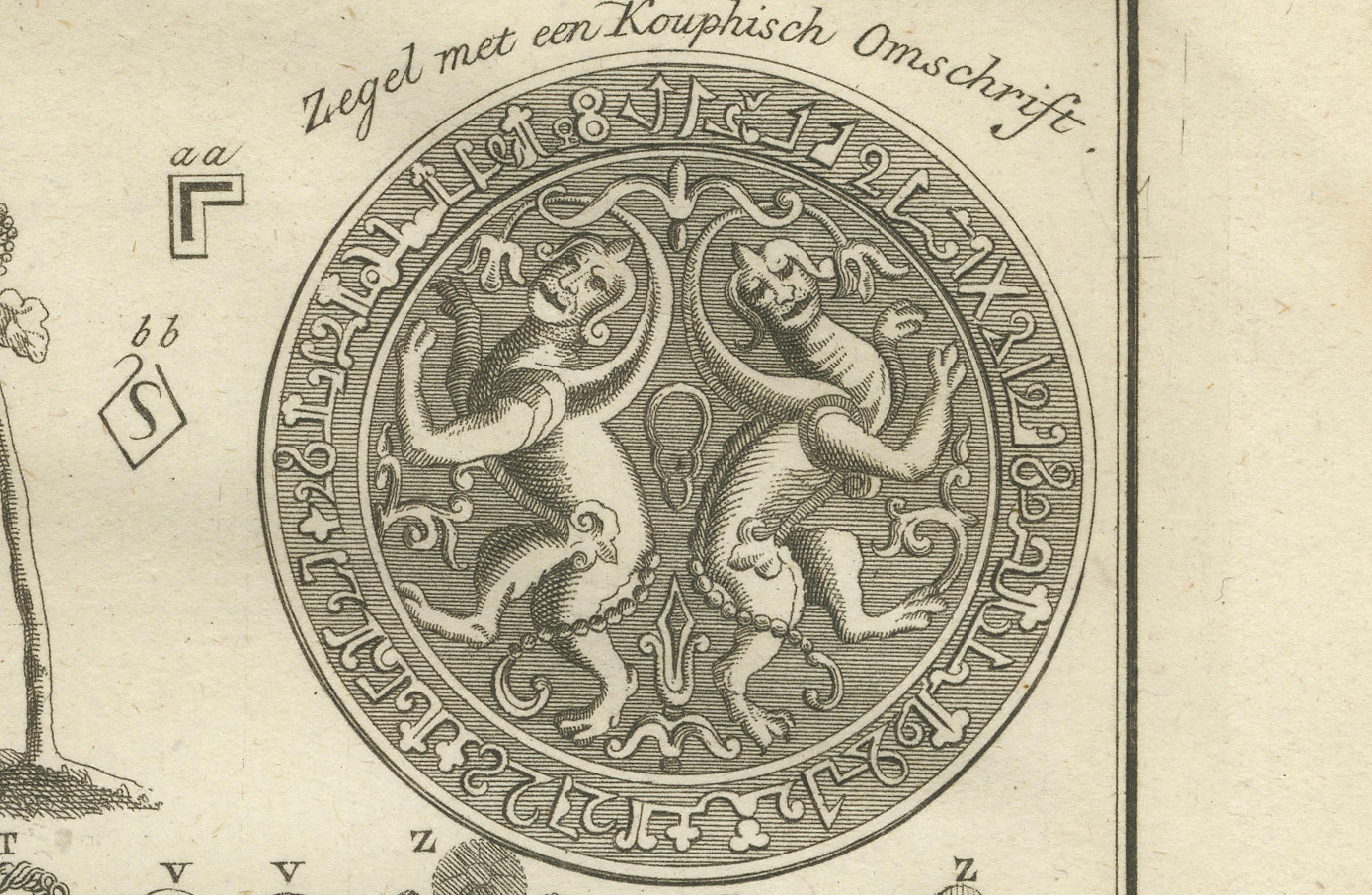
The top portion of the print depicts a stylized vineyard in Egypt, where vines are shown trained over a dome-shaped trellis—a distinctive method used to maximize shade and space in arid climates. To the right of this is a Coptic seal (Zegel met een Koptisch Opschrift), featuring two heraldic lions flanking a central motif and surrounded by decorative script. This seal symbolically connects Egypt’s Christian Coptic heritage with its wider cultural tapestry.
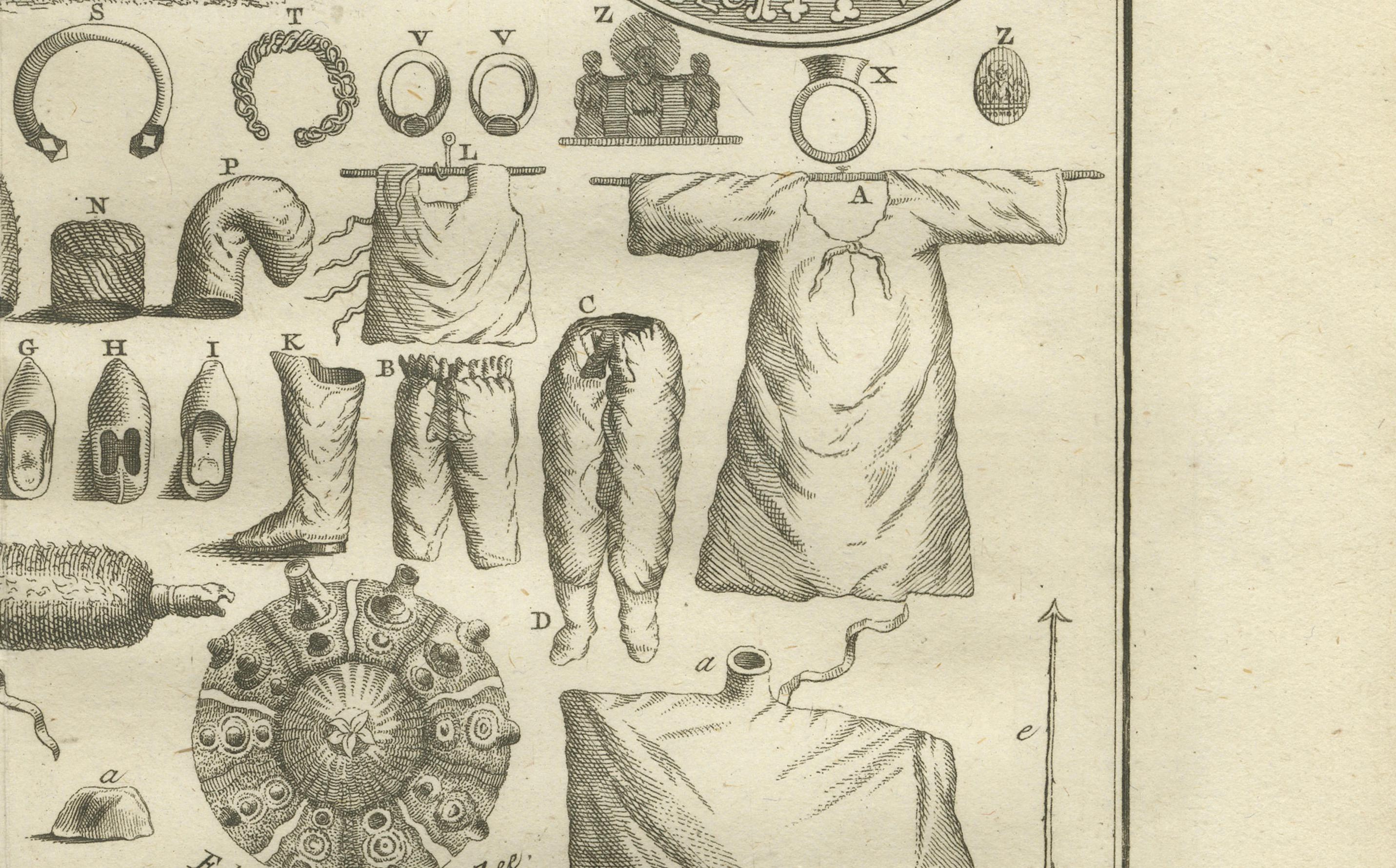
Beneath this, the plate presents an impressive array of jewelry and personal adornments: circular bracelets and anklets, hoop earrings, seal rings, and amulets, each meticulously rendered. These artifacts represent both everyday wear and ceremonial items, hinting at a society where appearance, identity, and belief were closely intertwined.
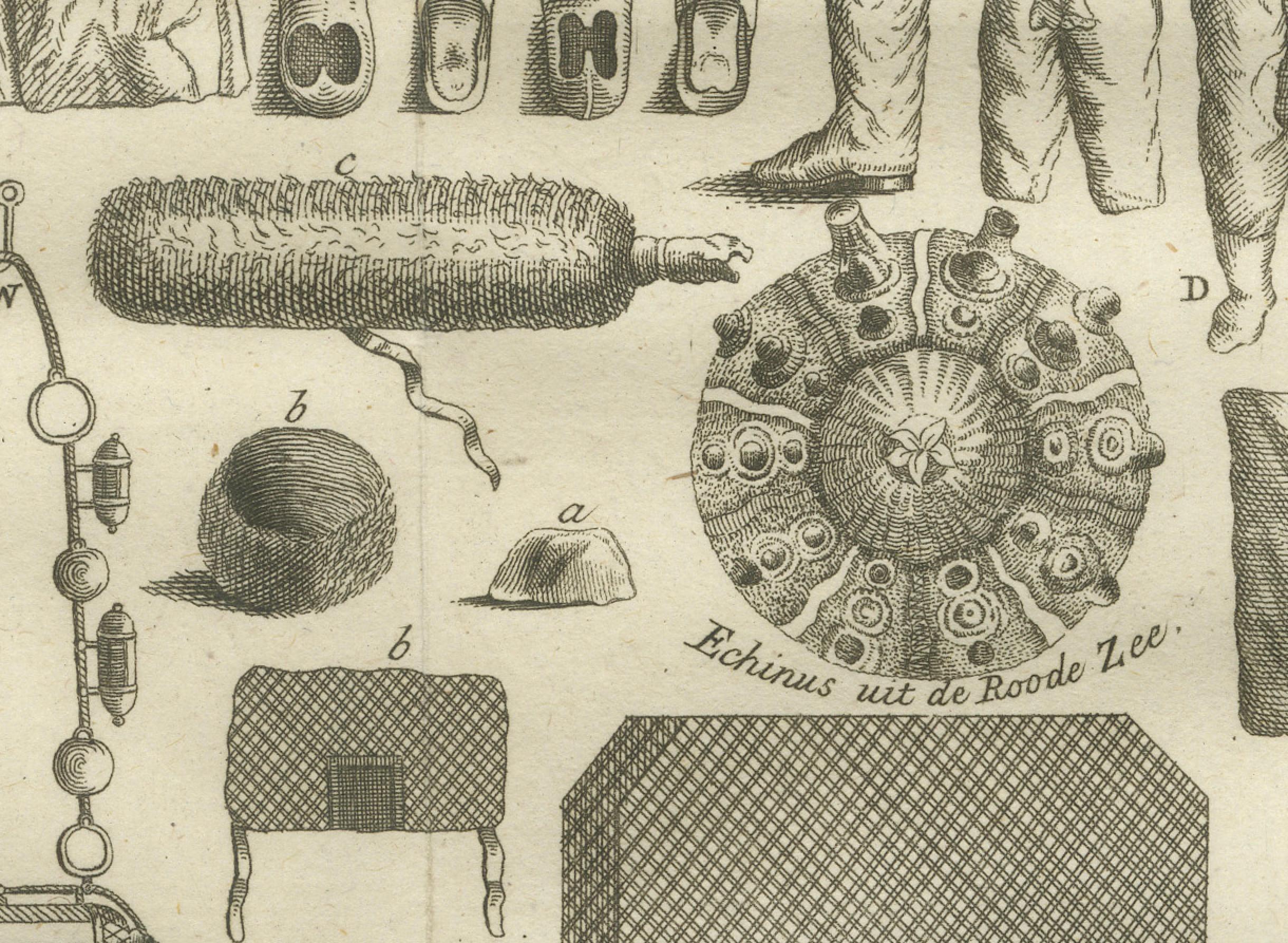
A variety of traditional garments are illustrated in the center section: tunics, trousers, robes, and shawls, all shown in folded or draped form to highlight texture and cut. Several smaller utilitarian objects such as sandals, headwear, coiled ropes, flasks, and what appears to be a “bidsnoer” or prayer string are also included, emphasizing the blend of spiritual and domestic life.
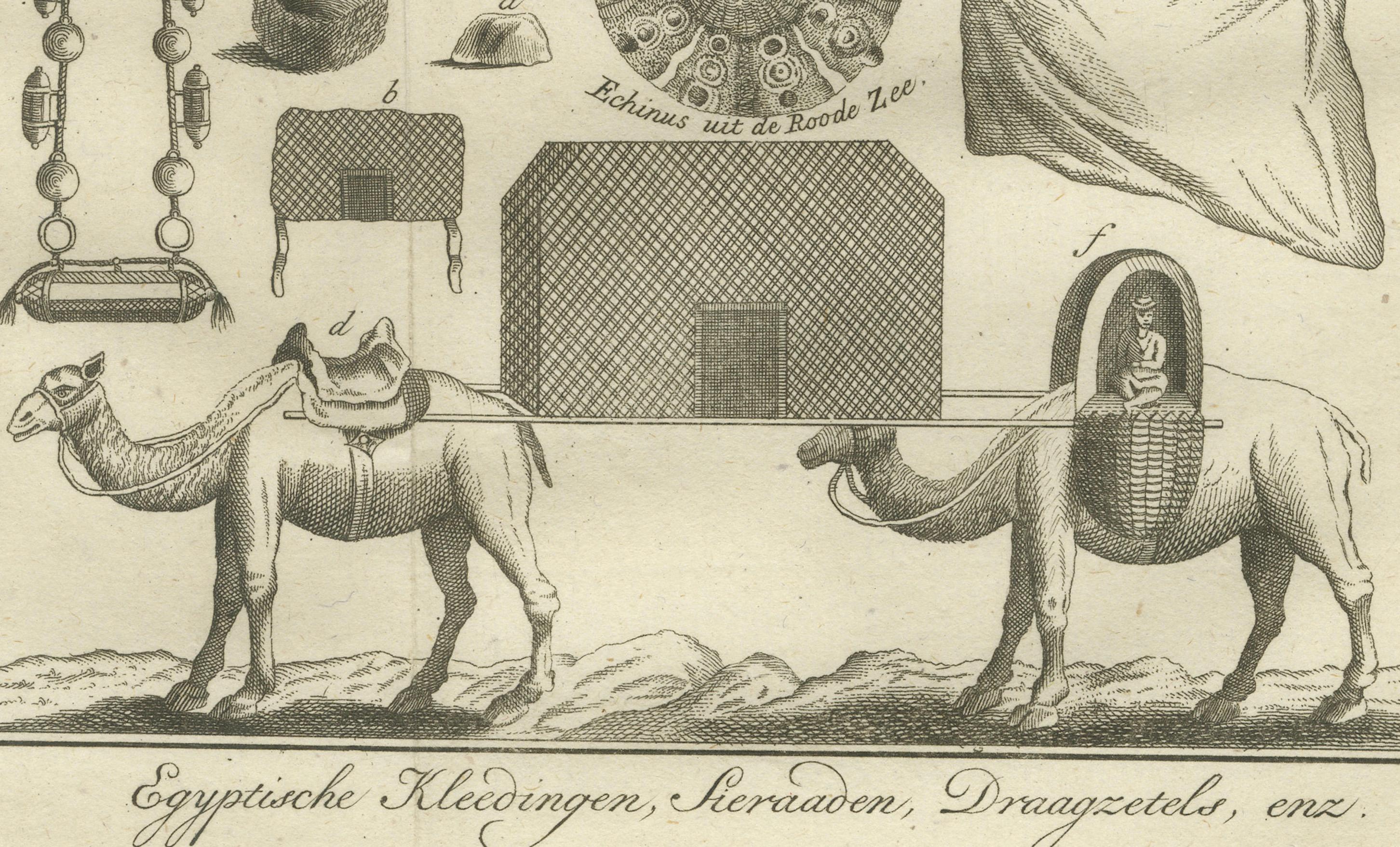
At the lower half of the engraving, we find two camels, each equipped for transport. The left camel carries a typical saddle, while the right one is shown with an elaborate sedan-style travel enclosure, housing a seated figure. This illustrates the practice of traveling through desert regions in protected, shaded compartments—used especially by women or high-ranking individuals. The construction of the sedan and the richly patterned fabric covering it underscores the combination of utility and status.
This plate serves not only as a documentary artifact but also as a visual ethnographic study, providing insight into how 18th-century Europe perceived and represented Egyptian life. Its detail and clarity make it a striking piece for collectors interested in costume history, orientalist prints, or the history of Middle Eastern travel and daily customs.
Condition report:
Good condition. Light age-toning to margins and minor edge wear. Image clean and sharp. Folding line as issued.
Framing tips:
A dark brown or black frame with a sand-colored mat would highlight the fine lines and aged paper tone, while complementing the historical theme.
Technique: Engraving
Maker: J. van der Spyk, Netherlands, circa 1776