About this sheet
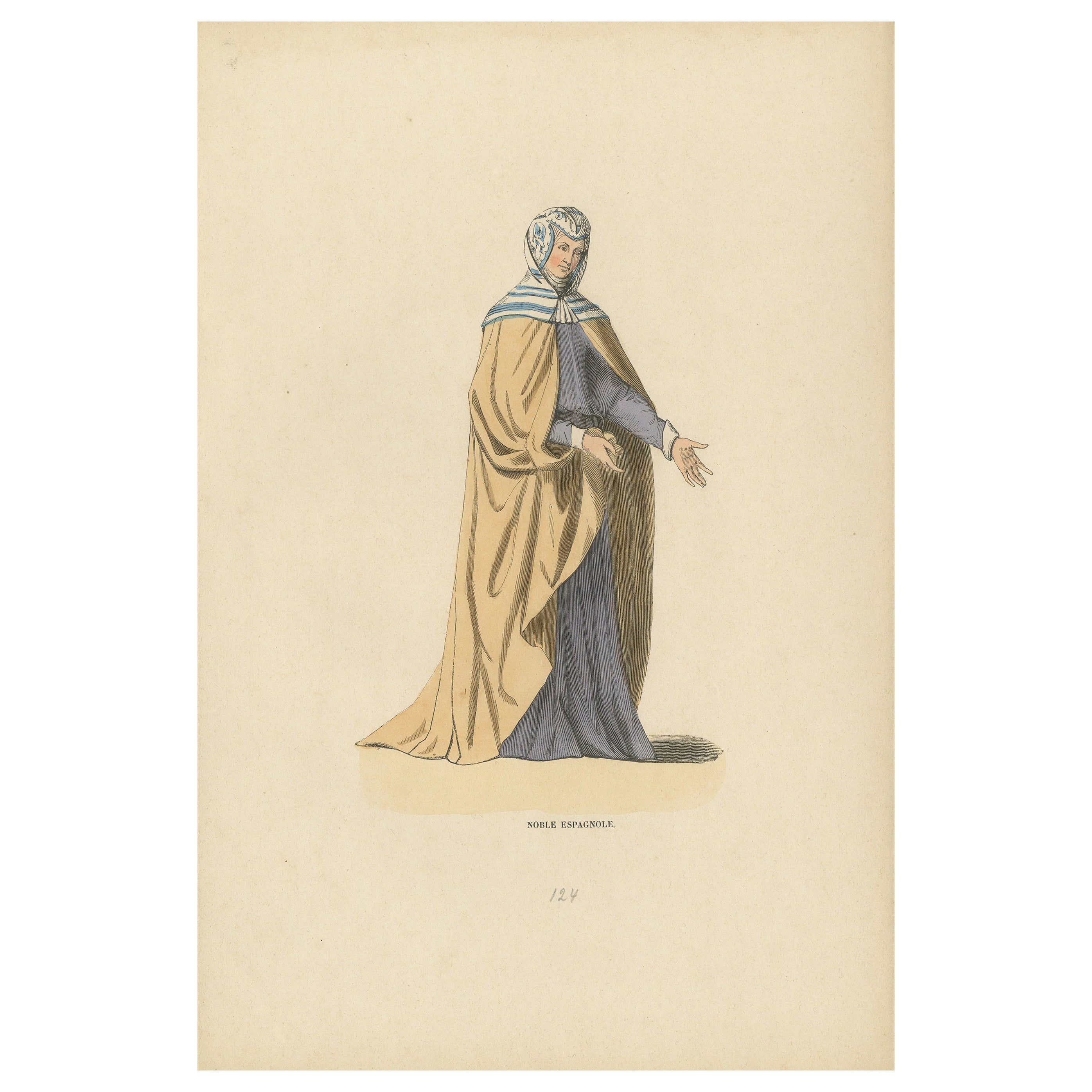
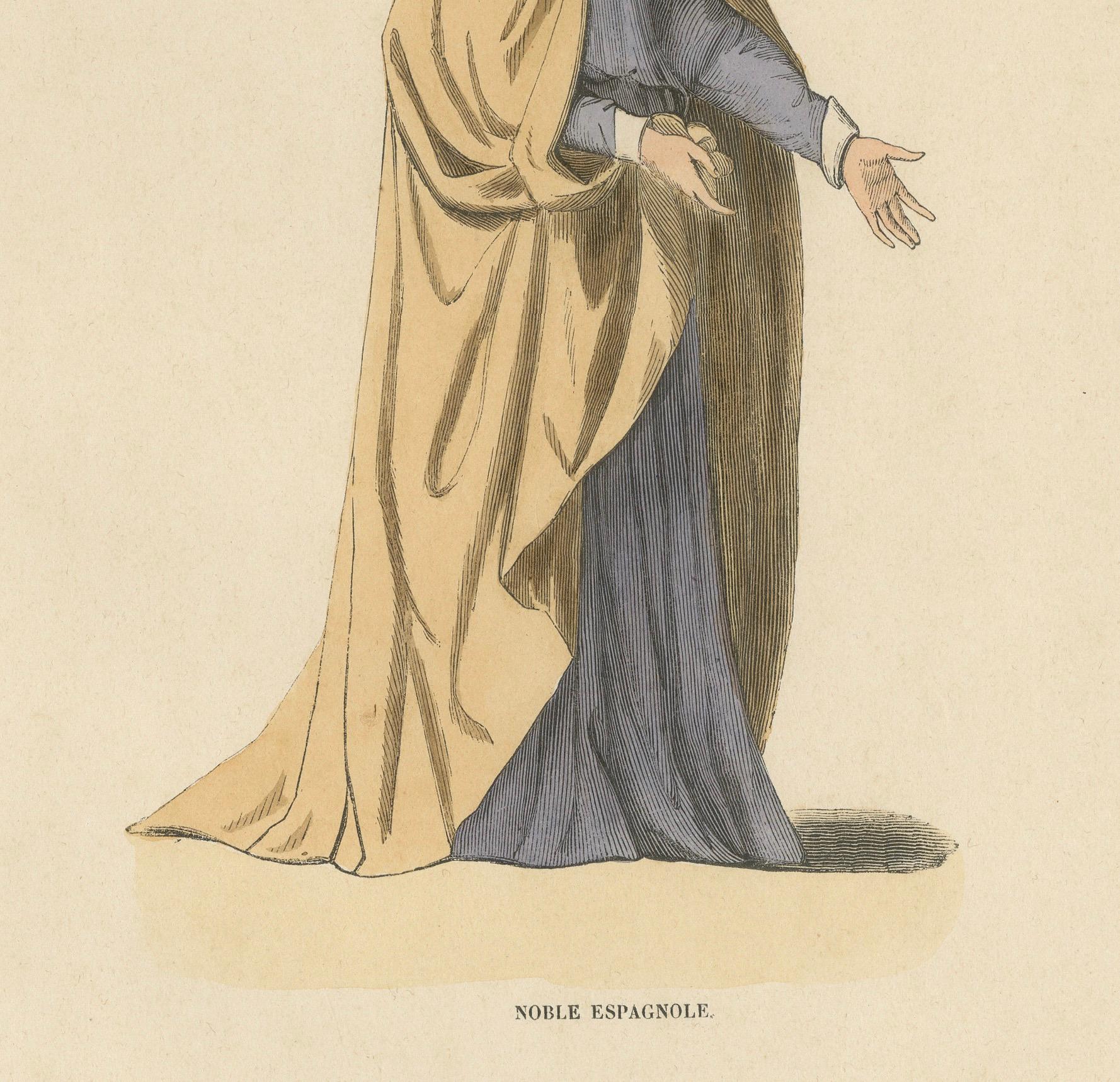
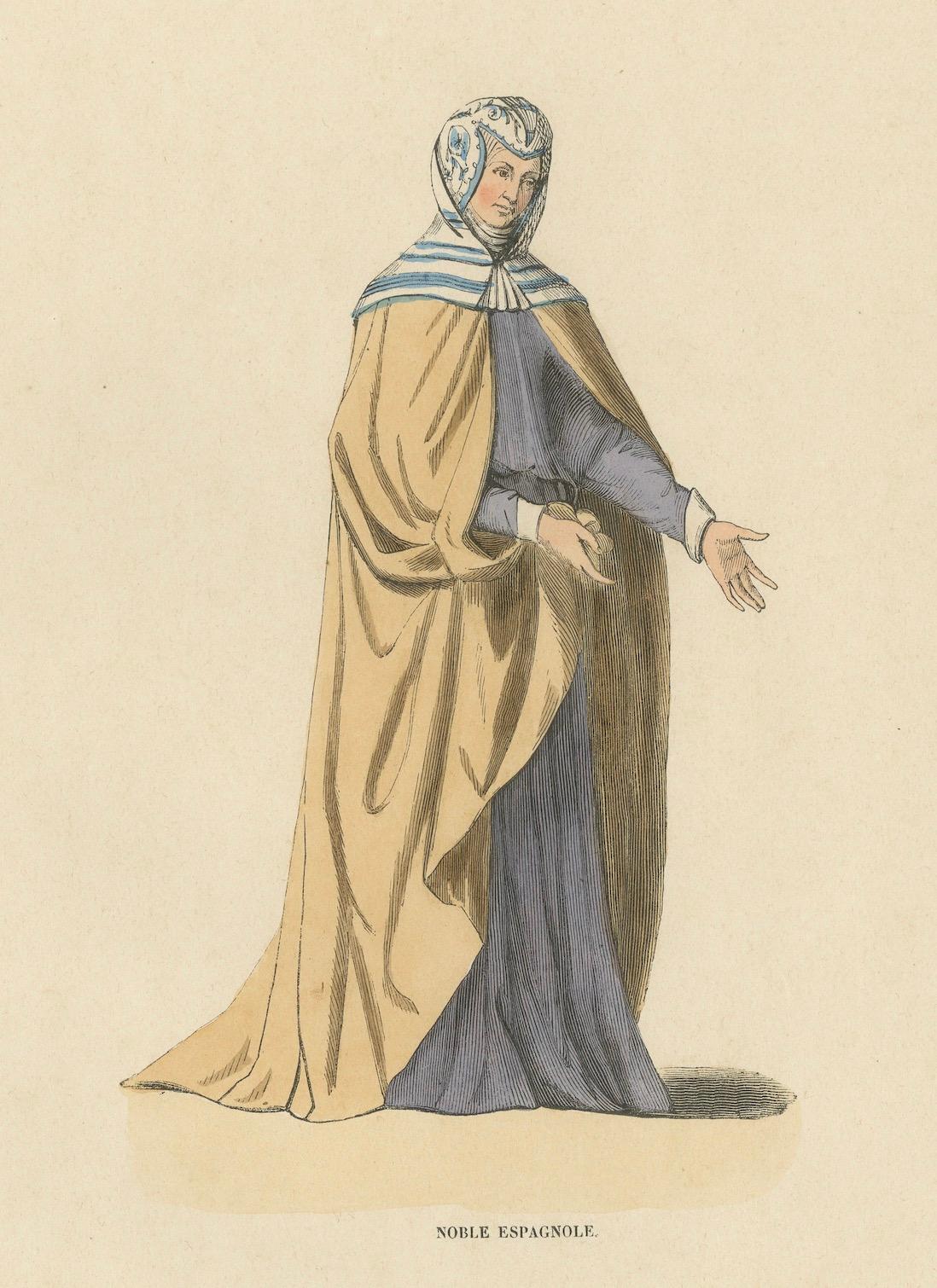
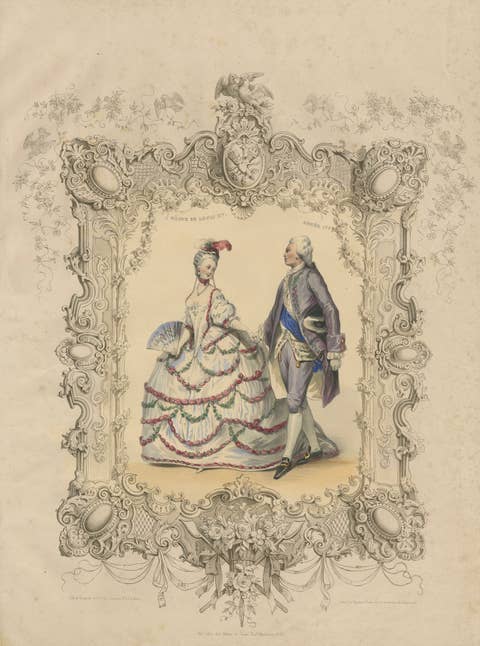
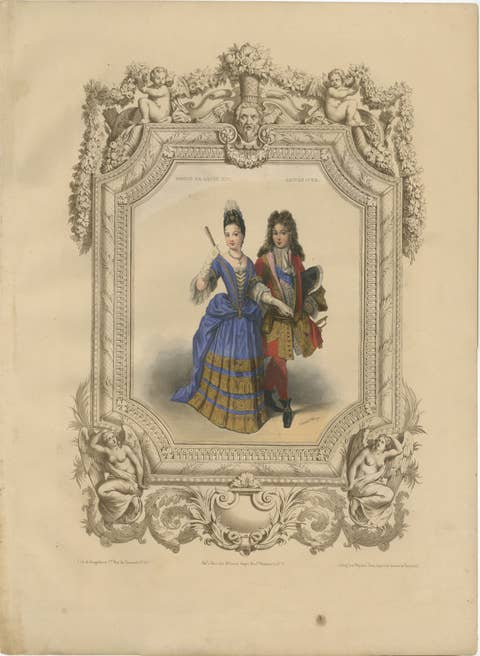
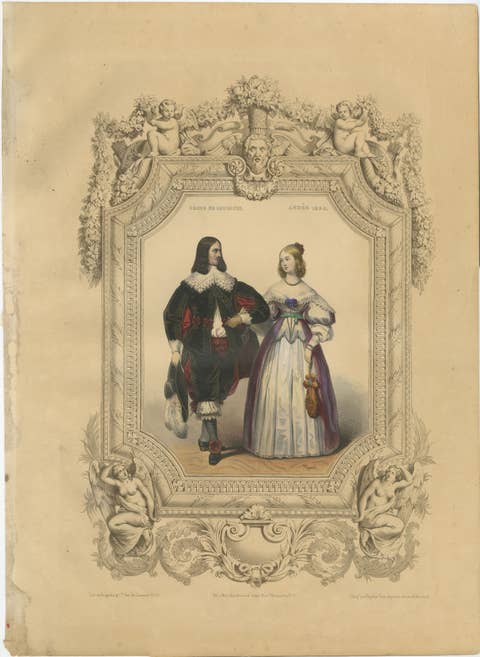
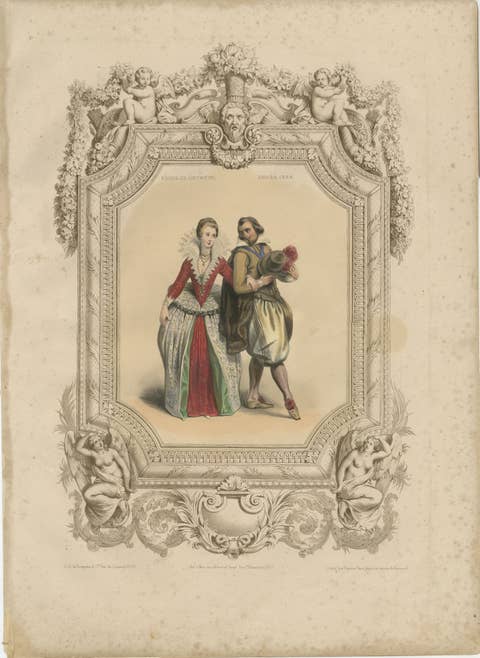
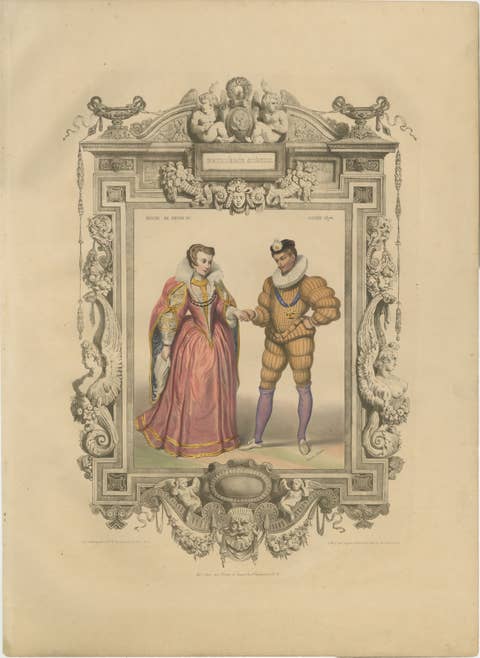
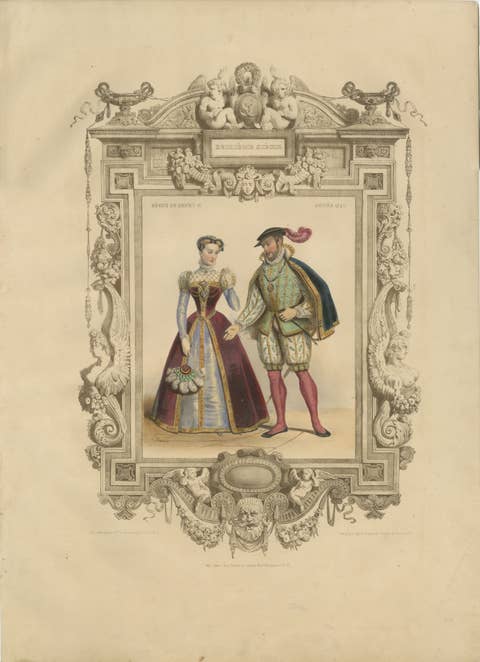
This striking lithograph from the historic 1847 anthology "Costume du Moyen Âge" portrays a Spanish noblewoman in traditional attire, captured with an essence of nobility and refined grace. The noblewoman is depicted in a three-quarter stance, her gaze gently directed towards the viewer, which creates an intimate connection with the audience. Her dress is a harmony of practicality and elegance, characterized by a full-length, tan cloak that wraps around her figure, edged with a subtle blue stripe that adds a touch of color to the otherwise muted palette.
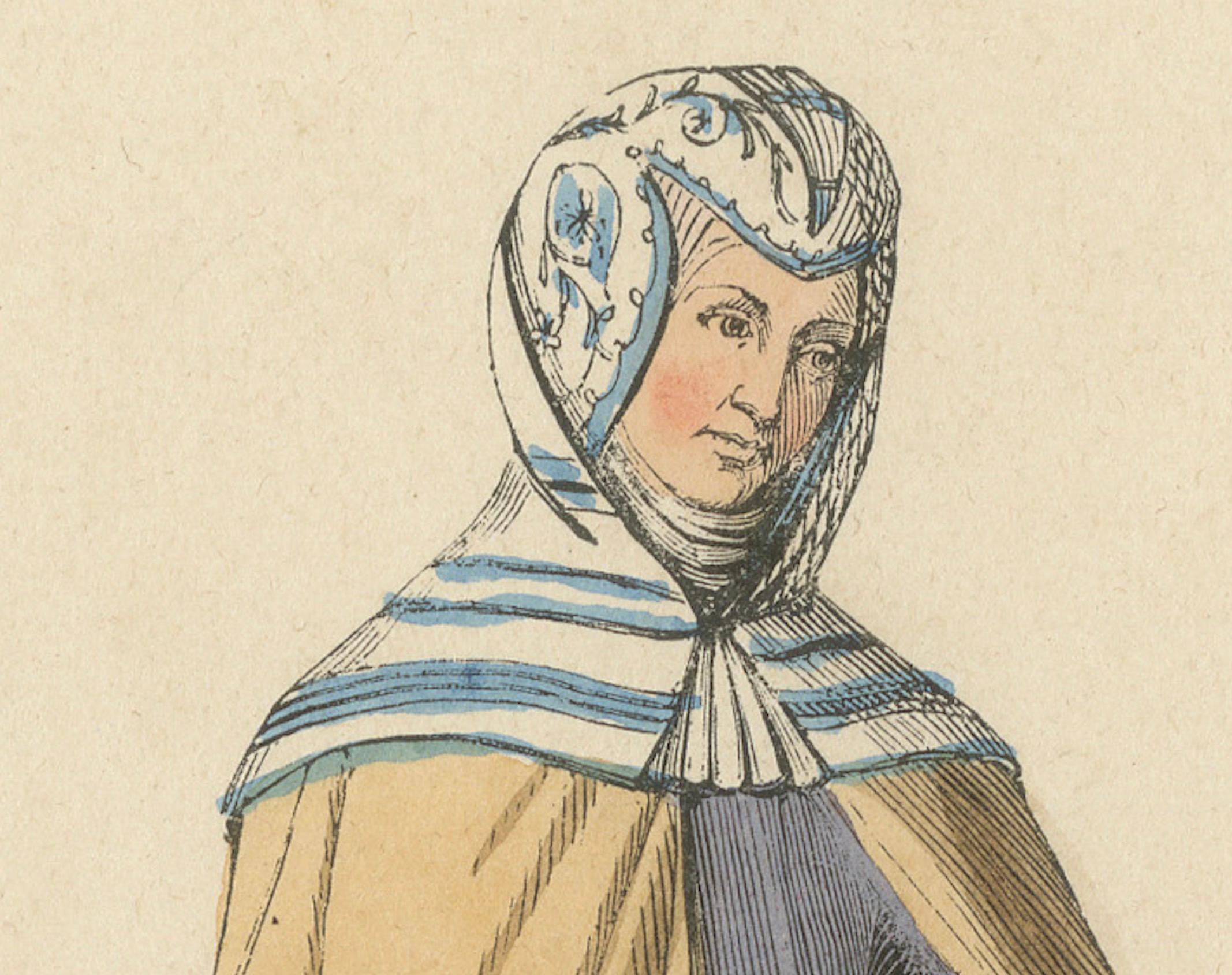
The noblewoman's headdress, a distinctive feature of her ensemble, is a beautifully patterned headscarf, its intricate design suggesting a status of wealth and sophistication. The scarf is secured around her head and beneath her chin, framing her face and highlighting her serene and composed expression. Beneath the cloak, glimpses of a dark undergarment can be seen, suggesting layers that were typical of the era's fashion.
Her right hand extends gracefully, perhaps in a gesture of communication or to display her ring, indicative of her marital status and her family's coat of arms. The lithograph demonstrates an exquisite attention to textile and pattern, which not only conveys the fashion of the period but also the cultural identity and social stature of the noblewoman.
As with other pieces in the collection, the background is deliberately left blank, focusing all attention on the subject and her costume. This lithographic work serves as both an artistic and historical document, offering insight into the lifestyle and status of noblewomen in medieval Spain. It is a testament to the meticulous research and artistic dedication of the time, revealing the nuanced details of wardrobe and accessories that were integral to the identity and portrayal of nobility in the Middle Ages.
The colors have a nice glow over them. Historically, egg whites, known as glair, and sometimes egg yolk were indeed used in illumination and painting, particularly in manuscripts, to give colors a brighter appearance and to add a sheen or gloss to the work. This technique was quite common during the Middle Ages and into the Renaissance.
Egg whites can be applied as a varnish over pigments to enhance their brightness and to protect the colors. This application could make the colors appear more vivid and also add a slight glossy sheen to the surface of the image.
Egg yolk, on the other hand, was commonly used as a binding agent in paint. It forms the basis of tempera paint, a medium that was widely used before the advent of oil painting. Egg yolk helps to create a durable and long-lasting color that adheres well to various surfaces.
In the context of the print from 1847, it's less likely that egg whites or yolks were used directly on the print, as by that time, commercial printing processes would have been more advanced and less reliant on such manual methods. However, if this print is a representation of an earlier style or is meant to mimic the appearance of hand-painted manuscripts, the original artists might have employed techniques or materials that gave a similar effect to those achieved with egg-based binders and varnishes.