About this sheet
Dialogue, Diplomacy and Divine Right: Medieval Italian Costume Scenes
Italian Medieval Artisans, Merchants and the Regal Doge of Venice - Published in 1845
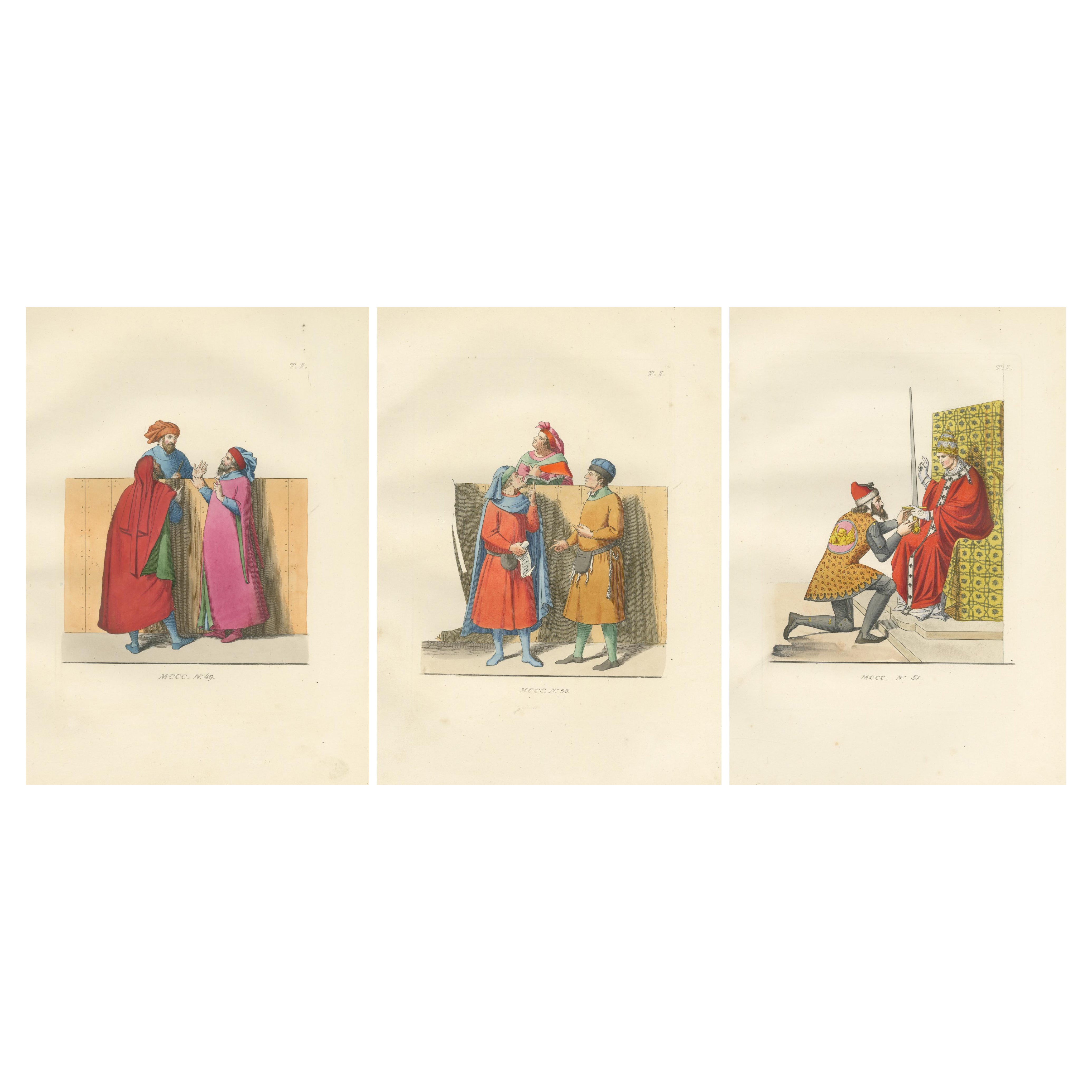
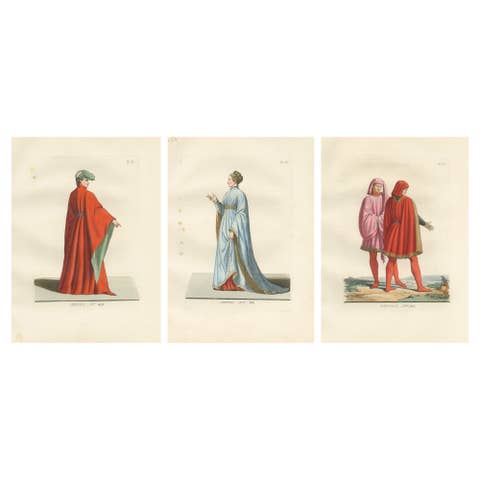
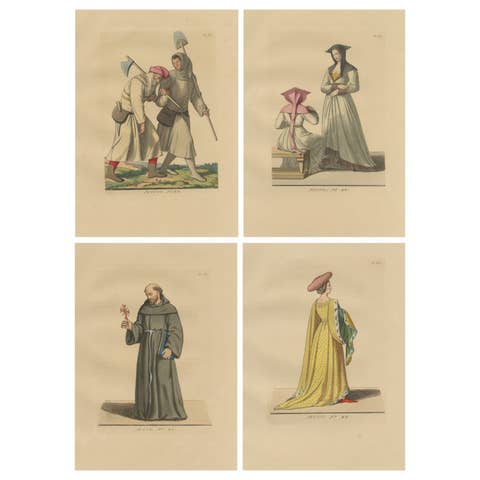
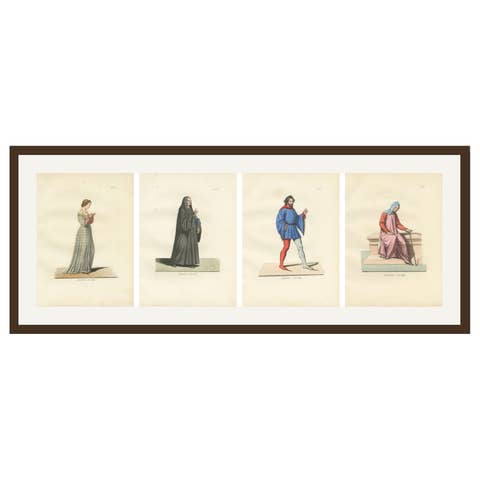
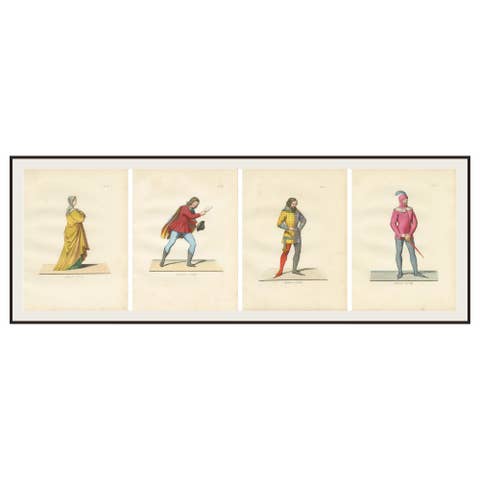
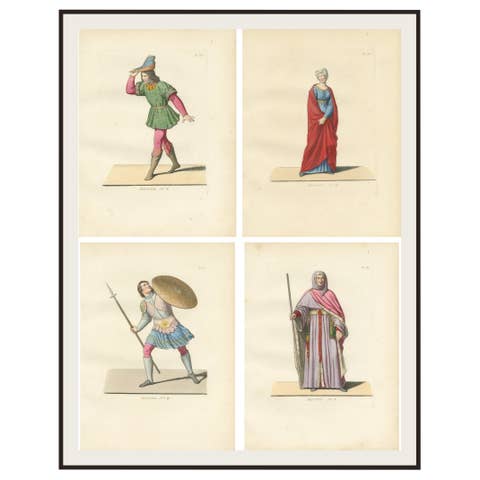
This cohesive trio of hand-colored lithographic prints vividly illustrates three distinct social roles in medieval Italy: artisans, merchants, and the Doge of Venice. Together, they present a compelling visual narrative for any collector or enthusiast of costume history and medieval civic structure.
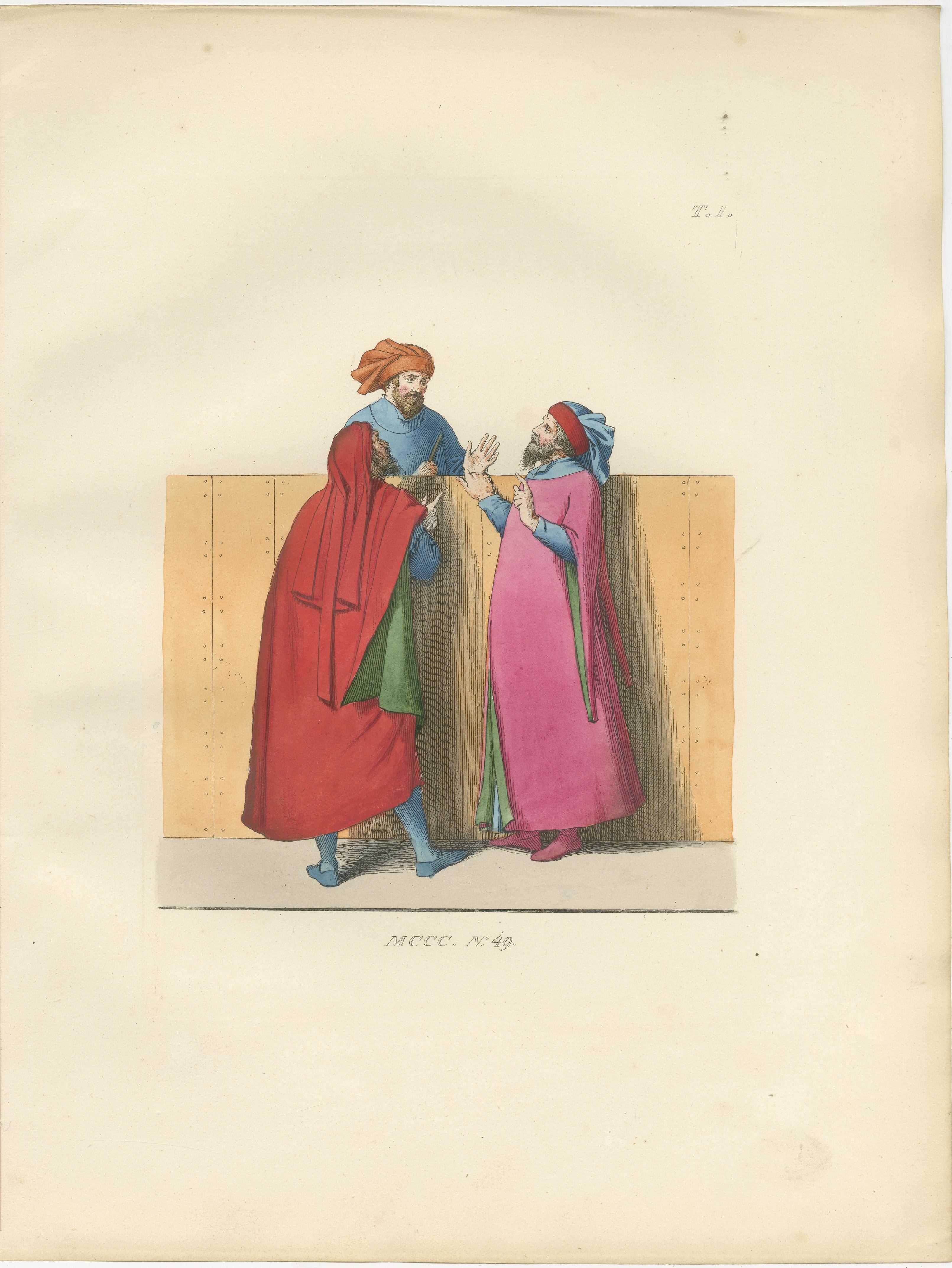
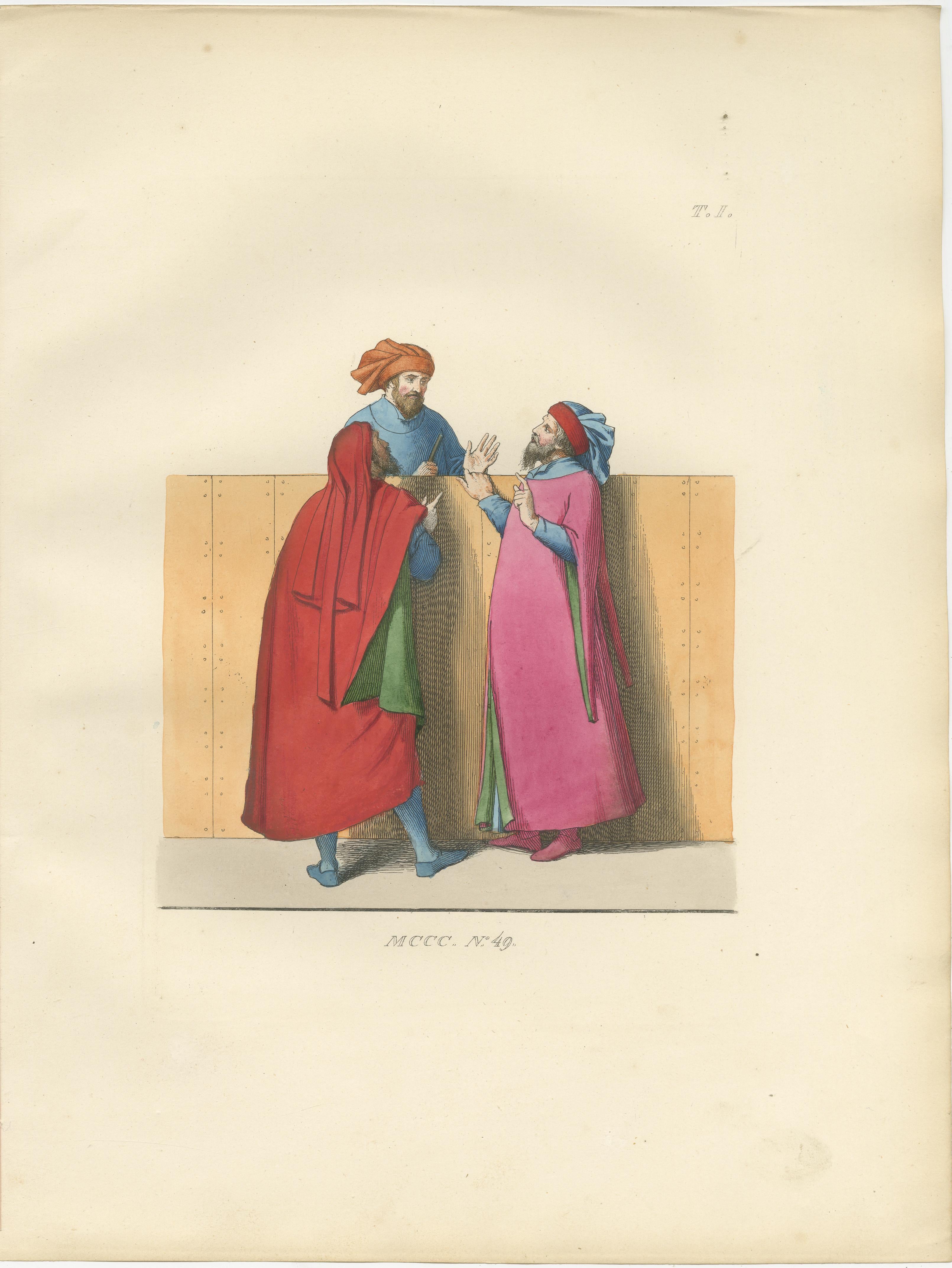
Plate No.49 portrays a group of Italian artisans—skilled craftsmen engaged in dialogue, likely with a notary. Their elaborate layered attire, including scarlet and pink habits paired with chaperon hoods and contrasting leggings, reflects not only their professional identity but also the diversity of fabric and style available to urban working classes in the 14th century. The dynamic gestures and interaction highlight the handshake between craft and commerce that defined artisan life.
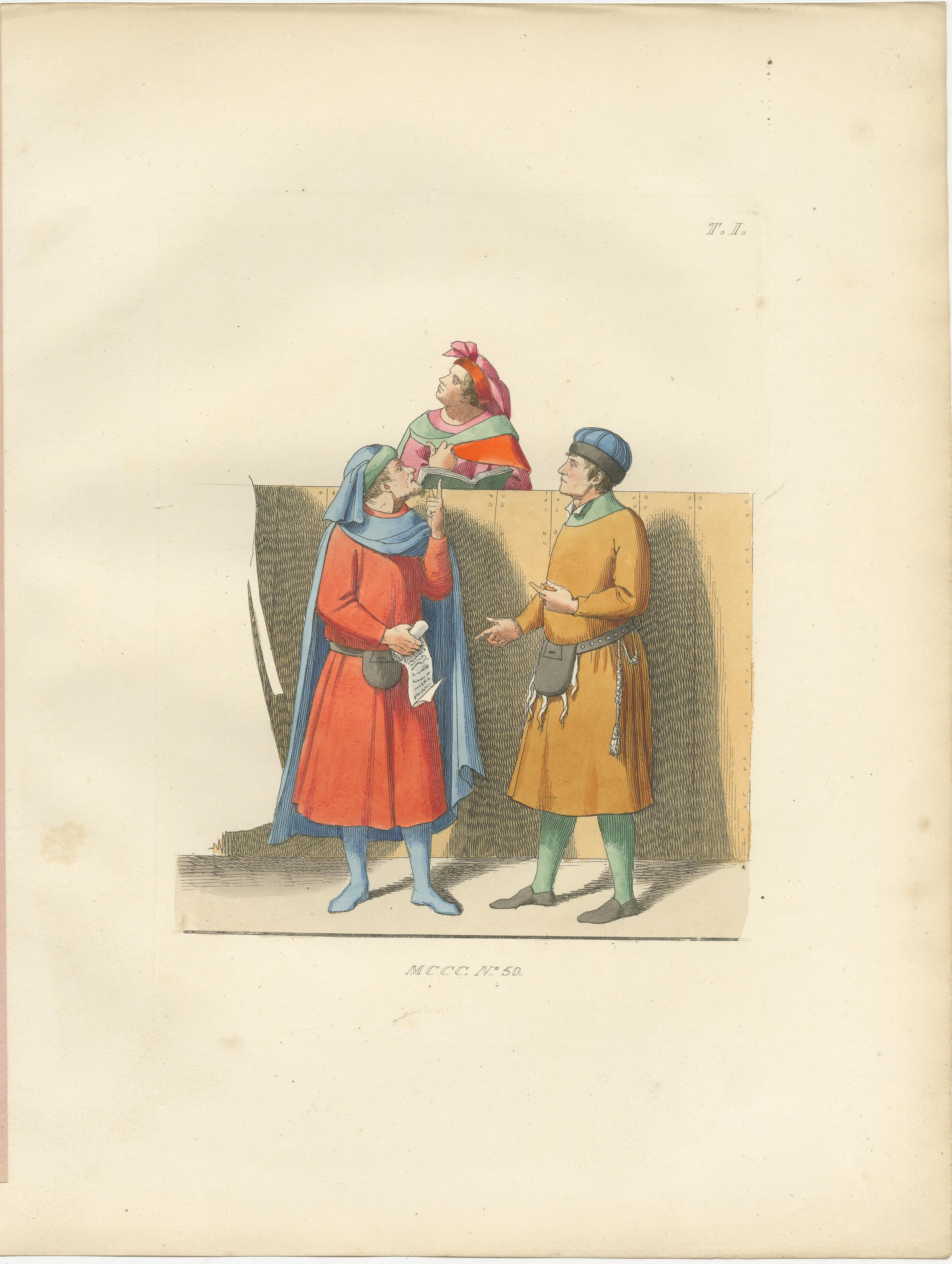
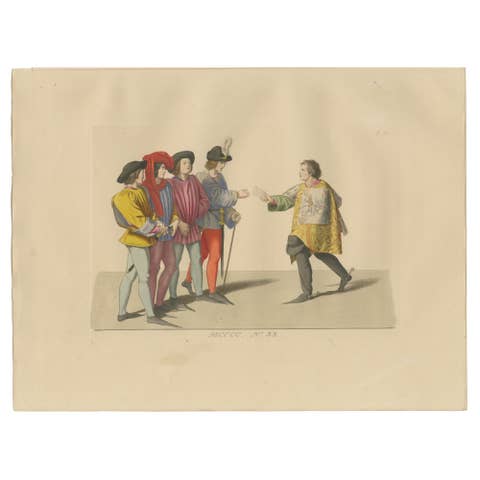
In Plate No.50, titled "Marchands," we see merchants poised in discussion—one possibly reading a document to his companions. Their attire—tunics in warm red-orange, blue, and mustard tones—along with varied head coverings, signifies social rank, trade identification, and active participation in public life. The scene suggests an atmosphere of negotiation or contractual exchange, capturing the essence of commerce in medieval Italy.
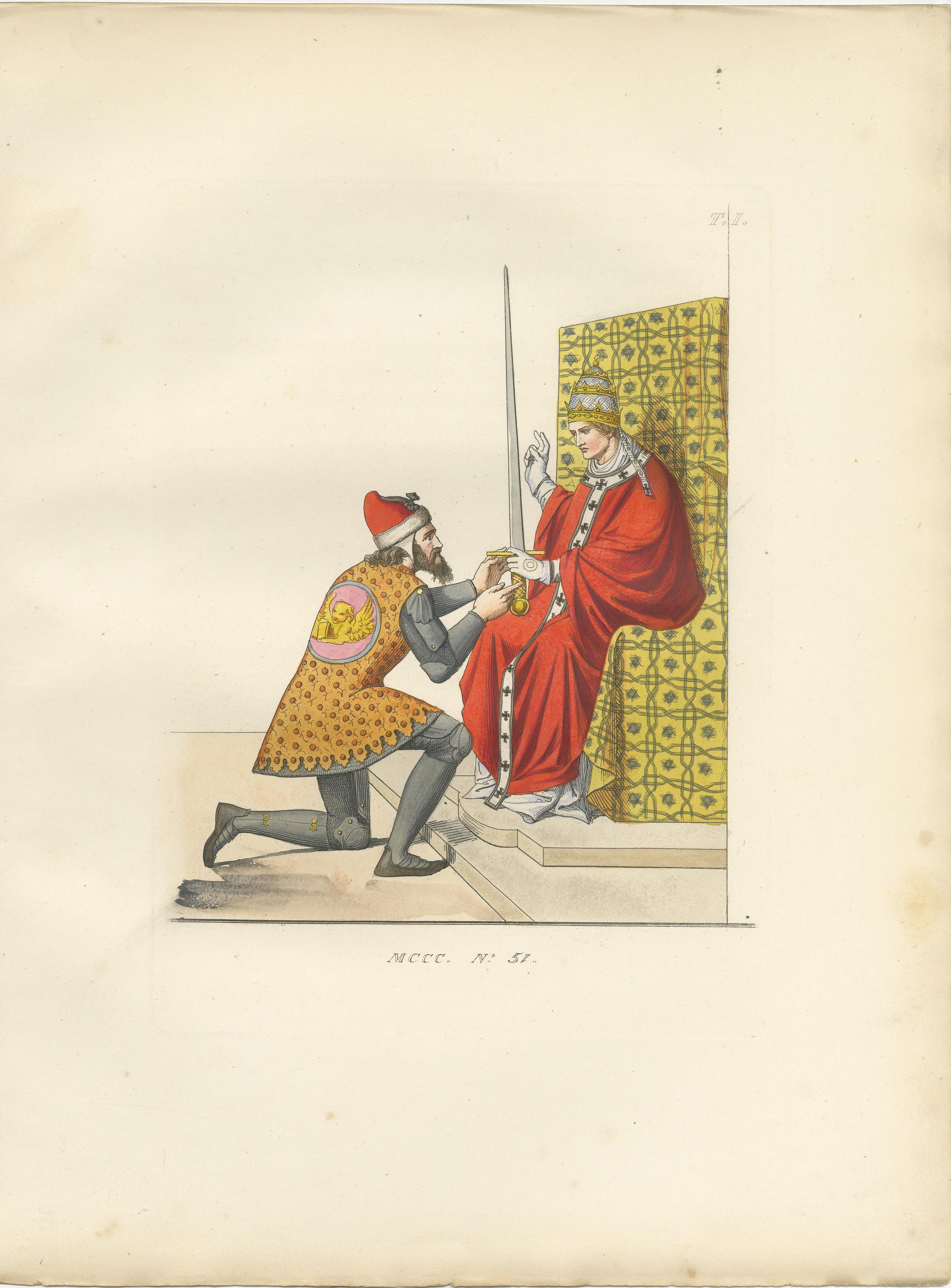
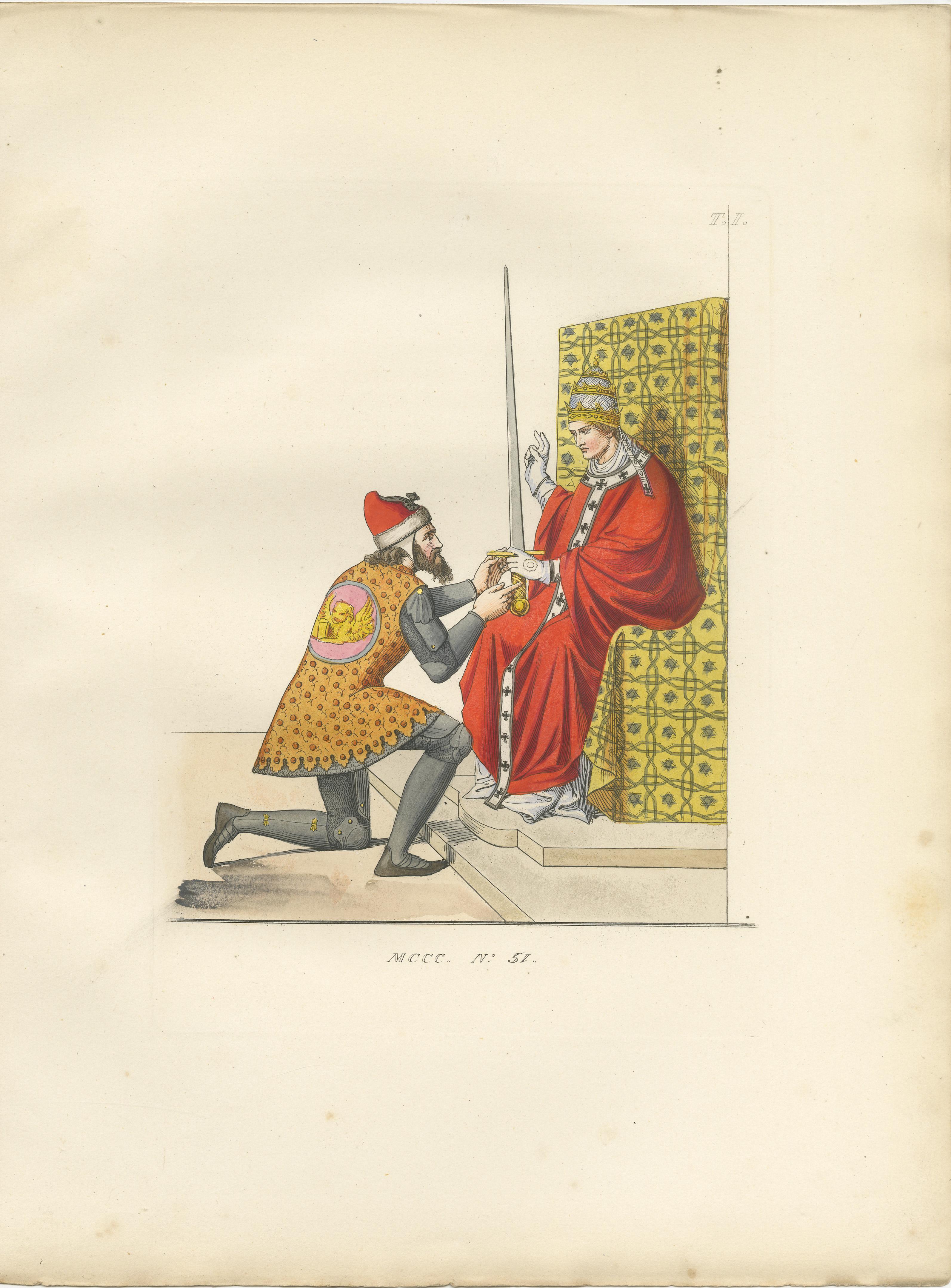
Plate No.51 depicts the Doge of Venice in full regalia—a profound emblem of state authority and spiritual symbolism. Seated on a patterned throne wearing resplendent red robes, the Doge bestows a document or decree to a kneeling figure, demonstrating the formal ceremony of governance. The distinctive corno ducale, the ceremonial horned cap in cloth-of-gold, is visible atop his camauro hood—signifying his role as lifelong elected leader of the Venetian Republic. The presence of the sword underscores combined civil and temporal power, while the richly decorated throne backdrop conveys the grandeur of the office.
Together, these prints form a narrative arc from the daily life of skilled artisans, through the transactional realm of merchants, to the apex of political ceremony in the figure of the Doge. Their richly realized costumes offer textured insight into class distinctions, civic practice, and ceremonial display—a combination that makes the set especially appealing for historical or artistic collectors.
Condition:
The prints remain in very good antique condition. Margins show minimal toning and faint scattered spots; central images are clean with no tears, creases, or fading. Hand-applied color remains crisp and vibrant.
Framing Tips:
To display this series effectively, position the three prints in a horizontal row with consistent spacing, maintaining the narrative progression. Choose a clean, off-white matboard to enhance the delicate hand-coloring. Opt for simple dark walnut or matte black frames to bring out the vivid hues without overpowering the detail. Install museum-grade UV-filtering glass to preserve the original color intensity. For a refined effect, ensure the mat window is cut to float the trimmed edge of each print, giving a crisp, gallery-style presentation.