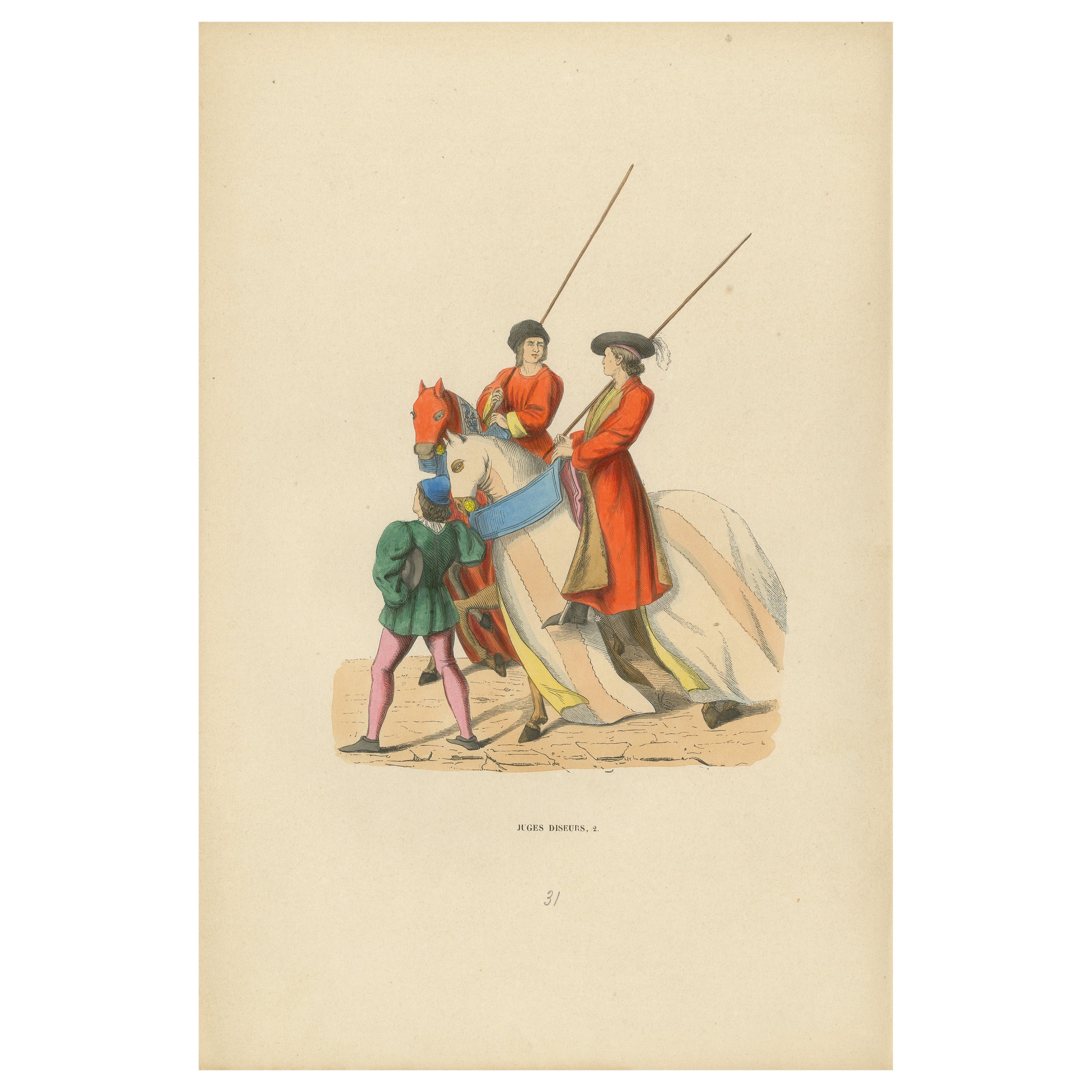
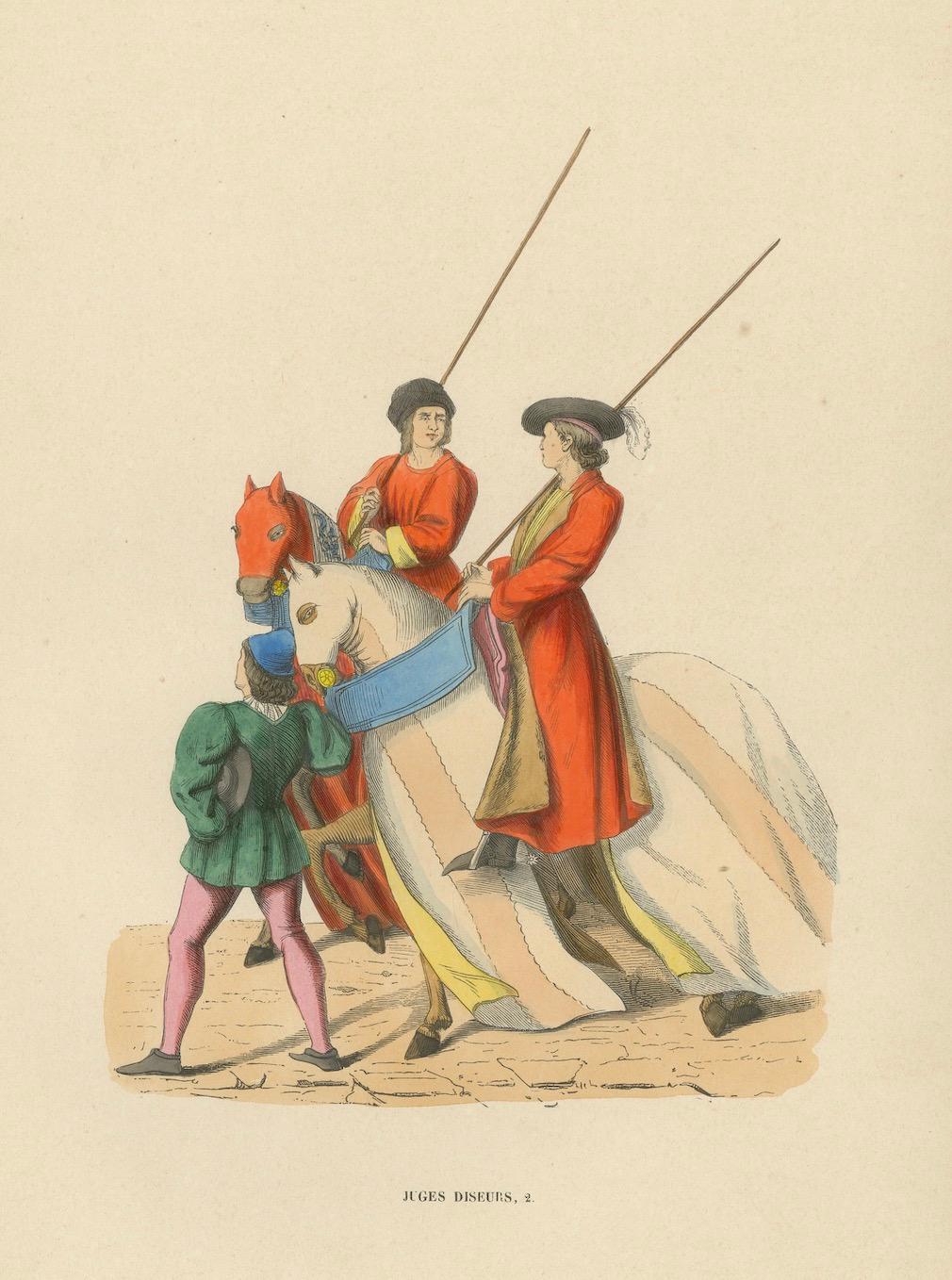
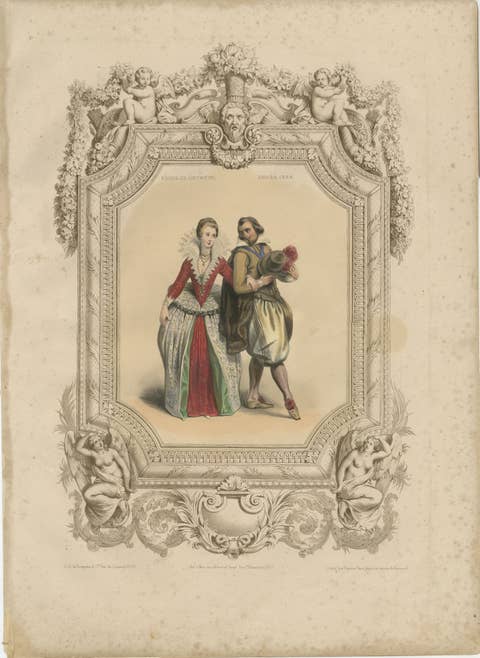
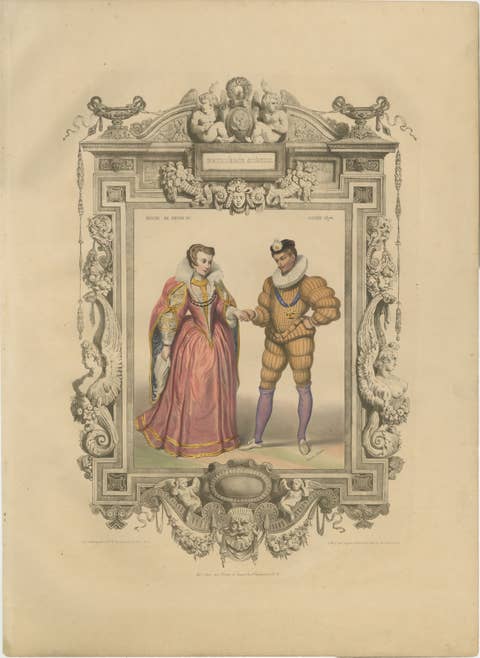
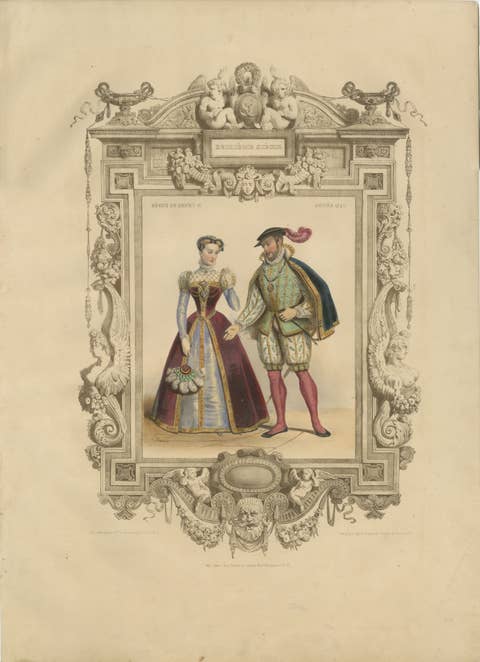
Ceremony of Judgment: Noblemen as Judicial Arbiters, 1847
€ 170
One of a kind: this is the sheet in the photographs. Ships from Langweer, the Netherlands.
Date
1847
Sheet size
27 × 18 cm (10.6 × 7.1 in)
Condition
Good
Reference
BG-13635-23
Condition
Good. Overal very light toning and light soiling but the image itself clean and hand-colored almost 200 years ago and still in expliciet colors. Aged paper with typically warm, yellowish-brown hue, mostly around the edges. Study the image carefully.
About this sheet
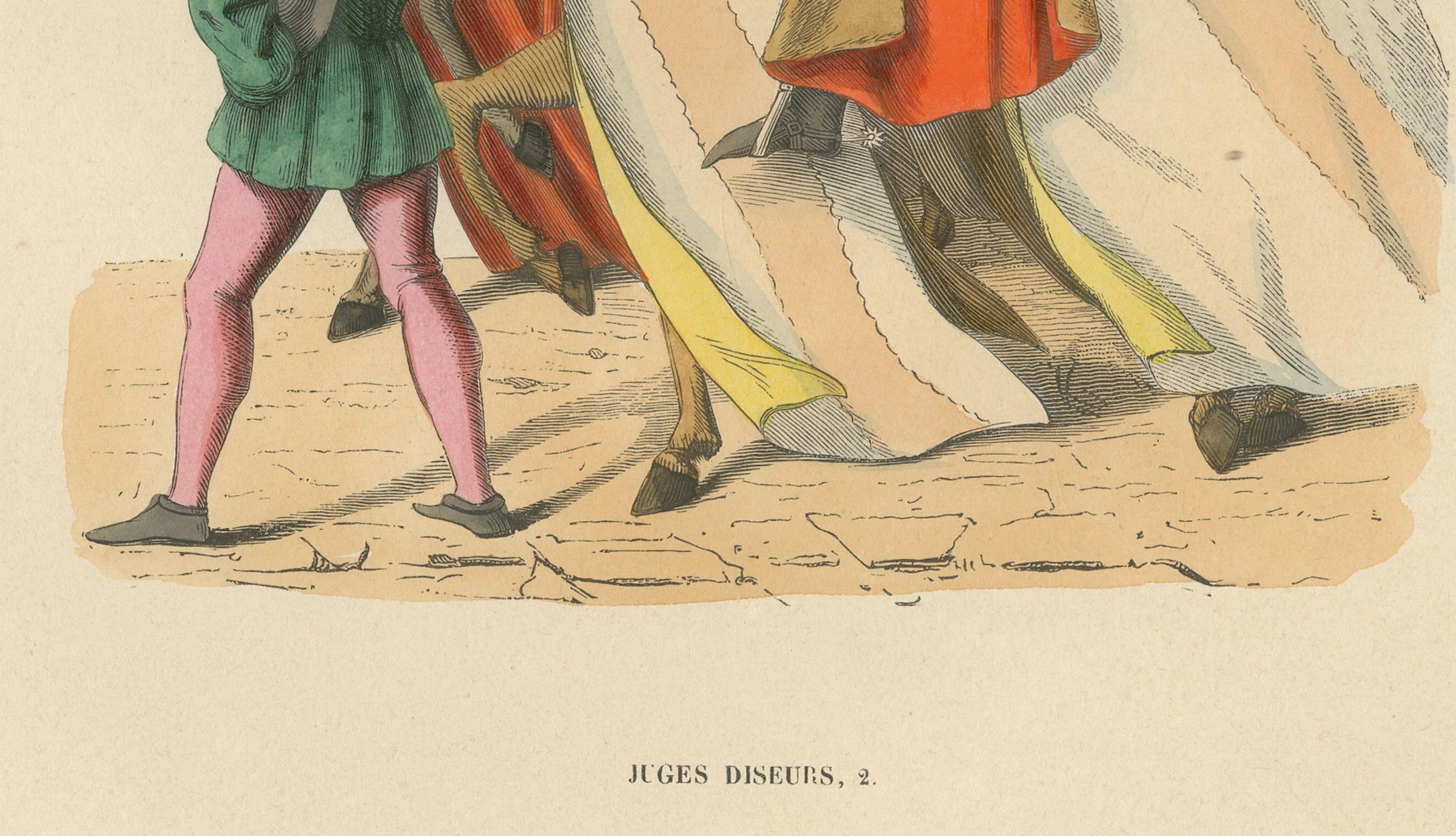
This original antique image for sale depicts a group of figures labeled "Juges Diseurs, 2," which translates to "Judges Speakers, 2." This likely refers to a continuation of the theme from a another image of this serie, showing officials who were responsible for proclaiming verdicts or public announcements.
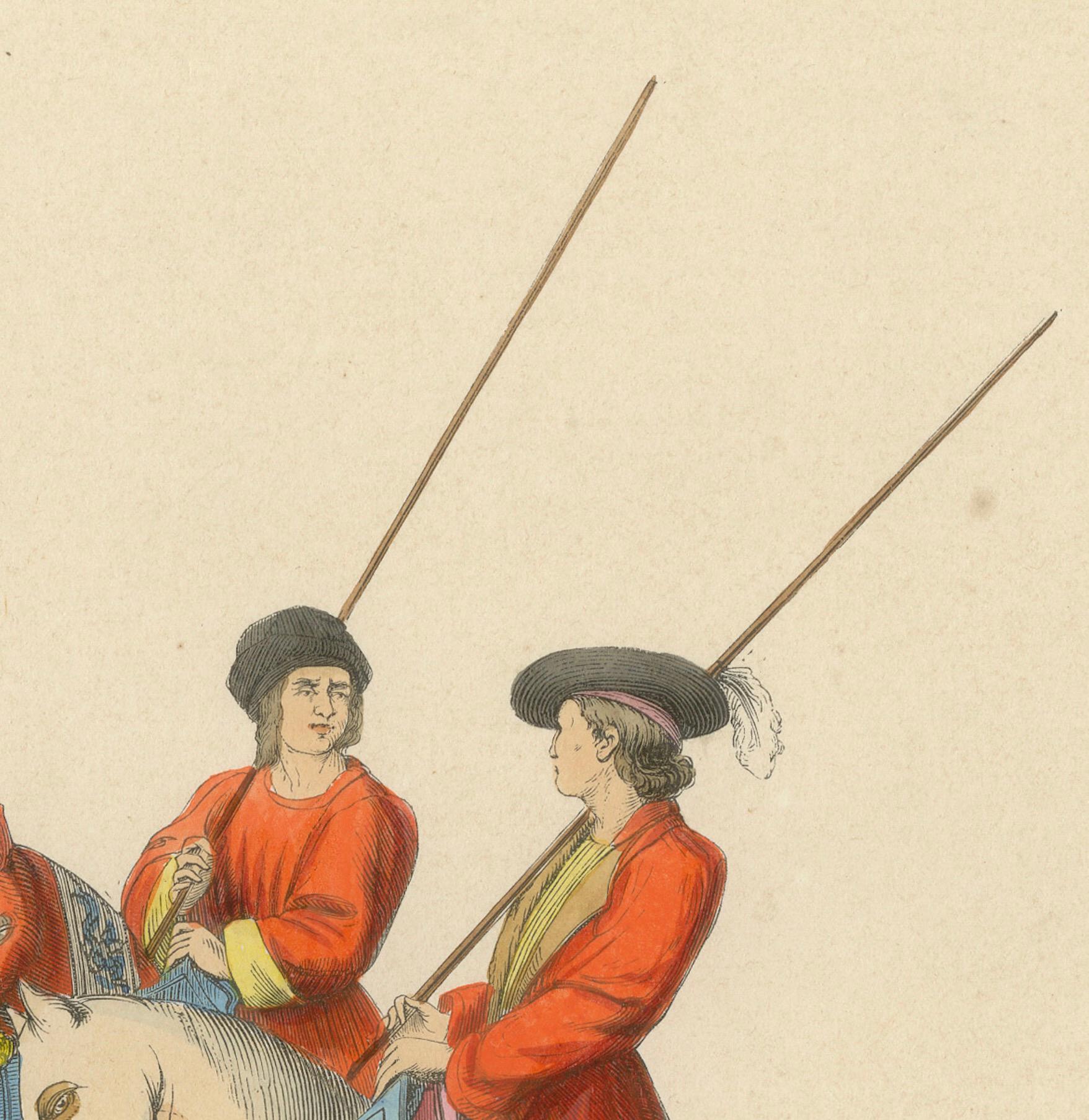
In this particular scene, two individuals, possibly knights or noblemen given their attire, are engaged in a conversation or an exchange. One of them is mounted on a horse, while the other stands beside him. Both are wearing long red robes that are indicative of their status, and they carry long spears, suggesting a dual role of judge and warrior, which was not uncommon in certain periods of history where military leaders also held judicial powers.
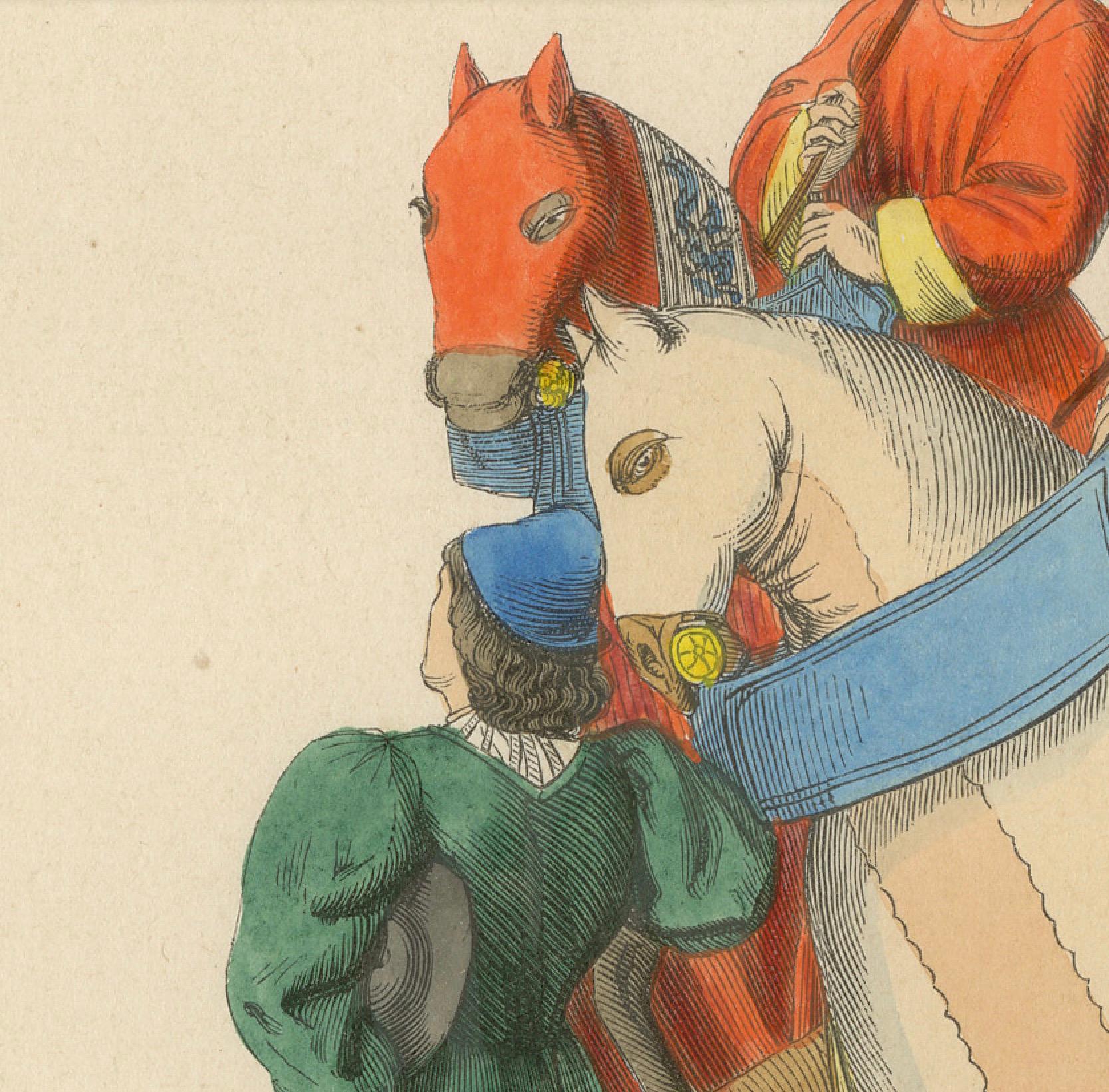
The third figure, dressed in green and pink, is facing the mounted figure, possibly presenting or receiving something. This could represent an act of fealty, a legal proceeding, or some sort of ceremonial exchange.
The title suggests the ceremonial aspect of their roles as judges and the aristocratic nature of their positions.
More about the vivid colors of this original hand-colored antique print:
Egg whites can be applied as a varnish over pigments to enhance their brightness and to protect the colors. This application could make the colors appear more vivid and also add a slight glossy sheen to the surface of the image.
Egg yolk, on the other hand, was commonly used as a binding agent in paint. It forms the basis of tempera paint, a medium that was widely used before the advent of oil painting. Egg yolk helps to create a durable and long-lasting color that adheres well to various surfaces.
In the context of the print from 1847, it's less likely that egg whites or yolks were used directly on the print, as by that time, commercial printing processes would have been more advanced and less reliant on such manual methods. However, if this print is a representation of an earlier style or is meant to mimic the appearance of hand-painted manuscripts, the original artists might have employed techniques or materials that gave a similar effect to those achieved with egg-based binders and varnishes.