Bayadere, Indian Dancing Girl, Antique Hand-Colored Costume Print, 1854
€ 195
Original antique · The actual sheet photographed · Certificate of authenticity on request · Sold unframed · Worldwide shipping from € 15 (rates)
Date
1854
Mapmaker / artist
Heinrich Berghaus
Publisher
J. Noorduyn en Zoon, Gorinchem
Technique
Lithograph
Coloring
Original hand color
Condition
Good
Reference
BG-14289-38
What the condition grades mean
Excellent
Bright and clean, with no faults worth mentioning.
Very good
Only light signs of age, such as faint toning.
Good
Normal signs of age for a sheet of this period: toning, some foxing, small marks or neat old repairs.
Fair
Clear faults such as staining, tears or repairs, priced to match.
Every fault we see is written in the condition note, and the whole sheet is shown uncropped in the photos.
Condition
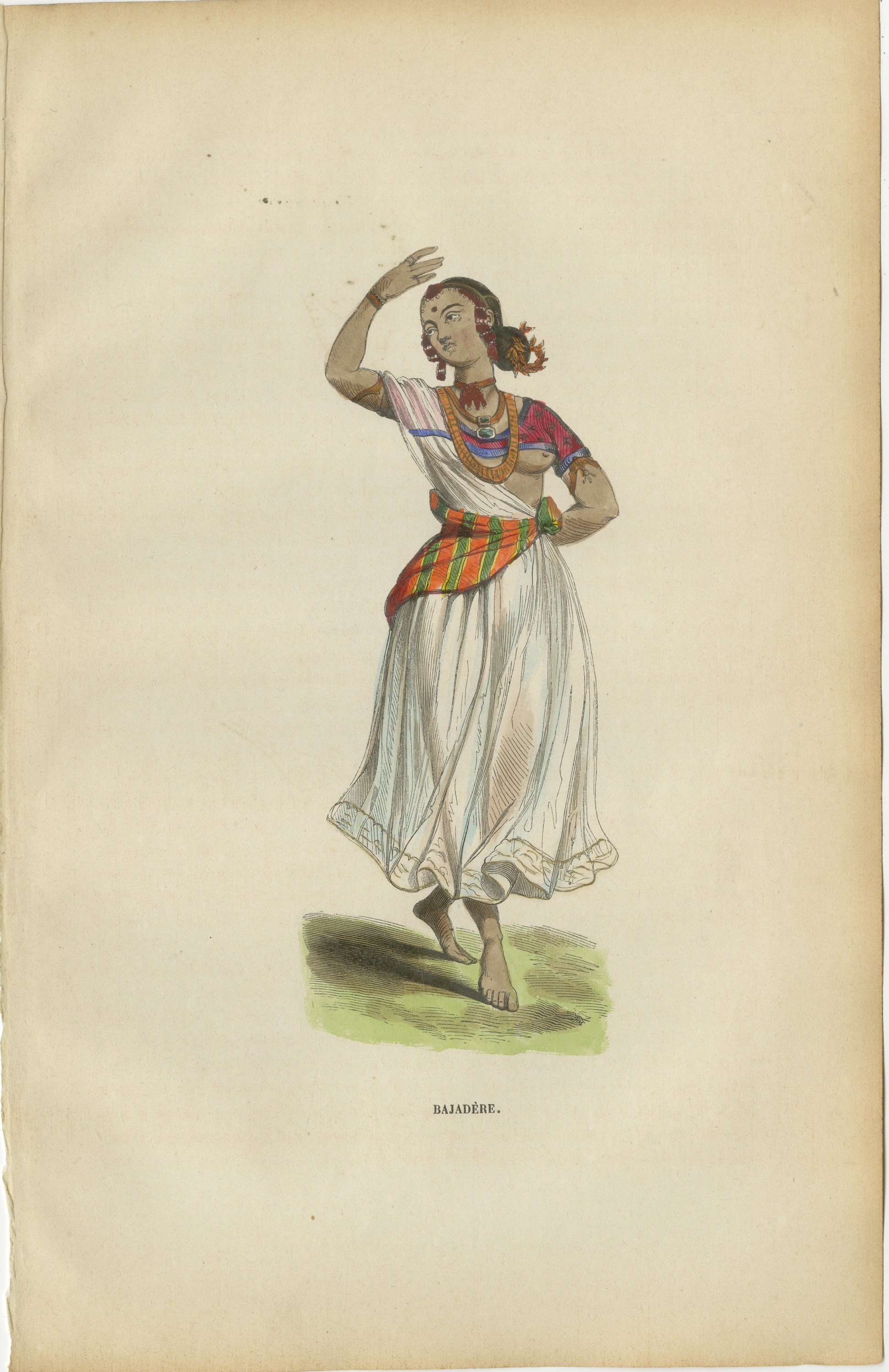
Light uneven toning, browner towards the edges. Marked handling soiling along all four edges. Foxing over much of the margin. Slight wear at the bottom left and bottom right corners. Minor edge wear, shallow nicks along the left.
About this sheet
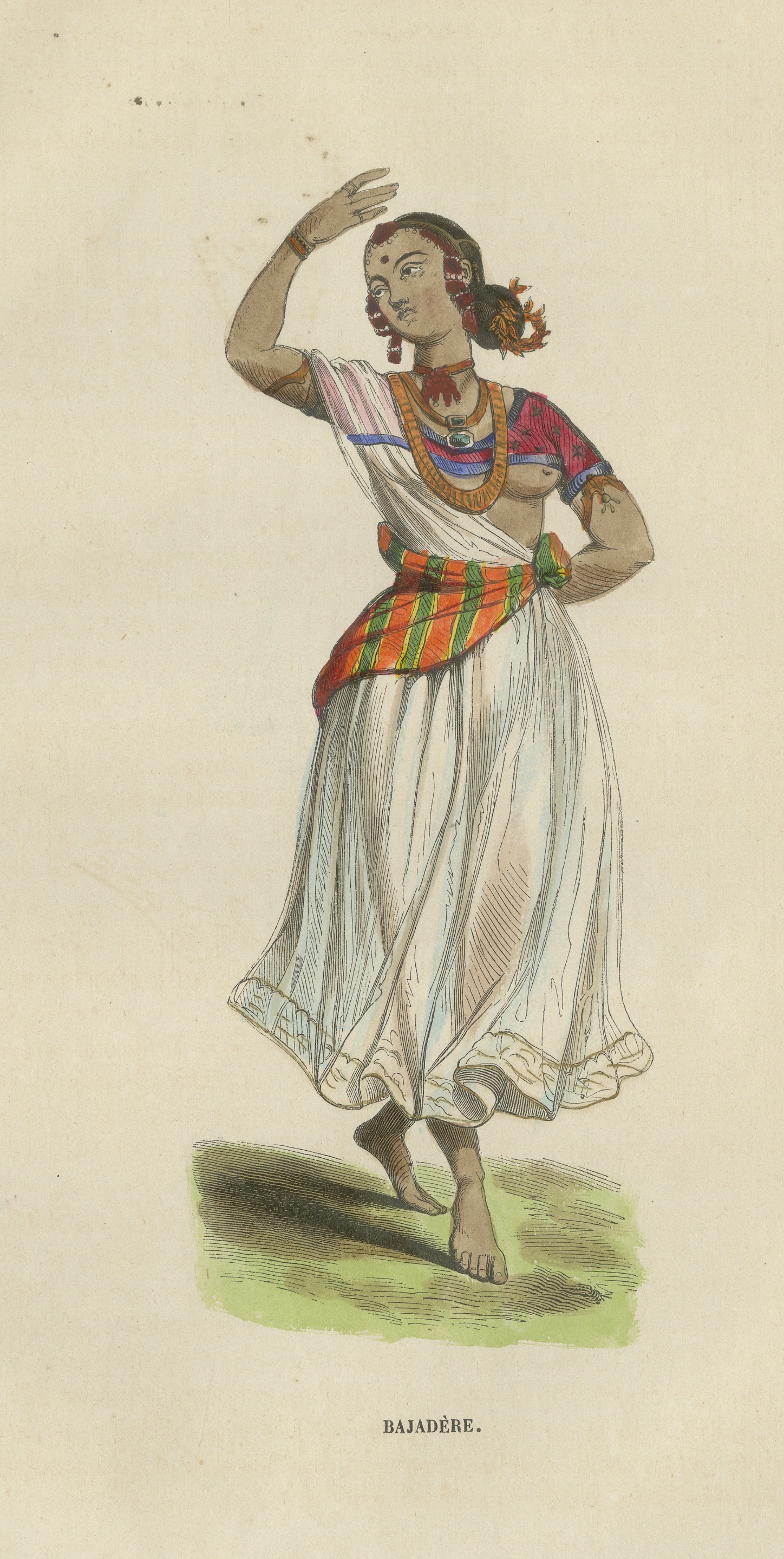
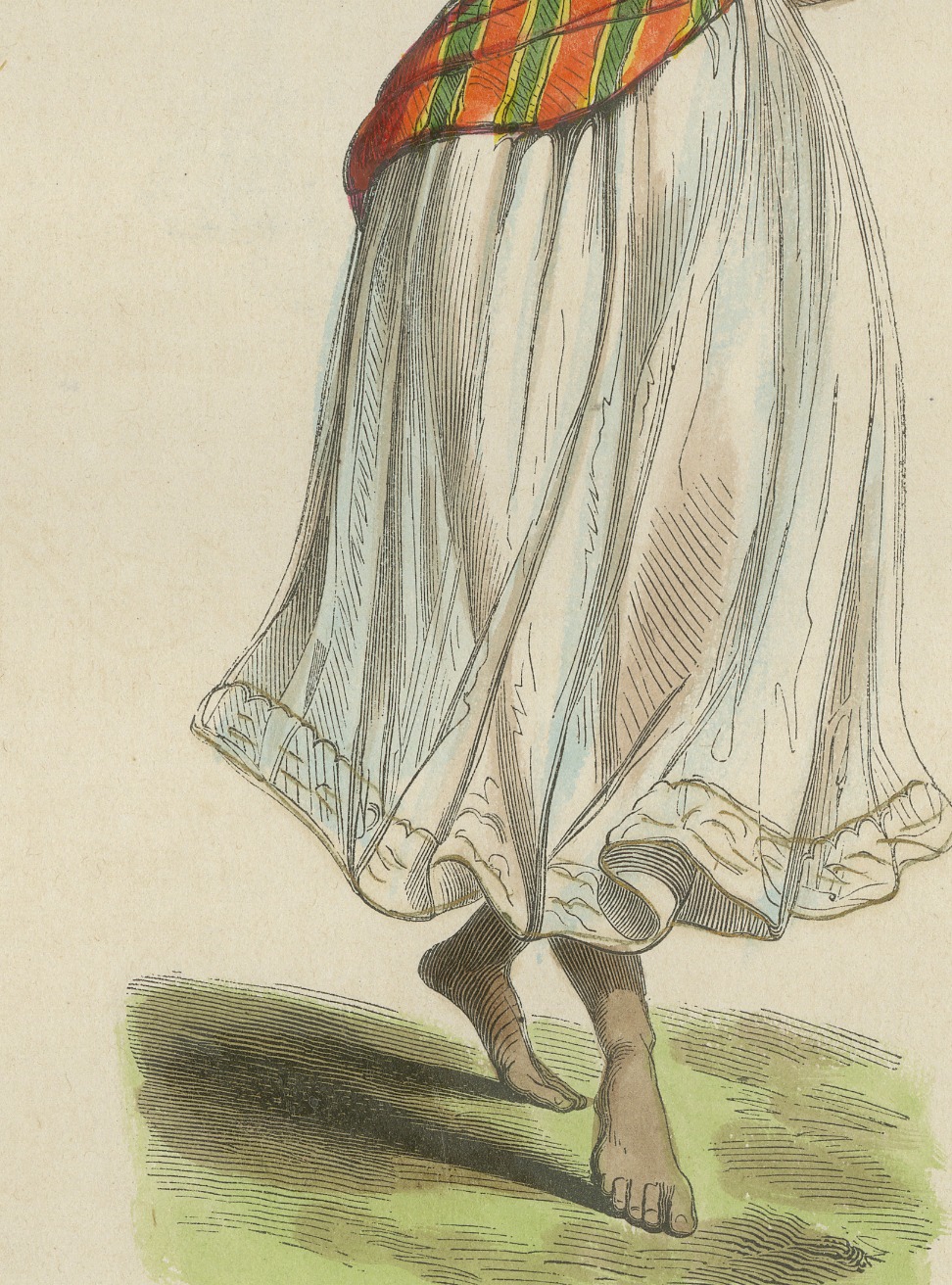
Bayadere, an original antique hand colored print of 1854 from the second volume of Heinrich Berghaus's work on the peoples of the world in its Dutch edition. The plate is captioned in Dutch BAJADÈRE., which reads in English as bayadere, the European name for an Indian dancing woman. The figure is a dancer, caught in movement. The coloring is applied by hand over a printed outline.
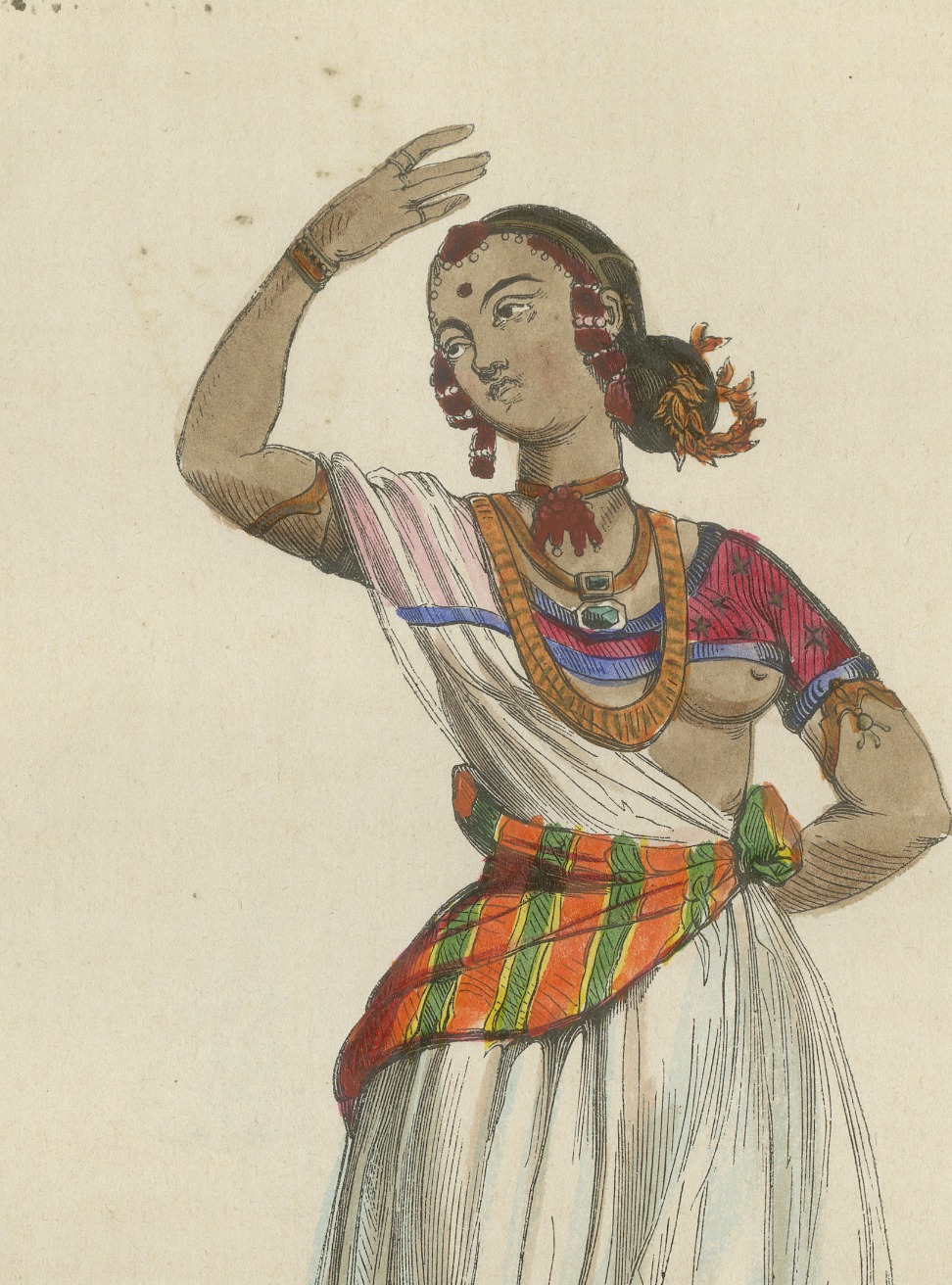
She dances barefoot on a patch of green ground, one heel raised, her right arm lifted above her head and her left hand on her hip, looking to the side. Her hair is gathered at the back with red flowers, with jeweled ornaments at her ears and a mark on her forehead. She wears a short red bodice with a blue border, leaving part of her upper body bare, a red choker and a broad orange necklace with a green pendant, and bangles on her arm. A long white skirt falls in full folds to her ankles, with a white scarf crossing her body and a sash striped in red, orange, green and yellow tied at her waist.
The caption is the only lettering on the sheet. No artist, lithographer or printer is named on the plate, and it carries no plate number. The figure stands on the plain paper of the page with no frame line, and the caption is printed in small capitals below.
The plate comes from the second volume of De Volken van den Aardbodem, the Dutch edition of Heinrich Berghaus's illustrated work on the peoples of the world, translated from the German by M. J. van Oven and published at Gorinchem by J. Noorduyn en Zoon in 1854. The title page of the volume announces 120 extra fine plates colored after nature. Berghaus was a German geographer, best known for his Physikalischer Atlas. The word bayadere came into French and Dutch from the Portuguese bailadeira, a dancer.
Light uneven toning, browner towards the edges. Marked handling soiling along all four edges. Foxing over much of the margin. Slight wear at the bottom left and bottom right corners. Minor edge wear, shallow nicks along the left.
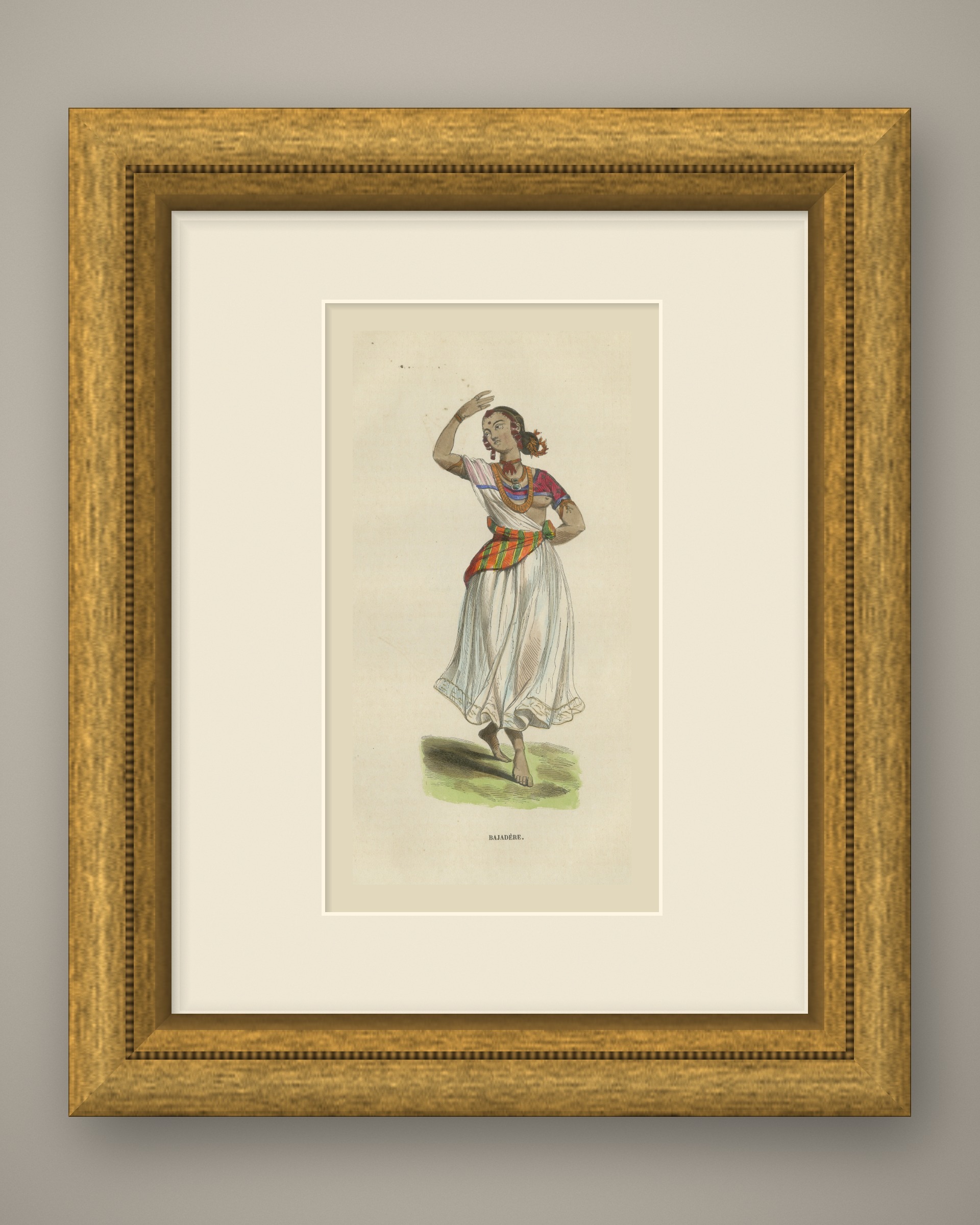
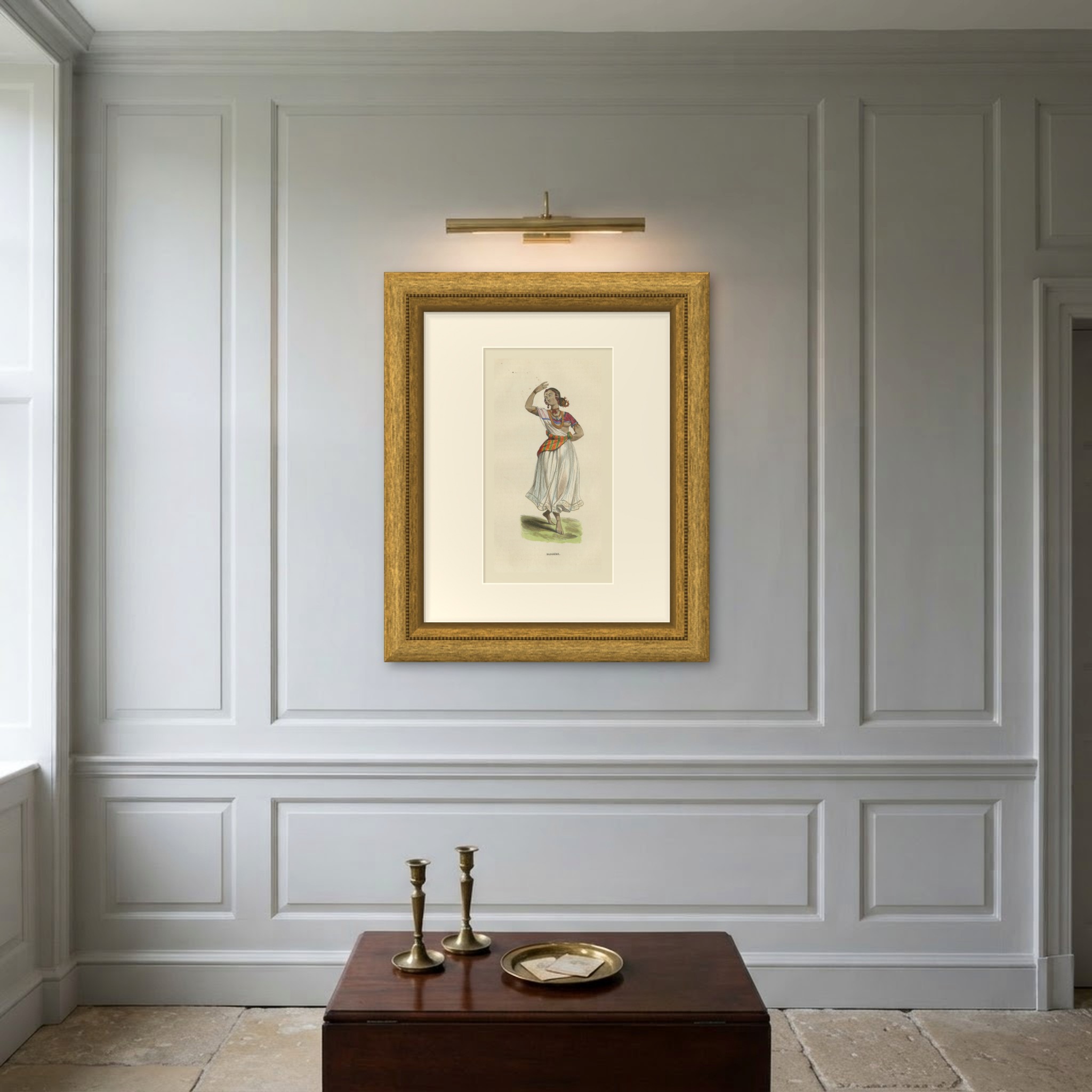
This is an original antique print, not a modern reproduction. This item is sold unframed. Any framed or interior images are shown for presentation and inspiration only, unless the listing explicitly states that the item is sold framed.