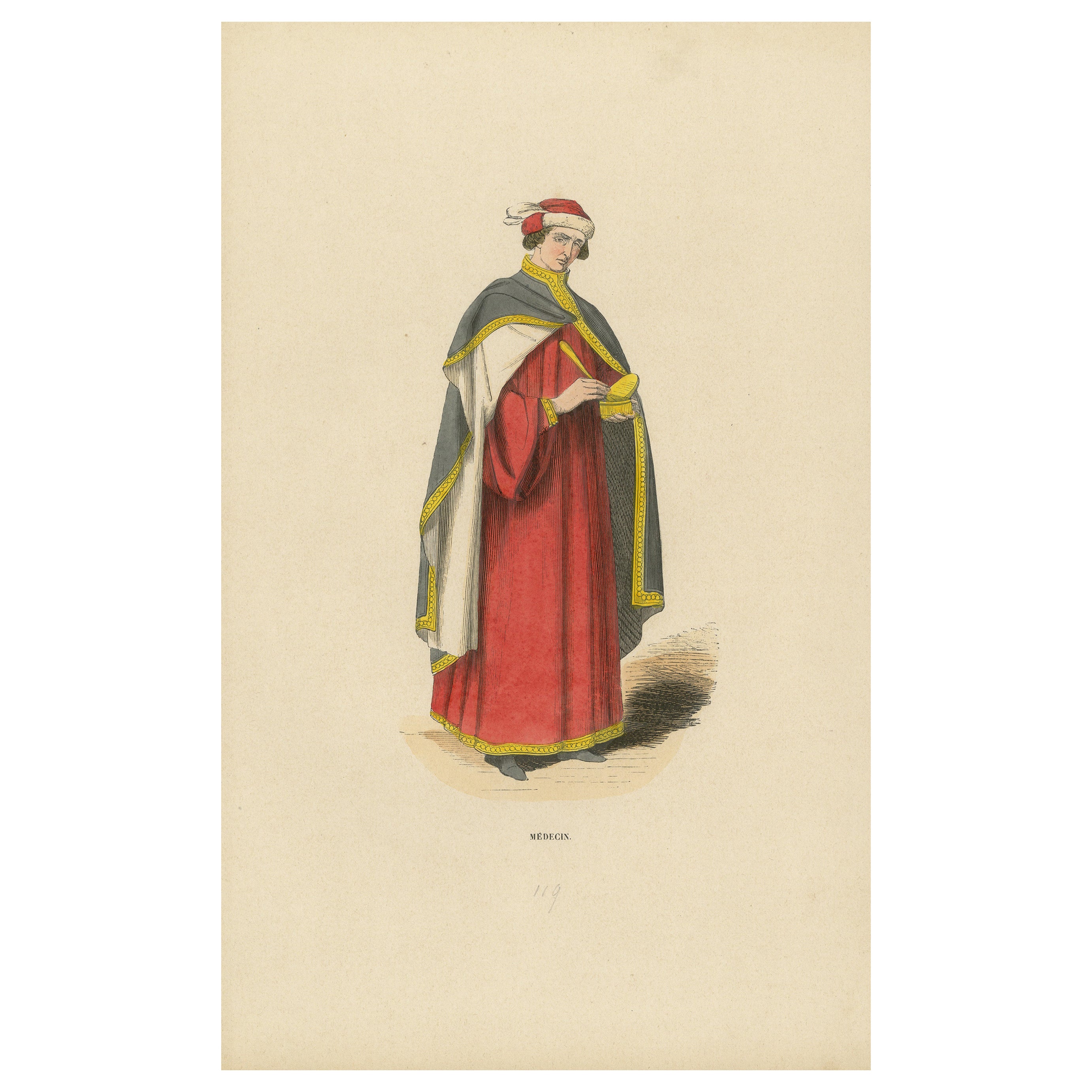
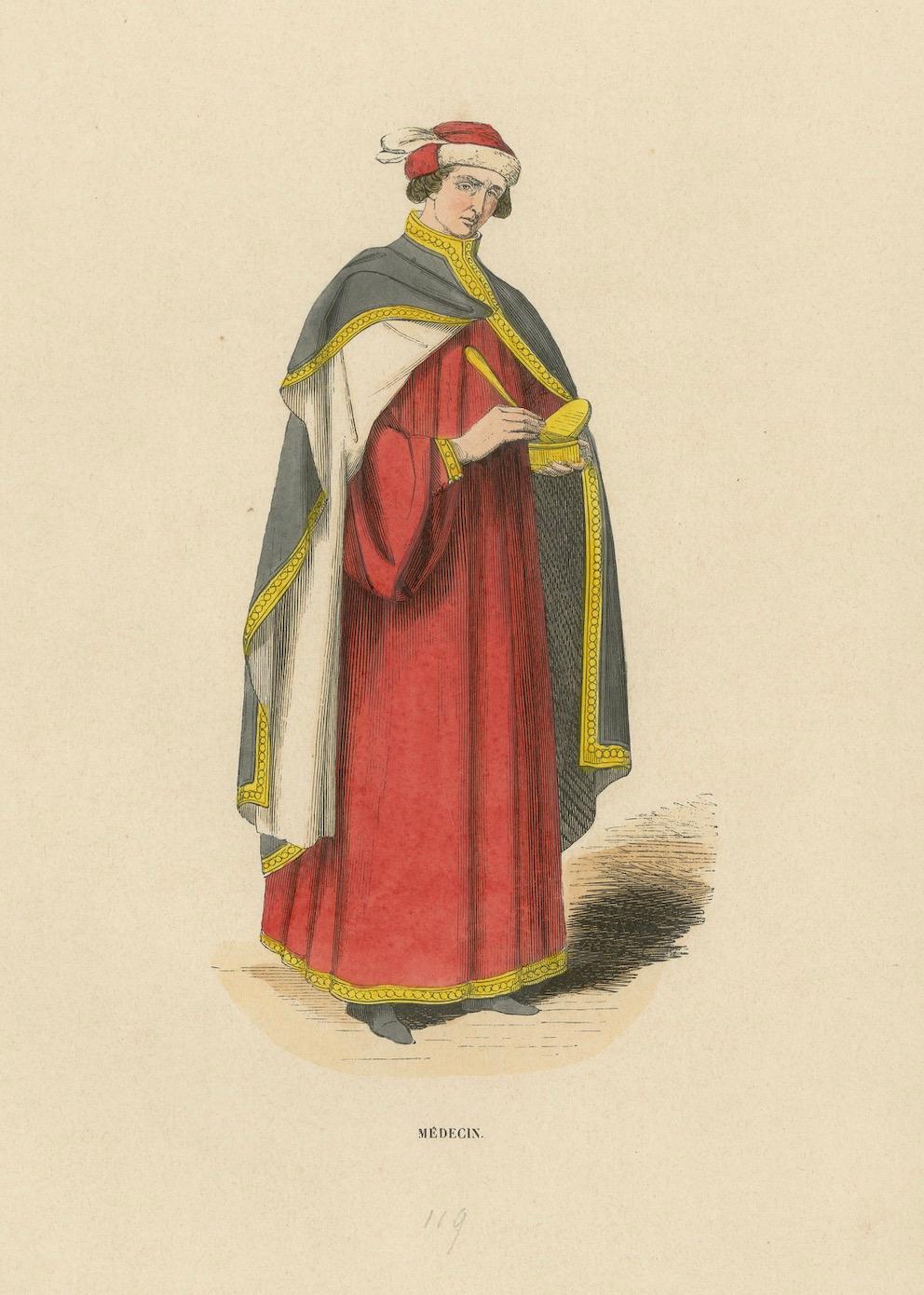
Attire of a Medieval Scholar: The Learned Physician of the Middle Ages, 1847
€ 150
One of a kind: this is the sheet in the photographs. Ships from Langweer, the Netherlands.
Date
1847
Sheet size
27 × 18 cm (10.6 × 7.1 in)
Condition
Good
Reference
BG-13635-101
Condition
Good. Overal light toning and light soiling but the image itself clean and hand-colored almost 200 years ago and still in expliciet colors. Aged paper with typically warm, yellowish-brown hue, mostly around the edges. Study the images carefully.
About this sheet
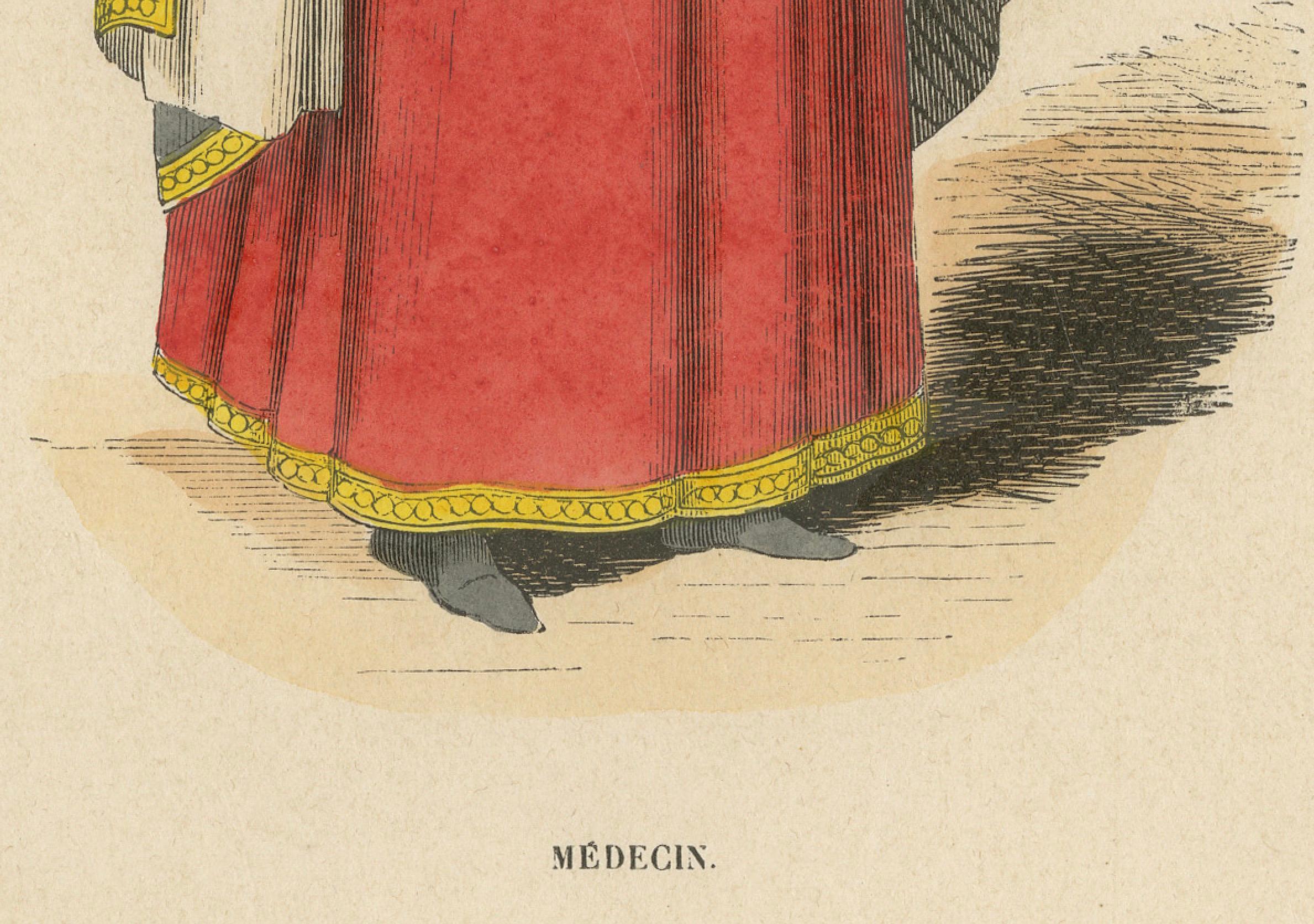
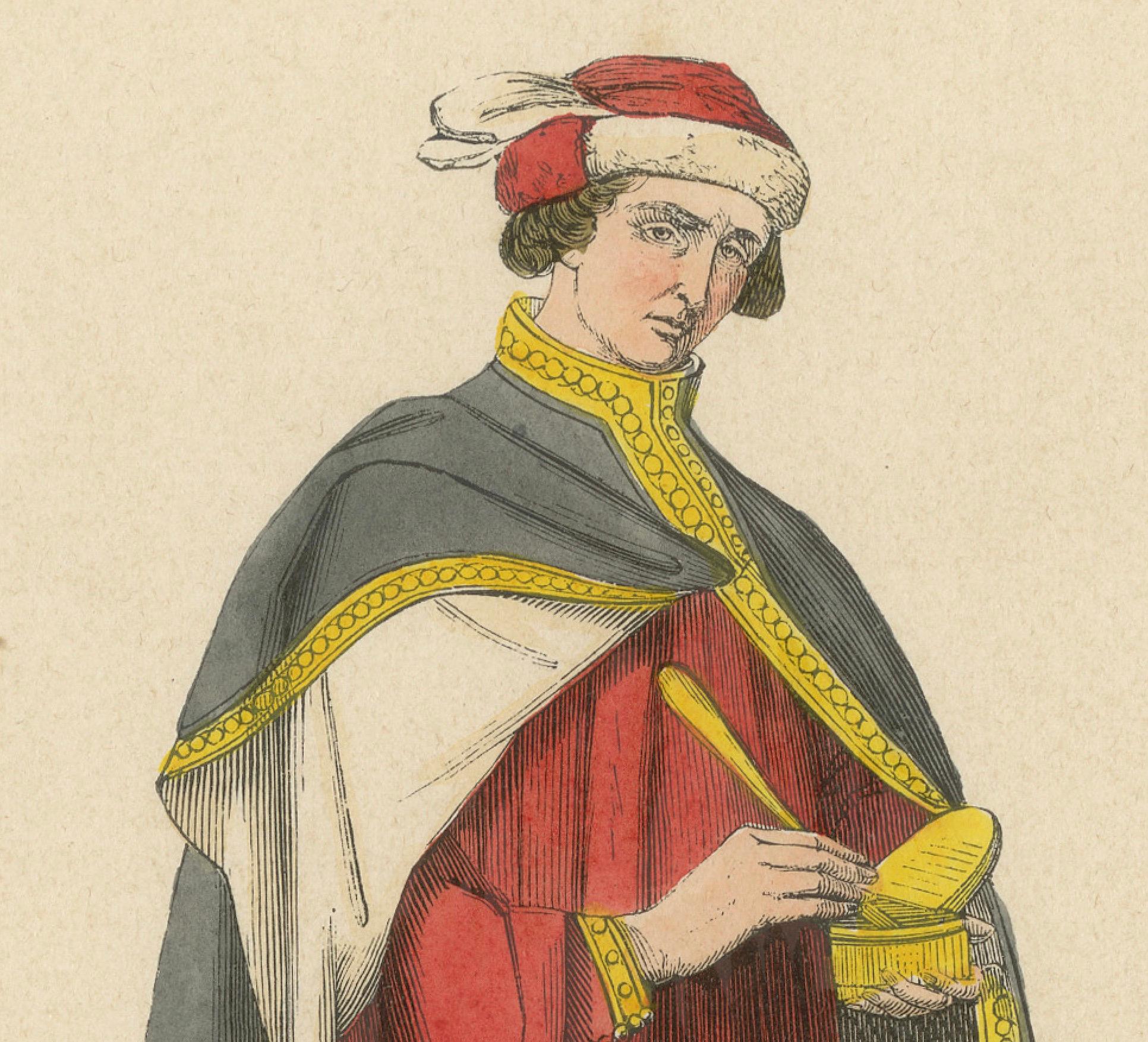
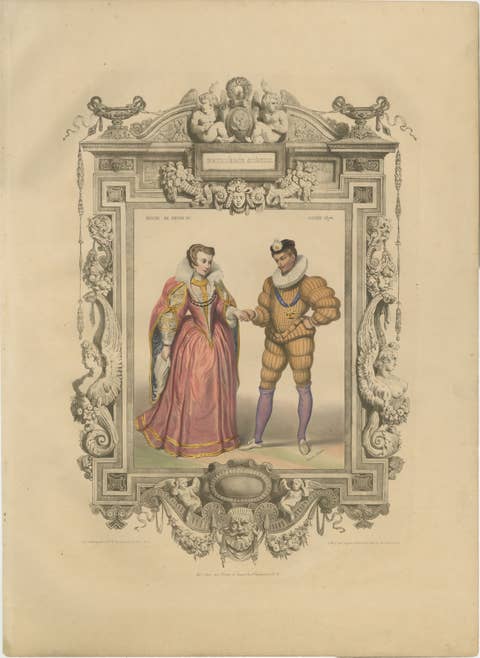
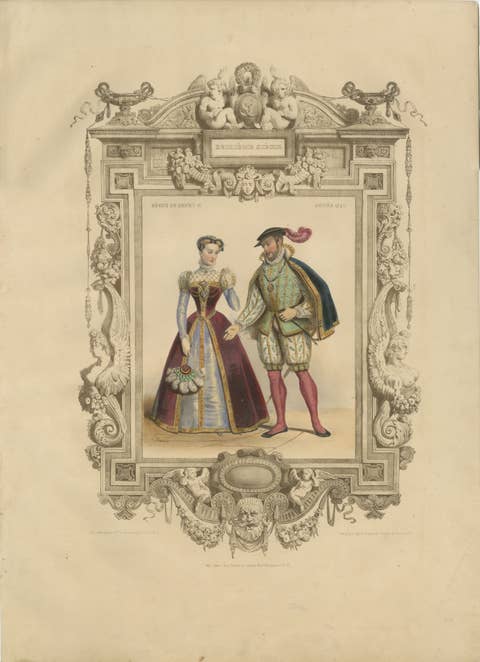
This hand-colored lithograph, titled "Médecin" in the original French, is a detailed portrayal of a medieval physician's attire from the celebrated 1847 publication "Costume du moyen age d'après les manuscrits, les peintures et les monuments contemporains." The illustration captures the essence of a scholarly healer of the Middle Ages, emphasizing the significance of clothing as a marker of knowledge and status. Adorned in a vibrant red robe that reaches the ground, the physician's garment is both a sign of his professional role and a reflection of the period's fashion. The robe is complemented by a distinguished grey and black cloak, meticulously edged with a golden-yellow trim that signifies wealth and distinction. The cap he wears, red with a white band, suggests a customary headgear for men of medicine during the era.
The physician stands with a composed and thoughtful expression, holding what appears to be a small book or set of papers, perhaps indicative of his knowledge and readiness to offer counsel. The lithograph's hand coloring brings to life the textures and fabrics of the period, offering a window into the world of medieval customs and societal roles. This image is not only a visual record of historical attire but also a cultural symbol that conveys the reverence and gravitas attributed to medical professionals in a time when their expertise was both vital and revered.
The colors have a nice glow over them. Historically, egg whites, known as glair, and sometimes egg yolk were indeed used in illumination and painting, particularly in manuscripts, to give colors a brighter appearance and to add a sheen or gloss to the work. This technique was quite common during the Middle Ages and into the Renaissance.
Egg whites can be applied as a varnish over pigments to enhance their brightness and to protect the colors. This application could make the colors appear more vivid and also add a slight glossy sheen to the surface of the image.
Egg yolk, on the other hand, was commonly used as a binding agent in paint. It forms the basis of tempera paint, a medium that was widely used before the advent of oil painting. Egg yolk helps to create a durable and long-lasting color that adheres well to various surfaces.
In the context of the print from 1847, it's less likely that egg whites or yolks were used directly on the print, as by that time, commercial printing processes would have been more advanced and less reliant on such manual methods. However, if this print is a representation of an earlier style or is meant to mimic the appearance of hand-painted manuscripts, the original artists might have employed techniques or materials that gave a similar effect to those achieved with egg-based binders and varnishes.