About this sheet
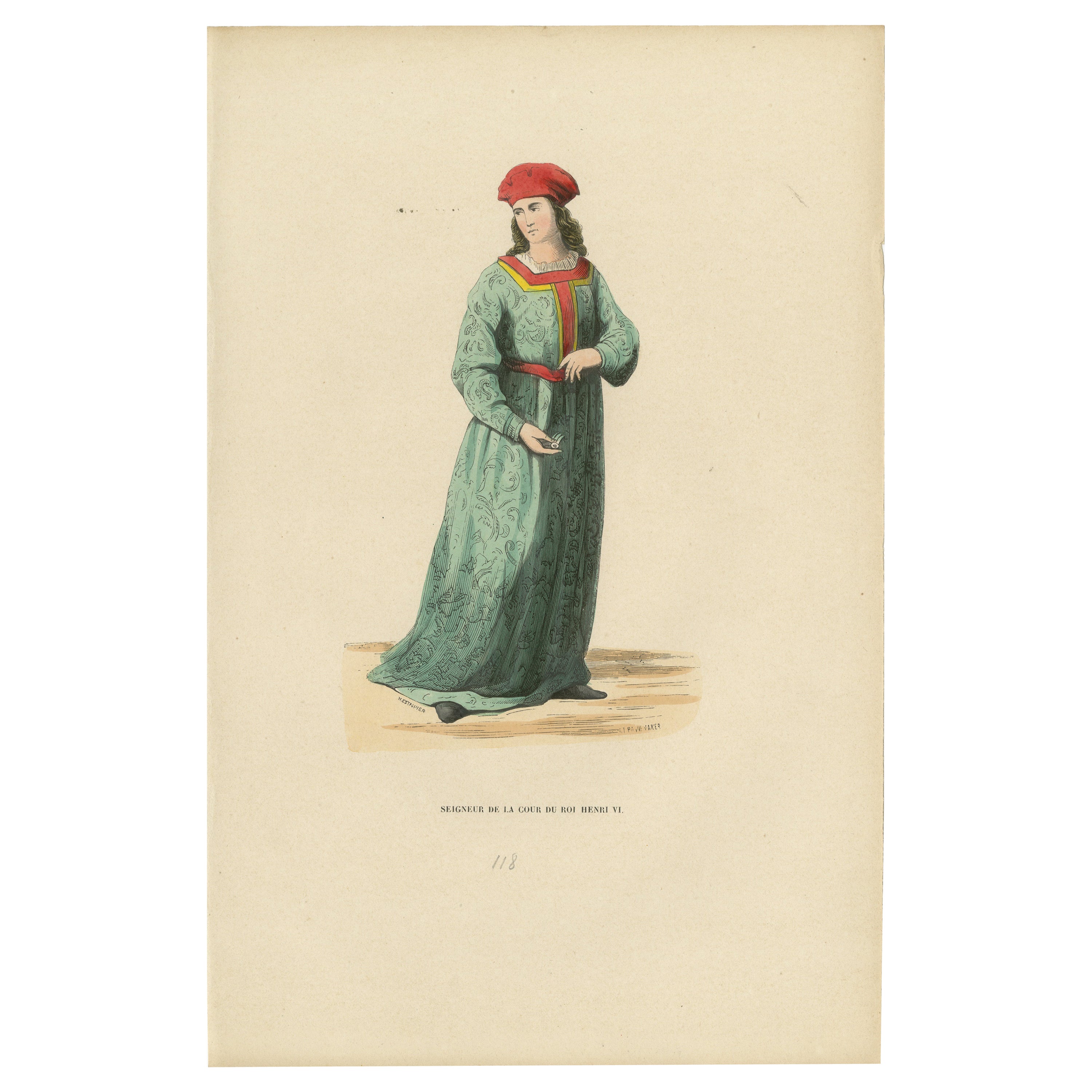
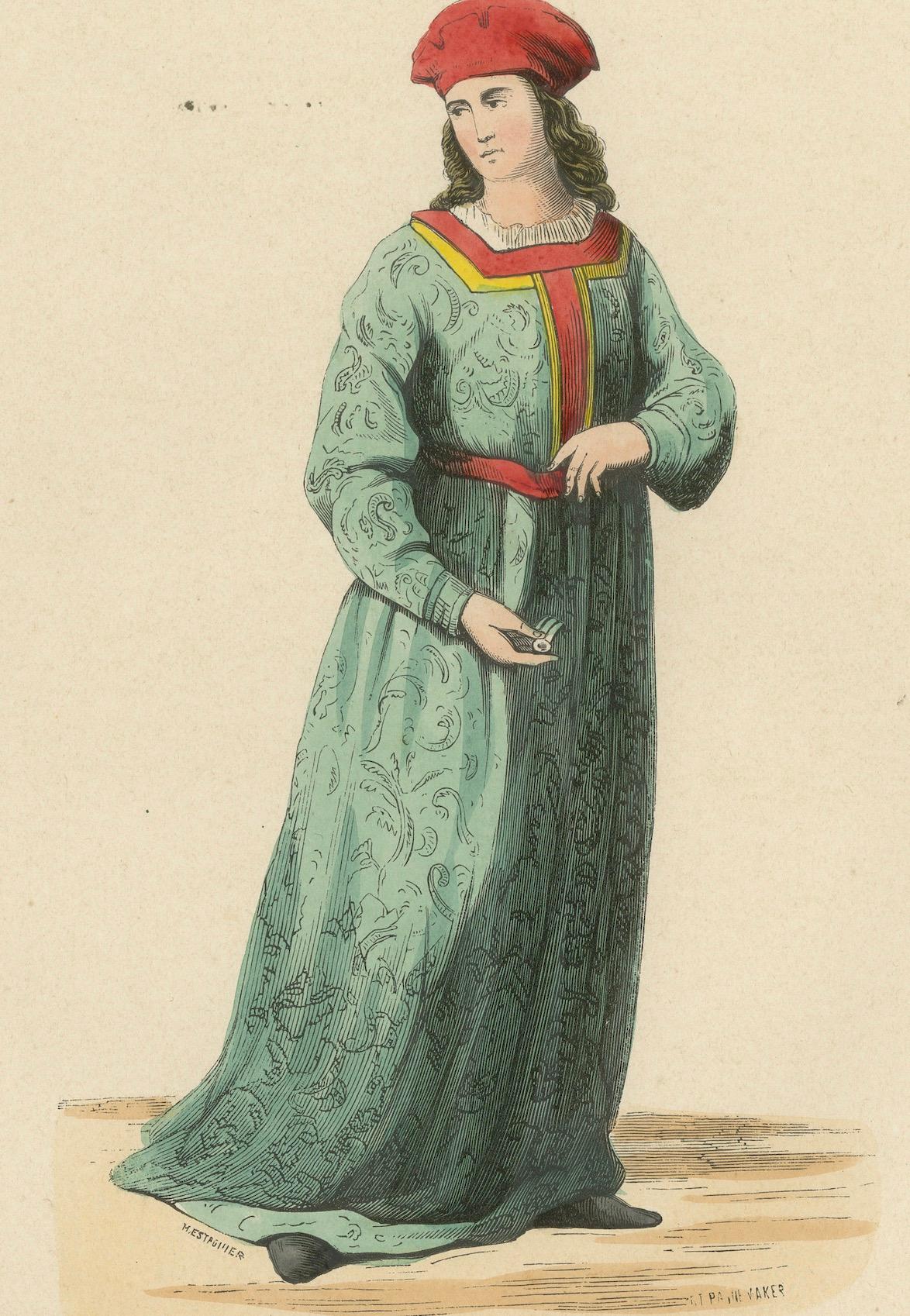
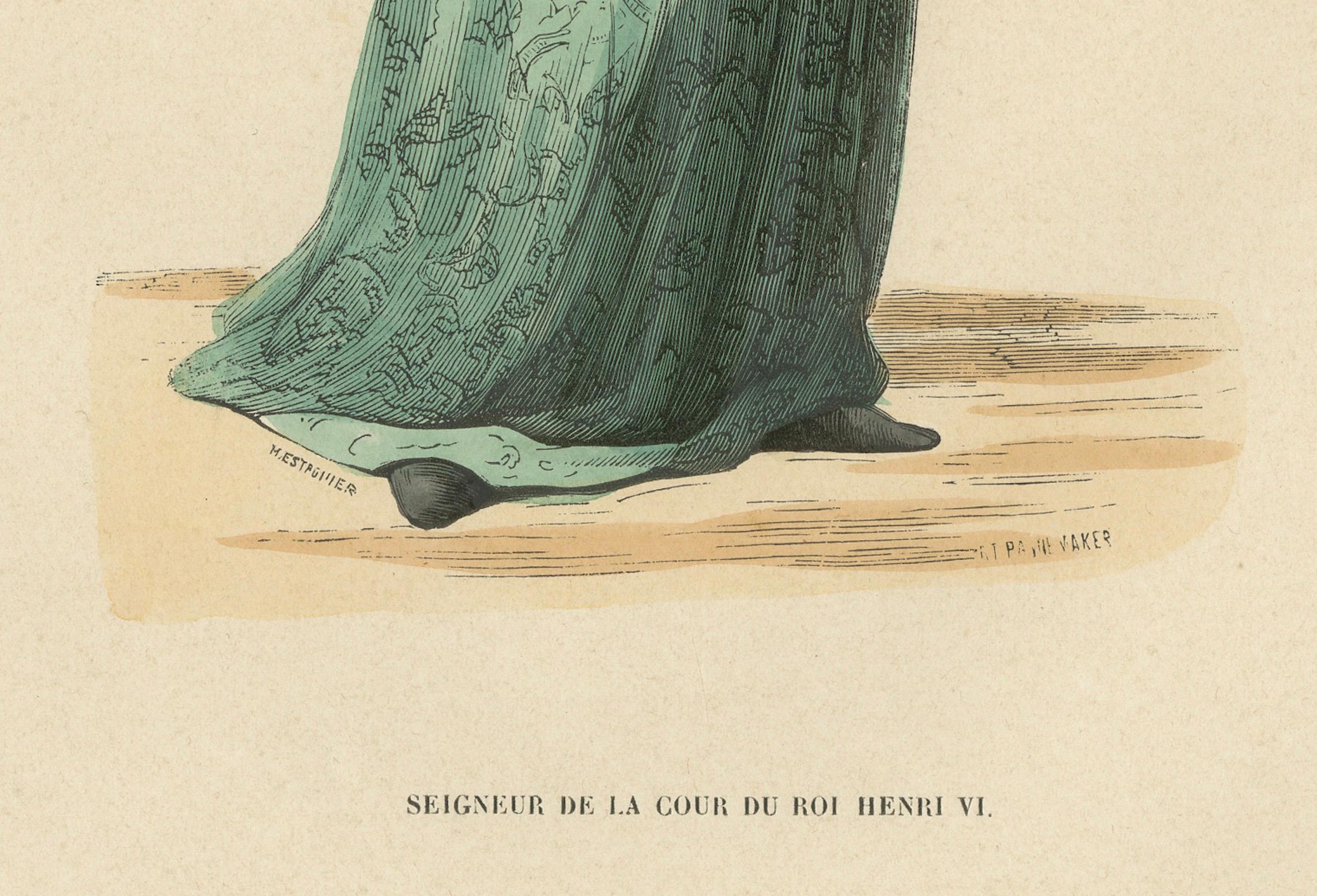
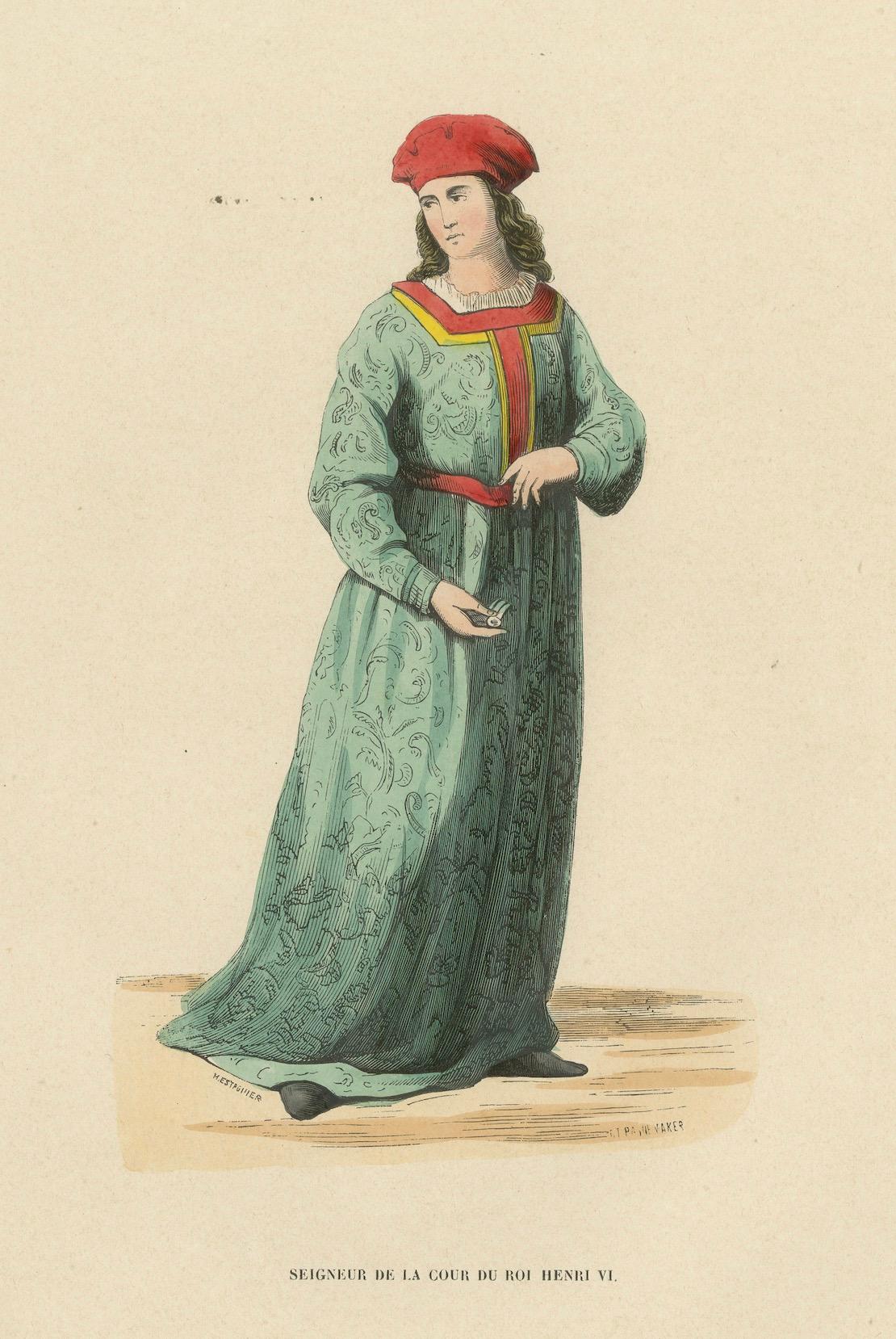
This hand-colored engraving from the 1847 "Costume du Moyen Age" series represents a nobleman from the court of King Henry VI. The title "Seigneur de la Cour du Roi Henri VI" identifies the subject as a lord or high-ranking individual within the royal court of the 15th-century English monarch.
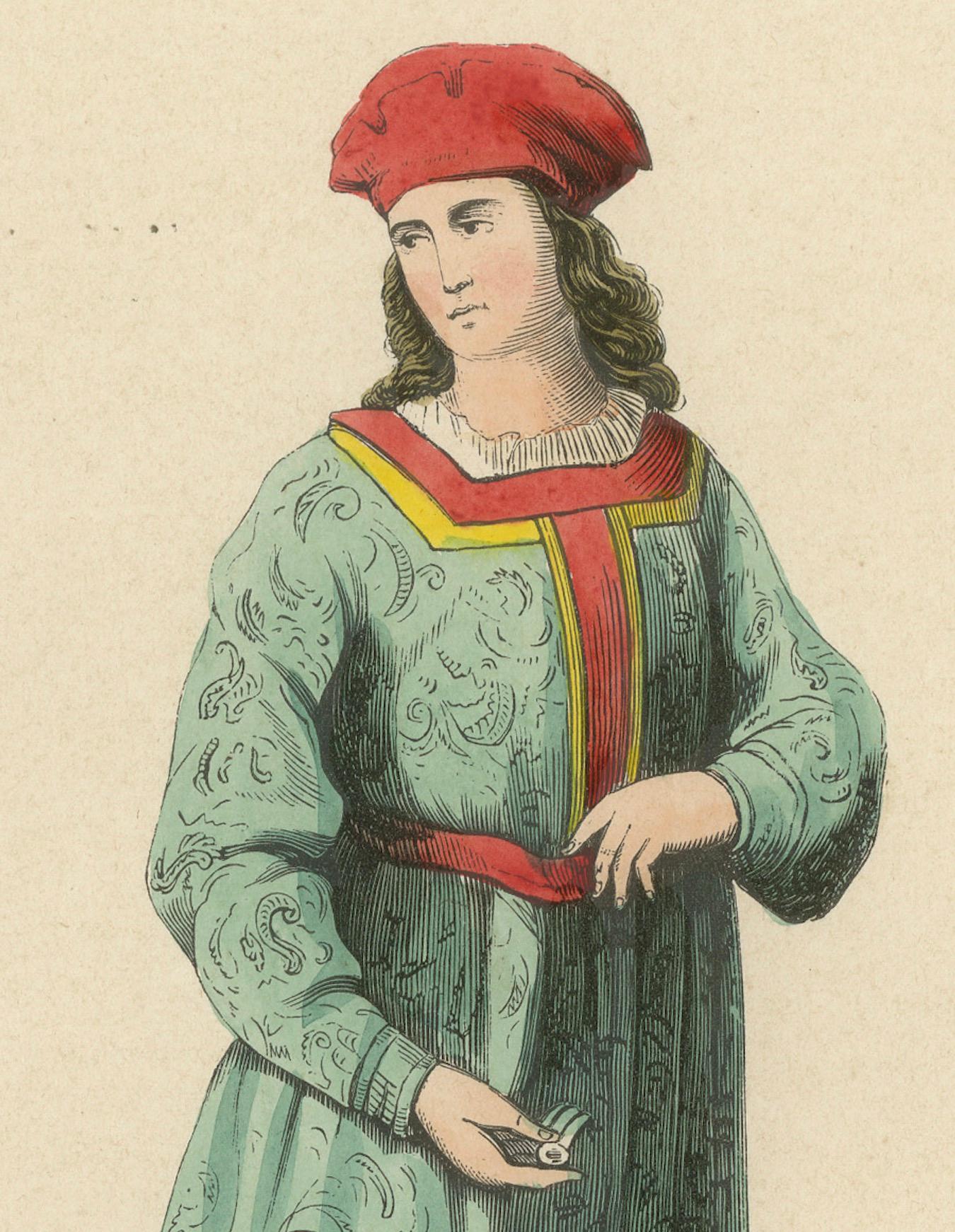
The lord is portrayed in a long, ornately patterned robe that falls gracefully to the ground, indicative of the elaborate fashion of the high nobility during the time. The garment is colored in a rich teal hue, with a detailed pattern that suggests luxury and status. The robe is trimmed with a contrasting color at the neck and cuffs, and a red belt cinches the robe at the waist, highlighting the layered aspect of medieval clothing.
He dons a red chaperon on his head, a stylish hat that was popular in the 15th century, which adds a dash of color and distinguishes his ensemble. The man’s hair is styled in the fashion of the era, with the length at the back and sides indicative of his class.
The nobleman holds an object in his right hand, which could be a glove or a small pouch, while his left hand rests gently on the hilt of his sword, signifying his readiness to defend his honor or fulfill his duties as a lord.
This illustration provides a window into the courtly attire and the dignified poise expected of a nobleman in the medieval era.
The colors have a nice glow over them. Historically, egg whites, known as glair, and sometimes egg yolk were indeed used in illumination and painting, particularly in manuscripts, to give colors a brighter appearance and to add a sheen or gloss to the work. This technique was quite common during the Middle Ages and into the Renaissance.
Egg whites can be applied as a varnish over pigments to enhance their brightness and to protect the colors. This application could make the colors appear more vivid and also add a slight glossy sheen to the surface of the image.
Egg yolk, on the other hand, was commonly used as a binding agent in paint. It forms the basis of tempera paint, a medium that was widely used before the advent of oil painting. Egg yolk helps to create a durable and long-lasting color that adheres well to various surfaces.
In the context of the print from 1847, it's less likely that egg whites or yolks were used directly on the print, as by that time, commercial printing processes would have been more advanced and less reliant on such manual methods. However, if this print is a representation of an earlier style or is meant to mimic the appearance of hand-painted manuscripts, the original artists might have employed techniques or materials that gave a similar effect to those achieved with egg-based binders and varnishes.