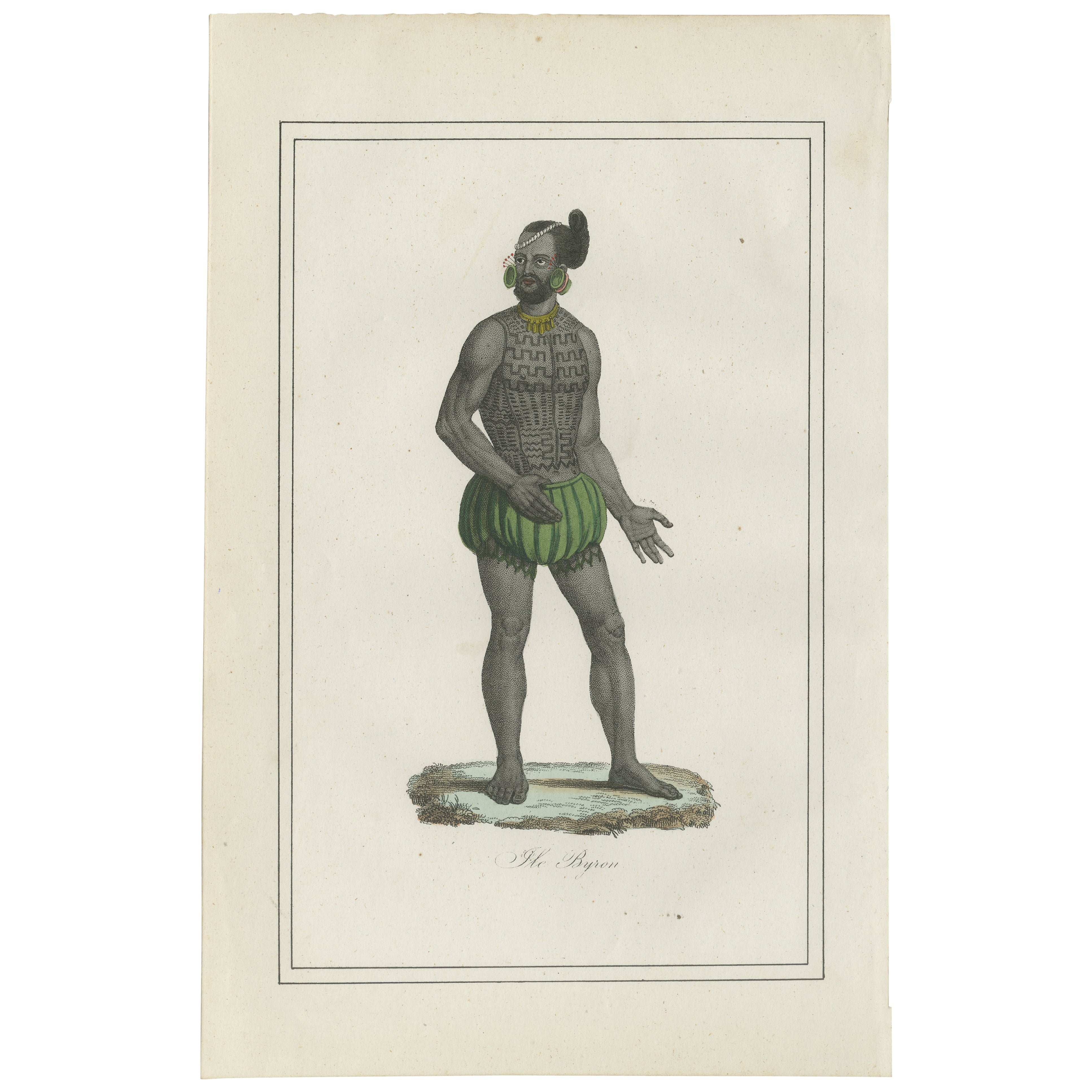
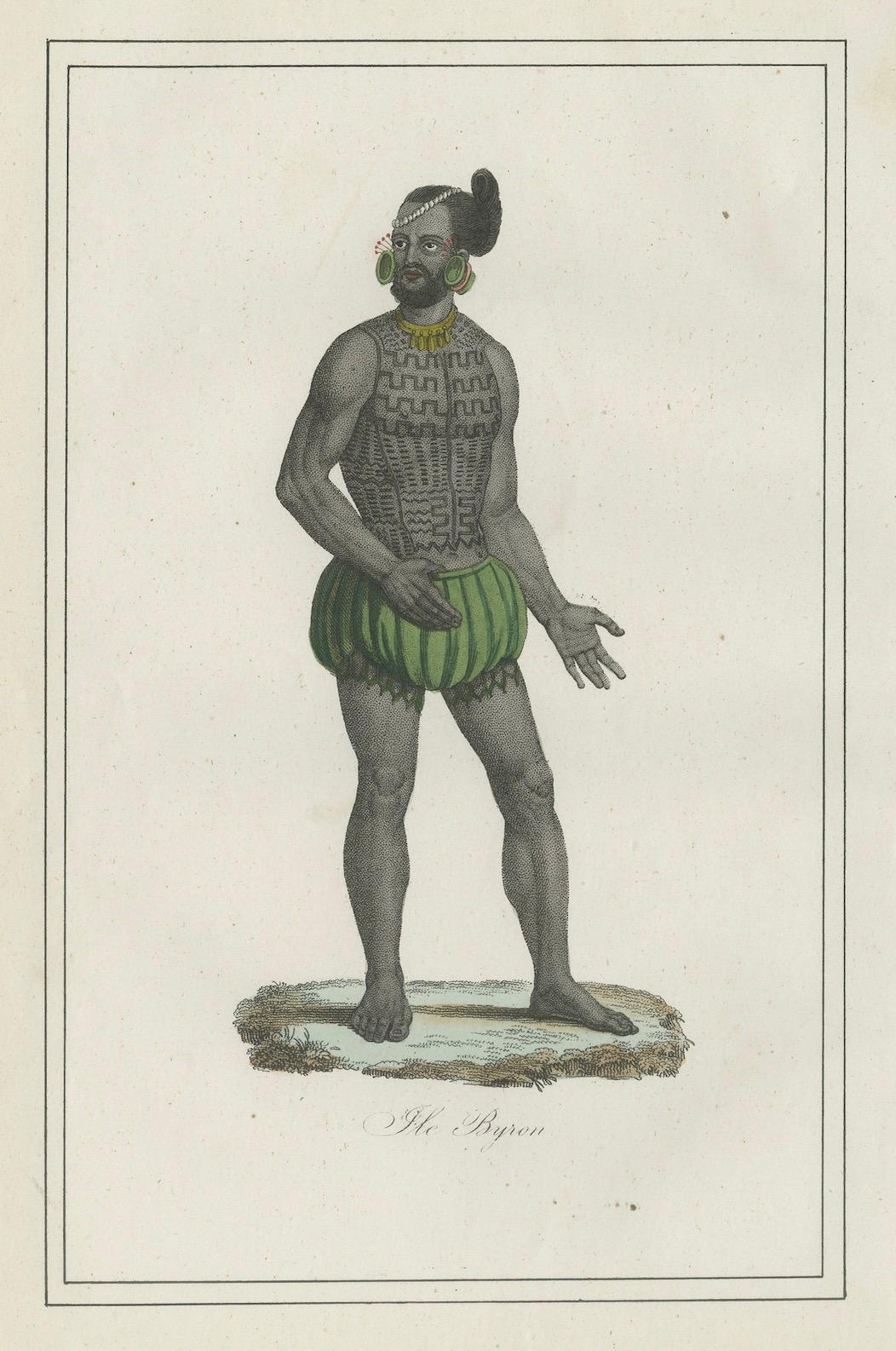
Antique Costume Print of Tattooed Man from Byron Island, 1854
€ 290
Original antique · The actual sheet photographed · Certificate of authenticity on request · Sold unframed · Worldwide shipping from € 15 (rates)
Date
1854
Mapmaker / artist
Martial Ardant Frères, Paris & Limoges, 1854
Technique
Hand-colored lithograph
Sheet size
27.2 × 18 cm (10.7 × 7.1 in)
Condition
Good
Reference
BG-14120-4
What the condition grades mean
Excellent
Bright and clean, with no faults worth mentioning.
Very good
Only light signs of age, such as faint toning.
Good
Normal signs of age for a sheet of this period: toning, some foxing, small marks or neat old repairs.
Fair
Clear faults such as staining, tears or repairs, priced to match.
Every fault we see is written in the condition note, and the whole sheet is shown uncropped in the photos.
Condition
Condition report: Light marginal foxing and faint age toning, consistent with mid-19th-century paper. Plate mark visible. Colors remain vivid, especially in the green costume and ornaments. Wide margins intact.
About this sheet
Antique Costume Print of Tattooed Man from Byron Island, 1854
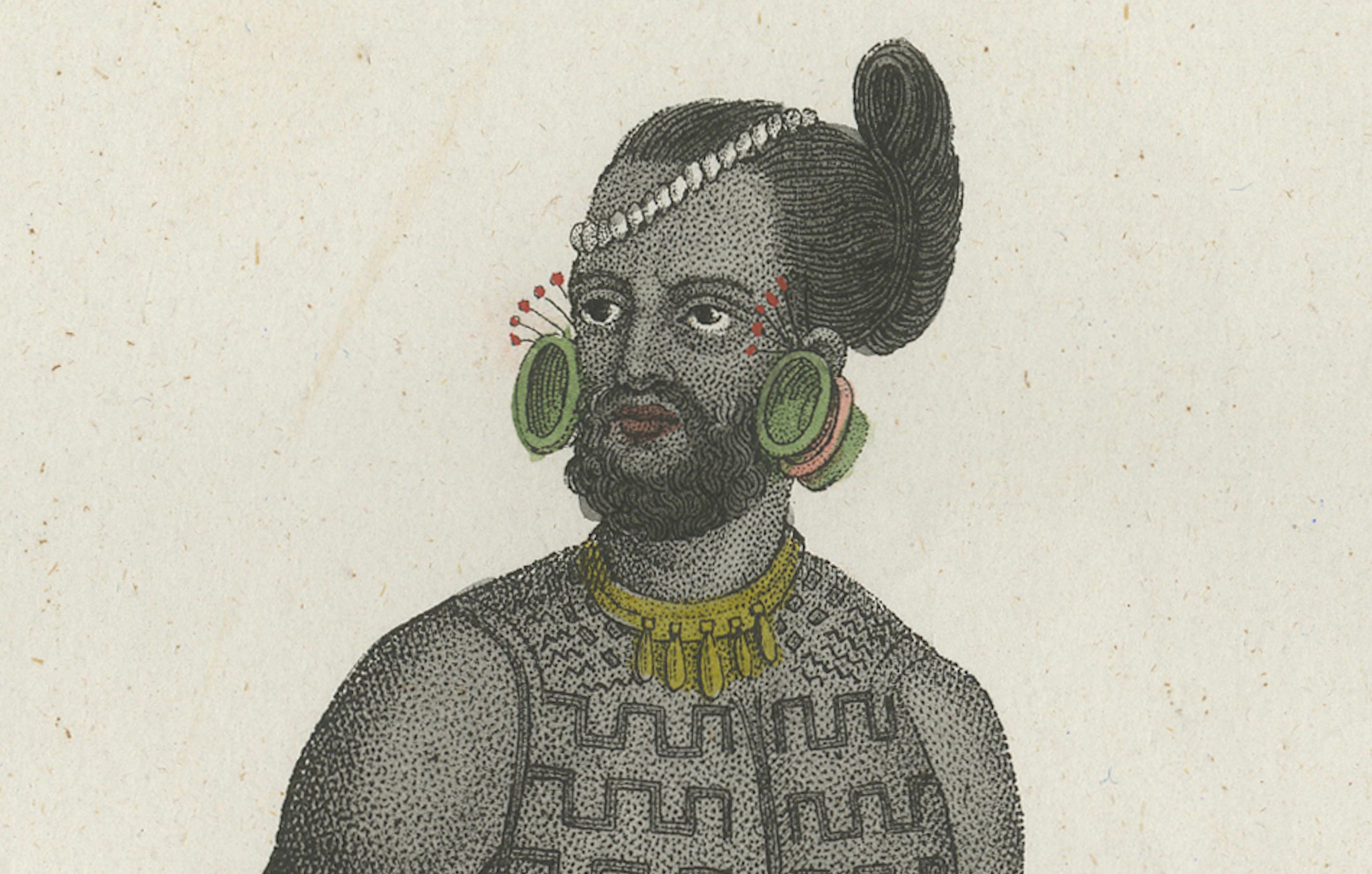
This striking hand-colored lithograph, published in 1854 in Album des Voyages Anciens et Modernes by Martial Ardant Frères, depicts a tattooed man from Île Byron (Byron Island, today known as Nikunau in Kiribati, Central Pacific). The image presents an ethnographic study of Pacific Islanders, part of the mid-19th century fascination with remote cultures encountered during voyages of discovery.
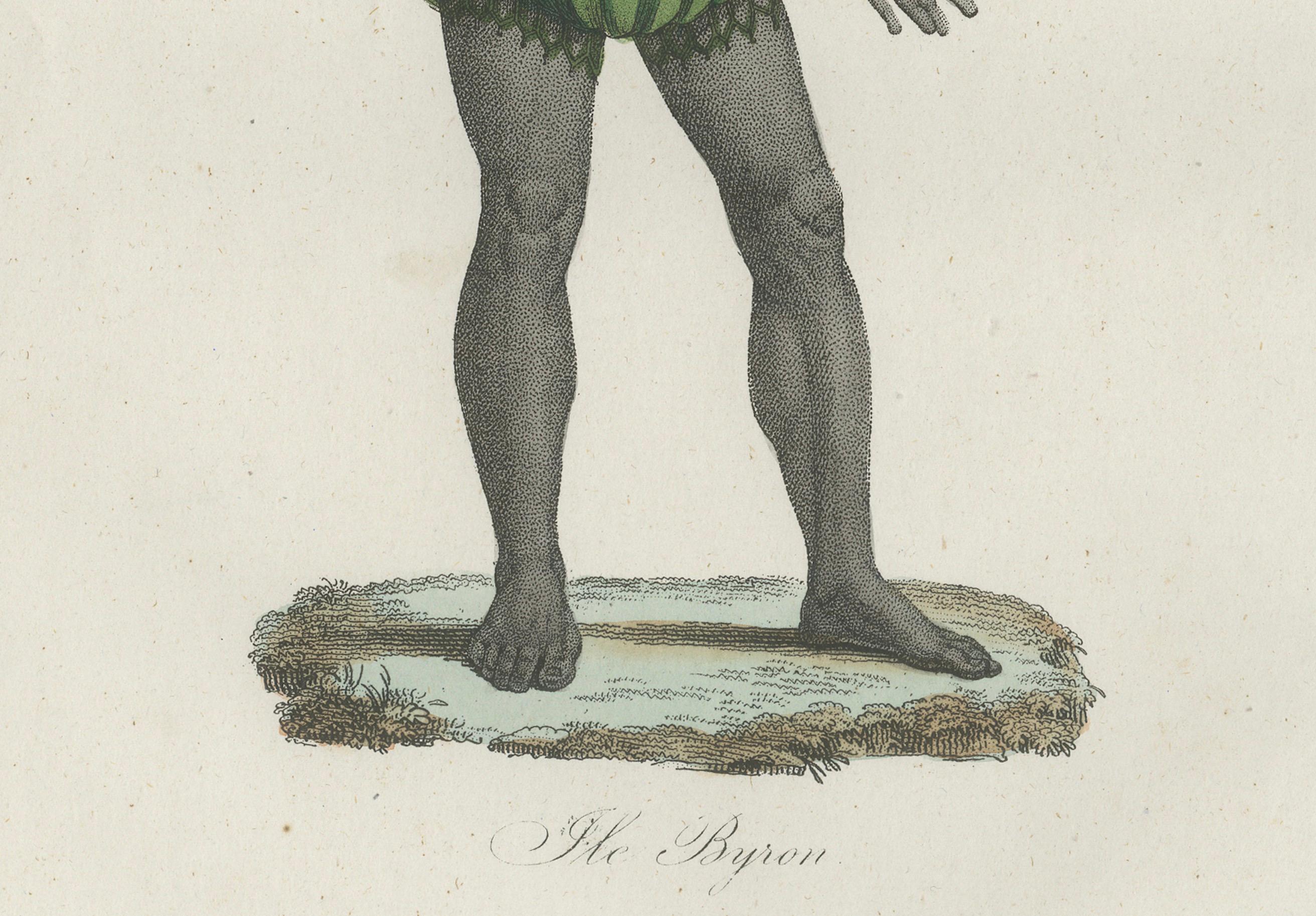
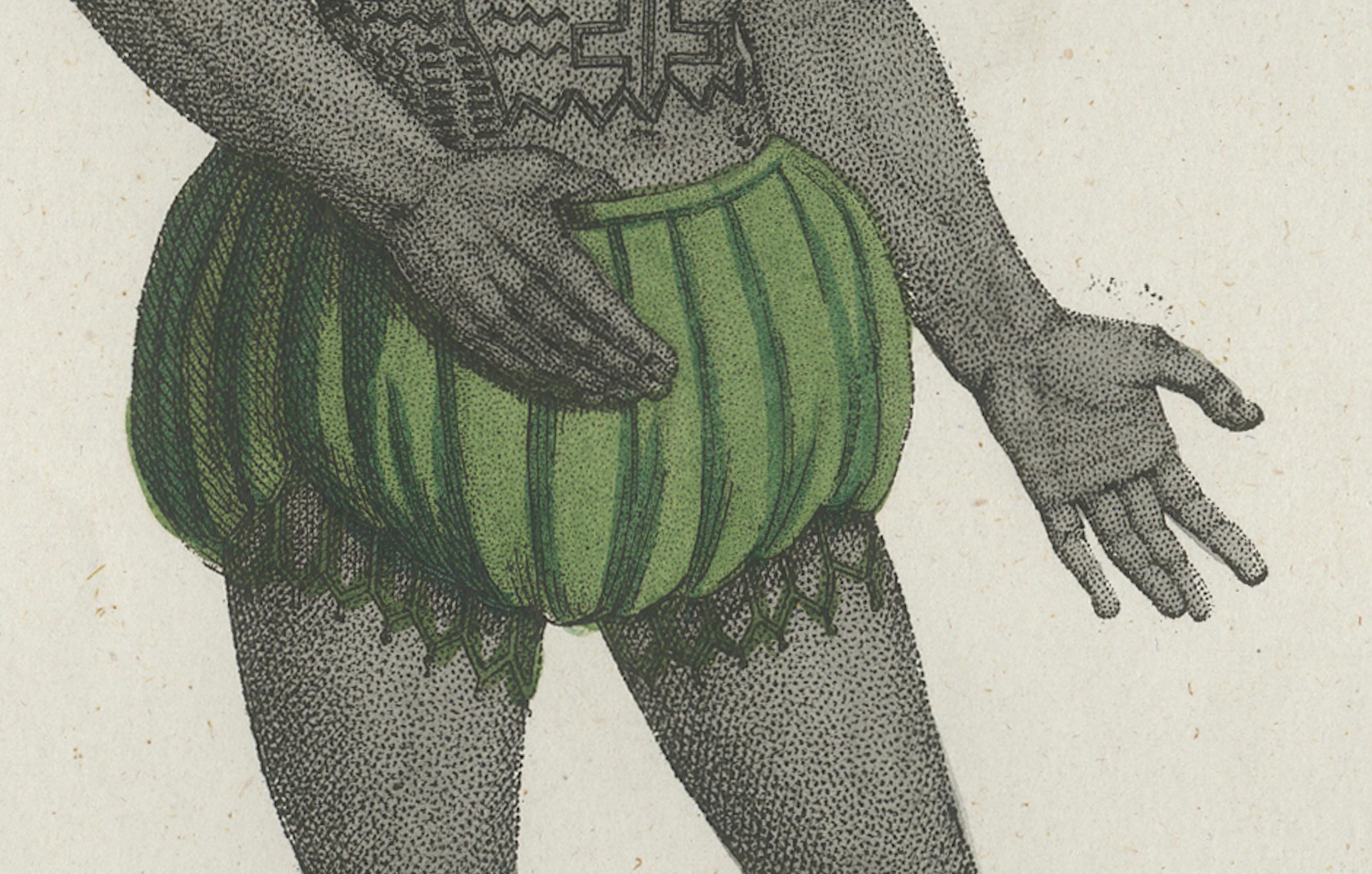
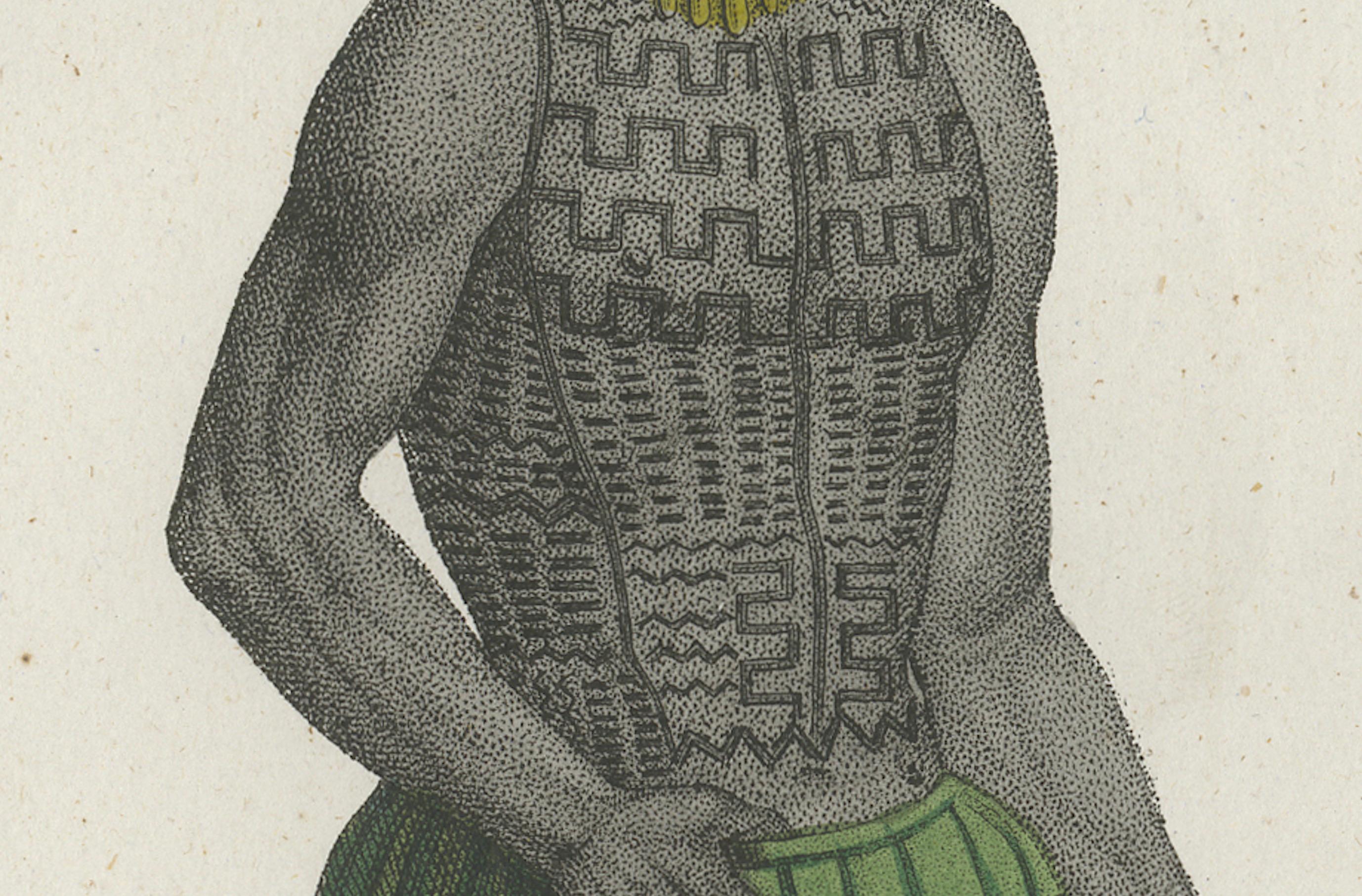
The figure stands proudly with his body covered in elaborate tattoos arranged in geometric patterns across the chest, arms, and torso. His attire is minimal, consisting of a short green garment tied around the waist, accentuating the tattoo designs that were central to identity and social status in Polynesian and Micronesian societies. He is adorned with large green ear ornaments, a yellow necklace, and a pearl or shell headpiece set into his tied-back hair. The presentation emphasizes both the physicality and cultural expression of Pacific Islanders, as perceived by European observers.
Byron Island, named after the British explorer John Byron in the 18th century, was part of the wider group of Pacific islands that became subjects of European curiosity and colonial interest. Prints such as this one provided continental readers with visual impressions of distant peoples, often filtered through exoticism and imagination. The detailed rendering of tattooing here, however, reflects genuine ethnographic observation, as body art was a vital aspect of Pacific cultural and spiritual life.
For collectors today, this print is valued not only for its decorative appeal but also for its importance as a historical artifact, documenting the 19th-century European lens on Pacific cultures. Its hand-applied coloring, particularly in the green garment and jewelry, enhances the figure’s visual impact against the otherwise plain background.
Condition report: Light marginal foxing and faint age toning, consistent with mid-19th-century paper. Plate mark visible. Colors remain vivid, especially in the green costume and ornaments. Wide margins intact.
Framing tips: A black or ebony frame with a cream mat will emphasize the strong lines of the tattoos and figure. For a more exotic presentation, a natural wood frame with a soft green mat will echo the garment and jewelry, bringing warmth and authenticity to the display.