About this sheet
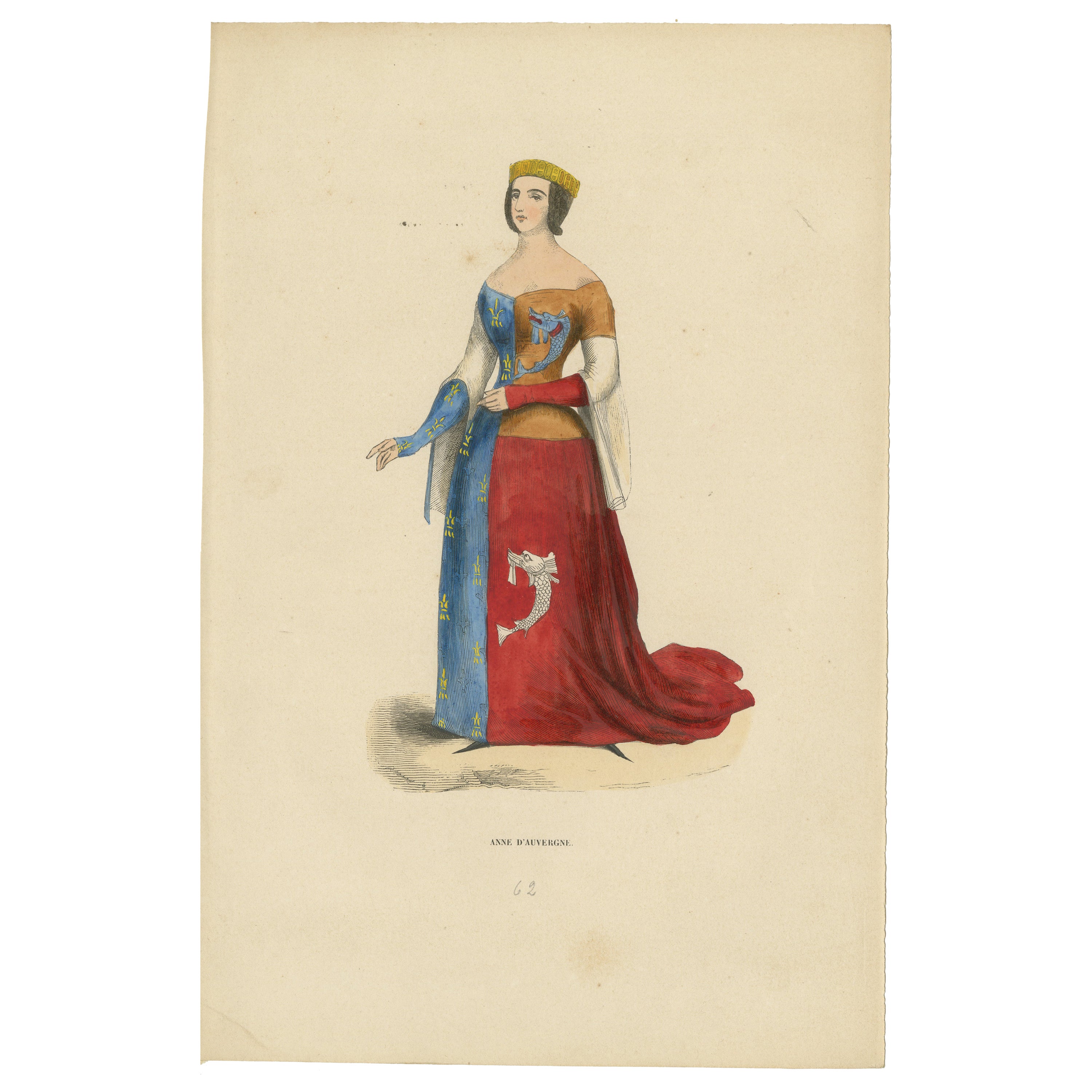
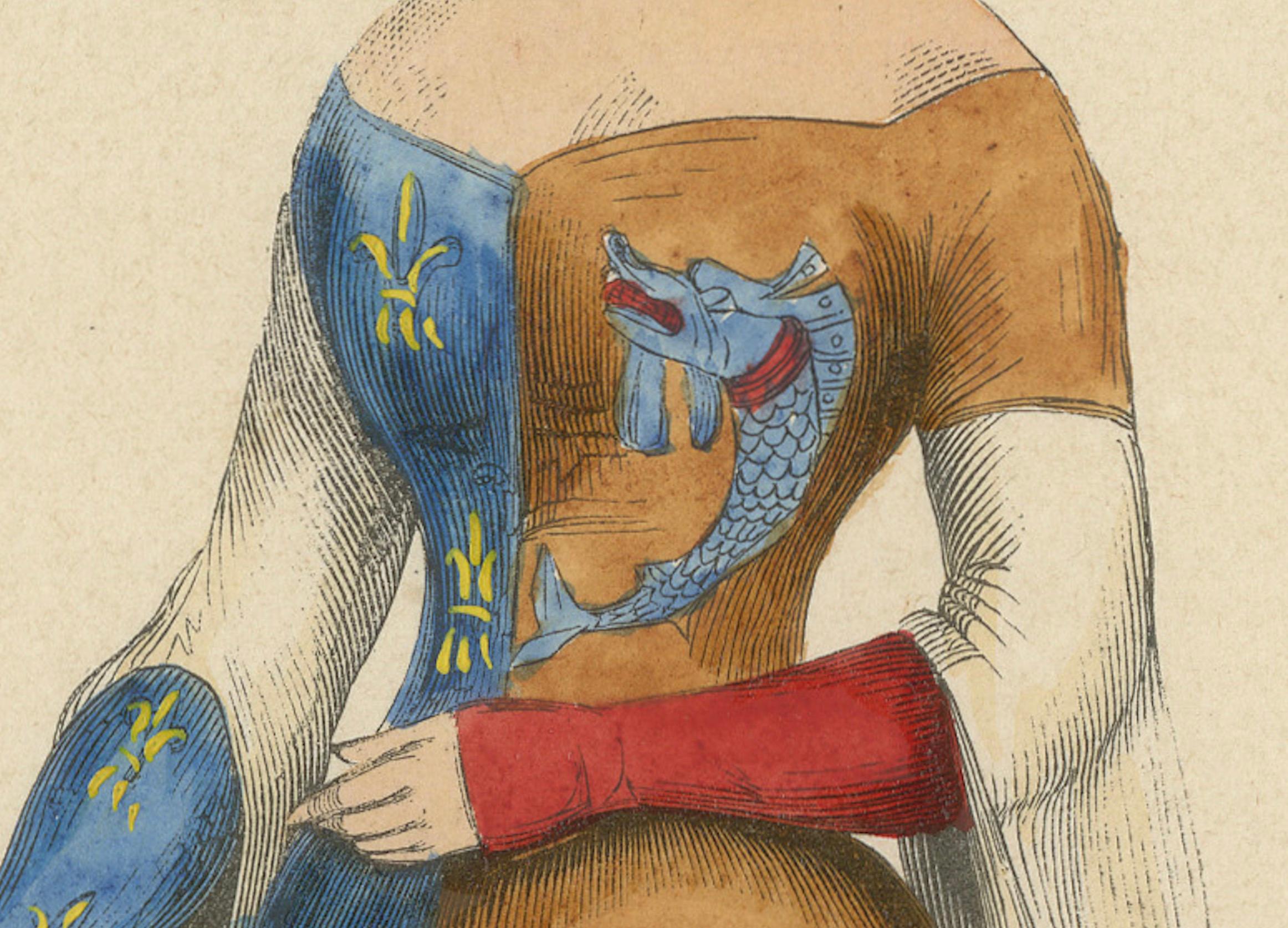
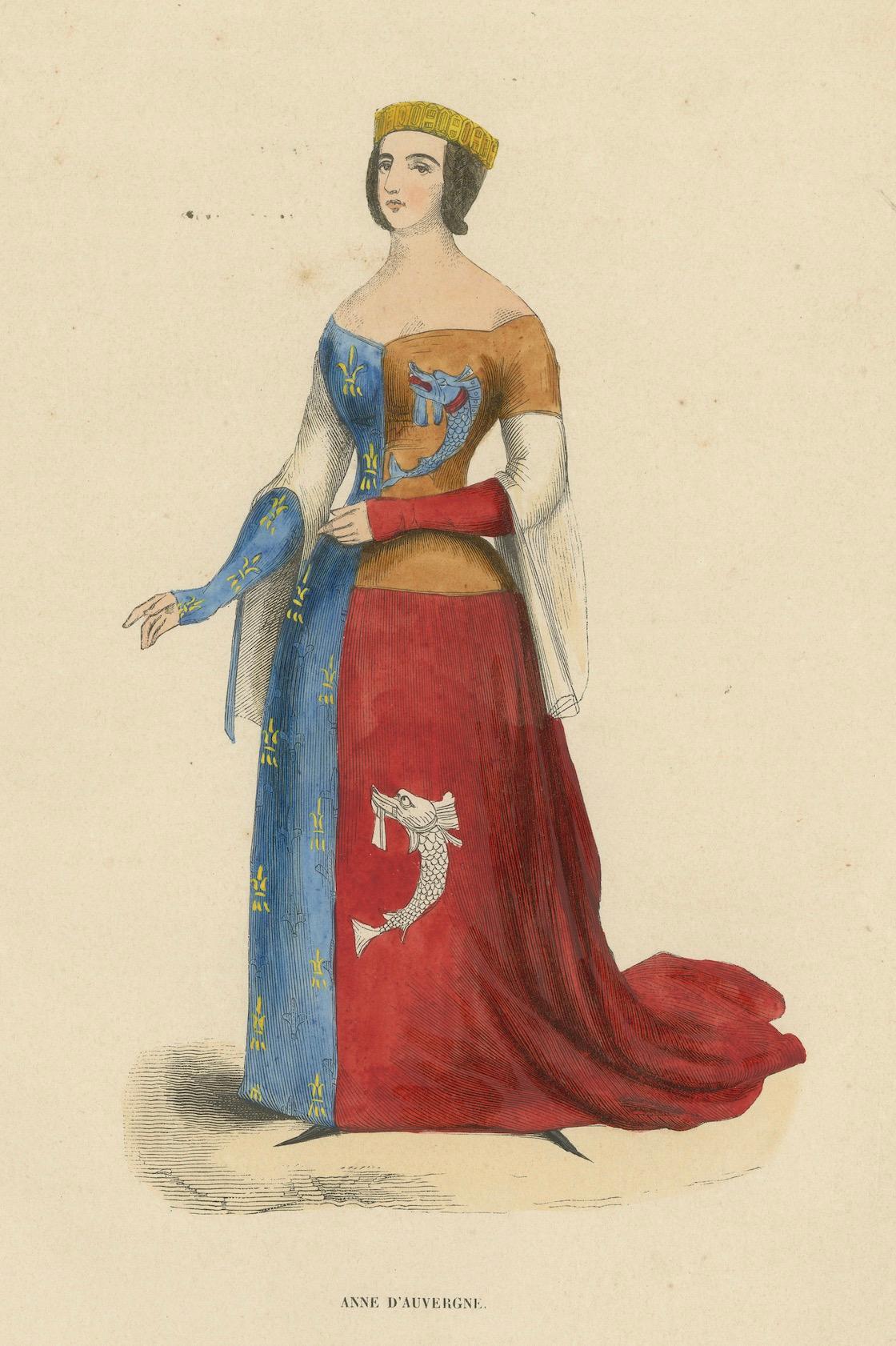
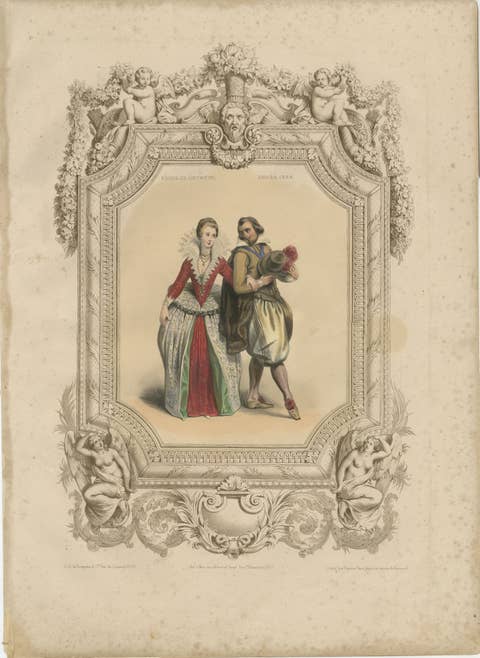
This print represents Anne d'Auvergne, a figure of nobility, depicted in a stately and refined manner. She is clad in a floor-length dress that is a testament to her high status. The bodice of the dress is of a neutral tone, form-fitting and simple, allowing the elaborate overgarment to stand out. This overgarment is a vibrant blue, embellished with golden fleurs-de-lis, a symbol often associated with French nobility, indicating her possible connection to the royal family or a region under French influence.
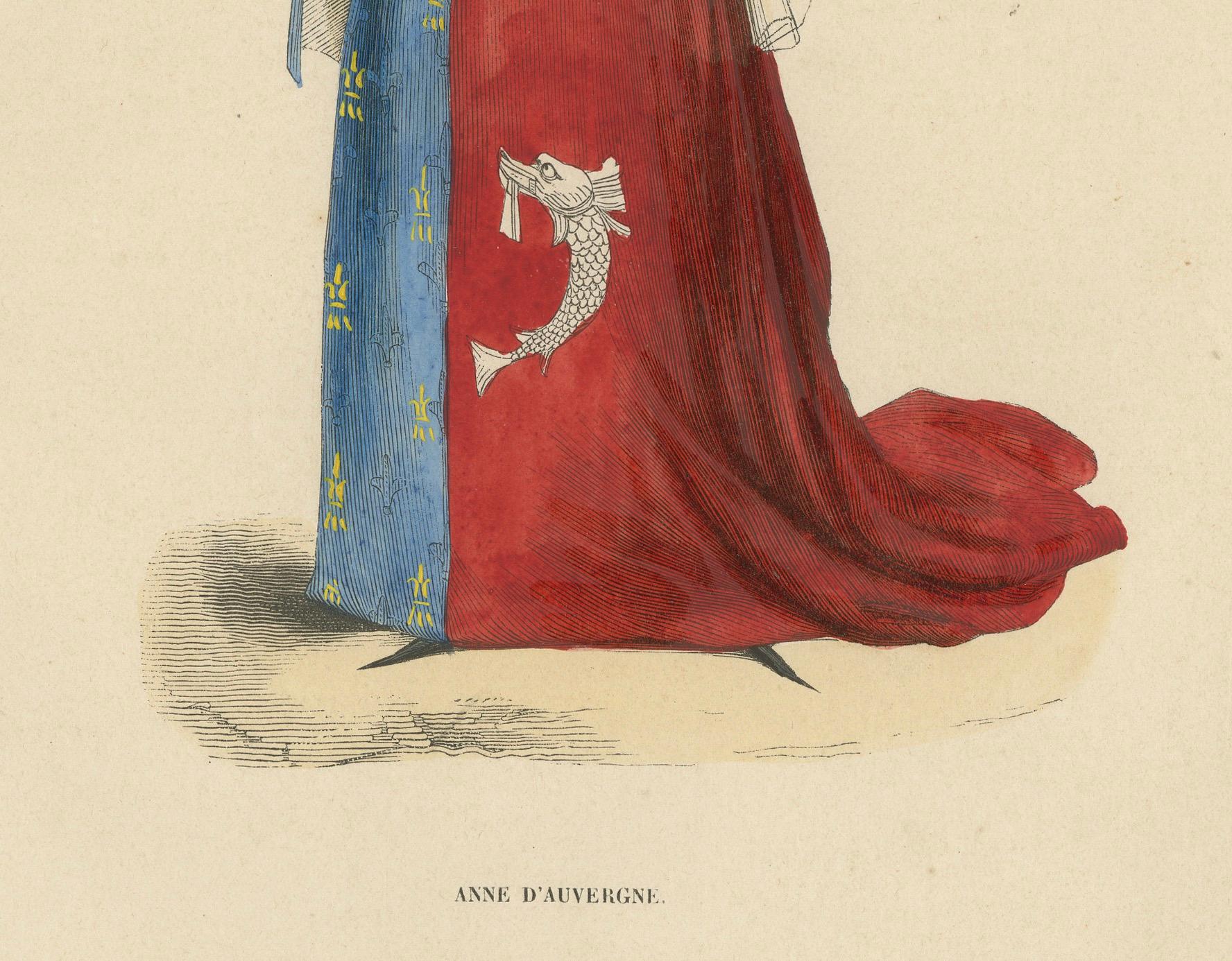
The dress features a long, flowing red skirt, a color traditionally associated with power and prestige. This skirt trails behind her, adding to the grandeur of her presence. A prominent white fish motif is present on the front of the skirt, which could be a personal or family emblem, signifying a heraldic identity.
Her sleeves are partially covered by a fur-trimmed cloak that drapes elegantly off her shoulders, suggesting both style and functionality. The white under-sleeves are tight and cuffed at the wrists, a common fashion of the era.
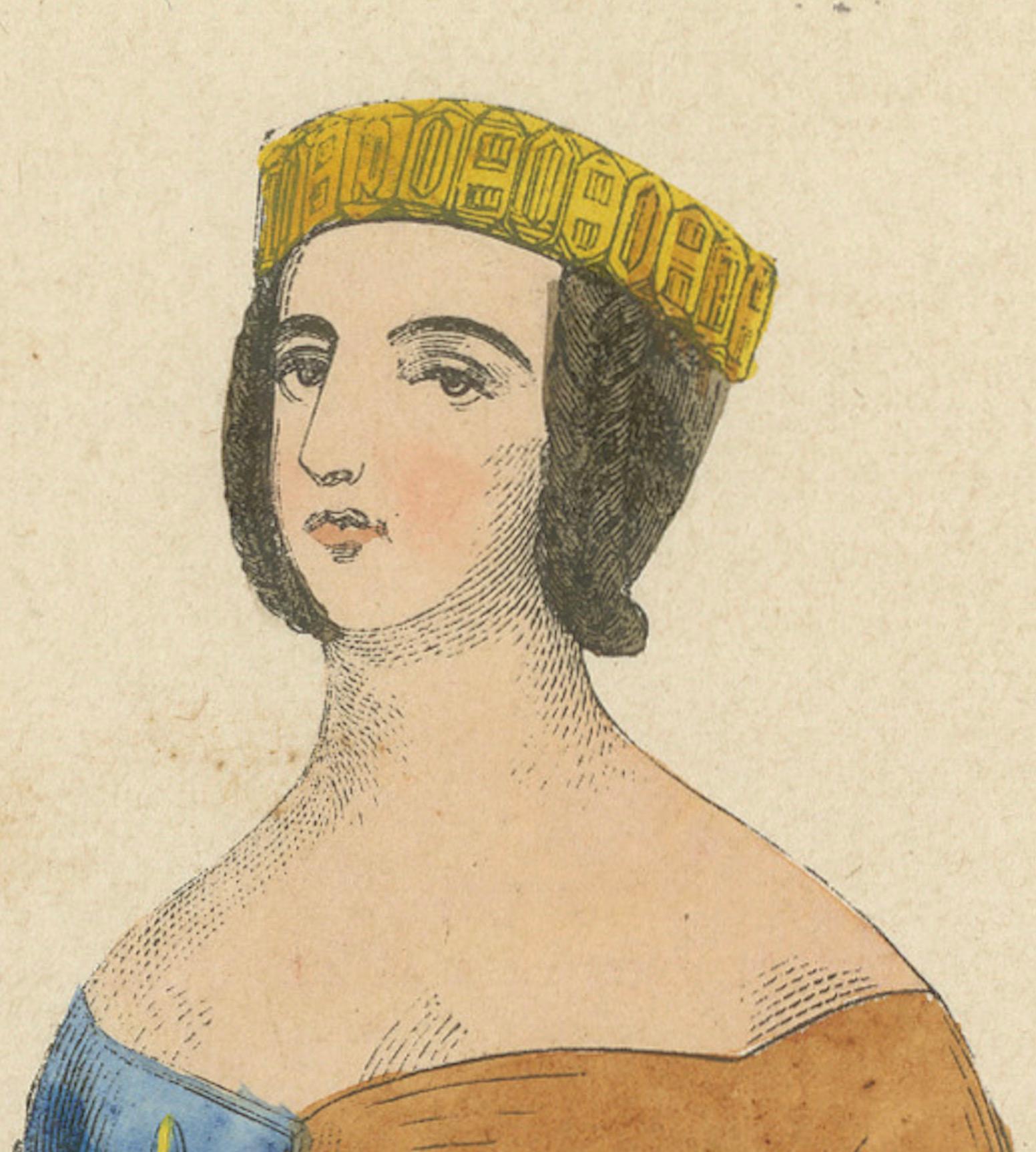
Anne’s hair is neatly set under a golden crown or headpiece, reflecting her noble lineage. Her expression is serene with a hint of resolve, befitting a woman of her standing. She extends one hand gracefully, which, along with her direct gaze, might indicate an action of address or command.
This image captures a moment of poised elegance, reflecting the intricate blend of power, fashion, and symbolism that was deeply ingrained in the courtly life of the Middle Ages.
The colors have a nice glow over them. Historically, egg whites, known as glair, and sometimes egg yolk were indeed used in illumination and painting, particularly in manuscripts, to give colors a brighter appearance and to add a sheen or gloss to the work. This technique was quite common during the Middle Ages and into the Renaissance.
Egg whites can be applied as a varnish over pigments to enhance their brightness and to protect the colors. This application could make the colors appear more vivid and also add a slight glossy sheen to the surface of the image.
Egg yolk, on the other hand, was commonly used as a binding agent in paint. It forms the basis of tempera paint, a medium that was widely used before the advent of oil painting. Egg yolk helps to create a durable and long-lasting color that adheres well to various surfaces.
In the context of the print from 1847, it's less likely that egg whites or yolks were used directly on the print, as by that time, commercial printing processes would have been more advanced and less reliant on such manual methods. However, if this print is a representation of an earlier style or is meant to mimic the appearance of hand-painted manuscripts, the original artists might have employed techniques or materials that gave a similar effect to those achieved with egg-based binders and varnishes.