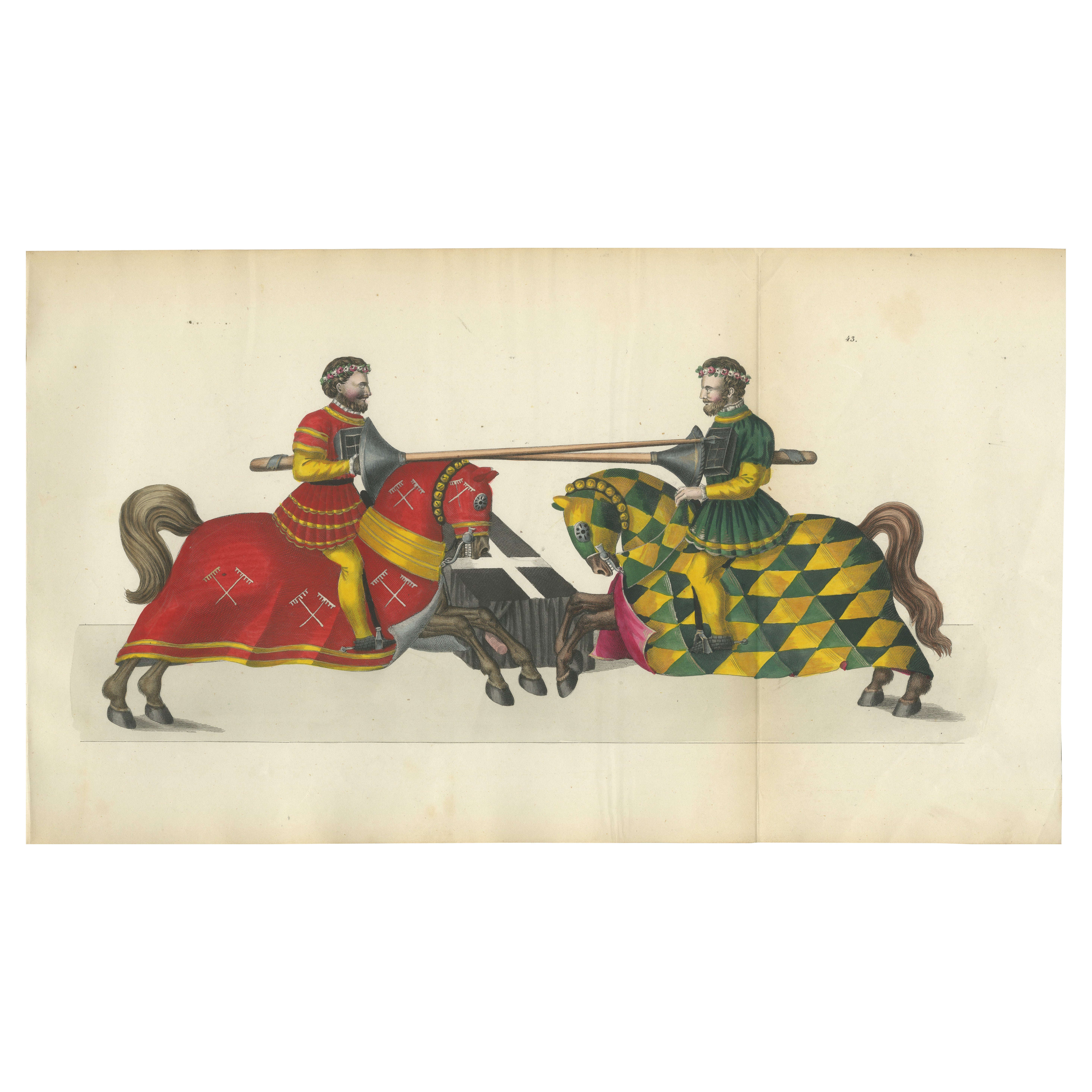
19th-Century Hand-Colored Lithograph of Jousting Gentlemen in Vibrant Attire
€ 740
Original antique · The actual sheet photographed · Certificate of authenticity on request · Sold unframed · Worldwide shipping from € 15 (rates)
Sheet size
23 × 39.5 cm (9.1 × 15.6 in)
Condition
Good
Reference
BG-14009-47
What the condition grades mean
Excellent
Bright and clean, with no faults worth mentioning.
Very good
Only light signs of age, such as faint toning.
Good
Normal signs of age for a sheet of this period: toning, some foxing, small marks or neat old repairs.
Fair
Clear faults such as staining, tears or repairs, priced to match.
Every fault we see is written in the condition note, and the whole sheet is shown uncropped in the photos.
Condition
The lithograph’s hand-applied colors remain remarkably vibrant, and the detailing of each element—from the ornate harnesses to the subtle shading of musculature on both horse and rider—is impressive. Minor age-related imperfections.
About this sheet
19th-Century Hand-Colored Print of Jousting Gentlemen in Vibrant Attire
This exquisite original hand-colored lithograph, dating from 1842, presents a vivid and engaging scene of two noble gentlemen engaged in a joust. It comes from the renowned publication Der Rittersaal: Eine Geschichte des Ritterthums, produced in Stuttgart by the publishing house Carl Hoffmann. The work features illustrations rendered under the artistic guidance of Friedrich Martin von Reibisch, complemented by historical commentary from Dr. Franz Kottenkamp. Together, they sought to faithfully capture the customs, pageantry, and aesthetics of European chivalry and its grand tournaments.
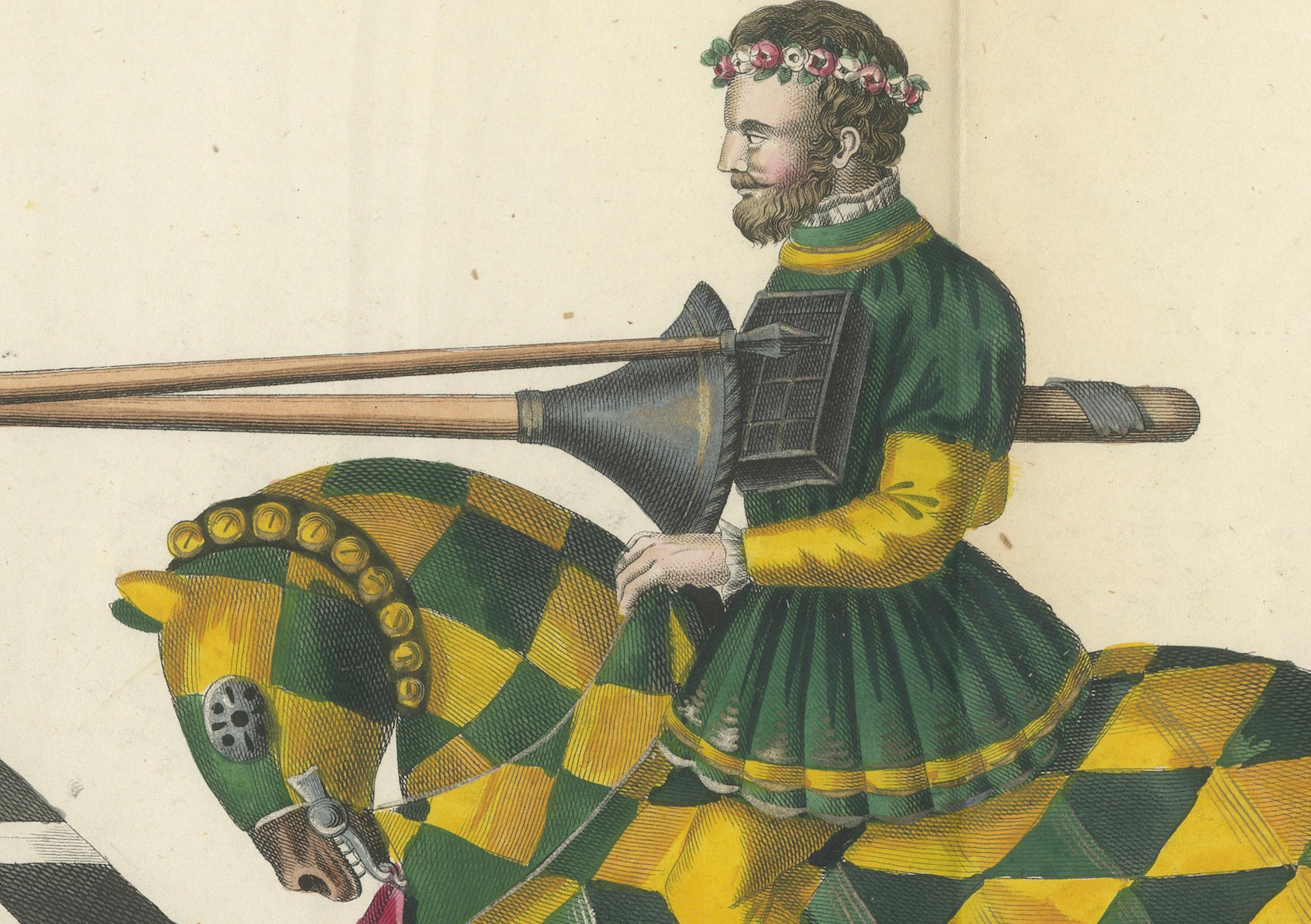
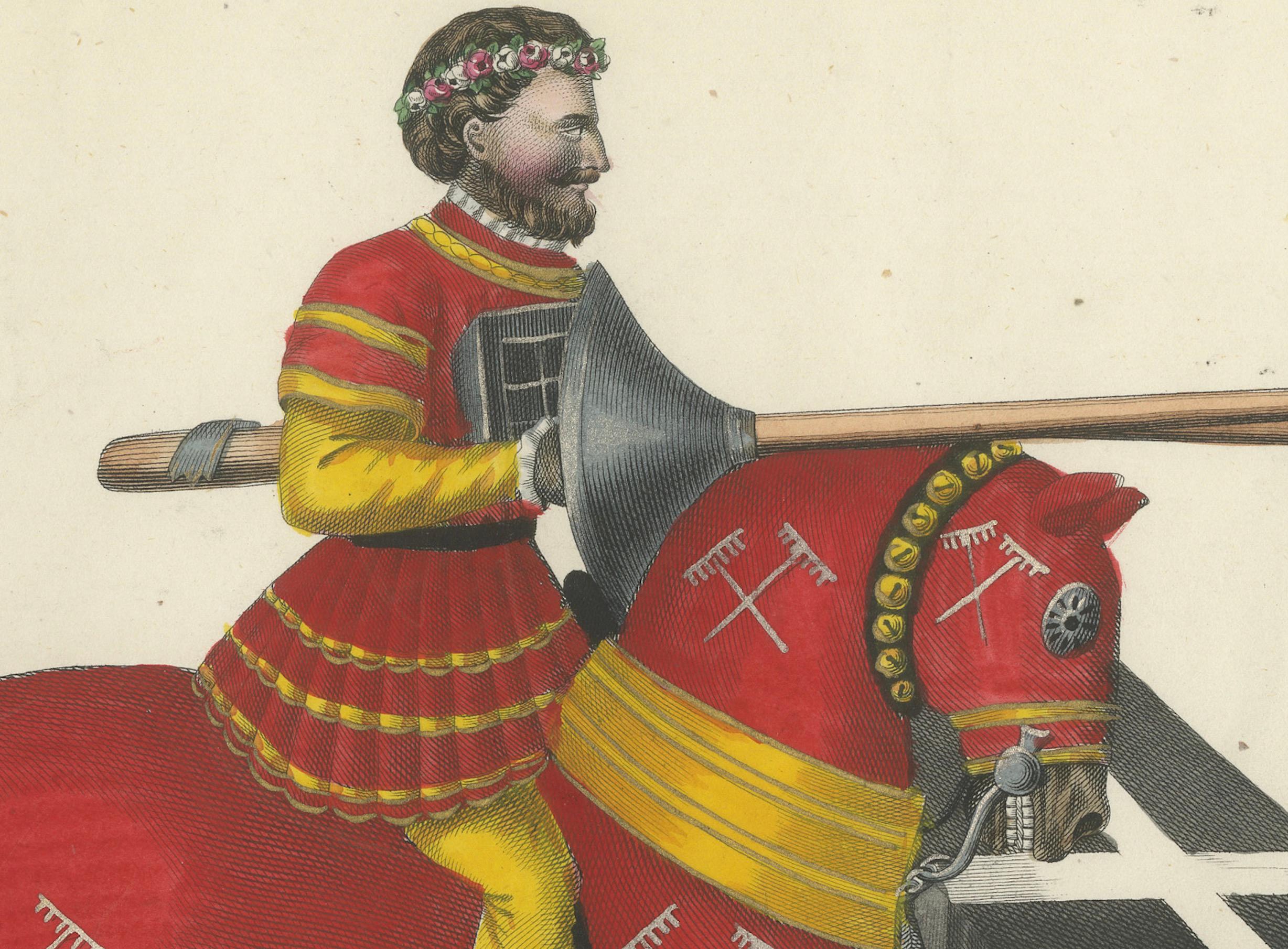
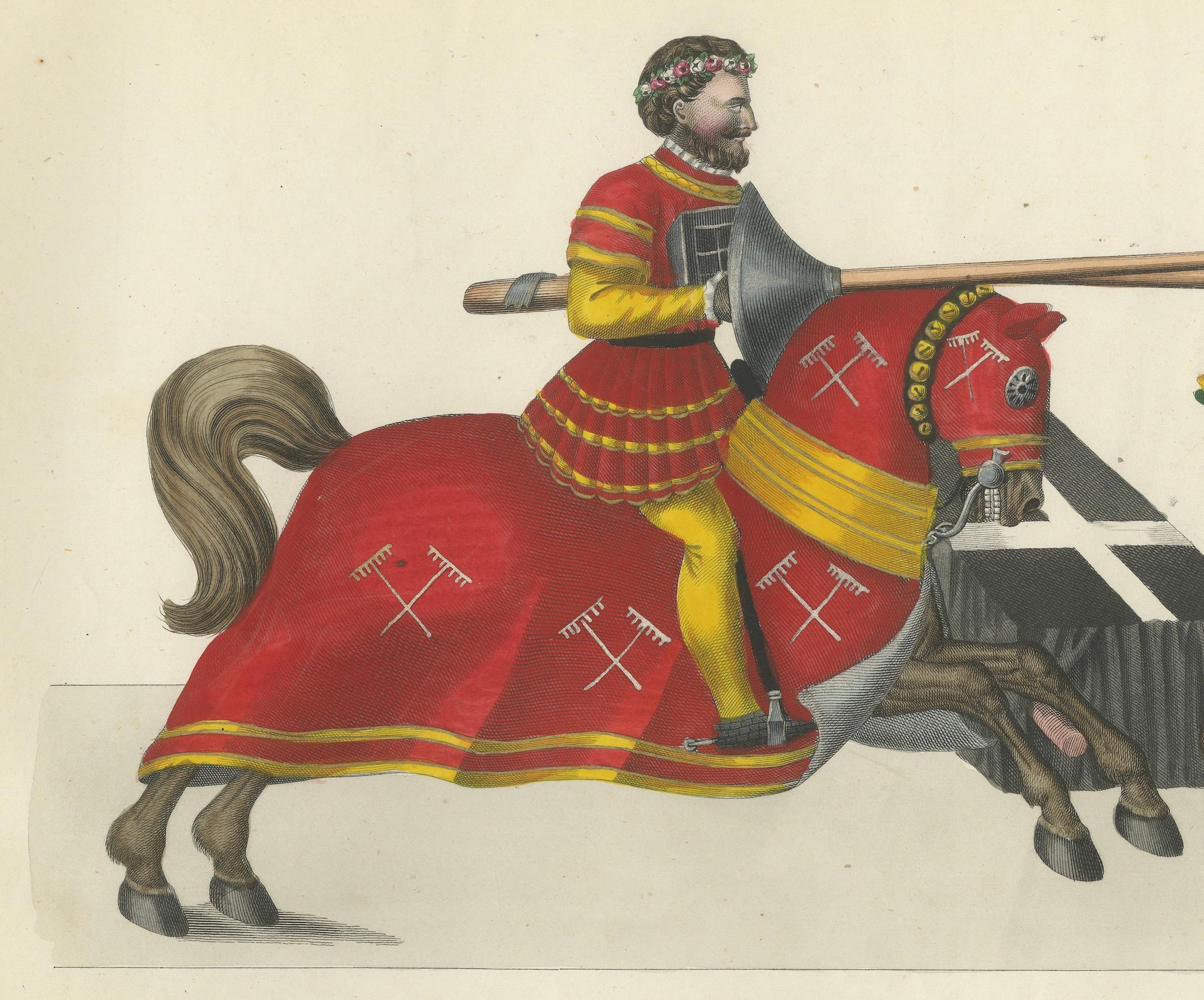
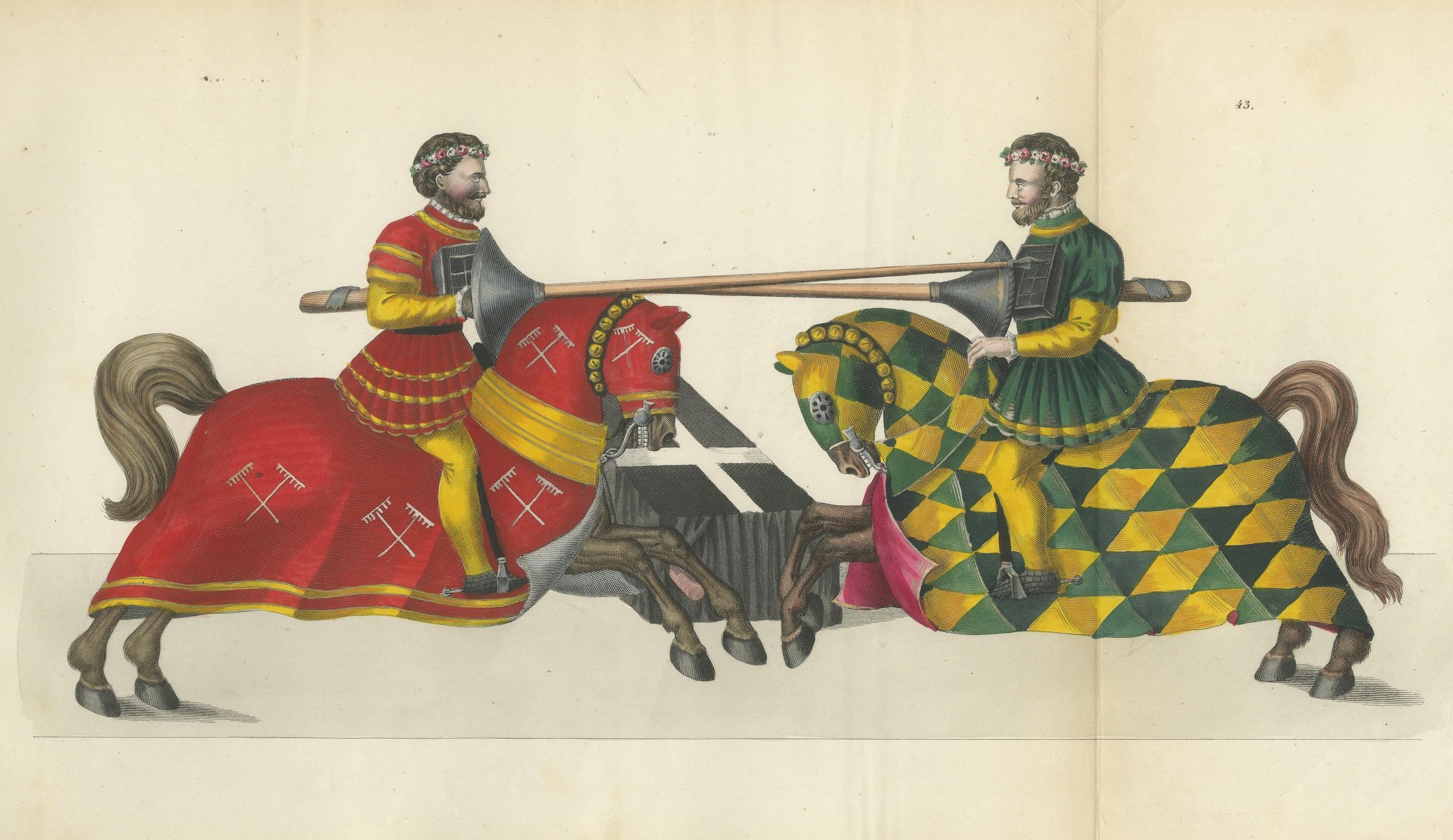
In this particular image, two mounted participants face each other with lances poised, their attire reflective of the social and heraldic significance of the event. One rider, clad in rich red garments and set against a horse draped in equally bold red cloth, features heraldic emblems that hint at lineage and status. His opponent, dressed in green and gold, rides a horse adorned with a distinctive geometric pattern, signaling a different noble affiliation and identity. Both are crowned with floral wreaths, a subtle nod to the festive and ceremonial nature of these contests.
The lithograph’s hand-applied colors remain remarkably vibrant, and the detailing of each element—from the ornate harnesses to the subtle shading of musculature on both horse and rider—is impressive. Minor age-related imperfections, including light toning and gentle creases, do not detract from its overall beauty. Instead, they serve as authentic marks of time.
This rare and captivating piece will appeal to collectors of medieval and Renaissance history, lovers of heraldry, and enthusiasts of early equestrian art. It offers an enchanting glimpse into the noble traditions of jousting and the enduring legacy of knightly culture.