About this sheet
"Dame du XIIIe Siècle" (Lady of the 13th Century)
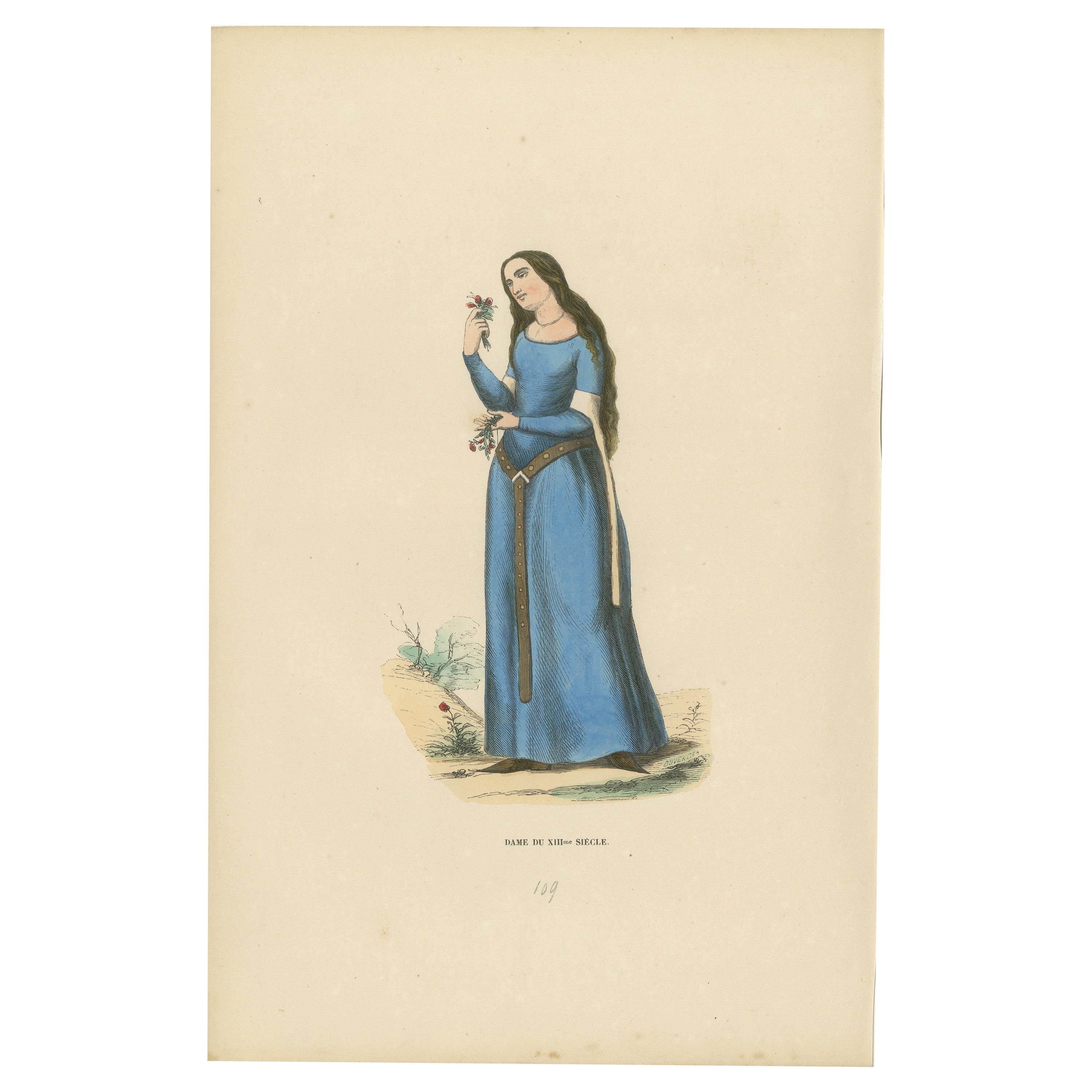
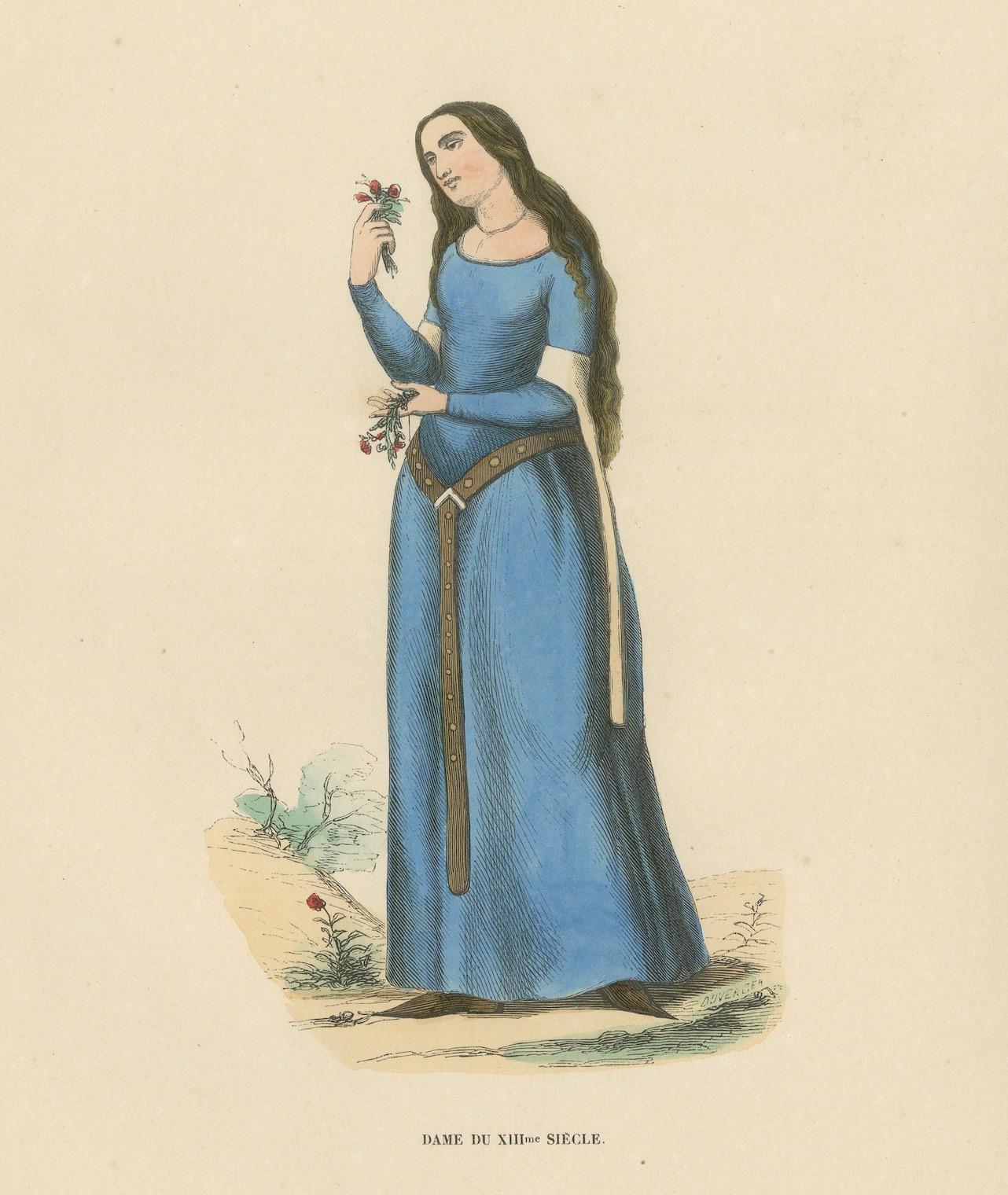
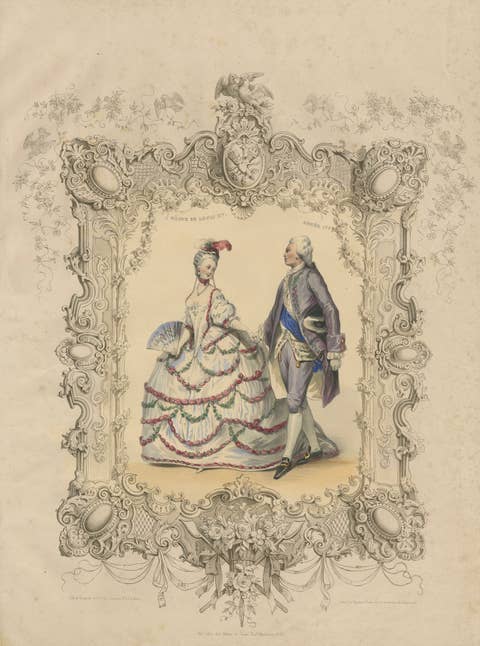
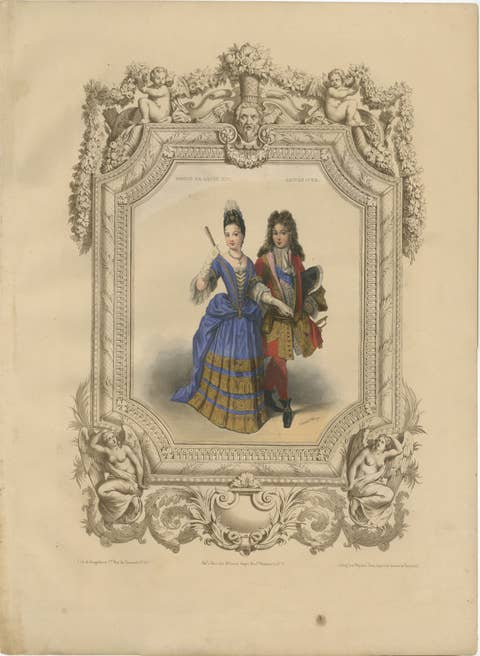
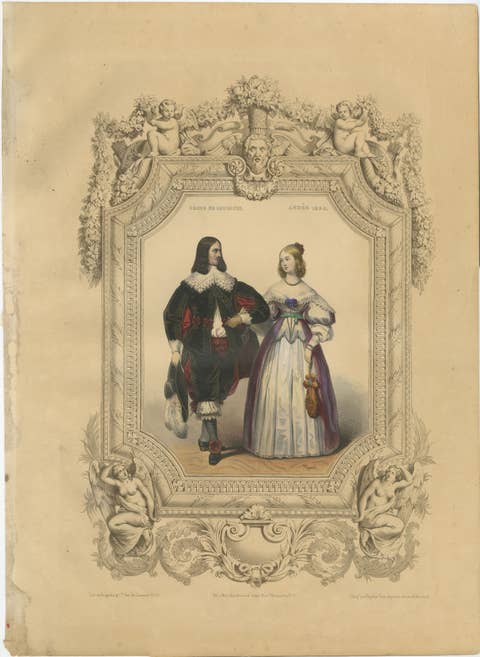
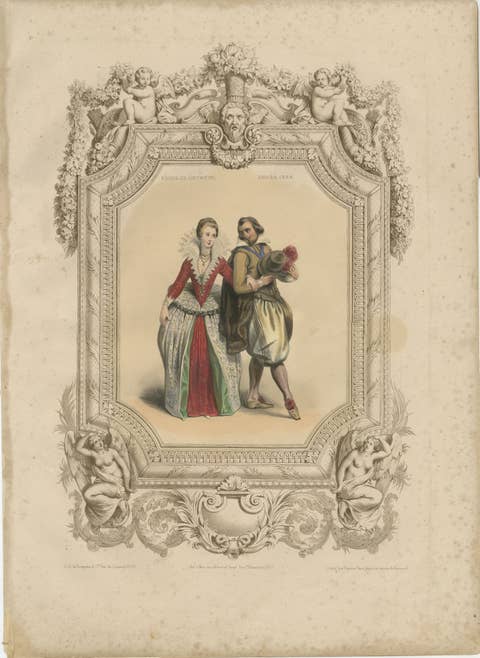
This delicate hand-colored engraving from the 1847 "Costume du Moyen Age" series depicts a lady from the 13th century. The title, "Dame du XIIIe Siècle," suggests an emphasis on historical accuracy in representing the fashion of that era.
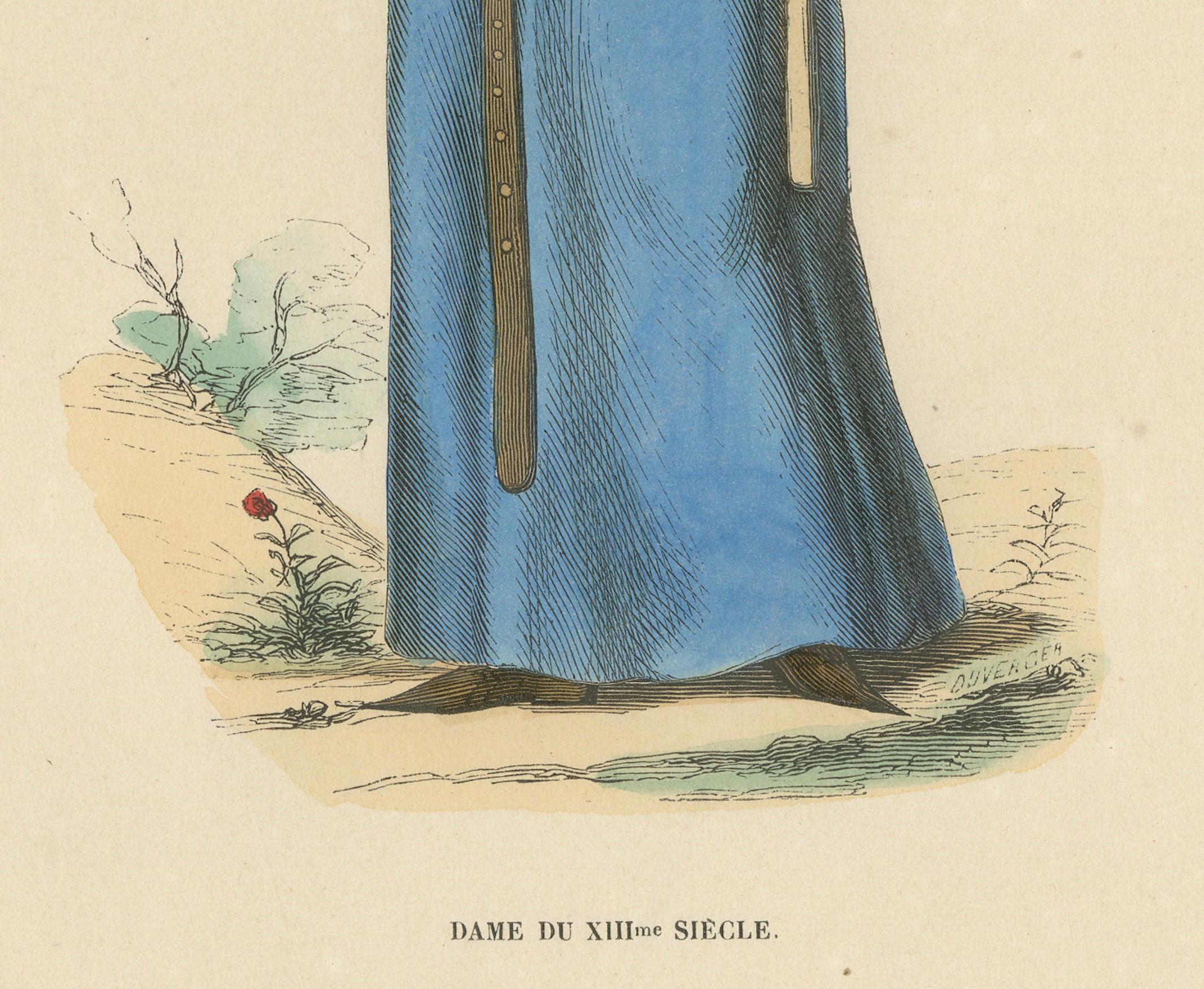
The lady is garbed in a long, flowing blue gown with tight-fitting sleeves, a style characteristic of the period. The gown is cinched at the waist with a decorative belt adorned with what appears to be metallic accents, highlighting the narrow waistline favored in feminine fashion of the time. Her dress drapes gracefully to the ground, hiding her feet, which adds to the modesty and elegance of her stance.
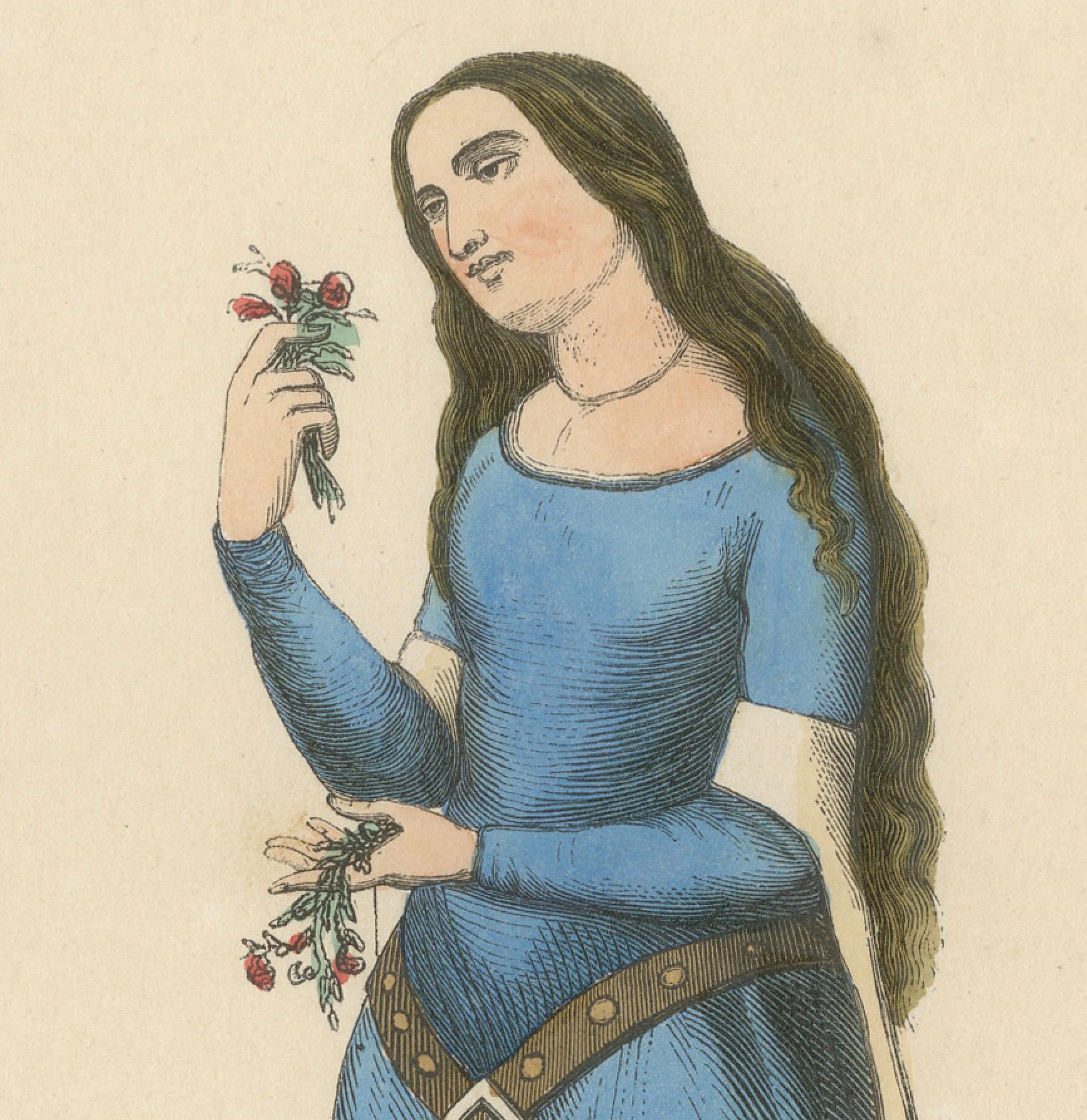
She holds a bouquet of flowers, perhaps wildflowers, indicative of an appreciation for nature, a common motif in medieval art. Her attention is tenderly focused on a single flower, suggesting a moment of contemplation or enjoyment of its beauty.
Her hair is styled long and loose, cascading down her back, which was often a sign of youth and beauty in medieval times. The simple yet noble elegance of her attire, coupled with her serene expression, portrays the lady as both graceful and dignified.
The background is minimally detailed with a hint of a natural landscape, ensuring the viewer's focus remains on the lady and her refined attire. The artistry of the engraving captures the romanticism often associated with medieval times, as well as the intricate details of the clothing worn during the 13th century.
The colors have a nice glow over them. Historically, egg whites, known as glair, and sometimes egg yolk were indeed used in illumination and painting, particularly in manuscripts, to give colors a brighter appearance and to add a sheen or gloss to the work. This technique was quite common during the Middle Ages and into the Renaissance.
Egg whites can be applied as a varnish over pigments to enhance their brightness and to protect the colors. This application could make the colors appear more vivid and also add a slight glossy sheen to the surface of the image.
Egg yolk, on the other hand, was commonly used as a binding agent in paint. It forms the basis of tempera paint, a medium that was widely used before the advent of oil painting. Egg yolk helps to create a durable and long-lasting color that adheres well to various surfaces.
In the context of the print from 1847, it's less likely that egg whites or yolks were used directly on the print, as by that time, commercial printing processes would have been more advanced and less reliant on such manual methods. However, if this print is a representation of an earlier style or is meant to mimic the appearance of hand-painted manuscripts, the original artists might have employed techniques or materials that gave a similar effect to those achieved with egg-based binders and varnishes.