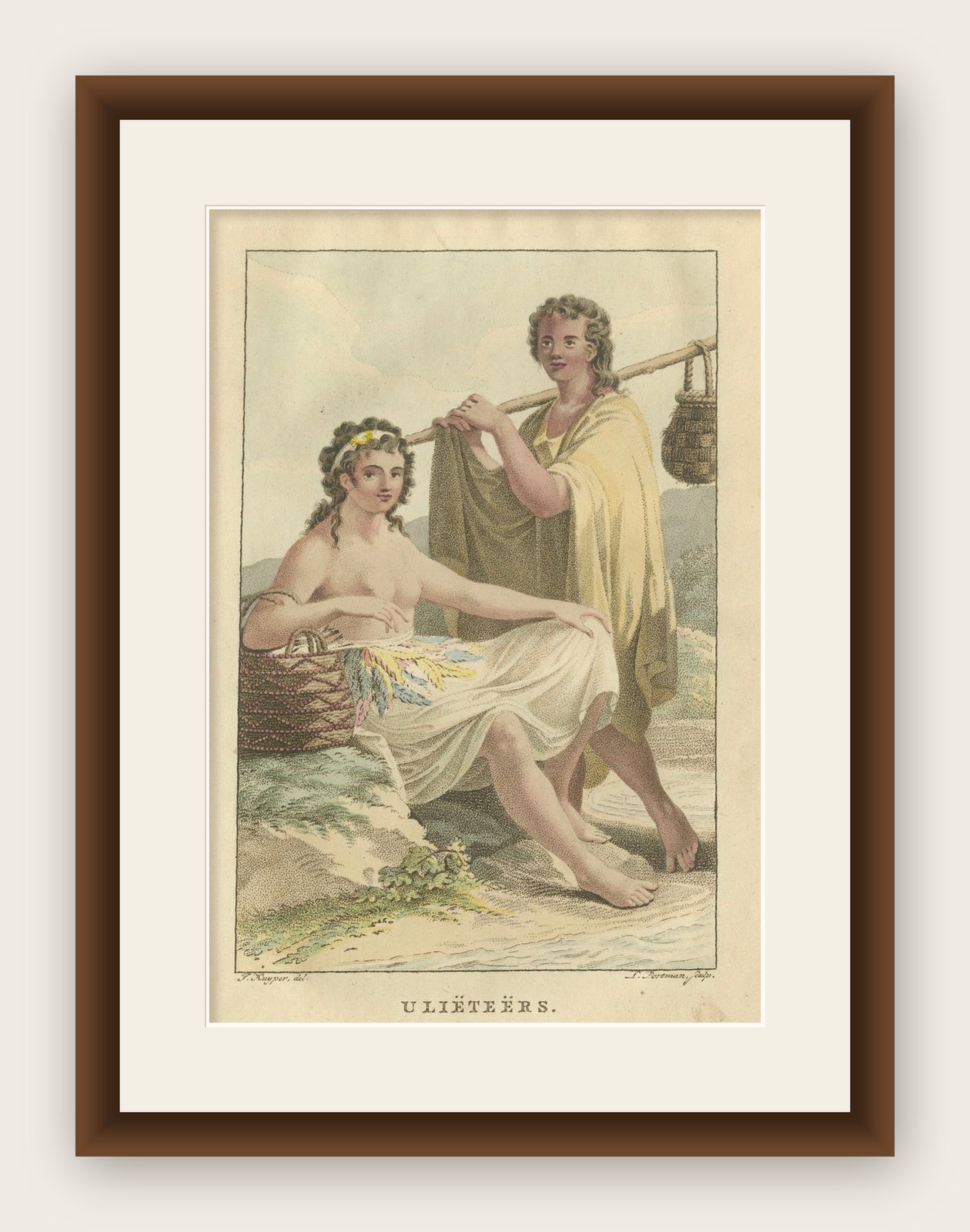
Ulieteërs - Old Handcolored Ethnographic Engraving of Raiatea, Polynesia 1803
€ 210
Original antique · The actual sheet photographed · Certificate of authenticity on request · Sold unframed · Worldwide shipping from € 15 (rates)
Date
1803
Mapmaker / artist
J. Allart (publisher), after S. Kuyper, engraved by J. Portman
Technique
Hand-colored engraving
Sheet size
22.5 × 13 cm (8.9 × 5.1 in)
Condition
Good
Reference
BG-13696-26
What the condition grades mean
Excellent
Bright and clean, with no faults worth mentioning.
Very good
Only light signs of age, such as faint toning.
Good
Normal signs of age for a sheet of this period: toning, some foxing, small marks or neat old repairs.
Fair
Clear faults such as staining, tears or repairs, priced to match.
Every fault we see is written in the condition note, and the whole sheet is shown uncropped in the photos.
Condition
Good condition consistent with age. Mild toning and a few small spots in margins. Some light handling marks and soft edges. Image clean with bright, original hand-coloring well-preserved.
About this sheet
Ulieteërs – Antique Hand-Colored Ethnographic Engraving of Raiatea, Polynesia (c.1800)
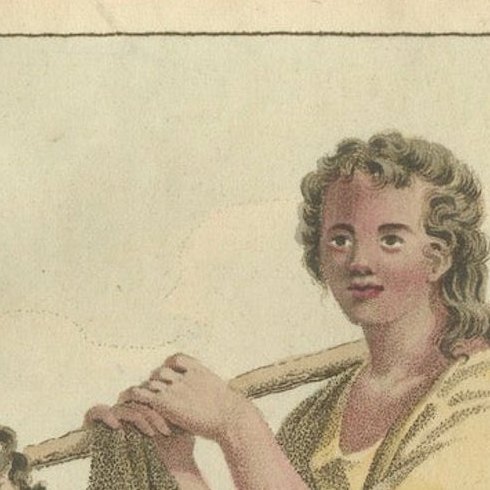
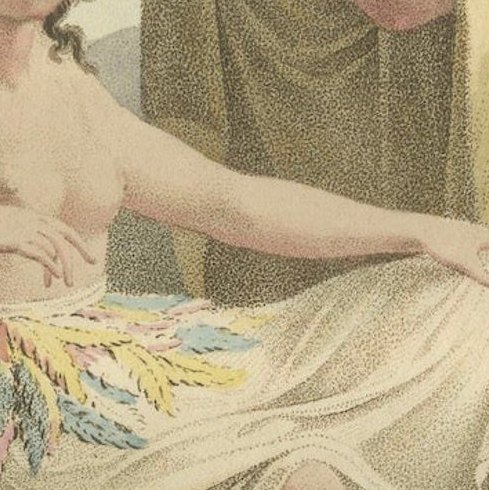
An elegant early 19th-century ethnographic engraving titled “Ulieteërs,” depicting two figures from Raiatea in the Society Islands (historically referred to as “Ulietea” by European explorers). A seated woman holds a basket filled with colorful tropical plants while draping a cloth loosely across her lap. Beside her stands a man carrying a pole over his shoulder with a woven basket suspended from it. The scene is set in a lush natural landscape, evoking the idyllic European perception of the Pacific islands during the era following Captain Cook’s voyages.
This finely engraved plate is hand-colored with soft tones typical of early Dutch and French color printing, giving the image both decorative charm and historical significance. Signed in the plate: “S. Kuyper del.” (artist) and “J. Portman sc.” (engraver). Published by J. Allart in the Netherlands, circa 1800.
This print represents part of a broader Enlightenment-era fascination with Polynesian societies, as European audiences sought visual documentation of distant cultures encountered through Pacific exploration. Today, it serves as an important artifact of early ethnographic illustration and cross-cultural history.
Framing Tips: A natural or dark wood frame pairs well with the soft palette. Use an off-white mat to emphasize the composition. Suitable for presentation as part of a Polynesian or Pacific exploration group.