About this sheet
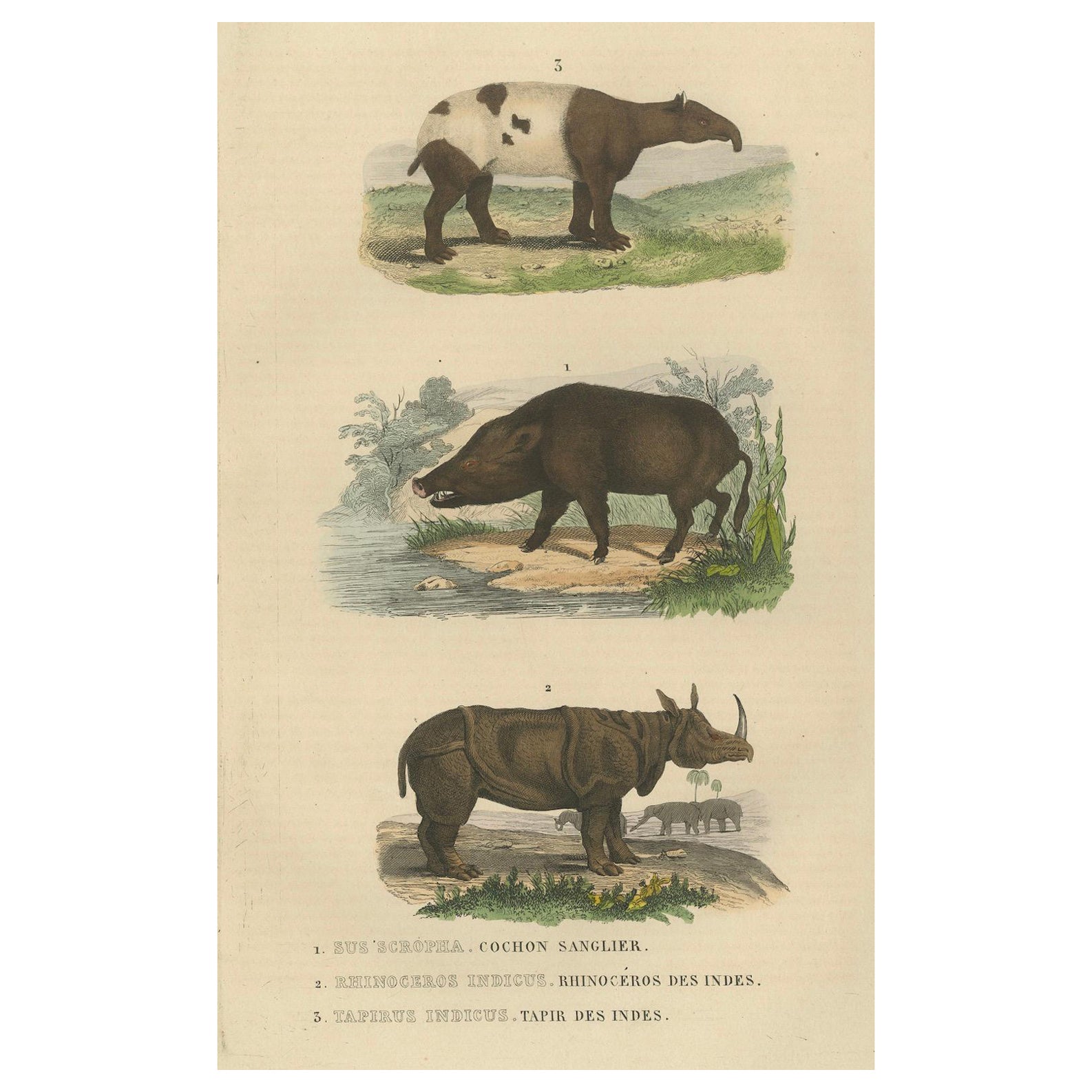
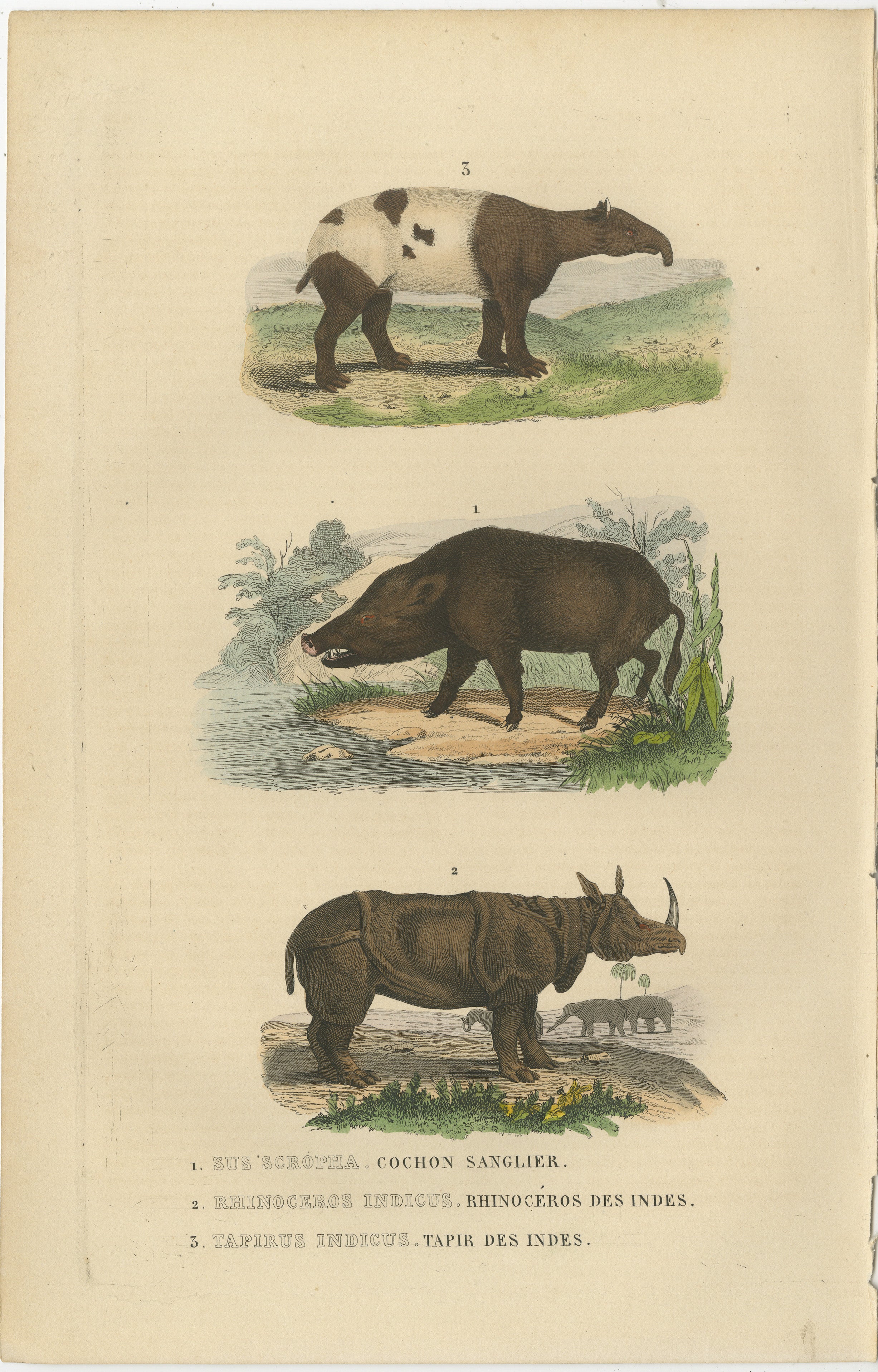
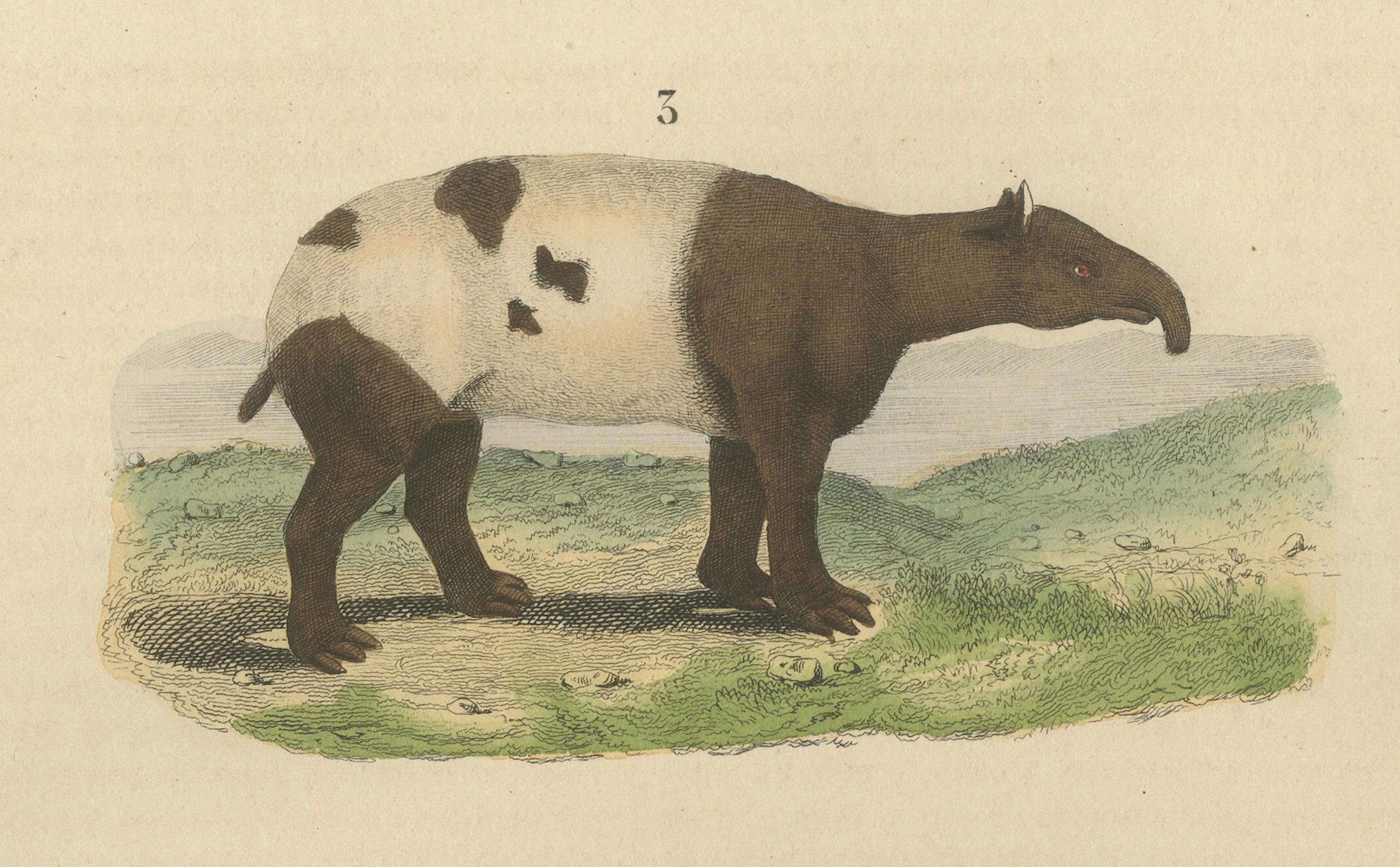
An original antique hand-colored engraving featuring three different species of animals, each labeled in both Latin and French:
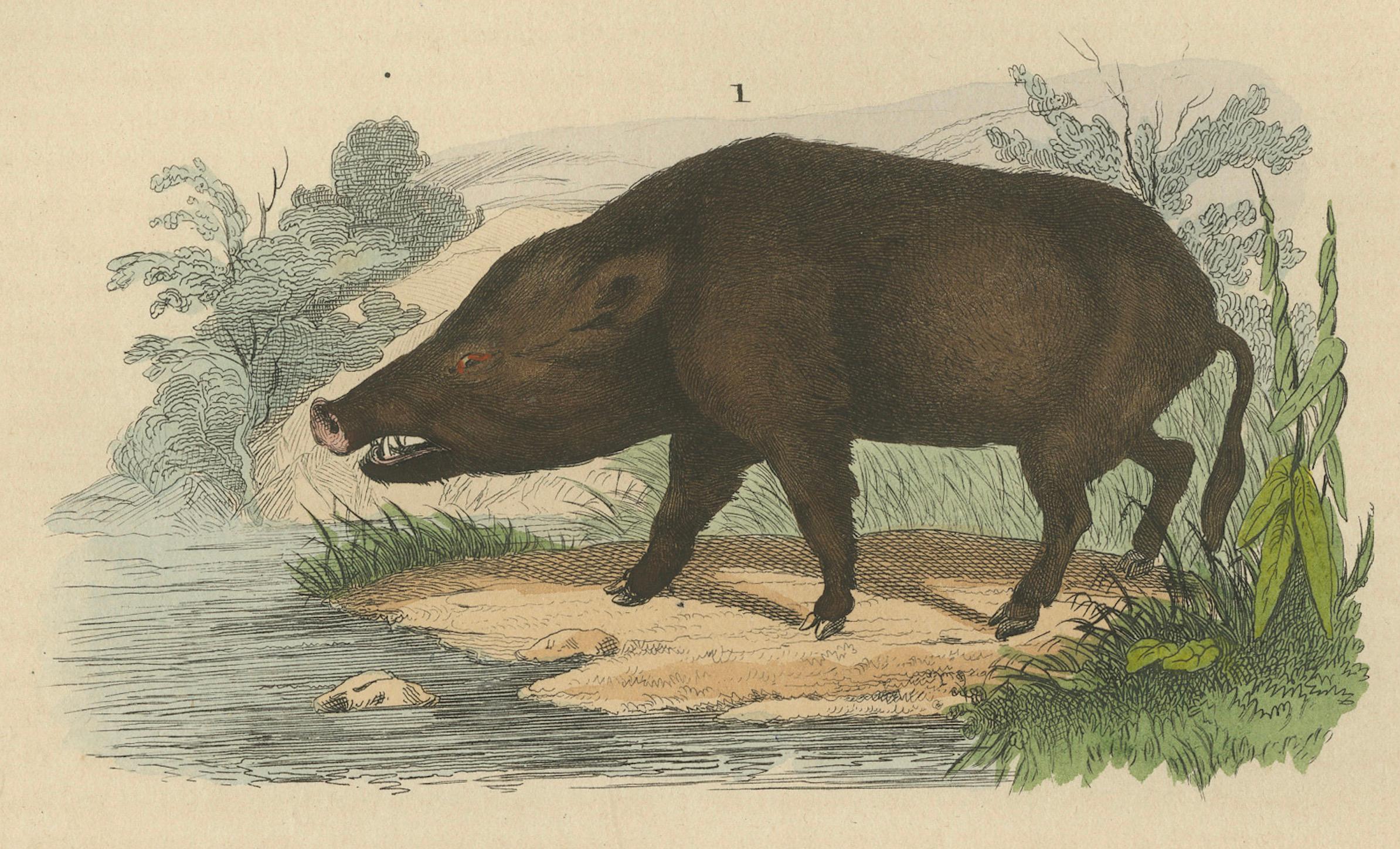
1. **Sus scrofa** - Commonly known as the wild boar. This illustration shows a dark-colored boar with sharp tusks and a somewhat aggressive stance, indicative of the species' reputation for being fierce and territorial.
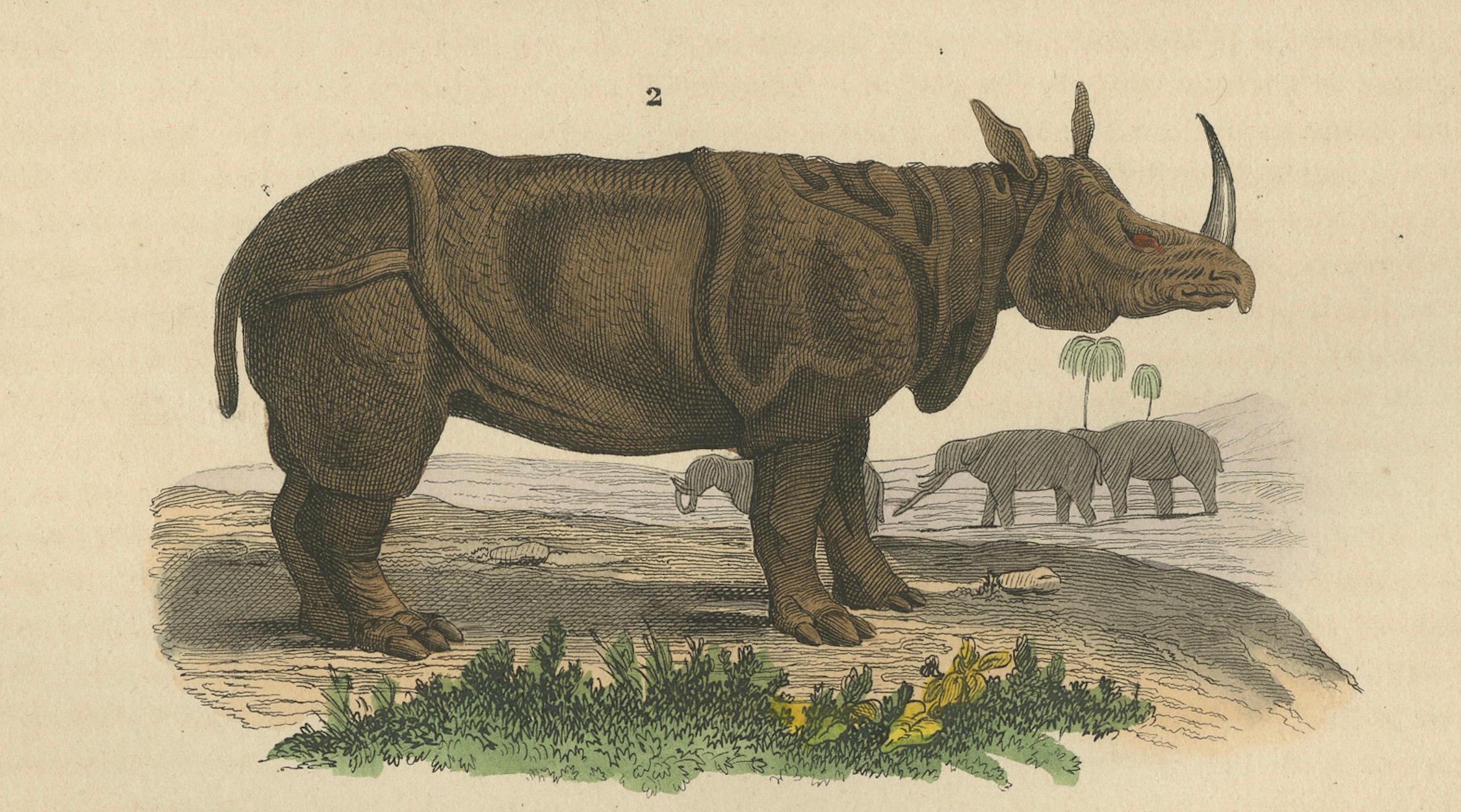
2. **Rhinoceros indicus** - Known as the Indian rhinoceros. The animal is depicted with a single black horn on its snout and thick, folded skin that looks like armor plating, which is characteristic of this species. It's shown in profile, giving a clear view of its body shape and size.
3. **Tapirus indicus** - This is the Malayan tapir, identifiable by its distinctive coloration with a black front and back and a white or light-colored 'saddle' that extends from its shoulders to the rear. The tapir has a short, prehensile trunk, and the illustration captures this unique feature.
The print is detailed and colored in the 19th century when such illustrations were common in scientific works. The animals are depicted in their natural habitats or settings that resemble it, which adds educational value to the illustration. The precise lines and the careful coloring suggest that the print was made with the intent to accurately educate about these species. They were part of a larger collection of animal illustrations used for academic or encyclopedic purposes.
It is an illustration from the 'Dictionnaire Classique des Sciences Naturelles' by Pierre Auguste Joseph Drapiez, which was published in 1845. This work is part of the tradition of 19th-century natural history publications that aimed to document and describe the natural world in detail. The illustrations in such works were both scientifically informative and artistically rendered, often by skilled artists who specialized in natural history subjects.
Each animal in the illustration is drawn with attention to anatomical detail and is placed within a naturalistic setting, which reflects the scientific and educational intentions of the work. The labels provide the scientific Latin name, which was and still is the universal language of taxonomy, as well as the common French name, indicating the animal's common identification in the region where the book was published.
This particular print would have served as an important reference for scholars, naturalists, and enthusiasts of natural history in the mid-19th century, offering a visual complement to the written descriptions found within the text of the 'Dictionnaire'. The fact that these illustrations are still appreciated today speaks to their quality and the enduring interest in the natural world.