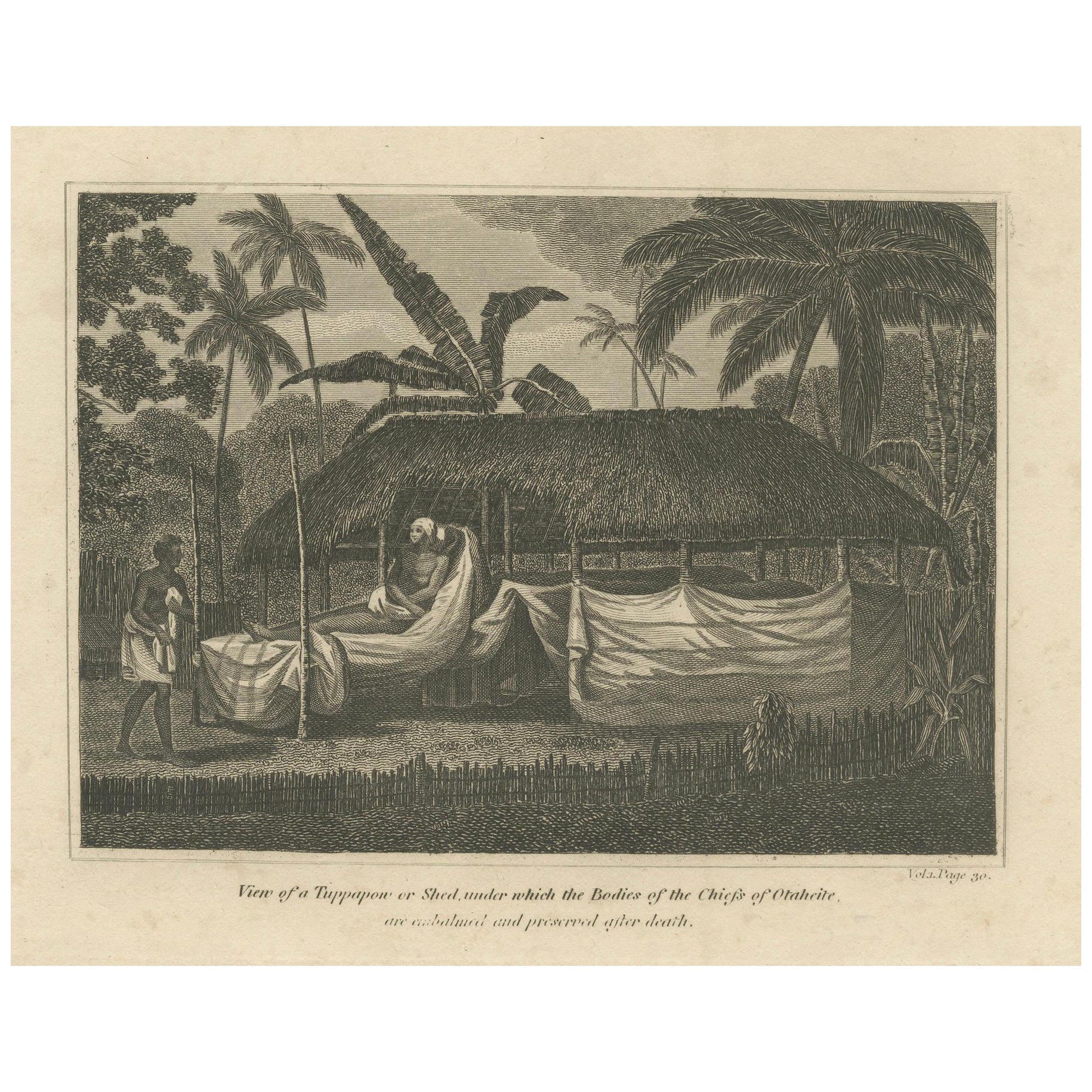
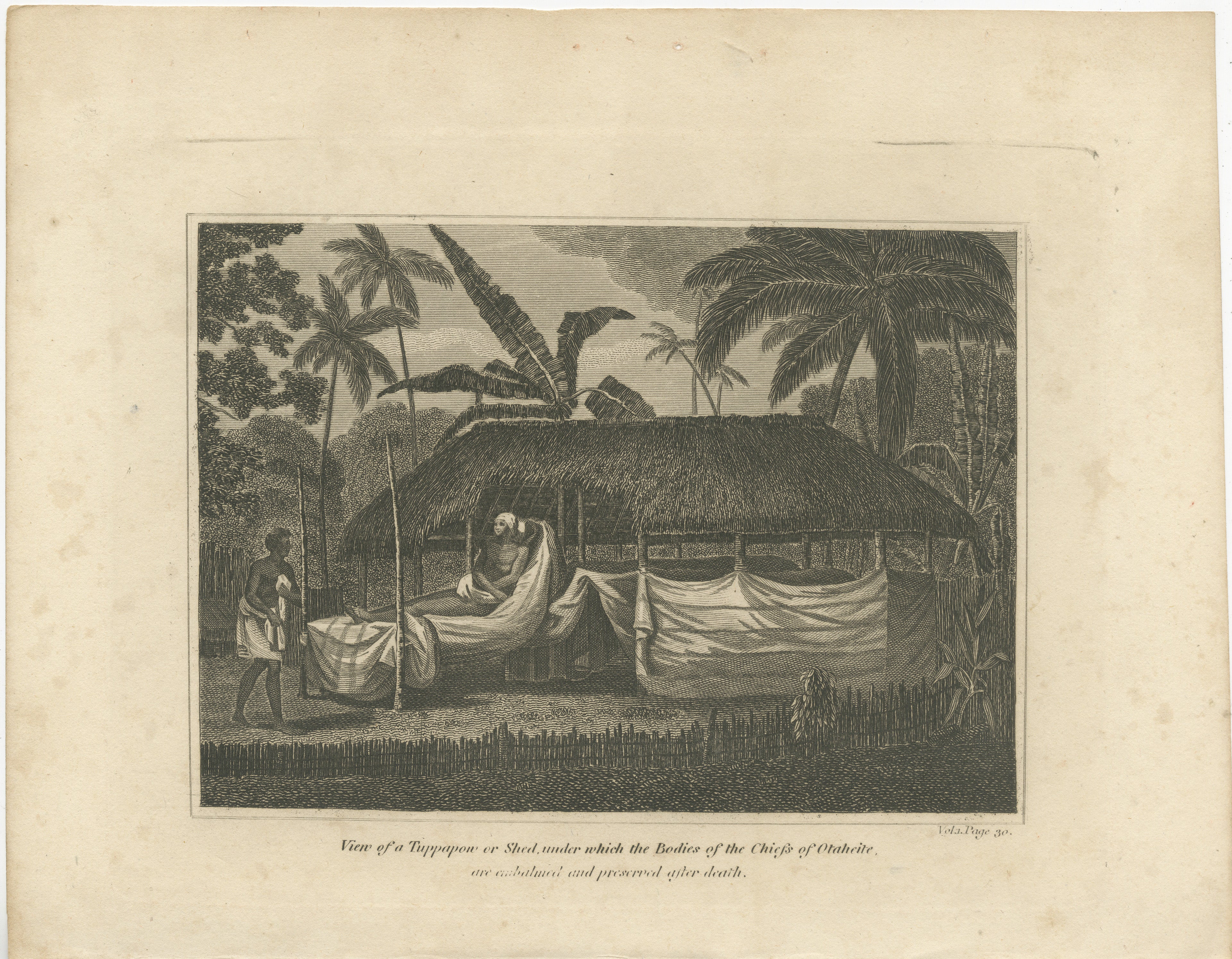
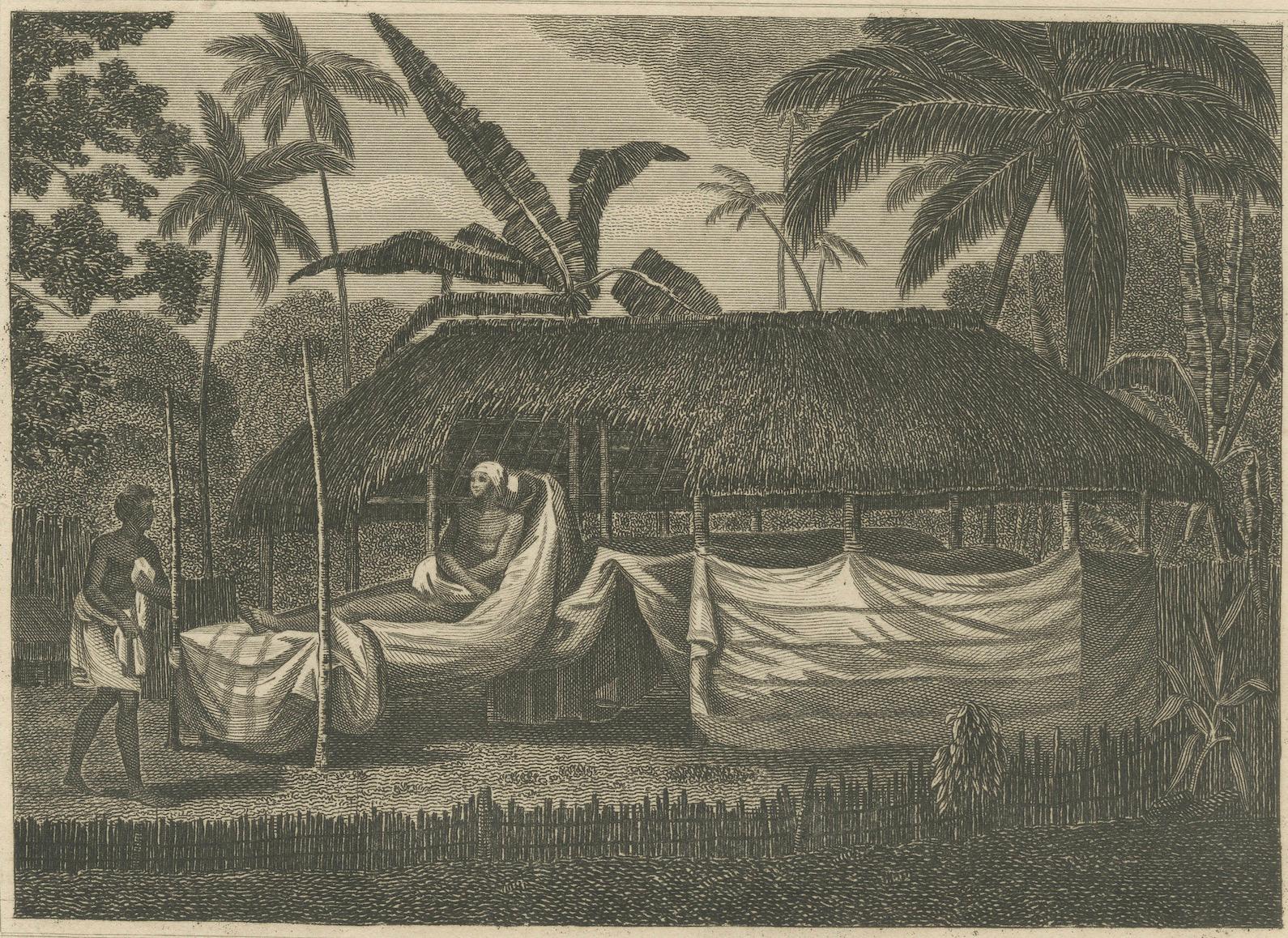
Tee's Eternal Rest: The Embalmed Chief of Otaheite or Tahiti, circa 1800
€ 220
One of a kind: this is the sheet in the photographs. Ships from Langweer, the Netherlands.
Date
1800
Sheet size
21 × 27 cm (8.3 × 10.6 in)
Condition
Good
Reference
BG-13597-57
Condition
Good. Overal light foxing and some soiling and offset. Image itself undisturbed and sharply detailed. Aged paper with typically warm, yellowish-brown hue, mostly around the edges. Please study the images carefully.
About this sheet
This engraving, after a drawing by John Webber, depicts the preserved body of Tee, a chief from Otaheite (Tahiti), following his death. The artwork originates from an account of Captain James Cook's third voyage and showcases the practice of preserving the dead in Tahitian culture. The scene takes place in Matavai Bay, a significant location during the era of exploration, already famed through earlier visits and the engravings of Sydney Parkinson and William Hodges.
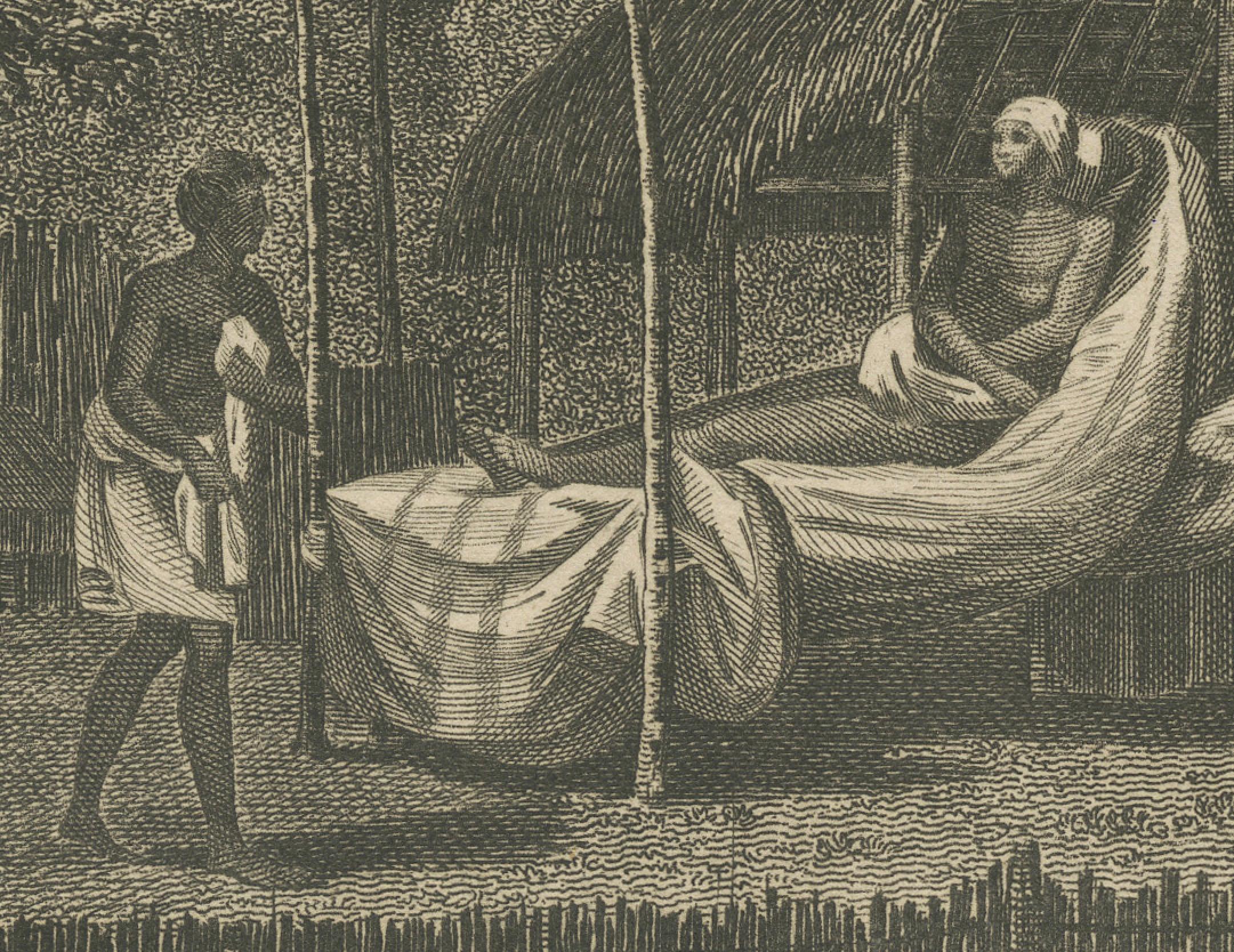
In the foreground, we see the tupapau, an elevated platform, which holds the body of Chief Tee. His body has been embalmed, a process that has successfully maintained its condition for over four months despite the humid climate of Tahiti. The engraving reflects the respect and honor accorded to the deceased chief, with his body carefully shrouded, echoing the practices of European art and recalling classical themes such as depicted in Nicolas Poussin's "The Death of Germanicus."
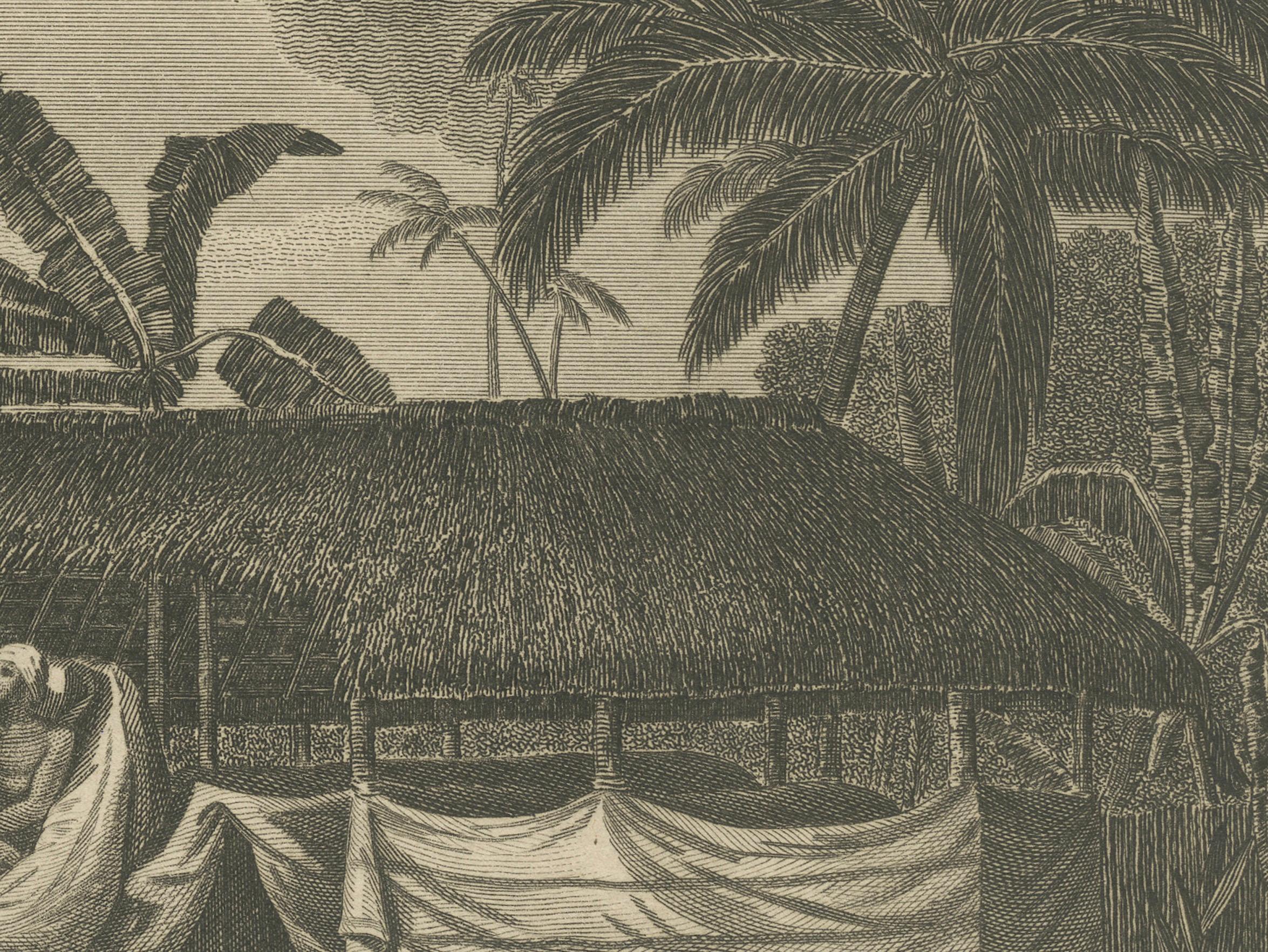
The image captures a tranquil and solemn moment within a lush tropical landscape, characterized by the thatched structures of the Tahitian people and the rich vegetation of palm trees. An attendant figure is seen by the side of the platform, reinforcing the sense of ongoing care and respect for the departed. John Webber's work, while documenting the cultural practices of the Pacific peoples encountered by Cook, is also steeped in the artistic conventions of his European heritage.