Suriname Indigenous People & Tribal Objects - Ethnographic Lithographs 1888
€ 440
Original antique · The actual sheet photographed · Certificate of authenticity on request · Sold unframed · Worldwide shipping from € 15 (rates)
Date
1888
Sheet size
28 × 19 cm (11.0 × 7.5 in)
Condition
Good
Reference
BG-14171-10, -11, 12
What the condition grades mean
Excellent
Bright and clean, with no faults worth mentioning.
Very good
Only light signs of age, such as faint toning.
Good
Normal signs of age for a sheet of this period: toning, some foxing, small marks or neat old repairs.
Fair
Clear faults such as staining, tears or repairs, priced to match.
Every fault we see is written in the condition note, and the whole sheet is shown uncropped in the photos.
Condition
All three original lithographs are in very good antique condition. Even overall age toning consistent with late 19th-century paper. Minor scattered foxing, mainly confined to the outer margins. Images remain clean and well preserved.
About this sheet
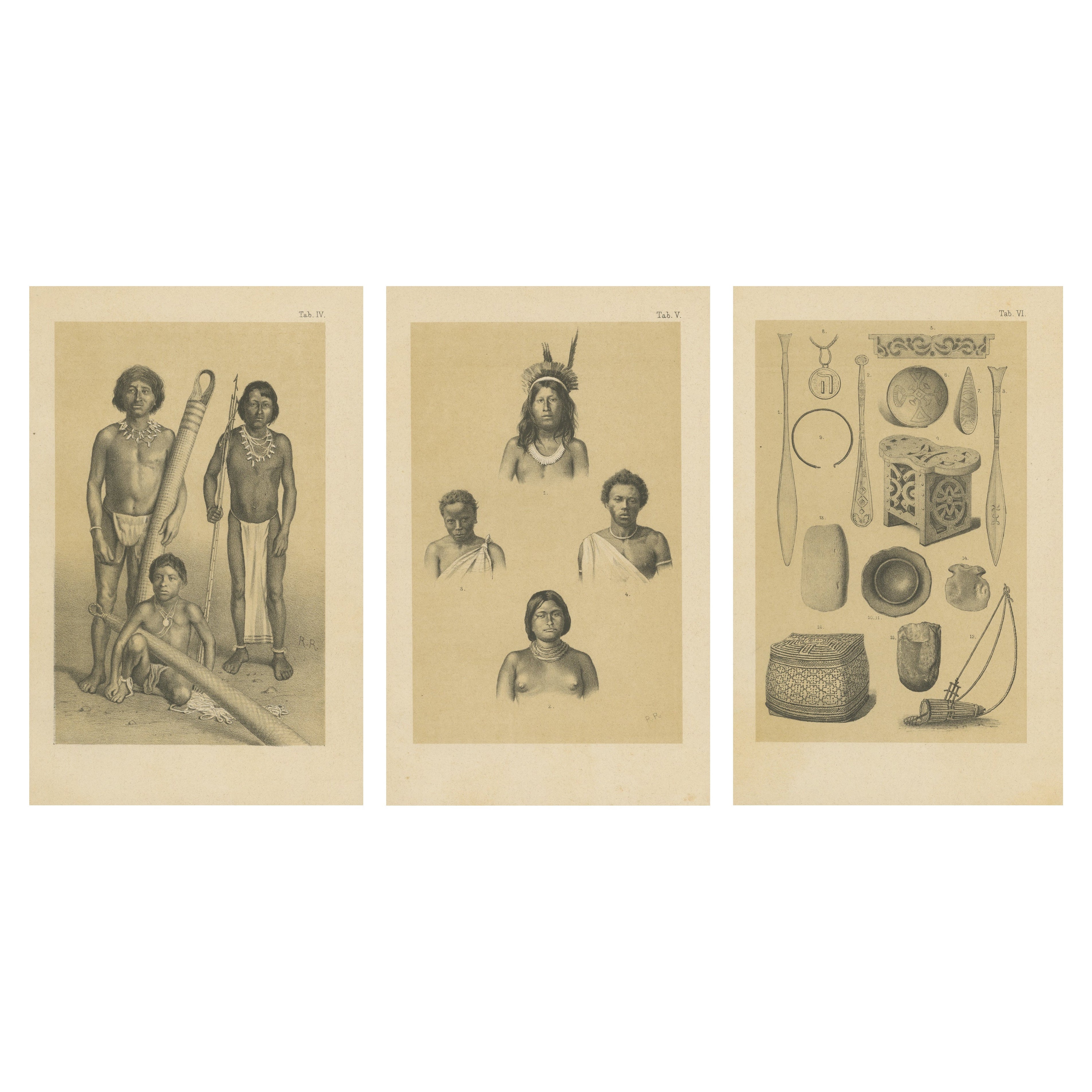
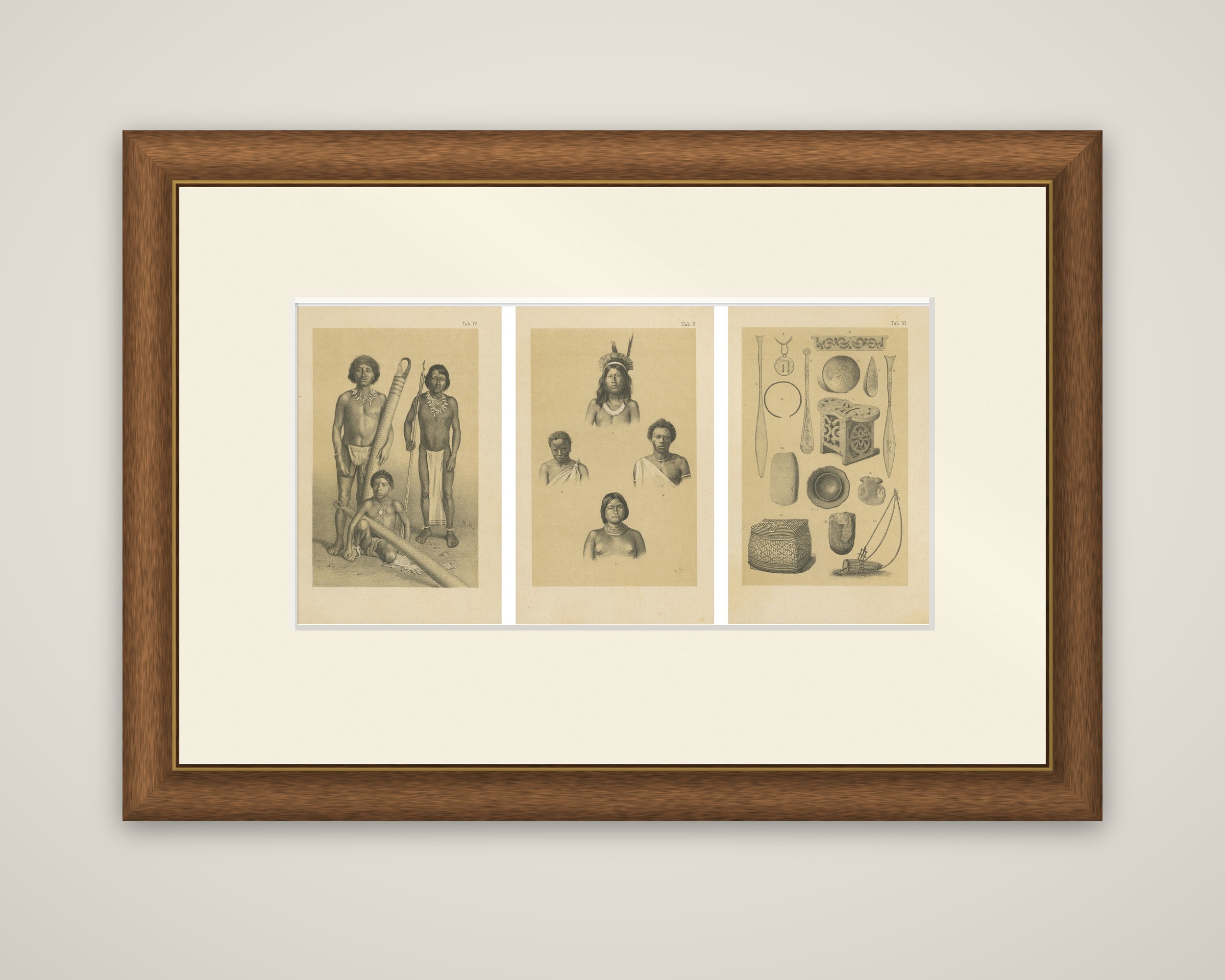
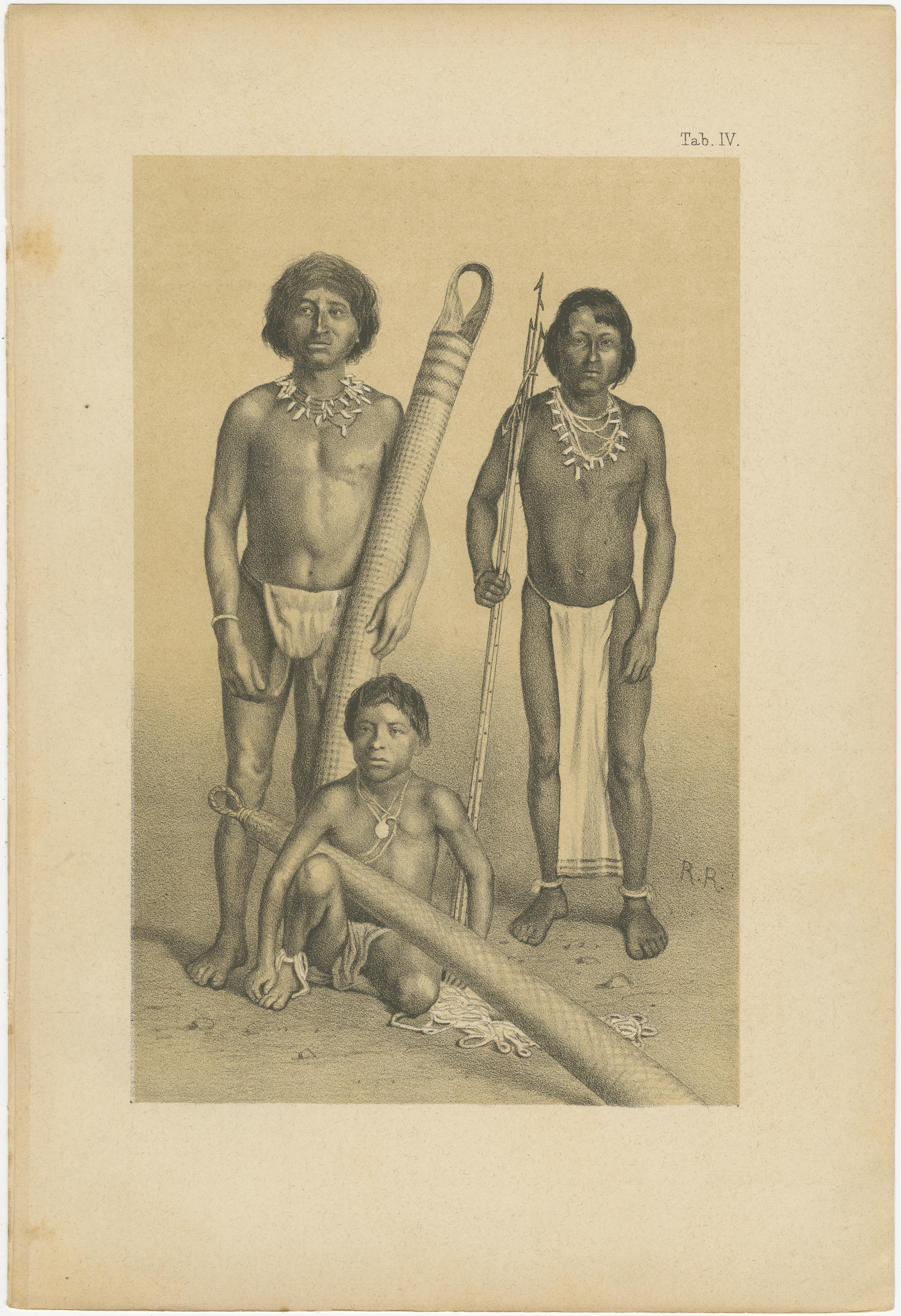
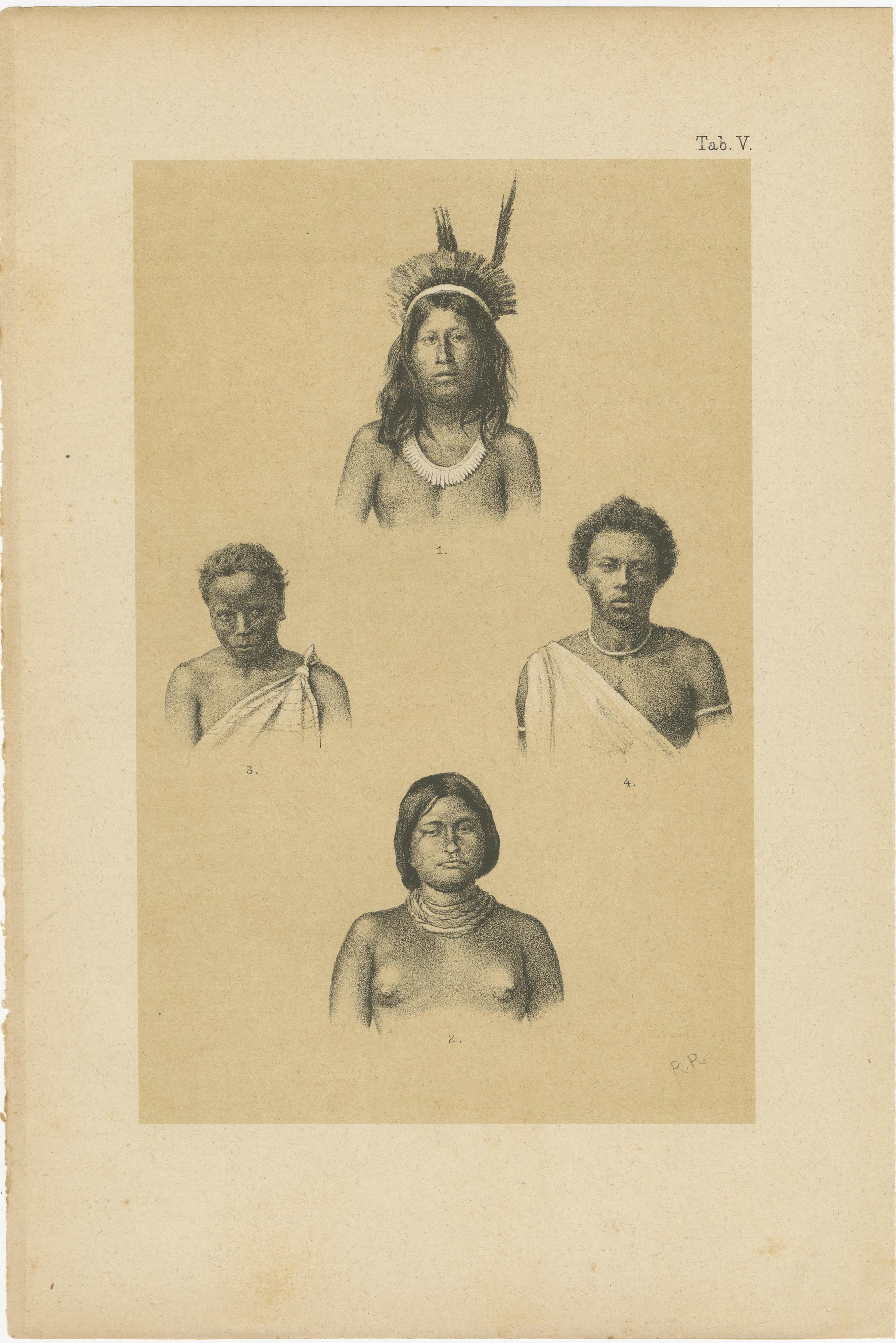
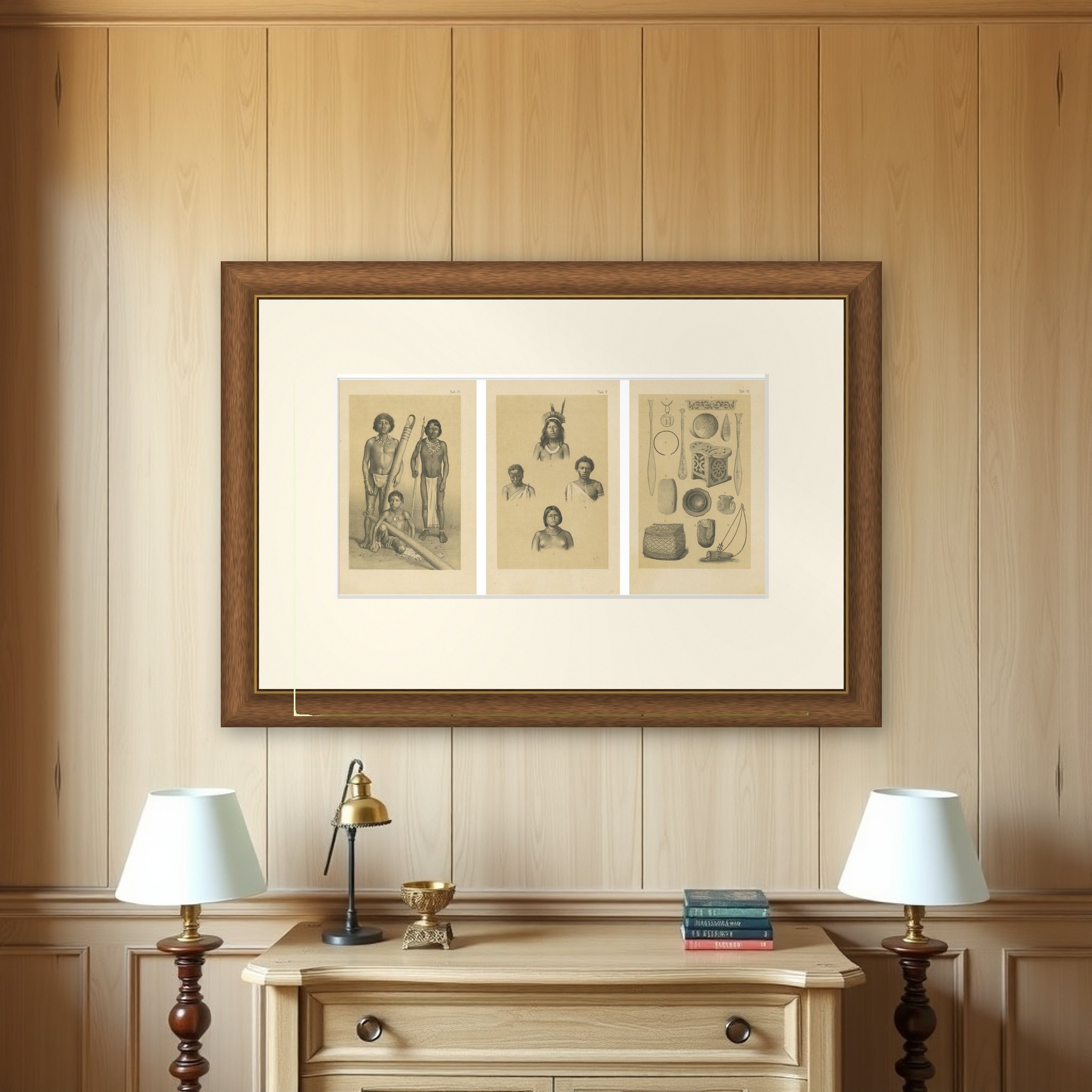
Indians and material culture of Suriname, a set of three original lithographs from Karl Martin's Bericht uber eine Reise nach Niederlandisch West-Indien, published at Leiden by E. J. Brill in 1888. The plates are lettered "Tab. IV", "Tab. V" and "Tab. VI" at the upper right and are printed in gray on a warm buff tint.
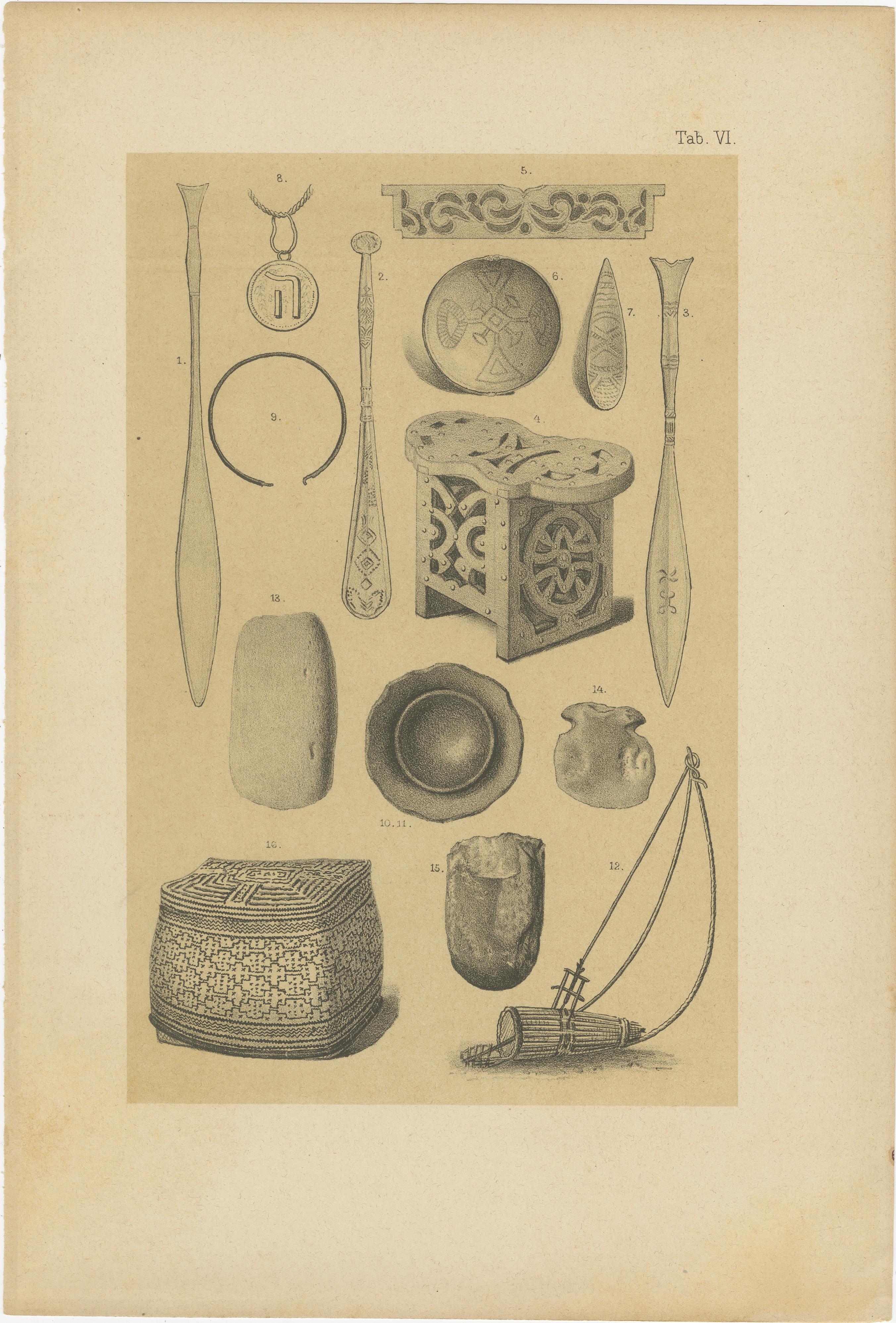
Tab. IV shows three people from the interior at full length: two standing men in loincloths and bead necklaces, one holding a long spear, and a seated boy in front of them, with a long banded cylinder lying across the foreground. Tab. V gives four head-and-shoulder portraits of individuals, with feathered headgear on the figure at the top and beaded necklaces on the others, arranged around the sheet. Tab. VI is an inventory of numbered objects: long carved paddles, a decorated stool, bowls and a small pot, a woven basket with a lid, a stone axe head, ornaments and a stringed instrument with a bow.
Martin was a professor of geology at Leiden, and his report on the Dutch West Indies covered the people and the objects he met on his journey as well as the rocks. The old description of the set speculates about which peoples are shown; the plates themselves carry no such identification.