Rare 1849 Handcolored Engraving of African & Charrúa (Uruguay) Men
€ 440
Original antique · The actual sheet photographed · Certificate of authenticity on request · Sold unframed · Worldwide shipping from € 15 (rates)
Date
1849
Sheet size
26.6 × 18.5 cm (10.5 × 7.3 in)
Reference
BG-13806-98
What the condition grades mean
Excellent
Bright and clean, with no faults worth mentioning.
Very good
Only light signs of age, such as faint toning.
Good
Normal signs of age for a sheet of this period: toning, some foxing, small marks or neat old repairs.
Fair
Clear faults such as staining, tears or repairs, priced to match.
Every fault we see is written in the condition note, and the whole sheet is shown uncropped in the photos.
Condition
This engraving is in excellent condition for its age, with vivid hand coloring and crisp detailing. There is minimal toning or foxing. The sheet is free from major defects, making it an exceptional collector's item.
About this sheet
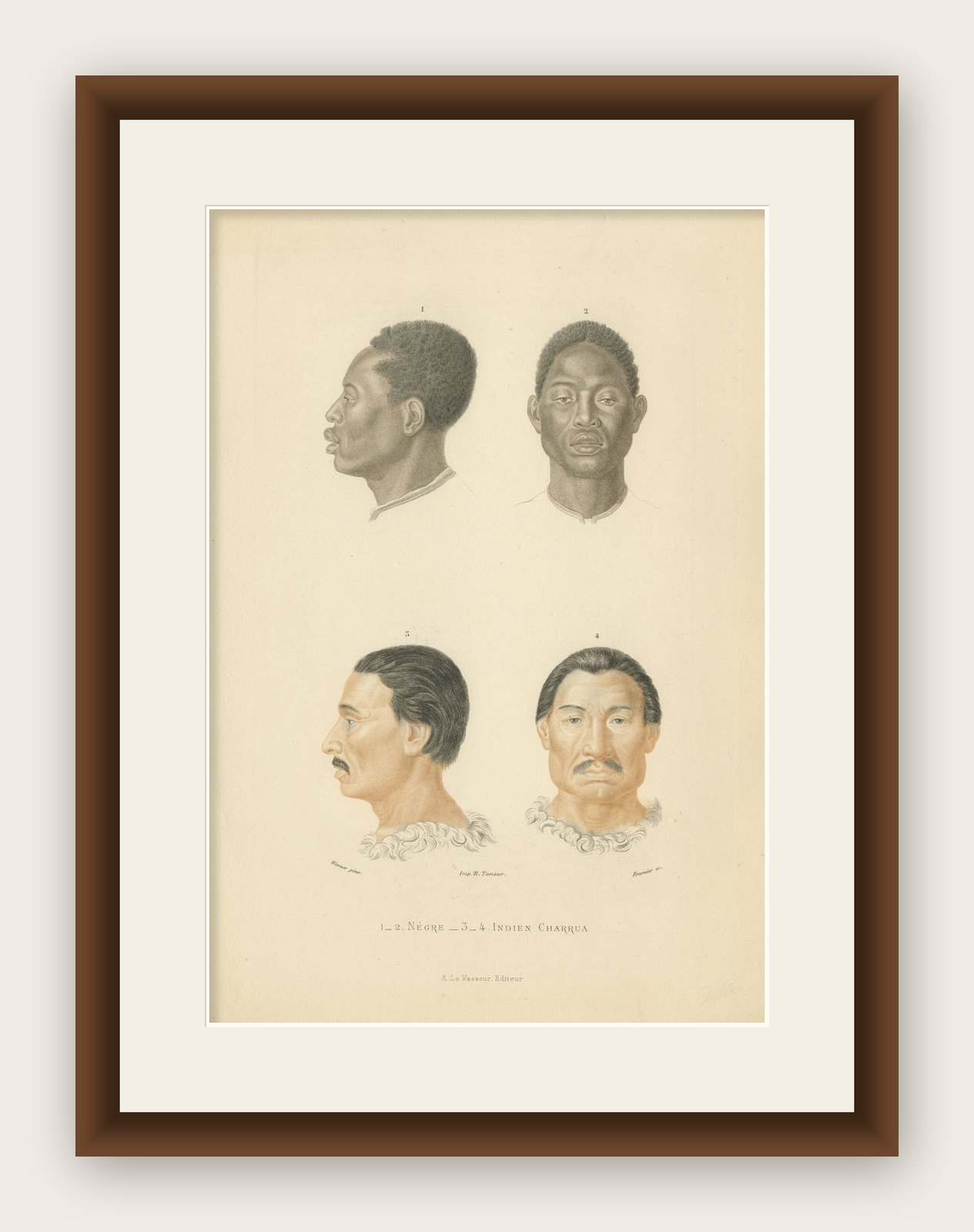
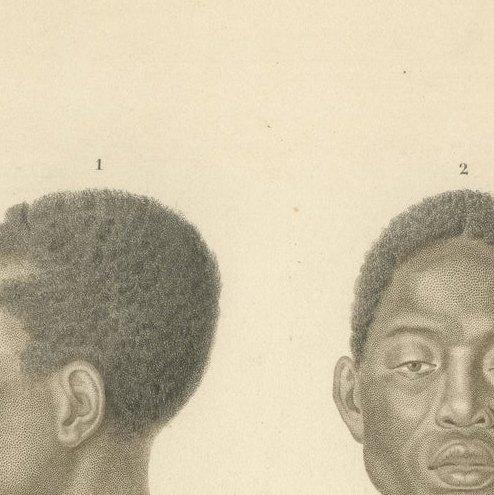
This rare and striking handcolored engraving, created by Fournier after an illustration by Werner, is a historically significant piece from Charles d'Orbigny's 'Dictionnaire Universel d'Histoire Naturelle' (Universal Dictionary of Natural History), published in Paris in 1849.
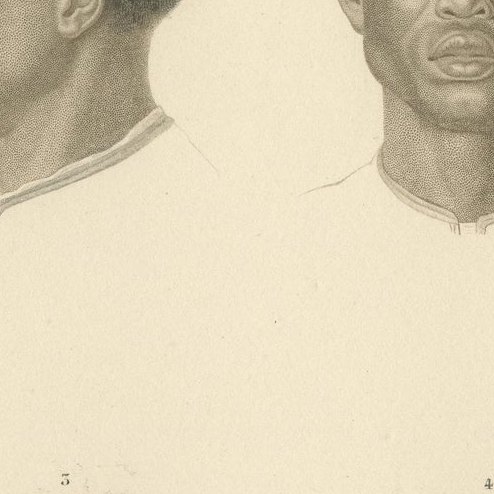
The work showcases meticulous portraits of two men: an African man in both profile and full-face views, and a Charrúa man from Uruguay, a representation of one of the last individuals of this now-extinct Indigenous group.
The Charrúa figure may depict Vaimaca-Piru Sira, one of the four Charrúa who were tragically exhibited in Paris in 1831 as living curiosities. These detailed portraits reflect the ethnographic focus of the 19th century, blending scientific documentation with artistic craftsmanship.
This piece is a valuable addition to collections focusing on 19th-century anthropology, natural history, or rare ethnographic prints. Its historical and cultural significance, combined with the exquisite artistry, ensures it will be a prized asset for any collector or academic institution.