About this sheet
Persian Punishments – 18th-Century Engraving of Judicial Practices, by J.C. Philips, 1754
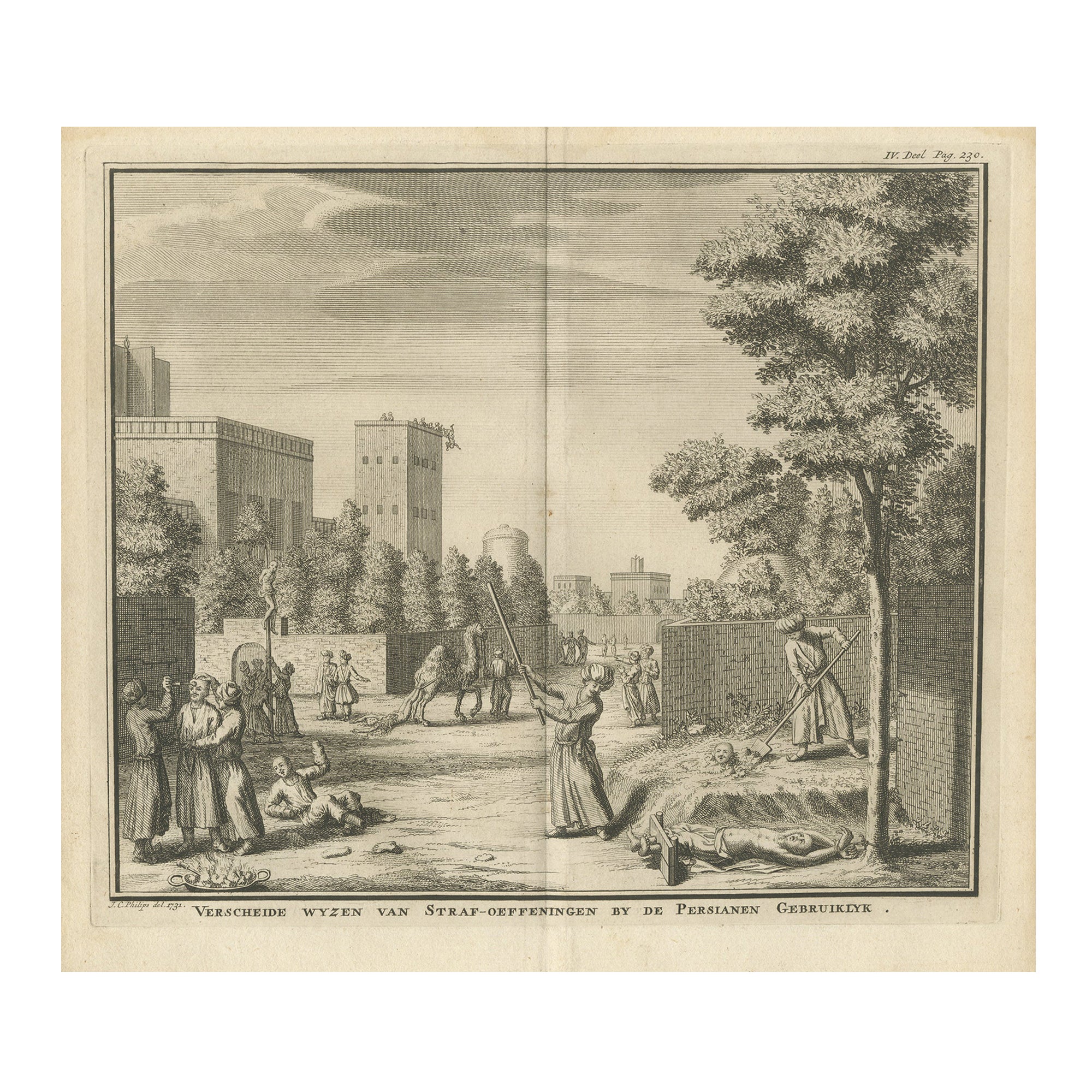
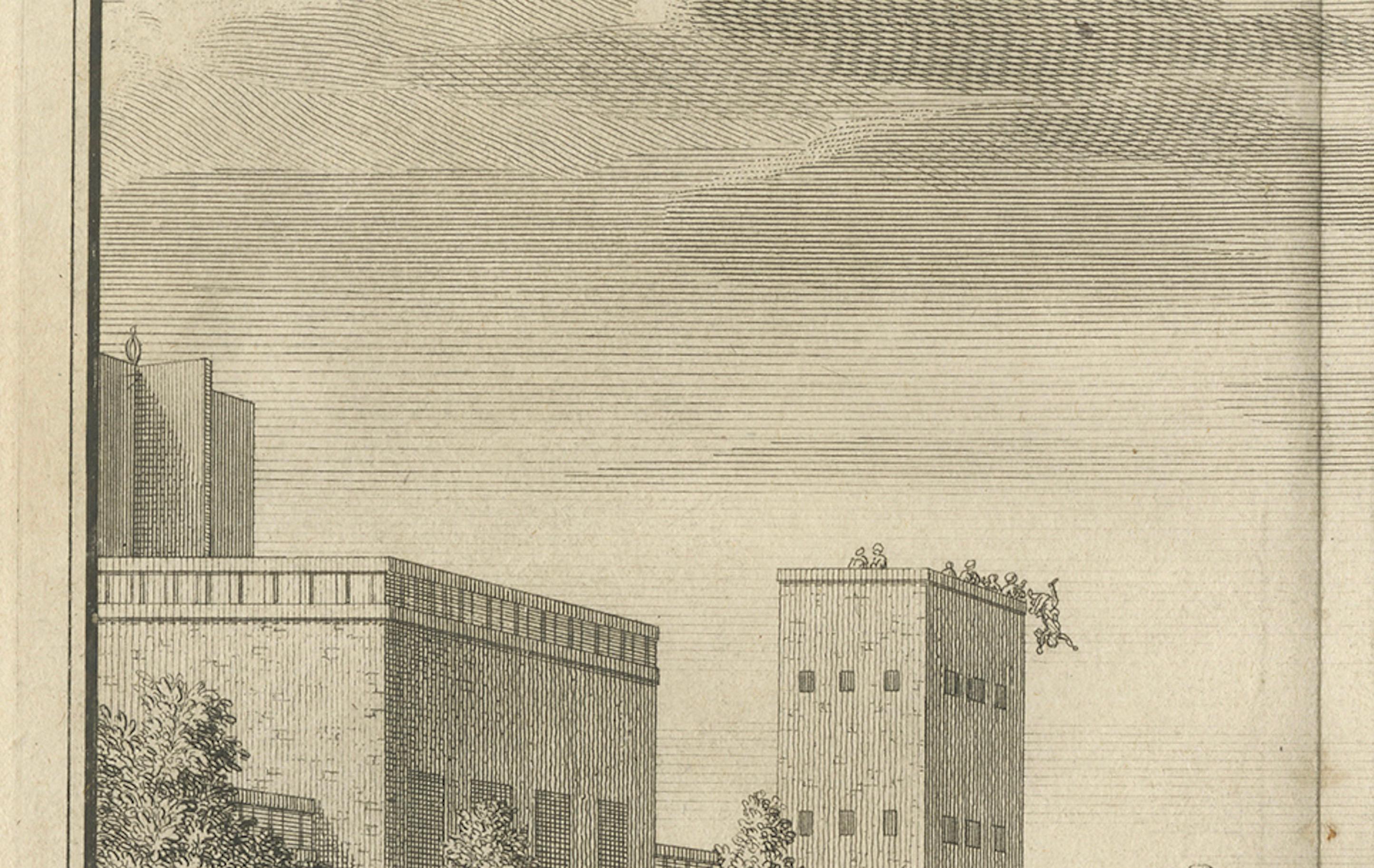
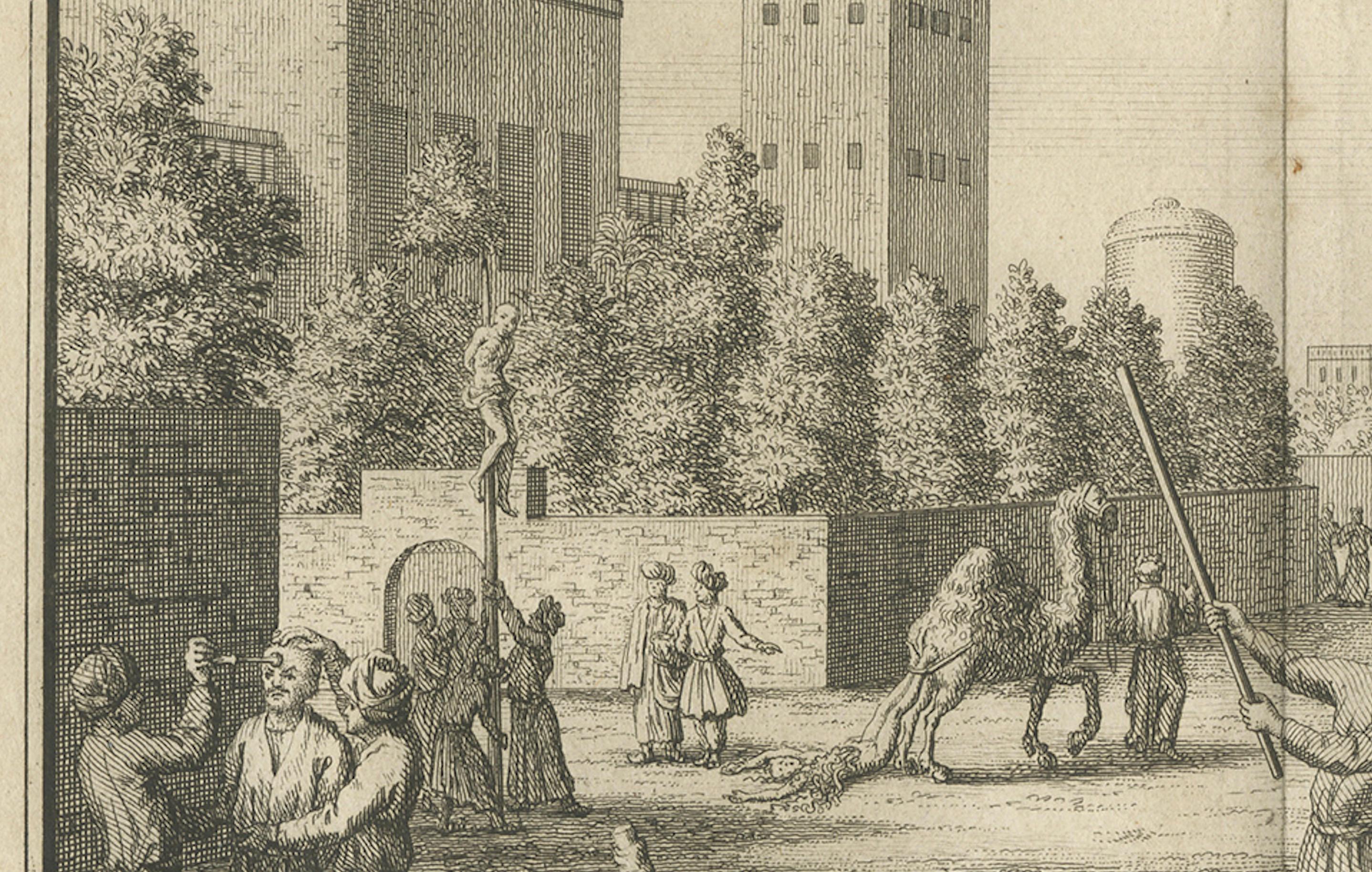
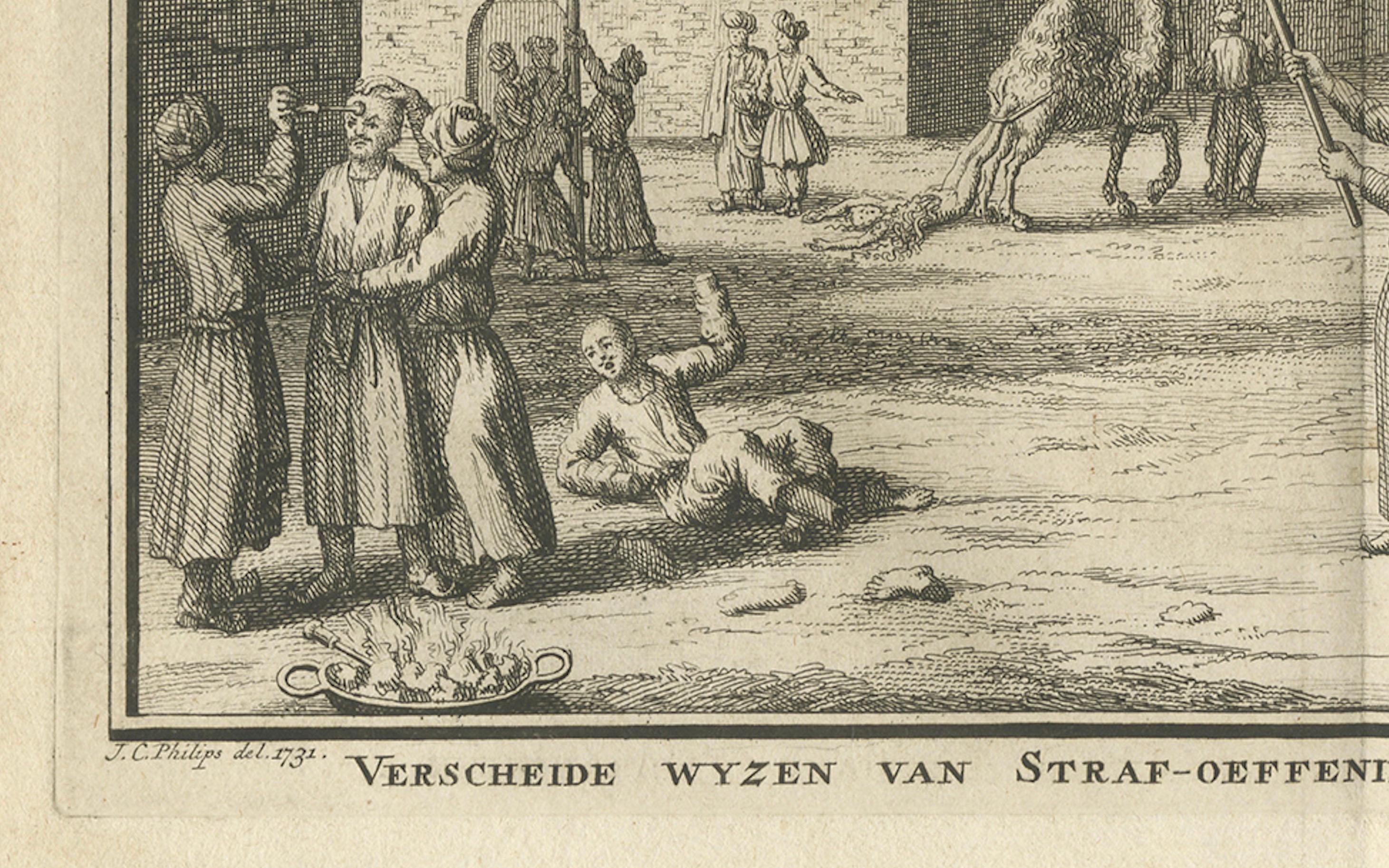
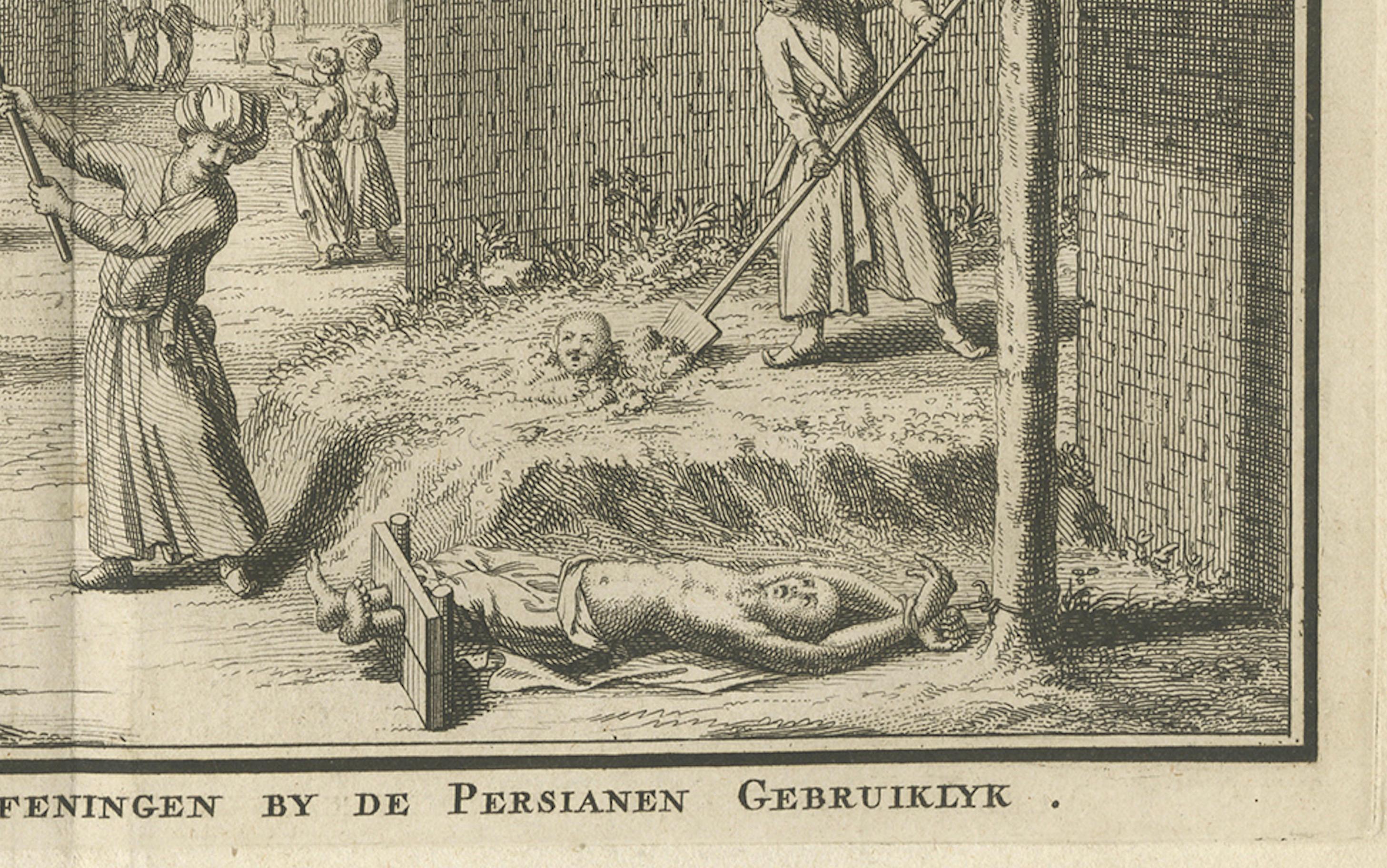
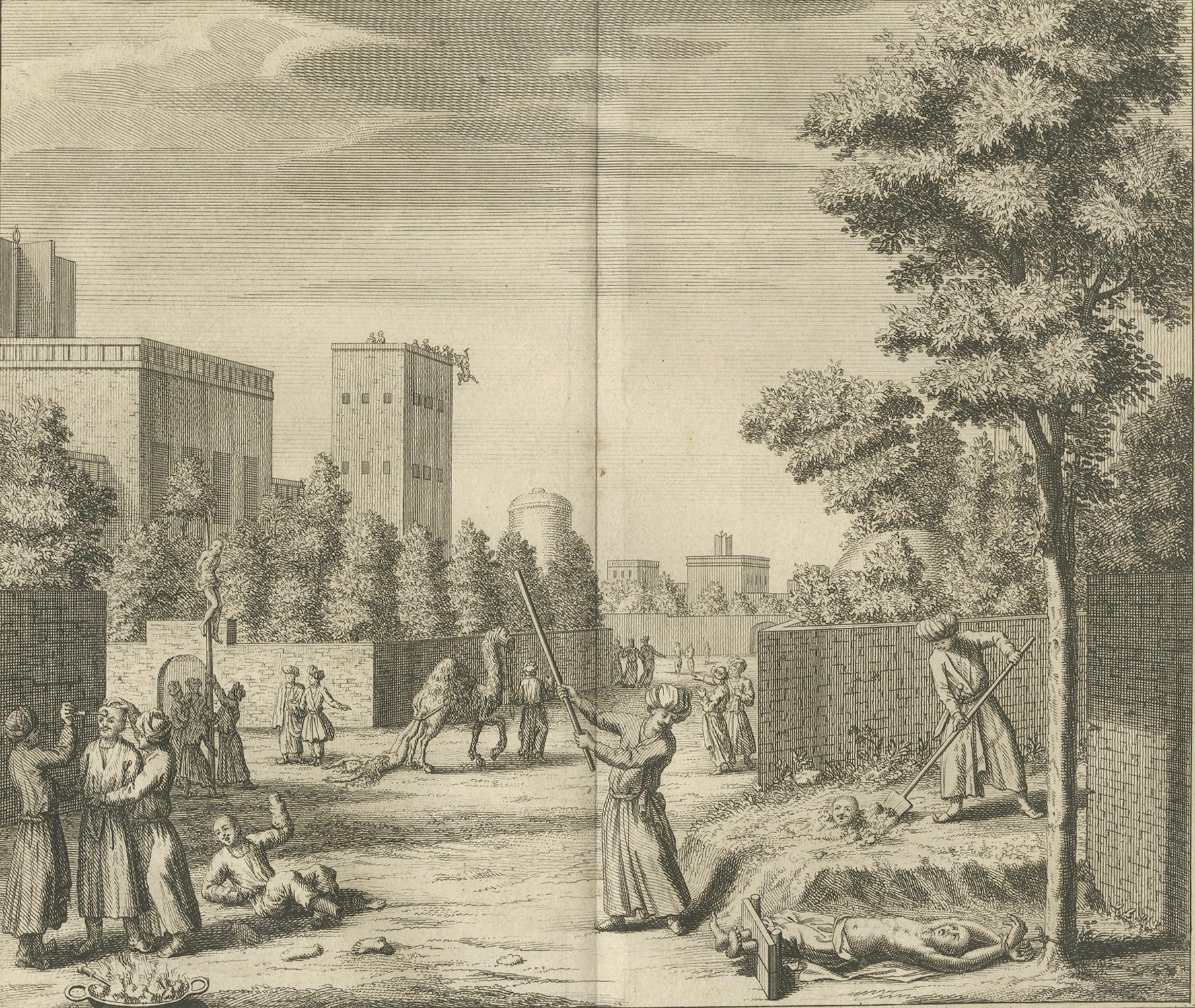
This dramatic and rare 18th-century engraving, titled Verscheide Wyzen van Straf-oeffeningen by de Persianen Gebruiklyk (“Various Types of Punishments Practiced by the Persians”), offers a vivid depiction of judicial and corporal punishments as observed or imagined in Safavid or early Qajar Persia. Created by the Dutch artist Jan Caspar Philips in 1754, this powerful image served as a visual supplement to contemporary ethnographic texts that aimed to illustrate the customs and governance of distant cultures to European audiences.
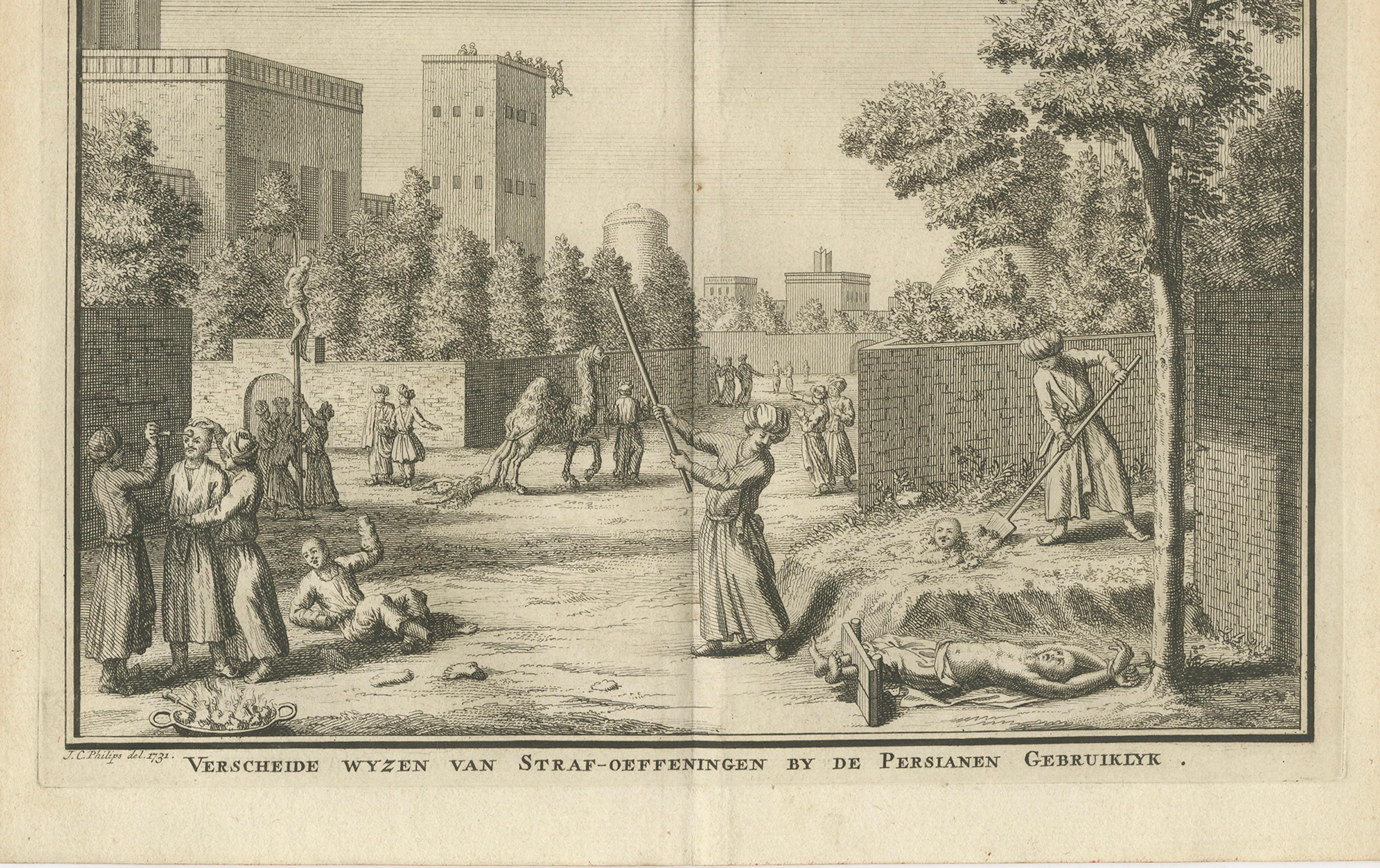
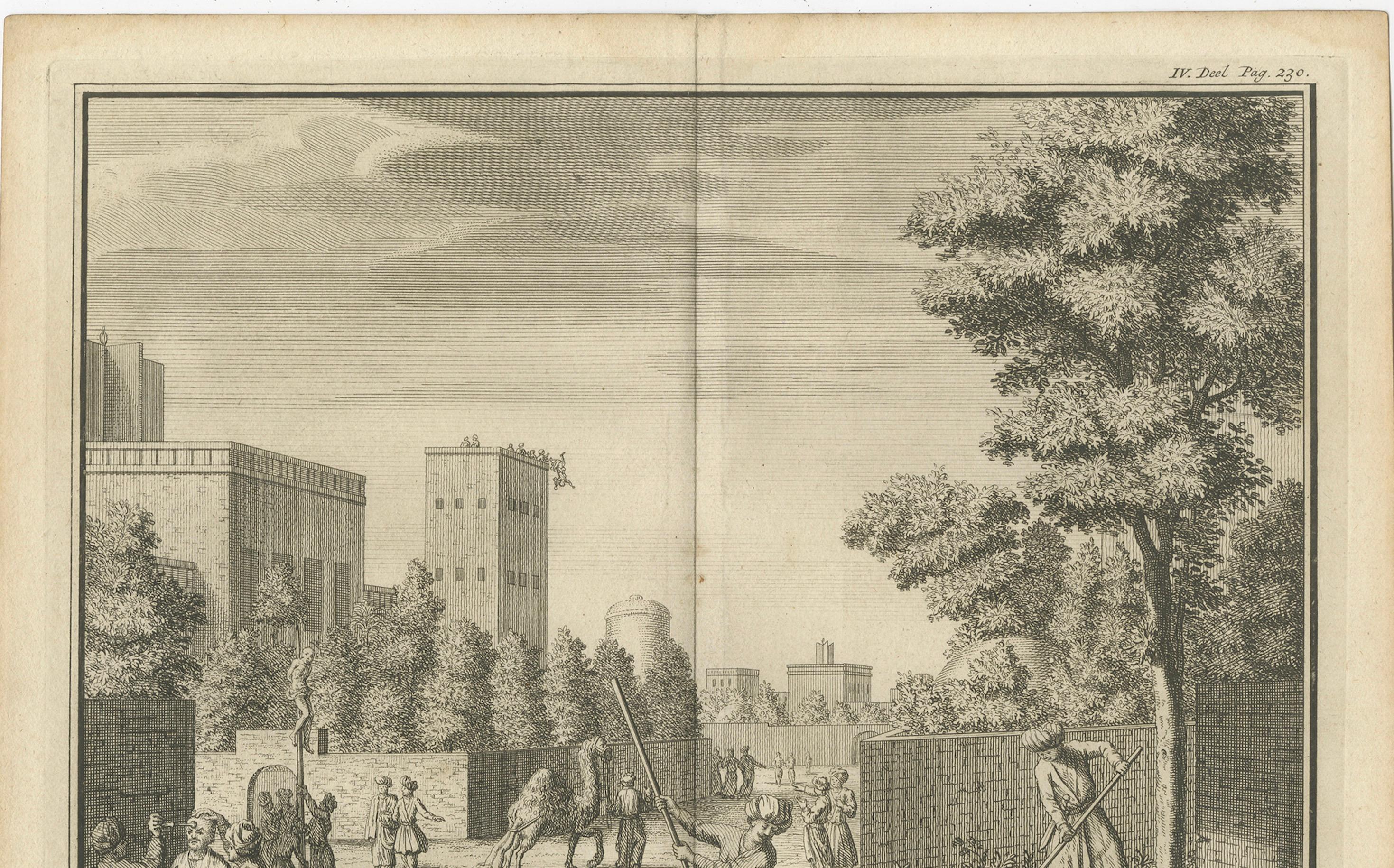
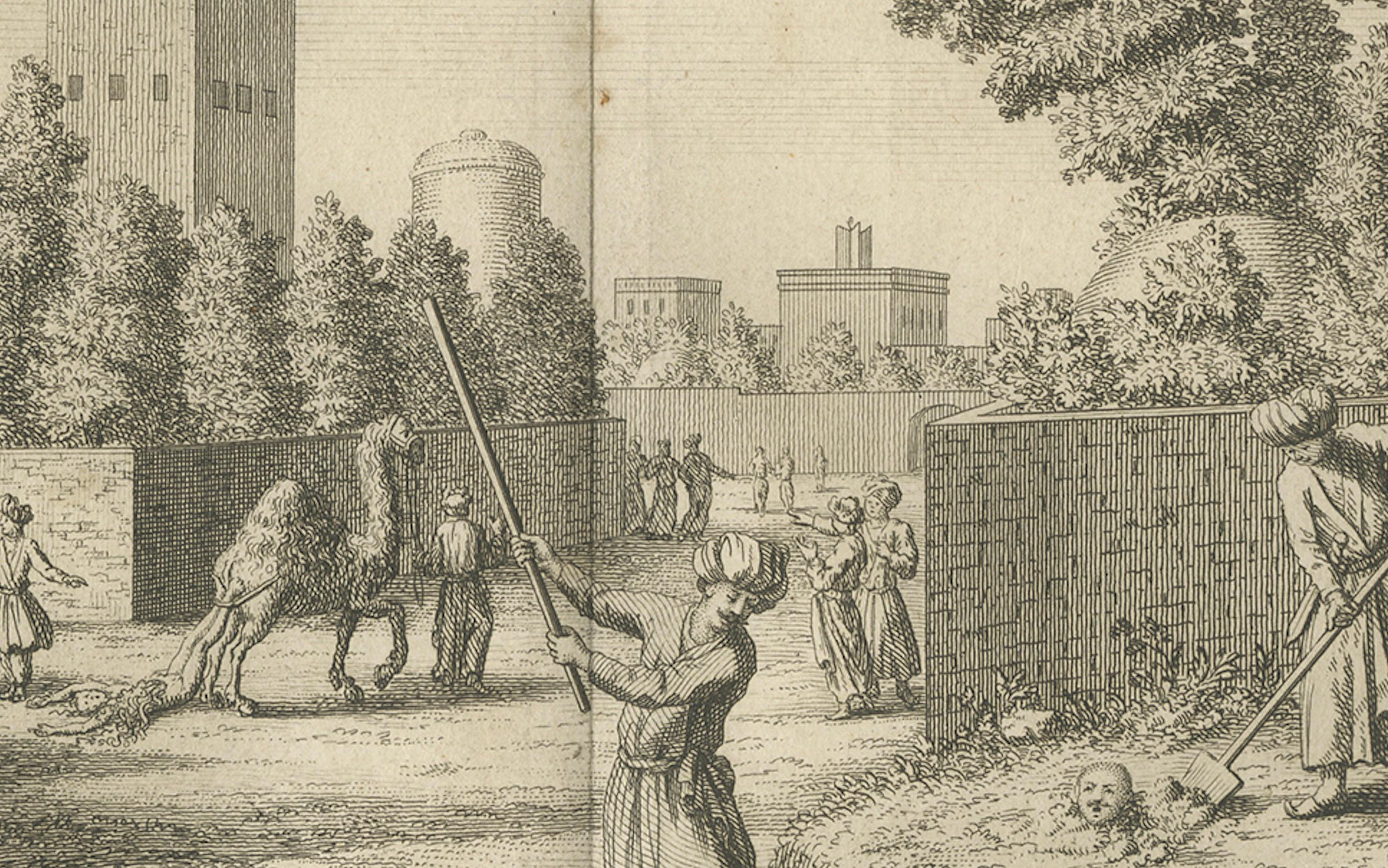
The print portrays multiple scenes of punishment occurring simultaneously across an enclosed city square. At left, men are shown branding or burning an offender’s foot with fire while others are restrained. Toward the center, a man is being buried up to his chest in the ground, suggesting a public shaming or impending execution. Nearby, another prisoner lies stretched and bound, possibly for flogging or torture. Other punishments include a person being whipped and what appears to be an execution or crucifixion scene in the background, watched over by a camel-mounted observer and urban towers behind.
Though presented with a theatrical, moralizing tone typical of 18th-century European depictions of “Oriental” justice, the engraving nonetheless provides valuable insight into how Persian legal and disciplinary traditions were interpreted, exaggerated, or misunderstood by Dutch illustrators working for travel compendiums and historical treatises.
The composition is carefully constructed to guide the viewer’s eye across each vignette of punishment, with trees and walled architecture providing spatial separation. This structured layout emphasizes both the spectacle and the orderliness of public justice.
Collectors interested in Orientalist themes, ethnographic studies, or early visual representations of judicial systems will find this engraving a compelling and provocative artifact.
Condition: Very good. Strong impression with good plate marks. Center fold as issued with some faint toning along the fold and upper margin. No significant tears or stains.
Framing tips: Best suited to a black or ebonized frame with a soft off-white or ivory mat to draw attention to the detailed linework without competing with the image’s tone.
Technique: Copper engraving
Maker: J.C. Philips, Amsterdam, 1754