About this sheet
Moorish Ornament – Arabesques & Calligraphic Panels, Plate XXX
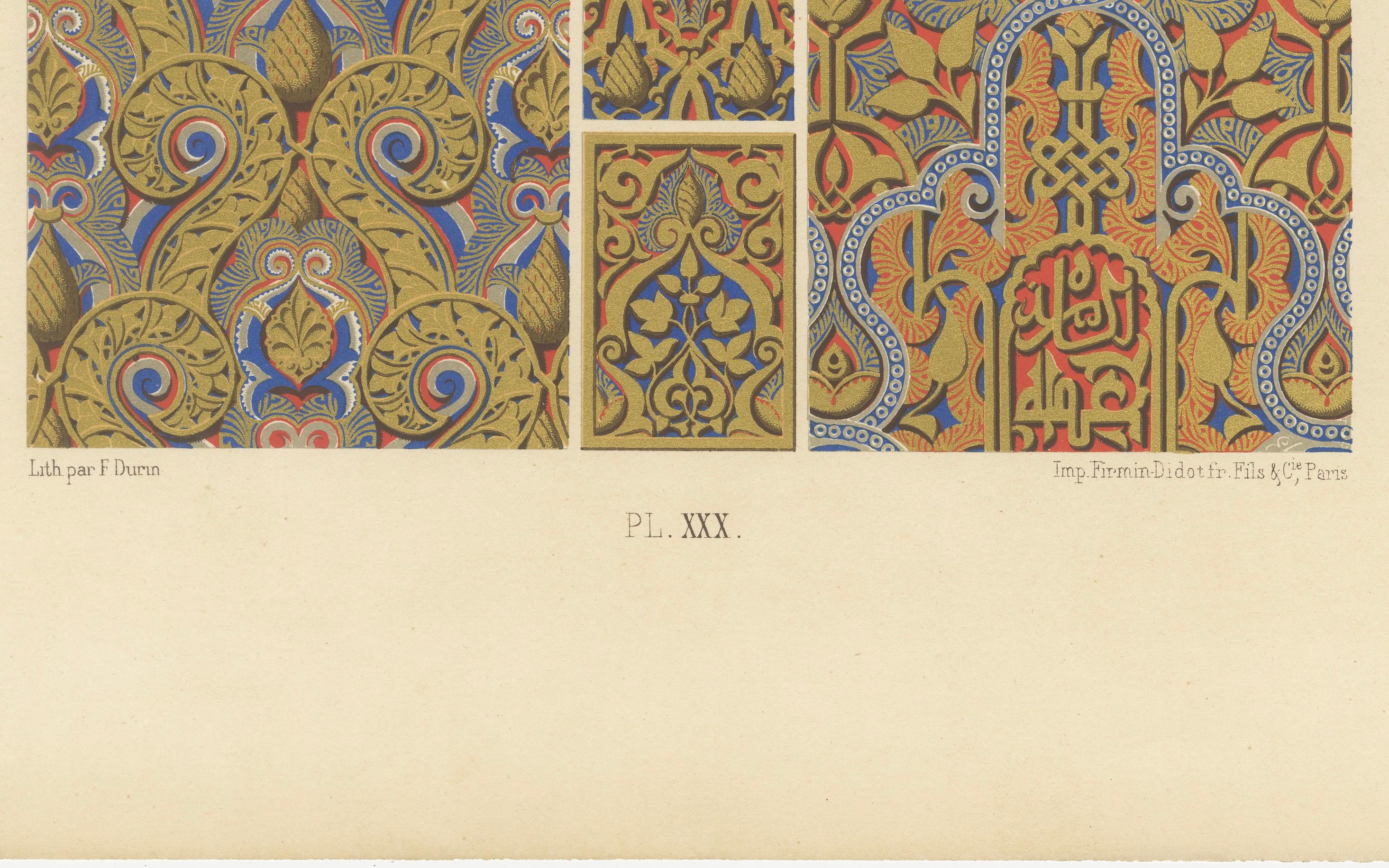
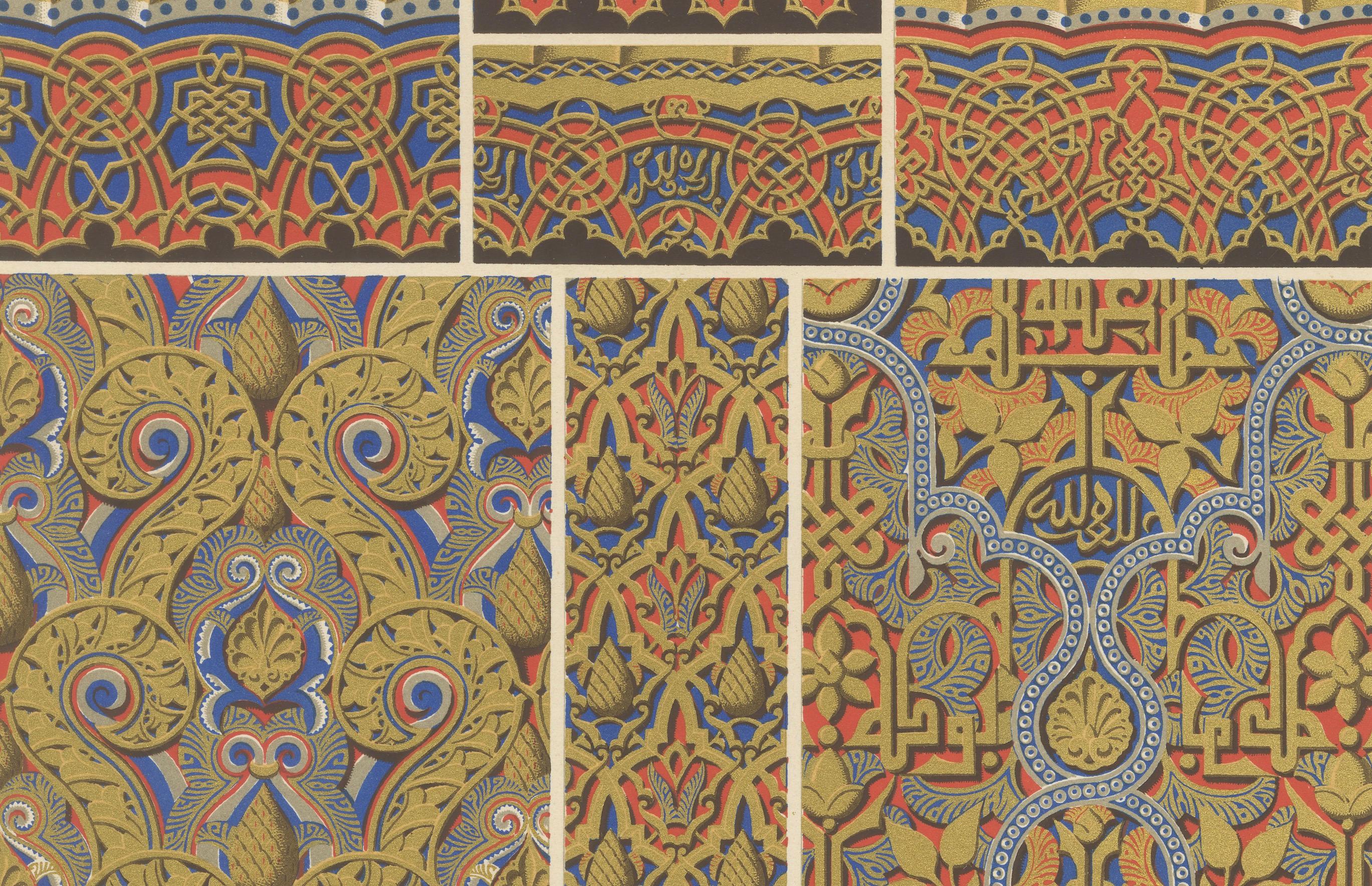
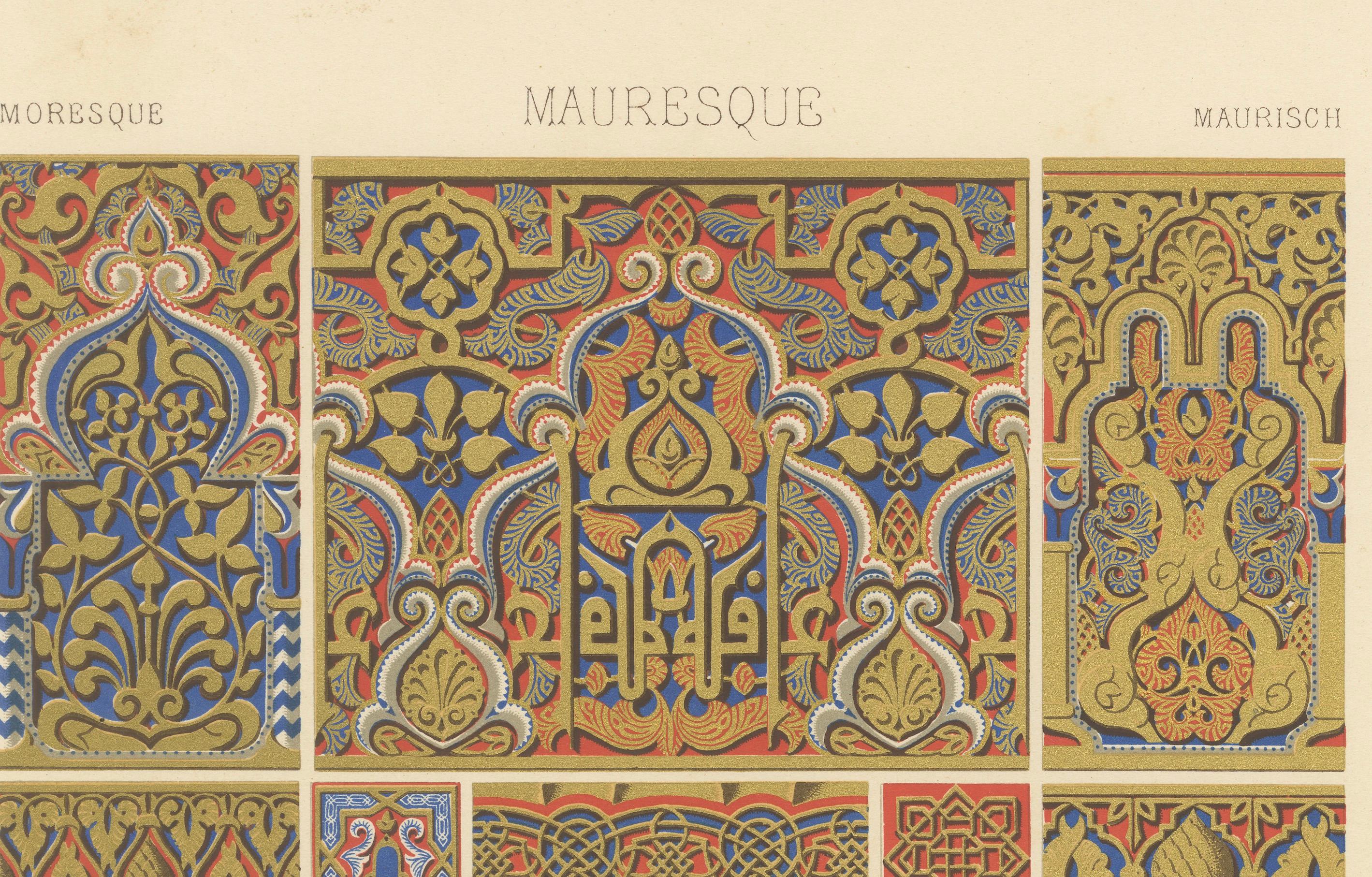
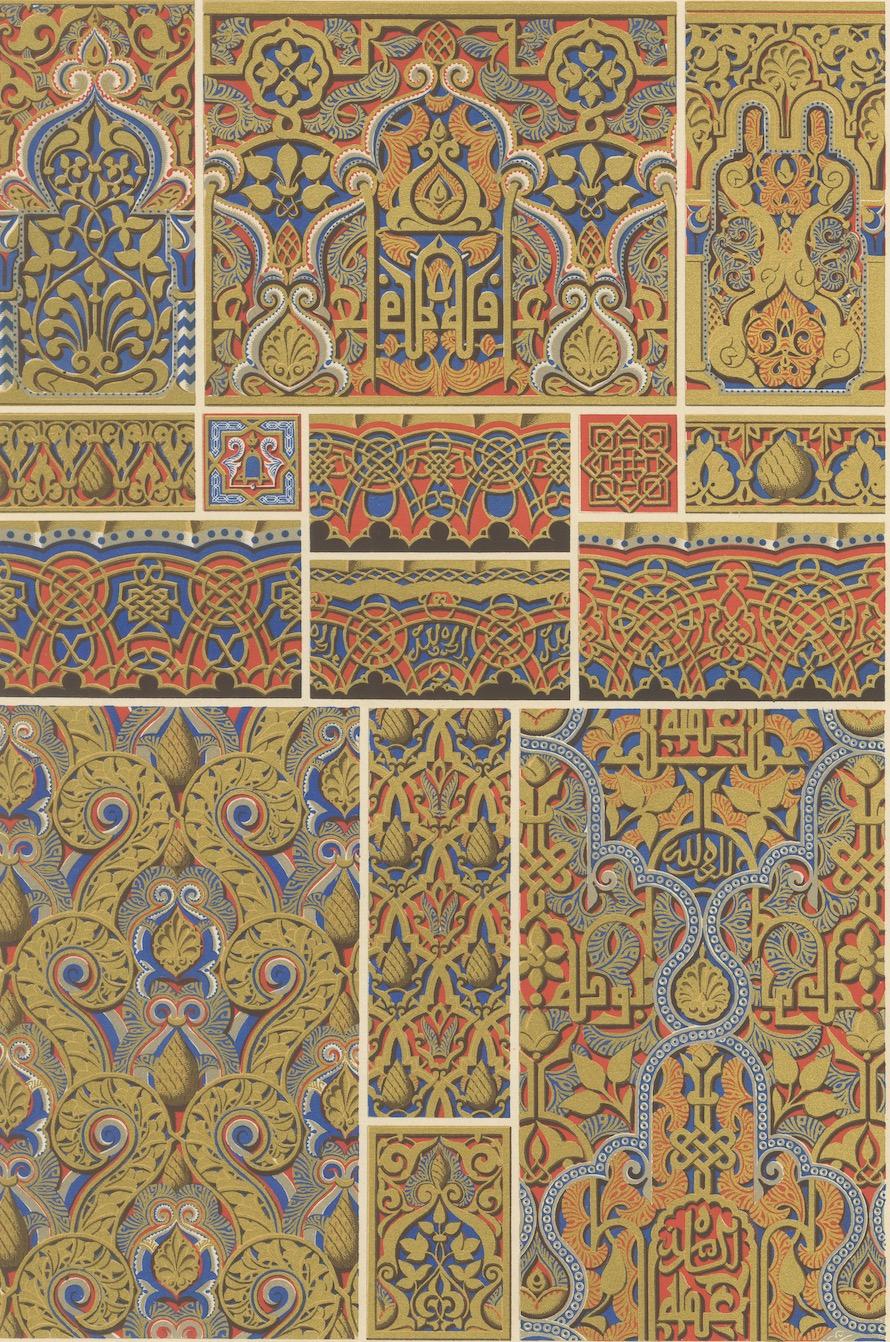
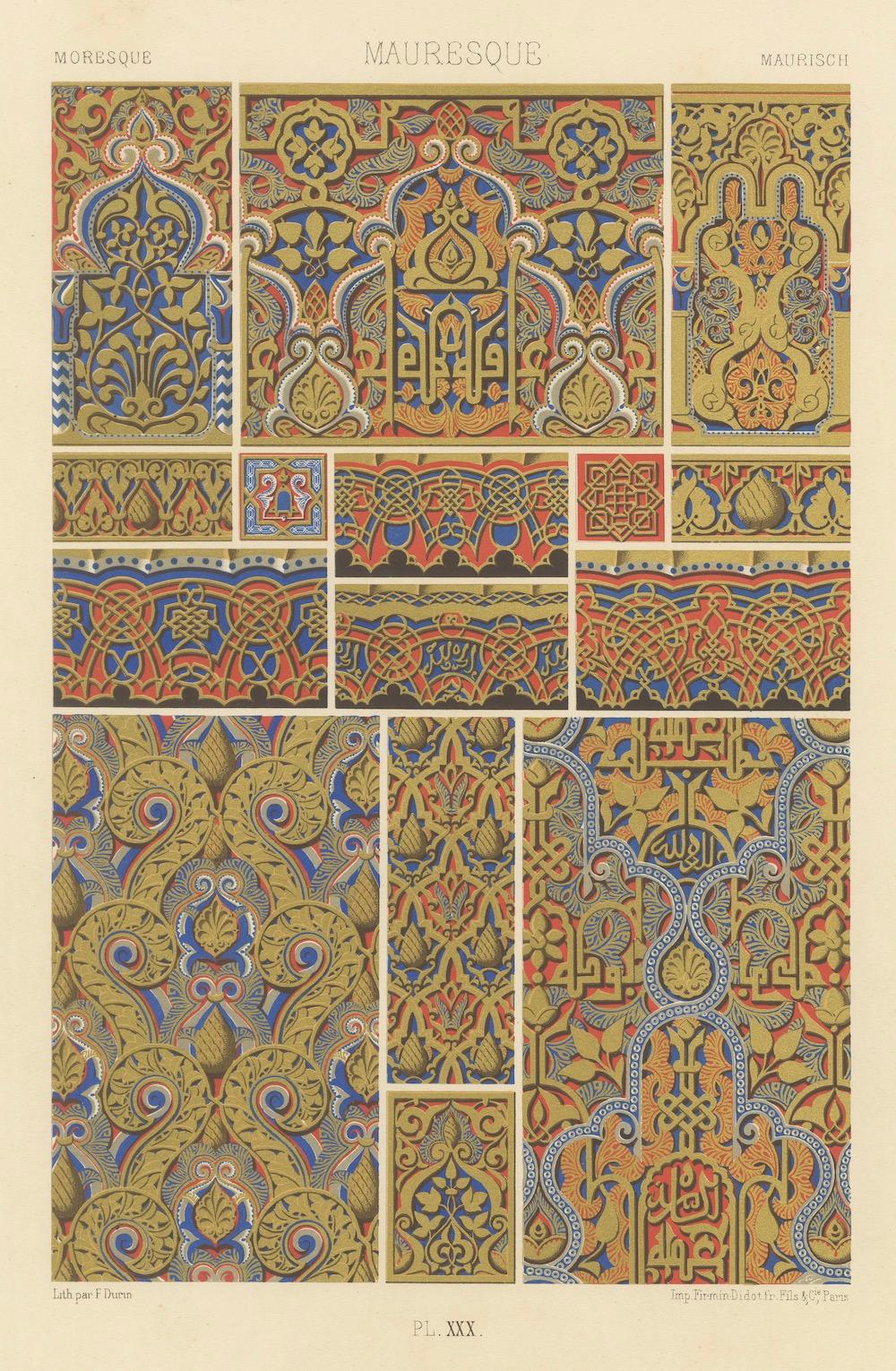
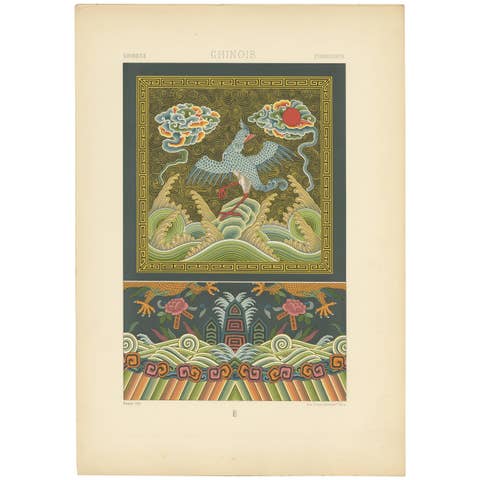
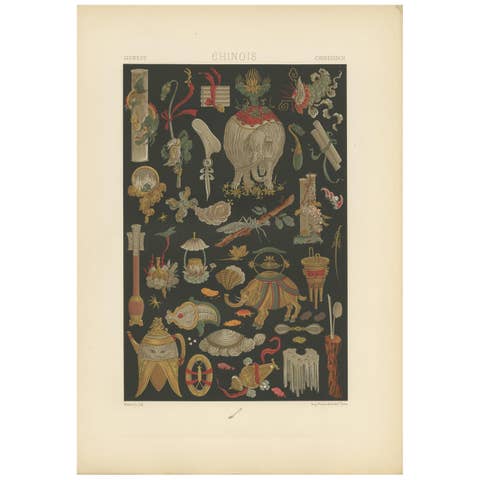
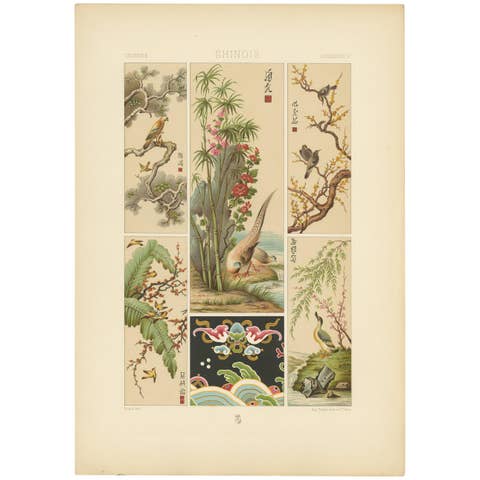
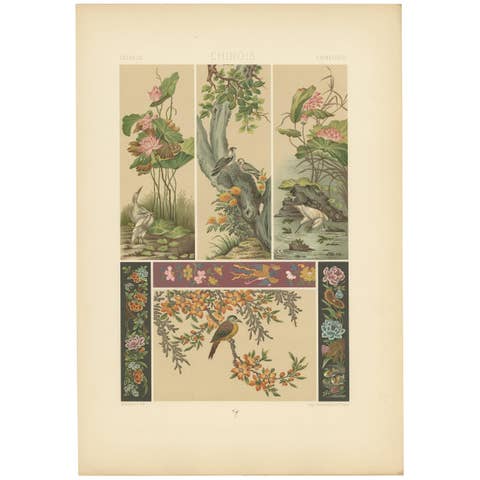
This richly detailed chromolithograph, titled "MAURESQUE" (Moorish), Plate XXX, presents a magnificent selection of Islamic decorative motifs from the western Islamic world, characterized by intricate arabesques, stylized foliage, geometric frameworks, and Kufic calligraphy. Created in the late 19th century and printed by Firmin-Didot Frères in Paris, this plate captures the opulent design vocabulary of the Moorish style as seen in the architecture of Andalusia and North Africa.
The composition displays 16 distinct ornamental panels arranged in a harmonious layout, each showcasing a different form of applied decoration. Many of the panels feature vegetal scrollwork—known as arabesque—with intertwining vines and palmettes flowing across gold backgrounds. These are rendered in jewel-like reds, cobalt blues, and verdant greens, highlighted with striking white and black outlines for visual depth. Several panels incorporate calligraphic cartouches, blending Arabic script seamlessly into the ornamental design in the traditional Islamic manner, where word and image are fused in abstraction and repetition.
The central upper panel displays a symmetrical structure with a central inscription framed by stylized lotus blossoms and floral swirls, likely drawn from plaster or painted woodwork in mosques or palaces. A lower register includes border patterns with knots, geometric lattices, and interlacing arches reminiscent of muqarnas or carved stucco. The largest panel in the lower left features a repeating gold ground motif of leaf forms and stylized acanthus scrolling—possibly taken from wall hangings or wood paneling.
This design was lithographed by F. Duren and printed by Firmin-Didot Frères, Fils & Cie, Paris, a leading 19th-century publisher known for *L'Ornement Polychrome* by Auguste Racinet and similar compilations. These volumes documented ornamental traditions from across the globe for use by architects and designers during the historicist and Orientalist revivals in Europe.
This plate is a splendid example of Islamic visual culture, reflecting centuries of artistic development where abstraction, symmetry, and spirituality converge. It is an exceptional reference for designers, collectors of Islamic art, or anyone drawn to the elegance of Moorish decorative tradition.
Condition report:
Very good condition. Strong, unfaded colors with only minor age-related toning to margins. No tears or visible blemishes. Image surface clean and crisp.
Framing tips:
To emphasize the golden tones and intricate detail, consider a deep walnut or black frame. A neutral mat in ivory or pale sand with an inner accent in indigo or red will beautifully complement the palette and enhance the ornate effect.
Technique: Chromolithograph
Maker: Lith. par F. Duren; printed by Firmin-Didot Frères, Fils & Cie, Paris, circa 1880s