Melbourne in 1855: Cityscape, Indigenous Portrait, and Town Hall View
€ 220
One of a kind: this is the sheet in the photographs. Ships from Langweer, the Netherlands.
Date
1855
Sheet size
40.2 × 28.4 cm (15.8 × 11.2 in)
Reference
BG-13812-33
Condition
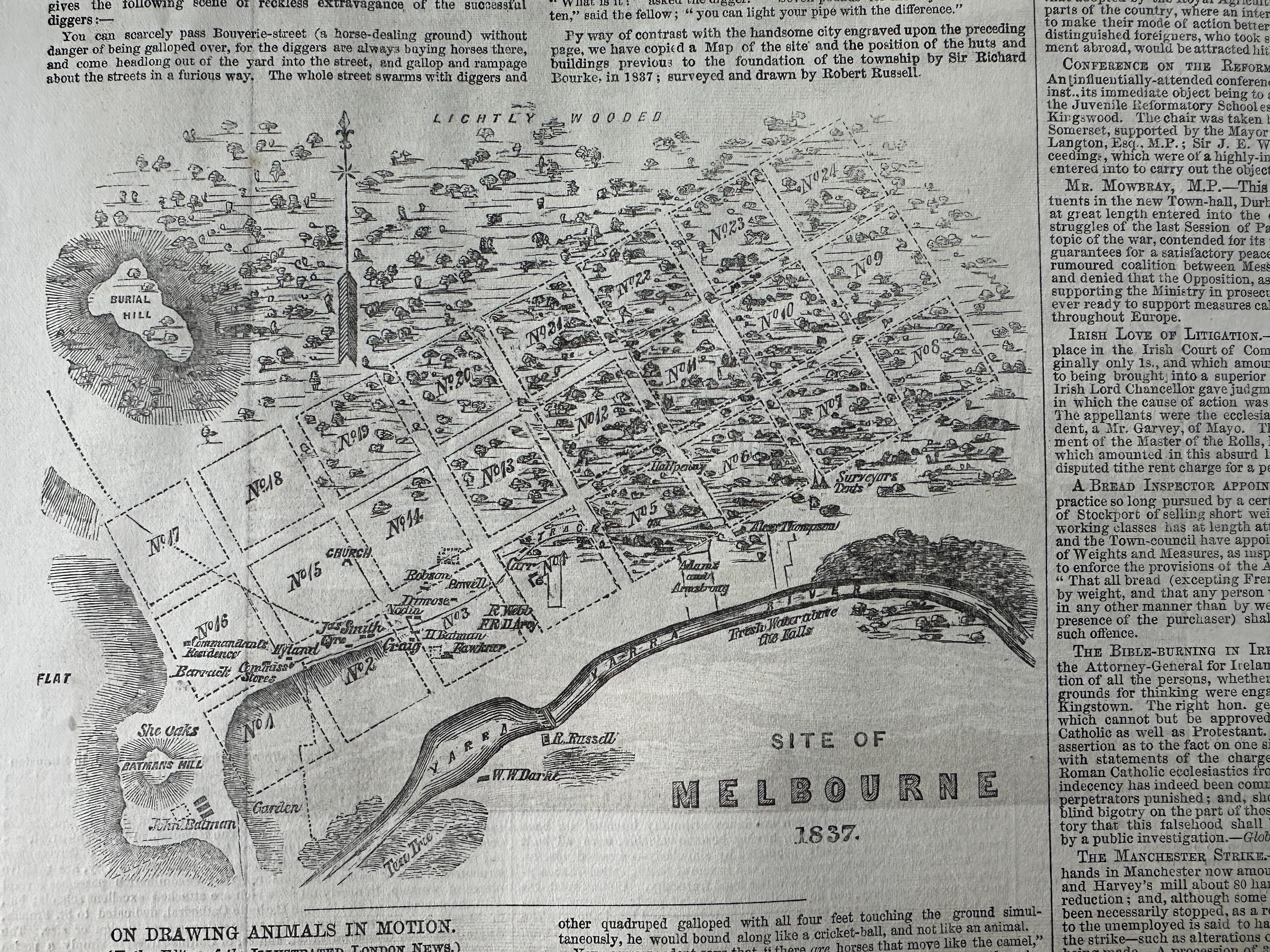
very good, given age. General age-related toning and/or occasional minor defects from handling. Few light folding lines. On the reverse a small layout of Melbourne in 1837. Please study scan carefully.
About this sheet
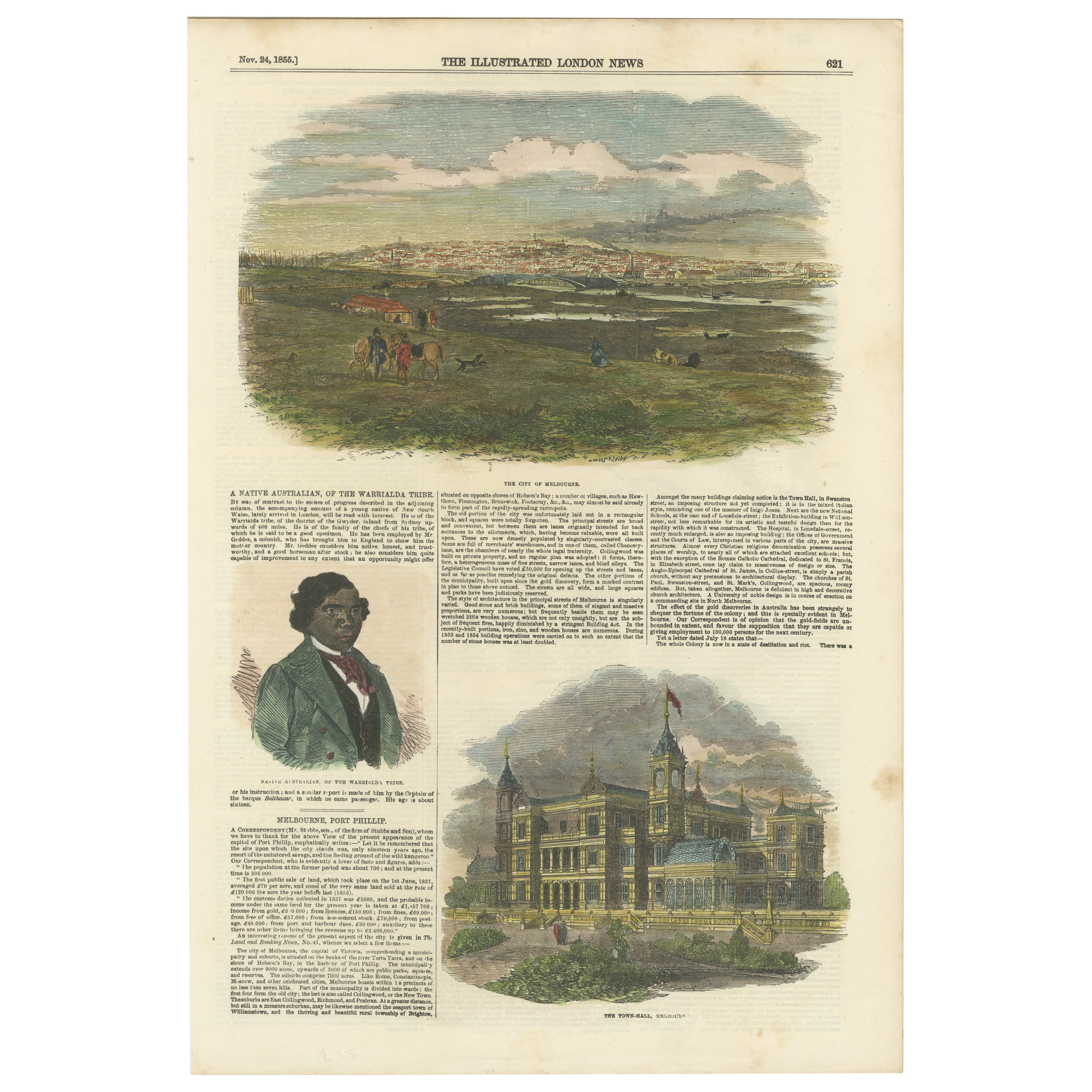
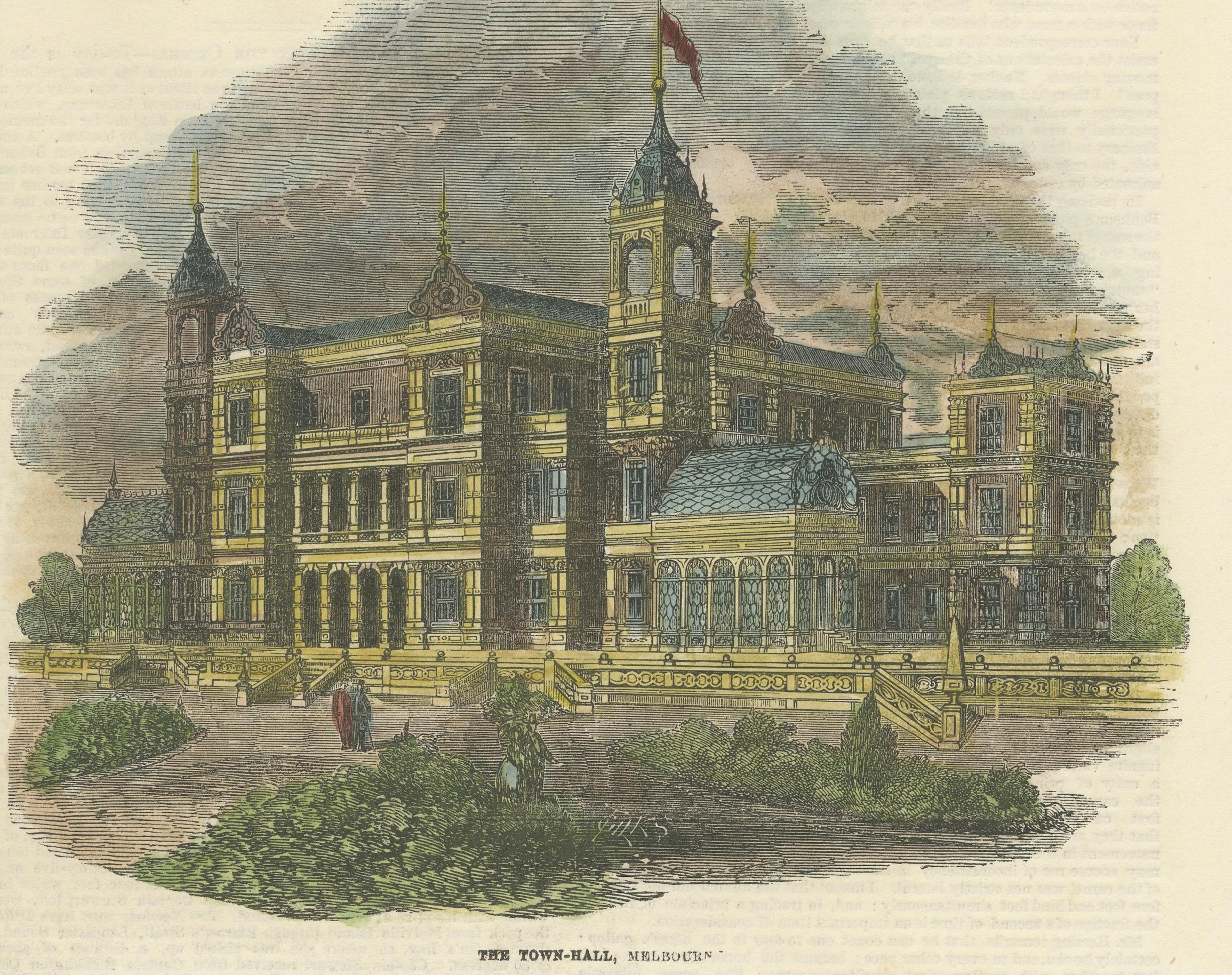
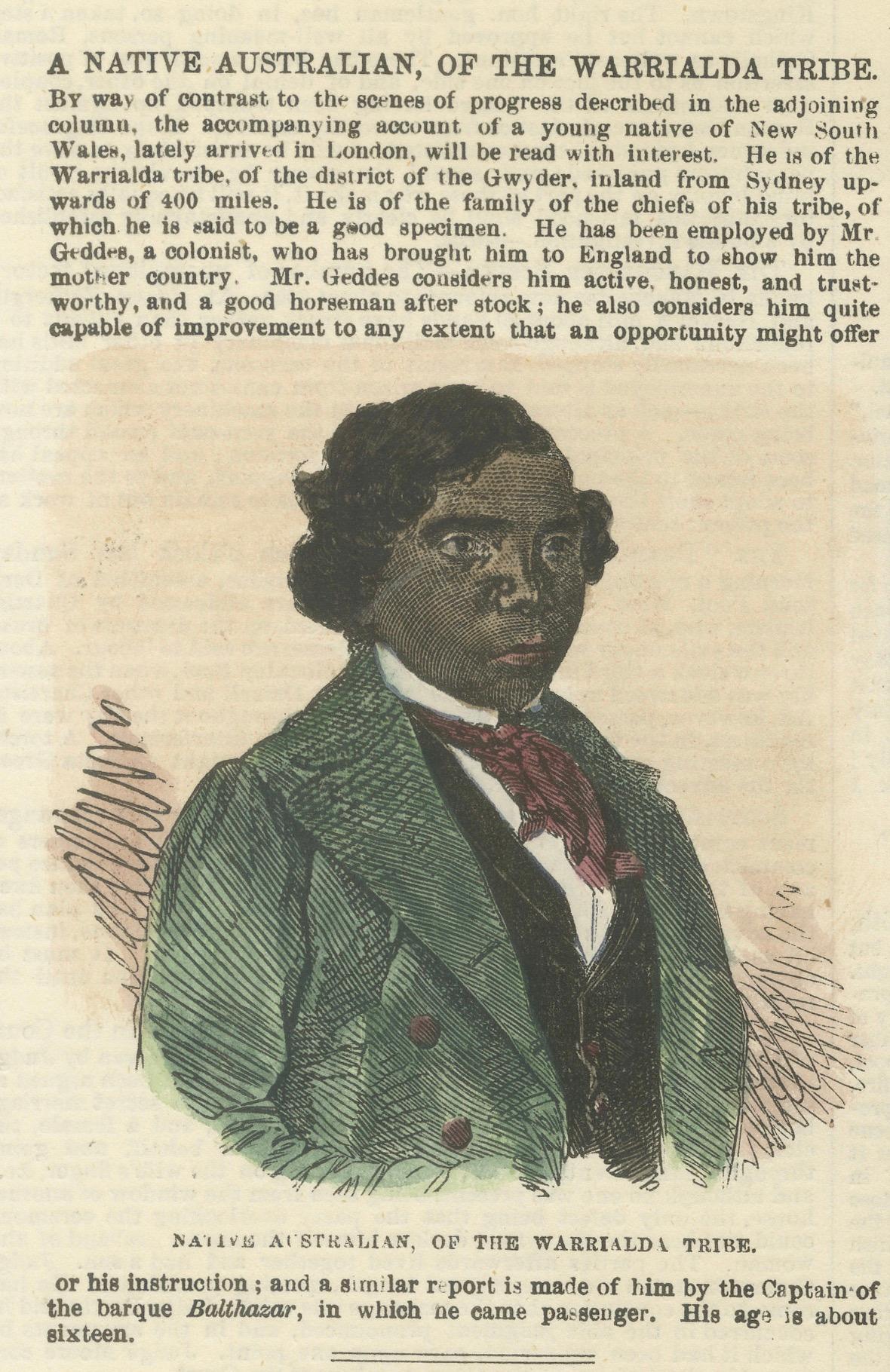
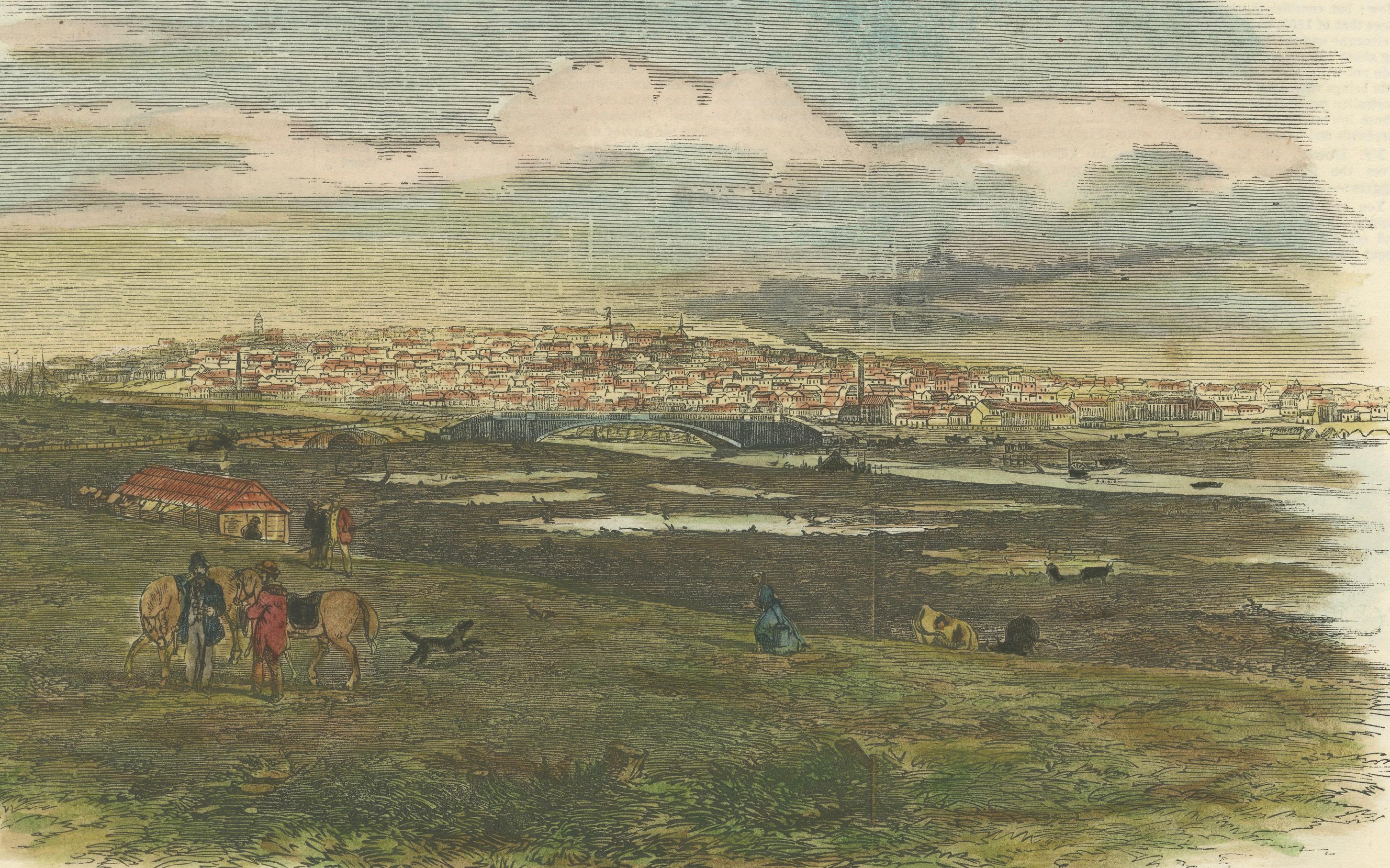
This hand-colored woodcut engraving, published in *The Illustrated London News* on November 24, 1855, provides a vivid and multifaceted view of Melbourne during the mid-19th century. The page combines three distinct illustrations and accompanying text, offering a rich depiction of the city's early development and cultural context.
At the top of the page is a panoramic view of Melbourne as seen from an elevated rural vantage point. The city’s sprawling layout is surrounded by the natural landscape, including grazing animals and modest rural structures in the foreground, which contrast with the emerging urban center in the background. This scene captures Melbourne at a time of rapid growth, following the Victorian gold rush, when the city was transforming into a major hub of commerce and migration.
Beneath the cityscape, the left section features a portrait of a member of the Warribaldra tribe, an Indigenous Australian, dressed in European-style clothing. The accompanying text discusses the man’s life and context, including his trip to England, highlighting the cultural shifts and colonial interactions of the period. Though reflective of the colonial perspective of the era, this portrait serves as a historical artifact of Indigenous representation during a time of significant societal change in Australia.
The final illustration, located at the bottom right, is an architectural rendering of Melbourne's Town Hall. This grand and ornate structure, newly completed at the time, symbolized the city’s growing wealth and civic pride. The detailed view emphasizes the intricate design of the building, surrounded by neatly landscaped gardens, with figures adding life and scale to the scene.
This print is a fascinating blend of visual and textual documentation, providing insights into Melbourne’s development, Indigenous presence, and architectural ambition. It offers a unique snapshot of the city during a pivotal era, making it a compelling piece for collectors of colonial and Australian history.