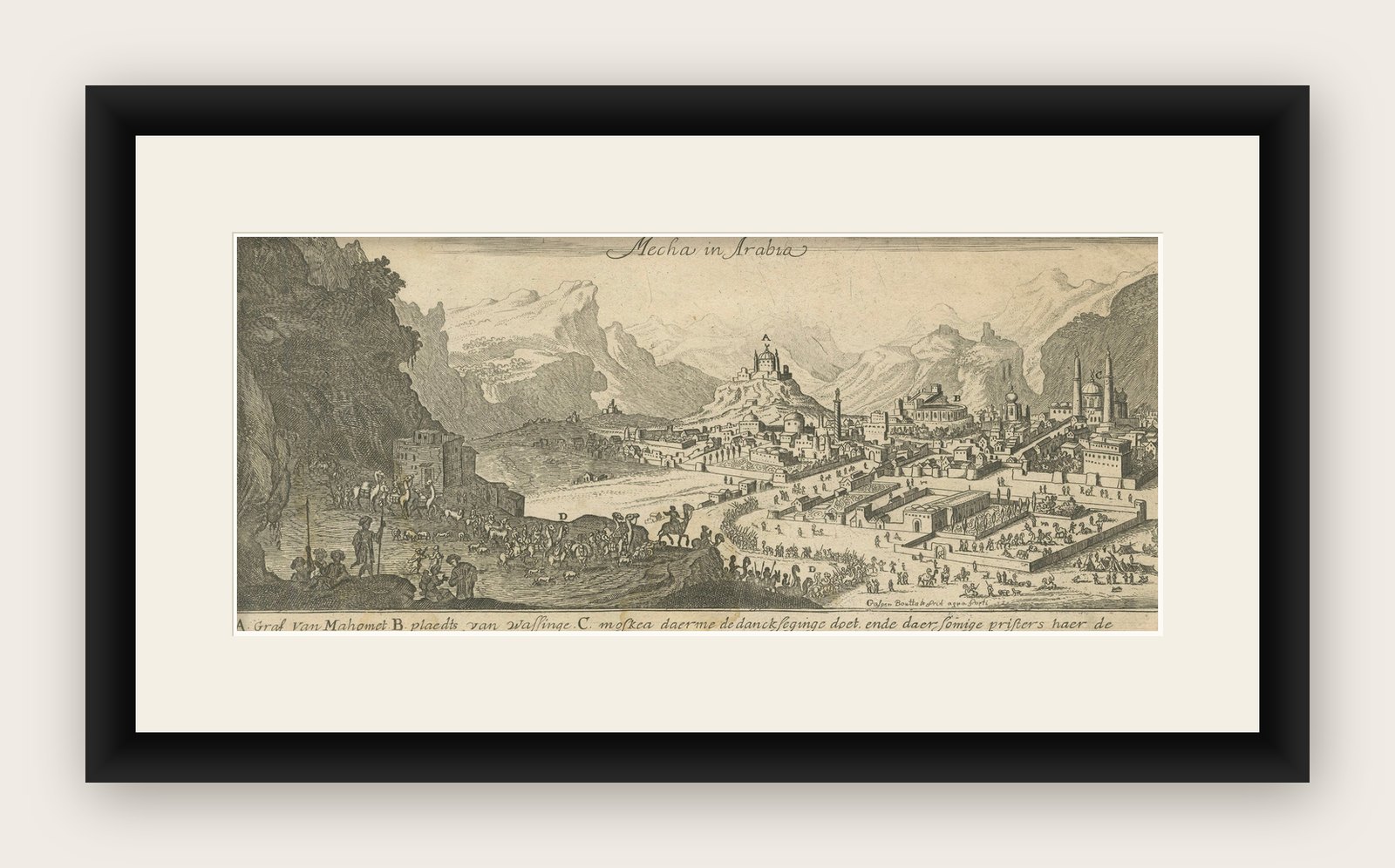
Mecha in Arabia – Engraving by Gaspar Bouttats after Jan Peeters, Antwerp, 1680
€ 340
Original antique · The actual sheet photographed · Certificate of authenticity on request · Sold unframed · Worldwide shipping from € 15 (rates)
Date
1680
Sheet size
16.5 × 28.5 cm (6.5 × 11.2 in)
Condition
Fair
Reference
BG-14036-2
What the condition grades mean
Excellent
Bright and clean, with no faults worth mentioning.
Very good
Only light signs of age, such as faint toning.
Good
Normal signs of age for a sheet of this period: toning, some foxing, small marks or neat old repairs.
Fair
Clear faults such as staining, tears or repairs, priced to match.
Every fault we see is written in the condition note, and the whole sheet is shown uncropped in the photos.
Condition
Fair condition with clear details, light foxing, minor edge wear, small tears, and water stains near the lower margin, consistent with age. Study the scans of this rare print carefully.
About this sheet
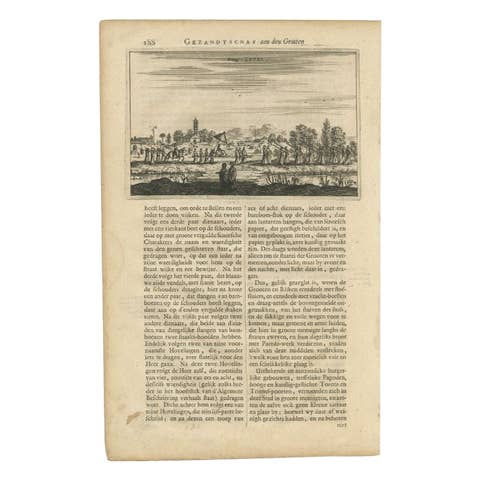
This copperplate engraving depicts a detailed view of Mecca in Arabia, highlighting the city’s iconic structures, including mosques, surrounding mountains, and caravan activity. The engraving includes a legend (A-D) identifying key landmarks, such as the "Graf Van Mahomet" (Tomb of Muhammad) and important locations associated with worship and trade. The artwork combines artistic and geographic details, typical of the late 17th century. Published in Antwerp, the print is attributed to Gaspar Bouttats as the engraver and Jan Peeters as the artist.
The Legend translated from old Dutch: A: Tomb of Muhammad B: Place of Washing C: Mosque where prayers of thanks are given D: Caravan arriving from Constantinople
Size: Engraving size approximately 10.5 x 25.5 cm Sheet size approximately 17 x 29 cm
The engraving remains in fair to good overall condition with clear impressions and detailed imagery. Light foxing is visible throughout, with more pronounced water stains near the lower margin. The sheet exhibits minor edge wear, including small tears and slight creases, consistent with age. Despite these imperfections, the engraving retains its aesthetic and historical appeal.