About this sheet
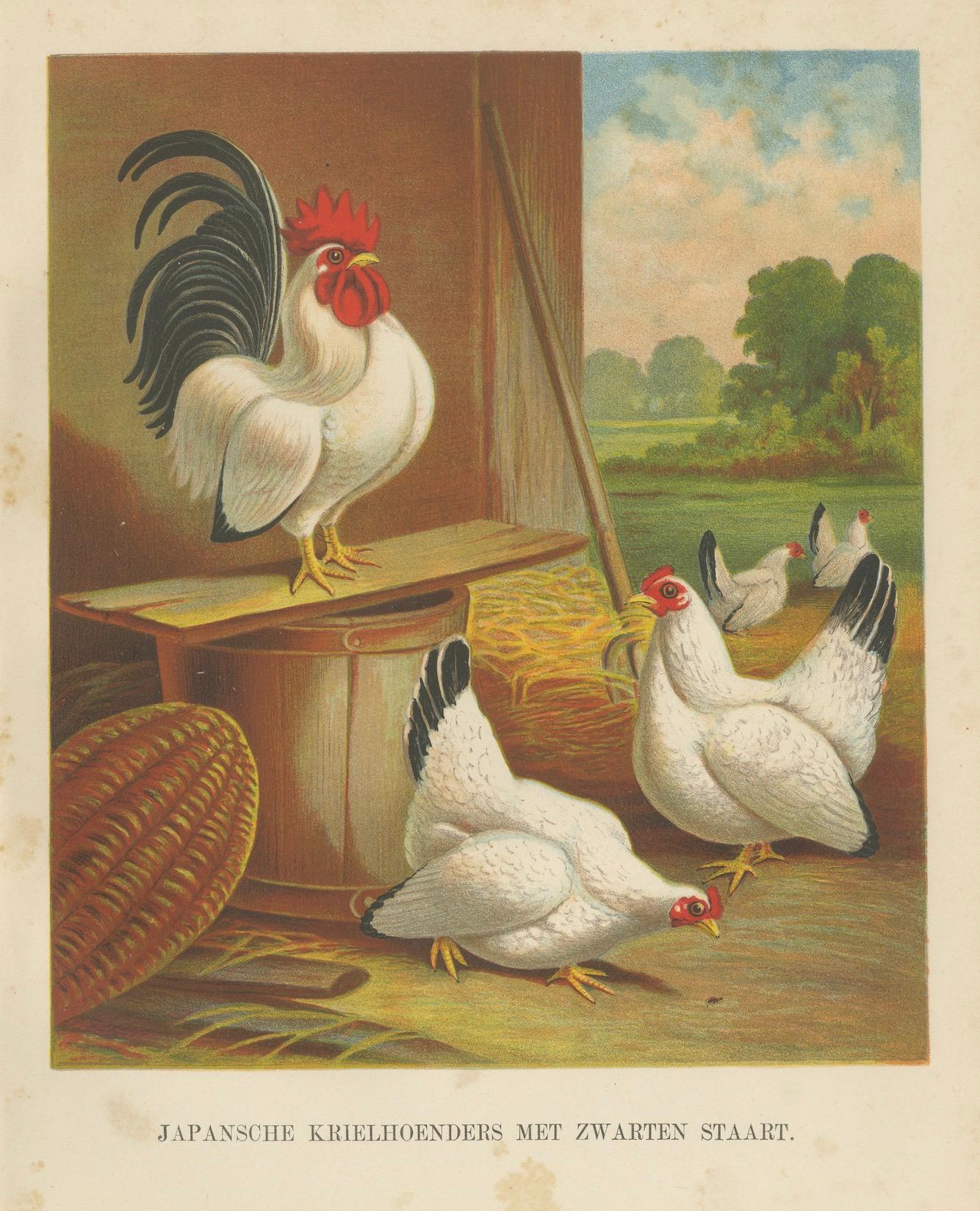
Japanese Bantams with Black Tails A Rare 19th Century Poultry Lithograph
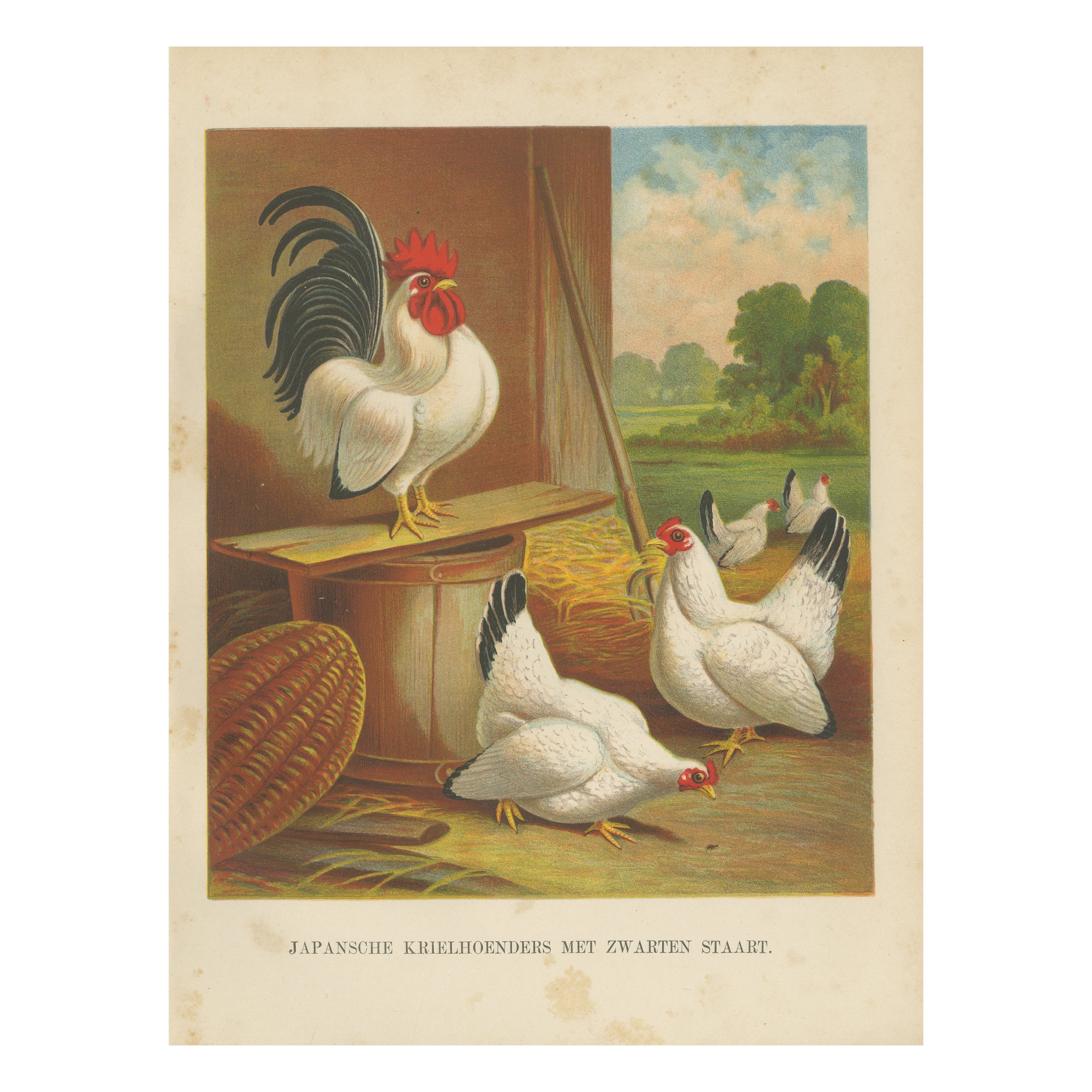
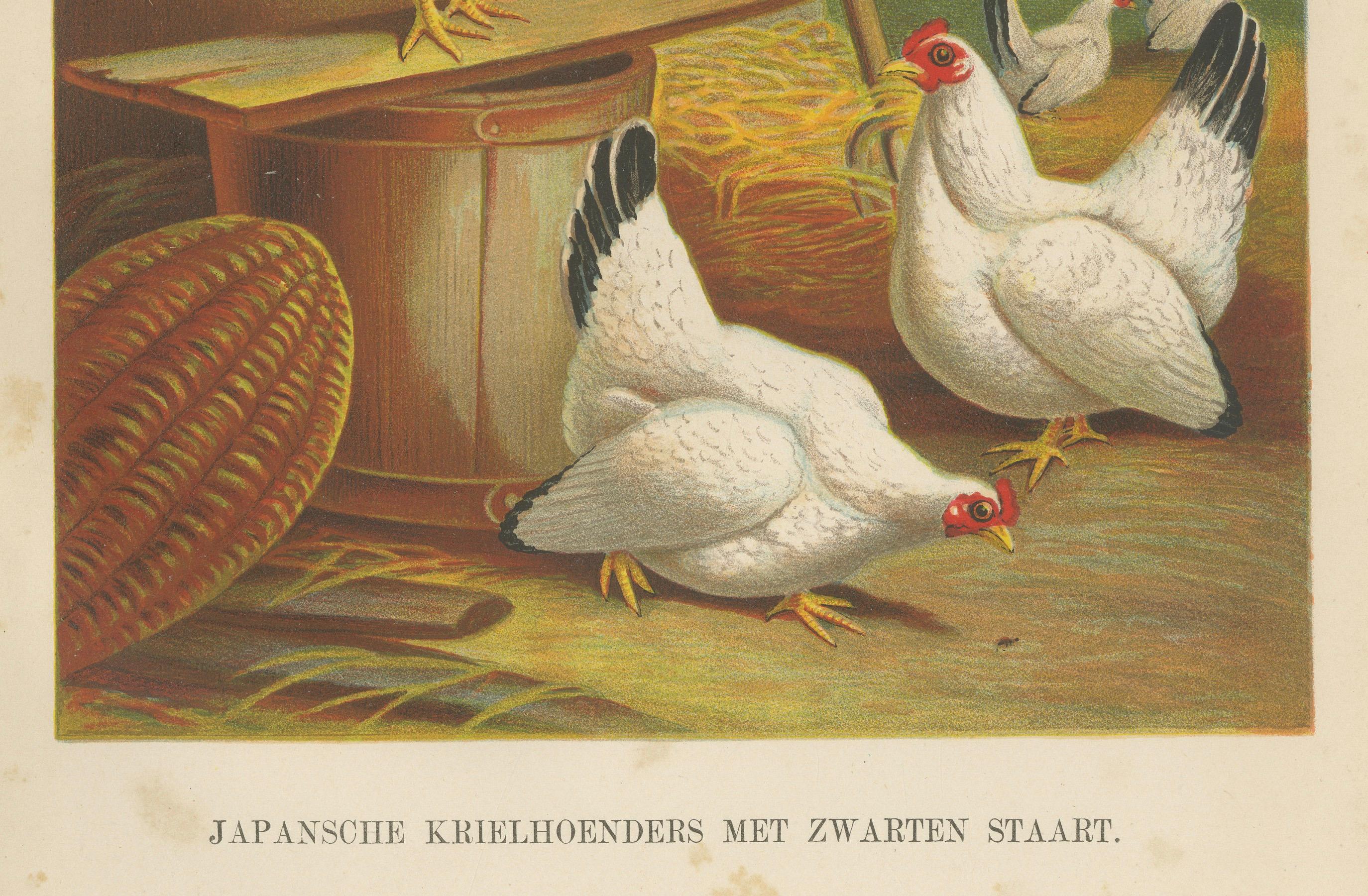
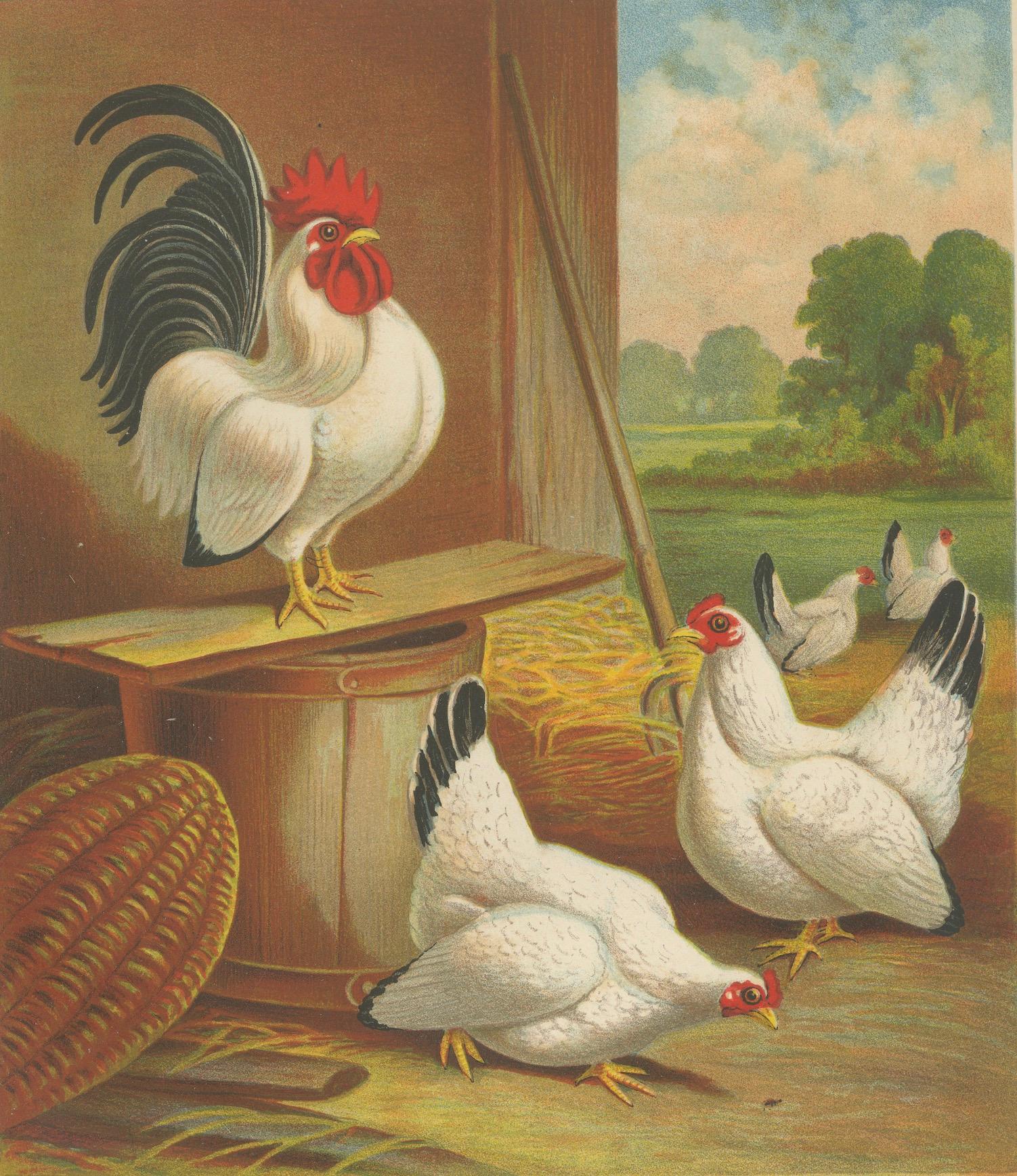
This exquisite 19th-century chromolithograph, titled Japansche Krielhoenders met Zwarten Staart, depicts a group of Japanese bantams, a breed known for its striking contrast between pure white plumage and jet-black tail feathers. Originally published in 1888 in Geïllustreerd Hoenderboek by Elsevier, this illustration is one of 40 richly detailed color prints based on artwork by Christian Förster. Edited for the Dutch market by Dr. A. C. Oudemans Jzn., the book provided an extensive guide to poultry breeding, care, and selection, making it an essential reference for farmers and breeders of the time.
Japanese bantams, or Chabo, are one of the most distinctive and ornamental chicken breeds. Originating from Japan, they are beloved for their short legs, upright tails, and compact bodies. Despite their small size, they carry themselves with a regal and confident demeanor, making them popular in both Europe and Asia as decorative fowl. Their white and black coloration is especially prized among poultry enthusiasts, who value the contrast between their pristine bodies and flowing, elegantly curved tails.
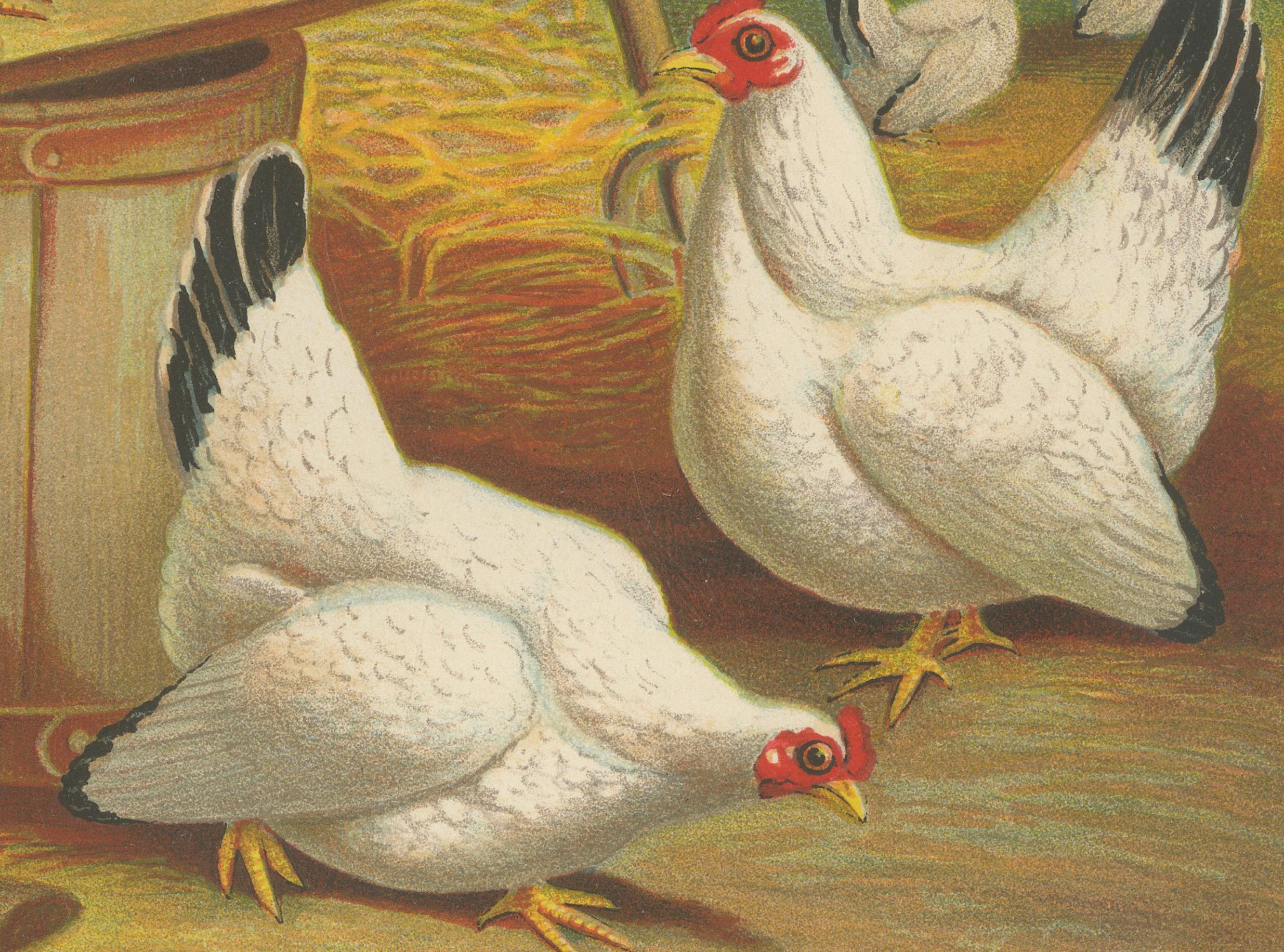
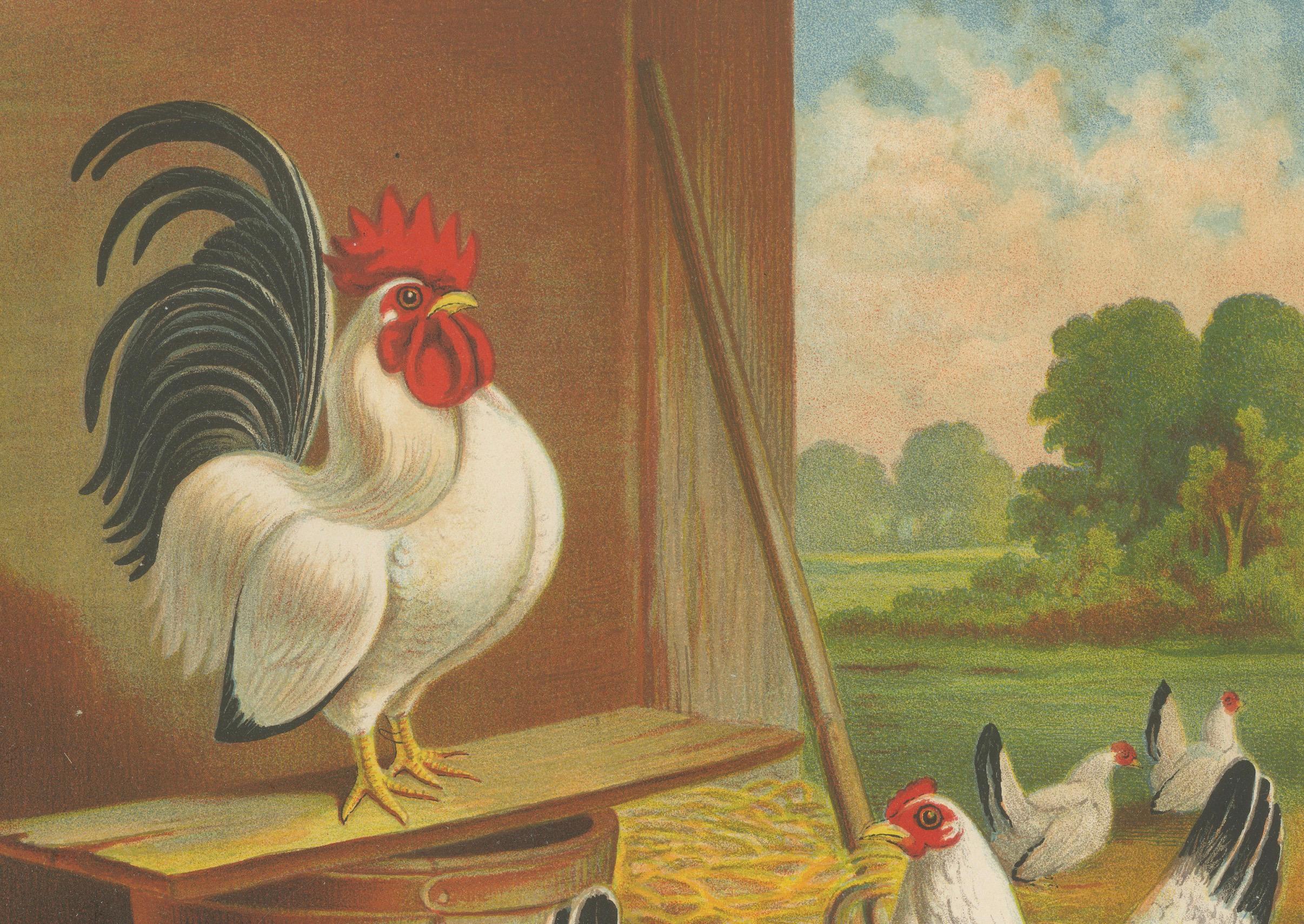
This illustration perfectly captures the charm and elegance of the breed. A proud rooster stands atop a wooden platform, surveying his hens as they forage among the hay. The rustic setting, complete with a barn door, hay bundles, and a lush countryside backdrop, creates a warm and pastoral atmosphere. The artist’s attention to detail is evident in the soft textures of the feathers, the naturalistic lighting, and the delicate shading that gives the birds a lifelike appearance.
The Art of Chromolithography
The print was created using chromolithography, a labor-intensive printing technique popular in the 19th century. Each color was applied separately using a different stone plate, requiring precise alignment to achieve the final image. This process resulted in rich, layered colors and a depth that earlier printing techniques could not replicate. Christian Förster’s artistic expertise, combined with the skill of the lithographers, produced a work of remarkable detail and vibrancy.
Condition Summary
This lithograph remains in good condition, with vibrant colors and clear detailing. Some light foxing is visible, particularly around the margins, which is common in antique prints of this age. The paper is stable with only minimal signs of wear.
Framing Tips
To best preserve and display this historic poultry print, consider the following framing recommendations
- Use an acid-free mat in off-white or warm cream tones to highlight the natural colors of the print
- A simple black or dark wood frame will create a sophisticated contrast with the light tones of the illustration
- Opt for museum-grade UV-protective glass to prevent fading over time
- Consider placing a descriptive plaque beneath the frame to provide context about the artwork and its historical significance
This print is a fascinating glimpse into 19th-century poultry breeding, showcasing the elegance of the Japanese bantam in a beautifully detailed farmyard setting. Whether displayed as part of a collection or as a standalone piece, it serves as a unique and decorative tribute to the artistry of historical animal illustration.