Indigenous Peoples of the Bering Sea: Portraits from the 18th-Century Engravings
€ 330
One of a kind: this is the sheet in the photographs. Ships from Langweer, the Netherlands.
Sheet size
39 × 25 cm (15.4 × 9.8 in)
Condition
Good
Reference
BG-13599-38
Condition
Good condition. Aged paper with sometimes light brownish edges that show small creases and wrinkles, but not touching the image. Study the images carefully.
About this sheet
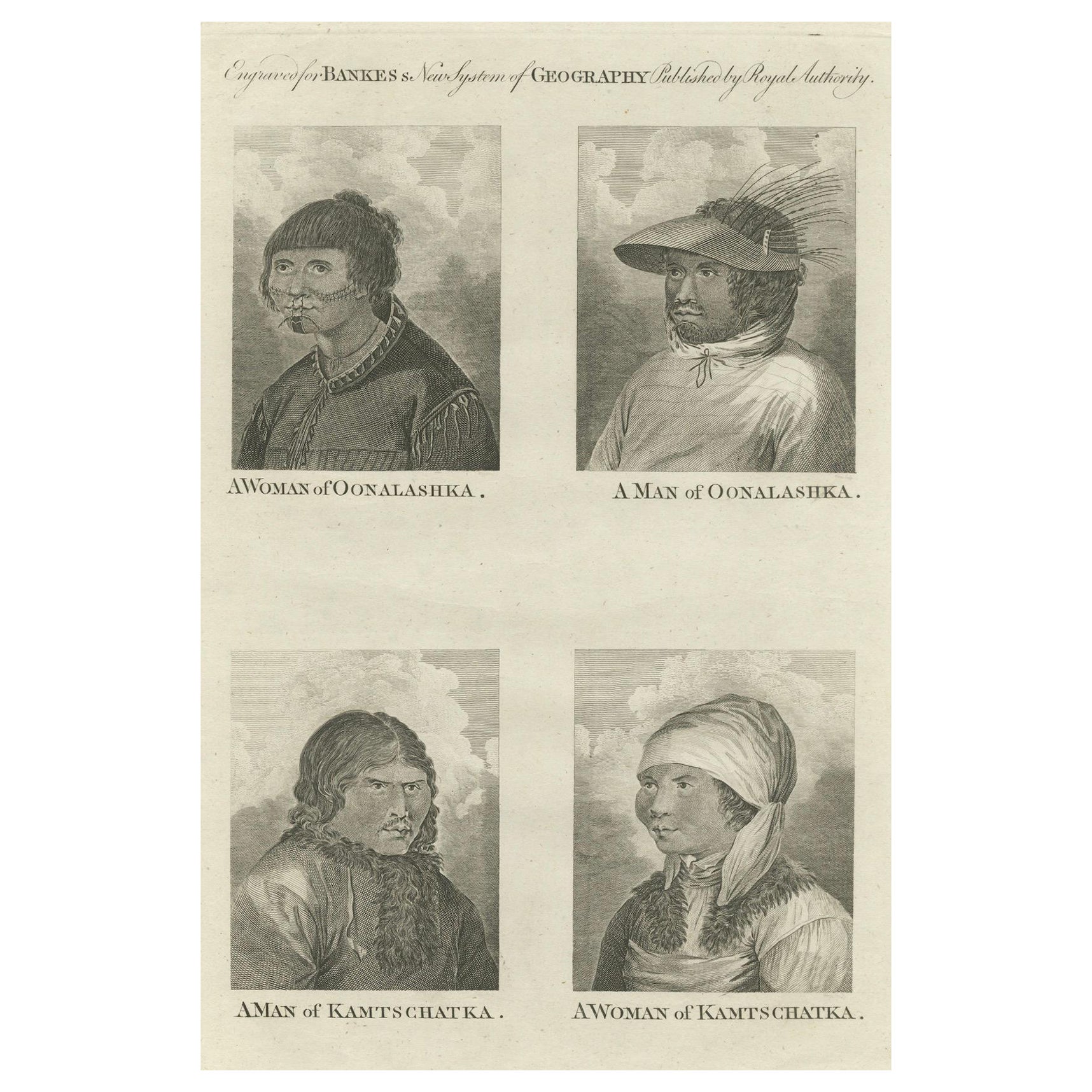
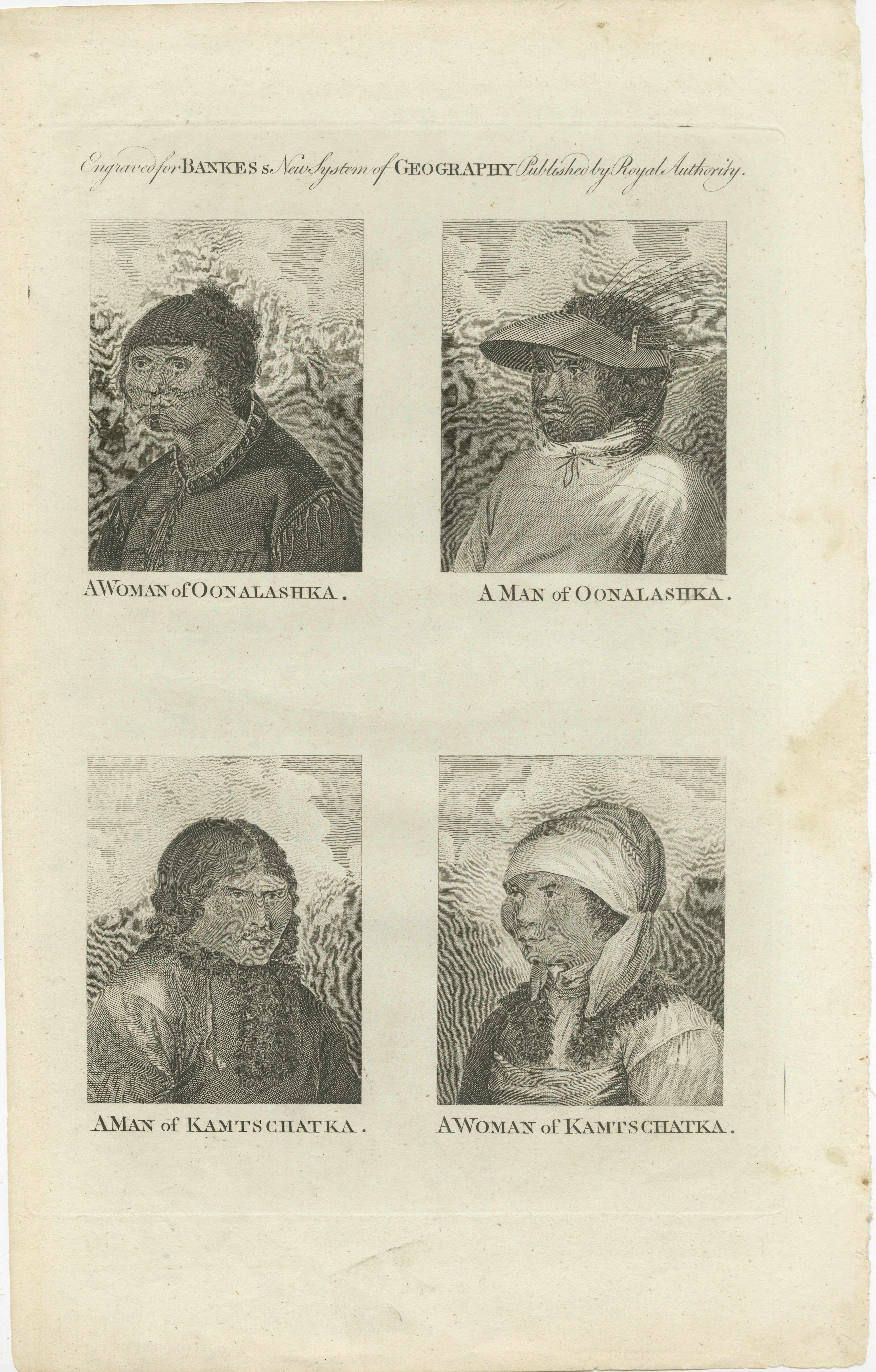
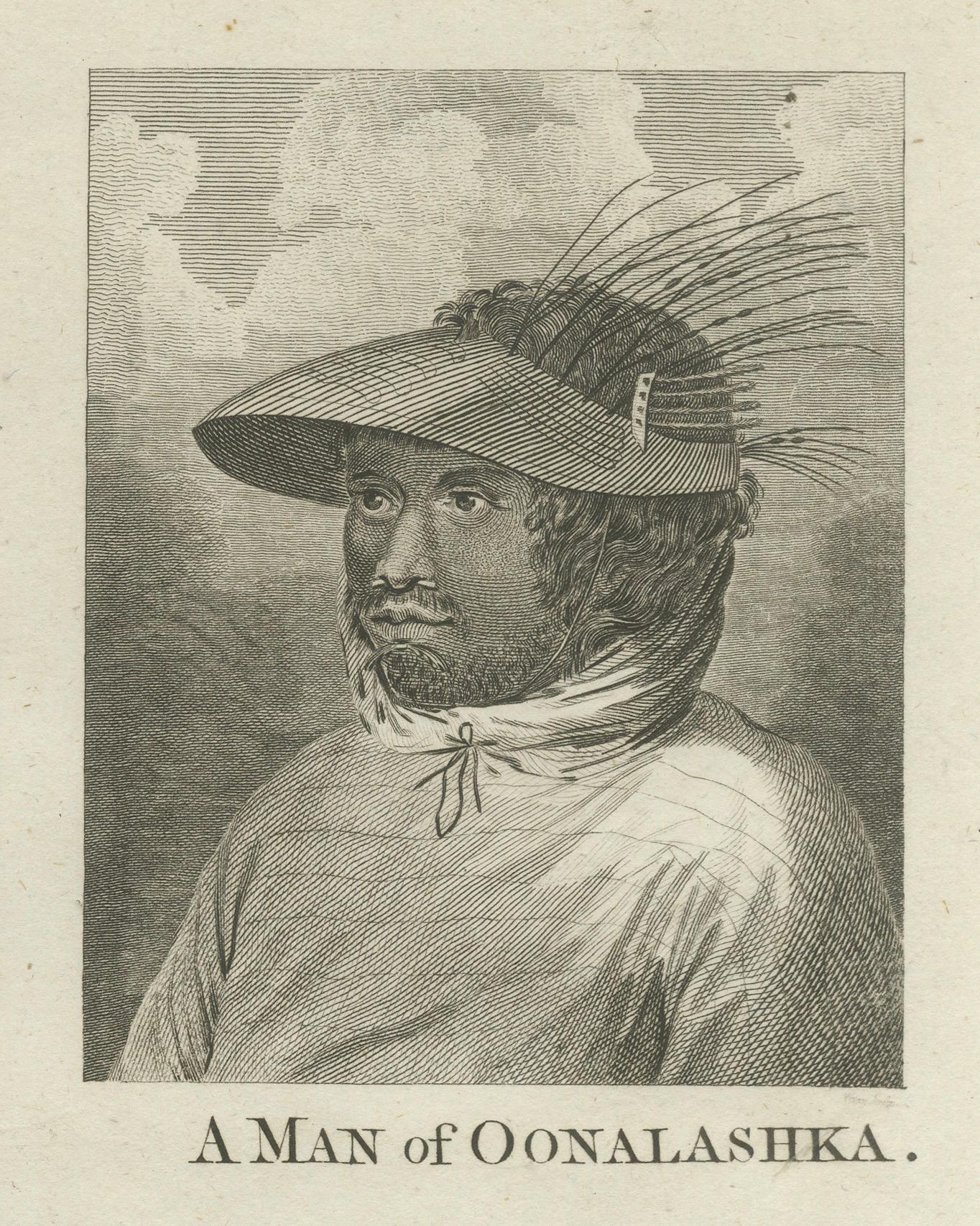
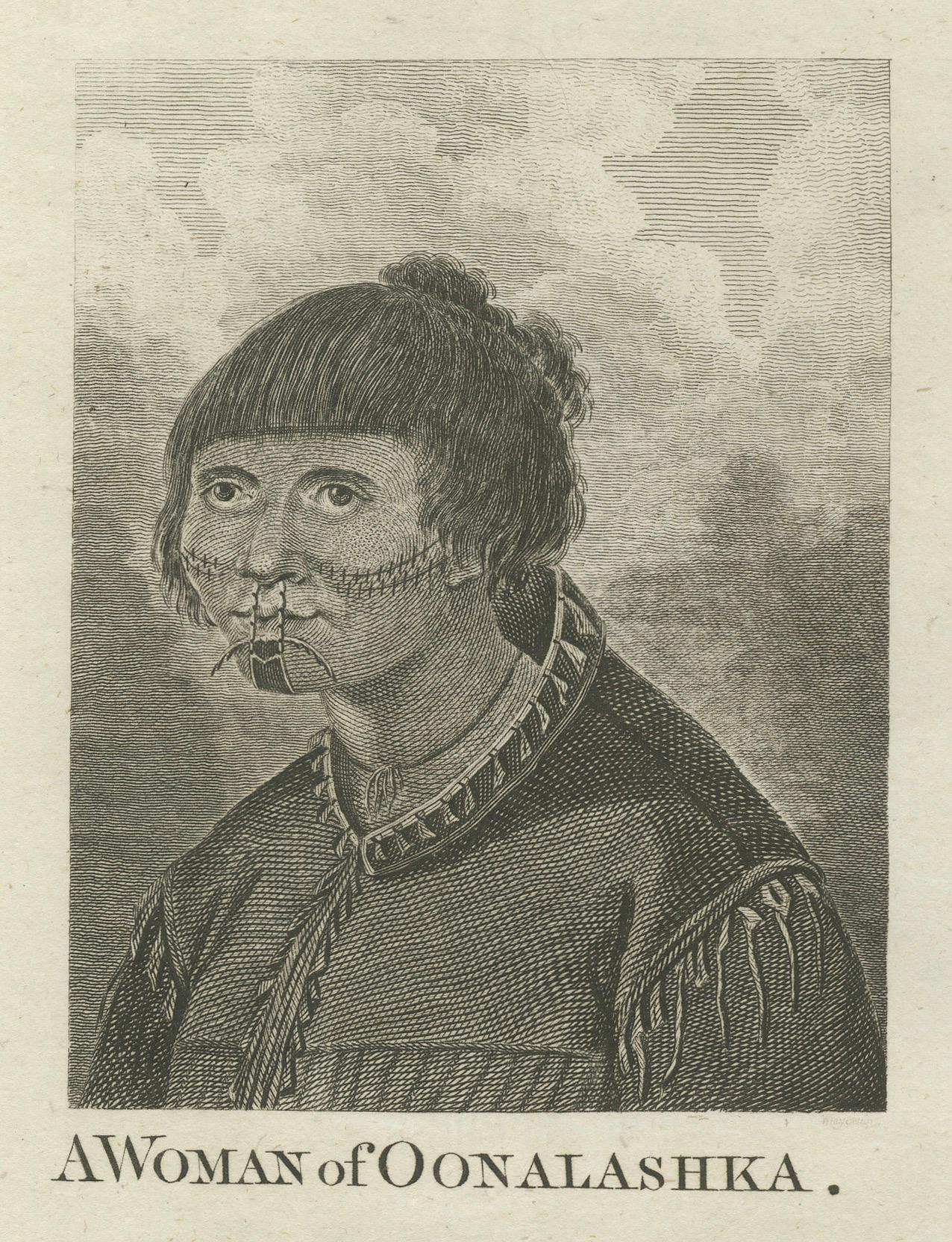
This original engraving contains four portrait engravings, two each of individuals from Unalaska (Oonalashka) and Kamchatka. These engravings, like the previous ones, are from "Bankes's New System of Geography," published by royal authority.
The top two portraits are labeled "A Woman of Oonalashka" and "A Man of Oonalashka." Unalaska is part of the Aleutian Islands, and the individuals are likely represented as Aleuts, an Indigenous people of the region. The woman is depicted with a facial tattoo, which is a traditional mark of identity among some Indigenous groups. The man is wearing a hat, which could be a part of traditional attire or possibly influenced by the European or Russian traders and explorers of the time.
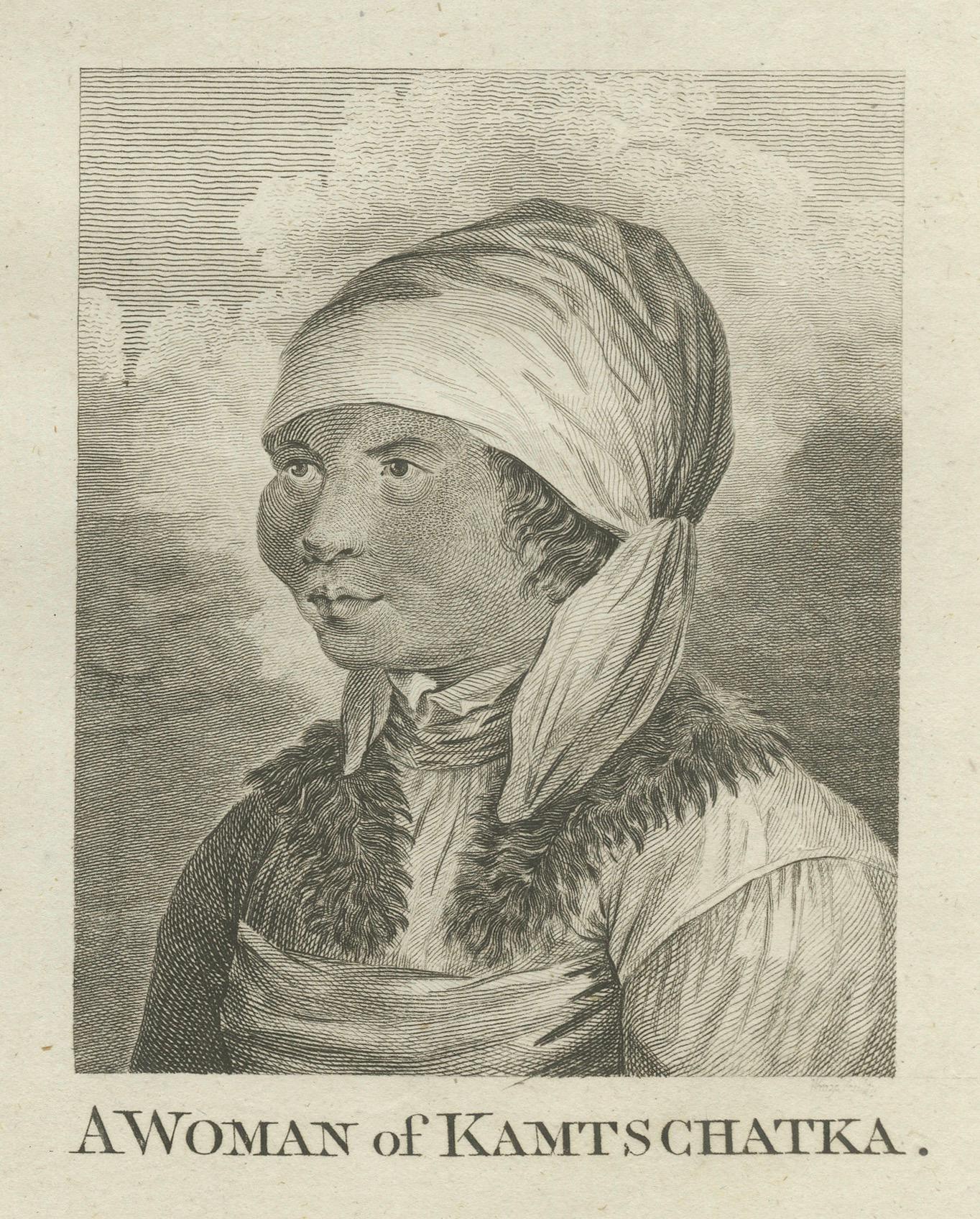
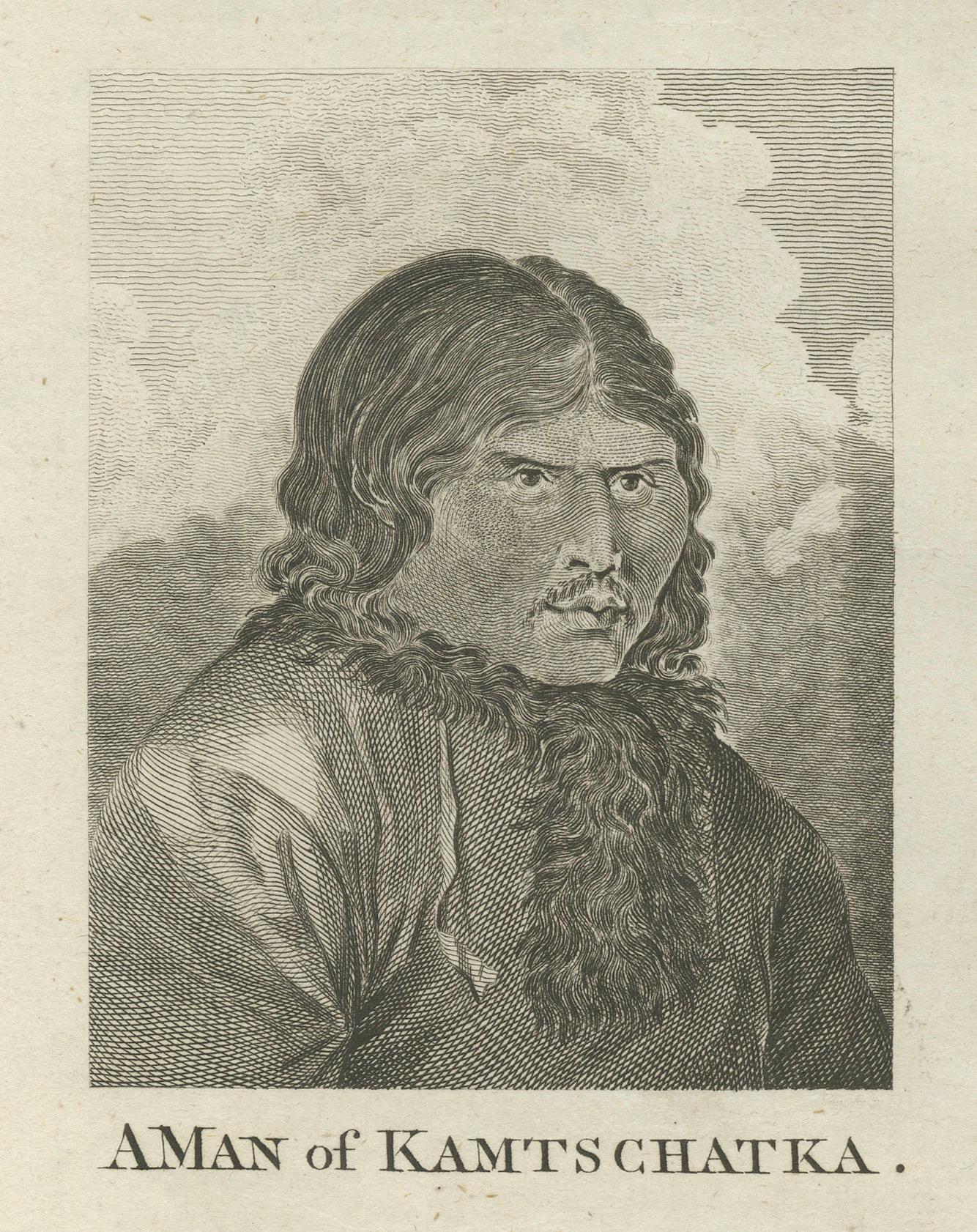
The bottom two portraits are labeled "A Man of Kamtschatka" and "A Woman of Kamtschatka." Kamchatka is a peninsula in the Russian Far East, and the depicted individuals are presumably from one of the Indigenous groups of that region. The man is shown with a heavy beard and fur clothing, indicating the cold climate of the region. The woman's attire appears to be a simple head covering and a fur-lined garment, also reflecting the need for warmth.
The engravings are consistent with the style of illustrations that were often included in published accounts of explorers like Captain James Cook. Cook's voyages in the 18th century were among the most significant European exploratory missions and were documented in a series of published journals and accounts that included detailed engravings of the peoples and places he encountered. These works were widely disseminated and had a considerable influence on European knowledge of the wider world.
However, the engravings are specifically stated to be from "Bankes's New System of Geography," which suggests that while they may be similar in style and content to those found in accounts of Cook's voyages, they are from a different work. "Bankes's New System of Geography" was an extensive geographical compendium and not exclusively a record of Cook's travels, although it likely included information and illustrations derived from the accounts of Cook and other explorers.
If these engravings were indeed from "Bankes's New System of Geography," they would not be directly from the publications of Cook's voyages, but they would be contemporaneous and possibly influenced by the illustrations and information that came out of Cook's expeditions. Cook's influence was widespread, and it was common for other geographical and ethnographic works of the time to re-use or re-interpret images and data from his voyages.