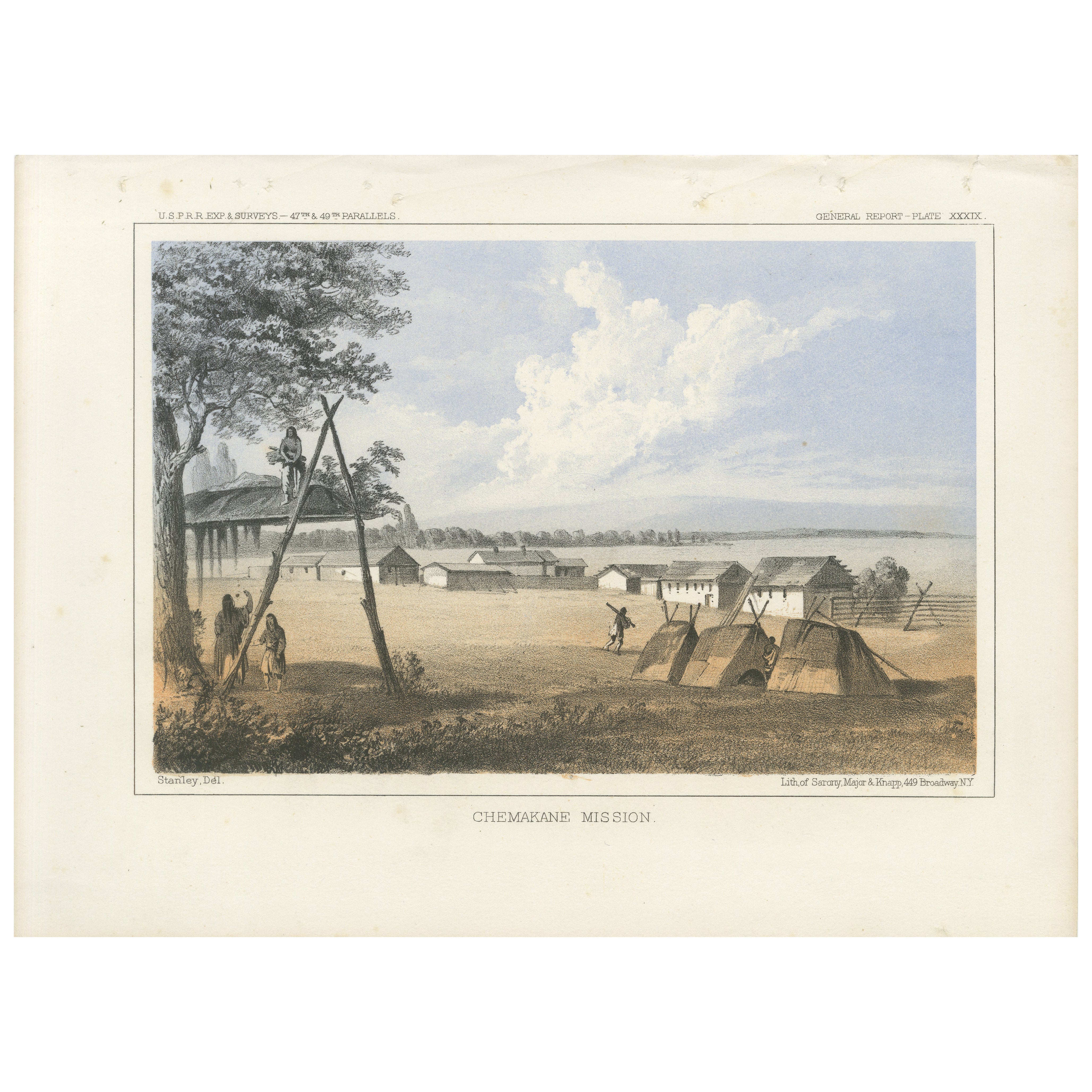
Historic View of Chemakane Mission with Indigenous and Mission Life Scene, 1856
€ 220
One of a kind: this is the sheet in the photographs. Ships from Langweer, the Netherlands.
Date
1856
Sheet size
20.7 × 28.3 cm (8.1 × 11.1 in)
Condition
Good
Reference
BG-14038-34
Condition
Condition summary: Good condition with some minor age-toning, typical of prints from this era, and well-preserved detail. Some pinhole in the top margin, outside the image, leaving the print perfectly suitable to be framed.
About this sheet
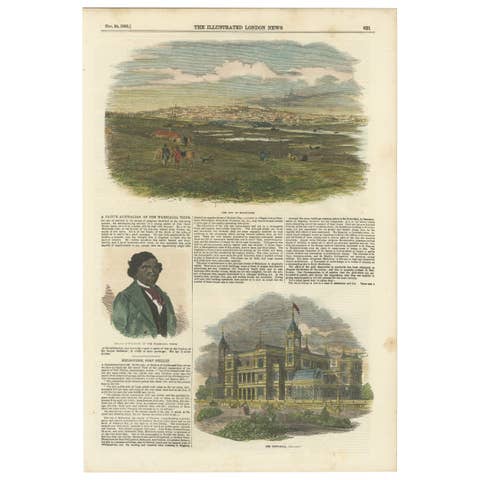
This captivating lithograph of the Chemakane Mission offers a rare glimpse into the historical interaction between Indigenous communities and missionaries in the Pacific Northwest. The scene is thoughtfully composed, capturing a blend of natural beauty, cultural elements, and architectural significance. The open plains, scattered with traditional Indigenous structures and mission buildings, provide a dynamic narrative of coexistence and transformation during a pivotal period in American history.
The Chemakane Mission, also known as the Tshimakain Mission, was established in 1838 by Protestant missionaries Elkanah Walker and Cushing Eells. It was located near present-day Ford, Washington, along Chamokane Creek. The mission served the Spokane Indians until it was abandoned in 1848 following the Whitman Massacre.
The artist’s careful detailing brings to life a moment in time, highlighting elements like the elevated drying rack used by Indigenous peoples and the cluster of mission buildings in the background. This lithograph reflects both the cultural exchange and the conflicts of the era, making it a compelling piece of historical art.
Lithography, the technique used to create this piece, was at its height during the mid-19th century. Each color was applied through a labor-intensive process involving stone plates, resulting in the rich, layered hues and precise details visible in this print. This method, combined with the artist's skill, ensures that the piece is both visually stunning and historically significant.
Condition summary: Good condition with some minor age-toning, typical of prints from this era, and well-preserved detail. Some pinhole in the top margin, outside the image, leaving the print perfectly suitable to be framed.
Framing tips: This lithograph would look best in a simple wood or gold-tone frame, paired with an acid-free mat in a neutral tone to highlight the artwork's warm palette. UV-protective glass is recommended to preserve the colors and prevent fading. Ideal for display in a study, library, or space celebrating history.