About this sheet
Hand-Colored 1900 Print of Ancient American Figures, Pre-1500 Indigenous Art
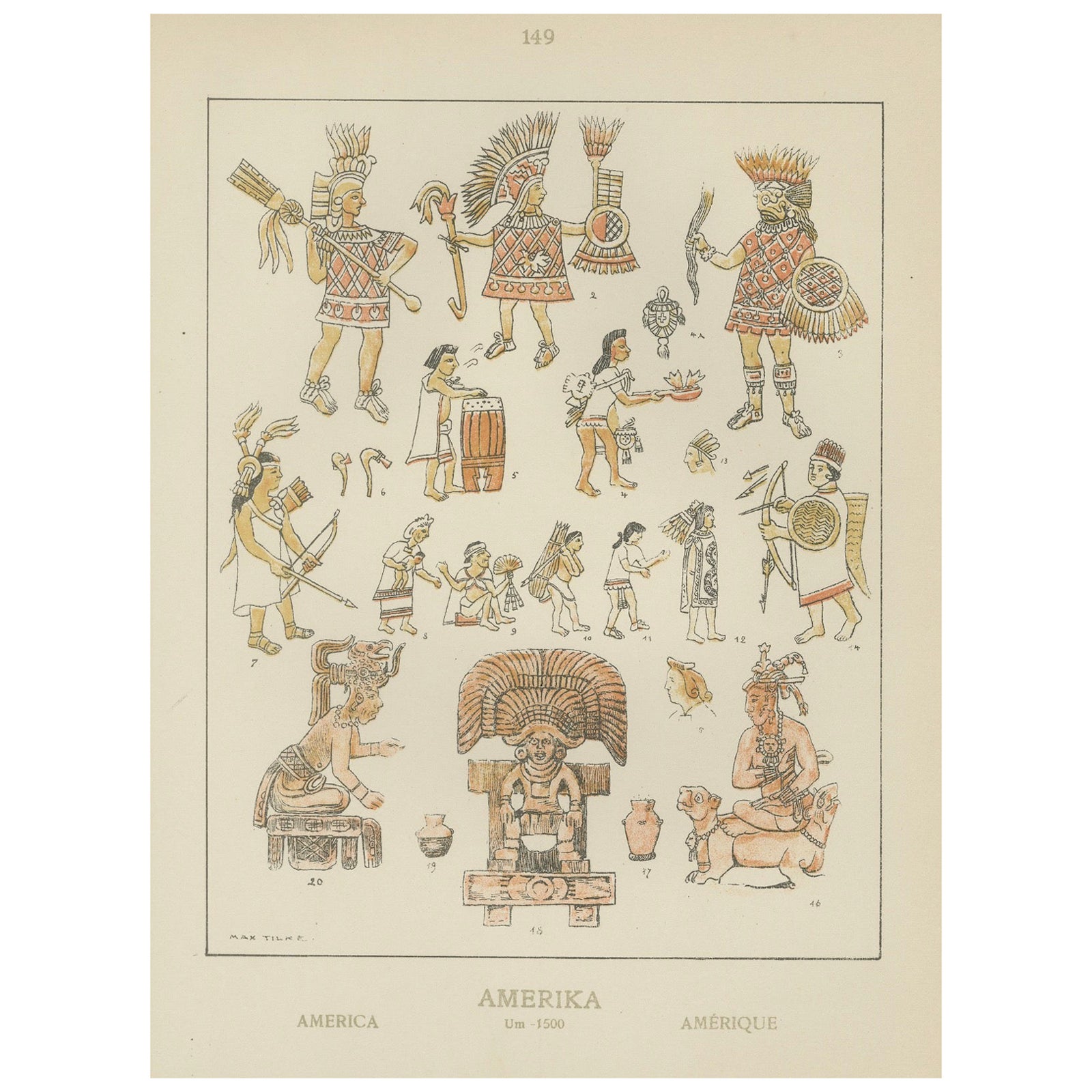
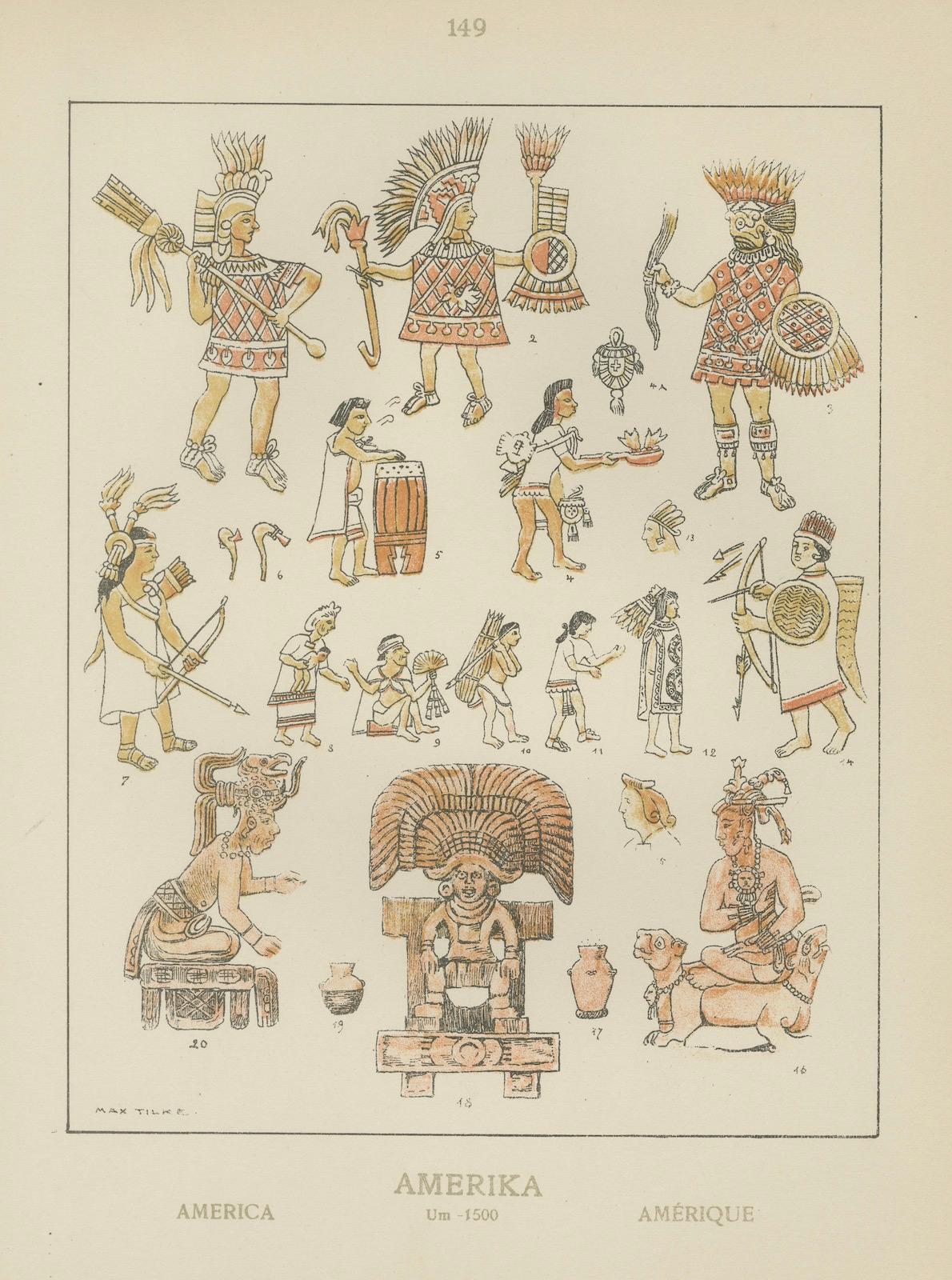
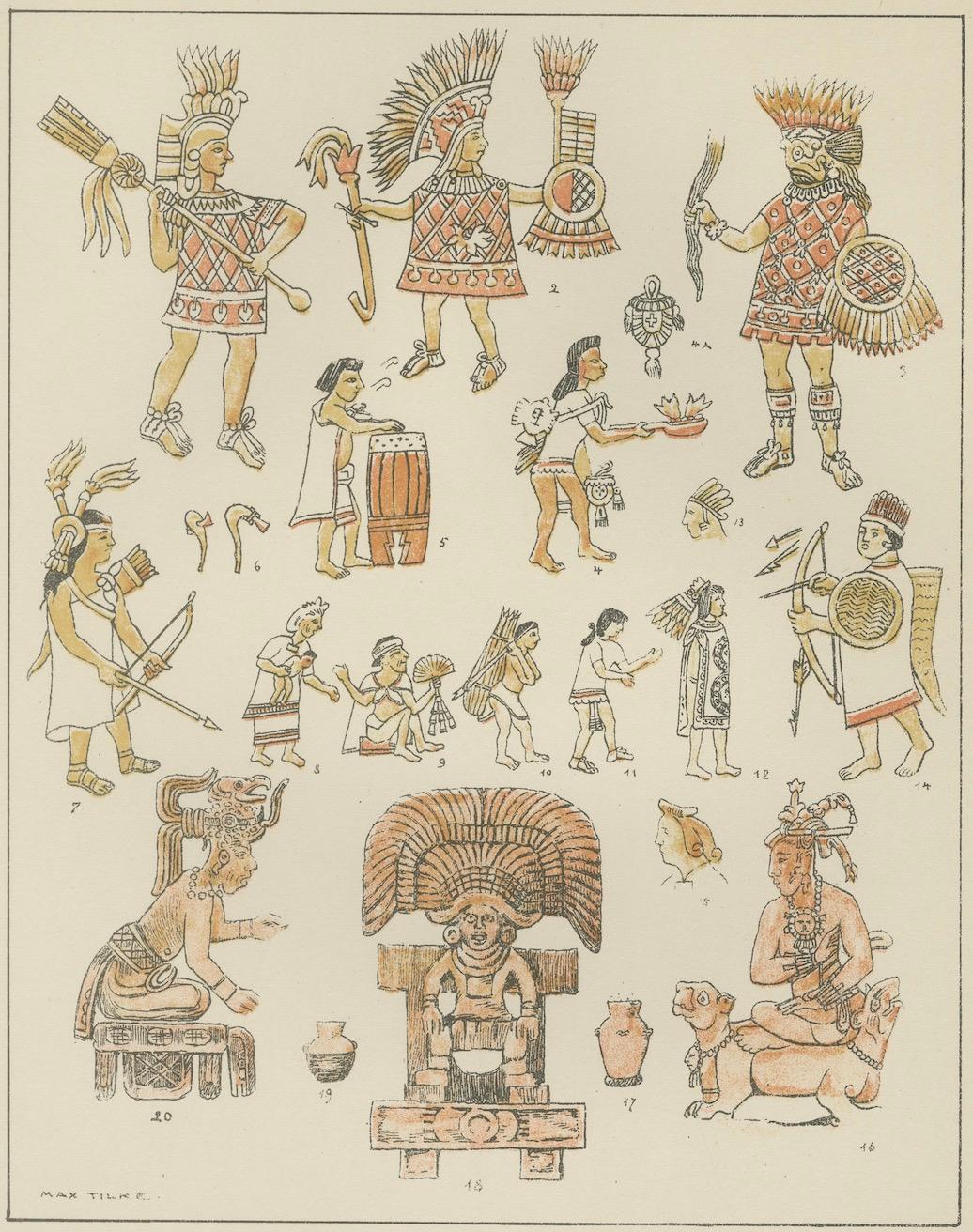
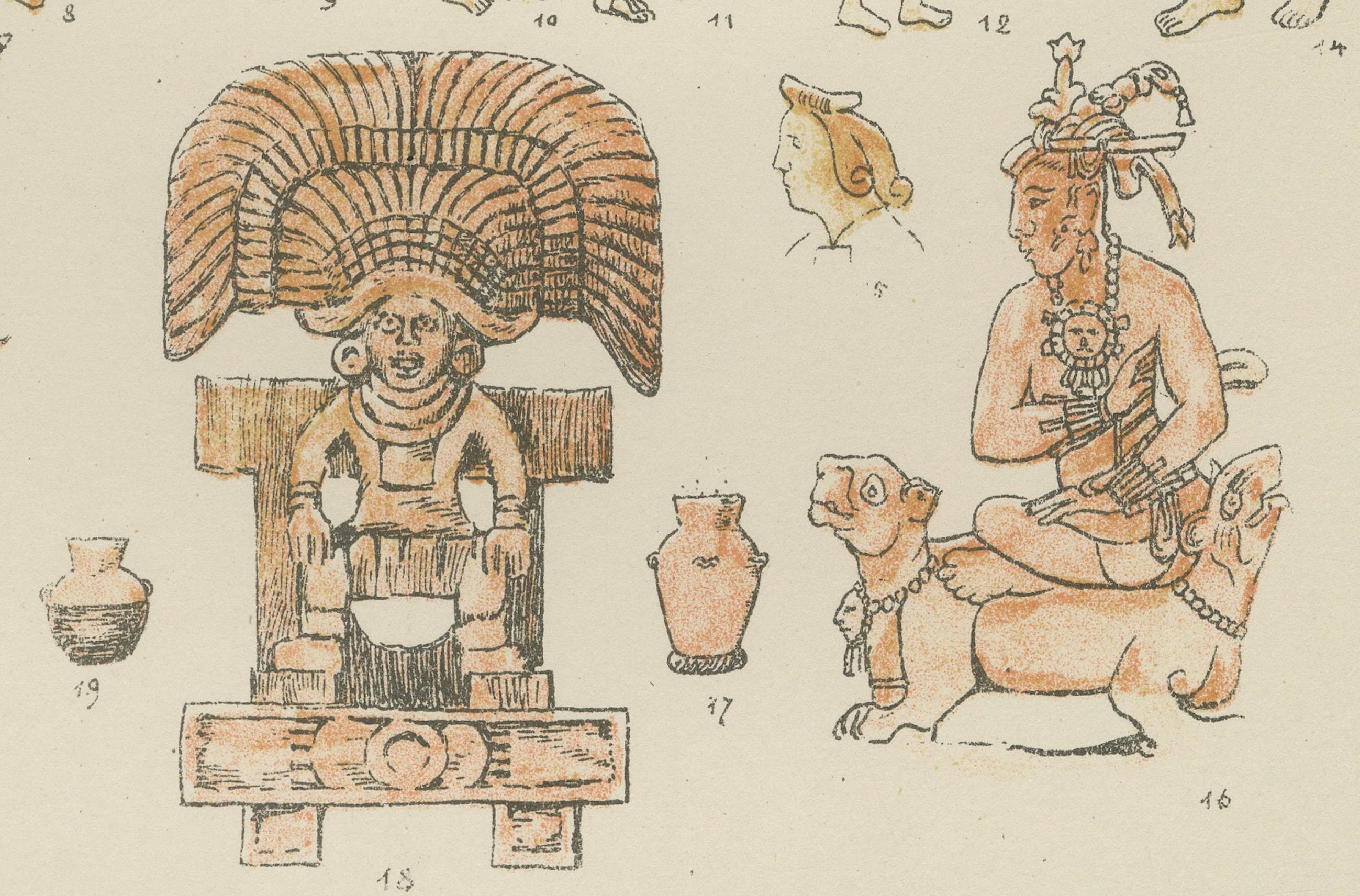
An original early 1900s chromolithograph published by Ernst Wasmuth A.-G. in Berlin, illustrating a wide range of pre-1500 Indigenous American ceremonial figures, deities, warriors, dancers, and ritual scenes. Drawn by Max Tilke, one of the leading specialists in historical costume and ethnographic illustration, this plate offers an engaging overview of cultural iconography from ancient Mesoamerica and South America.
The composition presents a collection of small vignettes inspired by archaeological sources, temple reliefs, codices, and early colonial manuscript drawings. At the top are elaborately adorned ceremonial dancers and warriors with headdresses, featherwork, shields, and symbolic regalia. These figures reflect the artistic language of Aztec and other Mesoamerican cultures, known for richly patterned textiles, feather crowns, and ritual objects.
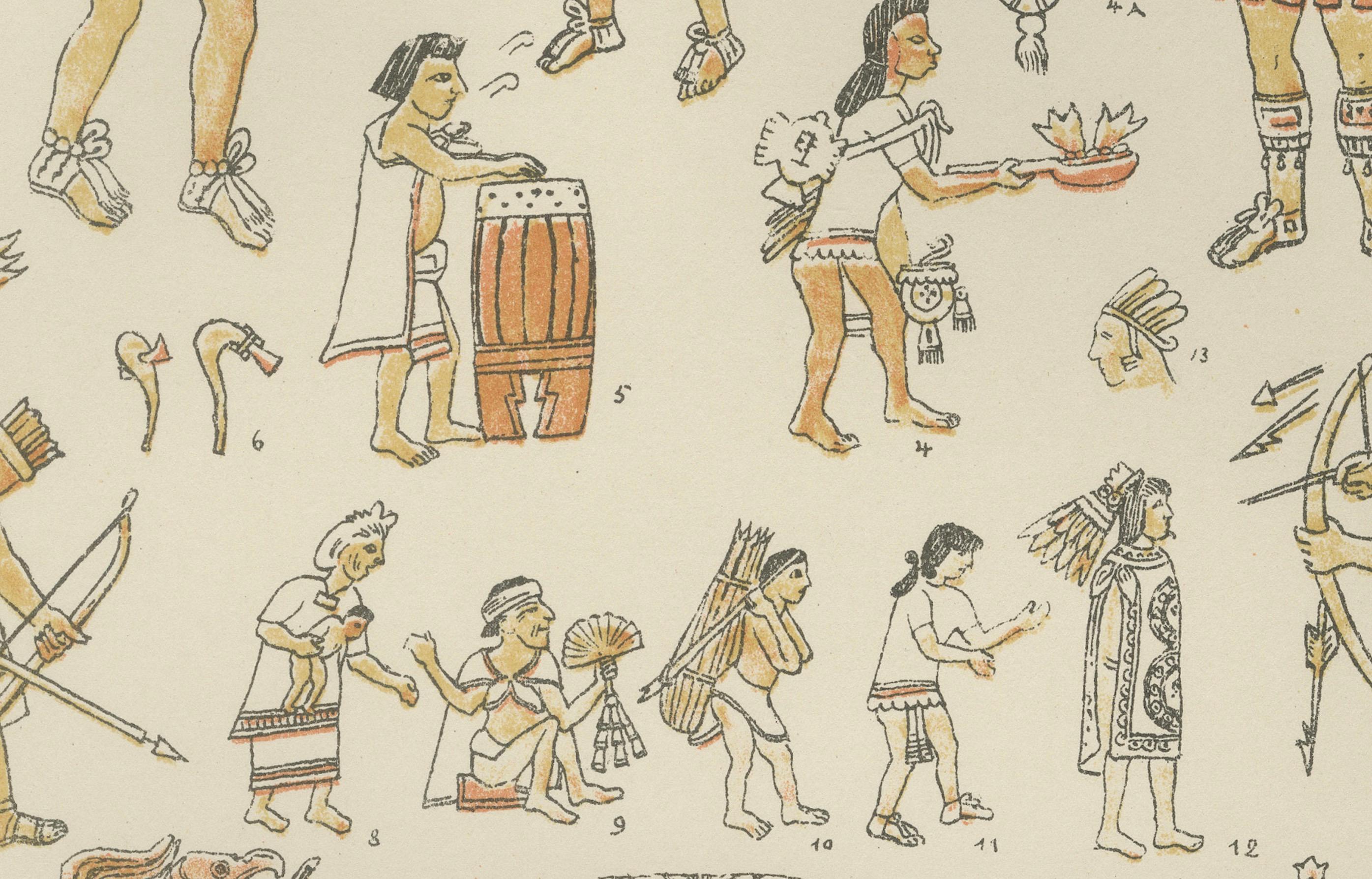
Below them are musicians, drummers, dancers, and attendants performing ceremonial roles. Additional details include profile heads showing variations of hairstyles, headdresses, and ear ornaments. Toward the lower section, the plate features divinities or priestly figures seated on sculptural thrones, ritual vessels, and a richly decorated ceremonial throne topped with an impressive feather structure. On the right a seated figure holds regalia and wears traditional body ornaments.
While Tilke’s work is interpretative and based on academic knowledge of the era, the sheet captures important elements of Indigenous American ceremonial attire and symbolic motifs just prior to European contact. For collectors of early ethnographic illustration, pre-Columbian studies, historical costume, or world cultures, this plate offers both decorative appeal and cultural value.
Condition:
Very good condition for age. Mild toning to the margins, a few small edge spots, and very light handling marks typical of early 20th-century paper. Image area clean with strong, even color.
Framing suggestion:
This plate looks striking in a natural maple, walnut, or black frame with a warm off-white mat. A wider mat works well to give space to the detailed smaller figures, and museum-grade glass is recommended to preserve the subtle color range.
Technique:
Chromolithograph
Maker:
Max Tilke (artist); Ernst Wasmuth A.-G., Berlin, c. 1900