About this sheet
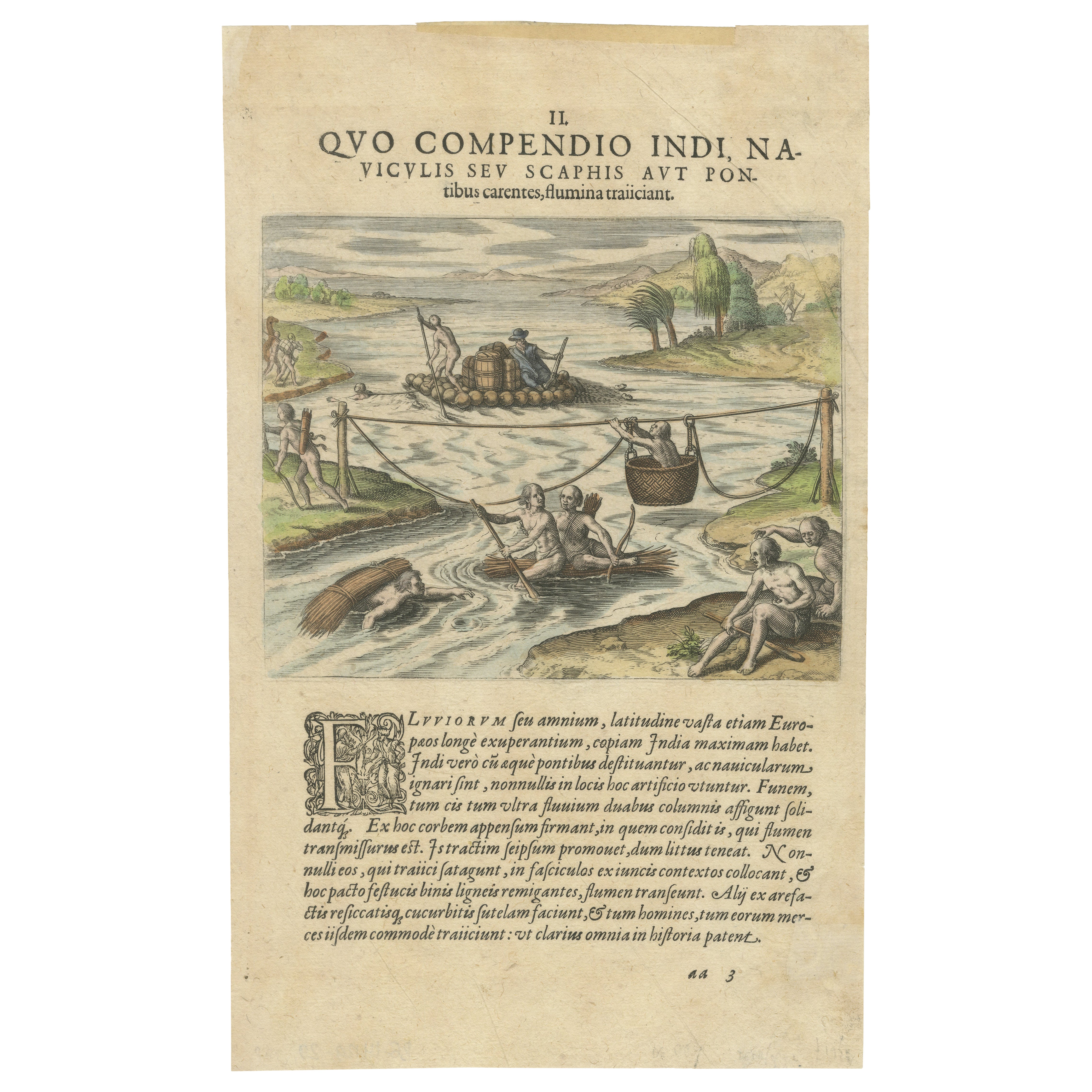
America – Indians Crossing a River, Rafts and Canoes – De Bry, Latin Edition c.1594–1596
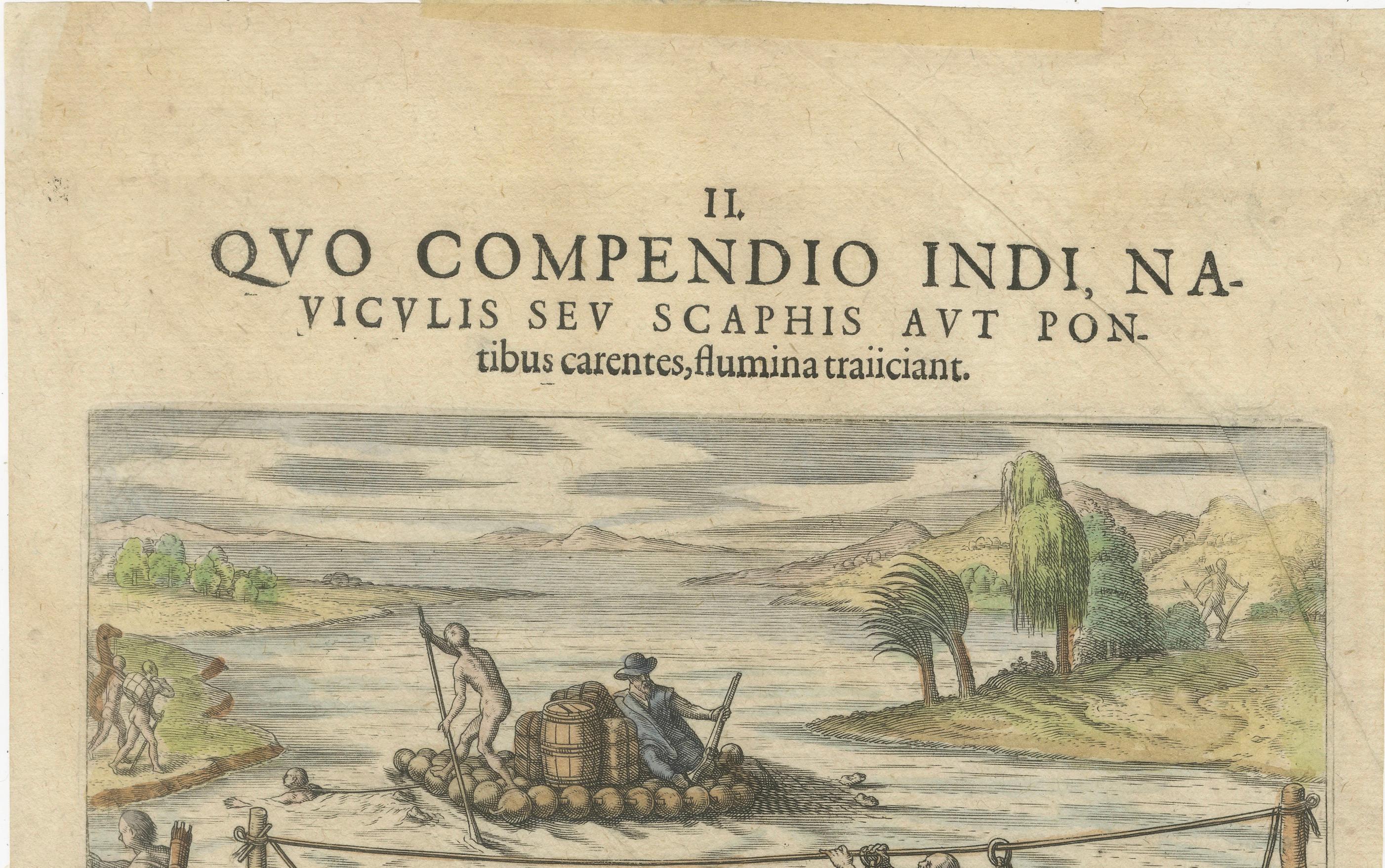
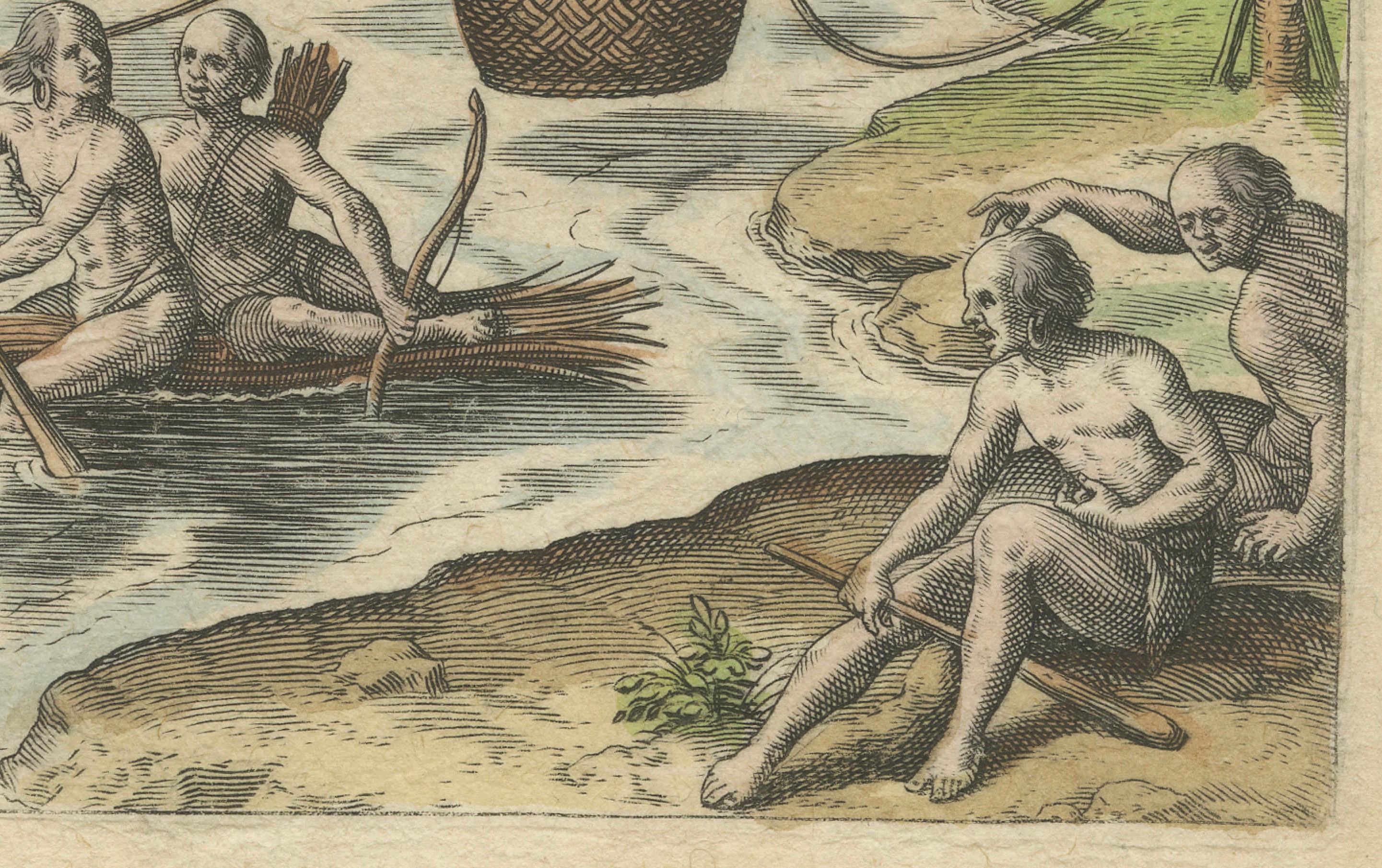
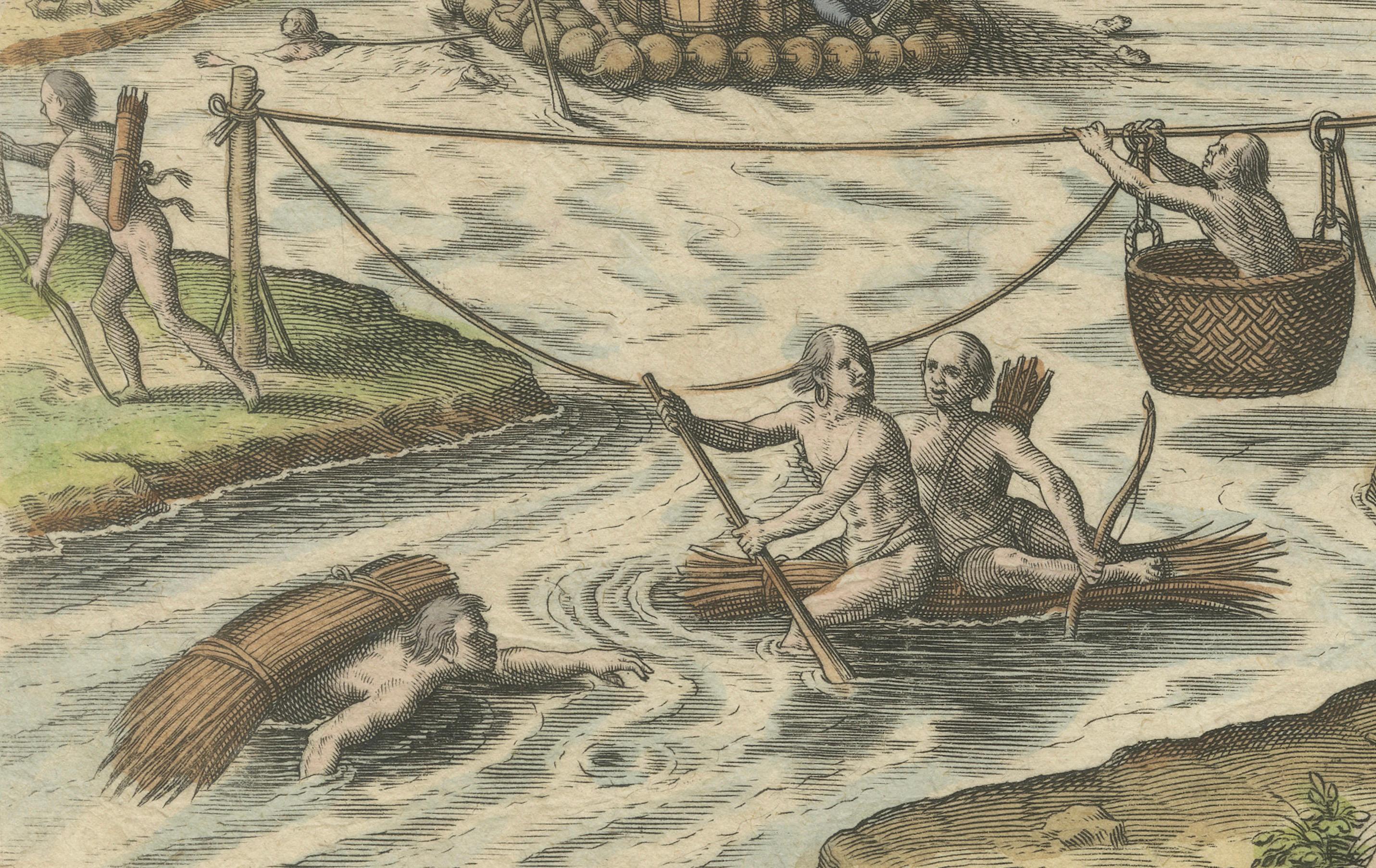
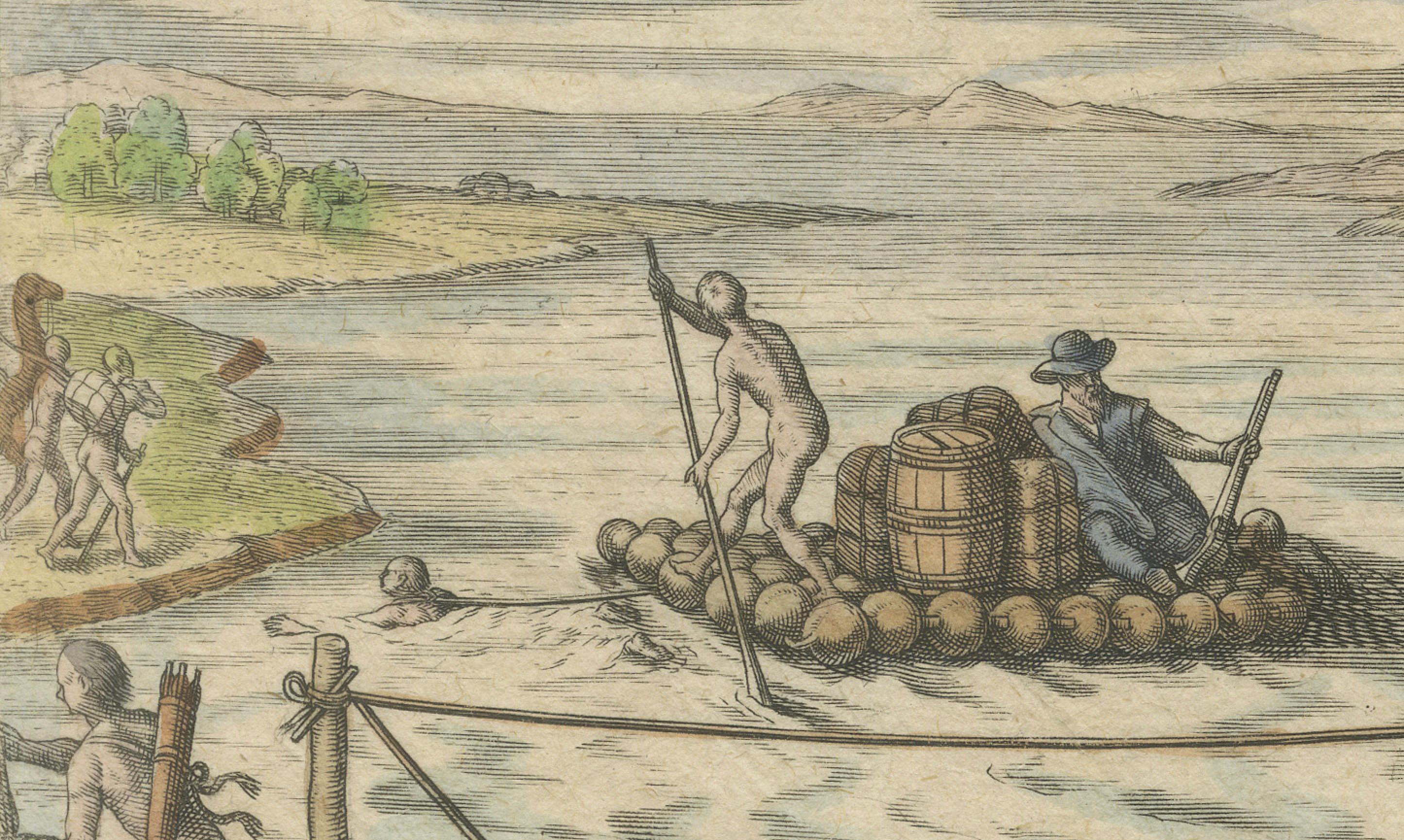
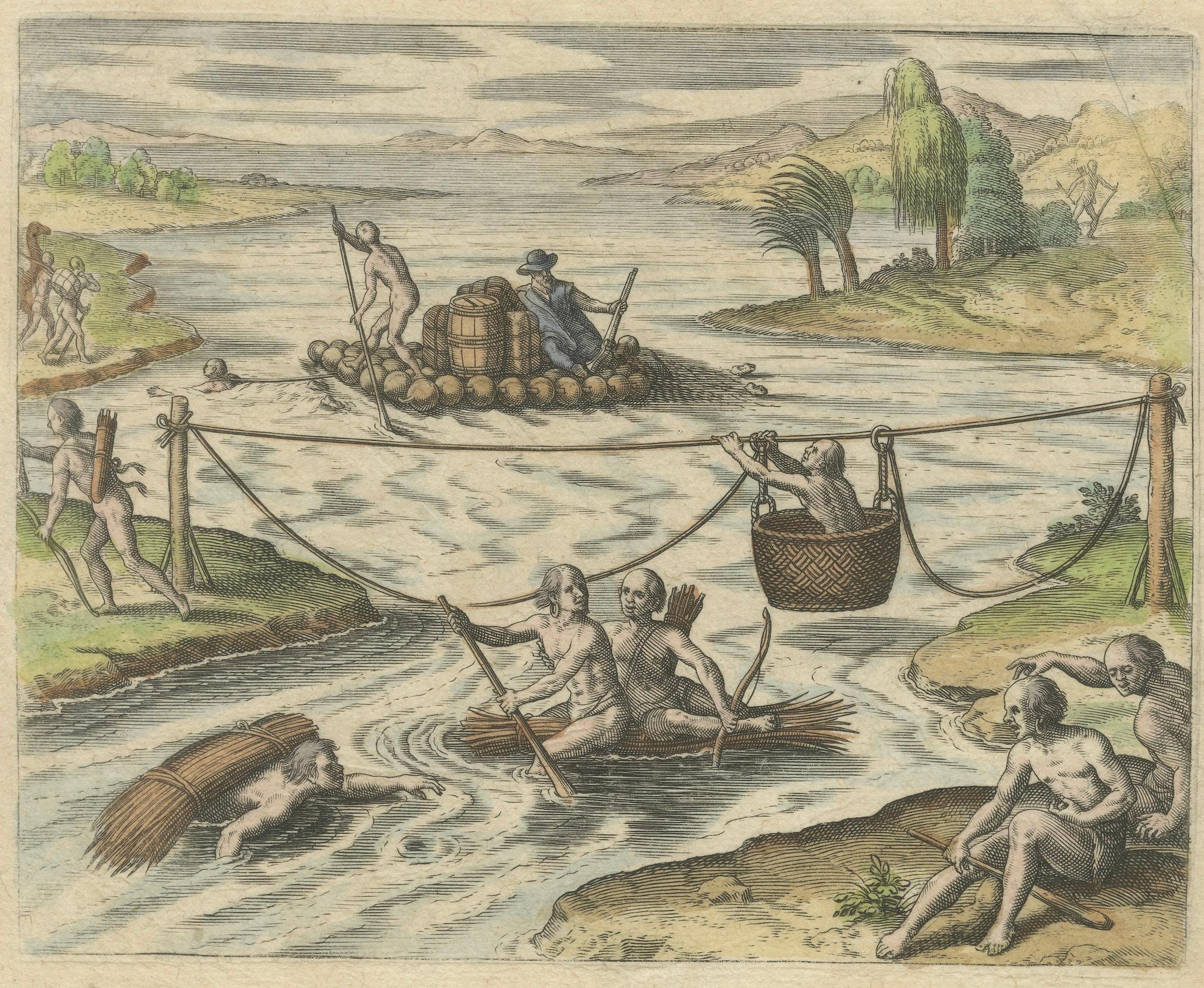
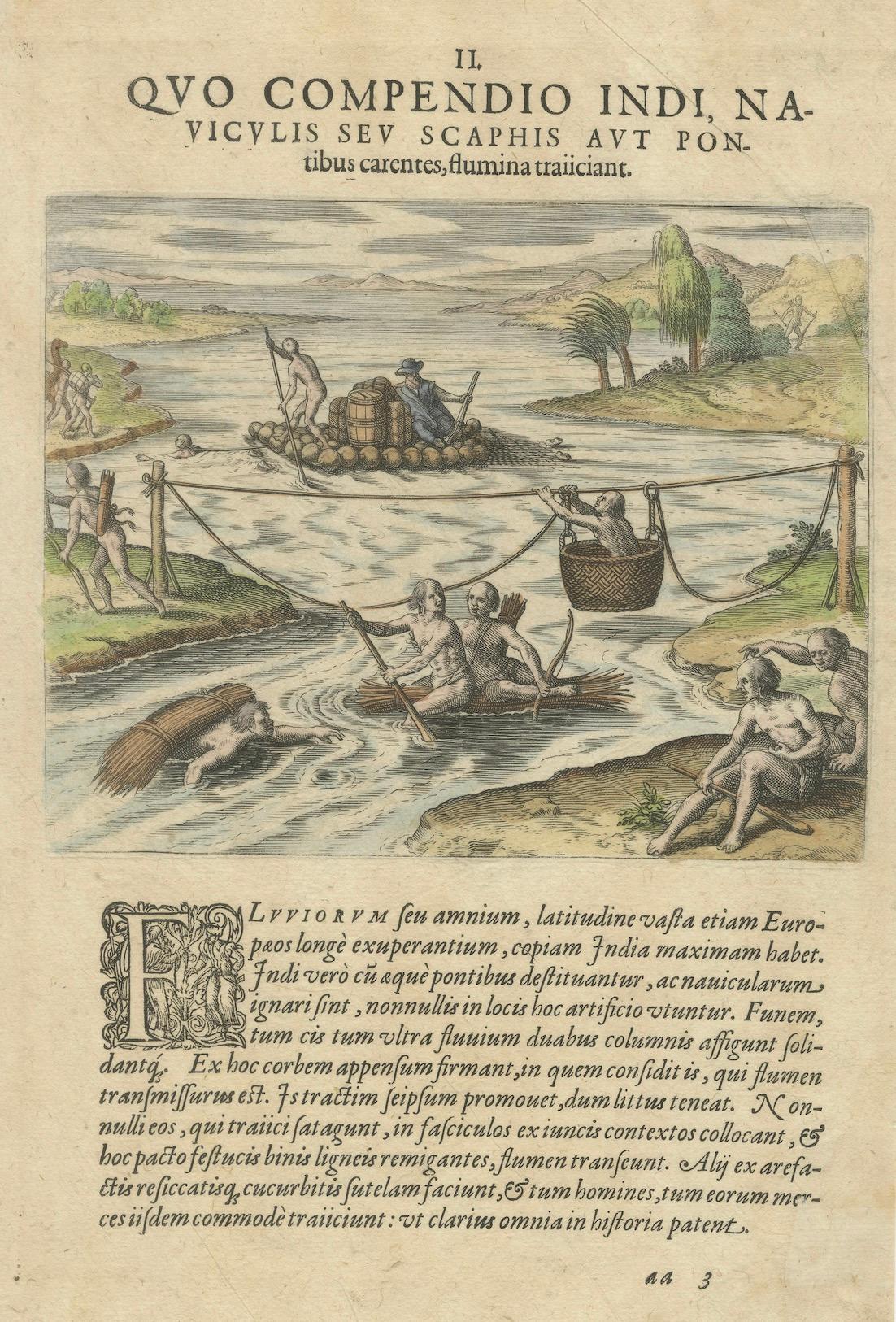
This finely engraved and hand-colored copperplate originates from the celebrated America series by Theodor de Bry, one of the most influential visual chronicles of early European encounters with the New World. The scene depicts Indigenous inhabitants of New Spain (present-day Mexico) crossing a river using rafts, canoes, and suspended baskets, transporting people and goods across the water in an ingenious and highly organized manner. Barrels and supplies are shown secured on floating platforms, while swimmers assist from below, offering a vivid and ethnographically rich view of Indigenous river transport techniques as observed by early European travelers.
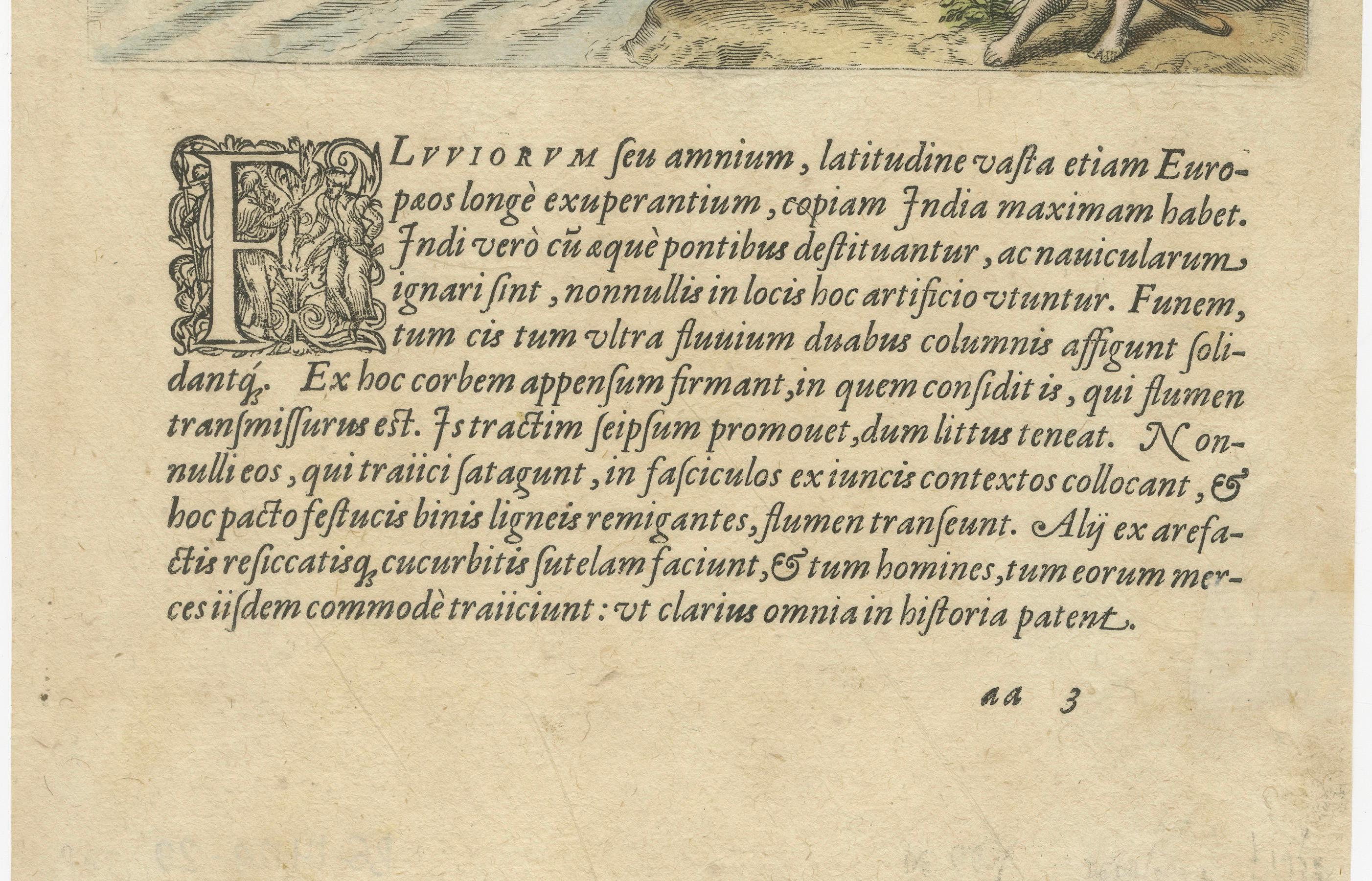
The print is from the original Latin edition of De Bry’s America, published in Frankfurt am Main in the final decade of the 16th century, circa 1594–1596. The Latin title “Quo compendio Indi, naviculis seu scaphis…” appears above the image, with a corresponding Latin text below, while the verso remains blank, a defining characteristic of the early folio Latin issues. These impressions precede the later abridged and vernacular editions and represent the earliest and most desirable state for collectors.
Theodor de Bry’s engravings were produced after first-hand travel accounts and drawings by explorers such as Girolamo Benzoni and others, translated into powerful visual narratives that shaped Europe’s perception of the Americas for generations. The quality of engraving, clarity of line, and balanced composition exemplify the high standards of De Bry’s Frankfurt workshop. The hand coloring, applied at an early date, enhances both the legibility and decorative appeal of the scene without obscuring engraved detail.
Unlike the later 17th-century abridged editions edited by Matthäus Merian, this print belongs to the original monumental folio series, issued with Latin text and blank verso, intended for an international scholarly audience. As such, it represents the foundational phase of De Bry’s publishing enterprise and is increasingly sought after by collectors of early Americana, ethnography, and exploration imagery.
Condition:
Good to very good condition. Light age-related toning and minor surface wear consistent with a late 16th-century copper engraving. Paper remains sound and supple, with strong impressions. Hand coloring well preserved. No restoration observed. Blank on the reverse, as issued.
Framing tips:
This print presents beautifully in a simple dark wood or ebonized frame with a wide off-white or light grey mat, allowing the hand coloring and fine engraving to stand out. Museum-style glazing is recommended to protect the early pigments and paper.
Technique: Copper engraving, hand-colored
Maker: Theodor de Bry, Frankfurt am Main, circa 1594–1596