About this sheet
Antique Japan View — Meaco (Kyoto), Deshima & Japanese Scenes, Chatelain, c.1719
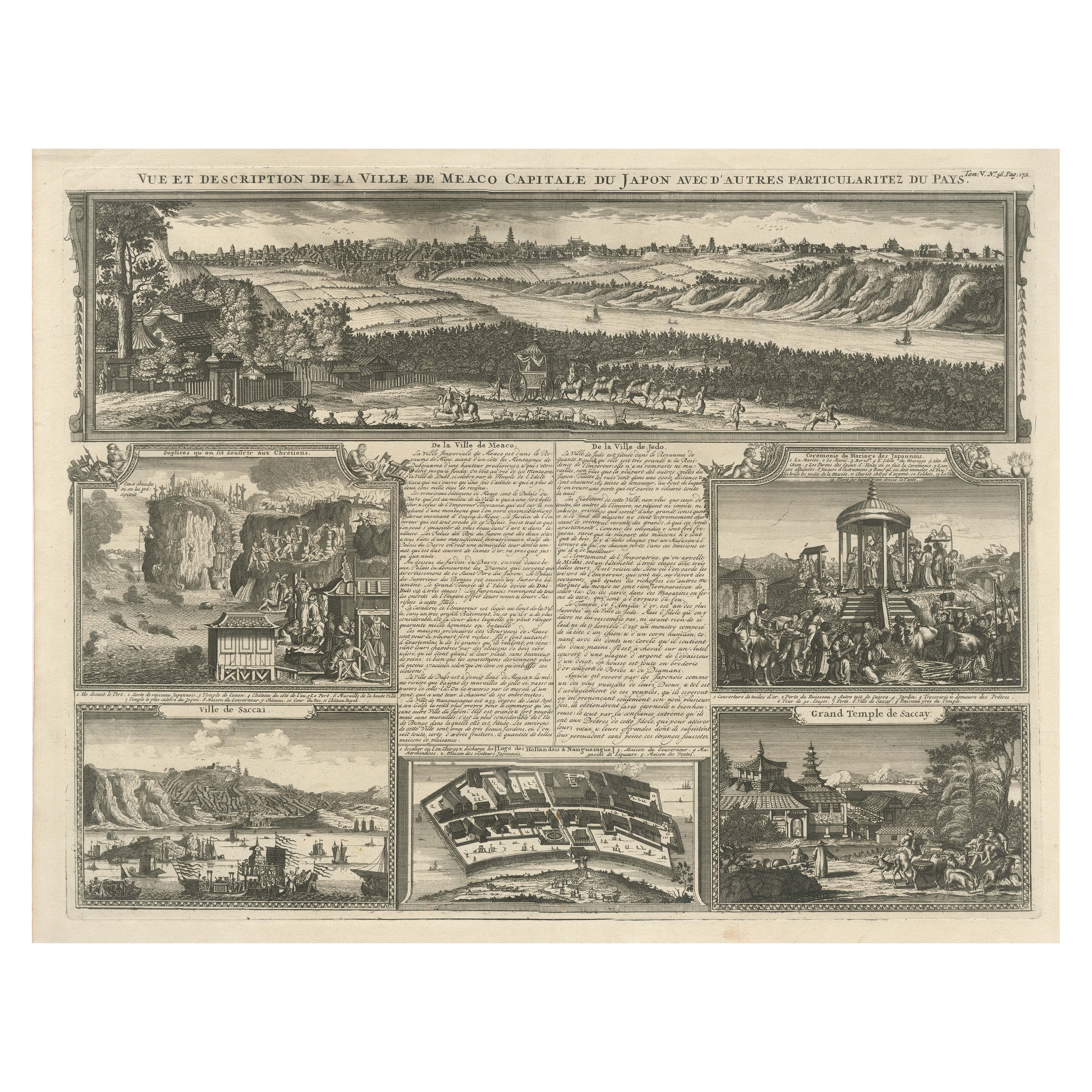
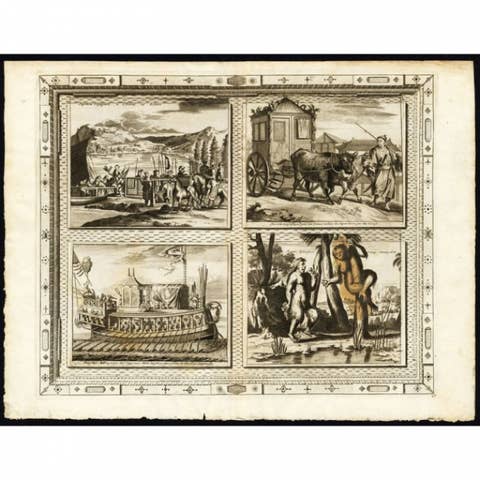
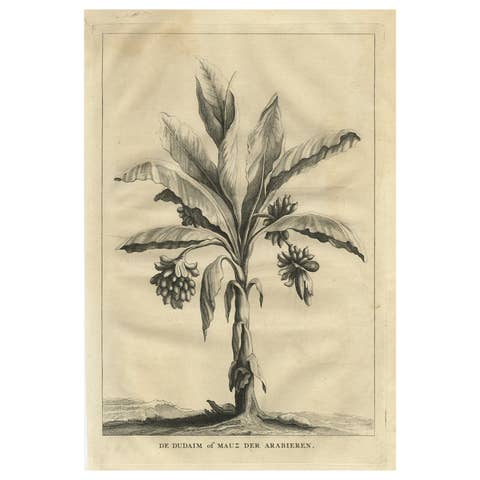
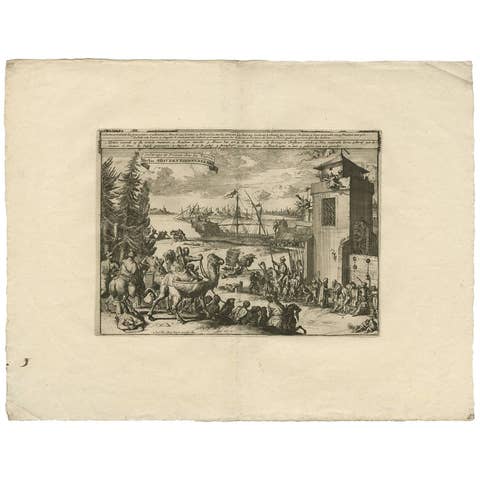
This remarkable early 18th-century copperplate engraving titled “Vue et Description de la Ville de Meaco Capitale du Japon avec d'autres particularitez du pays” was published around 1719 by Henri Abraham Chatelain in Amsterdam as part of his celebrated Atlas Historique. The engraving offers a richly detailed European interpretation of Japan during the Edo period, combining panoramic landscape views with ethnographic scenes and architectural studies that reflect Enlightenment-era curiosity about East Asia.
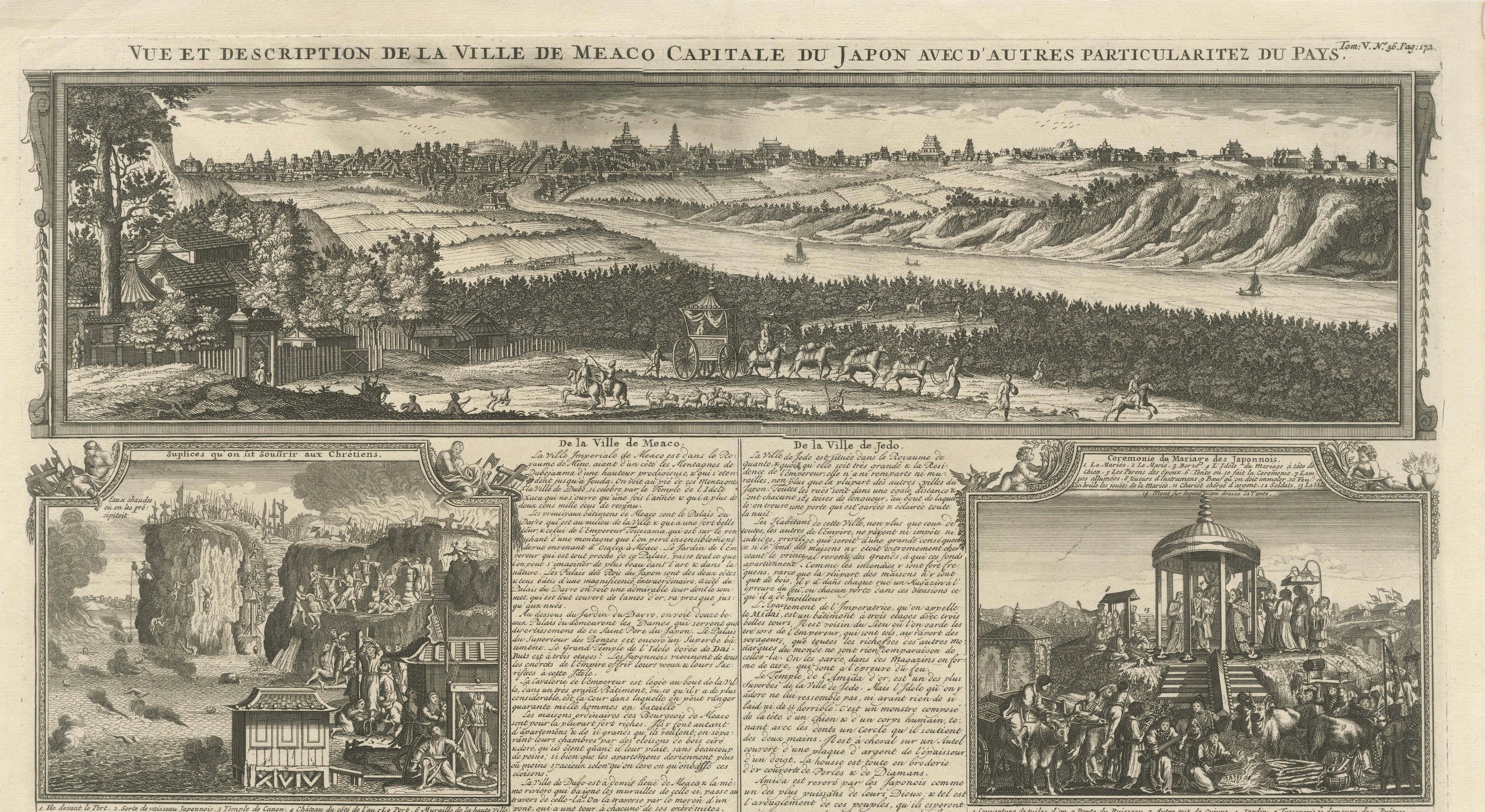
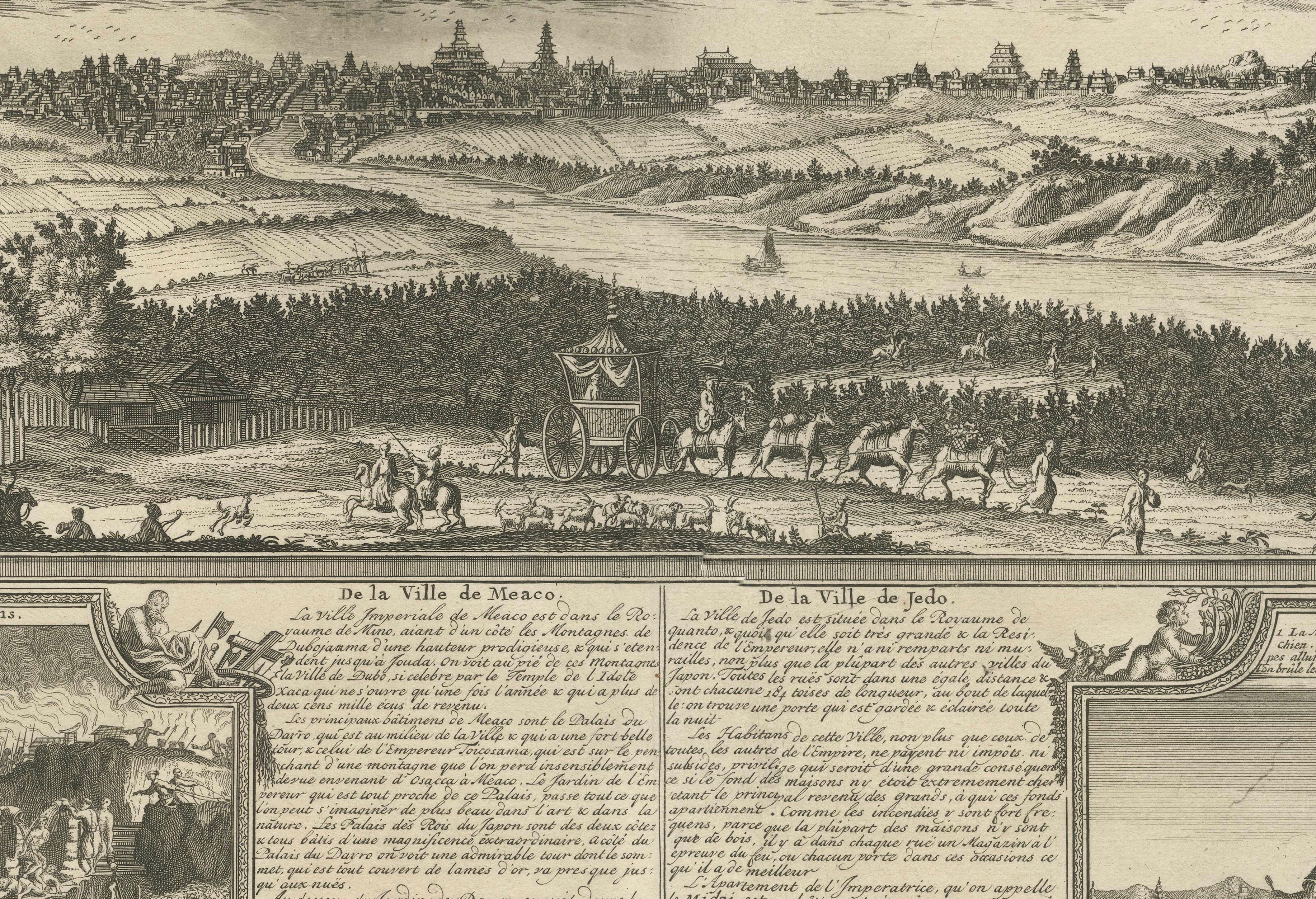
The main panoramic scene across the upper section depicts Meaco (modern-day Kyoto), which European sources of the time considered the imperial capital of Japan. The city unfolds across a wide landscape framed by rivers, hills, and temple complexes, rendered with refined engraved linework and atmospheric perspective. Processional figures and travelers animate the foreground, enhancing both narrative interest and decorative balance.
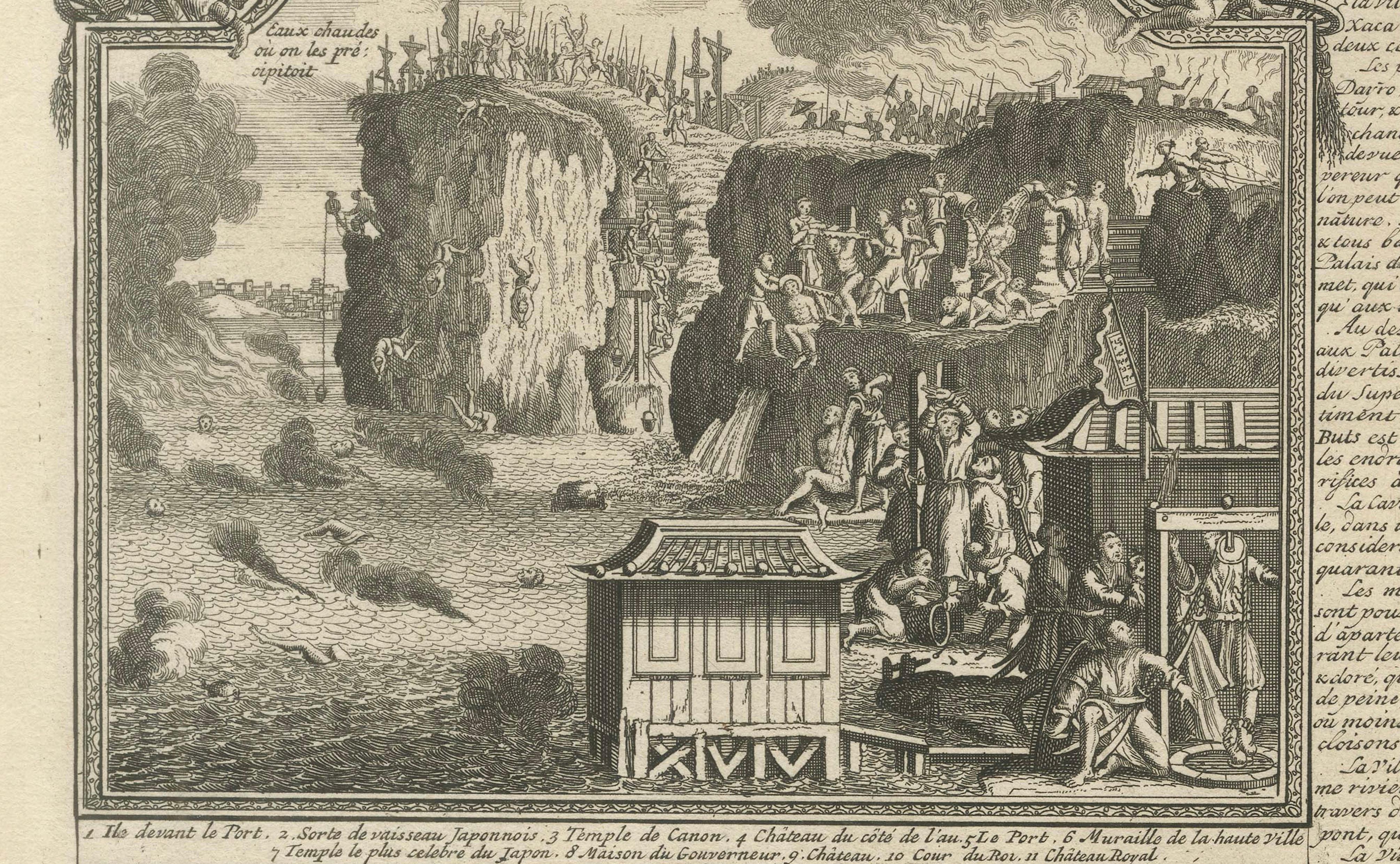
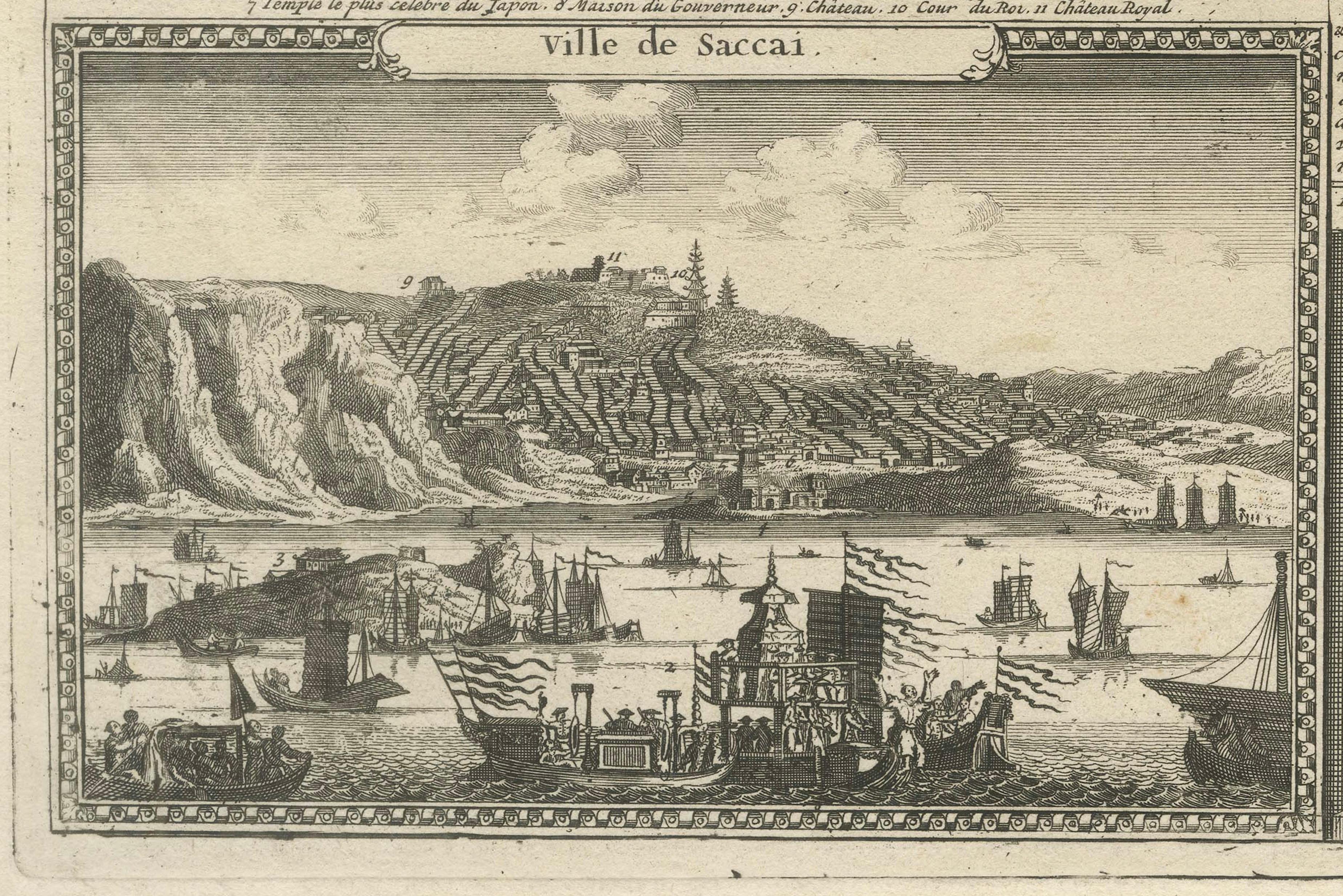
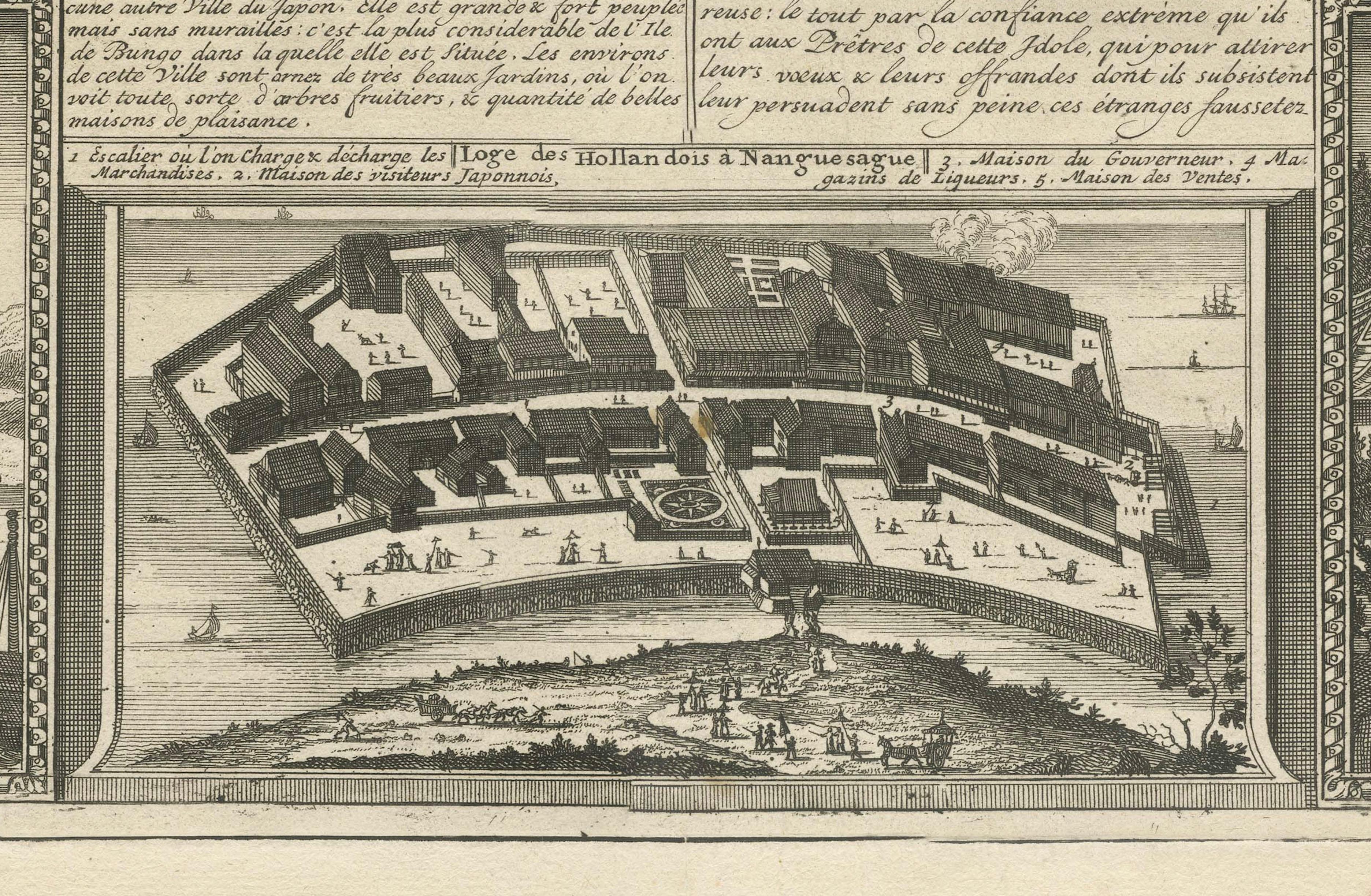
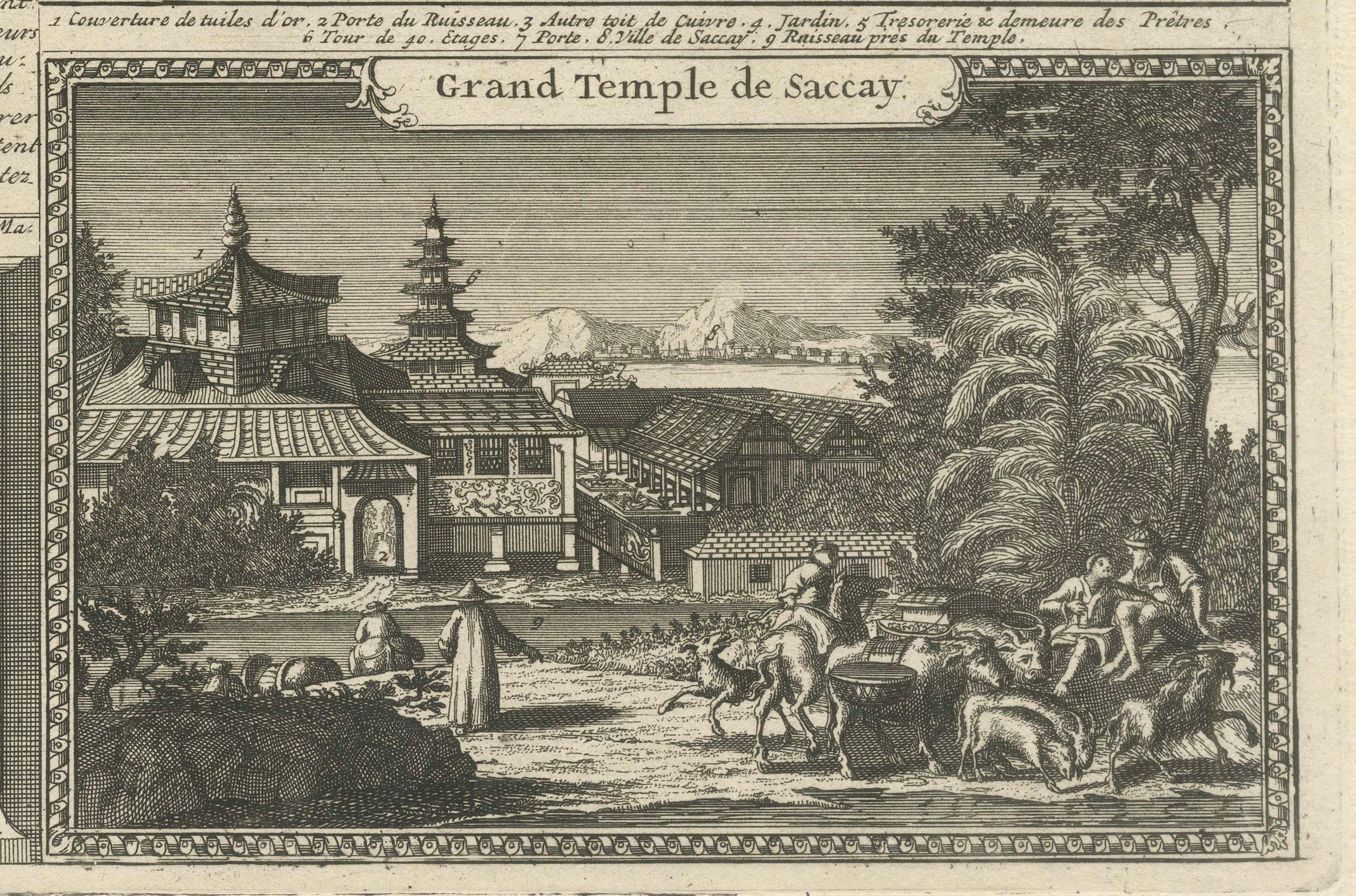
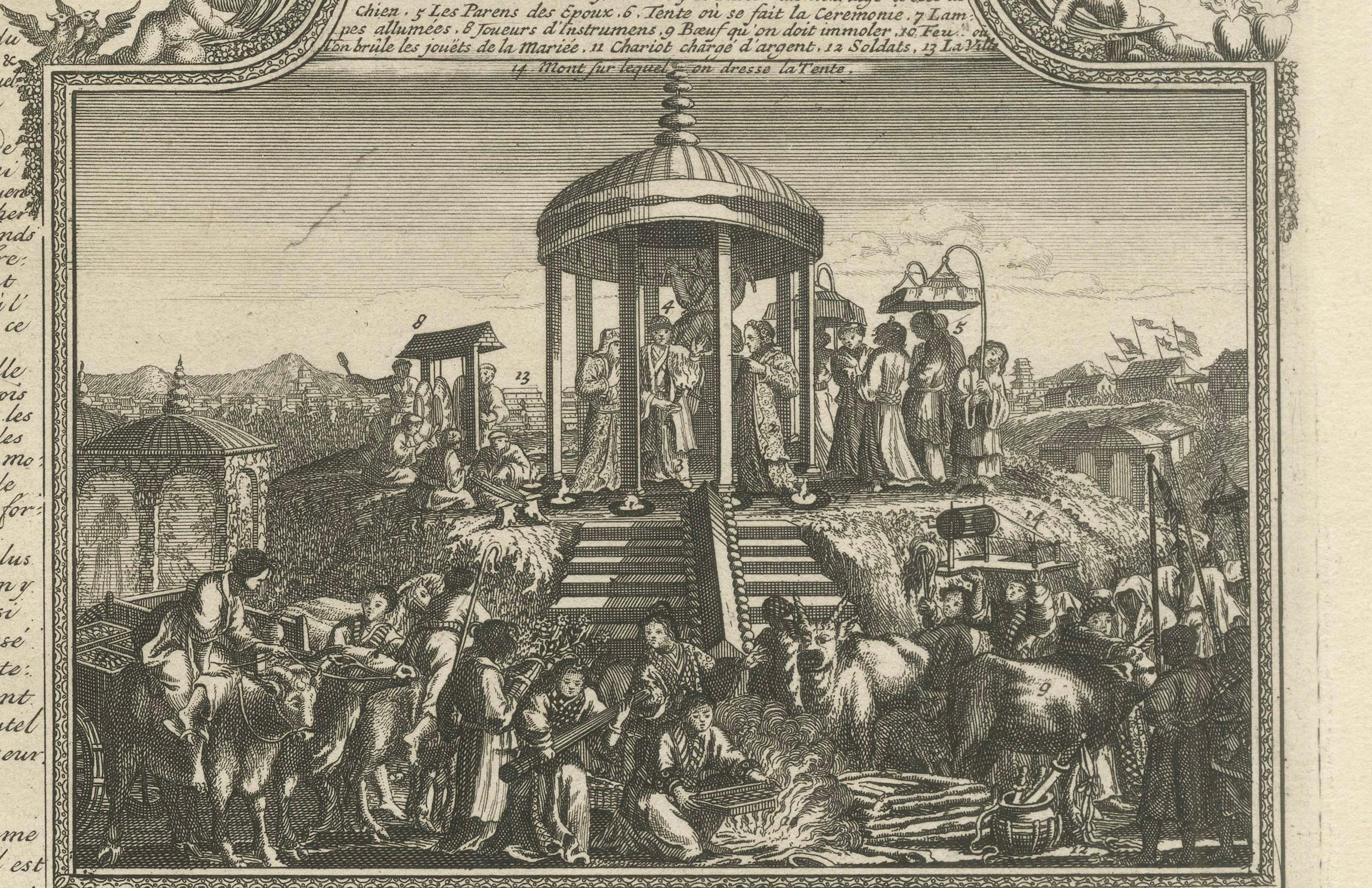
Below the panorama, several inset views present additional aspects of Japanese life and geography. These include a view of the town of Saccai (Sakai), historically an important port and commercial center; a ceremonial Japanese wedding scene illustrating social customs; and a depiction of the Dutch trading enclave at Deshima in Nagasaki — the only location where Europeans (The Dutch) were permitted limited trade with Japan during the period of national isolation. Another scene references the trials and persecution of Christians in Japan, reflecting historical events that shaped European perceptions of the country. The central French text provides historical descriptions and commentary on Meaco and Yedo (modern Tokyo), combining geographic knowledge with cultural interpretation.
Chatelain’s Atlas Historique stands among the most ambitious illustrated encyclopedic works of the early 18th century, blending geography, religion, politics, and ethnography into visually compelling plates intended for both education and display. Engravings depicting Japan were especially prized in Europe, where firsthand information was scarce, making this sheet an important historical document of cross-cultural exchange and early global publishing.
Decoratively, the engraving has strong visual presence, with its structured layout of panoramic and vignette scenes creating a dynamic yet balanced composition. It works exceptionally well within interiors featuring antique maps, maritime history, or Asian-inspired decorative themes.
These are original print(s) from the year of publication, not later reproductions. The print is offered unframed, enabling custom framing to personal or interior preferences. Any framed images shown are for visual inspiration only.
Condition report: Good antique condition consistent with early 18th-century atlas engravings. Age-related toning present; light handling wear to margins. Central vertical fold line visible as typical for bound atlas plates; plate impression visible.
Framing tips: A dark walnut or ebonized frame paired with a wide ivory or warm off-white mat will enhance the engraving’s panoramic composition and intricate detail. UV-protective museum glass is recommended to preserve the paper and highlight the fine engraved lines.
Technique: Copperplate engraving
Maker: Henri Abraham Chatelain, Amsterdam, circa 1719