About this sheet
Antique Chinese Temple & Pagoda Engraving — Chatelain, 1719
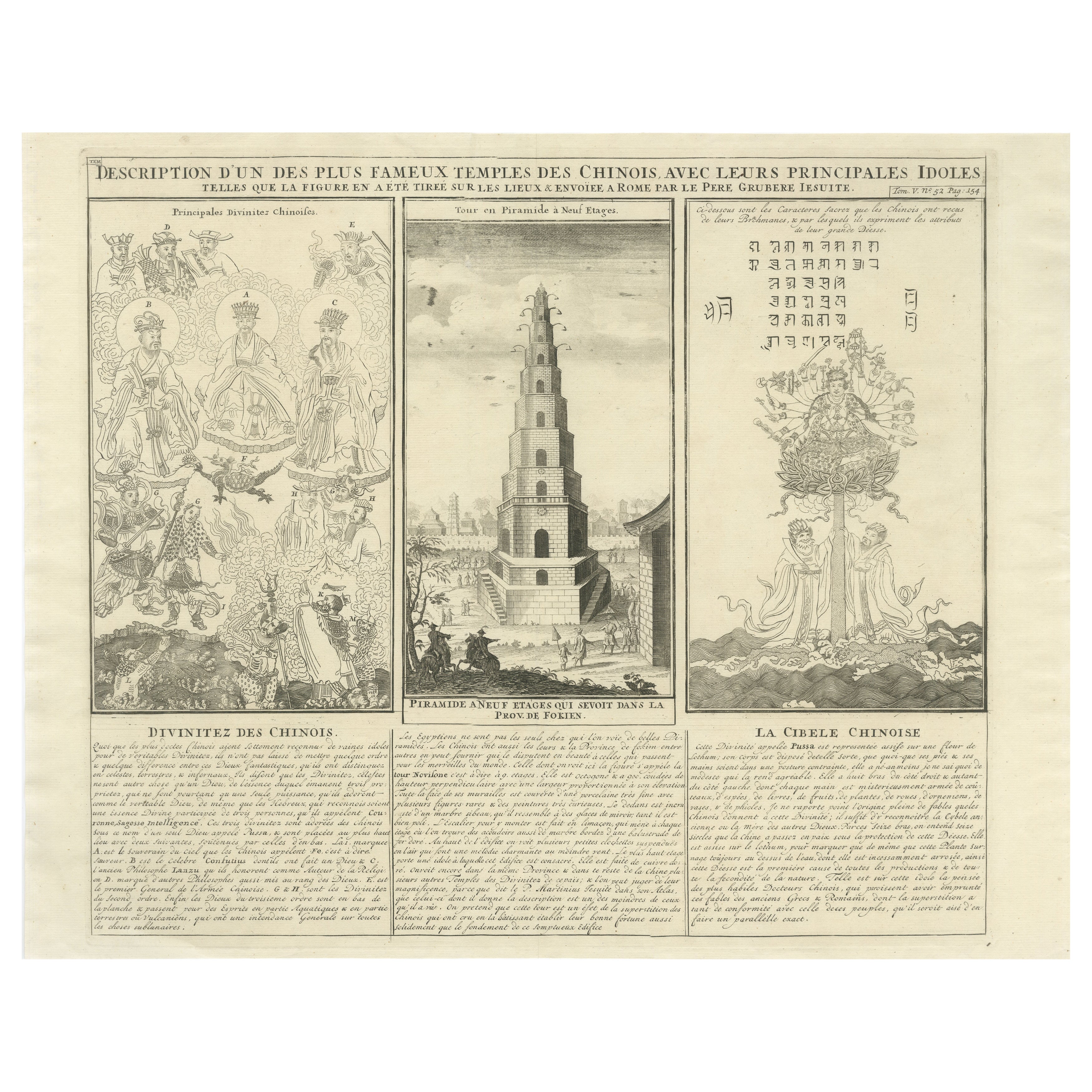
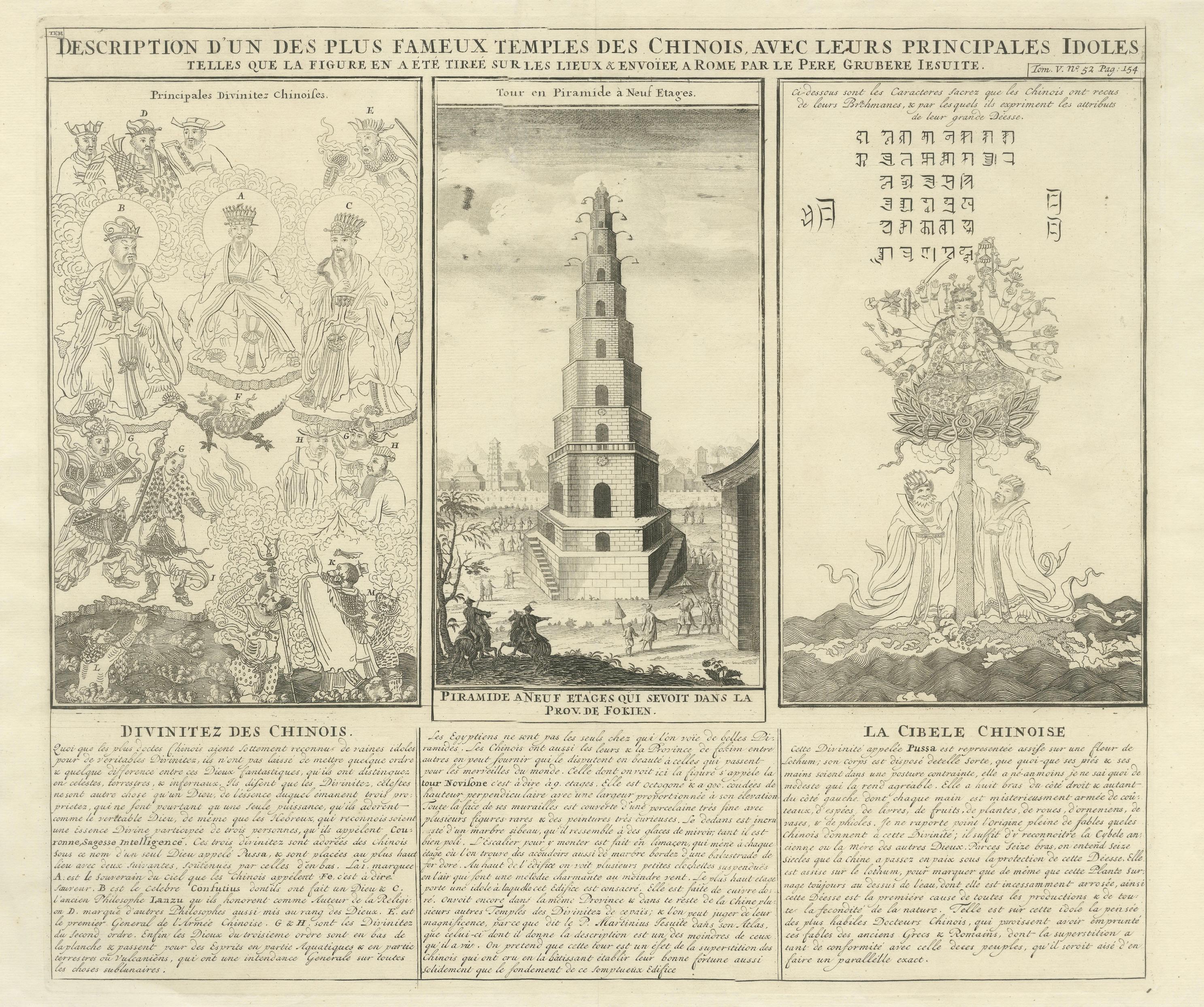
This important early 18th-century copperplate engraving titled “Description d'un des plus fameux temples des Chinois, avec leurs principales idoles” was published around 1719 by Henri Abraham Chatelain in his monumental Atlas Historique, one of the Enlightenment’s most ambitious illustrated encyclopedic works. The plate presents a rare and visually rich European interpretation of Chinese religious architecture and belief, based on reports and drawings sent to Rome by the Jesuit missionary Father Johann Grueber.
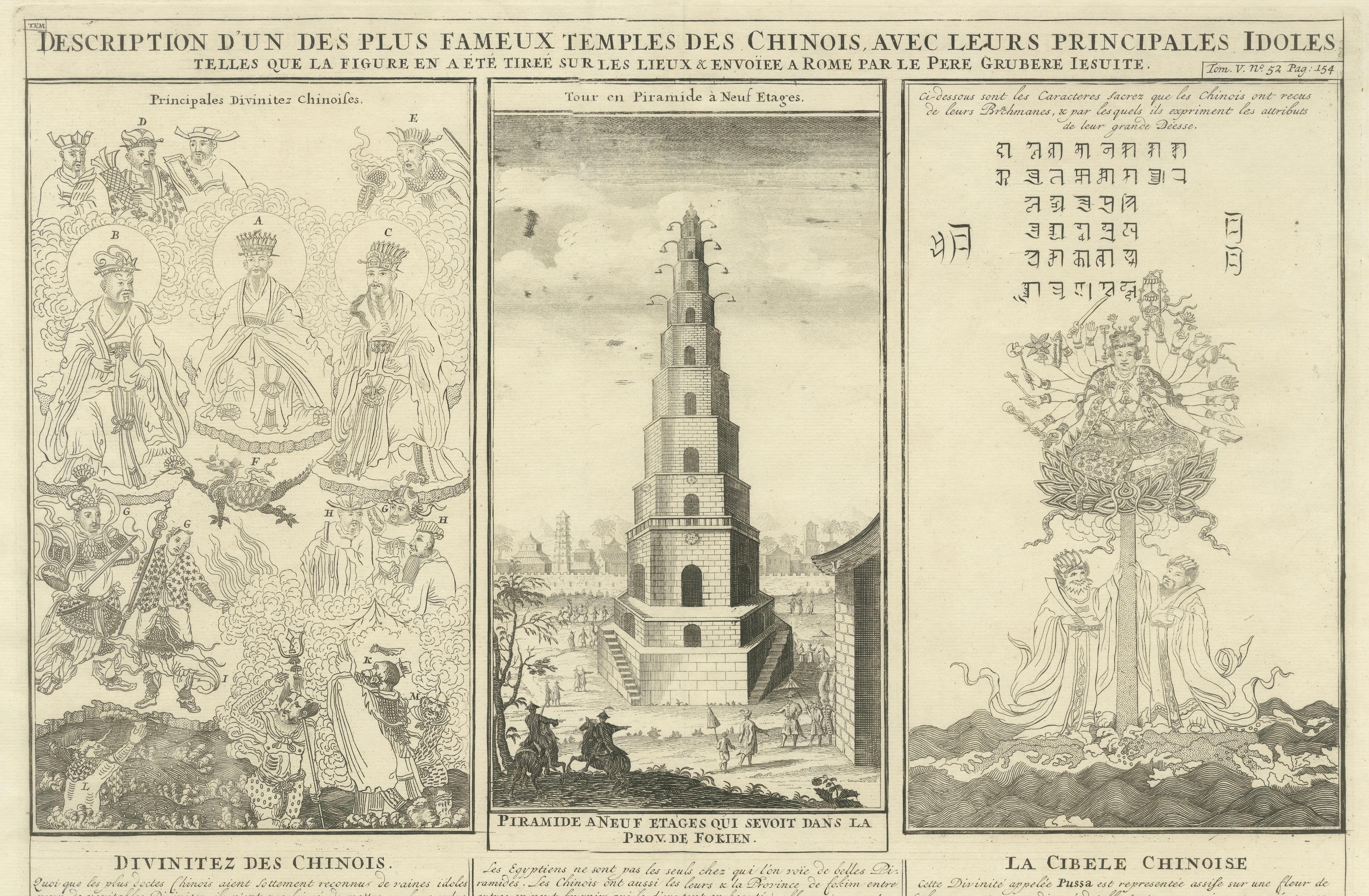
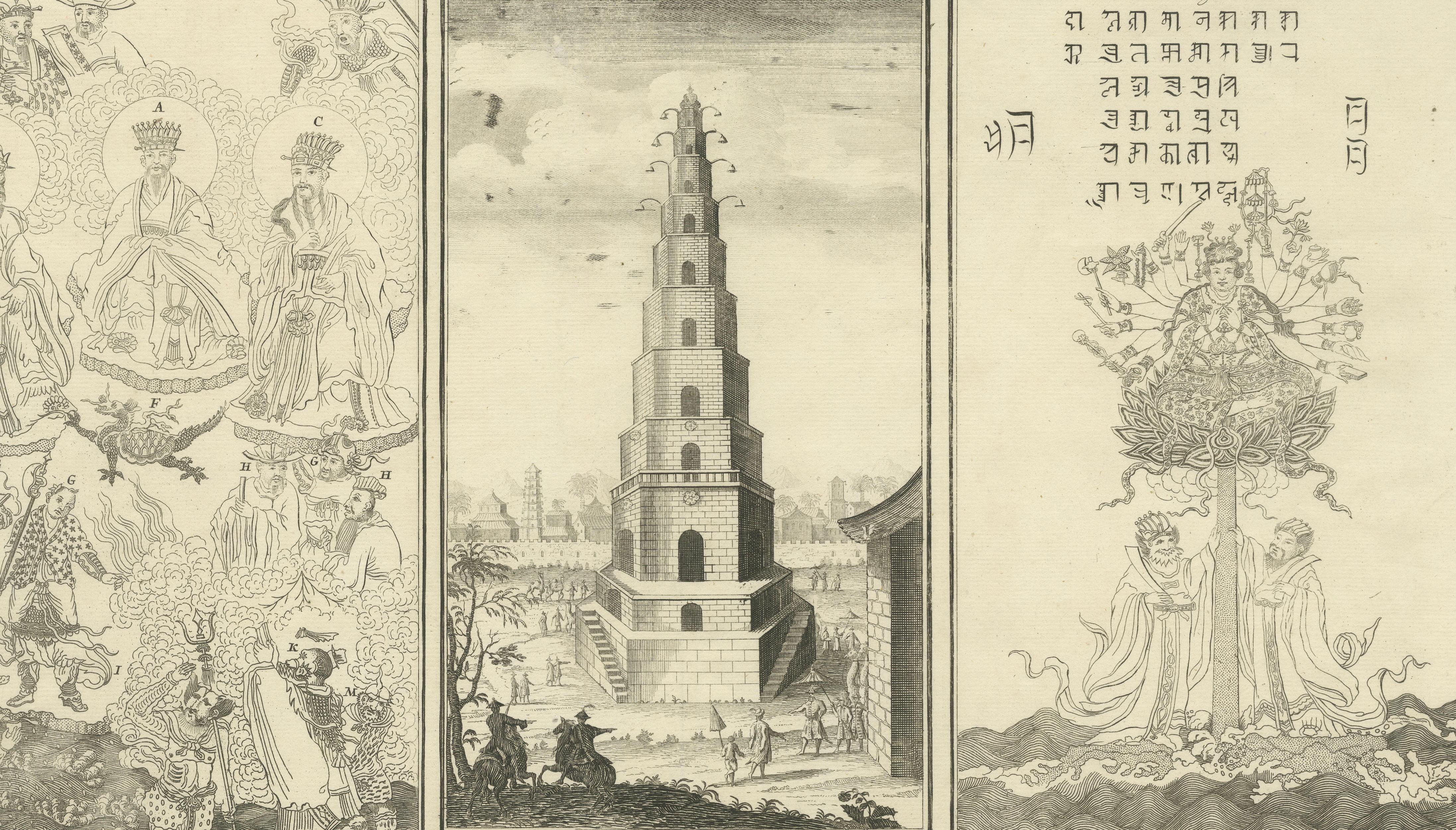
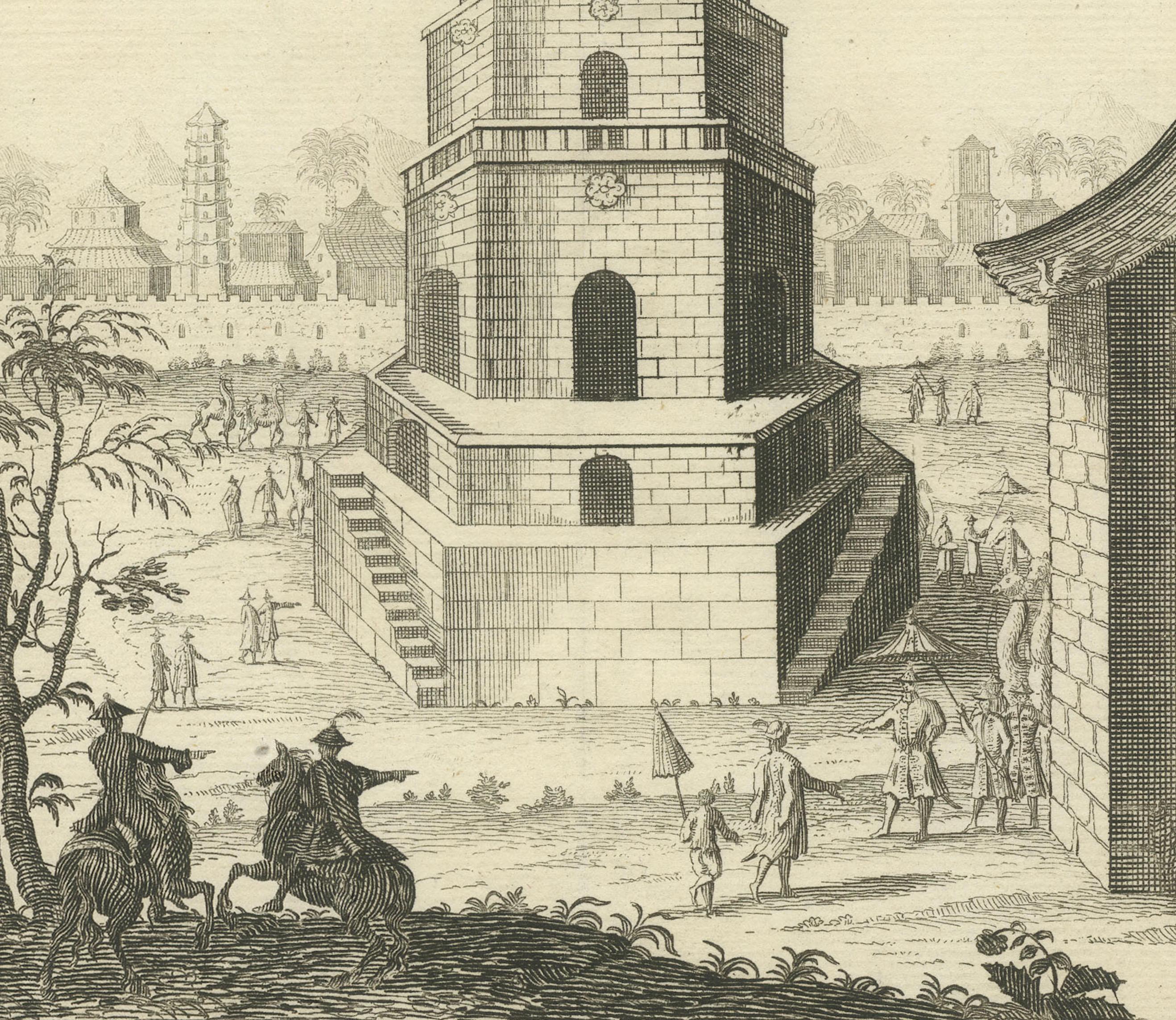
The composition is divided into three principal panels. At the center stands a striking nine-storied pagoda described as being located in the province of Fokien (Fujian). The structure rises in pyramidal tiers, carefully rendered with architectural precision and atmospheric depth. Small figures at its base provide scale, emphasizing the monument’s grandeur. The subtitle below identifies it as a “Pyramid of nine stories seen in the province of Fokien,” reflecting the European terminology applied to East Asian architectural forms.
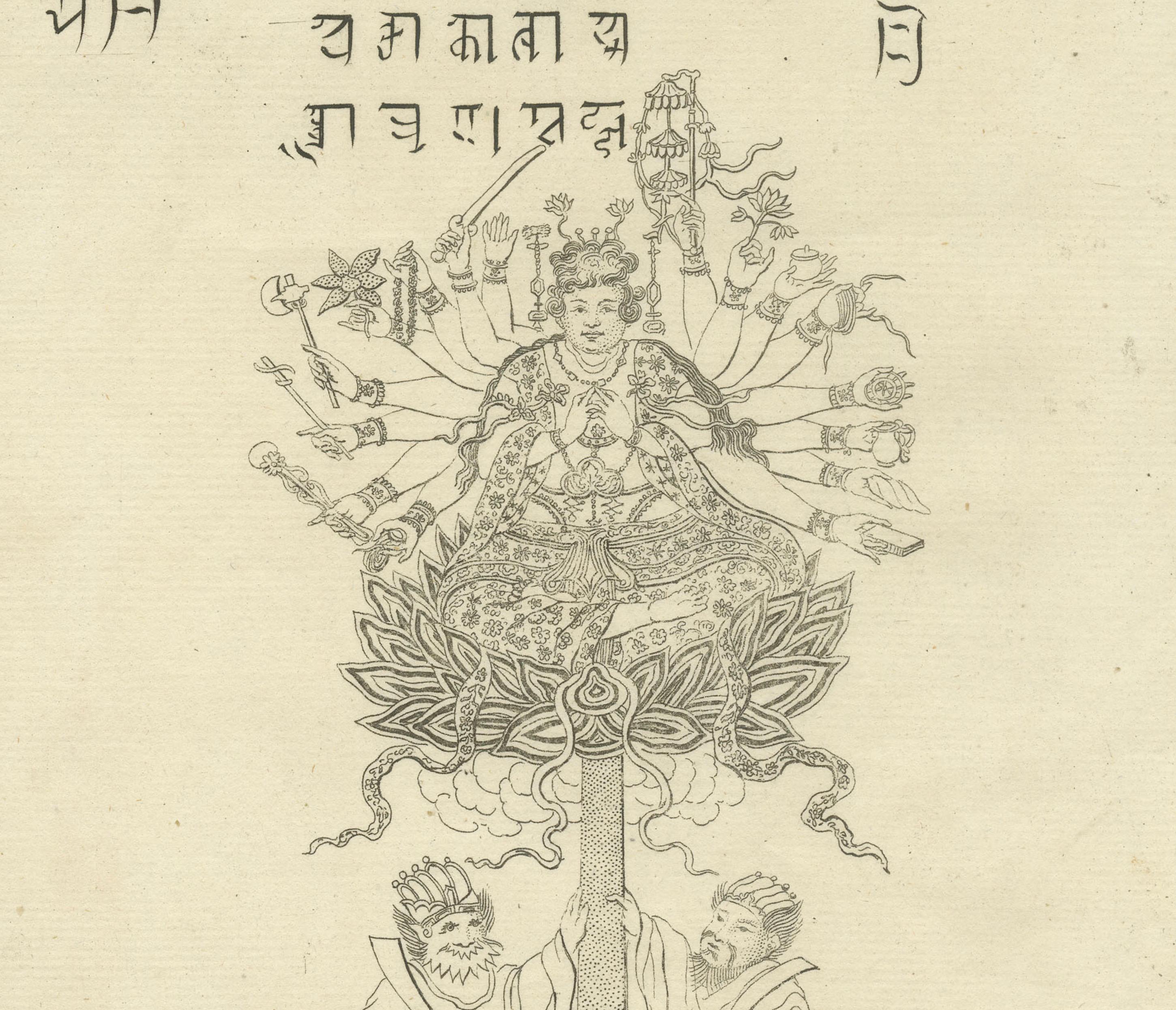
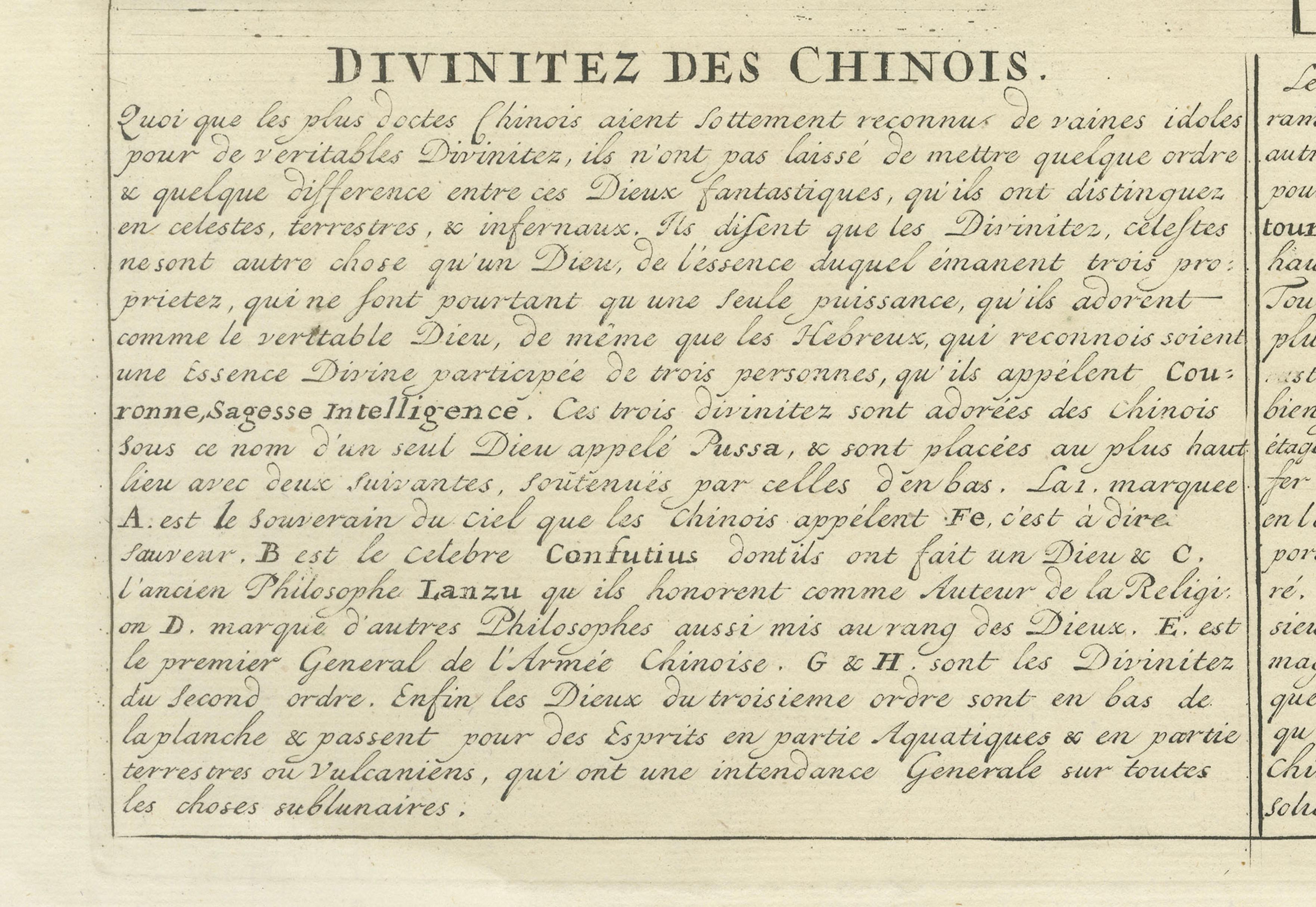
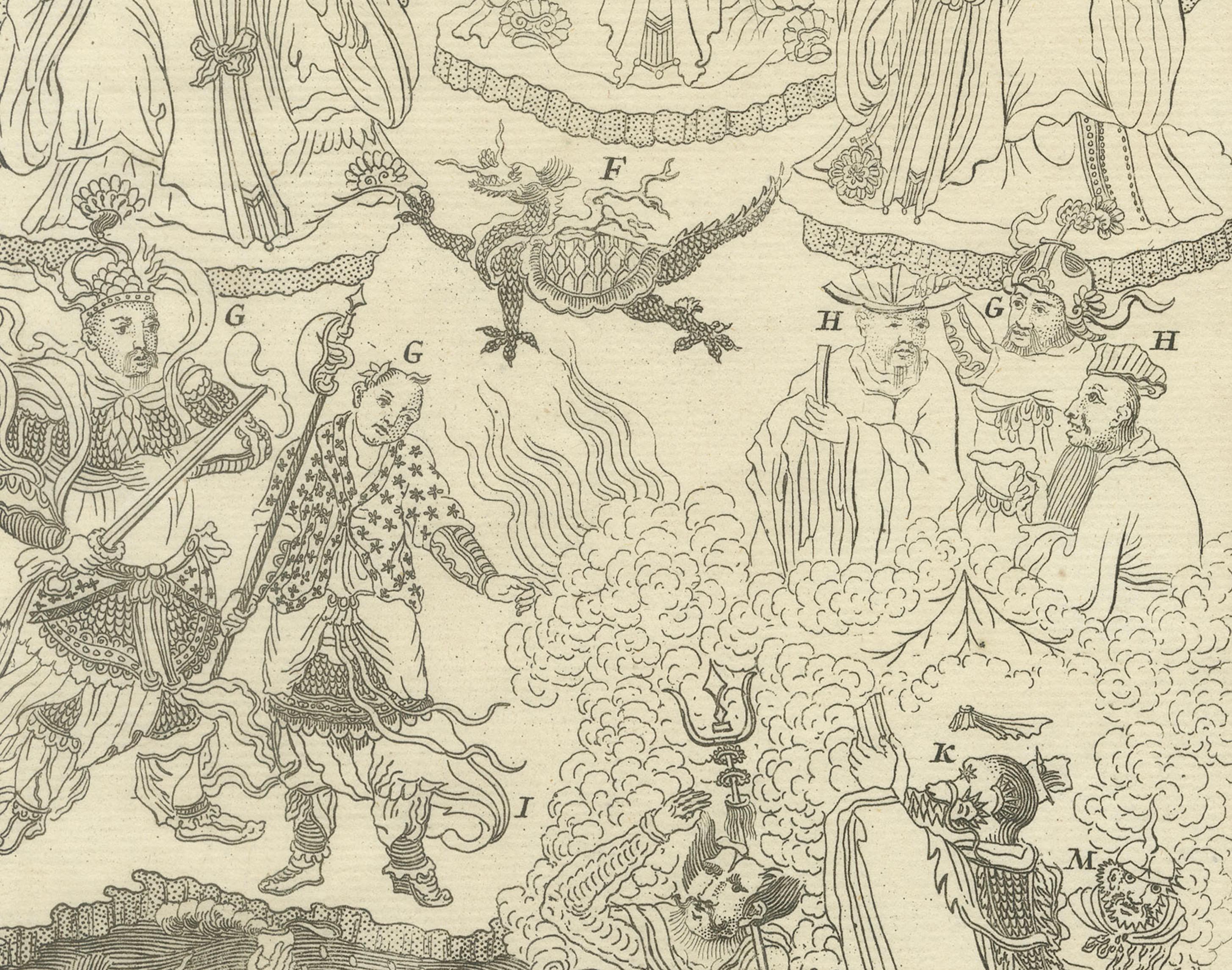
The left panel presents “Principales Divinités Chinoises,” depicting various Chinese deities arranged within clouds and ornamental framing. These figures reflect early 18th-century European attempts to categorize and interpret Chinese religious systems through classical analogies. The right panel features Chinese characters as observed in temple settings and an elaborate representation of what the engravers called “La Cibèle Chinoise,” a comparative reference linking Chinese religious imagery to Greco-Roman mythology. This blending of scholarship and interpretation is characteristic of Jesuit-influenced publications of the period.
Chatelain’s Atlas Historique sought to synthesize geography, religion, culture, and politics into a single illustrated reference work. Plates such as this were designed to inform European readers about distant civilizations while satisfying Enlightenment curiosity about global belief systems. Today, they remain highly collectible for their intellectual context, graphic elegance, and decorative power.
Visually, the engraving is exceptionally balanced: architectural monumentality in the center is framed by intricate figural iconography on either side. The crisp engraved linework, symmetrical layout, and harmonious proportions make this sheet particularly well suited for display in scholarly interiors, libraries, or curated walls focused on early travel, Asia, or religious history.
These are original print(s) from the year of publication, not later reproductions. The print is offered unframed, enabling custom framing to personal or interior preferences. Any framed images shown are for visual inspiration only.
Condition report: Good antique condition consistent with early 18th-century atlas engravings. Age-related toning present; light handling wear to margins. Vertical center fold line visible as typical for bound atlas plates; plate impression visible.
Framing tips: A dark walnut, black-stained, or ebonized frame with a generous ivory mat enhances the engraving’s architectural clarity and historical gravitas. UV-protective museum glass is recommended to preserve the paper and fine engraved detail.