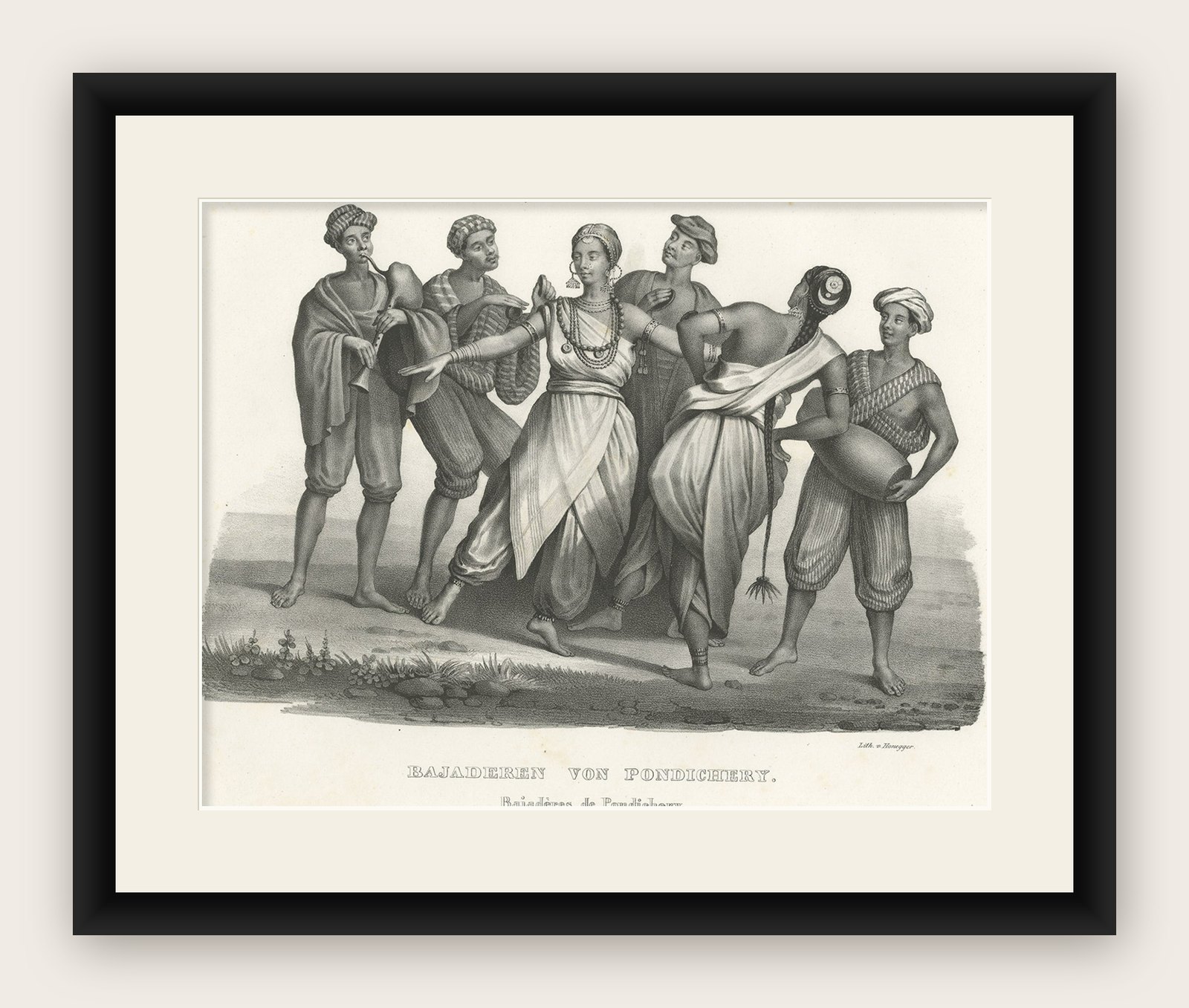
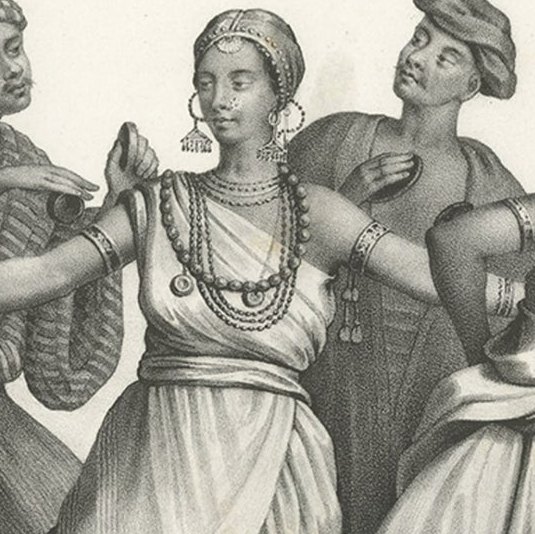
Musicians and Bajadere Dancers from Pondicherry, India, ca.1845
€ 340
Original antique · The actual sheet photographed · Certificate of authenticity on request · Sold unframed · Worldwide shipping from € 15 (rates)
Date
1845
Sheet size
26 × 35.5 cm (10.2 × 14.0 in)
Reference
BG-10718
What the condition grades mean
Excellent
Bright and clean, with no faults worth mentioning.
Very good
Only light signs of age, such as faint toning.
Good
Normal signs of age for a sheet of this period: toning, some foxing, small marks or neat old repairs.
Fair
Clear faults such as staining, tears or repairs, priced to match.
Every fault we see is written in the condition note, and the whole sheet is shown uncropped in the photos.
Condition
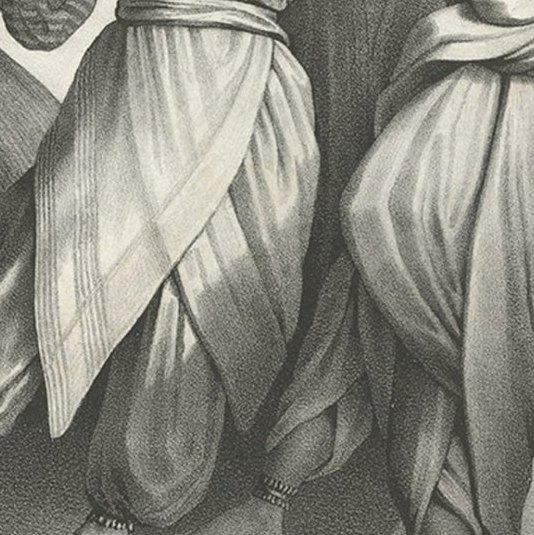
Very good, light foxing. Please review the images for further condition details.
About this sheet
Antique print titled 'Bajaderen von Pondichery, Bajadères de Pondichery'.
This print depicts musicians from Pondicherry, India.
Europeans referred to exotic Indian dancers as Bajaderes (French bayadère, from Port. bailadeira – female dancer, nomen agentis from bailar – to dance, from late Latin ballare). Unlike in the native Indian culture, no strict distinction was made between Devadasis (worshippers, temple dancers who were only allowed to perform at church services) and Nautch dancers (who danced for evening, secular entertainment). Bayaderes perform in groups of up to twelve girls at private festivities, accompanied by musicians. Their performances resemble pantomimes and deal with themes from the area of ??love life and the human emotional world. Dancers' clothing and shawls were also called 'Bajaderes' in Europe.
Originates from 'Naturgeschichte und Abbildungen des Menschen der verschiedenen Rassen und Stamme nach den neuesten Entdeckungen und vorzuglichsten Originalien.', by Heinrich Rudolf Schinz.
Artists and Engravers: Heinrich Rudolf Schinz (1777-1861) was a Swiss physician and naturalist. Schinz was born at Zurich and studied medicine at Würzburg and Jena, returning to Zurich in 1798 to practice. In 1804 he became a teacher at the medical institute, and in 1833 he became extraordinary professor of natural history at the university of Zurich.