18th-Century Engraving of Hottentots and Cape of Good Hope in South-Africa
€ 180
One of a kind: this is the sheet in the photographs. Ships from Langweer, the Netherlands.
Sheet size
37.5 × 23.5 cm (14.8 × 9.3 in)
Reference
BG-13599-39
Condition
good, given age. Clean and well-preserved engraving with minimal edge wear. Free from foxing or stains. Sharp lines and clear details throughout. Slight age toning to margins.
About this sheet
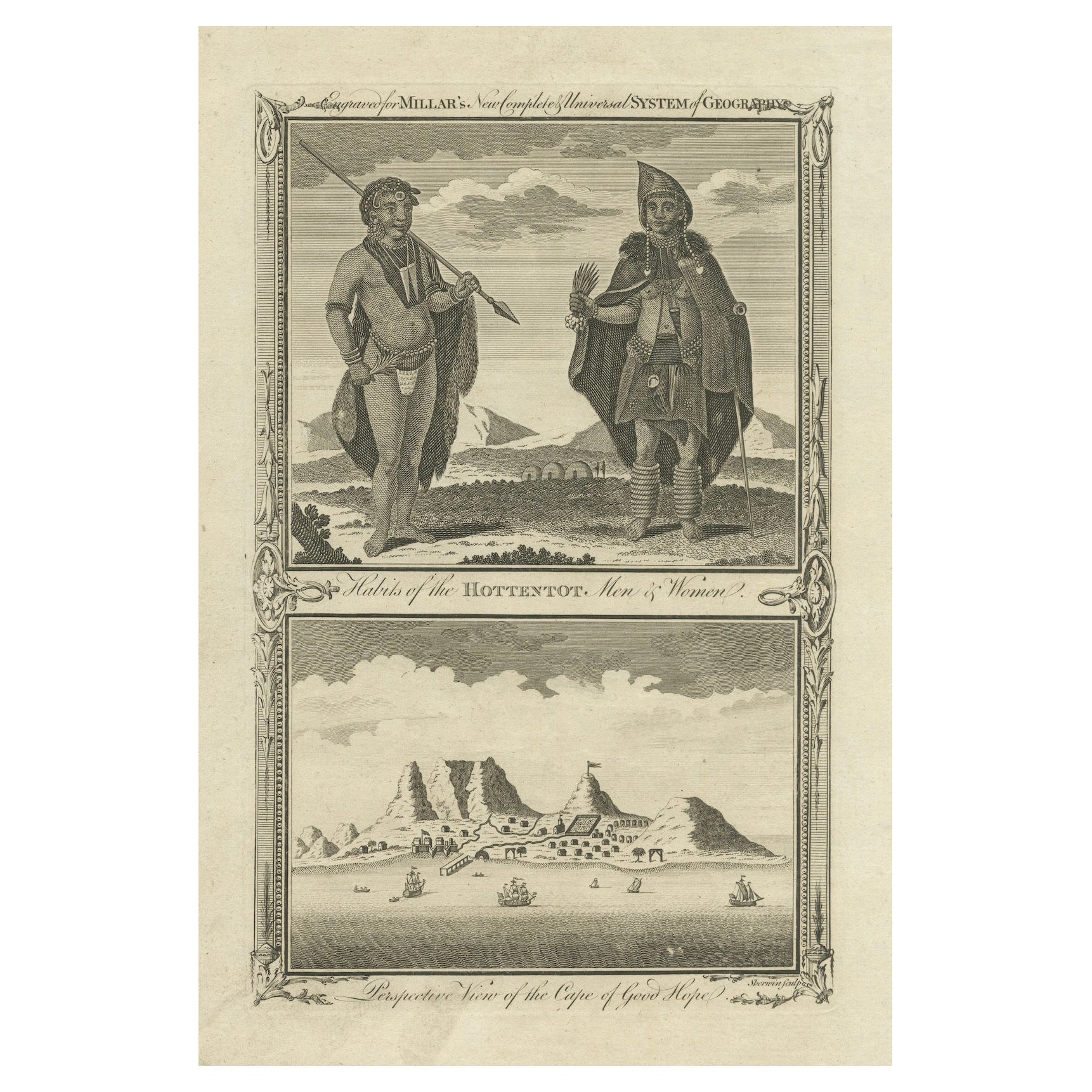
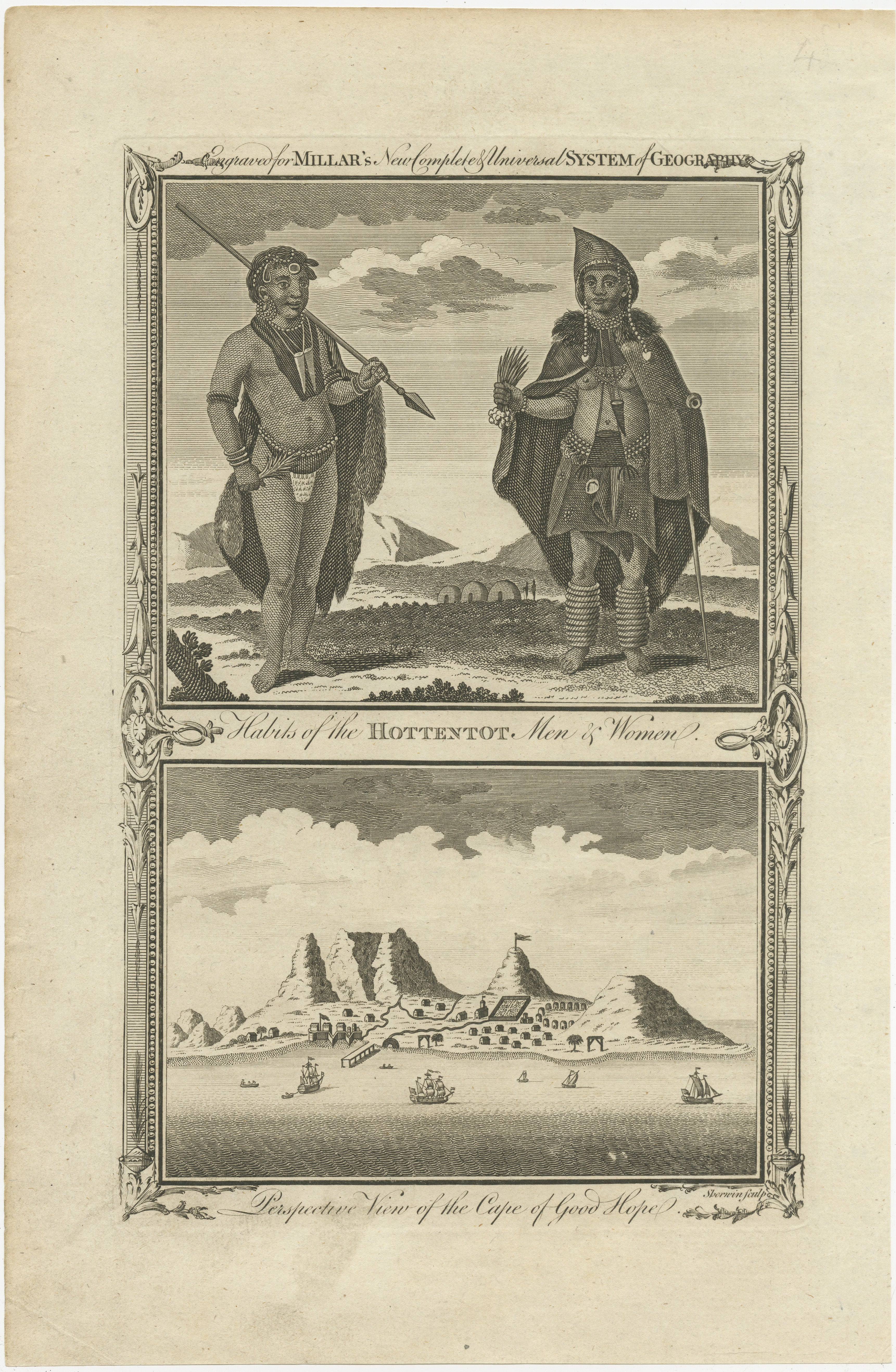
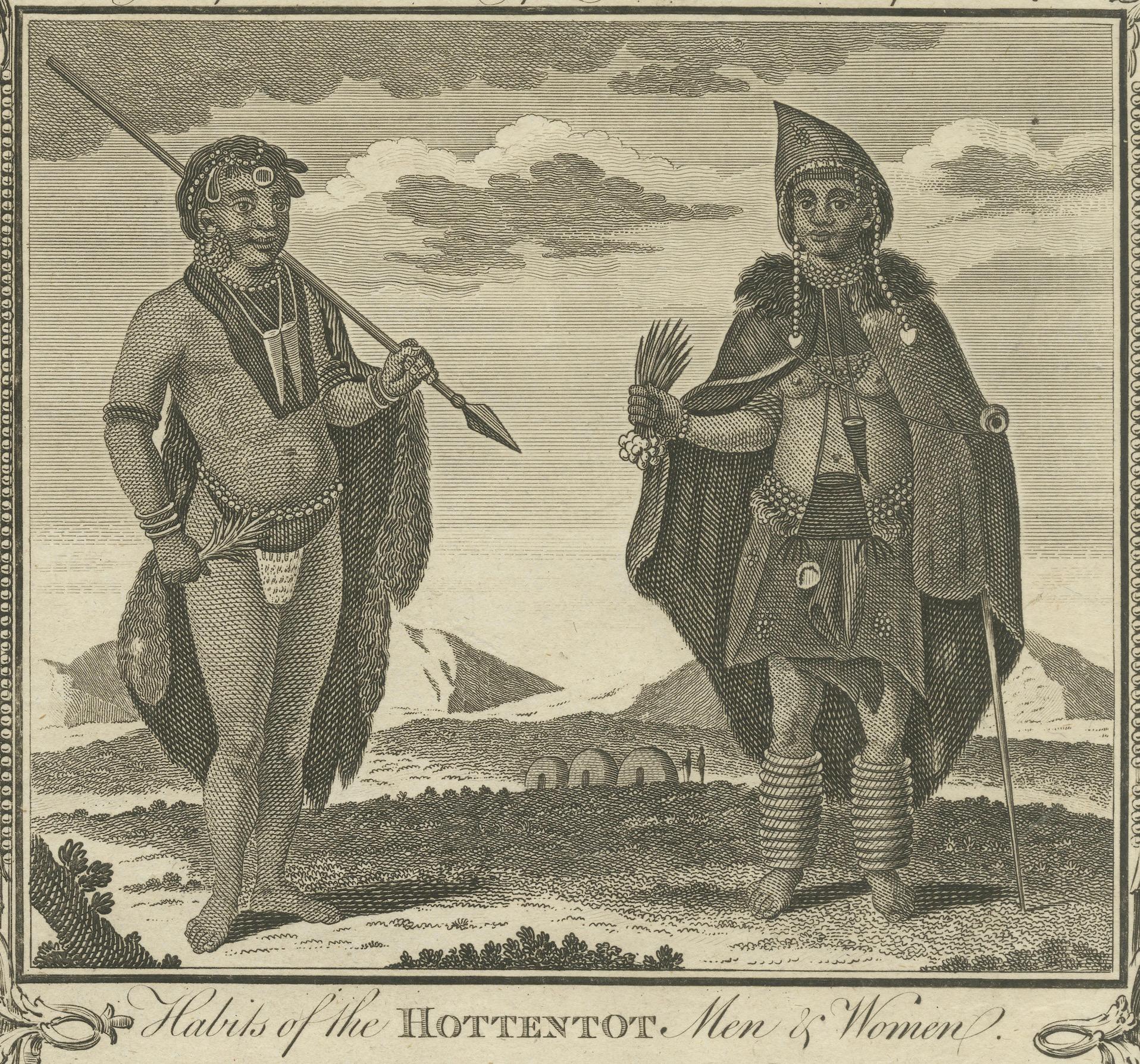
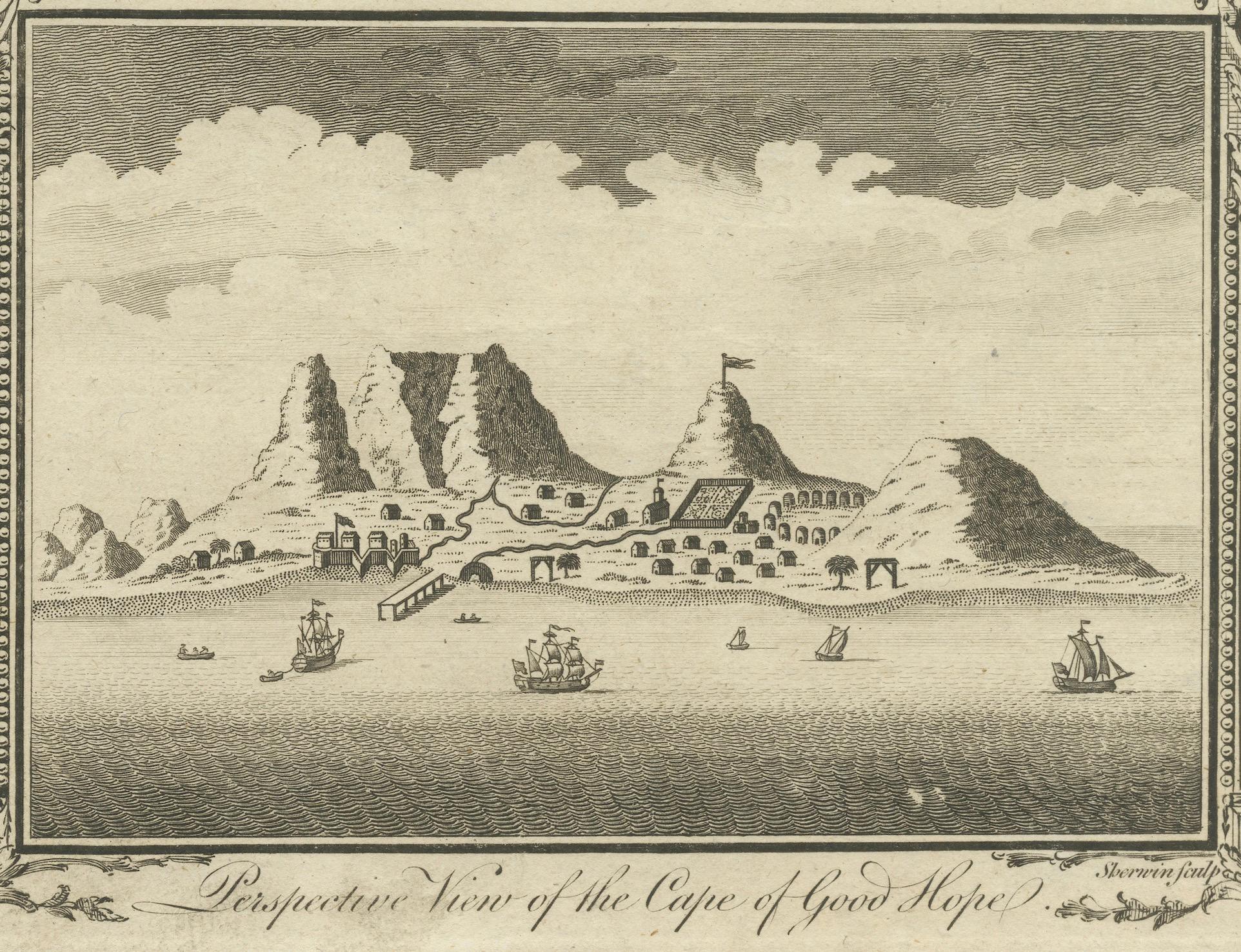
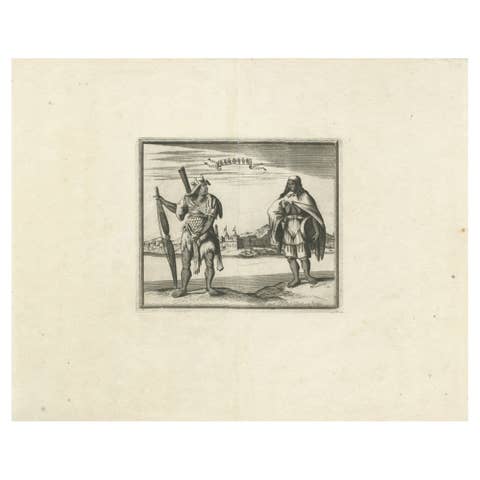
This engraving, titled "Habits of the Hottentot Men & Women" and "Perspective View of the Cape of Good Hope," is a fine example of 18th-century European visual representations of distant lands and peoples. Produced for *Millar’s New Complete & Universal System of Geography,* this work reflects the period's growing interest in global exploration and cultural documentation.
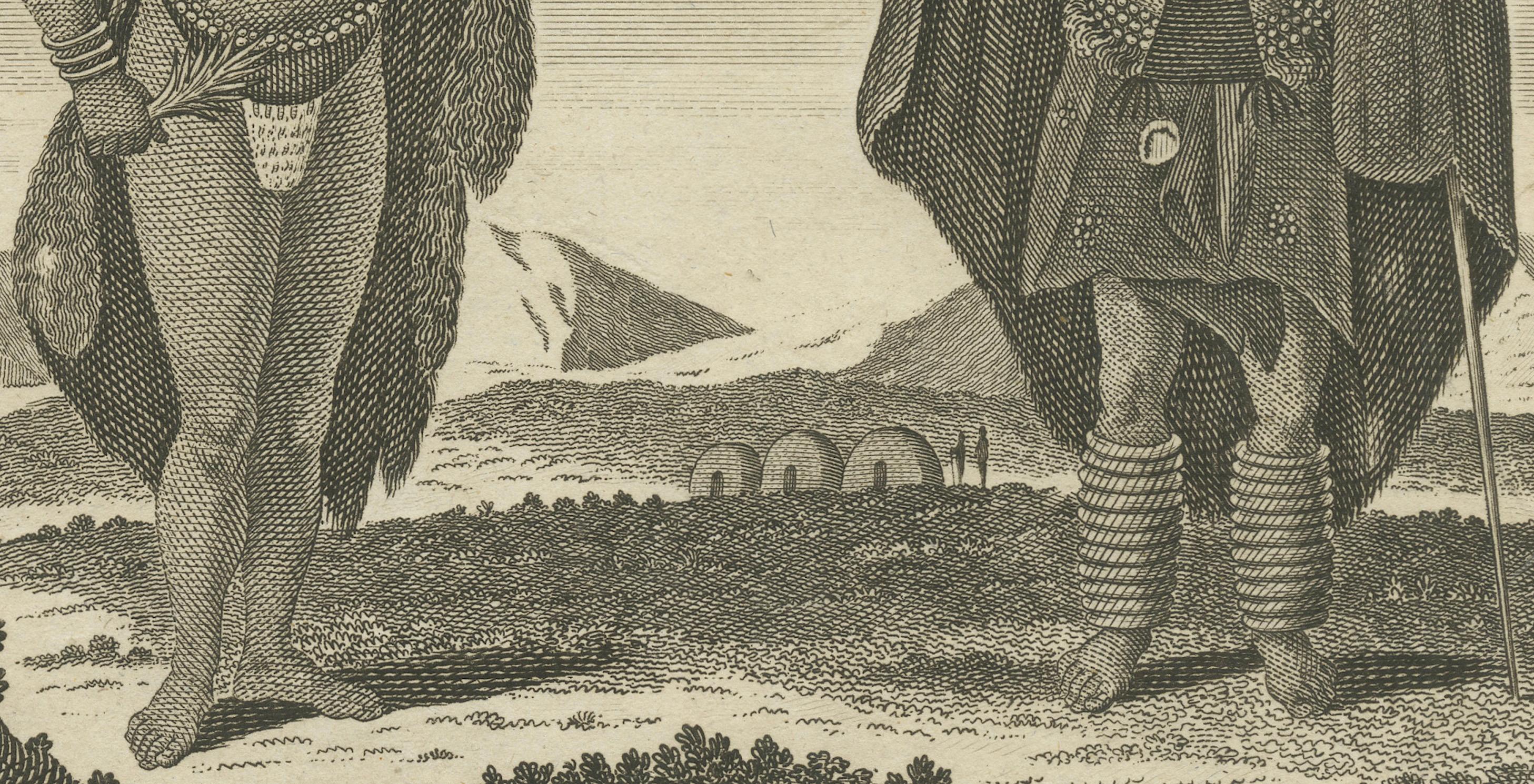
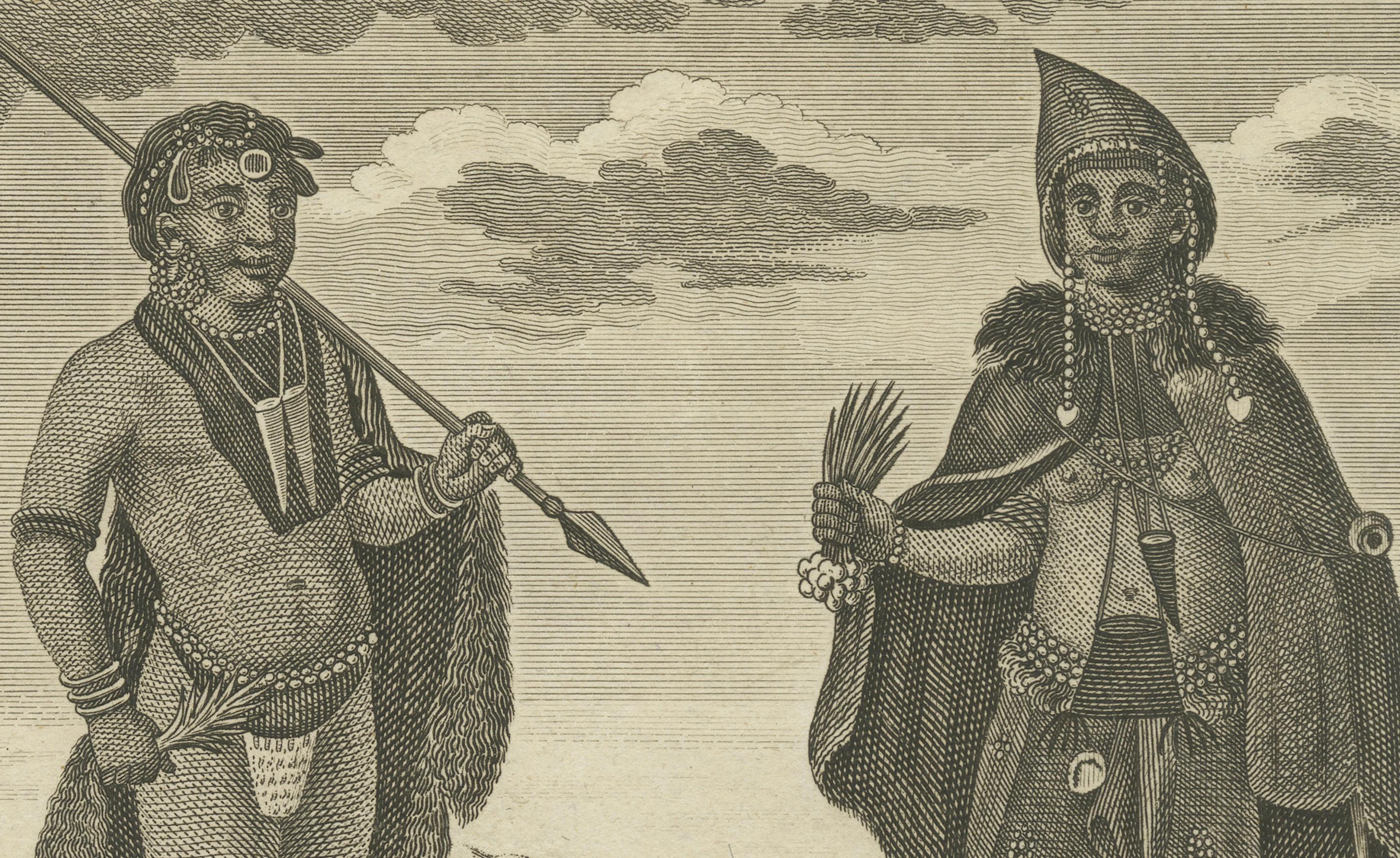
In the upper panel, the "Hottentot Men & Women" (a term historically used to describe the Khoikhoi people of Southern Africa) are portrayed in distinct attire. The man holds a spear and wears minimal clothing, with a fur draped across his shoulders. The woman is depicted in a more elaborate costume, including layered garments, jewelry, and an ornate headdress. While intended as an educational representation, such depictions often combined actual observation with European artistic conventions, presenting an idealized or sometimes misunderstood portrayal of indigenous peoples.
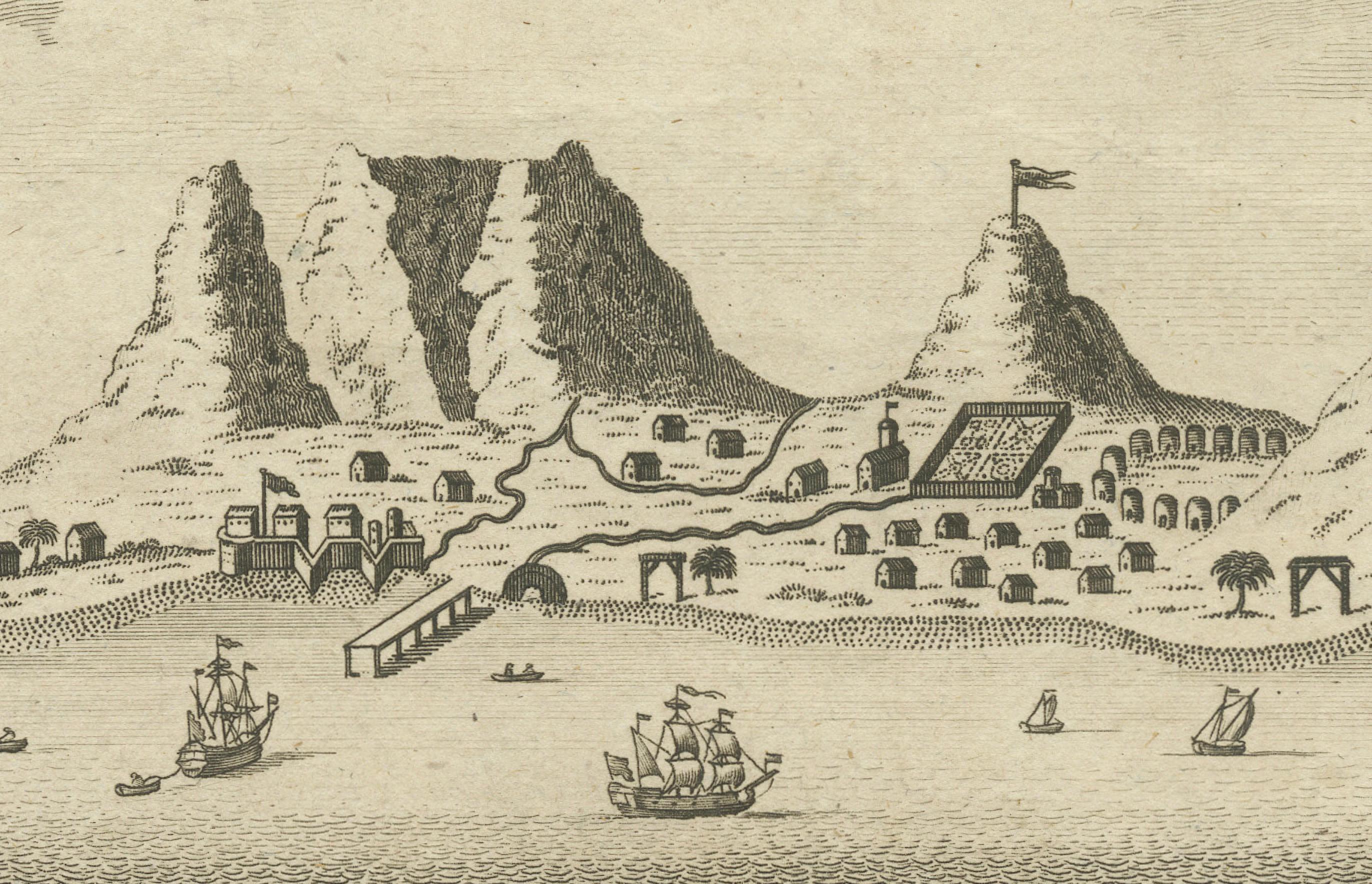
The lower panel offers a perspective view of the Cape of Good Hope, a key landmark at the southern tip of Africa. Table Mountain dominates the scene, with its flat summit rising prominently. Early Dutch settlements and fortifications are illustrated along the coastline, while sailing ships anchor in the harbor, highlighting the Cape's importance as a strategic stop for European trade routes to and from the East Indies.
This engraving is significant for its dual focus on geography and ethnography, both of which captivated European readers during the Enlightenment. It reflects a period when interest in far-off lands fueled curiosity, commerce, and exploration. The combination of cultural representation and detailed cartographic imagery served to inform and entertain audiences, though through a distinctly European perspective.
The fine craftsmanship of this print, with its clean lines and detailed border designs, demonstrates the skill of 18th-century engravers. Its condition, free of significant wear or foxing, enhances its value as a historical artifact. This piece remains a fascinating document of how distant places and peoples were visualized and interpreted during a transformative period in global history.